Industrial Intelligence in Cooling Systems: Key Use Cases and Risks




Why industrial intelligence changes cooling decisions on the ground
Industrial intelligence is no longer a side topic in cooling systems. It now shapes uptime, energy use, refrigerant strategy, and maintenance timing across mixed industrial environments.
The real value appears when thermal assets operate under variable loads. A packaging line, a semiconductor cleanroom, and a food cold process do not fail in the same way.
That is why industrial intelligence works best as a context tool, not only a monitoring layer. It must read thermodynamic behavior together with operating pressure, ambient variation, and process sensitivity.
This is also where platforms such as GTC-Matrix matter. By connecting cooling, compressed air, vacuum, and heat exchange intelligence, the analysis becomes closer to how industrial systems actually interact.
In practice, the best cooling decisions are rarely based on one dashboard. They depend on whether industrial intelligence can separate normal fluctuation from early thermal drift.
Different operating scenes create different intelligence needs
Cooling assets often look similar on a layout drawing. The demand pattern behind them is not. The logic changes with product sensitivity, cleanliness rules, runtime profile, and energy exposure.
A plant with stable batch cycles usually wants fault prediction and maintenance planning. A site facing volatile utility prices may care more about load shifting and efficiency benchmarking.
Where low-emission refrigerants are being phased in, industrial intelligence also becomes a compliance tool. It helps track performance loss after refrigerant changes or heat exchanger retrofits.
GTC-Matrix has an advantage here because its intelligence model is not limited to one device category. It links policy change, thermodynamic design evolution, and sector demand into one decision frame.
High-precision process cooling needs earlier signals, not louder alarms
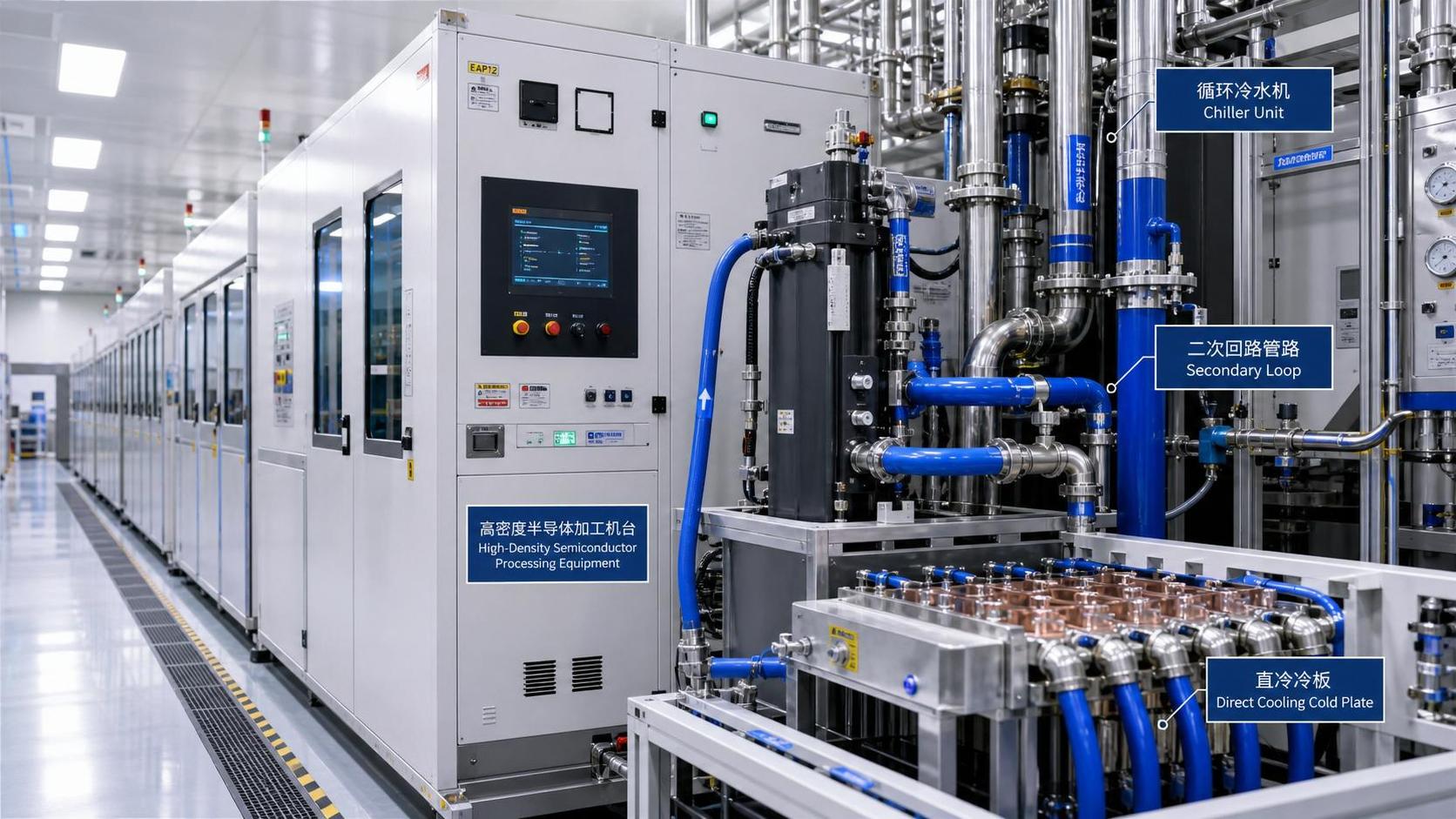
In pharmaceuticals and semiconductors, temperature deviation can damage yield before a system reaches a formal alarm threshold. Industrial intelligence must catch pattern drift, not only threshold violations.
Useful models in this scene compare compressor cycling, approach temperature, fluid cleanliness, and micro load changes. A simple power trend is too coarse for high-value process protection.
A common mistake is to treat these facilities like general utilities. They usually require cleaner data inputs, tighter sensor calibration, and stronger validation before automated recommendations are trusted.
Heavy-duty plants care more about resilience under unstable loads
Metal processing, chemicals, and mixed industrial campuses often face ambient swings, production shifts, and older equipment combinations. Here, industrial intelligence must tolerate imperfect operating conditions.
The judging point is not model elegance. It is whether the system can distinguish between harmless load swings and real efficiency collapse caused by fouling, leakage, or compression imbalance.
This scene benefits from cross-system analysis. Cooling behavior should be read alongside compressed air demand, pump response, and heat rejection patterns.
Food and cold-chain operations focus on continuity and hygiene risk
In food processing, a small temperature event can quickly become a product risk. Industrial intelligence has to balance thermal efficiency with cleaning cycles, door opening patterns, and sanitation downtime.
This is where false confidence creates trouble. A model trained on clean operating windows may underperform when washdown schedules or seasonal throughput alter the thermal rhythm.
Where the use cases deliver measurable value
The strongest industrial intelligence use cases in cooling systems usually sit between operations, maintenance, and energy management. They create value when they solve a real decision bottleneck.
- Predictive maintenance for compressors, fans, pumps, and heat exchangers before thermal instability reaches production quality.
- Dynamic setpoint optimization when utility tariffs, outdoor temperature, and process load change within the same week.
- Leakage and fouling detection through combined pressure, temperature, and power signatures rather than manual inspection alone.
- Retrofit verification after oil-free compression upgrades, microchannel exchanger adoption, or refrigerant transition programs.
- Lifecycle comparison across similar assets to identify which equipment family really supports lower total thermal cost.
These use cases fit the broader direction described by GTC-Matrix. Thermal efficiency is no longer separated from decarbonization, clean power quality, or resource circularity.
The judging criteria are not the same across sites
The table below shows why industrial intelligence should not be deployed with one universal logic. Cooling scenes look related, but decision priorities differ.
In actual deployment, this comparison matters more than broad promises. Good industrial intelligence starts by defining which decisions need better evidence.
Risks appear when intelligence outruns site reality
The upside of industrial intelligence is clear. The harder part is making sure the system remains reliable after integration with legacy controls, mixed refrigerants, and aging sensors.
One frequent risk is model drift. Cooling systems change after maintenance, valve replacement, coil fouling, or process expansion. If the model does not learn responsibly, recommendations become unstable.
Cybersecurity is another practical concern. A connected thermal network can expose compressors, building interfaces, and supervisory controls to unnecessary access points.
There is also a governance issue. Some sites collect more data than they can interpret, then rely on generic dashboards that hide the thermodynamic reason behind a warning.
GTC-Matrix is especially relevant in this discussion because policy, refrigerant quotas, and technology shifts affect data interpretation. Intelligence without sector context often misreads long-term equipment behavior.
The most common misjudgments usually start small
- Choosing a platform by dashboard appearance instead of data quality and site compatibility.
- Assuming two similar cooling loops have the same control logic and maintenance rhythm.
- Evaluating only acquisition cost while ignoring calibration, integration, retraining, and cybersecurity effort.
- Treating one season of stable performance as proof that the industrial intelligence model is mature.
- Separating cooling analysis from compressed air, vacuum demand, or heat recovery conditions.
A practical way to match industrial intelligence with the right cooling scene
A better path is to stage industrial intelligence by operational relevance. Start where cooling instability already creates visible energy, quality, or downtime pressure.
Then verify the data chain. Sensor location, calibration discipline, historian quality, and control-system access often matter more than analytics sophistication in the first phase.
It also helps to define acceptable automation boundaries. Some scenes only need recommendations. Others can support closed-loop optimization after validation.
- Map cooling assets by process criticality, not by equipment age alone.
- Build separate baselines for seasonal, batch, and sanitation-driven operating patterns.
- Check whether refrigerant transition plans or energy-price exposure will change optimization logic.
- Use cross-functional thermal indicators, including heat exchange efficiency and compression response.
- Review cybersecurity architecture before extending remote visibility or cloud analytics.
When these steps are in place, industrial intelligence becomes less of a software layer and more of an operating discipline tied to thermal reality.
What to clarify before the next deployment step
The most useful next move is to sort cooling scenes by decision difficulty. Some systems need prediction. Others need cleaner evidence on why efficiency is drifting.
From there, compare operating conditions, model risk, maintenance burden, and integration effort. That approach usually reveals where industrial intelligence will deliver durable value and where it may create noise.
In broad industrial settings, especially those tracked by GTC-Matrix, the strongest results come from connecting thermal behavior with market signals, technology evolution, and plant-level operating constraints.
The goal is not simply to digitize cooling. It is to build a reliable decision standard for energy efficiency, resilience, and long-cycle thermal performance.
Related News
- EU Label Deadline Hits China Chiller ExportsAuthor :Cryogenic Systems Expert

- How Smart Thermal Systems Improve Industrial Cooling EfficiencyAuthor :Cryogenic Systems Expert

- How to Choose Process Cooling Equipment for Stable Temperature ControlAuthor :Cryogenic Systems Expert

- EU Finalizes 2026 HFC Quota Cut for R-134a ChillersAuthor :Cryogenic Systems Expert

- EU Tightens HFC-134a Quotas for Industrial ChillersAuthor :Cryogenic Systems Expert

- REACH SVHC Update Pressures HFC-134a Chiller Supply ChainsAuthor :Cryogenic Systems Expert

- EU PFAS Coolant Ban Reshapes Chiller ExportsAuthor :Cryogenic Systems Expert

- EU REACH Restricts PFAS Cooling Media ImportsAuthor :Cryogenic Systems Expert

- EU Ecodesign Rule Takes Effect for Industrial ChillersAuthor :Cryogenic Systems Expert

- EU REACH Rule Takes Effect for PFAS in Industrial Cooling ExportsAuthor :Cryogenic Systems Expert

- Industrial Cooling for Plastic Processing: How to Size for Stable Cycle TimesAuthor :Cryogenic Systems Expert

- EU F-Gas Update Bars R404A/R507 in Commercial CoolingAuthor :Cryogenic Systems Expert

- DOE Raises Chiller Efficiency Standard From October 2026Author :Cryogenic Systems Expert

- India Mandates BIS Energy Certification for Industrial ChillersAuthor :Cryogenic Systems Expert

- Energy-Efficient Heat Exchange for Process Cooling: Cost vs PaybackAuthor :Cryogenic Systems Expert

- EPA R-134a Import Ban Takes Effect on July 13, 2026Author :Cryogenic Systems Expert

- India BIS Rule Takes Effect for Industrial ChillersAuthor :Cryogenic Systems Expert

- EPA Cuts R134a Import Quotas 20% From July 10Author :Cryogenic Systems Expert

- How to Compare Energy-Efficient Cooling Systems for Factory Expansion ProjectsAuthor :Cryogenic Systems Expert

- Chiller Price Index Rises 11.3% in Q2Author :Cryogenic Systems Expert

- Saudi SASO Tightens Chiller Import Compliance From July 10Author :Cryogenic Systems Expert

- Dubai Opens Fast-Track Chiller TendersAuthor :Cryogenic Systems Expert

- Japan Raises Chiller COP Floor to 6.2 From Sept. 1Author :Cryogenic Systems Expert
![]()
- Compact Thermal Management in Smart Devices: Common Failure RisksAuthor :Cryogenic Systems Expert

- Thermal Management for Batteries: Cooling Methods ComparedAuthor :Cryogenic Systems Expert

- How Compact Thermal Design Extends Smart Device UptimeAuthor :Cryogenic Systems Expert

- Shanghai-Rotterdam Reefer Rates Jump 37% in a WeekAuthor :Cryogenic Systems Expert

- Process Cooling Equipment Low Maintenance: What Cuts Downtime Over 5 Years?Author :Cryogenic Systems Expert

- Semiconductor Cooling Solutions: Which Design Works Best for High-Density Tools?Author :Cryogenic Systems Expert

- Semiconductor Thermal Management Systems: Preventing Yield Loss from Heat DriftAuthor :Cryogenic Systems Expert

- EPA Clears R-1234ze(E) for Industrial ChillersAuthor :Cryogenic Systems Expert
 for Industrial Chillers")
- DOE Raises Chiller IEER Floor to 12.8 From Oct. 2026Author :Cryogenic Systems Expert

- Singapore Refrigeration Show Adds Green Compliance HubAuthor :Cryogenic Systems Expert

- How Food Industry Temperature Control Systems Reduce Product LossAuthor :Cryogenic Systems Expert

- EU REACH Adds 12 SVHCs, Raising Chiller Compliance RiskAuthor :Cryogenic Systems Expert

- Precision Temperature Control Air Cooling: Key Setup Mistakes That Reduce StabilityAuthor :Cryogenic Systems Expert