Precision Temperature Control Air Cooling: Key Setup Mistakes That Reduce Stability




Why does precision temperature control air cooling lose stability so easily?
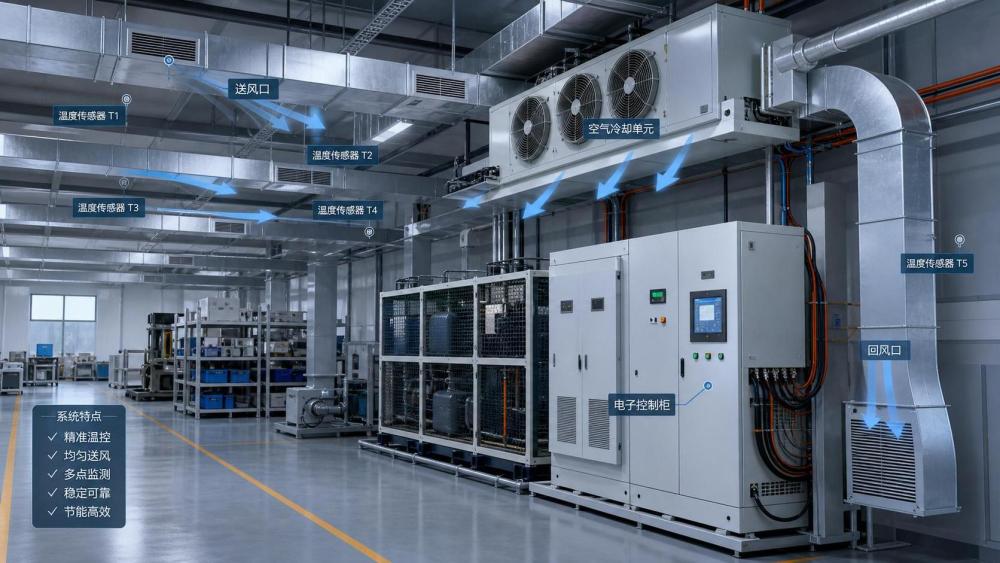
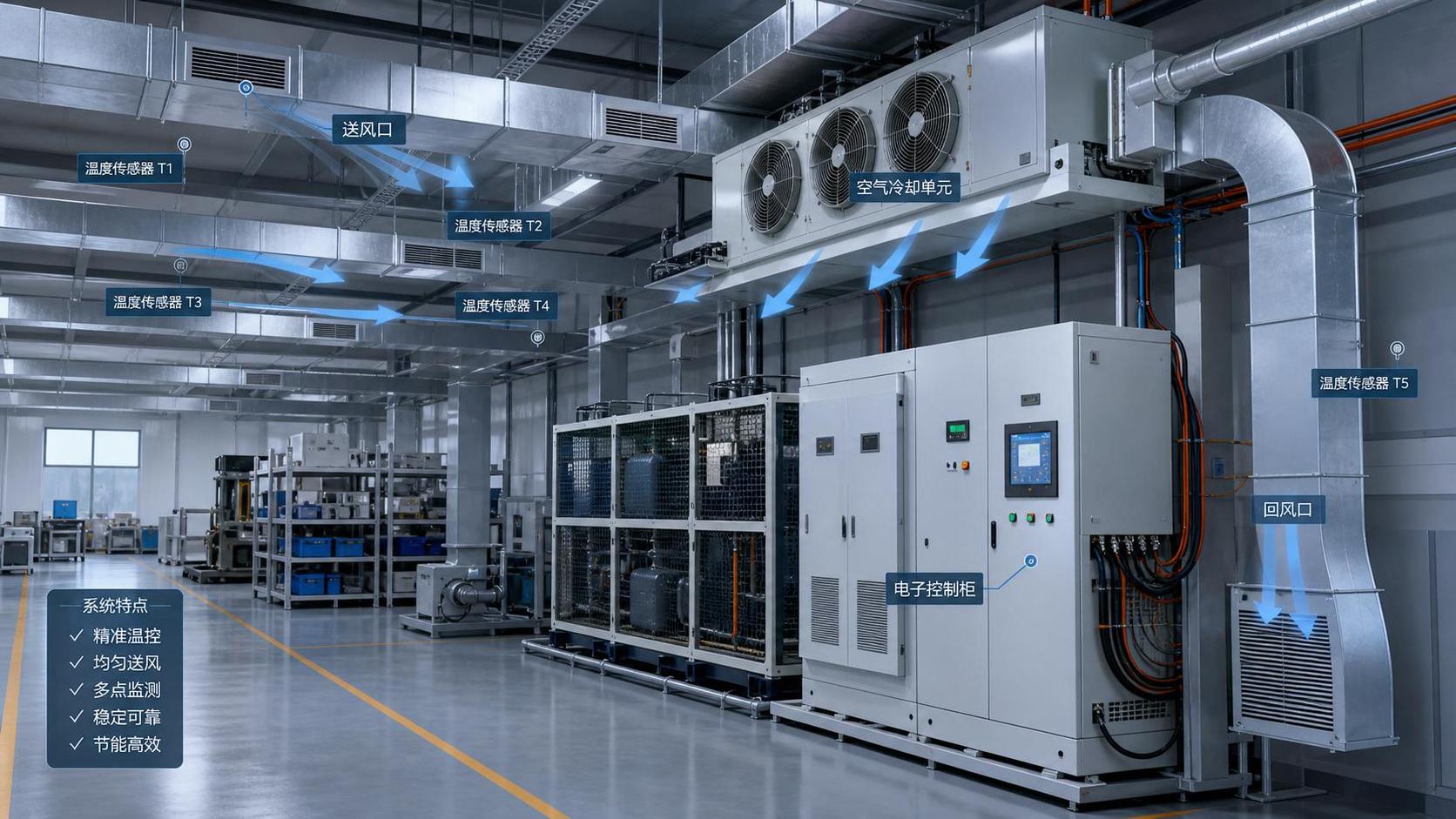
Precision temperature control air cooling looks straightforward on paper, yet stability often disappears because setup decisions ignore airflow behavior, load variation, and sensor response.
In daily operation, the problem is rarely a single dramatic failure. More often, small errors stack up and create uneven temperatures, delayed correction, and unnecessary power use.
That matters in packaging, electronics, food handling, lab support spaces, and light industrial processing, where a few degrees of drift can change product quality or cycle consistency.
A useful way to read precision temperature control air cooling is this: it is not only about cooling capacity. It is about how accurately the system senses, reacts, distributes air, and recovers.
This is also why industry platforms such as GTC-Matrix keep linking thermal design with compression efficiency, heat exchange performance, and operating data rather than treating them separately.
If the setup is wrong, the system may still run, but it will not run consistently. The most common mistakes are surprisingly practical and usually preventable.
Which setup mistakes cause the biggest temperature swings?
The largest stability losses usually come from airflow layout, sensor placement, poor load matching, and weak maintenance discipline. Each one changes how the control loop sees reality.
When these errors happen together, precision temperature control air cooling starts chasing symptoms instead of controlling the thermal process itself.
1. Sensor placement near supply air or hot spots
A sensor mounted too close to a discharge grille reads the conditioned air, not the real process condition. The controller then thinks everything is stable when the room is not.
The opposite also happens. If the sensor sits beside a motor, sunlight path, or door opening, the unit overreacts to a local disturbance.
2. Oversized or undersized cooling capacity
Oversizing causes short cycling. The unit reaches setpoint too quickly, shuts down, and restarts before air distribution becomes uniform.
Undersizing creates the opposite pattern. The system runs continuously, but cannot absorb peak heat gain, so temperature drift appears during load spikes.
3. Ignoring return air pathways
Many installations focus on supply air velocity and forget return air balance. That creates recirculation pockets and dead zones.
In precision temperature control air cooling, stable return conditions are just as important as supply conditions because the controller reacts to what returns from the process area.
4. Poor sealing around the controlled area
Leaks around panels, cable entries, access doors, or duct joints introduce uncontrolled air exchange. The result is hidden thermal noise.
This is especially common in mixed-use facilities where cooled zones sit near warmer production spaces or near compressed air equipment that releases heat.
How can you tell whether airflow is the real problem?
A stable setpoint does not automatically mean a stable environment. The better question is whether the same temperature exists where the process actually happens.
In practical checks, airflow problems show up as differences between corners, shelves, machine faces, or product heights. One point looks acceptable, another drifts repeatedly.
Use a simple mapping routine before changing equipment settings. Measure temperature at several fixed points during idle and loaded periods.
- Compare supply air temperature with return air temperature.
- Check whether readings differ by height, not only by floor position.
- Observe conditions after doors open, machines start, or batch loads enter.
- Look for repeated drift at the same location and time.
If the pattern is local and repeatable, airflow distribution is likely the issue. If the pattern is system-wide, capacity or control tuning may be the larger cause.
That distinction saves time. Many teams retune controllers first, even when the real fault is poor duct throw, blocked returns, or internal layout changes.
Is the controller setting itself causing instability?
Sometimes yes, but controller settings usually become a problem after physical setup issues are ignored. Fine tuning cannot rescue bad sensing or bad airflow.
Still, precision temperature control air cooling does depend on disciplined control logic. Aggressive settings can make the system hunt around the setpoint instead of settling smoothly.
Typical warning signs include rapid fan changes, frequent compressor starts, unstable dampers, and temperature graphs with repeated sharp peaks and drops.
Before changing advanced parameters, confirm four basics:
A more reliable approach is to correct the physical causes first, then tune the controller using real load data. That sequence produces steadier results.
What maintenance gaps quietly undermine precision temperature control air cooling?
Stability often fades gradually, which is why maintenance-related problems are missed. Nothing appears broken, but performance becomes less repeatable week by week.
Dirty filters are an obvious example, yet they are only part of the story. Fouled coils, slipping belts, blocked louvers, and sticky dampers distort airflow long before alarms appear.
The same goes for compressed air and heat-generating utilities nearby. If surrounding equipment behavior changes, the thermal profile around the cooling zone also changes.
This broader view fits the way GTC-Matrix interprets industrial thermal systems. Cooling stability depends on the relationship between heat sources, air movement, exchanger condition, and energy inputs.
A practical maintenance checklist should include:
- Filter pressure drop, not only visual cleanliness.
- Coil condition and signs of partial blockage.
- Fan rotation, vibration, and belt tension.
- Sensor drift after seasonal changes or service work.
- Air leakage from ducts, panels, and access points.
- Nearby process heat changes since the last stable period.
If precision temperature control air cooling used to work and now drifts, maintenance history often explains the shift faster than redesign discussions do.
When should you adjust the setup, and when is a redesign more realistic?
Not every instability problem requires replacing the system. Many cases improve through better sensor location, airflow balancing, zoning, sealing, and revised control logic.
Adjustment is usually enough when the load profile is still close to the original design and the controlled area has not changed much.
A redesign becomes more realistic when the process heat load has grown, the room layout has changed, or tighter tolerance is now required than the original system was built to hold.
In those cases, evaluate precision temperature control air cooling with a wider lens:
- Has the sensible heat load increased because of denser equipment?
- Do product or process tolerances now demand faster recovery?
- Is zoning needed to separate stable and unstable heat sources?
- Would a different heat exchanger or fan strategy improve uniformity?
- Are energy costs now high enough to justify a control upgrade?
This is where industry intelligence helps. Watching trends in oil-free compression, exchanger efficiency, and refrigerant policy can shape better retrofit timing and lower long-term risk.
What is the smartest next step if stability still feels inconsistent?
Start with evidence, not assumptions. Map temperatures, log operating cycles, and compare drift patterns with actual process events.
Then rank likely causes in order: sensing, airflow, load change, control tuning, and maintenance condition. That sequence keeps troubleshooting grounded.
Precision temperature control air cooling performs best when the thermal path is understood from heat source to air movement to control response. Stability is a system behavior, not a single setting.
If the goal is fewer interruptions and tighter consistency, document the current layout, verify sensor accuracy, and review whether today’s load still matches the original design basis.
That kind of structured review turns scattered complaints into clear action points. It also makes future upgrades easier to judge on performance, energy use, and operational risk.
Related News
- How Smart Thermal Systems Improve Industrial Cooling EfficiencyAuthor :Cryogenic Systems Expert

- How to Choose Process Cooling Equipment for Stable Temperature ControlAuthor :Cryogenic Systems Expert

- EU Finalizes 2026 HFC Quota Cut for R-134a ChillersAuthor :Cryogenic Systems Expert

- EU Tightens HFC-134a Quotas for Industrial ChillersAuthor :Cryogenic Systems Expert

- REACH SVHC Update Pressures HFC-134a Chiller Supply ChainsAuthor :Cryogenic Systems Expert

- EU PFAS Coolant Ban Reshapes Chiller ExportsAuthor :Cryogenic Systems Expert

- EU REACH Restricts PFAS Cooling Media ImportsAuthor :Cryogenic Systems Expert

- EU Ecodesign Rule Takes Effect for Industrial ChillersAuthor :Cryogenic Systems Expert

- EU REACH Rule Takes Effect for PFAS in Industrial Cooling ExportsAuthor :Cryogenic Systems Expert

- Industrial Cooling for Plastic Processing: How to Size for Stable Cycle TimesAuthor :Cryogenic Systems Expert

- EU F-Gas Update Bars R404A/R507 in Commercial CoolingAuthor :Cryogenic Systems Expert

- DOE Raises Chiller Efficiency Standard From October 2026Author :Cryogenic Systems Expert

- India Mandates BIS Energy Certification for Industrial ChillersAuthor :Cryogenic Systems Expert

- Energy-Efficient Heat Exchange for Process Cooling: Cost vs PaybackAuthor :Cryogenic Systems Expert

- EPA R-134a Import Ban Takes Effect on July 13, 2026Author :Cryogenic Systems Expert

- India BIS Rule Takes Effect for Industrial ChillersAuthor :Cryogenic Systems Expert

- EPA Cuts R134a Import Quotas 20% From July 10Author :Cryogenic Systems Expert

- How to Compare Energy-Efficient Cooling Systems for Factory Expansion ProjectsAuthor :Cryogenic Systems Expert

- Chiller Price Index Rises 11.3% in Q2Author :Cryogenic Systems Expert

- Saudi SASO Tightens Chiller Import Compliance From July 10Author :Cryogenic Systems Expert

- Dubai Opens Fast-Track Chiller TendersAuthor :Cryogenic Systems Expert

- Japan Raises Chiller COP Floor to 6.2 From Sept. 1Author :Cryogenic Systems Expert
![]()
- Compact Thermal Management in Smart Devices: Common Failure RisksAuthor :Cryogenic Systems Expert

- Thermal Management for Batteries: Cooling Methods ComparedAuthor :Cryogenic Systems Expert

- How Compact Thermal Design Extends Smart Device UptimeAuthor :Cryogenic Systems Expert

- Shanghai-Rotterdam Reefer Rates Jump 37% in a WeekAuthor :Cryogenic Systems Expert

- Process Cooling Equipment Low Maintenance: What Cuts Downtime Over 5 Years?Author :Cryogenic Systems Expert

- Semiconductor Cooling Solutions: Which Design Works Best for High-Density Tools?Author :Cryogenic Systems Expert

- Semiconductor Thermal Management Systems: Preventing Yield Loss from Heat DriftAuthor :Cryogenic Systems Expert

- EPA Clears R-1234ze(E) for Industrial ChillersAuthor :Cryogenic Systems Expert
 for Industrial Chillers")
- DOE Raises Chiller IEER Floor to 12.8 From Oct. 2026Author :Cryogenic Systems Expert

- Singapore Refrigeration Show Adds Green Compliance HubAuthor :Cryogenic Systems Expert

- How Food Industry Temperature Control Systems Reduce Product LossAuthor :Cryogenic Systems Expert

- EU REACH Adds 12 SVHCs, Raising Chiller Compliance RiskAuthor :Cryogenic Systems Expert

- Precision Temperature Control Air Cooling: Key Setup Mistakes That Reduce StabilityAuthor :Cryogenic Systems Expert

- India BEE Eyes APF Labels for Imported ChillersAuthor :Cryogenic Systems Expert