



Industrial Cooling Systems: Common Failure Causes and Fixes




Why do industrial cooling systems fail even when routine service is in place?
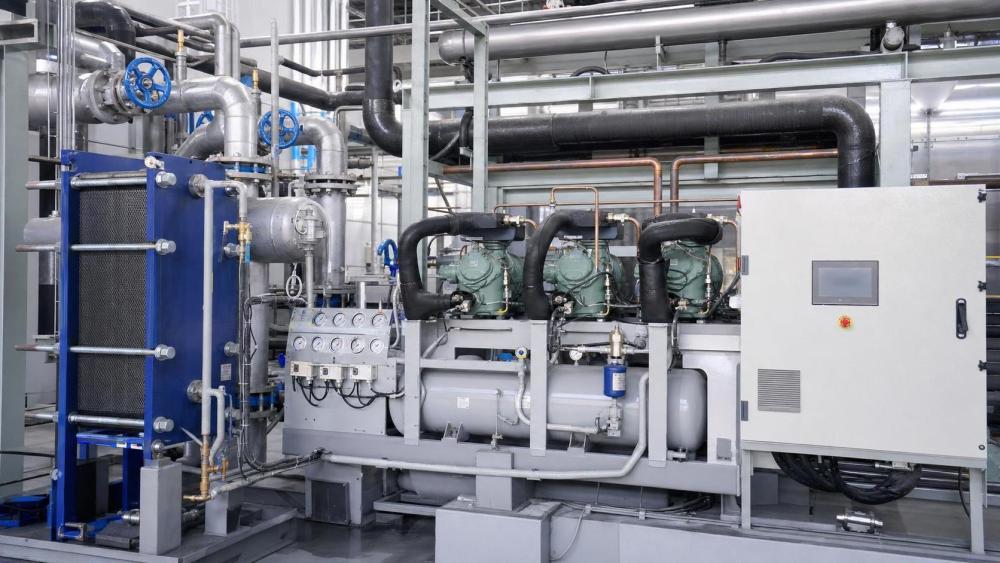
Industrial cooling systems rarely fail from one dramatic event.
More often, several small issues build up until temperature control, pressure balance, or flow stability is lost.
That is why minor alarms deserve attention.
A slightly dirty condenser, a drifting sensor, or a low refrigerant charge can quietly raise energy use for weeks.
Eventually, the system reaches a point where output falls, compressors short cycle, or process equipment overheats.
In practical service work, the fastest diagnosis starts with three checks.
- Has heat transfer dropped because surfaces are fouled or airflow is blocked?
- Has the refrigerant circuit lost charge, become restricted, or trapped non-condensables?
- Has the control side started making bad decisions from weak inputs?
This approach matters across general industry, from food lines to plastics, data rooms, metal processing, and packaging plants.
Different sites use different equipment, but the failure logic stays surprisingly similar.
GTC-Matrix often tracks this connection between thermodynamic behavior and operating risk.
That broader view is useful because many cooling faults are not isolated maintenance events.
They are also linked to energy cost pressure, refrigerant transitions, exchanger design choices, and tighter process tolerances.
Which symptoms usually point to the real fault first?
Not every alarm tells you the root cause.
A high discharge temperature alarm may come from fouling, low charge, poor oil return, or low evaporator load.
The better question is what changed before performance fell.
A short comparison table helps narrow the search quickly.
In many industrial cooling systems, trend history is more valuable than a single reading.
If condensing temperature has been climbing slowly for a month, fouling is more likely than a sudden valve failure.
If suction pressure collapses after filter replacement, airflow direction or damper position may be the hidden issue.
A useful habit is to compare current data with a known stable baseline.
That baseline should include ambient temperature, load condition, compressor amps, approach temperature, and pump or fan status.
When fouled heat exchangers are the problem, what actually fixes it?
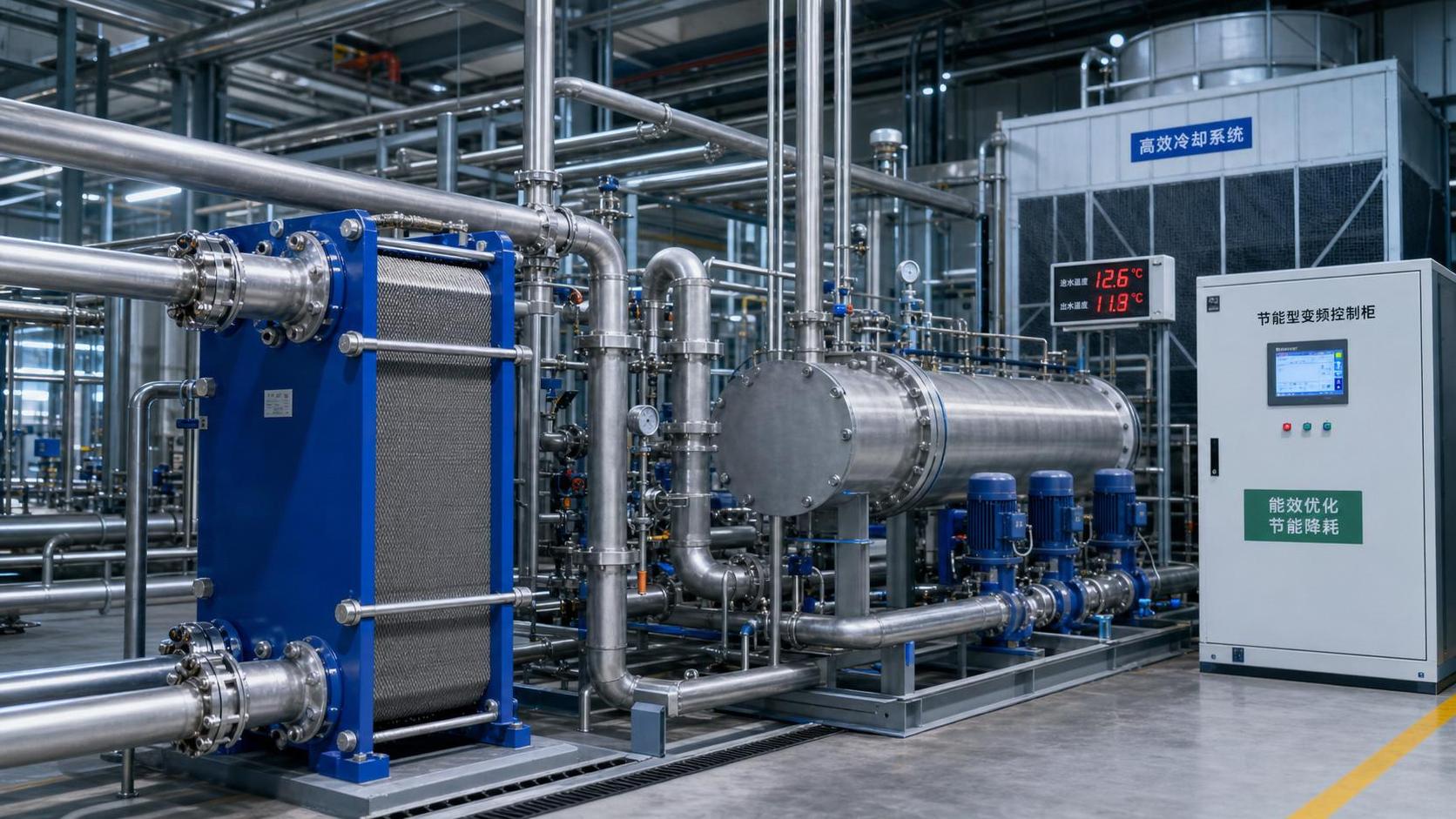
Fouling is still one of the most common causes of weak industrial cooling systems performance.
The reason is simple.
Once heat transfer surfaces are coated with dust, oil film, scale, or biological growth, the whole thermal balance shifts.
Air-cooled equipment shows this through rising head pressure and longer run times.
Water-cooled equipment often shows a wider temperature approach and unstable process temperatures.
The fix depends on the fouling type, not just the location.
- Dust and lint usually respond to low-pressure cleaning and airflow path correction.
- Oil film may need coil-safe detergent and follow-up rinsing.
- Mineral scale often requires water treatment review and chemical descaling.
- Biofouling needs cleaning plus corrective action in the water circuit.
A common mistake is cleaning the visible surface only.
Microchannel coils, plate exchangers, and shell-and-tube bundles can hold contamination deeper than the eye suggests.
If pressure drop and approach temperature remain abnormal after cleaning, internal blockage may still be present.
This is where system knowledge matters.
GTC-Matrix regularly highlights the growing use of compact exchangers and higher-efficiency surfaces.
They improve performance, but they also demand tighter cleaning methods and better water quality discipline.
Could refrigerant issues be hiding behind poor cooling capacity?
Yes, and this happens more often than people expect.
When industrial cooling systems lose capacity, low refrigerant charge gets blamed quickly.
Sometimes that is correct, but not always.
A restricted filter drier, a sticking expansion valve, or non-condensables can mimic similar symptoms.
The safer path is to read the circuit as a whole.
Look at superheat, subcooling, compressor amperage, sight glass behavior, and liquid line temperature together.
If subcooling is low and superheat is high, charge loss becomes more likely.
If subcooling is normal but evaporator feed is poor, a restriction may be the better explanation.
If head pressure is oddly high despite clean heat exchange surfaces, non-condensables deserve attention.
One practical reminder stands out.
Do not recharge before confirming leak location and repair quality.
Repeated topping up hides the real failure, raises compliance risk, and increases operating cost.
This is especially relevant as refrigerant policies tighten and low-GWP options spread.
Changes in refrigerant selection can affect pressure behavior, service procedures, and spare parts planning.
Why do controls and sensors cause so many misleading faults?
Because industrial cooling systems now depend heavily on control logic.
A healthy compressor and a clean exchanger still cannot perform well if the control system reads the plant incorrectly.
In field conditions, sensor drift is often overlooked.
A temperature sensor that is only slightly off can cause poor staging, false freeze protection, or unstable leaving fluid temperature.
Pressure transducers can create similar confusion by shifting the control response away from actual system needs.
More subtle issues appear when drives, pumps, and valves respond at different speeds.
The unit may hunt for setpoint, overshoot, then cycle repeatedly.
When that happens, the fix is rarely replacing parts at random.
A better sequence is usually this.
- Verify sensor accuracy with independent instruments.
- Check trend logs for oscillation patterns and timing gaps.
- Confirm actuator travel, valve authority, and VFD minimum settings.
- Review recent software edits, bypass changes, or wiring work.
This is where a data-centered approach helps most.
GTC-Matrix often connects service decisions with broader efficiency intelligence.
That perspective matters because control errors do more than trigger faults.
They can quietly increase energy intensity across the entire thermal system.
What maintenance mistakes keep the same cooling problem coming back?
Recurring failures usually point to incomplete diagnosis, not bad luck.
Many industrial cooling systems are repaired symptom by symptom, while the original trigger remains active.
For example, a replaced fan motor will not solve chronic high head pressure if condenser cleaning frequency is too low.
A new expansion valve will not hold stable control if the moisture problem upstream was never corrected.
The repeat offenders are usually easy to recognize.
- Skipping baseline data after commissioning or major repair.
- Treating alarms without reviewing load and ambient conditions.
- Ignoring water treatment, filtration, and oil cleanliness together.
- Using fixed service intervals where operating conditions vary widely.
- Replacing controls without validating sensor inputs first.
A stronger practice is condition-based service.
That means using trends, approach temperatures, pressure drop, vibration, and energy draw to decide timing.
It does not need to be complicated.
Even a simple monthly comparison sheet can reveal early drift before downtime appears.
For facilities balancing decarbonization goals with uptime, this is also a cost discipline.
Stable industrial cooling systems usually consume less power and produce fewer emergency interventions.
How should the next troubleshooting step be prioritized?
If a cooling fault has already appeared, priority should follow risk, not convenience.
Start with anything that threatens compressor protection, process temperature limits, or safety controls.
Then move to heat transfer, refrigerant circuit health, and control verification.
That order usually restores stable operation faster than changing parts based on guesswork.
For industrial cooling systems, the most useful next step is often a structured fault record.
Log the symptom, operating condition, measured values, action taken, and final result.
Over time, this turns repeated service calls into a searchable failure map.
That kind of discipline aligns well with the GTC-Matrix view of thermal systems.
Better decisions come from linking field evidence with thermodynamic logic, efficiency trends, and changing technology standards.
If the same fault is recurring, review exchanger cleanliness, charge integrity, sensor accuracy, and control response as one connected system.
That is usually where the durable fix begins.
Related News
- EN 378-1:2026 Tightens EU Export ChecksAuthor :Cryogenic Systems Expert

- How to Compare Semiconductor Cooling Solutions by Heat Load and Uptime RiskAuthor :Cryogenic Systems Expert

- EU Label Deadline Hits China Chiller ExportsAuthor :Cryogenic Systems Expert

- How Smart Thermal Systems Improve Industrial Cooling EfficiencyAuthor :Cryogenic Systems Expert

- How to Choose Process Cooling Equipment for Stable Temperature ControlAuthor :Cryogenic Systems Expert

- EU Finalizes 2026 HFC Quota Cut for R-134a ChillersAuthor :Cryogenic Systems Expert

- EU Tightens HFC-134a Quotas for Industrial ChillersAuthor :Cryogenic Systems Expert

- REACH SVHC Update Pressures HFC-134a Chiller Supply ChainsAuthor :Cryogenic Systems Expert

- EU PFAS Coolant Ban Reshapes Chiller ExportsAuthor :Cryogenic Systems Expert

- EU REACH Restricts PFAS Cooling Media ImportsAuthor :Cryogenic Systems Expert

- EU Ecodesign Rule Takes Effect for Industrial ChillersAuthor :Cryogenic Systems Expert

- EU REACH Rule Takes Effect for PFAS in Industrial Cooling ExportsAuthor :Cryogenic Systems Expert

- Industrial Cooling for Plastic Processing: How to Size for Stable Cycle TimesAuthor :Cryogenic Systems Expert

- EU F-Gas Update Bars R404A/R507 in Commercial CoolingAuthor :Cryogenic Systems Expert

- DOE Raises Chiller Efficiency Standard From October 2026Author :Cryogenic Systems Expert

- India Mandates BIS Energy Certification for Industrial ChillersAuthor :Cryogenic Systems Expert

- Energy-Efficient Heat Exchange for Process Cooling: Cost vs PaybackAuthor :Cryogenic Systems Expert

- EPA R-134a Import Ban Takes Effect on July 13, 2026Author :Cryogenic Systems Expert

- India BIS Rule Takes Effect for Industrial ChillersAuthor :Cryogenic Systems Expert

- EPA Cuts R134a Import Quotas 20% From July 10Author :Cryogenic Systems Expert

- How to Compare Energy-Efficient Cooling Systems for Factory Expansion ProjectsAuthor :Cryogenic Systems Expert

- Chiller Price Index Rises 11.3% in Q2Author :Cryogenic Systems Expert

- Saudi SASO Tightens Chiller Import Compliance From July 10Author :Cryogenic Systems Expert

- Dubai Opens Fast-Track Chiller TendersAuthor :Cryogenic Systems Expert

- Japan Raises Chiller COP Floor to 6.2 From Sept. 1Author :Cryogenic Systems Expert
![]()
- Compact Thermal Management in Smart Devices: Common Failure RisksAuthor :Cryogenic Systems Expert

- Thermal Management for Batteries: Cooling Methods ComparedAuthor :Cryogenic Systems Expert

- How Compact Thermal Design Extends Smart Device UptimeAuthor :Cryogenic Systems Expert

- Shanghai-Rotterdam Reefer Rates Jump 37% in a WeekAuthor :Cryogenic Systems Expert

- Process Cooling Equipment Low Maintenance: What Cuts Downtime Over 5 Years?Author :Cryogenic Systems Expert

- Semiconductor Cooling Solutions: Which Design Works Best for High-Density Tools?Author :Cryogenic Systems Expert

- Semiconductor Thermal Management Systems: Preventing Yield Loss from Heat DriftAuthor :Cryogenic Systems Expert

- EPA Clears R-1234ze(E) for Industrial ChillersAuthor :Cryogenic Systems Expert
 for Industrial Chillers")
- DOE Raises Chiller IEER Floor to 12.8 From Oct. 2026Author :Cryogenic Systems Expert

- Singapore Refrigeration Show Adds Green Compliance HubAuthor :Cryogenic Systems Expert

- How Food Industry Temperature Control Systems Reduce Product LossAuthor :Cryogenic Systems Expert