



EU Sets CFP Label Rules for Industrial Chillers




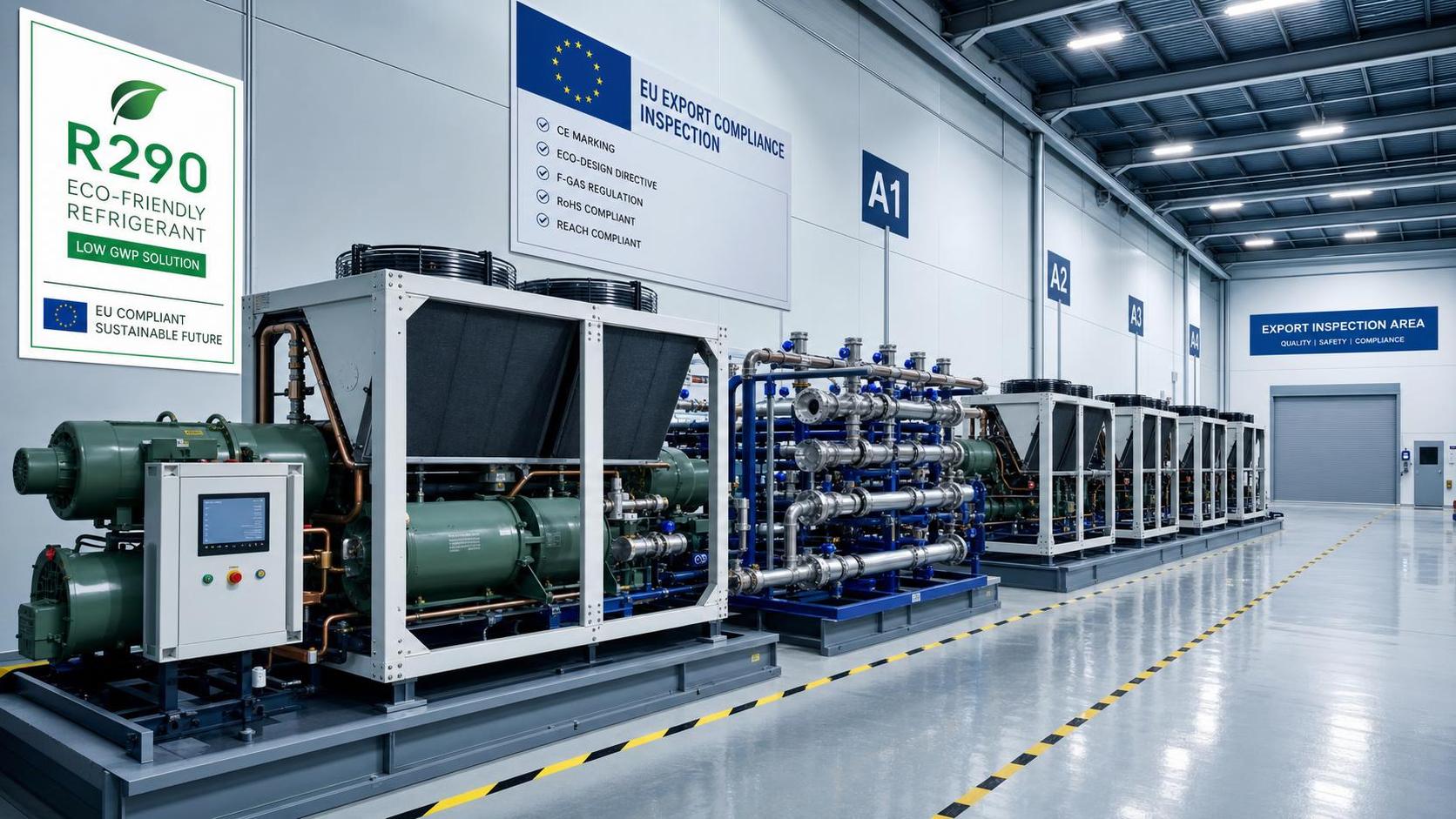
On June 23, 2026, the European Commission released Annex III to Regulation (EU) 2026/1142, setting implementation details for carbon footprint labels on industrial chillers. The change matters because it moves carbon disclosure for products placed on the EU market closer to documentable compliance, affecting manufacturers, exporters, certification-related service providers, procurement teams, and technical delivery functions that must prepare EPD-based and LCA-based product documentation before market placement.
What the new filing requirements now specify
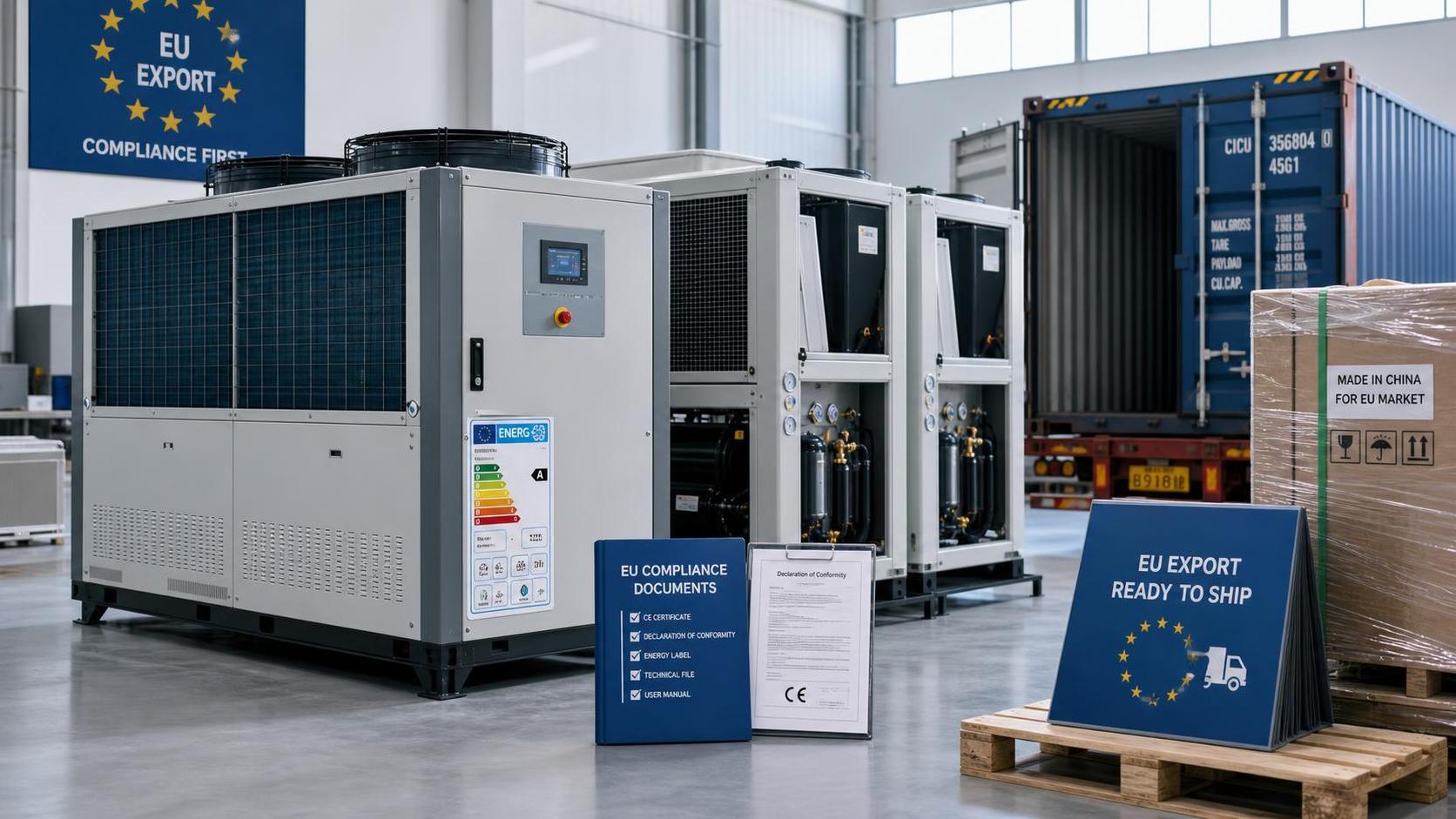
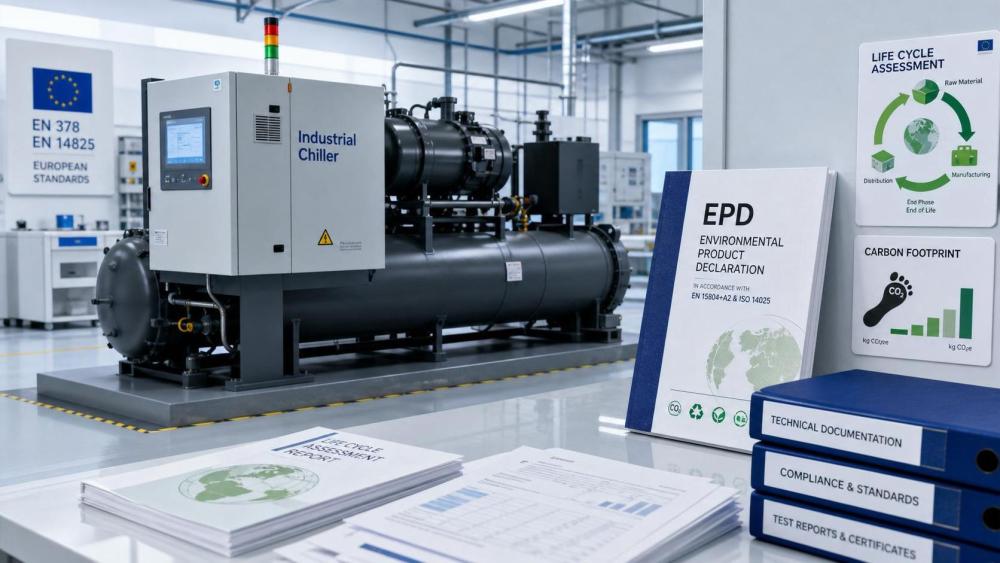
The confirmed facts are limited but clear. According to the released annex, from August 1, 2026, all industrial chiller units placed on the EU market must obtain EPD certification. The technical documentation must also disclose full life-cycle module data for A1–A5, covering raw material acquisition to factory gate stages as described in the input, and C1–C4, covering end-of-life treatment stages. In addition, the documentation must list, in line with ISO 14044, the electricity structure factor, transport distance, and recycling rate parameters as separate items.
The rule change therefore does not only concern the presence of a carbon footprint label. It also defines a more specific documentation boundary and a more itemized disclosure structure for supporting technical files.
Where the operational pressure is likely to appear
Product manufacturers face a documentation threshold, not only a labeling task
From an industry perspective, industrial chiller manufacturers are likely to be affected first because the rule ties EU market placement to EPD certification and to module-based life-cycle disclosure. The practical impact is likely to appear in product technical files, internal data collection, and the alignment between design, sourcing, and compliance teams. What deserves closer attention is whether existing product documentation can already support A1–A5 and C1–C4 disclosure in a form consistent with ISO 14044 parameter listing requirements.
Export and trading teams may need earlier compliance checks before shipment
Analysis shows that exporters and direct trading companies may need to move compliance review forward in the transaction process. If a unit is intended for the EU market, EPD status and the completeness of technical documentation become issues linked to market access rather than optional sustainability communication. This could affect document readiness before delivery, bid submission, or shipment scheduling, especially where commercial teams rely on manufacturers or upstream suppliers for life-cycle inputs.
Certification and testing-related service providers may see higher demand for structured data support
Observably, certification-related companies and testing or documentation service providers may be drawn more deeply into product preparation because the annex points to structured disclosure rather than broad narrative claims. The likely impact is on data formatting, parameter traceability, and consistency between EPD materials and technical files. For these participants, attention may center on how supporting records are organized and whether the stated parameters can be clearly separated and verified in the final documentation package.
Procurement and project delivery teams may need tighter supplier document control
Buyers, project procurement teams, and supply chain service providers may also feel the change through specification review and supplier qualification. Where industrial chillers are procured for EU-bound projects or resale into the EU market, documentation completeness may become part of supplier screening, contract review, and handover requirements. The immediate issue is not only price or delivery timing, but whether suppliers can provide EPD-backed files and the required A1–A5 and C1–C4 module disclosures with the listed ISO 14044-related parameters.
What companies should review now
Check whether existing technical files match the required LCA boundary
Analysis shows that companies should first review whether current product files already cover the required A1–A5 and C1–C4 modules in a complete and usable form. If the existing materials only provide partial carbon information or non-modular summaries, that may create a compliance gap for products intended for the EU market.
Confirm how EPD workstreams connect with product launch and delivery timing
What deserves closer attention is the operational link between EPD certification and market placement from August 1, 2026. Companies may need to examine whether certification preparation, document consolidation, and delivery commitments are aligned, particularly for units already in pipeline planning for the EU market.
Review supplier data collection for the named parameters
Because the annex requires separate listing of electricity structure factor, transport distance, and recycling rate parameters under ISO 14044, companies may need to check whether upstream data requests, internal templates, and supplier declarations are set up to capture those items consistently. This is especially relevant where life-cycle data sits across procurement, manufacturing, and logistics functions.
Watch for execution language in tenders and customer specifications
It is more appropriate to understand this as a compliance signal that may flow into commercial documents as well as technical files. Export teams, bid teams, and after-sales documentation managers may therefore want to monitor whether customer specifications, tender documents, or acceptance requirements begin to reflect EPD status and module-based carbon disclosure expectations.
How this announcement is best understood at this stage
Observably, this development looks less like a general sustainability statement and more like a rule with implementation consequences for documentation and certification. The presence of a start date and named disclosure modules suggests an execution signal rather than a purely directional policy message. At the same time, analysis shows that market participants still need to watch how certification practice, documentation review, and commercial adoption develop in actual transactions and project requirements.
A practical reading for the market
In practical terms, the announcement is best read as a concrete compliance development for industrial chillers entering the EU market. The confirmed change is narrow in scope but specific in execution: EPD certification becomes mandatory, and life-cycle documentation must show defined modules and listed parameters. A neutral reading is that companies should treat this as a rule now close to operational use, while continuing to observe how implementation language appears in certification workflows, procurement documents, and market feedback.
Basis of this article and what still needs verification
This article is generated from the user-provided news title, event date, and event summary. Source types commonly relevant to this kind of development include official regulatory notices, publications by supervisory or regulatory authorities, trade administration information, industry association updates, standard-setting documents, and reporting by authoritative media. A specific official source link was not provided in the input, so the exact official link still needs to be verified. Follow-up attention should remain on detailed implementation language, certification practice, tender document changes, industry feedback, and how companies execute the requirement in real market placements.
Related News
- EN 378-1:2026 Tightens EU Export ChecksAuthor :Cryogenic Systems Expert

- How to Compare Semiconductor Cooling Solutions by Heat Load and Uptime RiskAuthor :Cryogenic Systems Expert

- EU Label Deadline Hits China Chiller ExportsAuthor :Cryogenic Systems Expert

- How Smart Thermal Systems Improve Industrial Cooling EfficiencyAuthor :Cryogenic Systems Expert

- How to Choose Process Cooling Equipment for Stable Temperature ControlAuthor :Cryogenic Systems Expert

- EU Finalizes 2026 HFC Quota Cut for R-134a ChillersAuthor :Cryogenic Systems Expert

- EU Tightens HFC-134a Quotas for Industrial ChillersAuthor :Cryogenic Systems Expert

- REACH SVHC Update Pressures HFC-134a Chiller Supply ChainsAuthor :Cryogenic Systems Expert

- EU PFAS Coolant Ban Reshapes Chiller ExportsAuthor :Cryogenic Systems Expert

- EU REACH Restricts PFAS Cooling Media ImportsAuthor :Cryogenic Systems Expert

- EU Ecodesign Rule Takes Effect for Industrial ChillersAuthor :Cryogenic Systems Expert

- EU REACH Rule Takes Effect for PFAS in Industrial Cooling ExportsAuthor :Cryogenic Systems Expert

- Industrial Cooling for Plastic Processing: How to Size for Stable Cycle TimesAuthor :Cryogenic Systems Expert

- EU F-Gas Update Bars R404A/R507 in Commercial CoolingAuthor :Cryogenic Systems Expert

- DOE Raises Chiller Efficiency Standard From October 2026Author :Cryogenic Systems Expert

- India Mandates BIS Energy Certification for Industrial ChillersAuthor :Cryogenic Systems Expert

- Energy-Efficient Heat Exchange for Process Cooling: Cost vs PaybackAuthor :Cryogenic Systems Expert

- EPA R-134a Import Ban Takes Effect on July 13, 2026Author :Cryogenic Systems Expert

- India BIS Rule Takes Effect for Industrial ChillersAuthor :Cryogenic Systems Expert

- EPA Cuts R134a Import Quotas 20% From July 10Author :Cryogenic Systems Expert

- How to Compare Energy-Efficient Cooling Systems for Factory Expansion ProjectsAuthor :Cryogenic Systems Expert

- Chiller Price Index Rises 11.3% in Q2Author :Cryogenic Systems Expert

- Saudi SASO Tightens Chiller Import Compliance From July 10Author :Cryogenic Systems Expert

- Dubai Opens Fast-Track Chiller TendersAuthor :Cryogenic Systems Expert

- Japan Raises Chiller COP Floor to 6.2 From Sept. 1Author :Cryogenic Systems Expert
![]()
- Compact Thermal Management in Smart Devices: Common Failure RisksAuthor :Cryogenic Systems Expert

- Thermal Management for Batteries: Cooling Methods ComparedAuthor :Cryogenic Systems Expert

- How Compact Thermal Design Extends Smart Device UptimeAuthor :Cryogenic Systems Expert

- Shanghai-Rotterdam Reefer Rates Jump 37% in a WeekAuthor :Cryogenic Systems Expert

- Process Cooling Equipment Low Maintenance: What Cuts Downtime Over 5 Years?Author :Cryogenic Systems Expert

- Semiconductor Cooling Solutions: Which Design Works Best for High-Density Tools?Author :Cryogenic Systems Expert

- Semiconductor Thermal Management Systems: Preventing Yield Loss from Heat DriftAuthor :Cryogenic Systems Expert

- EPA Clears R-1234ze(E) for Industrial ChillersAuthor :Cryogenic Systems Expert
 for Industrial Chillers")
- DOE Raises Chiller IEER Floor to 12.8 From Oct. 2026Author :Cryogenic Systems Expert

- Singapore Refrigeration Show Adds Green Compliance HubAuthor :Cryogenic Systems Expert

- How Food Industry Temperature Control Systems Reduce Product LossAuthor :Cryogenic Systems Expert