



EU Rule Takes Effect on Modular CFP Disclosure for Industrial Chillers




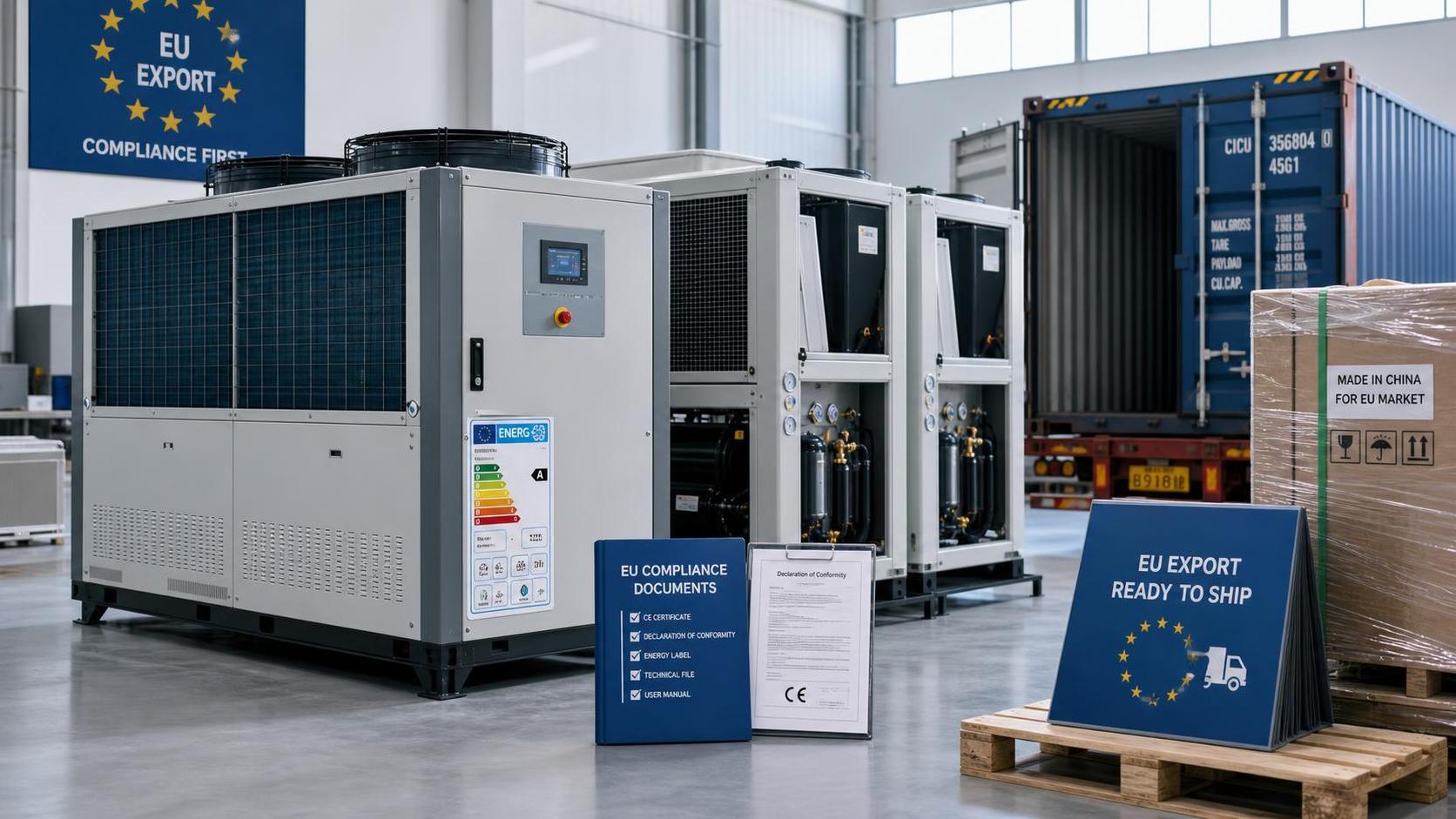
From July 1, 2026, industrial chillers sold in the EU market must be supported by a life cycle assessment report aligned with EN ISO 14040/14044 and presented through a five-part carbon footprint structure covering raw material acquisition, manufacturing, transport, use, and end-of-life recovery. The measure, formally implemented by the European Commission on June 24, 2026 under its Carbon Footprint Labeling (CFP) implementing rules, is especially relevant for exporters, manufacturers, documentation teams, and third-party verification participants because it ties market access more closely to how carbon footprint data is prepared and disclosed.
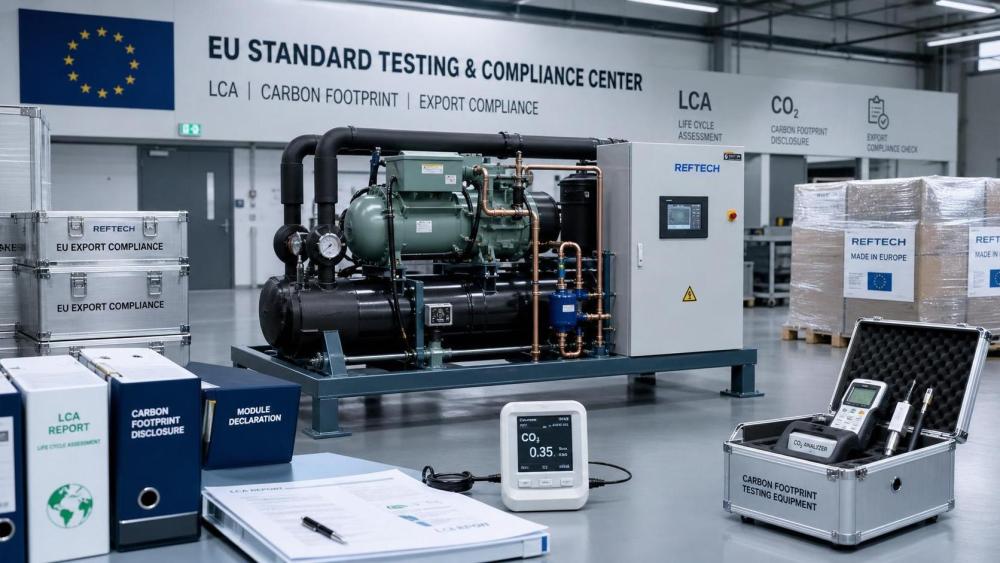
What the new requirement specifically covers
The confirmed requirement applies to all industrial chillers sold in the EU market from the mandatory enforcement date of July 1, 2026.
Under the implemented CFP rules, affected products must be accompanied by a full life cycle assessment report that complies with EN ISO 14040/14044.
The required disclosure is not limited to a single overall footprint figure. The data must be structured into five modules: raw material acquisition, manufacturing, transport, use, and end-of-life recovery.
The information provided also indicates that this requirement directly affects product access to the EU market, the preparation of technical documentation, and the route for third-party verification, with clear implications for Chinese exporters in particular.
Where the impact is likely to appear first
Export-facing product compliance moves to the front
From an industry perspective, companies directly selling industrial chillers into the EU are likely to feel the impact first because product entry is tied to whether the required LCA report and modular disclosure are ready in the expected format. The practical pressure is likely to center on submission readiness, document completeness, and alignment between product data and compliance files.
Manufacturing teams face a deeper documentation burden
Analysis shows that manufacturing businesses may be affected not only by the need to produce equipment, but also by the need to organize carbon footprint information across the full product life cycle structure. The change is likely to be felt in internal data collection, technical file preparation, and coordination between production, engineering, and compliance functions.
Supply chain and service partners become part of the evidence chain
Observably, the five-module format can affect upstream and service-side participants because raw materials, transport, and end-of-life stages all require structured disclosure. For supply chain service providers and verification-related partners, the main issue is less about public messaging and more about whether supporting records can be provided in a form that fits the LCA and third-party review process.
Procurement and EU-side customers may tighten document expectations
What deserves closer attention is that buyers and channel participants connected to the EU market may increasingly focus on whether a supplier can provide compliant LCA materials and module-based carbon footprint data on time. The likely effect is greater scrutiny of document quality, delivery timing, and consistency between commercial and technical submissions.
Practical issues companies should watch now
Whether the LCA file is ready in the required structure
The immediate point is not only having carbon-related information, but having it organized under the five required modules. Companies involved in EU sales should pay close attention to whether existing technical files can support that structure without major rework.
How documentation and verification paths are being aligned
Analysis shows that the rule has a direct connection to third-party verification pathways. That makes document traceability, internal consistency, and version control important practical issues, especially where multiple teams or external service providers contribute to the same compliance package.
Which business steps may face timing pressure
For exporters and delivery teams, a key concern is the possible interaction between compliance preparation and shipment or customer submission schedules. The operational focus should be on whether supporting materials are complete early enough for review, rather than treating the carbon footprint report as a final-stage attachment.
How to separate official requirements from internal assumptions
What deserves closer attention is the distinction between the confirmed rule and company interpretations built around it. The confirmed facts are the enforcement date, the EN ISO 14040/14044 LCA requirement, and the five-module disclosure structure. Any broader operational assumption should still be checked carefully against subsequent official wording and actual customer requirements.
Why this matters beyond a single filing task
Observably, this development can be read as more than a documentation adjustment. The rule links market access for industrial chillers in the EU to a more structured presentation of life cycle carbon data, which suggests that compliance work is moving closer to product definition and transaction readiness.
Analysis shows that it is more appropriate to understand this as both an immediate compliance change and a longer-term signal about how environmental product information may be expected to function in cross-border industrial trade. At the same time, it should not be treated as a basis for broader conclusions that go beyond the confirmed text provided here.
How the industry may best interpret this stage
At this point, the most balanced reading is that the rule has already created a concrete compliance threshold for industrial chillers sold into the EU from July 1, 2026. For the industry, the significance lies less in abstract sustainability language and more in the operational need to prepare LCA-based, module-specific data in a way that supports product access, documentation review, and verification.
It is more appropriate to understand this as a confirmed short-term requirement with longer-term signaling value, while continuing to watch how implementation details are interpreted in actual business practice.
Basis of this article and what still needs checking
This article is generated from the user-provided news title, event date, and event summary concerning the European Commission's implementation of CFP rules for industrial chillers.
For this type of industry update, relevant source categories usually include official announcements, company statements, industry association releases, authoritative media reporting, and standards-related documents. A specific official source link was not provided in the input, so the precise source document and any later clarifications still need ongoing verification.
Areas that remain worth following include any subsequent official wording, implementation interpretations in actual documentation practice, and how third-party verification pathways are applied in real transactions.
Related News
- EN 378-1:2026 Tightens EU Export ChecksAuthor :Cryogenic Systems Expert

- How to Compare Semiconductor Cooling Solutions by Heat Load and Uptime RiskAuthor :Cryogenic Systems Expert

- EU Label Deadline Hits China Chiller ExportsAuthor :Cryogenic Systems Expert

- How Smart Thermal Systems Improve Industrial Cooling EfficiencyAuthor :Cryogenic Systems Expert

- How to Choose Process Cooling Equipment for Stable Temperature ControlAuthor :Cryogenic Systems Expert

- EU Finalizes 2026 HFC Quota Cut for R-134a ChillersAuthor :Cryogenic Systems Expert

- EU Tightens HFC-134a Quotas for Industrial ChillersAuthor :Cryogenic Systems Expert

- REACH SVHC Update Pressures HFC-134a Chiller Supply ChainsAuthor :Cryogenic Systems Expert

- EU PFAS Coolant Ban Reshapes Chiller ExportsAuthor :Cryogenic Systems Expert

- EU REACH Restricts PFAS Cooling Media ImportsAuthor :Cryogenic Systems Expert

- EU Ecodesign Rule Takes Effect for Industrial ChillersAuthor :Cryogenic Systems Expert

- EU REACH Rule Takes Effect for PFAS in Industrial Cooling ExportsAuthor :Cryogenic Systems Expert

- Industrial Cooling for Plastic Processing: How to Size for Stable Cycle TimesAuthor :Cryogenic Systems Expert

- EU F-Gas Update Bars R404A/R507 in Commercial CoolingAuthor :Cryogenic Systems Expert

- DOE Raises Chiller Efficiency Standard From October 2026Author :Cryogenic Systems Expert

- India Mandates BIS Energy Certification for Industrial ChillersAuthor :Cryogenic Systems Expert

- Energy-Efficient Heat Exchange for Process Cooling: Cost vs PaybackAuthor :Cryogenic Systems Expert

- EPA R-134a Import Ban Takes Effect on July 13, 2026Author :Cryogenic Systems Expert

- India BIS Rule Takes Effect for Industrial ChillersAuthor :Cryogenic Systems Expert

- EPA Cuts R134a Import Quotas 20% From July 10Author :Cryogenic Systems Expert

- How to Compare Energy-Efficient Cooling Systems for Factory Expansion ProjectsAuthor :Cryogenic Systems Expert

- Chiller Price Index Rises 11.3% in Q2Author :Cryogenic Systems Expert

- Saudi SASO Tightens Chiller Import Compliance From July 10Author :Cryogenic Systems Expert

- Dubai Opens Fast-Track Chiller TendersAuthor :Cryogenic Systems Expert

- Japan Raises Chiller COP Floor to 6.2 From Sept. 1Author :Cryogenic Systems Expert
![]()
- Compact Thermal Management in Smart Devices: Common Failure RisksAuthor :Cryogenic Systems Expert

- Thermal Management for Batteries: Cooling Methods ComparedAuthor :Cryogenic Systems Expert

- How Compact Thermal Design Extends Smart Device UptimeAuthor :Cryogenic Systems Expert

- Shanghai-Rotterdam Reefer Rates Jump 37% in a WeekAuthor :Cryogenic Systems Expert

- Process Cooling Equipment Low Maintenance: What Cuts Downtime Over 5 Years?Author :Cryogenic Systems Expert

- Semiconductor Cooling Solutions: Which Design Works Best for High-Density Tools?Author :Cryogenic Systems Expert

- Semiconductor Thermal Management Systems: Preventing Yield Loss from Heat DriftAuthor :Cryogenic Systems Expert

- EPA Clears R-1234ze(E) for Industrial ChillersAuthor :Cryogenic Systems Expert
 for Industrial Chillers")
- DOE Raises Chiller IEER Floor to 12.8 From Oct. 2026Author :Cryogenic Systems Expert

- Singapore Refrigeration Show Adds Green Compliance HubAuthor :Cryogenic Systems Expert

- How Food Industry Temperature Control Systems Reduce Product LossAuthor :Cryogenic Systems Expert