Industrial Cooling Solutions: How to Cut Energy Use Without Losing Capacity




Industrial Cooling Solutions: How to Cut Energy Use Without Losing Capacity
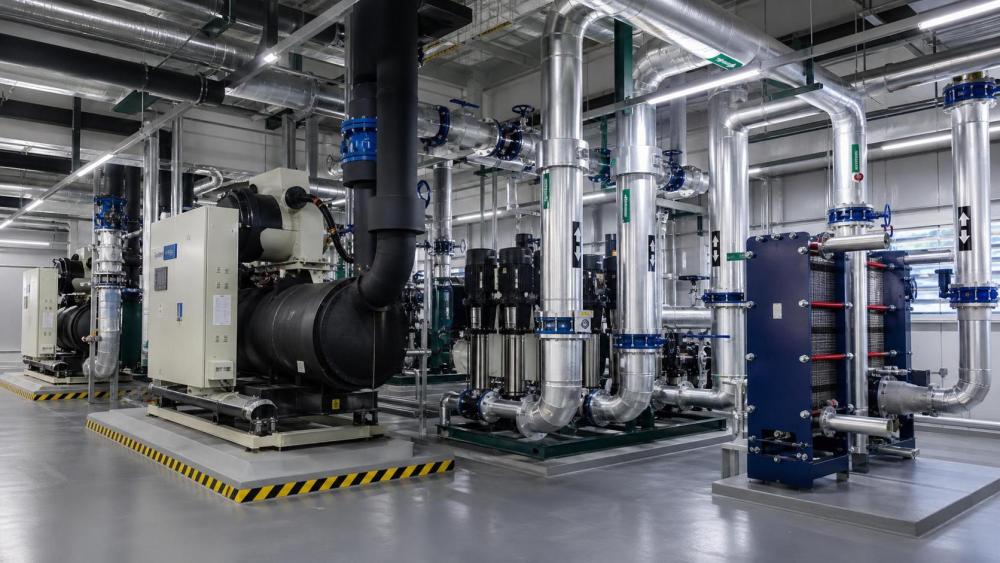
Industrial cooling solutions are under pressure to deliver stable performance with lower power use. That pressure is now coming from energy prices, emissions targets, and tighter production tolerances.
For many facilities, the real issue is not cooling alone. It is how to reduce total system energy without creating process risk, hidden downtime, or quality drift.
That is why better industrial cooling solutions start with a business view. The goal is not just lower kilowatt-hours. The goal is preserved capacity, predictable output, and stronger operating margins.
From recent market signals, one pattern is clear. Companies that win on energy efficiency usually improve controls, heat exchange, and load matching at the same time.
In practice, this means moving away from oversized equipment and reactive maintenance. It means building industrial cooling solutions around data, operating profiles, and realistic demand variation.
Why energy waste happens in cooling systems
Many plants assume their cooling systems are efficient because temperatures stay within target. That assumption often hides major losses in part-load operation, poor airflow, and aging heat exchangers.
The most common problem is mismatch. Equipment is selected for peak design days, but most production hours run far below that load.
When chillers, pumps, and fans run inefficiently at partial demand, energy intensity climbs. Cooling capacity may remain available, but each unit of cooling costs more.
Another issue is control fragmentation. Separate cooling assets may work against each other, especially across compressed air, process cooling, and ventilation systems.
This is where intelligence matters. Platforms such as GTC-Matrix highlight how thermodynamic behavior, utility pricing, and equipment condition shape the real efficiency picture.
- Oversized chillers force inefficient cycling.
- Dirty coils reduce heat transfer performance.
- Fixed-speed drives waste energy at low load.
- Weak controls create unstable supply temperatures.
- Poor maintenance increases pressure drop and power draw.
How to cut energy use without losing cooling capacity
The best industrial cooling solutions do not begin with equipment replacement. They begin with identifying where capacity is being wasted, stranded, or poorly controlled.
1. Match output to real demand
Variable-speed compressors, pumps, and fans can transform efficiency at part load. They reduce unnecessary power draw while keeping process temperatures stable.
This is especially useful in facilities with changing batch schedules, seasonal swings, or mixed production lines. Load matching is often the fastest route to better industrial cooling solutions.
2. Improve heat exchange first
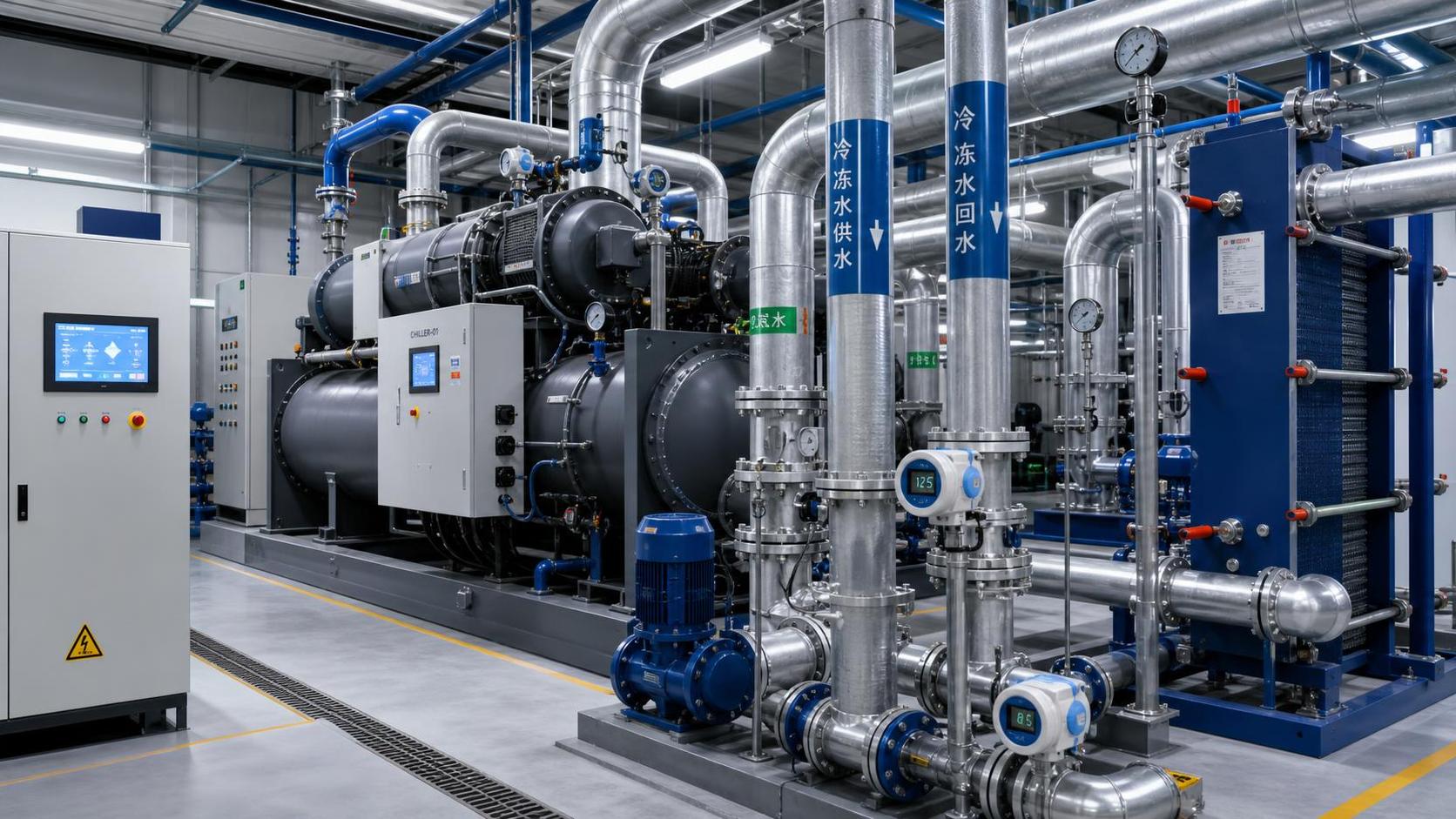
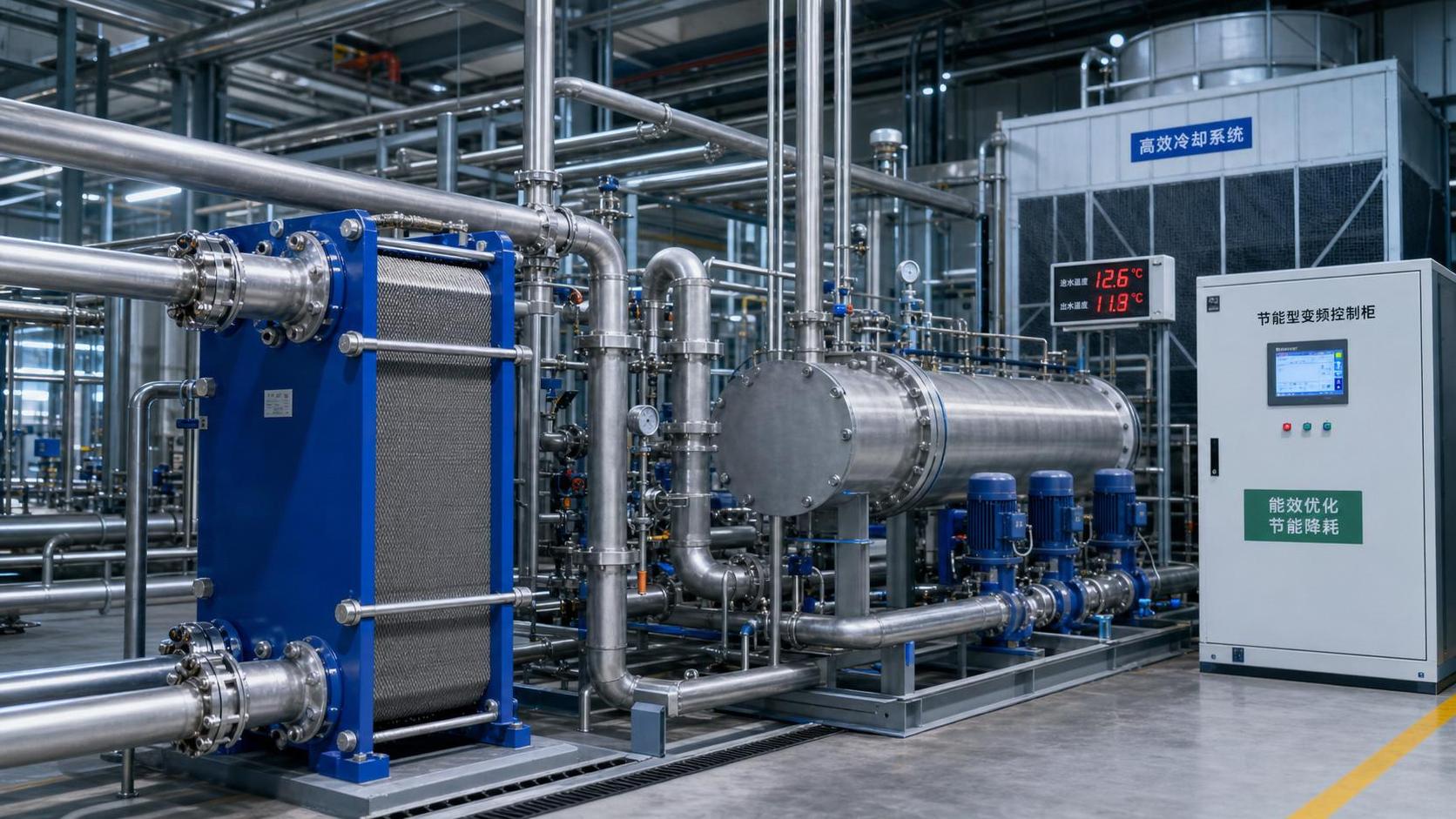
Heat exchangers are often treated as passive hardware. In reality, they determine how hard the entire cooling system must work.
Microchannel technology, cleaner surfaces, and better fluid management can reduce approach temperatures. That translates into lower compressor lift and lower energy consumption.
3. Use smarter control logic
Setpoints should reflect process risk, not outdated habits. Many sites run colder than necessary because nobody wants to be blamed for a temperature excursion.
A small setpoint adjustment, backed by data, can cut energy use materially. Done carefully, it protects output while improving overall system efficiency.
4. Recover waste heat where possible
Some industrial cooling solutions create value beyond cooling. Waste heat from compressors or condensers can support hot water, preheating, or adjacent thermal processes.
That changes the investment case. Instead of viewing cooling as a pure cost center, it becomes part of broader energy optimization.
Technology trends changing industrial cooling solutions
The market is moving quickly, and not every trend matters equally. The most valuable upgrades are the ones that improve control, heat transfer, and refrigerant strategy together.
Oil-free compression
Oil-free systems can improve efficiency in sensitive sectors where purity and temperature consistency matter. They also reduce contamination risk in food, pharma, and electronics settings.
Low-GWP refrigerant planning
Refrigerant policy is becoming a board-level issue. Cooling investments made today should account for quota pressure, service availability, and long-term compliance risk.
Digital monitoring and predictive service
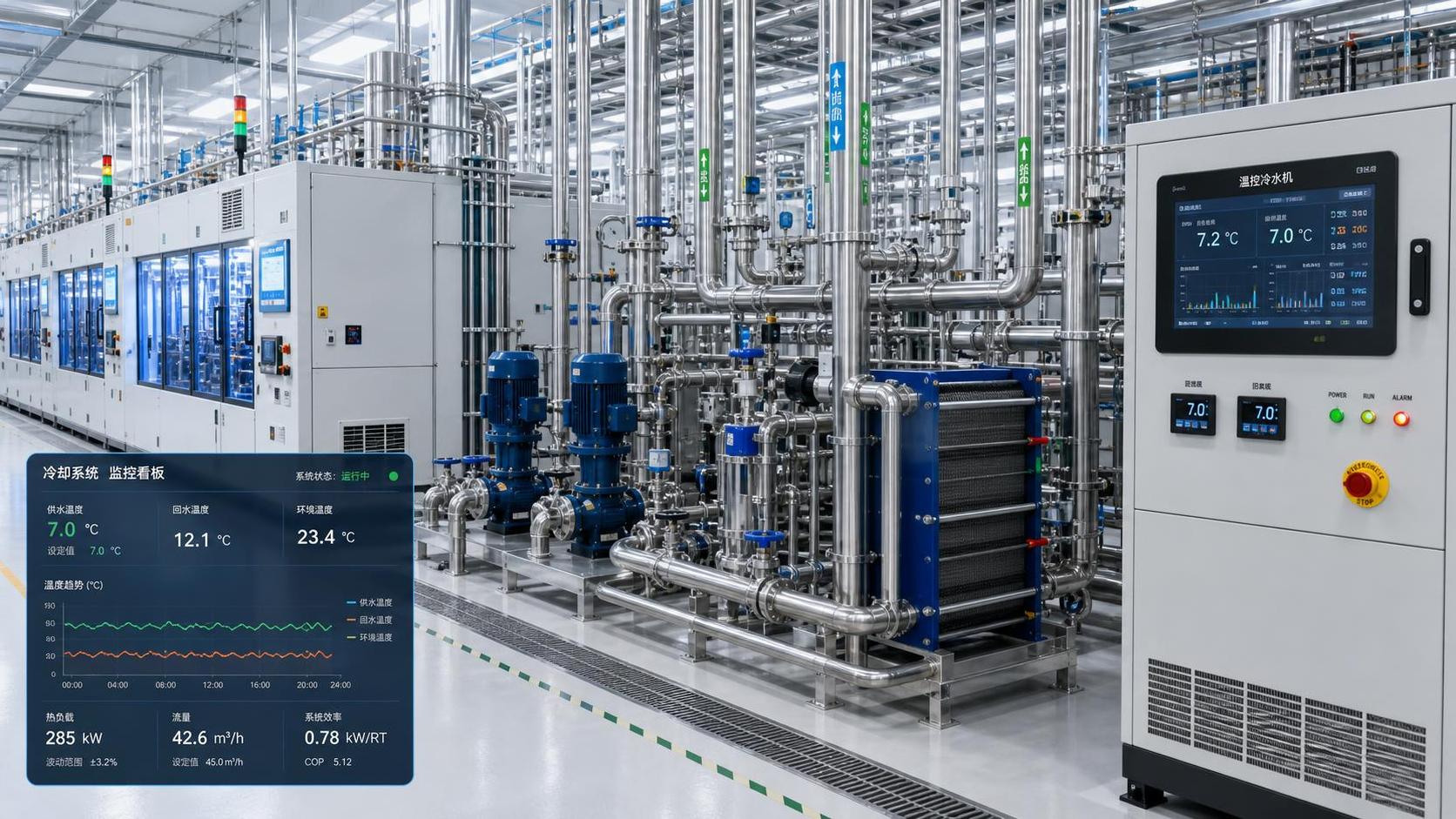
Sensors now make it easier to track approach temperature, pressure drop, cycling frequency, and specific energy use. Those signals reveal when industrial cooling solutions are losing efficiency before failure occurs.
This also supports better capital timing. Instead of replacing assets too early or too late, operations can act when performance data justifies the move.
A practical decision framework for investment
Choosing industrial cooling solutions should not rely on nameplate efficiency alone. A better decision comes from comparing technical fit, lifecycle cost, and operational resilience.
A useful framework starts with four questions. Where is energy being lost today? Which loads are critical? What is the part-load profile? How expensive is unplanned downtime?
This kind of structured view is where GTC-Matrix adds value. Its intelligence lens connects thermodynamics, policy, and commercial signals, helping teams make better cooling decisions with less guesswork.
Where industrial cooling solutions deliver the fastest returns
Not every project needs a full system overhaul. In many cases, the highest-return industrial cooling solutions are focused upgrades with measurable impact.
- Retrofit variable-speed drives on pumps and condenser fans.
- Clean or replace fouled heat exchangers and coils.
- Reset chilled water or process temperature targets carefully.
- Integrate cooling controls with compressed air and process loads.
- Install monitoring for specific energy consumption and thermal drift.
These actions are practical because they reduce waste before adding complexity. They also create better data for future capital planning.
More importantly, they help prove that industrial cooling solutions can lower energy use without weakening output. That proof is often what unlocks larger modernization budgets.
Common risks to watch during optimization
Energy-saving projects can fail when they ignore production realities. A cooling strategy that looks efficient on paper may create instability under actual operating conditions.
One risk is chasing peak efficiency while reducing redundancy too far. Another is changing setpoints without validating product sensitivity or ambient variation.
There is also a data quality risk. If sensors are drifting or metrics are inconsistent, teams may draw the wrong conclusions about system performance.
The safer path is staged optimization. Test, measure, compare, and scale. That approach keeps industrial cooling solutions aligned with business continuity.
Conclusion: make cooling efficiency a strategic advantage
Industrial cooling solutions are no longer a background utility choice. They directly affect cost competitiveness, sustainability performance, and production reliability.
The strongest results usually come from coordinated action. Better controls, better heat exchange, better load matching, and better intelligence work best together.
For companies planning the next step, the priority is simple. Start with a system-level review, identify part-load losses, and rank upgrades by operational value.
With that foundation, industrial cooling solutions become more than an energy-saving initiative. They become a practical route to resilient, high-efficiency manufacturing.
A disciplined, intelligence-led approach, supported by insights like those from GTC-Matrix, helps turn cooling decisions into long-term performance gains.
Related News
- How to Compare Semiconductor Cooling Solutions by Heat Load and Uptime RiskAuthor :Cryogenic Systems Expert

- EU Label Deadline Hits China Chiller ExportsAuthor :Cryogenic Systems Expert

- How Smart Thermal Systems Improve Industrial Cooling EfficiencyAuthor :Cryogenic Systems Expert

- How to Choose Process Cooling Equipment for Stable Temperature ControlAuthor :Cryogenic Systems Expert

- EU Finalizes 2026 HFC Quota Cut for R-134a ChillersAuthor :Cryogenic Systems Expert

- EU Tightens HFC-134a Quotas for Industrial ChillersAuthor :Cryogenic Systems Expert

- REACH SVHC Update Pressures HFC-134a Chiller Supply ChainsAuthor :Cryogenic Systems Expert

- EU PFAS Coolant Ban Reshapes Chiller ExportsAuthor :Cryogenic Systems Expert

- EU REACH Restricts PFAS Cooling Media ImportsAuthor :Cryogenic Systems Expert

- EU Ecodesign Rule Takes Effect for Industrial ChillersAuthor :Cryogenic Systems Expert

- EU REACH Rule Takes Effect for PFAS in Industrial Cooling ExportsAuthor :Cryogenic Systems Expert

- Industrial Cooling for Plastic Processing: How to Size for Stable Cycle TimesAuthor :Cryogenic Systems Expert

- EU F-Gas Update Bars R404A/R507 in Commercial CoolingAuthor :Cryogenic Systems Expert

- DOE Raises Chiller Efficiency Standard From October 2026Author :Cryogenic Systems Expert

- India Mandates BIS Energy Certification for Industrial ChillersAuthor :Cryogenic Systems Expert

- Energy-Efficient Heat Exchange for Process Cooling: Cost vs PaybackAuthor :Cryogenic Systems Expert

- EPA R-134a Import Ban Takes Effect on July 13, 2026Author :Cryogenic Systems Expert

- India BIS Rule Takes Effect for Industrial ChillersAuthor :Cryogenic Systems Expert

- EPA Cuts R134a Import Quotas 20% From July 10Author :Cryogenic Systems Expert

- How to Compare Energy-Efficient Cooling Systems for Factory Expansion ProjectsAuthor :Cryogenic Systems Expert

- Chiller Price Index Rises 11.3% in Q2Author :Cryogenic Systems Expert

- Saudi SASO Tightens Chiller Import Compliance From July 10Author :Cryogenic Systems Expert

- Dubai Opens Fast-Track Chiller TendersAuthor :Cryogenic Systems Expert

- Japan Raises Chiller COP Floor to 6.2 From Sept. 1Author :Cryogenic Systems Expert
![]()
- Compact Thermal Management in Smart Devices: Common Failure RisksAuthor :Cryogenic Systems Expert

- Thermal Management for Batteries: Cooling Methods ComparedAuthor :Cryogenic Systems Expert

- How Compact Thermal Design Extends Smart Device UptimeAuthor :Cryogenic Systems Expert

- Shanghai-Rotterdam Reefer Rates Jump 37% in a WeekAuthor :Cryogenic Systems Expert

- Process Cooling Equipment Low Maintenance: What Cuts Downtime Over 5 Years?Author :Cryogenic Systems Expert

- Semiconductor Cooling Solutions: Which Design Works Best for High-Density Tools?Author :Cryogenic Systems Expert

- Semiconductor Thermal Management Systems: Preventing Yield Loss from Heat DriftAuthor :Cryogenic Systems Expert

- EPA Clears R-1234ze(E) for Industrial ChillersAuthor :Cryogenic Systems Expert
 for Industrial Chillers")
- DOE Raises Chiller IEER Floor to 12.8 From Oct. 2026Author :Cryogenic Systems Expert

- Singapore Refrigeration Show Adds Green Compliance HubAuthor :Cryogenic Systems Expert

- How Food Industry Temperature Control Systems Reduce Product LossAuthor :Cryogenic Systems Expert

- EU REACH Adds 12 SVHCs, Raising Chiller Compliance RiskAuthor :Cryogenic Systems Expert