



India BIS Tightens QR Label Rule for Industrial Chillers




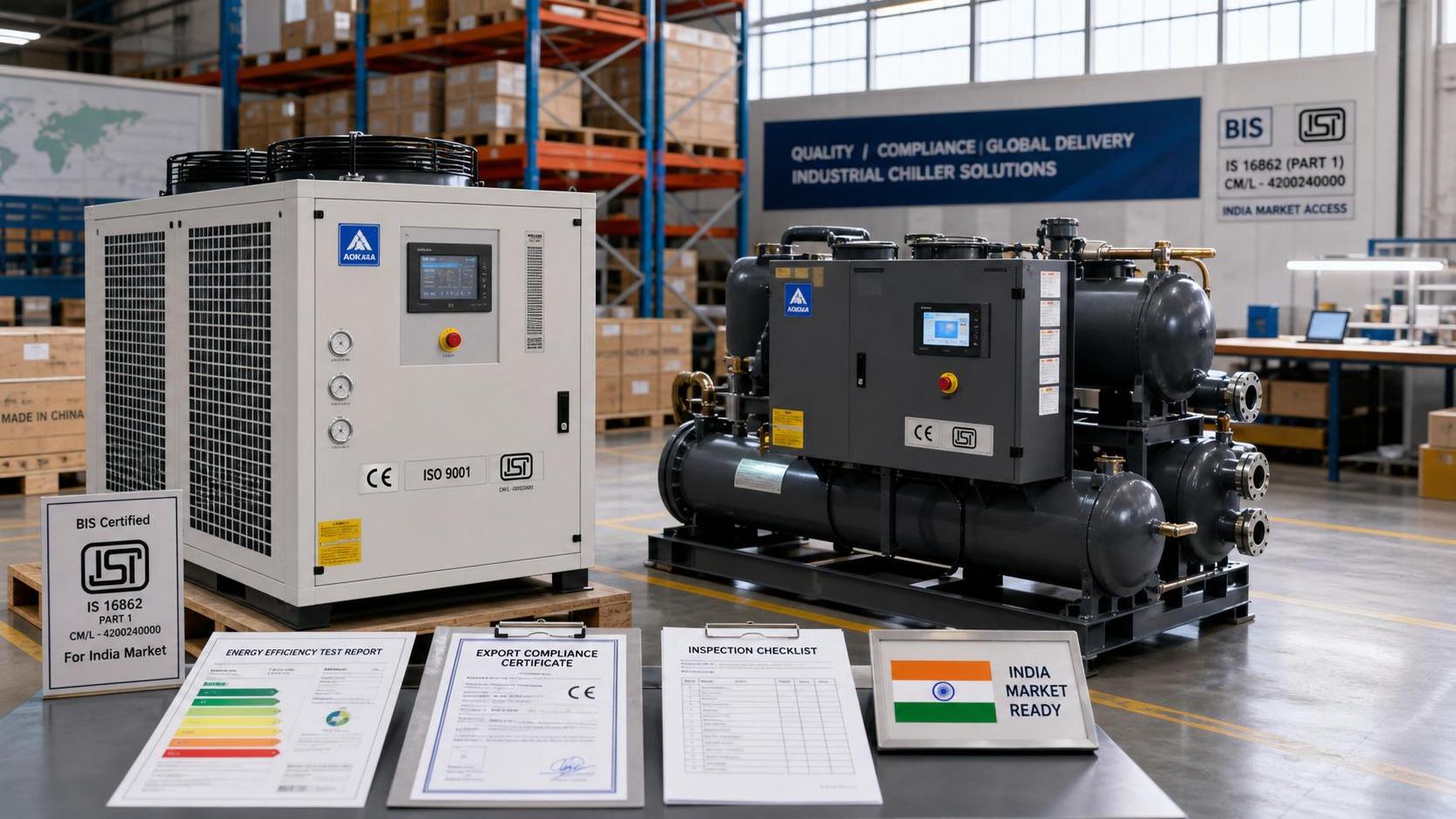
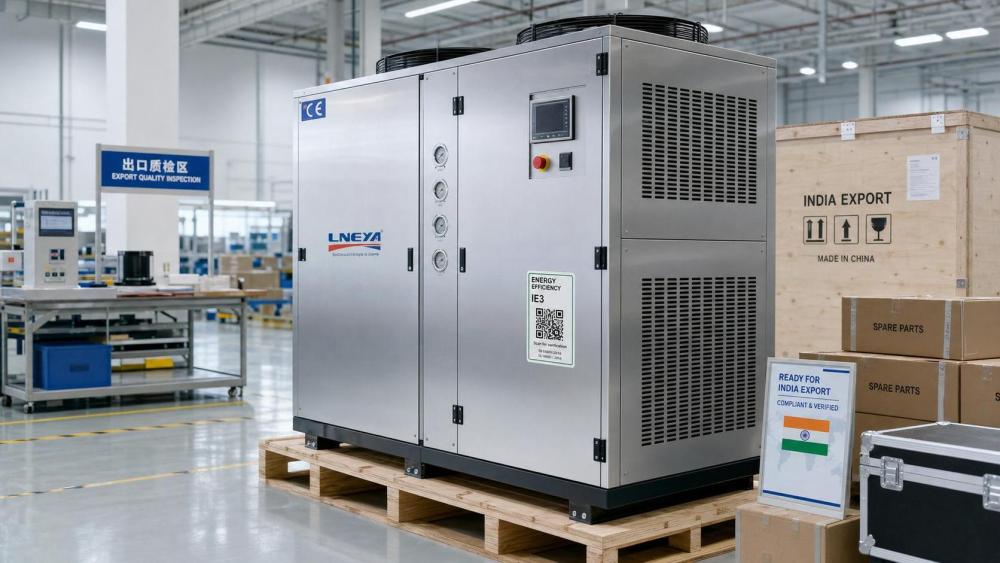
On June 26, 2026, India’s Bureau of Indian Standards (BIS) issued Amendment No. 2 to IS 16845:2026, adding a new compliance requirement for imported industrial chillers. From October 1, 2026, these products must carry a dynamic QR-code energy label next to the nameplate, with the code linking to the BIS official database for real-time verification of energy performance and an ISEER threshold of at least 3.5. For exporters, import-facing suppliers, labeling service providers, and buyers working on India-bound shipments, the update is worth close attention because it connects product compliance more directly with labeling execution, quotation structure, and delivery readiness.
What the amendment explicitly requires
The confirmed facts are limited but clear. BIS released Amendment No. 2 to IS 16845:2026 on June 26, 2026. The amendment sets October 1, 2026 as the effective date for a new labeling requirement covering imported industrial chillers. Under this rule, the product must display a dynamic QR-code energy label beside the nameplate. The QR code must connect to the BIS official database so that the product’s energy rating can be verified in real time. The stated energy performance benchmark in the input is ISEER not lower than 3.5.
The input information also indicates that the rule is expected to affect export quotation structures for China-to-India trade and increase demand for localized labeling services. Beyond that, no further official implementation detail has been provided in the input.
Where the immediate business pressure may appear
Export transactions may face a pricing and execution adjustment
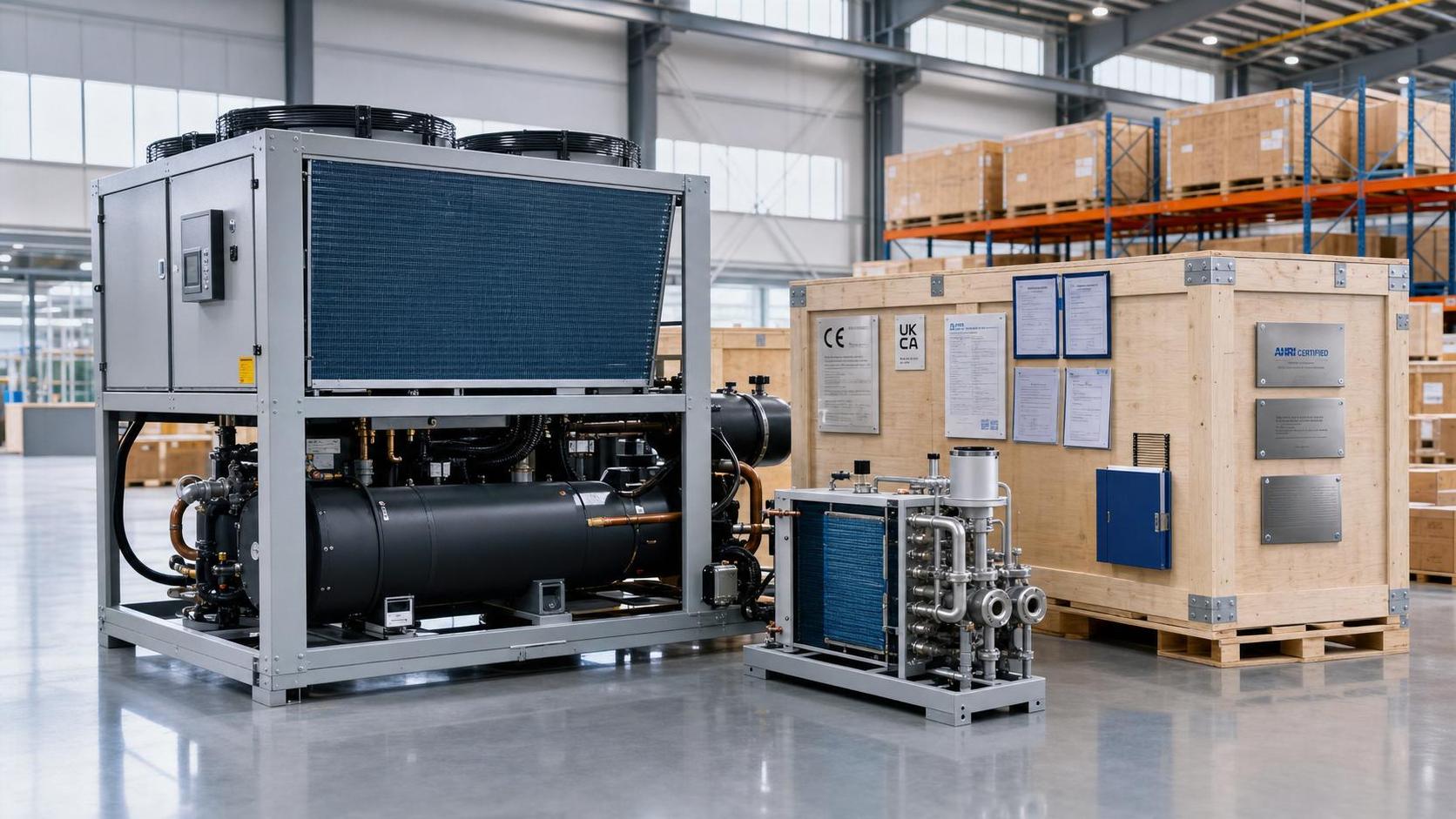
From an industry perspective, exporters of industrial chillers to India may be affected first at the quotation and shipment-preparation stage. The reason is straightforward: compliance is no longer only about certification status, but also about whether the required dynamic QR-code energy label is properly prepared and placed next to the nameplate before products enter the market. What deserves closer attention is whether pricing models, document coordination, and final pre-shipment checks now need to absorb this additional compliance step.
Manufacturing and finishing stages may need tighter label coordination
For manufacturers and processing partners, the likely impact is concentrated in the finishing stage of the product, especially where nameplates, energy labels, and export-market identifiers are applied. Analysis shows that even a narrow rule focused on label format and placement can create operational pressure if internal workflows were built around earlier labeling assumptions. The practical issue is less about redesigning the entire product and more about making sure the physical labeling step aligns with the BIS verification mechanism described in the amendment.
Localized service providers may see more demand around compliance support
The input specifically notes rising demand for localized labeling services. Observably, that points to service providers involved in label production, compliance coordination, and market-entry support. Their role may become more important where exporters need market-specific execution close to delivery timelines. The business question is whether service support can keep pace with rule timing, label accuracy, and coordination with official verification requirements.
Buyers and import-side operators may pay more attention to shipment readiness
For procurement teams, importers, and downstream users sourcing industrial chillers for the Indian market, the rule may shift more attention to compliance readiness before shipment or acceptance. Analysis shows that the QR-code label requirement is not only a packaging detail; it can also become part of supplier communication, acceptance checks, and delivery timing. Buyers may therefore need to ask earlier how exporters will handle the BIS-linked label requirement in practice.
What companies should watch now
Track whether BIS provides further implementation wording
The amendment gives the effective date and core requirement, but the input does not include more detailed official guidance. What deserves closer attention is whether BIS later clarifies operational points such as label generation procedures, update responsibility for dynamic QR codes, or documentary alignment with import processes. Companies should separate the confirmed rule from any market assumptions until additional wording is available.
Review how the label requirement changes shipment preparation
For companies already exporting or preparing to export industrial chillers to India, the immediate practical issue is whether current shipment workflows can accommodate a QR-code energy label positioned next to the nameplate. This is a narrow but important execution detail. Observably, any gap between certification paperwork and on-product labeling could create friction in handover, inspection, or customer acceptance.
Recalculate quotation logic for India-bound orders
The input states that the new rule will affect export quotation structures for China-to-India business. Analysis shows that companies should therefore review whether quotations need to reflect additional labeling work, local coordination, or compliance handling steps tied to this market. The key point is not to assume the pricing effect is universal across all orders, but to identify where India-specific execution now adds a distinct cost or service layer.
Strengthen customer and supplier communication around timelines
Where multiple parties are involved, the issue is likely to be timing as much as compliance. Exporters, component partners, labeling providers, and buyers may need clearer alignment on who is responsible for the final QR-code label, when it is applied, and how readiness is confirmed before dispatch. From an industry perspective, this is the kind of rule change that can appear limited on paper but still affect delivery coordination if responsibilities are left vague.
Why this looks more like a compliance signal than a one-off label change
Analysis shows that this update should not be read only as a packaging adjustment. By requiring a dynamic QR code linked to the BIS official database for real-time verification, the amendment points to a more traceable and more actively verifiable compliance approach. That does not, by itself, prove a broader regulatory shift beyond this product category, and the input does not support that conclusion as a confirmed fact. Still, it is more appropriate to understand this as a meaningful compliance signal for companies serving the Indian market, especially where labeling, certification, and transaction execution are closely connected.
Observably, the rule has both a short-term and a watch-list dimension. In the short term, it creates a concrete deadline and a specific operational requirement for imported industrial chillers. Over the longer view, the industry may want to watch whether similar verification logic appears in other product categories or related compliance processes. At this stage, that remains an area for continued observation rather than a confirmed outcome.
How this update is best understood at this stage
The most grounded reading of this development is that India has added a more specific and more execution-sensitive compliance requirement for imported industrial chillers. The immediate significance lies in the link between BIS certification visibility, product labeling beside the nameplate, and real-time energy-rating verification through an official database. For affected businesses, the practical impact is likely to appear first in quotations, labeling workflows, supplier coordination, and order readiness.
It is more appropriate to understand this as a concrete short-term rule change with possible longer-term signaling value. The rule itself is confirmed; the wider market consequences still need to be monitored through actual implementation and any further official clarification.
Basis of this article and what still needs verification
This article is based on the user-provided news title, event date, and event summary concerning the BIS amendment for imported industrial chillers in India. The input identifies the event date as June 26, 2026 and states that BIS issued Amendment No. 2 to IS 16845:2026, with the new QR-code energy label requirement taking effect on October 1, 2026.
For this type of industry update, relevant source categories typically include official notices, standard organization documents, enterprise compliance disclosures, industry association updates, and reporting from authoritative trade media. No specific official source link was provided in the input, so the exact publication record and any subsequent interpretive guidance still require ongoing verification. Follow-up attention should focus on any further BIS wording, implementation detail, and practical compliance expectations affecting labeling and export execution.
Related News
- EPA Rule Takes Effect for R-410A Equipment ImportsAuthor :Cryogenic Systems Expert

- EN 378-1:2026 Tightens EU Export ChecksAuthor :Cryogenic Systems Expert

- How to Compare Semiconductor Cooling Solutions by Heat Load and Uptime RiskAuthor :Cryogenic Systems Expert

- EU Label Deadline Hits China Chiller ExportsAuthor :Cryogenic Systems Expert

- How Smart Thermal Systems Improve Industrial Cooling EfficiencyAuthor :Cryogenic Systems Expert

- How to Choose Process Cooling Equipment for Stable Temperature ControlAuthor :Cryogenic Systems Expert

- EU Finalizes 2026 HFC Quota Cut for R-134a ChillersAuthor :Cryogenic Systems Expert

- EU Tightens HFC-134a Quotas for Industrial ChillersAuthor :Cryogenic Systems Expert

- REACH SVHC Update Pressures HFC-134a Chiller Supply ChainsAuthor :Cryogenic Systems Expert

- EU PFAS Coolant Ban Reshapes Chiller ExportsAuthor :Cryogenic Systems Expert

- EU REACH Restricts PFAS Cooling Media ImportsAuthor :Cryogenic Systems Expert

- EU Ecodesign Rule Takes Effect for Industrial ChillersAuthor :Cryogenic Systems Expert

- EU REACH Rule Takes Effect for PFAS in Industrial Cooling ExportsAuthor :Cryogenic Systems Expert

- Industrial Cooling for Plastic Processing: How to Size for Stable Cycle TimesAuthor :Cryogenic Systems Expert

- EU F-Gas Update Bars R404A/R507 in Commercial CoolingAuthor :Cryogenic Systems Expert

- DOE Raises Chiller Efficiency Standard From October 2026Author :Cryogenic Systems Expert

- India Mandates BIS Energy Certification for Industrial ChillersAuthor :Cryogenic Systems Expert

- Energy-Efficient Heat Exchange for Process Cooling: Cost vs PaybackAuthor :Cryogenic Systems Expert

- EPA R-134a Import Ban Takes Effect on July 13, 2026Author :Cryogenic Systems Expert

- India BIS Rule Takes Effect for Industrial ChillersAuthor :Cryogenic Systems Expert

- EPA Cuts R134a Import Quotas 20% From July 10Author :Cryogenic Systems Expert

- How to Compare Energy-Efficient Cooling Systems for Factory Expansion ProjectsAuthor :Cryogenic Systems Expert

- Chiller Price Index Rises 11.3% in Q2Author :Cryogenic Systems Expert

- Saudi SASO Tightens Chiller Import Compliance From July 10Author :Cryogenic Systems Expert

- Dubai Opens Fast-Track Chiller TendersAuthor :Cryogenic Systems Expert

- Japan Raises Chiller COP Floor to 6.2 From Sept. 1Author :Cryogenic Systems Expert
![]()
- Compact Thermal Management in Smart Devices: Common Failure RisksAuthor :Cryogenic Systems Expert

- Thermal Management for Batteries: Cooling Methods ComparedAuthor :Cryogenic Systems Expert

- How Compact Thermal Design Extends Smart Device UptimeAuthor :Cryogenic Systems Expert

- Shanghai-Rotterdam Reefer Rates Jump 37% in a WeekAuthor :Cryogenic Systems Expert

- Process Cooling Equipment Low Maintenance: What Cuts Downtime Over 5 Years?Author :Cryogenic Systems Expert

- Semiconductor Cooling Solutions: Which Design Works Best for High-Density Tools?Author :Cryogenic Systems Expert

- Semiconductor Thermal Management Systems: Preventing Yield Loss from Heat DriftAuthor :Cryogenic Systems Expert

- EPA Clears R-1234ze(E) for Industrial ChillersAuthor :Cryogenic Systems Expert
 for Industrial Chillers")
- DOE Raises Chiller IEER Floor to 12.8 From Oct. 2026Author :Cryogenic Systems Expert

- Singapore Refrigeration Show Adds Green Compliance HubAuthor :Cryogenic Systems Expert