Carbon Neutrality Pressures on Biomass Energy ROI




As carbon neutrality targets tighten, biomass energy projects face growing pressure to prove real financial returns, not just environmental value. For financial approvers, ROI now depends on fuel stability, policy incentives, carbon accounting, and long-term operating efficiency. This article examines how carbon neutrality requirements are reshaping investment logic in biomass energy and what decision-makers should assess before approving capital allocation.
For capital reviewers in industry, biomass is no longer evaluated as a simple “green alternative.” It is assessed as an operating asset with multi-year exposure to feedstock pricing, downtime risk, emissions compliance, and reporting obligations. In sectors linked to thermal systems, boilers, process heat, compressed air support, and plant utilities, the financial case must now withstand both internal hurdle rates and external carbon neutrality scrutiny.
This matters especially in energy-intensive manufacturing, where thermal efficiency and fuel flexibility shape the economics of steam generation, drying, district heat integration, and waste-to-energy conversion. For finance teams, the central question is practical: under tighter carbon neutrality rules, when does biomass improve ROI, and when does it create hidden liabilities?
Why Carbon Neutrality Is Changing Biomass Investment Logic
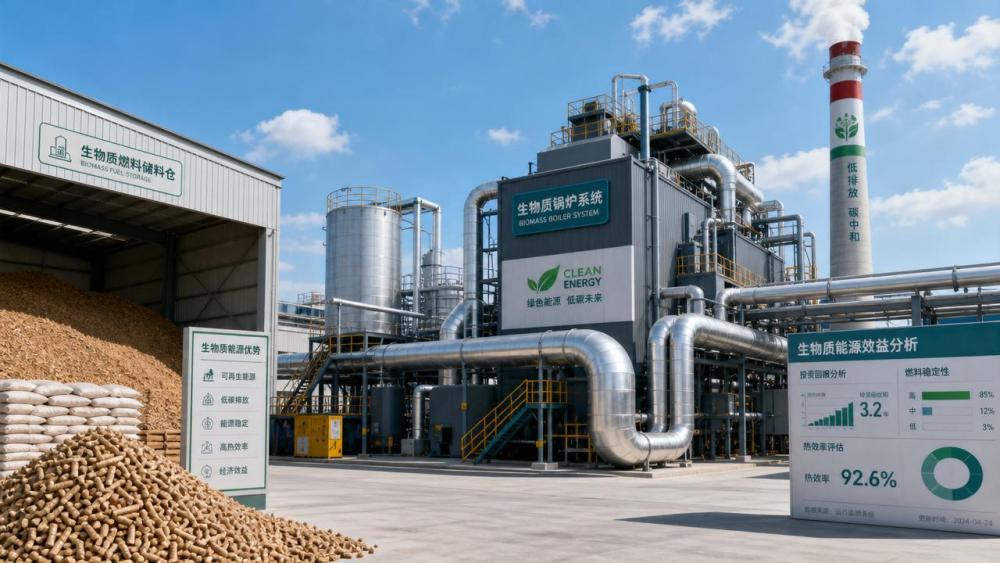
The old biomass narrative focused on renewable fuel substitution. The new one is broader. Carbon neutrality frameworks increasingly examine full-lifecycle emissions, upstream transport distance, moisture content, auxiliary electricity use, ash disposal, and methane avoidance. A project that looked attractive 3 years ago may now produce a weaker return once carbon accounting boundaries are expanded.
Financial approvers should view biomass ROI through at least 4 lenses: fuel security, conversion efficiency, policy durability, and verifiable emissions reduction. If one of these pillars is weak, the project may still operate, but its payback period can move from 4–6 years to 7–10 years, especially when maintenance and logistics inflation are included.
The shift from nominal carbon benefit to auditable carbon value
Many boards once accepted biomass as inherently low carbon. That assumption is no longer sufficient. Under stricter carbon neutrality programs, investors may require traceable feedstock sourcing, annual emissions verification, and scenario analysis for subsidy reduction. In practice, this means finance teams must discount unsupported carbon claims and reward only measurable reductions.
For industrial heat users, even a 5%–8% gap between expected and actual boiler efficiency can materially change project IRR. If carbon credits, renewable heat certificates, or tax incentives make up 15%–25% of forecast value, documentation quality becomes as important as mechanical performance.
Why thermal performance matters more than headline sustainability
Biomass projects are deeply tied to thermodynamic reality. Feedstock with 35% moisture behaves very differently from feedstock at 15%–20%. Poor combustion stability, inconsistent calorific value, or oversized heat exchangers can lower usable heat output and increase auxiliary power draw. In facilities where steam, cooling, and compressed air loads are interdependent, this can affect the wider energy balance.
For platforms such as GTC-Matrix, which track industrial cooling, compression, and heat exchange technologies, the biomass conversation is not isolated. It intersects with condensate recovery, low-NOx thermal design, process temperature control, and the electrical load of fans, pumps, and air systems. A biomass unit that appears carbon positive on paper can still underperform financially if thermal integration is weak.
The table below shows how carbon neutrality pressures are changing the financial review criteria used in industrial biomass decisions.
The main conclusion is clear: carbon neutrality does not automatically strengthen the biomass case. It raises the standard of proof. Projects now need stronger operational data, more disciplined carbon accounting, and better sensitivity analysis before approval.
What Financial Approvers Should Measure Before Releasing Capital
A strong biomass proposal should survive stress testing across 5 dimensions: feedstock reliability, thermal efficiency, maintenance exposure, carbon reporting cost, and policy sensitivity. If a project deck only emphasizes annual CO2 reduction without quantifying operating variability, it is incomplete from a finance perspective.
1. Feedstock quality and supply-chain resilience
Fuel is often the largest uncertainty. Biomass economics can weaken quickly when transport radius exceeds 80–120 km, storage losses rise above 3%–5%, or moisture swings force extra drying. Finance teams should ask for at least 12 months of supply mapping, dual-source planning, and minimum stock coverage of 14–30 days where feasible.
- Check calorific value range rather than a single nominal figure.
- Review seasonal sourcing gaps and weather exposure.
- Confirm handling cost for chipping, pelletizing, screening, or drying.
- Assess contamination risk that may increase ash or maintenance burden.
2. Net efficiency, not nameplate efficiency
For steam and hot water systems, net useful energy is more relevant than the vendor’s best-case rating. A plant may advertise 85% efficiency, but after start-stop cycles, fan power, fuel preparation, and heat losses, seasonal net performance may fall into the 68%–78% range. That difference can reshape annual cash flow.
In industrial environments with cooling towers, compressors, heat recovery loops, and process exchangers, system integration can either recover 5%–12% value or destroy it. Finance approvers should require a site energy balance, not a standalone equipment estimate.
Questions that improve approval quality
- What is the expected annual operating hour range: 4,000, 6,000, or 8,000 hours?
- What is the forecast downtime percentage for cleaning and feed handling?
- How much auxiliary electricity is needed per MWh of useful heat?
- What efficiency drop is expected if feedstock moisture rises by 10 points?
3. Carbon accounting cost and compliance burden
Carbon neutrality reporting is not free. Monitoring, documentation, third-party verification, and internal controls all add overhead. While these costs are often smaller than fuel expense, they can still reduce project value by 1%–3% annually. For smaller installations, that percentage can be even higher because fixed compliance effort is spread over less energy output.
Approvers should identify whether the business case depends on voluntary disclosures, mandatory reporting, or incentive qualification. Each pathway has different evidence standards and timing risks. Delayed verification can also delay financial benefits.
The following matrix can help finance teams screen biomass proposals before they move into full due diligence.
This screening approach helps separate strategic biomass investments from projects that rely too heavily on optimistic assumptions. In most cases, the strongest proposals are those with moderate but durable savings, not aggressive return claims built on unstable policy or fuel forecasts.
Where Biomass ROI Holds Up Best Under Carbon Neutrality Pressure
Not all biomass applications perform equally well. Returns are usually stronger where there is stable thermal demand, local feedstock access, and the ability to use waste heat efficiently. Projects with year-round base load often outperform facilities with highly variable or seasonal demand.
High-potential industrial scenarios
Biomass tends to be more resilient in plants that need continuous steam, hot water, or process heat in the 80°C–250°C range. Food processing, wood products, pulp-related operations, certain chemical utilities, and district heating links often match this profile. In these settings, thermal utilization can remain above 70% across much of the year.
It can also fit sites where organic residues or by-products already exist on site or within a short logistics loop. When transport distance stays controlled and fuel preprocessing is limited, the carbon neutrality argument becomes more credible and the operating margin less fragile.
Lower-confidence scenarios
Projects are harder to justify where heat demand fluctuates sharply, fuel must be hauled long distances, or the business case depends mainly on incentives. If thermal load drops below design assumptions for several months each year, effective ROI can erode through idle capacity, lower efficiency, and fixed maintenance cost.
Facilities pursuing carbon neutrality should also be cautious when biomass competes with electrification, heat pumps, renewable power purchase agreements, or efficiency retrofits. Sometimes the best return comes from reducing thermal demand first, then resizing any biomass asset accordingly.
Common approval mistake: treating biomass as a standalone sustainability project
Biomass should be reviewed as part of a wider thermal strategy. In many plants, the better sequence is a 3-step path: improve heat recovery, optimize combustion and utility controls, then evaluate biomass capacity. This approach often reduces oversizing risk and shortens effective payback by preserving system efficiency.
For finance leaders, this means capital allocation should compare biomass not only against fossil fuels, but also against insulation upgrades, condensate return improvements, exchanger replacement, and advanced monitoring. Carbon neutrality rewards the total efficiency stack, not just the renewable label.
A Practical Decision Framework for Finance Teams
A disciplined review process reduces bias and improves capital quality. Before approving biomass expenditure, finance teams should ask whether the project remains acceptable under three stress cases: lower incentive value, higher feedstock cost, and lower annual operating hours. If returns collapse in any one scenario, the proposal needs redesign.
Recommended 5-step approval path
- Validate site heat demand using 12–24 months of actual operating data.
- Model feedstock cost under normal, tight, and disrupted supply conditions.
- Estimate seasonal net efficiency including auxiliary loads and outages.
- Define carbon neutrality accounting boundaries and reporting workload.
- Run ROI, NPV, and payback sensitivity tests across a 5–10 year horizon.
Minimum documentation package
- Load profile for steam, hot water, or process heat
- Feedstock quality specification and storage plan
- Maintenance schedule with expected cleaning frequency
- Carbon neutrality reporting method and evidence chain
- Scenario-based financial model with downside assumptions
For organizations operating complex utility systems, intelligence support can improve this process. Market visibility into fuel trends, thermal technology evolution, emissions policy, and industrial efficiency benchmarks helps finance approvers challenge weak assumptions earlier. That is where sector-focused analysis from platforms such as GTC-Matrix becomes operationally useful rather than merely informative.
Biomass can still support carbon neutrality and generate acceptable returns, but only when technical design, sourcing discipline, and financial controls move together. The winning projects are rarely the loudest; they are the ones with realistic heat balances, defensible carbon claims, and stable long-term operating economics.
If you are reviewing biomass capital plans tied to industrial heating, energy conversion efficiency, or broader thermal system strategy, now is the time to test assumptions with sharper intelligence. Contact us to explore tailored insights, compare solution pathways, and get a more decision-ready view of biomass ROI under carbon neutrality pressure.
Related News
- IEA Report Flags 37% Rise in Biomass Boiler BudgetsAuthor :Thermal Energy Strategist

- Vietnam Tightens Import Rules for Biomass BoilersAuthor :Thermal Energy Strategist

- SASO Tightens NOx Monitoring Rule for Biomass BoilersAuthor :Thermal Energy Strategist

- Vietnam Halts New Biomass Boiler Import PermitsAuthor :Thermal Energy Strategist

- Industrial Biomass Boilers: Key Cost Factors for Heating ProjectsAuthor :Thermal Energy Strategist
![]()
- PSA Jurong Island Launch Cuts Biomass Fuel Clearance to 48 HoursAuthor :Thermal Energy Strategist
![]()
- Vietnam Requires CFP for Imported Biomass BoilersAuthor :Thermal Energy Strategist

- EU Monitoring Tightens Biomass Boiler Steel SupplyAuthor :Thermal Energy Strategist

- ASHRAE 189.1-2026 Adds Biomass Carbon ReviewAuthor :Thermal Energy Strategist

- ACWA Power Sets 45% Local Content Rule in Boiler TenderAuthor :Thermal Energy Strategist

- India BIS Draft Targets Biomass Boiler Data LinksAuthor :Thermal Energy Strategist

- EU REACH SVHC Update Restricts TCEP in Biomass EquipmentAuthor :Thermal Energy Strategist

- China Customs Adds HS Code Rule for Biomass Boiler ExportsAuthor :Thermal Energy Strategist

- China Adds Carbon Traceability Rule for Biomass Boiler ExportsAuthor :Thermal Energy Strategist

- Sugar Import Quota Notice Raises Biomass Fuel Cost FocusAuthor :Thermal Energy Strategist
![]()
- Urea Drops to $577/Ton, Easing Biomass Boiler CostsAuthor :Thermal Energy Strategist

- Urea Falls to $577/Ton, Easing Biomass Boiler Cost PressureAuthor :Thermal Energy Strategist

- Carbon Neutrality Pressures on Biomass Energy ROIAuthor :Thermal Energy Strategist

- Japan's Crude Imports Plunge 64% in April, Boosting Biomass & Chiller AdoptionAuthor :Thermal Energy Strategist

- Indonesia Tightens Thermal Coal Exports, Boosts Biomass & Industrial Chiller DemandAuthor :Thermal Energy Strategist

- Clean Energy Technology Gains That Make Biomass Worth RevisitingAuthor :Thermal Energy Strategist

- Clean Energy Technology Trends Changing Biomass Energy Project ReturnsAuthor :Thermal Energy Strategist

- Carbon Neutrality Pressures on Biomass Energy ProjectsAuthor :Thermal Energy Strategist

- Biomass Energy Cold-Heat Supply System Named in China’s Top 7 Future IndustriesAuthor :Thermal Energy Strategist

- Carbon Neutrality Pressure and Biomass Energy Project PaybackAuthor :Thermal Energy Strategist

- NEOM Green Infrastructure Certification Expands to Biomass CHP SystemsAuthor :Thermal Energy Strategist

- Saudi SASO Mandates NGIC Certification for Biomass CHP SystemsAuthor :Thermal Energy Strategist

- Clean Energy Technology Trends Changing Biomass Energy ProjectsAuthor :Thermal Energy Strategist

- Saudi SASO Mandates NEOM Green Infrastructure Certification for Biomass CHP SystemsAuthor :Thermal Energy Strategist

- Middle East Bans R134a Imports; Biomass CHP Gains TractionAuthor :Thermal Energy Strategist

- Clean Energy Technology and Biomass Energy: What Changes in 2026Author :Thermal Energy Strategist

- Middle East Bans R134a Equipment Imports; Biomass CCHP Gains TractionAuthor :Thermal Energy Strategist

- Canton Fair Phase II: Biomass Boiler Orders Surge 112% from SEAAuthor :Thermal Energy Strategist

- Carbon Neutrality and Biomass Energy: Where the Business Case Is StrongestAuthor :Thermal Energy Strategist

- Industrial Heat Recovery Ideas That Cut Fuel Use in Daily OperationsAuthor :Thermal Energy Strategist