Carbon Neutrality Pressures on Biomass Energy Projects




As carbon neutrality targets tighten worldwide, biomass energy projects are facing growing pressure from regulators, investors, and industrial buyers to prove both environmental and economic value. For business evaluation professionals, understanding policy shifts, lifecycle emissions, and technology performance is now essential to judging whether these projects can deliver credible returns in an increasingly carbon-conscious market.
Why carbon neutrality is reshaping biomass energy project evaluation
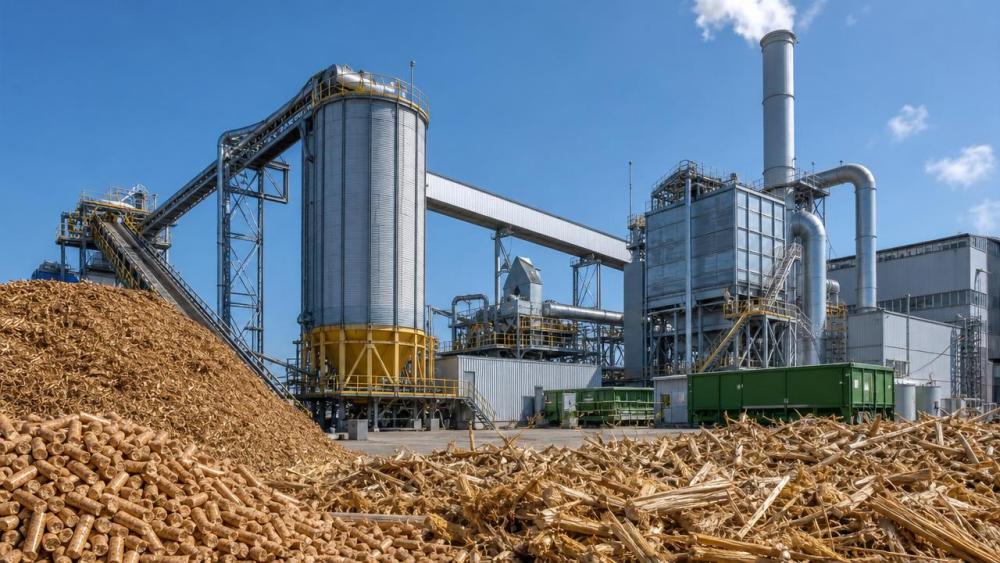
Biomass once benefited from a simple narrative: renewable feedstock equals low-carbon energy. That assumption no longer passes commercial scrutiny. Today, carbon neutrality assessments go beyond combustion-stage emissions and examine feedstock sourcing, transport, drying, storage losses, auxiliary electricity, and ash handling.
For business evaluation teams, this shift changes project screening logic. A biomass boiler, CHP unit, pellet line, or biomass-to-steam system may look attractive on paper, yet underperform once carbon accounting, fuel variability, and compliance costs are added.
This matters across the broader industrial landscape. Food processing, pharmaceuticals, paper, chemicals, district heating, and light manufacturing often rely on thermal systems where fuel switching decisions affect not only emissions but also pressure stability, heat quality, maintenance routines, and buyer reputation.
- Regulators are tightening lifecycle carbon disclosure rather than accepting generic renewable claims.
- Investors increasingly test whether emissions reductions are additional, measurable, and durable.
- Industrial buyers want supply security, predictable steam or heat output, and auditable environmental performance.
- Procurement teams now compare biomass against electrification, waste heat recovery, natural gas efficiency upgrades, and hybrid thermal architectures.
In this context, carbon neutrality is not a branding term. It is a commercial filter that can accelerate a project, delay financing, or exclude it from preferred supplier lists.
What business evaluators should measure beyond the renewable label
A sound biomass decision starts with a wider measurement frame. Many proposals emphasize installed capacity and fuel cost, but business evaluation professionals need a fuller matrix covering emissions integrity, thermal performance, and operating resilience.
Core evaluation dimensions
- Feedstock traceability: origin, seasonality, moisture range, contamination risk, and competing end uses.
- Lifecycle emissions: collection, preprocessing, logistics, combustion efficiency, methane leakage from storage, and residue disposal.
- Thermal compatibility: ability to meet process heat temperature, pressure stability, ramping behavior, and backup requirements.
- Commercial durability: fuel supply contracts, OPEX volatility, maintenance intervals, and downtime exposure.
- Compliance readiness: local air emissions rules, carbon reporting methodology, and sustainability documentation.
For industries dependent on thermal reliability, emissions reduction alone is insufficient. If a system causes unstable steam output, excessive fouling, or expensive pretreatment, the carbon neutrality story weakens quickly because operating losses and backup fuel use can offset expected gains.
The table below highlights practical checkpoints that help evaluators connect carbon neutrality claims with technical and financial review.
A biomass project that clears these checkpoints is more likely to support both decarbonization goals and investment discipline. One that fails them may still be technically feasible, but its risk premium should be raised.
Which biomass project scenarios remain credible under carbon neutrality pressure?
Not every biomass pathway performs equally well. Commercial credibility depends on proximity of feedstock, process heat demand, emissions controls, and integration with existing thermal infrastructure.
Stronger-fit scenarios
- Industrial sites with steady low- to medium-pressure steam demand and locally available residues.
- Agro-industrial clusters where by-products already exist on site, reducing transport emissions and storage losses.
- Hybrid systems combining biomass with heat recovery, thermal storage, or high-efficiency auxiliary gas support.
Higher-risk scenarios
- Projects dependent on long-distance feedstock transport or fragmented supply chains.
- Facilities requiring highly stable, contamination-sensitive thermal conditions without strong pretreatment control.
- Projects justified mainly by assumed carbon benefits while ignoring particulate treatment, slagging, or ash management costs.
To support carbon neutrality screening, the following comparison helps evaluators distinguish where biomass is more likely to withstand regulatory and commercial review.
The strongest projects tend to be local, integrated, and data-backed. The weakest are those that rely on generic assumptions about biomass being automatically carbon neutral regardless of logistics and operating detail.
How thermal performance and system integration influence investment quality
Business evaluation often focuses on fuel economics first, but thermal performance deserves equal weight. In many industries, value depends on whether the biomass system can deliver the right heat form at the right consistency.
Key technical signals to review
- Combustion efficiency under variable moisture conditions, not only under ideal test assumptions.
- Heat exchanger and flue gas recovery design, especially where low-grade heat can offset other utility loads.
- Integration with compressed air, cooling, and process utility systems that may indirectly change plant-wide energy balance.
- Control responsiveness during startup, part load, and seasonal demand changes.
This is where cross-disciplinary intelligence becomes valuable. GTC-Matrix tracks industrial cooling, compressed air, vacuum processes, and heat exchange technologies because carbon neutrality outcomes rarely depend on one asset in isolation. A boiler upgrade that ignores downstream heat recovery or utility interactions can leave emissions savings unrealized.
For example, a biomass steam project may become more bankable when paired with improved condensate recovery, optimized heat exchangers, lower parasitic electricity use, or revised compressed air efficiency. In practice, system-level efficiency often determines whether a project remains competitive once carbon reporting matures.
Procurement and due diligence: what should be checked before approval?
Procurement decisions fail when evaluation criteria are too narrow. Business teams should build a due diligence sequence that covers technical readiness, carbon neutrality credibility, and delivery practicality at the same time.
Recommended due diligence checklist
- Request feedstock specifications across seasons, not a single nominal value.
- Verify assumptions for annual operating hours, load factor, and backup fuel demand.
- Check whether emission control equipment has been included in both CapEx and maintenance budgets.
- Review spare parts strategy, refractory maintenance needs, and operator skill requirements.
- Confirm reporting boundaries for carbon neutrality claims and whether third-party verification may be needed.
Lead time also matters. Tight project schedules may favor modular or hybrid solutions over large bespoke biomass systems, especially where civil work, fuel handling infrastructure, or permit review could delay commissioning.
Cost, alternatives, and the hidden variables that change project rankings
Carbon neutrality pressure does not eliminate cost discipline. It changes how cost should be interpreted. The cheapest fuel pathway may not deliver the lowest risk-adjusted cost once compliance, downtime, and future reporting obligations are included.
Hidden cost variables
- Fuel drying or pretreatment needed to maintain stable combustion.
- Extra warehouse area, fire prevention systems, and handling equipment.
- Unexpected ash disposal costs or higher cleaning frequency for heat transfer surfaces.
- Carbon disclosure and verification expenses that rise as customer scrutiny increases.
Alternatives should also be tested seriously. In some industrial settings, electrified heat, natural gas efficiency retrofits, waste heat recovery, or a staged hybrid approach may produce better carbon neutrality outcomes per unit of risk, particularly where biomass fuel quality is uncertain.
That does not mean biomass is losing relevance. It means business evaluators should rank it against realistic alternatives using the same assumptions for system boundaries, thermal reliability, and carbon reporting burden.
Compliance, reporting, and common misconceptions
One recurring mistake is assuming that biomass automatically satisfies carbon neutrality expectations. In reality, compliance can involve air emissions permits, sustainability evidence, fuel origin documentation, and transparent accounting methods.
Misconceptions that often distort evaluation
- “Renewable” and “carbon neutral” mean the same thing. They do not. Carbon neutrality depends on the accounting boundary and actual operational performance.
- Combustion emissions can be ignored if the feedstock is biogenic. Buyers and regulators increasingly look at total lifecycle impact.
- If biomass fuel is available, project economics are secure. Supply quality, storage, and logistics can change the cost structure substantially.
A prudent evaluator should also ask whether the project’s carbon neutrality narrative will stand up in customer audits, lender questions, and internal sustainability reporting. If not, the reputational downside can be as significant as the technical downside.
FAQ: practical questions from business evaluation teams
How should we test whether a biomass project truly supports carbon neutrality?
Start with lifecycle boundaries. Include feedstock origin, transport distance, moisture conditioning, auxiliary power, and backup fuel demand. Then compare projected emissions reductions against a credible baseline such as existing fossil thermal supply or alternative efficiency upgrades.
Which industries are most suitable for biomass under current market pressure?
Industries with stable thermal demand and access to local residues are usually better candidates. Examples include some food, agro-processing, paper, and district heating applications. Highly sensitive or highly variable thermal processes require deeper integration review.
What should procurement teams ask suppliers first?
Ask for seasonal fuel specifications, expected part-load efficiency, emissions control scope, maintenance intervals, and the assumptions behind carbon neutrality claims. Also request a clear list of excluded costs and external dependencies.
Can a hybrid solution be better than a full biomass conversion?
Often yes. Hybrid systems can reduce supply risk, improve turndown flexibility, and preserve production stability. They may also simplify project phasing when capital budgets, permit schedules, or utility constraints make full conversion difficult.
Why work with GTC-Matrix when evaluating biomass under carbon neutrality pressure?
Biomass energy decisions no longer sit in a single equipment category. They intersect with heat exchange efficiency, compressed air electricity demand, cooling loads, thermal recovery opportunities, and broader industrial decarbonization strategy. That is why evaluation quality depends on connected intelligence rather than isolated vendor claims.
GTC-Matrix helps business evaluation professionals interpret these links through sector news, technology trend analysis, and commercial insights grounded in industrial thermal systems. Our perspective is especially useful when you need to compare biomass with alternative heat pathways, assess integration risk, or translate technical complexity into investment judgment.
- Need support confirming thermal parameters, load profiles, or heat recovery relevance?
- Need a structured comparison between biomass, hybrid heat, and other decarbonization routes?
- Need guidance on supplier screening, delivery timing, compliance questions, or reporting assumptions?
Contact GTC-Matrix to discuss project screening criteria, technology selection, delivery considerations, customized evaluation frameworks, certification-related questions, or commercial quotation alignment. When carbon neutrality claims become harder to defend, better industrial intelligence becomes a direct business advantage.
Related News
- IEA Report Flags 37% Rise in Biomass Boiler BudgetsAuthor :Thermal Energy Strategist

- Vietnam Tightens Import Rules for Biomass BoilersAuthor :Thermal Energy Strategist

- SASO Tightens NOx Monitoring Rule for Biomass BoilersAuthor :Thermal Energy Strategist

- Vietnam Halts New Biomass Boiler Import PermitsAuthor :Thermal Energy Strategist

- Industrial Biomass Boilers: Key Cost Factors for Heating ProjectsAuthor :Thermal Energy Strategist
![]()
- PSA Jurong Island Launch Cuts Biomass Fuel Clearance to 48 HoursAuthor :Thermal Energy Strategist
![]()
- Vietnam Requires CFP for Imported Biomass BoilersAuthor :Thermal Energy Strategist

- EU Monitoring Tightens Biomass Boiler Steel SupplyAuthor :Thermal Energy Strategist

- ASHRAE 189.1-2026 Adds Biomass Carbon ReviewAuthor :Thermal Energy Strategist

- ACWA Power Sets 45% Local Content Rule in Boiler TenderAuthor :Thermal Energy Strategist

- India BIS Draft Targets Biomass Boiler Data LinksAuthor :Thermal Energy Strategist

- EU REACH SVHC Update Restricts TCEP in Biomass EquipmentAuthor :Thermal Energy Strategist

- China Customs Adds HS Code Rule for Biomass Boiler ExportsAuthor :Thermal Energy Strategist

- China Adds Carbon Traceability Rule for Biomass Boiler ExportsAuthor :Thermal Energy Strategist

- Sugar Import Quota Notice Raises Biomass Fuel Cost FocusAuthor :Thermal Energy Strategist
![]()
- Urea Drops to $577/Ton, Easing Biomass Boiler CostsAuthor :Thermal Energy Strategist

- Urea Falls to $577/Ton, Easing Biomass Boiler Cost PressureAuthor :Thermal Energy Strategist

- Carbon Neutrality Pressures on Biomass Energy ROIAuthor :Thermal Energy Strategist

- Japan's Crude Imports Plunge 64% in April, Boosting Biomass & Chiller AdoptionAuthor :Thermal Energy Strategist

- Indonesia Tightens Thermal Coal Exports, Boosts Biomass & Industrial Chiller DemandAuthor :Thermal Energy Strategist

- Clean Energy Technology Gains That Make Biomass Worth RevisitingAuthor :Thermal Energy Strategist

- Clean Energy Technology Trends Changing Biomass Energy Project ReturnsAuthor :Thermal Energy Strategist

- Carbon Neutrality Pressures on Biomass Energy ProjectsAuthor :Thermal Energy Strategist

- Biomass Energy Cold-Heat Supply System Named in China’s Top 7 Future IndustriesAuthor :Thermal Energy Strategist

- Carbon Neutrality Pressure and Biomass Energy Project PaybackAuthor :Thermal Energy Strategist

- NEOM Green Infrastructure Certification Expands to Biomass CHP SystemsAuthor :Thermal Energy Strategist

- Saudi SASO Mandates NGIC Certification for Biomass CHP SystemsAuthor :Thermal Energy Strategist

- Clean Energy Technology Trends Changing Biomass Energy ProjectsAuthor :Thermal Energy Strategist

- Saudi SASO Mandates NEOM Green Infrastructure Certification for Biomass CHP SystemsAuthor :Thermal Energy Strategist

- Middle East Bans R134a Imports; Biomass CHP Gains TractionAuthor :Thermal Energy Strategist

- Clean Energy Technology and Biomass Energy: What Changes in 2026Author :Thermal Energy Strategist

- Middle East Bans R134a Equipment Imports; Biomass CCHP Gains TractionAuthor :Thermal Energy Strategist

- Canton Fair Phase II: Biomass Boiler Orders Surge 112% from SEAAuthor :Thermal Energy Strategist

- Carbon Neutrality and Biomass Energy: Where the Business Case Is StrongestAuthor :Thermal Energy Strategist

- Industrial Heat Recovery Ideas That Cut Fuel Use in Daily OperationsAuthor :Thermal Energy Strategist