Sumitomo Electric Raises Epoxy Resin Prices for Semiconductor Packaging by 10–20%




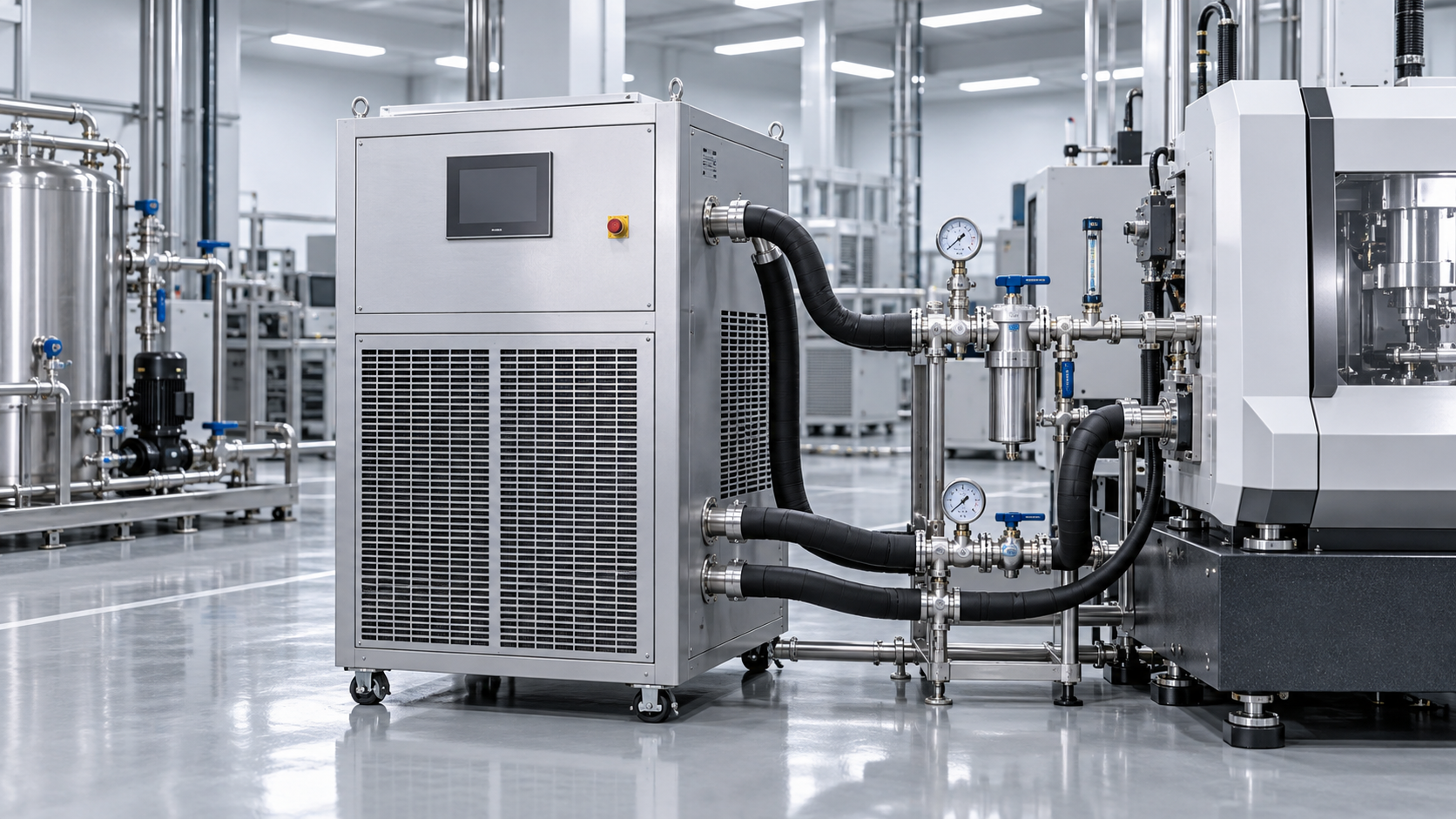
Effective 1 June 2026, Sumitomo Electric has announced a price increase of 10–20% for its epoxy resins used in semiconductor packaging, citing rising raw material costs and globally tight supply-demand balance. The adjustment directly impacts thermal management components—including liquid cold plates, heat pipes, and industrial chillers with precision temperature control down to −40 °C—used across power modules and IGBT substrate packaging.

Confirmed Pricing Adjustment Effective June 2026
Sumitomo Electric implemented a 10–20% price hike on its semiconductor-grade epoxy resins beginning 1 June 2026. The material is widely employed in encapsulation of power modules and IGBT heat-dissipating substrates. Its cost escalation directly affects the bill of materials (BOM) for liquid cold plates, heat pipe assemblies, and industrial chillers capable of sub-−40 °C precision temperature regulation. In response, packaging and testing service providers—including HuaHai Advanced Materials and JCET—have initiated new rounds of supplier evaluation and competitive bidding for cooling system components.
Supply Chain Impact Across Key Roles
Direct trading enterprises
Companies engaged in cross-border trade of epoxy resins or finished thermal interface materials face immediate margin pressure due to revised landed cost structures. Import declarations, customs valuation, and tariff classification may require revalidation where pricing thresholds affect preferential treatment eligibility.
Raw material procurement units
Purchasing departments at semiconductor assembly and test facilities must reassess long-term contracts, spot-buying strategies, and hedging mechanisms. The tight global supply-demand balance signals limited near-term substitution options, increasing reliance on forward pricing visibility and multi-source qualification.
Manufacturing enterprises
Fabricators of power module substrates and thermal management systems must revisit BOM costing models, particularly for products requiring ultra-low-temperature operational stability (e.g., −40 °C industrial chillers). Design-for-cost reviews and material qualification timelines may need acceleration.
Supply chain service providers
Logistics, customs brokerage, and technical compliance support firms should anticipate increased client requests for cost transparency documentation, origin verification, and updated safety data sheets (SDS) aligned with revised formulations or sourcing pathways.
Strategic Priorities for Affected Firms
Re-evaluate cooling system supplier qualifications
With HuaHai Advanced Materials and JCET launching new vendor assessments, firms must ensure their thermal solutions meet updated mechanical, thermal, and chemical resistance specifications—especially under extended low-temperature cycling conditions.
Verify material compliance and traceability
Epoxy resin batches used in high-reliability applications require full documentation: RoHS/REACH status, halogen-free certification, outgassing reports, and thermal cycling validation data supporting −40 °C operational integrity.
Adjust procurement planning and lead-time buffers
Given constrained global availability, procurement teams should extend safety stock levels and align delivery schedules with confirmed production windows—particularly for chillers and cold plates integrated into automotive or industrial power electronics.
Update technical tender specifications
When issuing RFQs for next-generation cooling systems, engineering and procurement units must explicitly reference updated thermal interface material performance requirements—including coefficient of thermal expansion (CTE) matching, adhesion strength after thermal shock, and long-term aging stability under sub-zero operation.
Industry Observation: Cost Pass-Through Signals Structural Shift
Analysis shows this price adjustment marks more than a cyclical cost correction—it reflects an emerging inflection point in advanced packaging thermal supply chains. As heterogeneous integration and chiplet-based architectures drive higher localized power densities, the functional reliability of encapsulation resins under extreme thermal stress becomes a critical differentiator—not just a commodity input. Observably, cooling system vendors are no longer evaluated solely on thermal resistance metrics, but increasingly on verified lifetime performance across extended low-temperature operating conditions. It is more appropriate to understand this as a de facto tightening of technical entry requirements for high-end thermal management suppliers.
Key Takeaway for Market Participants
This adjustment underscores that cost volatility in foundational packaging materials now propagates rapidly across the entire thermal management value chain—from resin formulation through cold plate manufacturing to system-level chiller integration. Stakeholders should treat such shifts not merely as procurement events, but as catalysts for cross-functional alignment between materials engineering, thermal design, quality assurance, and supply chain strategy.
Source Attribution and Monitoring Guidance
This article was generated exclusively from the user-provided information: title, event date (2026-06-01), and summary description. Specific official source links were not provided in the input and should be verified continuously. Stakeholders are advised to monitor forthcoming updates on material specification revisions, industry consortium guidance (e.g., JEDEC JC-14.1), and national regulatory clarifications concerning thermal interface material environmental compliance and safety reporting requirements.
Ready when you are. Send us a message to get started.
Related News
- How corrugation angle affects heat transfer in plate heat exchangersAuthor :Thermodynamics Analyst

- R22 Prices Retreat as China's Refrigerant Market Faces Tight Quotas and Soft DemandAuthor :Cryogenic Systems Expert

- How to select industrial equipment for automation with existing PLCsAuthor :

- Carrier Plans $600 Million Manufacturing and Engineering Center in Fort WorthAuthor :

- How electricity prices shape industrial compressed air price trendsAuthor :

- Chemours Faces Investor Lawsuit Over Opteon Refrigerant Sales ForecastsAuthor :Cryogenic Systems Expert

- Choosing air filtration systems for heavy dust in the Middle EastAuthor :

- LG Expands R290 Monobloc Heat Pump Range with New 12–16 kW ModelsAuthor :Cryogenic Systems Expert

- How to size a chiller for pharmaceutical cleanroom temperature controlAuthor :Cryogenic Systems Expert

- Kentucky Regulators Approve $191 Million Cooling Tower at Mitchell Coal PlantAuthor :Thermodynamics Analyst

- How much does a fully installed compressed air monitoring system cost?Author :

- What documentation supports CE marking for industrial equipment?Author :

- When do plate heat exchangers suit Middle East seawater cooling?Author :Thermodynamics Analyst

- EU Issues Updated Guidance on Industrial Refrigeration Efficiency and F-gas AlternativesAuthor :Cryogenic Systems Expert

- How does base pressure affect film purity in vacuum deposition?Author :Vacuum Process Fellow

- Do U.S. refrigerant regulations require replacing R-410A systems?Author :Cryogenic Systems Expert

- When does variable gas flow justify a custom screw compressor system?Author :Pneumatic Power Engineer

- How local support affects vacuum system costs in Southeast AsiaAuthor :

- How worldwide industry category guides help compare market opportunitiesAuthor :

- How to verify food-grade purity in compressed air systemsAuthor :Pneumatic Power Engineer

- When high-pressure waste heat recovery boilers make economic senseAuthor :Thermal Energy Strategist

- How to size compressed air equipment for pneumatic toolsAuthor :Pneumatic Power Engineer

- How to size vacuum process equipment for the required pump-down timeAuthor :Vacuum Process Fellow

- What determines the price of pure air compression systems?Author :Pneumatic Power Engineer

- How steam generation efficiency shapes thermal power system designAuthor :Thermal Energy Strategist

- What drives sustainable thermal systems cost over their operating life?Author :

- Which vacuum specification best protects semiconductor process yield?Author :Vacuum Process Fellow

- When do smart thermal systems with sensors reduce chiller energy use?Author :Cryogenic Systems Expert

- When does gasketed plate heat exchanger technology suit your process?Author :Thermodynamics Analyst

- How to size oil-free compressors for instrumentation air demandAuthor :Pneumatic Power Engineer

- How Class 0 oil-free compressors protect product quality in food productionAuthor :Pneumatic Power Engineer

- Which industrial solution comparison criteria prevent project delays?Author :

- Chiller Optimization Checklist for Rising Energy Use and Unstable Cooling OutputAuthor :Cryogenic Systems Expert

- How to Specify a High-Precision Temperature Chiller for Tight-Tolerance ProcessesAuthor :Cryogenic Systems Expert

- Designing Energy-Efficient Industrial Cooling for Variable Process LoadsAuthor :Cryogenic Systems Expert

- Low-GWP Cooling Solutions for Process Plants: Comparing Safety, Efficiency, and CostAuthor :Cryogenic Systems Expert