Saudi SASO Mandates IEC 61508 SIL2 Certification for Screw Compressor Drives




Saudi Arabia’s Standards, Metrology and Quality Organization (SASO) has introduced a new mandatory functional safety requirement for screw compressor drive systems exported to the Kingdom — effective 1 November 2026 — significantly impacting global manufacturers and exporters in the industrial compression sector.
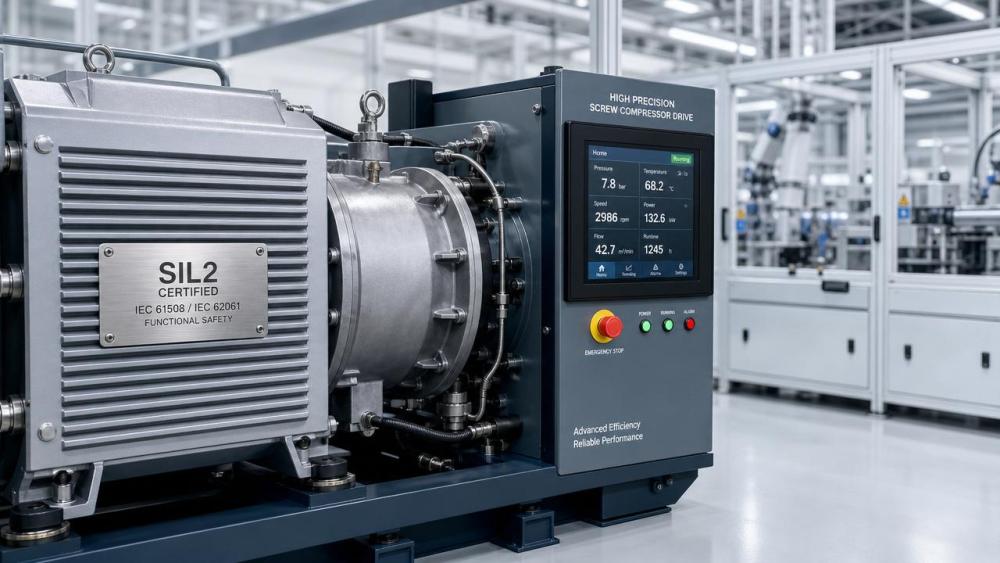
New SASO Standard Enforces Functional Safety Compliance
On 9 May 2026, SASO officially published the mandatory national standard SASO IEC 61800-5-2:2026. This standard applies specifically to variable speed drives used in screw compressors intended for the Saudi market. It requires all such drives to comply with IEC 61508 functional safety requirements at Safety Integrity Level 2 (SIL2). Exporters must obtain and submit a valid SIL2 certification issued by a SASO-recognized conformity assessment body — including, but not limited to, TÜV Rheinland and SGS. Enforcement begins on 1 November 2026.
Impact Across the Industrial Compression Supply Chain
Export-oriented equipment manufacturers
Manufacturers exporting screw compressor drives to Saudi Arabia must now integrate SIL2-certified functional safety architectures into product design and validation. This affects firmware development, hardware redundancy planning, failure mode analysis, and documentation traceability — adding complexity to R&D and type approval timelines.
Component and subsystem suppliers
Suppliers of safety-related components — such as safety PLCs, certified sensors, or emergency stop interfaces — face stricter qualification demands. Their parts must be pre-validated within a SIL2-compliant system context, requiring deeper technical alignment and joint certification efforts with drive integrators.
Contract manufacturers and OEM integrators
Integrators assembling complete compressor packages must verify that every drive unit carries a SASO-accepted SIL2 certificate prior to shipment. This introduces new checkpoints in final assembly, quality assurance, and export documentation workflows — especially for multi-source or modular builds.
Logistics and compliance service providers
Third-party compliance consultants, certification brokers, and customs agents supporting Saudi-bound shipments will need updated technical expertise in functional safety standards and SASO’s recognition criteria. Certificate authenticity verification, translation of technical reports, and coordination with accredited labs become critical value-added services.
Key Actions for Exporters and Manufacturers
Conduct immediate gap assessment against IEC 61508 SIL2
Review existing drive designs, safety manuals, and failure mode databases to identify deviations from SIL2 requirements — particularly regarding diagnostic coverage, safe failure fraction, and systematic capability evidence.
Engage SASO-recognized bodies early in the certification cycle
Given typical SIL2 certification lead times (often 4–6 months), initiate engagement with TÜV Rheinland, SGS, or other SASO-accredited organizations no later than Q3 2026 to secure timely certification ahead of the 1 November enforcement date.
Update technical documentation and tender specifications
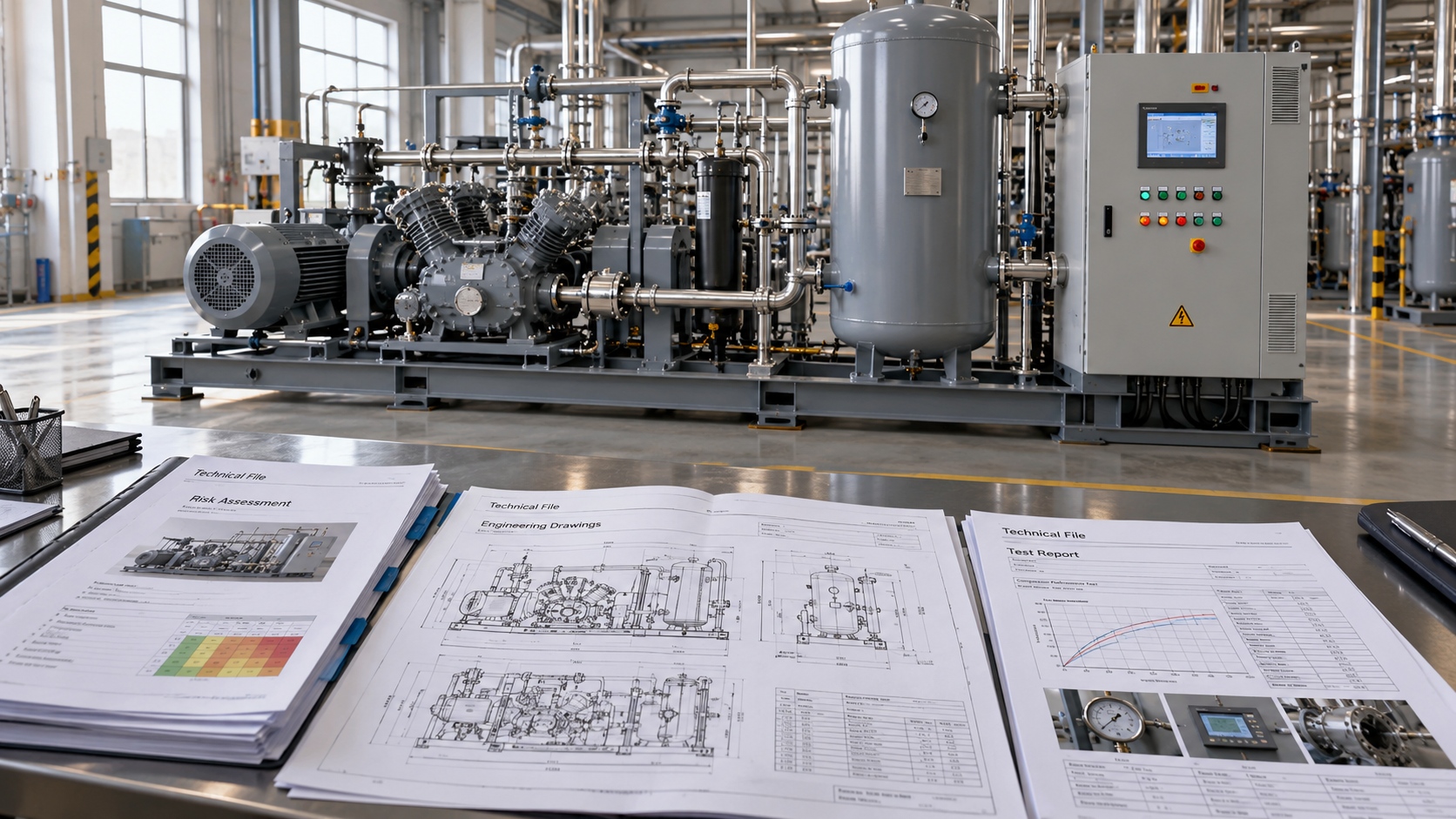
Revise product datasheets, user manuals, and safety instructions to reflect SIL2 compliance status. Ensure bid submissions for Saudi projects explicitly reference SASO IEC 61800-5-2:2026 and include certified test reports and certificate copies.
Align supplier contracts with functional safety obligations
Amend procurement agreements to require SIL2-ready components and impose contractual liability for non-compliance — especially for safety-critical subassemblies sourced externally.
Industry Observation: Rising Technical Barriers in Emerging Markets
Analysis shows this move reflects a broader trend among Gulf Cooperation Council (GCC) regulators toward adopting international functional safety frameworks — not merely as best practice, but as enforceable trade conditions. From an industry perspective, SASO’s adoption of IEC 61508 SIL2 signals increasing convergence between process safety expectations in oil & gas infrastructure and powertrain-level compliance in rotating equipment. What deserves closer attention is the growing lead time burden: SIL2 certification is not a one-time lab test, but a lifecycle process involving design review, hardware-software co-validation, and ongoing production surveillance — raising both cost and time-to-market thresholds for mid-tier exporters.
Strategic Implication for Global Compression Suppliers
This regulation marks a structural shift — moving beyond basic EMC or energy efficiency compliance toward embedded functional safety as a non-negotiable market access condition. It underscores that for high-risk industrial applications in regulated markets, safety integrity is now inseparable from commercial viability. Companies treating SIL2 as optional or postponable risk shipment rejection, contract termination, or loss of eligibility in public-sector tenders.
Source Information and Verification Guidance
This article is based solely on the provided information: title, event date (2026-11-01), and summary describing SASO’s publication of SASO IEC 61800-5-2:2026 on 9 May 2026 and its enforcement timeline. Specific official source links were not provided in the input and should be verified continuously. Stakeholders are advised to monitor SASO’s official portal for implementation guidelines, recognized body updates, and clarifications on scope interpretation — particularly regarding legacy equipment, field retrofits, and multi-vendor system integration scenarios.
Ready when you are. Send us a message to get started.
Related News
- How corrugation angle affects heat transfer in plate heat exchangersAuthor :Thermodynamics Analyst

- R22 Prices Retreat as China's Refrigerant Market Faces Tight Quotas and Soft DemandAuthor :Cryogenic Systems Expert

- How to select industrial equipment for automation with existing PLCsAuthor :

- Carrier Plans $600 Million Manufacturing and Engineering Center in Fort WorthAuthor :

- How electricity prices shape industrial compressed air price trendsAuthor :

- Chemours Faces Investor Lawsuit Over Opteon Refrigerant Sales ForecastsAuthor :Cryogenic Systems Expert

- Choosing air filtration systems for heavy dust in the Middle EastAuthor :

- LG Expands R290 Monobloc Heat Pump Range with New 12–16 kW ModelsAuthor :Cryogenic Systems Expert

- How to size a chiller for pharmaceutical cleanroom temperature controlAuthor :Cryogenic Systems Expert

- Kentucky Regulators Approve $191 Million Cooling Tower at Mitchell Coal PlantAuthor :Thermodynamics Analyst

- How much does a fully installed compressed air monitoring system cost?Author :

- What documentation supports CE marking for industrial equipment?Author :

- When do plate heat exchangers suit Middle East seawater cooling?Author :Thermodynamics Analyst

- EU Issues Updated Guidance on Industrial Refrigeration Efficiency and F-gas AlternativesAuthor :Cryogenic Systems Expert

- How does base pressure affect film purity in vacuum deposition?Author :Vacuum Process Fellow

- Do U.S. refrigerant regulations require replacing R-410A systems?Author :Cryogenic Systems Expert

- When does variable gas flow justify a custom screw compressor system?Author :Pneumatic Power Engineer

- How local support affects vacuum system costs in Southeast AsiaAuthor :

- How worldwide industry category guides help compare market opportunitiesAuthor :

- How to verify food-grade purity in compressed air systemsAuthor :Pneumatic Power Engineer

- When high-pressure waste heat recovery boilers make economic senseAuthor :Thermal Energy Strategist

- How to size compressed air equipment for pneumatic toolsAuthor :Pneumatic Power Engineer

- How to size vacuum process equipment for the required pump-down timeAuthor :Vacuum Process Fellow

- What determines the price of pure air compression systems?Author :Pneumatic Power Engineer

- How steam generation efficiency shapes thermal power system designAuthor :Thermal Energy Strategist

- What drives sustainable thermal systems cost over their operating life?Author :

- Which vacuum specification best protects semiconductor process yield?Author :Vacuum Process Fellow

- When do smart thermal systems with sensors reduce chiller energy use?Author :Cryogenic Systems Expert

- When does gasketed plate heat exchanger technology suit your process?Author :Thermodynamics Analyst

- How to size oil-free compressors for instrumentation air demandAuthor :Pneumatic Power Engineer

- How Class 0 oil-free compressors protect product quality in food productionAuthor :Pneumatic Power Engineer

- Which industrial solution comparison criteria prevent project delays?Author :

- Chiller Optimization Checklist for Rising Energy Use and Unstable Cooling OutputAuthor :Cryogenic Systems Expert

- How to Specify a High-Precision Temperature Chiller for Tight-Tolerance ProcessesAuthor :Cryogenic Systems Expert

- Designing Energy-Efficient Industrial Cooling for Variable Process LoadsAuthor :Cryogenic Systems Expert

- Low-GWP Cooling Solutions for Process Plants: Comparing Safety, Efficiency, and CostAuthor :Cryogenic Systems Expert