When are plate heat exchangers suitable for pharmaceutical production?




Plate heat exchangers are suitable for pharmaceutical production when a relatively clean, pumpable fluid needs efficient heating or cooling in a compact footprint, and when the selected construction can be cleaned, inspected, and controlled to the required quality standard. The strongest candidates are closed, well-characterized processes with manageable fouling, compatible materials, and pressure and temperature conditions within the equipment’s limits.
Suitability is not established by thermal performance alone. Heat exchanger technology for pharmaceuticals must also address product integrity, cross-contamination, cleanability, leakage detection, and documented compliance with applicable GMP requirements. A plate exchanger that performs well in a utility loop is not automatically appropriate for direct contact with a sterile or biologically sensitive product.
Where heat exchanger technology for pharmaceuticals fits
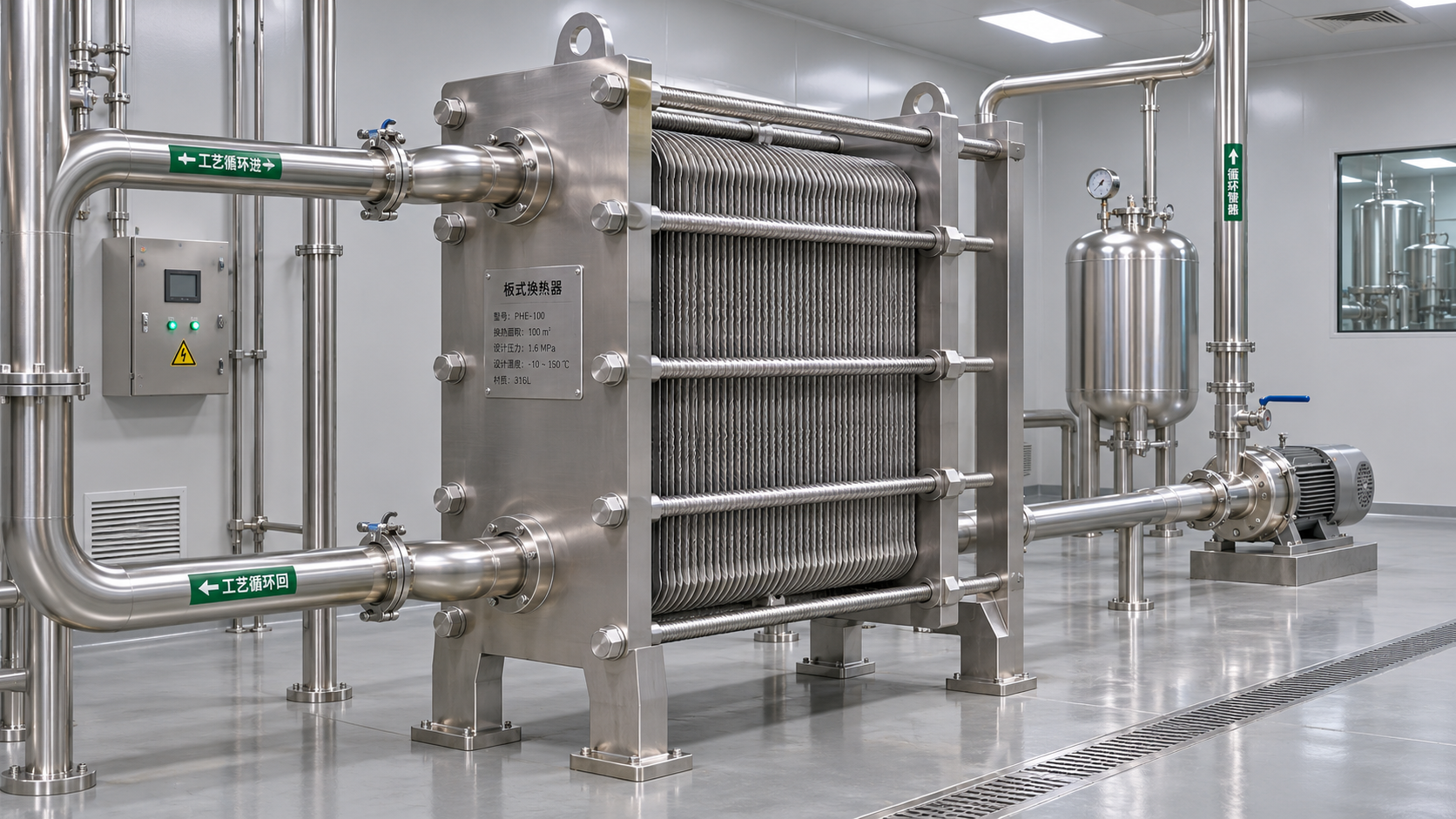
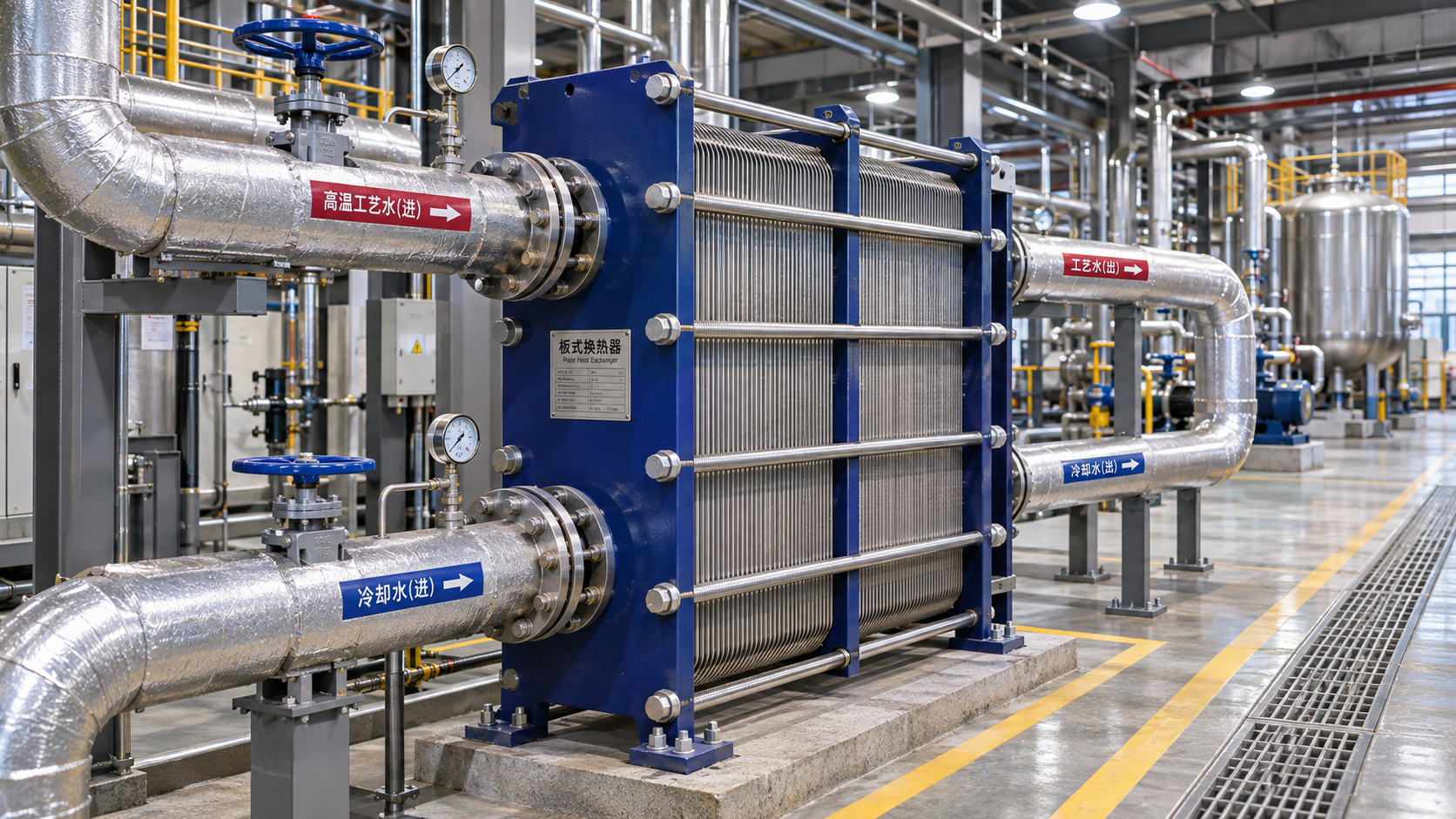
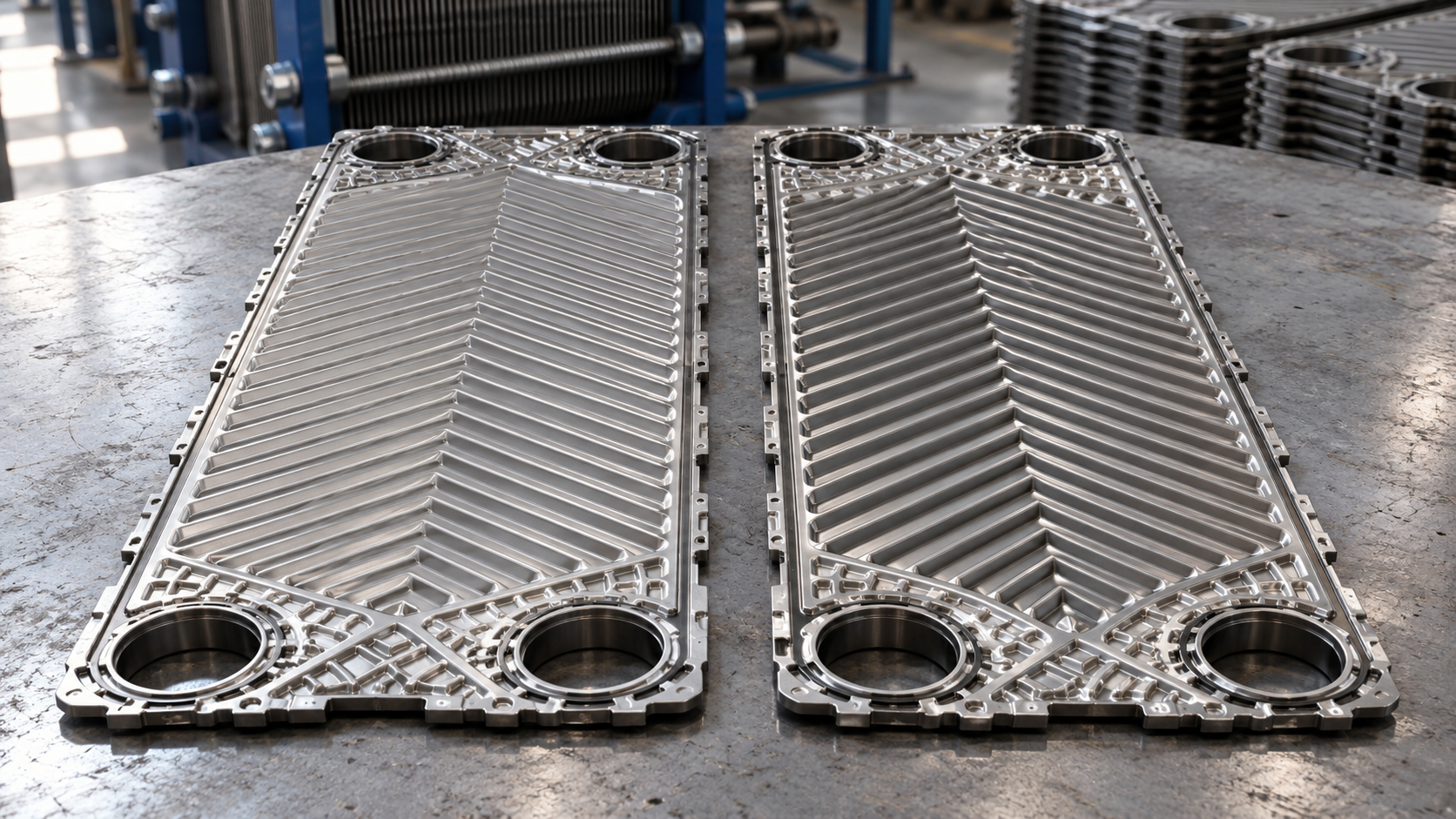
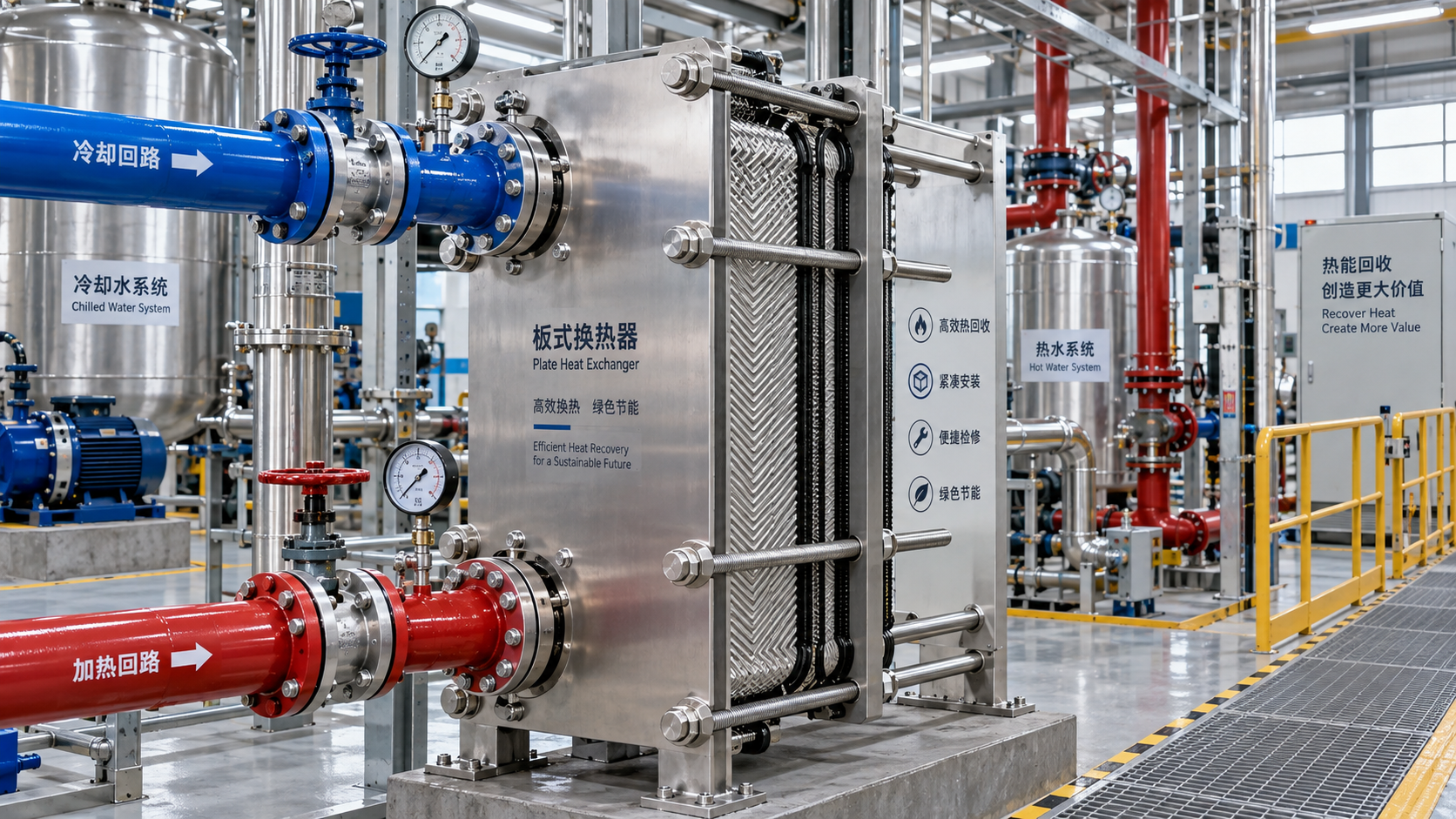
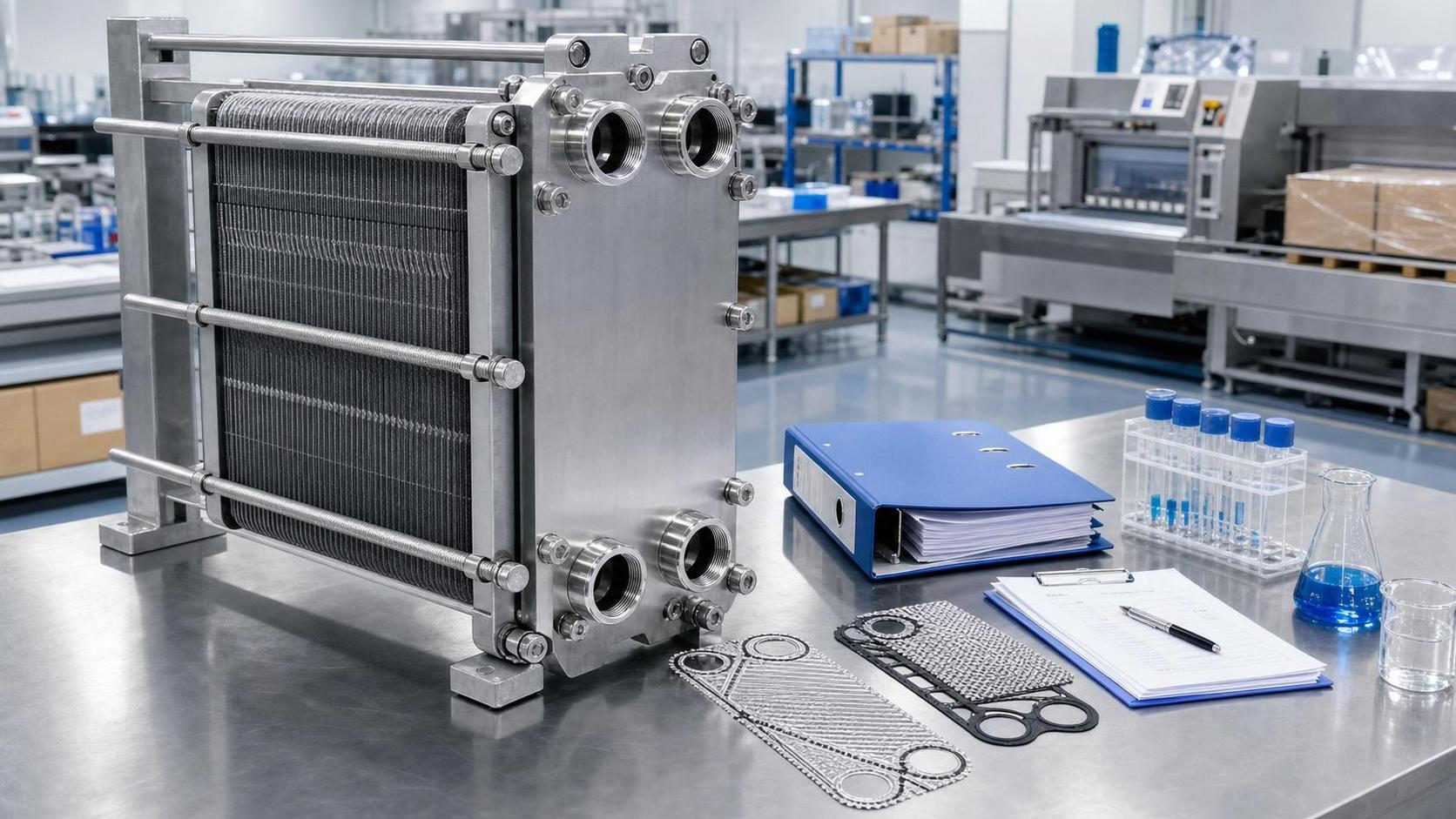
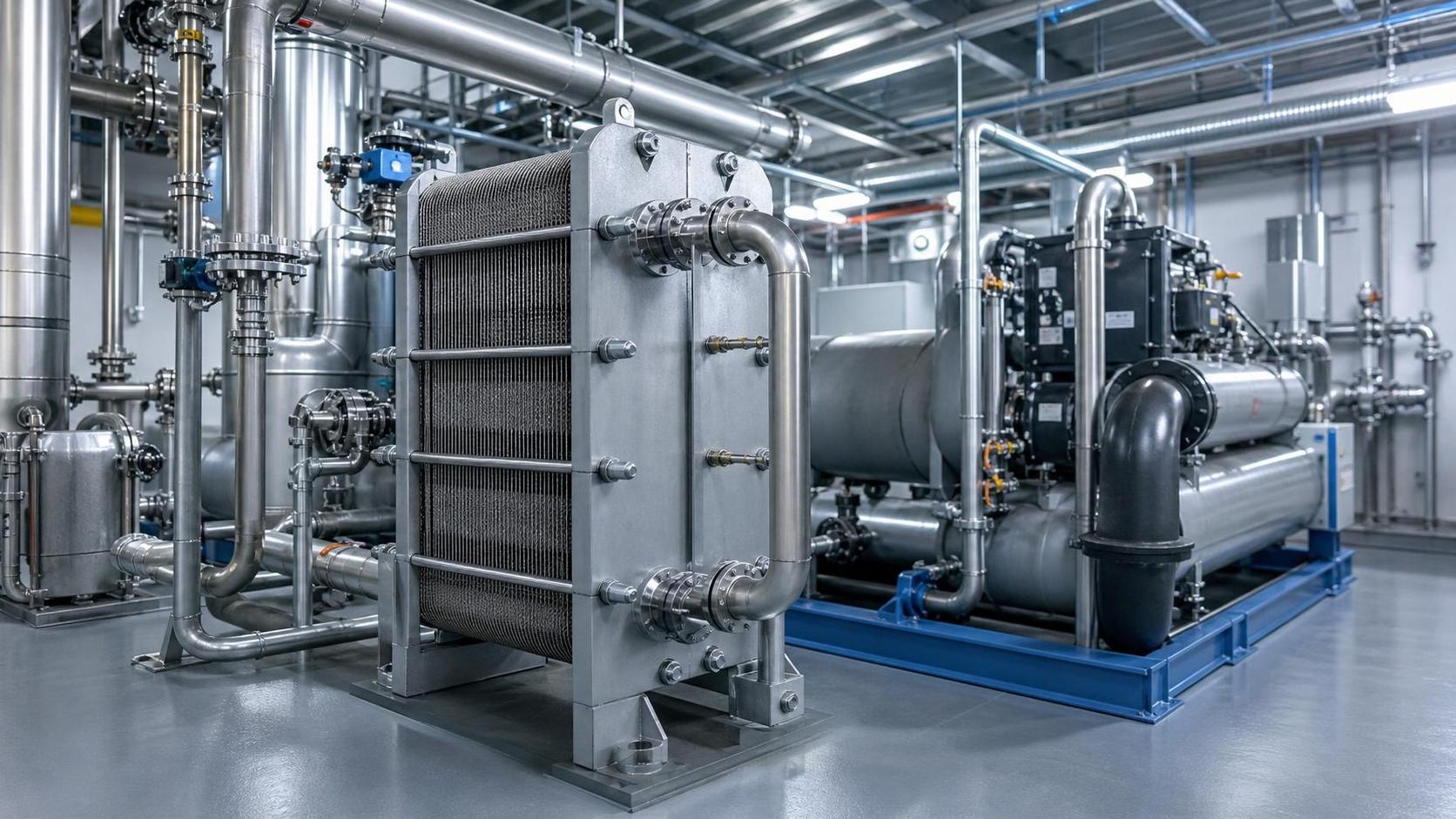
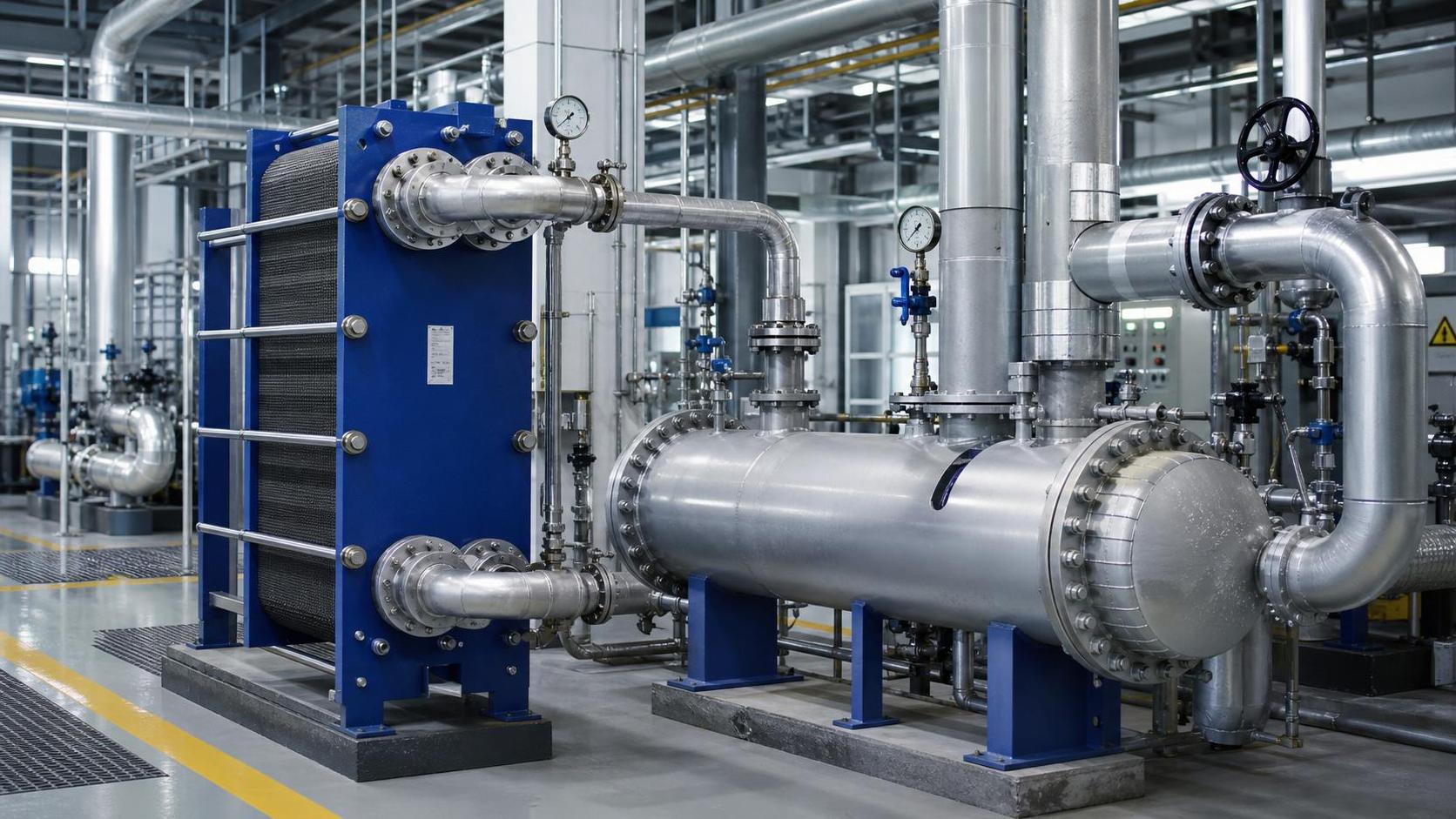
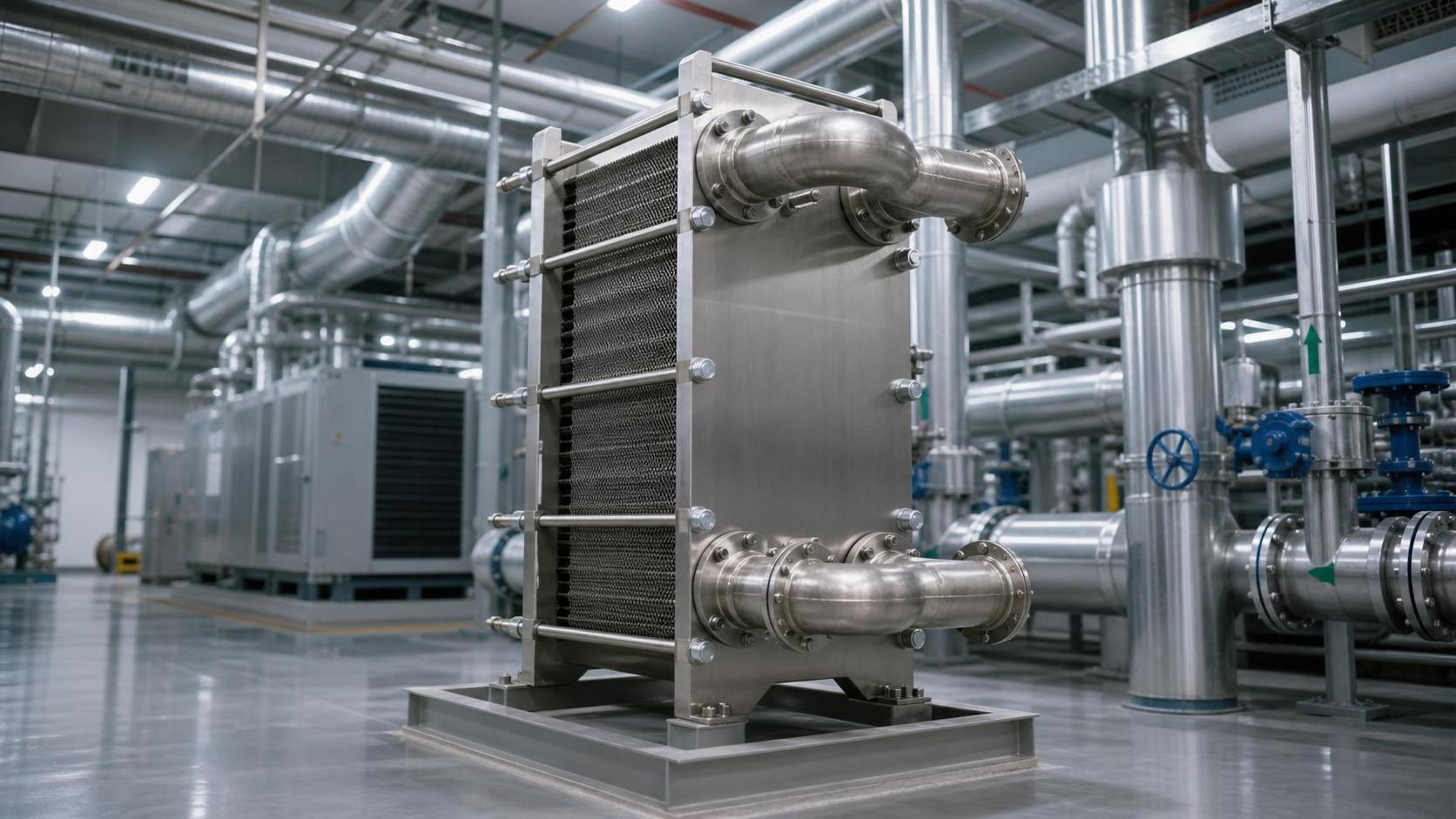
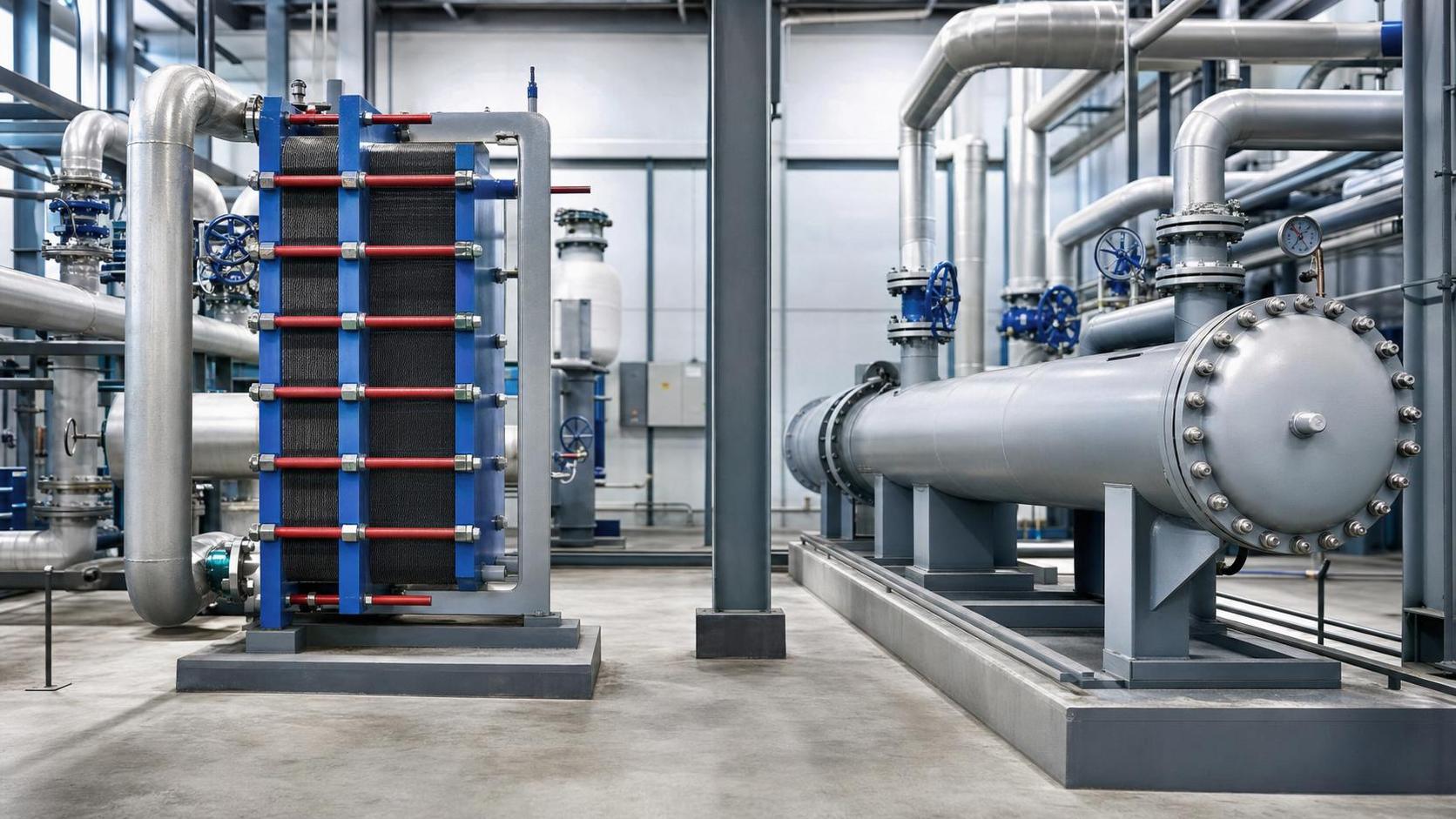
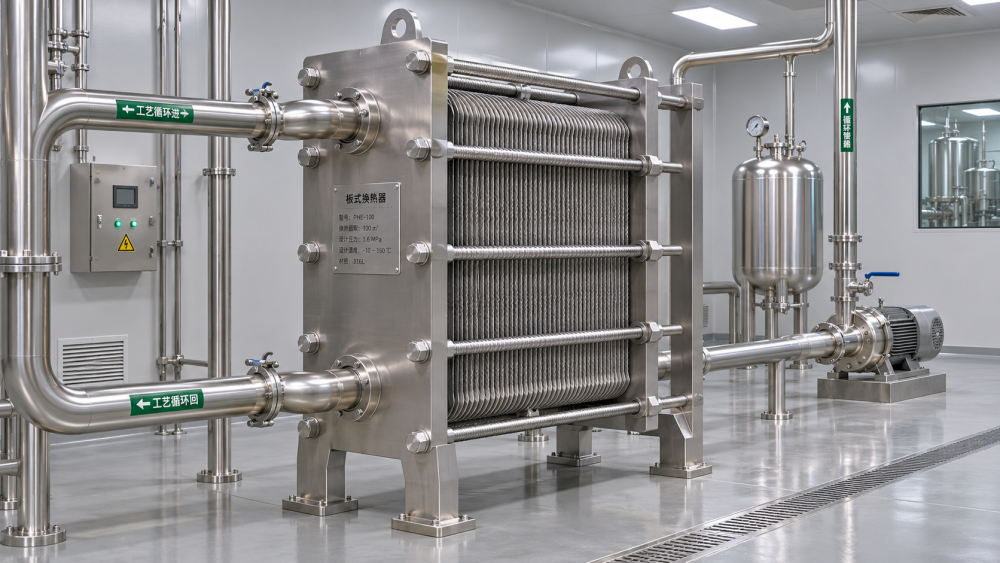
A plate heat exchanger transfers heat through thin metal plates that separate two flowing media. Corrugated channels encourage turbulence and provide substantial heat-transfer area within a compact assembly. Depending on the construction, plates may be sealed with gaskets, welded, or joined by brazing.
The configuration is attractive when a process needs a close approach between product and service-fluid temperatures, but the achievable approach depends on flow arrangement, available area, pressure drop, fouling allowance, and operating variability. A design should be evaluated at minimum and maximum flow, startup, normal production, and cleaning conditions—not only at its nominal duty point.
- Utility heating and cooling: Plate exchangers can separate plant utilities from secondary heating or cooling loops. Direct product-contact requirements may not apply, although leakage and utility-quality risks still require assessment.
- Purified water and water-for-injection systems: They can be used for heating or cooling where wetted materials, drainability, sanitization, temperature control, and contamination prevention are appropriate to the water system design.
- Non-sterile liquid processing: Solutions and other pumpable preparations can be suitable when their viscosity, particulate content, fouling behavior, and cleaning requirements match the selected channel geometry.
- Biopharmaceutical processing: Product heating or cooling may be feasible, but shear sensitivity, residence time, hold-up, adsorption, and microbial control need product-specific evaluation.
A compact exchanger is less compelling when the fluid contains large particles, forms persistent deposits, or is highly sensitive to local temperature and flow conditions. In such cases, accessible tubular or other purpose-designed equipment may offer a more controllable process despite a larger footprint.
Start with the product and the required temperature profile
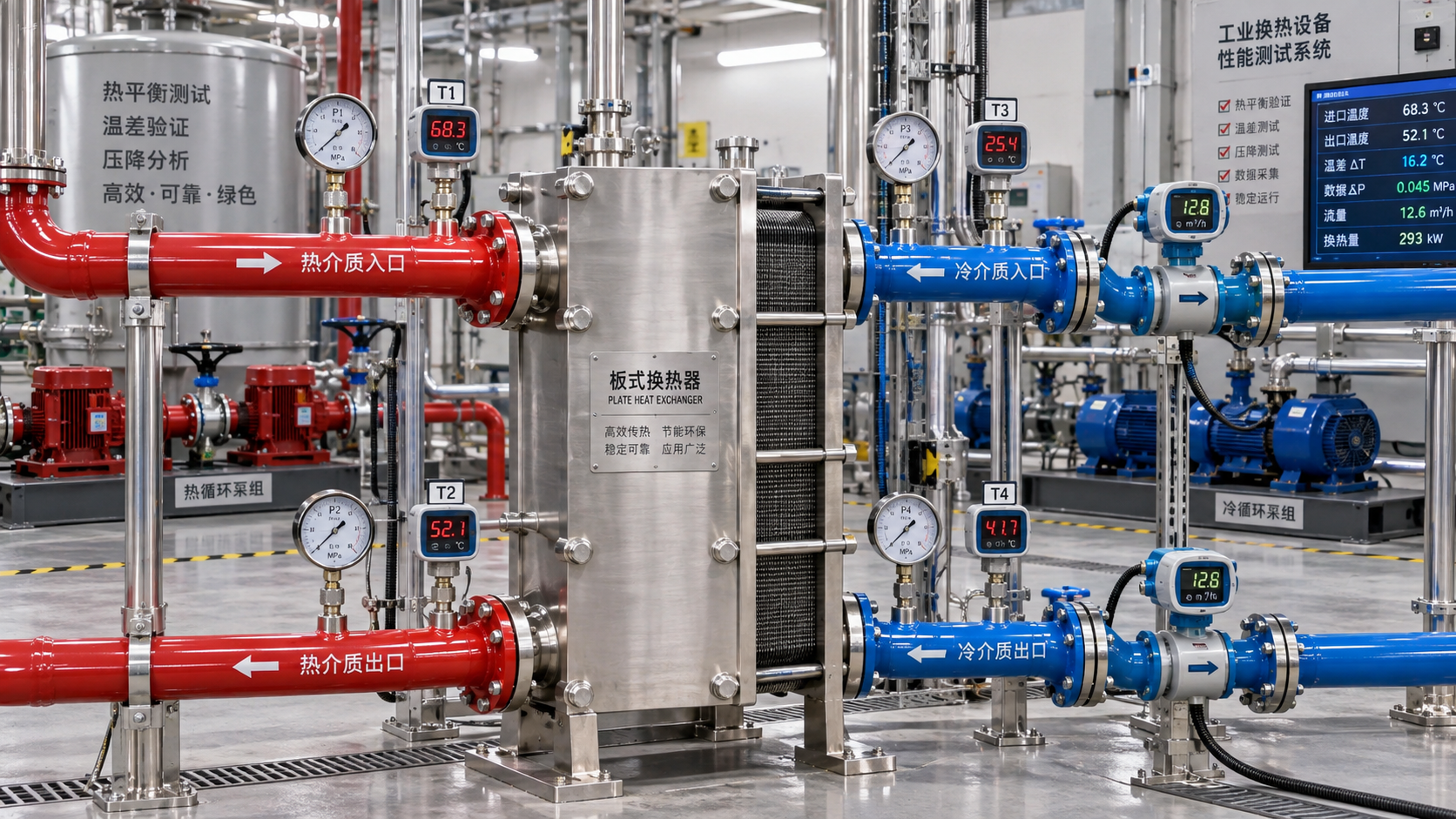
Thermal sizing begins with the required heat load, inlet and outlet temperatures, flow rates, fluid properties, and operating range on both sides. The design must also account for how those properties change with temperature and concentration. A calculated heat duty does not by itself demonstrate that the product will remain within its acceptable temperature exposure.
For a heat-sensitive formulation, examine the temperature of the heating medium, control-valve response, exchanger hold-up volume, and conditions during reduced flow or a stoppage. A hot service fluid can create excessive local exposure even when the measured outlet temperature appears acceptable. Control strategies such as limiting service-fluid temperature, diverting off-specification flow, or stopping heating on loss of product flow should be assessed against the process risk.
For viscous products, pressure drop can become the limiting factor before heat-transfer area does. Narrow channels may improve heat transfer but increase pumping demand and sensitivity to fouling. Suspensions and products containing aggregates also require an assessment of channel blockage, particle damage, and whether representative material can pass through the selected plate pattern.
Where cooling is the objective, check the consequences of low wall temperatures as well as the bulk outlet temperature. Precipitation, crystallization, or freezing near a heat-transfer surface can increase pressure drop and impair cleaning. Transient behavior matters: a unit that is stable at design flow may behave differently during batch changeover or partial-load operation.
Choose the construction around cleanability and contamination risk
The plate pack is only one part of a hygienic system. Connections, distribution areas, seals, instrumentation, drain points, and associated pipework must support the intended cleaning and operating strategy. Equipment described as sanitary still needs to be evaluated against the actual process and site quality requirements.
Wetted materials and surface condition
Specify product-contact metals, elastomers, welds, and any brazing materials for compatibility with the formulation, expected impurities, cleaning agents, and sanitization conditions. Corrosion resistance depends on the complete chemistry and operating envelope, including temperature and exposure time; a stainless-steel designation alone is not a complete compatibility assessment.
Surface finish, weld quality, and material traceability should match the intended use and the site’s quality system. Where relevant, request documentation for wetted materials and evaluate extractables and leachables risks from seals or other nonmetallic components. The need for testing depends on the product, contact conditions, and risk assessment.
Cleaning, sanitization, and inspection
Clean-in-place capability must be demonstrated for the installed system, not inferred from an equipment description. Confirm that cleaning solutions reach the entire product-contact path and that flow, temperature, chemical concentration, contact time, and rinse conditions are appropriate for the residues. The worst case may be a low-flow branch or distribution zone rather than the main plate channels.
Assess drainability in the installed orientation and identify any retained liquid that could dilute the next batch or support microbial growth. If steam or hot-water sanitization is planned, verify that plates, gaskets, connections, and pressure ratings tolerate the complete cycle, including thermal expansion and cooling. Where disassembly is part of the cleaning strategy, define inspection, reassembly, and leak-testing controls.
Control the barrier between product and service fluid
A plate exchanger normally relies on a thin physical barrier between the two media. Plate damage, seal failure, corrosion, or incorrect assembly can create a leakage path. The consequence depends on the fluids involved: a leak from a lower-quality cooling medium into a high-quality product stream can be more consequential than product loss to the service side.
Pressure hierarchy is a risk-control measure, not a guarantee against contamination. Maintaining product pressure above service-side pressure can reduce inward leakage during steady operation, but startup, shutdown, cleaning, and loss of flow may reverse that relationship. The assessment should cover differential pressure throughout the operating cycle and define alarms or interlocks where justified.
For higher-consequence duties, consider whether a double-wall exchanger, an intermediate fluid loop, or another separation arrangement provides an appropriate additional barrier. Each introduces trade-offs in heat transfer, complexity, and monitoring. External leak visibility is useful only if the installation makes leakage observable and the response procedure is defined.
Check mechanical limits across the complete lifecycle
Confirm the maximum allowable pressure and temperature for each side, as well as the permitted differential pressure across the plates. Design for the full range of operating and upset conditions, including pump shutoff, control-valve closure, thermal expansion, pressure surges, and cleaning cycles. The plate, gasket, frame, and connection ratings must all be compatible with the intended envelope.
Pressure drop deserves equal attention on product and service sides. Excessive product-side loss can alter flow or damage a sensitive material through the associated pumping requirements; excessive utility-side loss can prevent the required heating or cooling duty. Include the effects of fouling and realistic fluid properties rather than sizing only for clean water.
Maintenance access is another decision boundary. A gasketed frame needs sufficient clearance to open the plate pack, remove plates, inspect sealing surfaces, and reassemble to the specified dimensions. A compact footprint loses some of its advantage if the surrounding installation makes those activities impractical.
What evidence supports GMP suitability?
GMP suitability is established through the intended use, risk assessment, equipment design, and qualification within the site’s quality system. Applicable obligations depend on jurisdiction, product, and process stage. Relevant frameworks can include EU GMP, including Annex 1 where sterile manufacture is involved, and applicable US FDA current good manufacturing practice requirements; a named standard or certification alone does not establish compliance.
Define the required evidence before equipment selection so that documentation and testing are built into the specification. Depending on the application, the package can include:
- Design drawings showing flow paths, connections, plate arrangement, drain points, and instrument locations.
- Material and wetted-component documentation, including relevant gasket compatibility and traceability records.
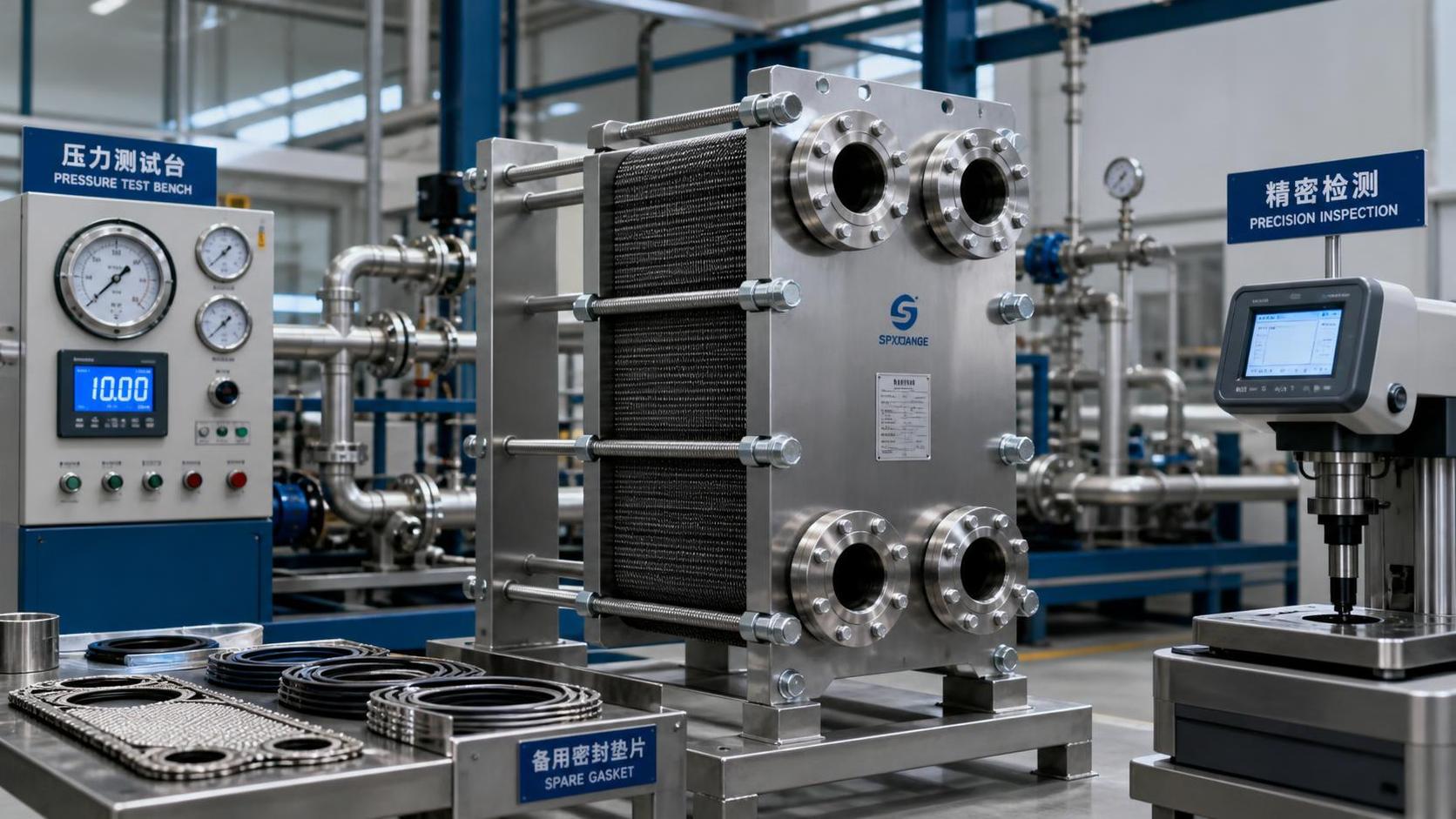
- Pressure and leak-test records, with acceptance criteria appropriate to the construction and intended use.
- Surface-finish and weld documentation where specified for product-contact areas.
- Instructions and limits for cleaning, sanitization, inspection, gasket replacement, and reassembly.
- Qualification evidence for installation and operation, plus process-specific cleaning and performance validation where required.
Testing should address the installed system’s difficult conditions. For example, a cooling exchanger used in a purified water loop may need evidence that temperature control, sanitization, and leakage controls work during normal operation and transitions. For a product-contact batch process, residue removal and recovery after a stoppage may be the more demanding questions.
When an alternative deserves preference
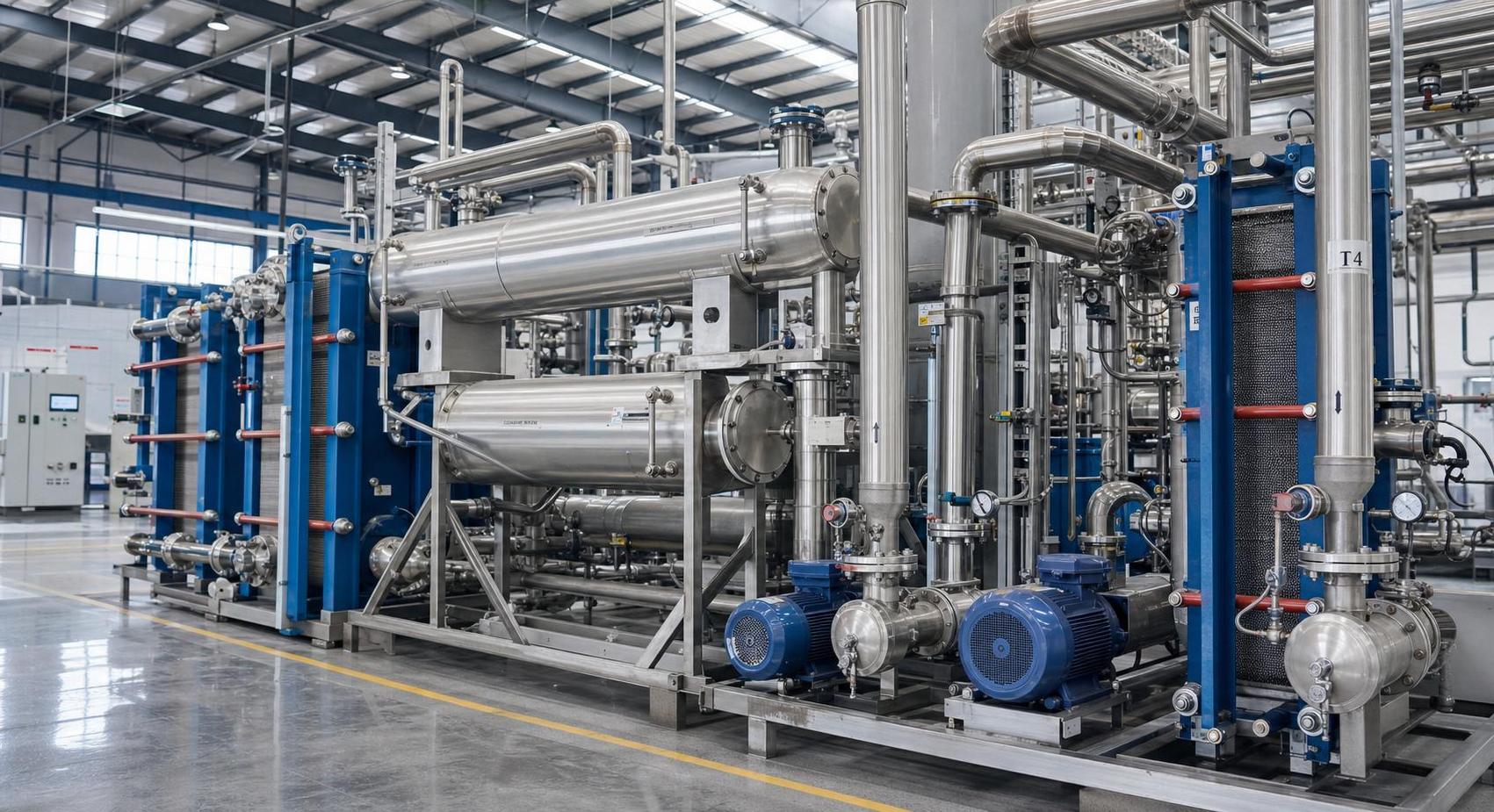
A tubular heat exchanger can be preferable for fluids with substantial particulates, higher viscosity, or fouling characteristics that make narrow plate channels difficult to operate or clean. Tube geometry can also offer different inspection and mechanical-cleaning options, although these depend on the specific design. The trade-off can be greater space demand and a different heat-transfer profile.
A jacketed vessel may be more appropriate when the process requires controlled bulk mixing, addition of ingredients during heating, or longer residence time rather than continuous passage through an exchanger. Its suitability depends on mixing performance and heat-transfer capacity, particularly when avoiding hot or cold zones is critical.
For a hypothetical sterile, heat-sensitive product cooled against a plant utility, the decision should not rest on footprint alone. Compare a hygienic plate design with an intermediate loop or double-wall barrier against a suitable tubular alternative, then evaluate product exposure, contamination consequences, cleaning validation, and maintenance access under the same process conditions.
Select a plate heat exchanger when its thermal advantages remain intact after those constraints are applied. If acceptable pressure drop, product protection, cleanability, barrier integrity, and qualification evidence cannot all be demonstrated for the intended duty, a different heat-transfer arrangement is the stronger choice.
Ready when you are. Send us a message to get started.
Related News
- When are plate heat exchangers suitable for pharmaceutical production?Author :Thermodynamics Analyst

- When are plate heat exchangers an energy-efficient solution?Author :Thermodynamics Analyst

- How corrugation angle affects heat transfer in plate heat exchangersAuthor :Thermodynamics Analyst

- When do plate heat exchangers suit Middle East seawater cooling?Author :Thermodynamics Analyst

- When does gasketed plate heat exchanger technology suit your process?Author :Thermodynamics Analyst

- When does heat recovery improve data center cooling efficiency?Author :Thermodynamics Analyst

- How Do I Verify Heat Transfer Calculations in a Supplier Quotation?Author :Thermodynamics Analyst

- How to evaluate a plate heat exchangers supplier before orderingAuthor :Thermodynamics Analyst

- EU Tightens Fatigue Checks for Plate Heat ExchangersAuthor :Thermodynamics Analyst

- EU PFAS Rule Adds New Export Filing for Cooling EquipmentAuthor :Thermodynamics Analyst

- EU EN 13445-4:2026 Adds Fatigue Report RequirementAuthor :Thermodynamics Analyst

- EU Updates EN 13445-4 for Plate ExchangersAuthor :Thermodynamics Analyst

- How to Compare Energy-Efficient Heat Exchange SolutionsAuthor :Thermodynamics Analyst

- Brazed Plate Exchanger Design: 7 Factors That Affect Heat TransferAuthor :Thermodynamics Analyst

- EU CBAM Pilot List Adds Plate ExchangersAuthor :Thermodynamics Analyst

- How Heat Exchange Systems Improve Temperature Control StabilityAuthor :Thermodynamics Analyst

- Japan to Require Efficiency Labels for Plate ExchangersAuthor :Thermodynamics Analyst

- EU REACH Adds PFAS Ban for Plate Heat ExchangersAuthor :Thermodynamics Analyst

- India Enforces BIS Rule for Plate Heat ExchangersAuthor :Thermodynamics Analyst

- DIN EN 13445-6:2026 Tightens Plate Exchanger CE RulesAuthor :Thermodynamics Analyst

- EU REACH Restricts PFAS Seals for Plate Heat ExchangersAuthor :Thermodynamics Analyst

- India Mandates BIS Certification for Imported Plate ExchangersAuthor :Thermodynamics Analyst

- Vietnam Requires QR Labels on Imported Plate Heat ExchangersAuthor :Thermodynamics Analyst

- EU EN 13445-4:2026 Tightens NDT Rules for Heat ExchangersAuthor :Thermodynamics Analyst

- EPA Clears R-1234ze(E) for Plate Exchanger SystemsAuthor :Thermodynamics Analyst
 for Plate Exchanger Systems")
- Heat Exchange Equipment Selection: Key Performance Checks Before You Compare ModelsAuthor :Thermodynamics Analyst

- ASHRAE 90.1-2026 Raises Plate Exchanger Efficiency ThresholdAuthor :Thermodynamics Analyst

- Heat Exchange Systems: How to Choose the Right SetupAuthor :Thermodynamics Analyst

- EPA SNAP 89 Takes Effect for Plate ExchangersAuthor :Thermodynamics Analyst

- How to Compare Heat Exchange Solutions for Lower Energy UseAuthor :Thermodynamics Analyst

- EPA SNAP 89 Expands Filing Rules for Plate Heat ExchangersAuthor :Thermodynamics Analyst

- EPA SNAP update adds filing rule for plate heat exchangersAuthor :Thermodynamics Analyst

- Industrial Heat Recovery: Where the Payback Is Fastest in 2026Author :Thermodynamics Analyst

- California EPR Deadline Nears for Cooling Equipment MakersAuthor :Thermodynamics Analyst

- Heat Exchanger Technology: Plate vs Shell and Tube for EfficiencyAuthor :Thermodynamics Analyst

- Industrial Heat Recovery Options for High-Temperature ProcessesAuthor :Thermodynamics Analyst