



EU Updates EN 13445-4 for Plate Exchangers




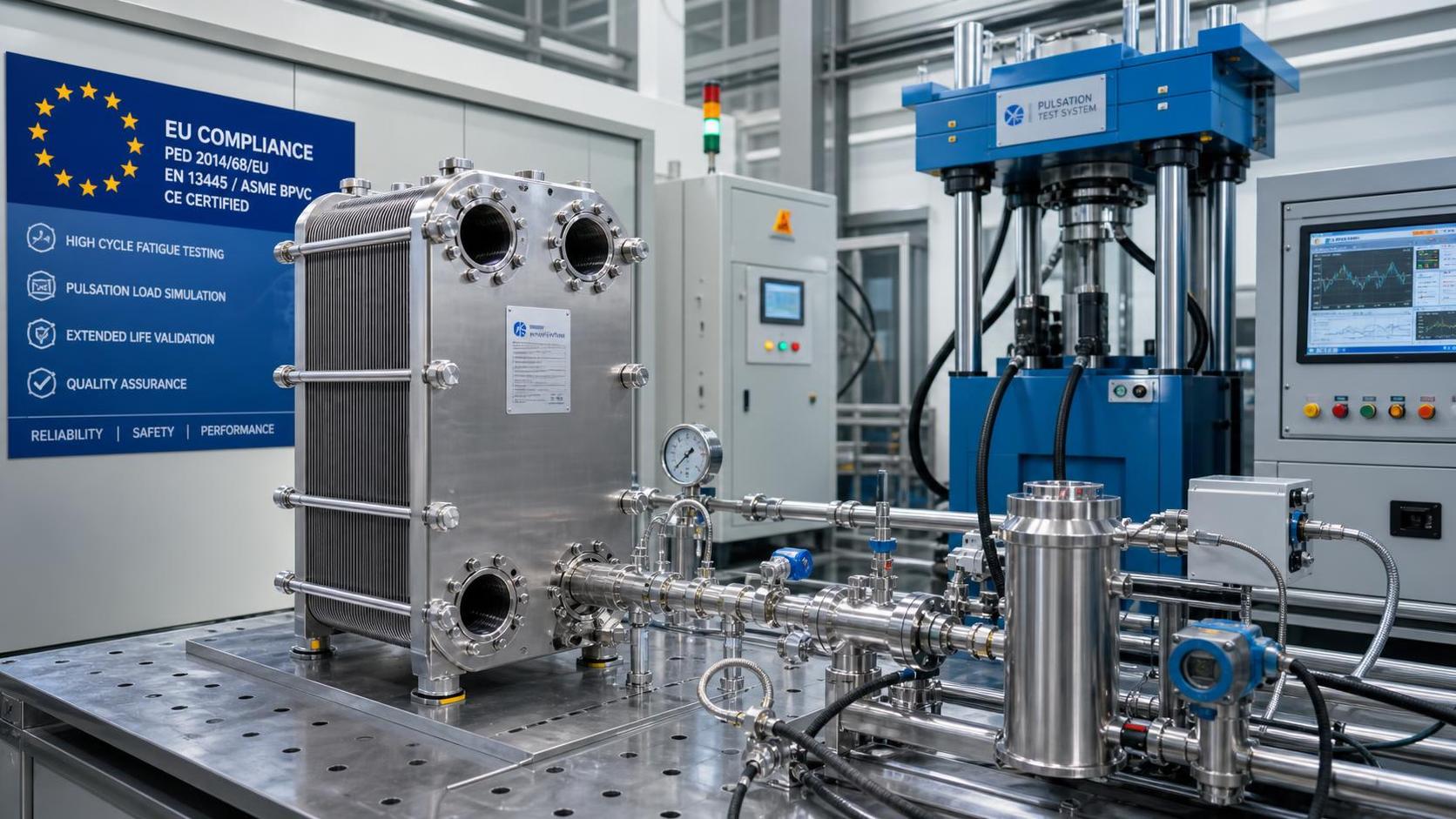
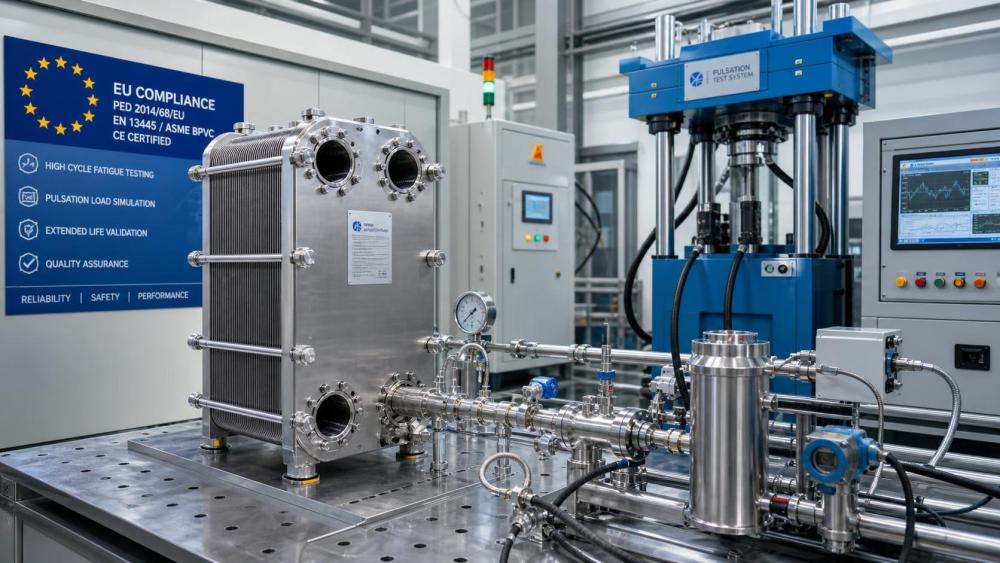
On August 3, 2026, CEN released the revised EN 13445-4:2026, introducing a new compliance requirement for industrial plate exchangers exported to the EU: they must now pass updated fatigue life verification and pulsating load simulation testing. Because the rule takes effect immediately and allows only a 90-day transition period, it deserves close attention from exporters, certification teams, equipment manufacturers, and buyers serving food, pharmaceutical, and chemical applications where high-cycle operating conditions are common.
What the revised standard now requires
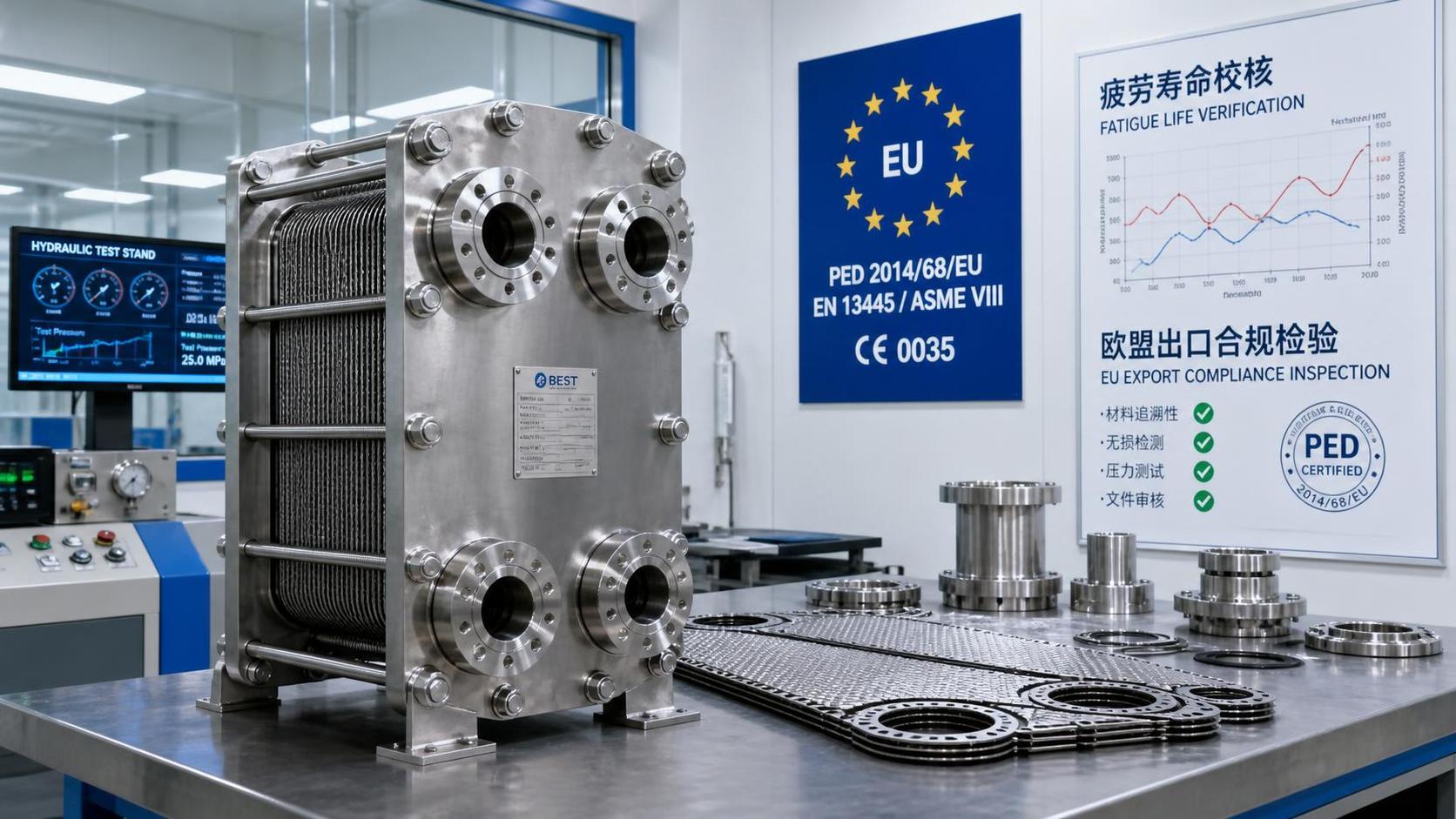
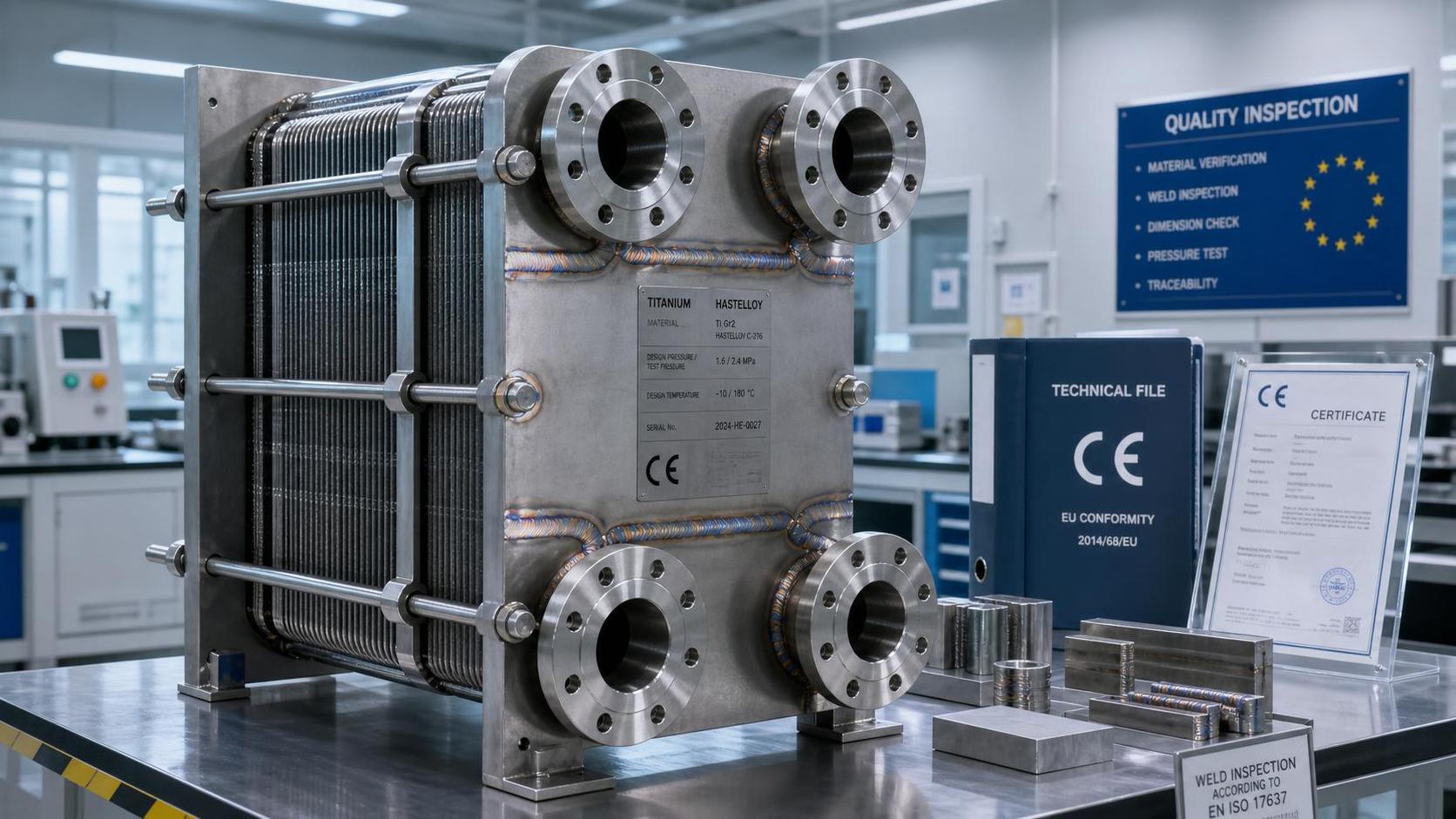
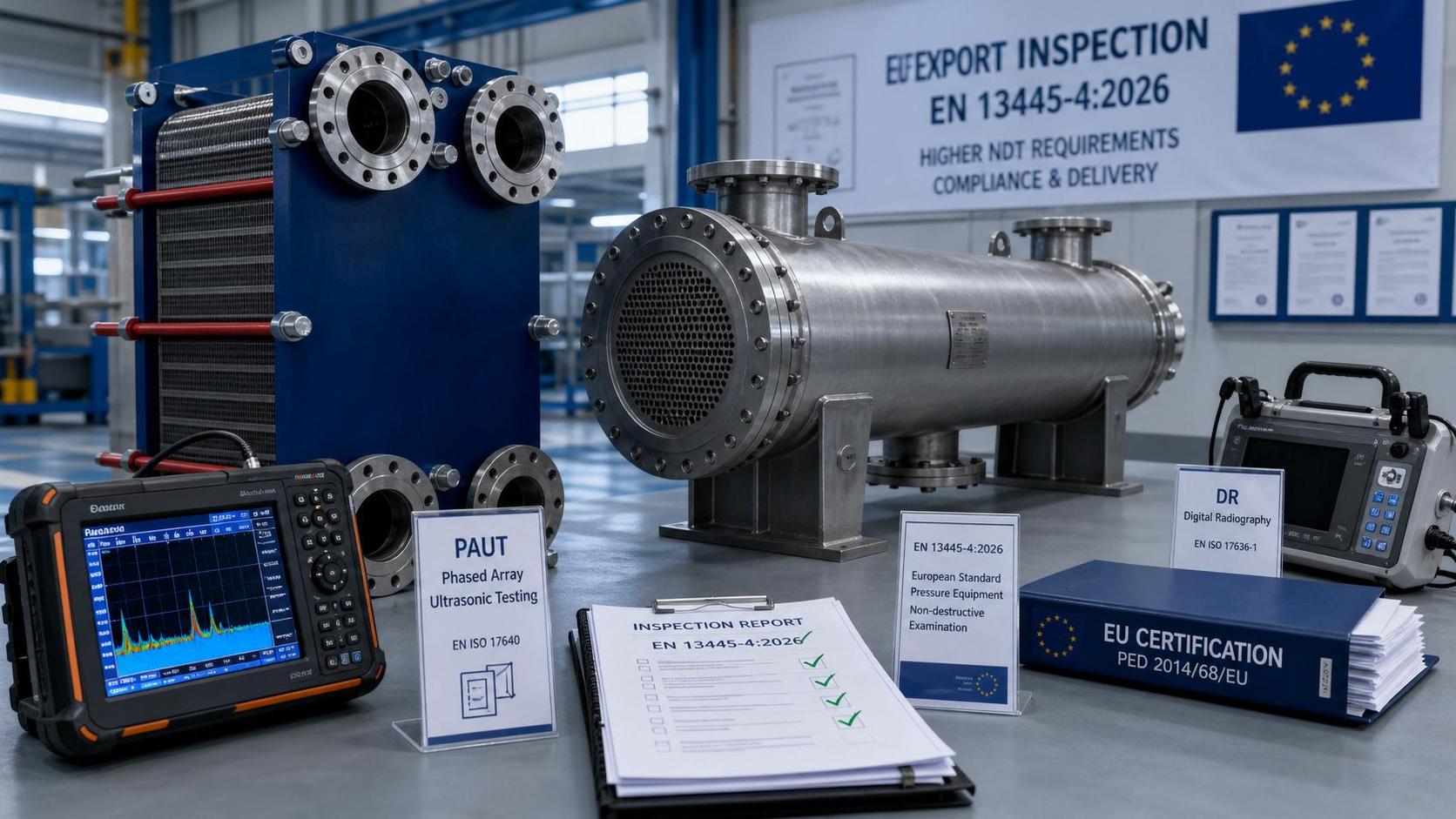
The confirmed change is that the revised EN 13445-4:2026 was formally published by CEN on August 3, 2026. Under the revision, all industrial Plate Exchangers exported to the EU must complete the new fatigue life and pulsating load condition simulation tests. The standard is effective immediately, and the transition period is limited to 90 days. The update directly affects the export certification path for Chinese suppliers, with particular compliance implications for products used in food, pharmaceutical, and chemical sectors under high-cycle duty conditions.
Where the pressure will be felt first
Export-facing manufacturers and certification teams
From an industry perspective, manufacturers shipping industrial plate exchangers to the EU may feel the impact first at the certification and documentation stage. The practical issue is not only product design, but whether existing approval pathways, technical files, and testing arrangements still align with the revised requirement within the short transition window.
Suppliers serving high-cycle process industries
Analysis shows that suppliers focused on food, pharmaceutical, and chemical applications may face a more immediate compliance burden because the event summary specifically highlights high-cycle operating conditions in these sectors. The main pressure points are likely to center on product qualification, customer acceptance, and the ability to demonstrate that equipment can meet the revised fatigue-related verification threshold.
EU buyers and project procurement functions
Buyers, importers, and procurement teams connected to EU-bound projects may also need to watch this change closely. The reason is straightforward: when a standard changes with immediate effect and a short transition period, procurement decisions, supplier screening, and delivery planning can all become more sensitive to certification readiness and test evidence.
Supply chain and delivery coordination
Observably, supply chain service providers and contract execution teams may be affected through timing rather than product ownership. If additional testing or revalidation is needed, the business impact may appear in scheduling, order confirmation, document review, and communication between suppliers and customers rather than in a single technical step.
What companies should watch now
Track how the revised wording is applied in practice
What deserves closer attention is the distinction between the published rule and its implementation in live export and certification workflows. Companies should closely monitor any further official wording, interpretations, or procedural clarifications related to the revised EN 13445-4:2026 requirement, especially where fatigue life verification and pulsating load simulation must be evidenced.
Review product lines tied to EU export exposure
For businesses with multiple product categories, the immediate focus should be on plate exchanger models intended for EU delivery, particularly those used in food, pharmaceutical, and chemical environments mentioned in the event summary. The key question is which products may face the greatest documentation or test-readiness gap during the 90-day transition period.
Recheck certification materials and customer-facing documents
Companies should also pay attention to whether current technical files, qualification records, and export-related documentation remain consistent with the revised standard. In practice, this matters not only for formal approval but also for customer communication, contract confidence, and shipment planning.
Prepare for timing and communication risks
Analysis shows that the short transition period makes internal coordination especially important. Export sales teams, engineering teams, compliance staff, and supply chain coordinators may need to align quickly on delivery commitments, pending orders, and customer questions about whether products can satisfy the new verification expectation.
Why this looks like more than a routine update
As an editorial observation, this development is more appropriate to understand as an immediate compliance change with longer-term signaling value. The immediate part is clear: a revised standard has been published, it is already effective, and the transition period is short. The longer-term signal is that fatigue performance and pulsating load validation are becoming more visible in market access expectations for EU-bound industrial equipment in relevant applications.
At the same time, this should not be overstated. Based on the provided information alone, it is not yet possible to conclude how broadly certification practices, sourcing decisions, or competitive positions will shift after the transition period. That remains an area for continued observation rather than a settled outcome.
How the market may best read this development
The industry significance of this update lies in its combination of technical specificity and short implementation timing. It is not simply a headline about a standards revision; it directly touches export certification pathways for Chinese suppliers and raises the compliance threshold for certain application scenarios. A balanced reading is that this is already a real operational issue for affected businesses, while its wider commercial consequences still need to be tracked through actual implementation.
Basis of this article
This article is based on the user-provided news title, event date, and event summary concerning the release of EN 13445-4:2026 by CEN on August 3, 2026. For this type of industry update, commonly relevant source categories may include official notices, standardization body documents, company disclosures, industry association updates, and reporting by authoritative trade media. A specific official source link was not provided in the input, so the exact source document and any subsequent implementation details still require ongoing verification. Continued attention should focus on official clarifications, certification practice changes, and how the revised requirement is applied in EU export workflows.
Related News
- How to evaluate a plate heat exchangers supplier before orderingAuthor :Thermodynamics Analyst

- EU Tightens Fatigue Checks for Plate Heat ExchangersAuthor :Thermodynamics Analyst

- EU PFAS Rule Adds New Export Filing for Cooling EquipmentAuthor :Thermodynamics Analyst

- EU EN 13445-4:2026 Adds Fatigue Report RequirementAuthor :Thermodynamics Analyst

- EU Updates EN 13445-4 for Plate ExchangersAuthor :Thermodynamics Analyst

- How to Compare Energy-Efficient Heat Exchange SolutionsAuthor :Thermodynamics Analyst

- Brazed Plate Exchanger Design: 7 Factors That Affect Heat TransferAuthor :Thermodynamics Analyst

- EU CBAM Pilot List Adds Plate ExchangersAuthor :Thermodynamics Analyst

- How Heat Exchange Systems Improve Temperature Control StabilityAuthor :Thermodynamics Analyst

- Japan to Require Efficiency Labels for Plate ExchangersAuthor :Thermodynamics Analyst

- EU REACH Adds PFAS Ban for Plate Heat ExchangersAuthor :Thermodynamics Analyst

- India Enforces BIS Rule for Plate Heat ExchangersAuthor :Thermodynamics Analyst

- DIN EN 13445-6:2026 Tightens Plate Exchanger CE RulesAuthor :Thermodynamics Analyst

- EU REACH Restricts PFAS Seals for Plate Heat ExchangersAuthor :Thermodynamics Analyst

- India Mandates BIS Certification for Imported Plate ExchangersAuthor :Thermodynamics Analyst

- Vietnam Requires QR Labels on Imported Plate Heat ExchangersAuthor :Thermodynamics Analyst

- EU EN 13445-4:2026 Tightens NDT Rules for Heat ExchangersAuthor :Thermodynamics Analyst

- EPA Clears R-1234ze(E) for Plate Exchanger SystemsAuthor :Thermodynamics Analyst
 for Plate Exchanger Systems")
- Heat Exchange Equipment Selection: Key Performance Checks Before You Compare ModelsAuthor :Thermodynamics Analyst

- ASHRAE 90.1-2026 Raises Plate Exchanger Efficiency ThresholdAuthor :Thermodynamics Analyst

- Heat Exchange Systems: How to Choose the Right SetupAuthor :Thermodynamics Analyst

- EPA SNAP 89 Takes Effect for Plate ExchangersAuthor :Thermodynamics Analyst

- How to Compare Heat Exchange Solutions for Lower Energy UseAuthor :Thermodynamics Analyst

- EPA SNAP 89 Expands Filing Rules for Plate Heat ExchangersAuthor :Thermodynamics Analyst

- EPA SNAP update adds filing rule for plate heat exchangersAuthor :Thermodynamics Analyst

- Industrial Heat Recovery: Where the Payback Is Fastest in 2026Author :Thermodynamics Analyst

- California EPR Deadline Nears for Cooling Equipment MakersAuthor :Thermodynamics Analyst

- Heat Exchanger Technology: Plate vs Shell and Tube for EfficiencyAuthor :Thermodynamics Analyst

- Industrial Heat Recovery Options for High-Temperature ProcessesAuthor :Thermodynamics Analyst

- Heat Transfer Problems in Process Lines: Causes and Practical FixesAuthor :Thermodynamics Analyst

- India Tightens Plate Exchanger Import Clearance RulesAuthor :Thermodynamics Analyst

- SABIC Methanol Force Majeure Extended to Q4 2026Author :Thermodynamics Analyst

- How to Improve Heat Exchanger Efficiency Without Major RetrofitAuthor :Thermodynamics Analyst

- Plate Heat Exchange vs Shell & Tube: Which Fits Your Process Better?Author :Thermodynamics Analyst

- Heat Transfer Basics: What Affects Efficiency Most?Author :Thermodynamics Analyst
![]()
- Microchannel Heat Exchangers vs Plate Exchangers: Key Trade-OffsAuthor :Thermodynamics Analyst