



Vietnam Mandates VEE Labels for Imported Chillers




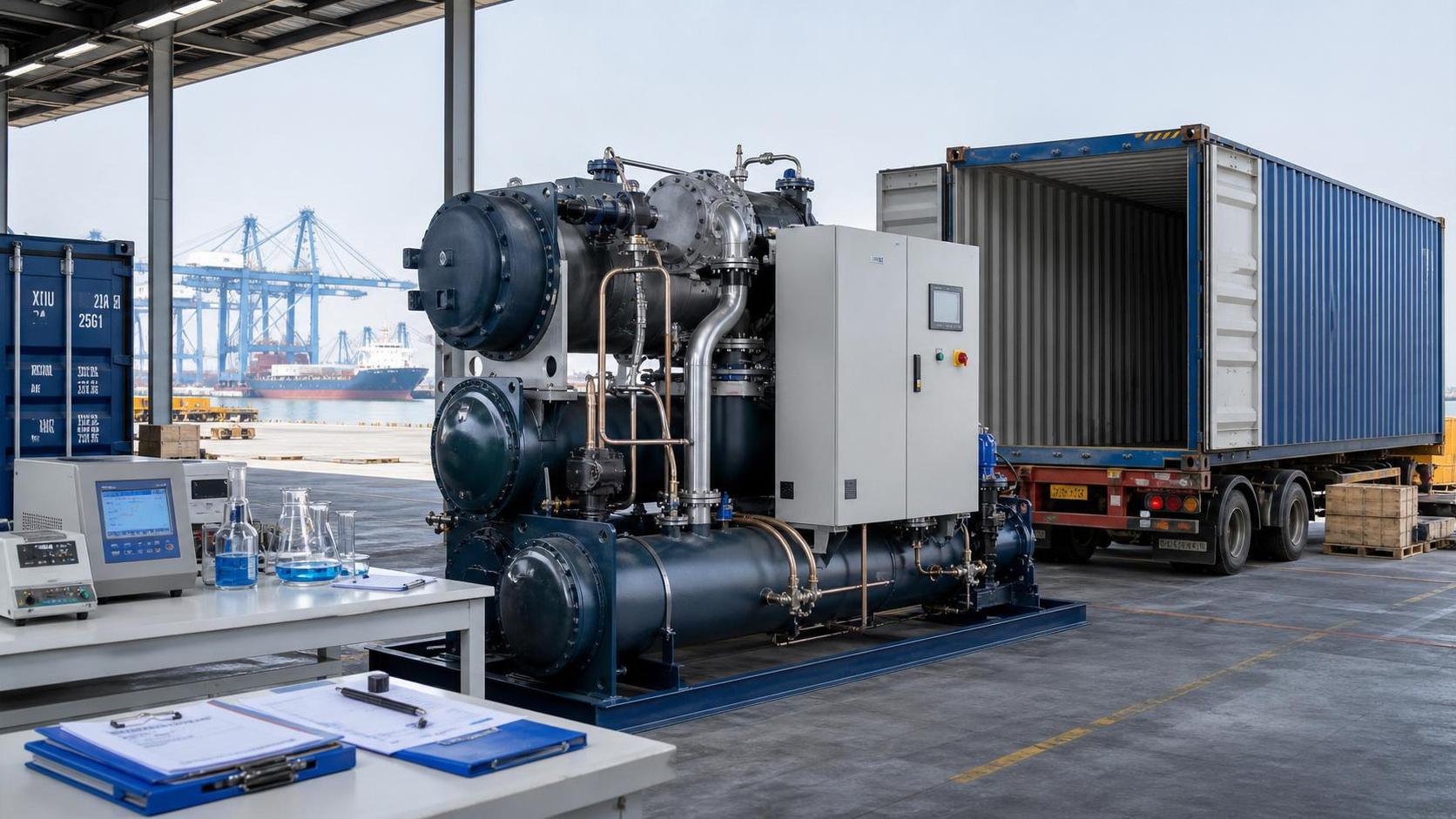
Vietnam is moving quickly to tighten compliance requirements for imported industrial chillers. On June 14, 2026, the Ministry of Industry and Trade (MOIT) signed Circular No. 32/2026/TT-BCT, setting a July 1, 2026 start date for mandatory Vietnam Energy Efficiency (VEE) labeling on imported Industrial Chillers. For manufacturers, exporters, importers, distributors, and procurement teams serving the Vietnam market, the short implementation window and added documentation requirements make this a practical market-access issue rather than a routine regulatory update.
What the new rule formally requires
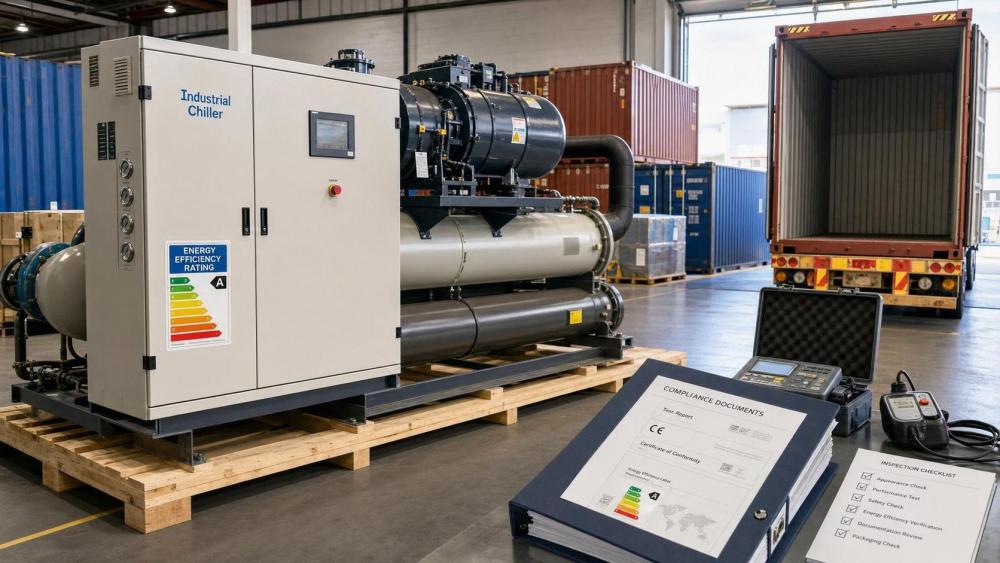
According to the provided information, MOIT signed Circular No. 32/2026/TT-BCT on June 14, 2026. The new rule requires all imported Industrial Chillers to carry the Vietnam Energy Efficiency label (VEE) from July 1, 2026.
The classification basis is TCCS 8723:2026. The minimum market-entry threshold is Grade C, defined as IPLV ≥ 5.2. The rule also requires a Vietnamese-language energy efficiency test report and an original manufacturer energy consumption declaration.
Where the immediate pressure is likely to appear
Imported equipment transactions may face a tighter compliance checkpoint
From an industry perspective, importers and trading companies are the first group likely to feel the direct effect, because the rule applies specifically to imported Industrial Chillers. The impact is likely to center on product eligibility review, document readiness, and shipment clearance preparation. What deserves closer attention is whether each model already has the required labeling and supporting paperwork aligned with the Vietnam market.
Manufacturers may need to adjust document delivery for Vietnam-bound products
Analysis shows that original equipment manufacturers serving Vietnam may need to respond not only on product performance classification, but also on documentation format and language. The requirement for a Vietnamese-language test report and an original manufacturer energy consumption declaration means technical files prepared for other markets may not be sufficient without localization or additional coordination.
Distributors and project-facing sellers may need earlier customer communication
For distributors and channel-side sales teams, the likely impact is less about policy interpretation and more about transaction execution. If a product cannot clearly demonstrate compliance with the VEE labeling rule, sales discussions, quotations, and delivery commitments may all require extra verification. Observably, teams handling bid support, project supply, or specification matching should pay close attention to document completeness before confirming supply schedules.
Procurement and end-user buyers may need to review specification assumptions
Buyers sourcing Industrial Chillers for Vietnam projects may also be affected through procurement planning and supplier screening. The new threshold of Grade C under TCCS 8723:2026 introduces a clear minimum entry condition. Analysis shows that purchasers may need to confirm at an earlier stage whether shortlisted equipment can meet the required rating and provide the required Vietnamese-language compliance materials.
What companies should watch in the near term
Check model-level compliance, not only product-family claims
What deserves closer attention is whether each imported chiller model intended for Vietnam can meet the stated minimum threshold of Grade C under TCCS 8723:2026. General efficiency claims or non-local documentation may not address the specific compliance requirement described in the new rule.
Prepare Vietnamese-language documents before shipment decisions
The documentation requirement is not a minor administrative detail. Companies involved in export, import, or local distribution should pay attention to the availability of a Vietnamese-language energy efficiency test report and the original manufacturer energy consumption declaration, because these materials may affect timing, handover, and customer acceptance processes.
Separate policy text from operational readiness
Analysis shows that the existence of a signed circular and the ability to execute compliant deliveries are not the same thing. Businesses should distinguish between understanding the rule and being operationally ready for labeling, document submission, and internal review workflows tied to Vietnam-bound orders.
Track any follow-up clarification linked to implementation
Because the implementation date arrives shortly after the signing date, companies should continue watching for any official clarification, interpretive language, or procedural detail that may affect actual filing, labeling practice, or supporting document expectations. This is especially relevant for teams managing lead times and cross-border coordination.
How this update is best understood right now
Observably, this development already represents a concrete compliance change rather than a distant policy signal, because it includes a signed circular, a named standard, a minimum threshold, and a clear implementation date. At the same time, it is more appropriate to understand this as a market-access control point for imported Industrial Chillers, not as a complete picture of Vietnam's broader cooling equipment regulation beyond the facts provided here.
Analysis shows that the most important near-term implication is procedural: market participants must connect product efficiency classification, local-language technical documentation, and shipment planning into one compliance workflow. Whether the rule later leads to broader product or sourcing adjustments remains a matter for continued observation rather than a confirmed outcome.
A short-term compliance change with longer-term signaling value
For the industry, the immediate meaning of this update is clear: imported Industrial Chillers entering Vietnam from July 1, 2026 will face a defined energy labeling threshold and added document requirements. In practical terms, this is best understood as an actionable short-term compliance requirement with potential longer-term signaling value for suppliers, importers, and buyers that depend on uninterrupted access to the Vietnam market.
A neutral reading today is that companies should focus first on execution risks such as labeling, documentation, and model qualification, while continuing to observe whether implementation brings further clarification or additional regulatory detail.
Basis of this article and points for continued verification
This article is based on the user-provided news title, event date, and event summary regarding Vietnam's new energy efficiency labeling rule for imported Industrial Chillers. Information of this kind is typically associated with sources such as official government notices, company compliance updates, industry association releases, authoritative media coverage, and standard-related documents.
No specific official source link was provided in the input, so the exact official link remains to be verified on an ongoing basis. Follow-up attention should focus on any later official clarification related to implementation details, document handling, and practical enforcement under Circular No. 32/2026/TT-BCT and TCCS 8723:2026.
Related News
- EU Label Deadline Hits China Chiller ExportsAuthor :Cryogenic Systems Expert

- How Smart Thermal Systems Improve Industrial Cooling EfficiencyAuthor :Cryogenic Systems Expert

- How to Choose Process Cooling Equipment for Stable Temperature ControlAuthor :Cryogenic Systems Expert

- EU Finalizes 2026 HFC Quota Cut for R-134a ChillersAuthor :Cryogenic Systems Expert

- EU Tightens HFC-134a Quotas for Industrial ChillersAuthor :Cryogenic Systems Expert

- REACH SVHC Update Pressures HFC-134a Chiller Supply ChainsAuthor :Cryogenic Systems Expert

- EU PFAS Coolant Ban Reshapes Chiller ExportsAuthor :Cryogenic Systems Expert

- EU REACH Restricts PFAS Cooling Media ImportsAuthor :Cryogenic Systems Expert

- EU Ecodesign Rule Takes Effect for Industrial ChillersAuthor :Cryogenic Systems Expert

- EU REACH Rule Takes Effect for PFAS in Industrial Cooling ExportsAuthor :Cryogenic Systems Expert

- Industrial Cooling for Plastic Processing: How to Size for Stable Cycle TimesAuthor :Cryogenic Systems Expert

- EU F-Gas Update Bars R404A/R507 in Commercial CoolingAuthor :Cryogenic Systems Expert

- DOE Raises Chiller Efficiency Standard From October 2026Author :Cryogenic Systems Expert

- India Mandates BIS Energy Certification for Industrial ChillersAuthor :Cryogenic Systems Expert

- Energy-Efficient Heat Exchange for Process Cooling: Cost vs PaybackAuthor :Cryogenic Systems Expert

- EPA R-134a Import Ban Takes Effect on July 13, 2026Author :Cryogenic Systems Expert

- India BIS Rule Takes Effect for Industrial ChillersAuthor :Cryogenic Systems Expert

- EPA Cuts R134a Import Quotas 20% From July 10Author :Cryogenic Systems Expert

- How to Compare Energy-Efficient Cooling Systems for Factory Expansion ProjectsAuthor :Cryogenic Systems Expert

- Chiller Price Index Rises 11.3% in Q2Author :Cryogenic Systems Expert

- Saudi SASO Tightens Chiller Import Compliance From July 10Author :Cryogenic Systems Expert

- Dubai Opens Fast-Track Chiller TendersAuthor :Cryogenic Systems Expert

- Japan Raises Chiller COP Floor to 6.2 From Sept. 1Author :Cryogenic Systems Expert
![]()
- Compact Thermal Management in Smart Devices: Common Failure RisksAuthor :Cryogenic Systems Expert

- Thermal Management for Batteries: Cooling Methods ComparedAuthor :Cryogenic Systems Expert

- How Compact Thermal Design Extends Smart Device UptimeAuthor :Cryogenic Systems Expert

- Shanghai-Rotterdam Reefer Rates Jump 37% in a WeekAuthor :Cryogenic Systems Expert

- Process Cooling Equipment Low Maintenance: What Cuts Downtime Over 5 Years?Author :Cryogenic Systems Expert

- Semiconductor Cooling Solutions: Which Design Works Best for High-Density Tools?Author :Cryogenic Systems Expert

- Semiconductor Thermal Management Systems: Preventing Yield Loss from Heat DriftAuthor :Cryogenic Systems Expert

- EPA Clears R-1234ze(E) for Industrial ChillersAuthor :Cryogenic Systems Expert
 for Industrial Chillers")
- DOE Raises Chiller IEER Floor to 12.8 From Oct. 2026Author :Cryogenic Systems Expert

- Singapore Refrigeration Show Adds Green Compliance HubAuthor :Cryogenic Systems Expert

- How Food Industry Temperature Control Systems Reduce Product LossAuthor :Cryogenic Systems Expert

- EU REACH Adds 12 SVHCs, Raising Chiller Compliance RiskAuthor :Cryogenic Systems Expert

- Precision Temperature Control Air Cooling: Key Setup Mistakes That Reduce StabilityAuthor :Cryogenic Systems Expert