DOE Extends R454B Chiller Transition to Q2 2027




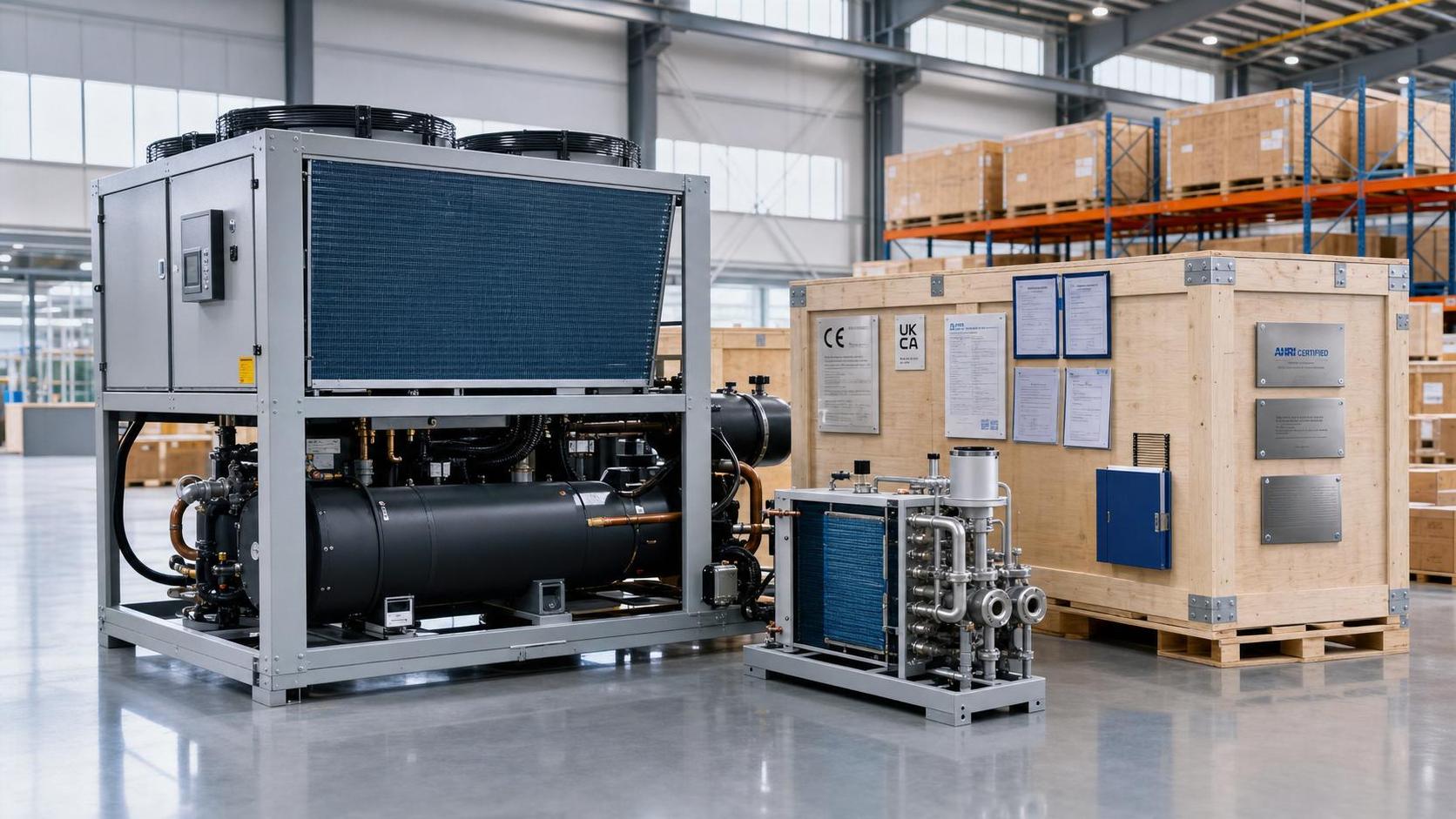
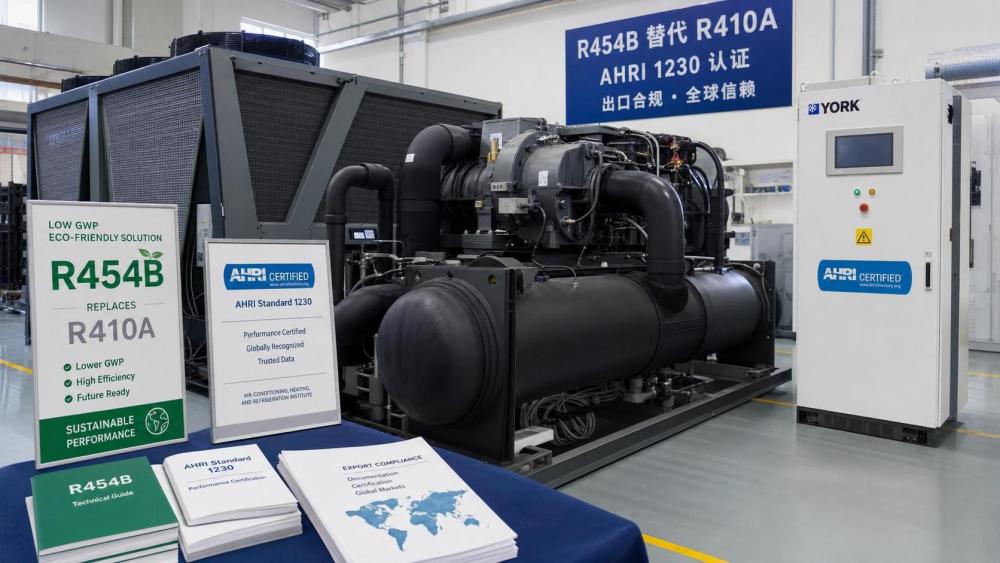
On June 13, 2026, the U.S. Department of Energy revised the compliance timetable for using R454B as an alternative to R410A in commercial and industrial chillers, extending the transition period through March 31, 2027, while also setting an earlier certification requirement for new models from October 2026 under AHRI 1230. For chiller manufacturers, exporters, component suppliers, and buyers serving the U.S. market, the update is worth close attention because it changes the pace of compliance without removing the technical documentation and certification pressure attached to new product launches.
What the revised timetable confirms
The confirmed facts are limited but commercially important. According to the provided event summary, DOE issued a revision notice on June 13, 2026 that extends the compliance transition period for R454B, as a replacement refrigerant for R410A in Commercial & Industrial Chillers, to March 31, 2027.
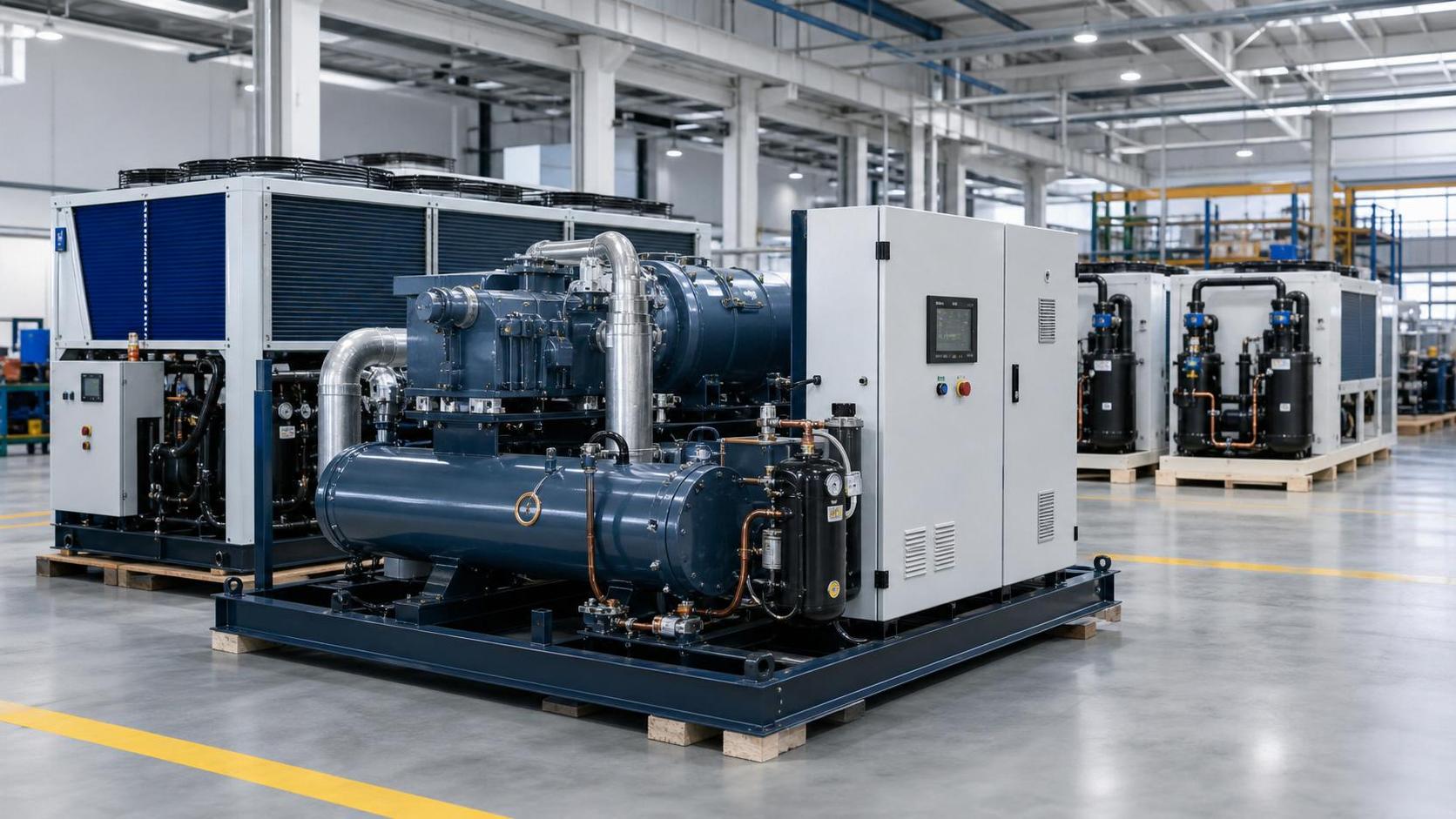
The same notice also states that, starting in October 2026, all new models must obtain certification under AHRI 1230. The information provided further indicates that this adjustment eases short-term capacity pressure related to oil-lubricated screw compressors and creates additional technical buffer time for Chinese exporters.
Why different parts of the chain may feel the change differently
Manufacturers face a split timeline between transition and certification
From an industry perspective, chiller manufacturers are likely to be the first group affected because the extension provides more time for overall compliance, but the October 2026 AHRI 1230 requirement keeps pressure on new-model development. The practical impact is likely to fall on model planning, certification scheduling, and launch sequencing rather than on a simple delay of all compliance work.
Component and supply-side planning may gain short-term breathing room
Analysis shows that suppliers tied to oil-lubricated screw compressor capacity may see some short-term operational relief because the transition deadline has been pushed out. The key business effect is not the removal of demand pressure, but a temporary adjustment in procurement rhythm, production coordination, and delivery planning across export-oriented projects.
Exporters to the U.S. market need to track model status carefully
For Chinese export manufacturers and trading participants, the provided information suggests a more workable technical buffer. What deserves closer attention is whether a shipment involves an existing model path or a new model path, because the certification trigger from October 2026 may affect documentation readiness, customer communication, and lead-time expectations even while the broader transition window is extended.
Buyers and channel partners may need clearer compliance communication
Distributors, project buyers, and other downstream participants may also be affected at the specification and sourcing stage. Observably, the extension could reduce immediate substitution pressure in some transactions, but the new-model certification requirement means procurement teams still need clarity on model qualification status, compliance timing, and delivery feasibility.
What companies should watch now
Separate the extended deadline from the October certification trigger
One practical priority is to avoid treating the extension to March 31, 2027 as a blanket postponement of all compliance actions. The provided information clearly indicates that new models face an AHRI 1230 certification requirement from October 2026, so internal teams should distinguish between transition timing and model certification timing.
Review which products are considered new models
What deserves closer attention is the product classification issue in real business execution. Companies involved in exports, manufacturing, or product management should closely verify which offerings fall into the new-model category in their compliance workflow, because that distinction may directly affect launch readiness, technical file preparation, and customer commitments.
Prepare supporting documents and customer communication early
For firms serving the U.S. market, the operational focus is likely to include certification materials, product qualification records, sales documentation, and buyer-facing explanations. Analysis shows that even where the extension reduces short-term timing pressure, document readiness and communication consistency remain critical to avoiding disruption in quoting, order confirmation, and delivery planning.
Keep monitoring whether the rule language shifts further
The current update changes the timetable, but companies should continue tracking any further official wording, implementation clarification, or related standard interpretation. This matters because policy timing and day-to-day execution often diverge in practice, especially when certification, supply capacity, and export delivery schedules intersect.
How this update is best understood at this stage
Analysis shows that this is better understood as a near-term regulatory adjustment with operational consequences rather than as a final easing of all transition pressure. The extension signals additional time for compliance adaptation, yet the October 2026 AHRI 1230 requirement for new models means the technical threshold remains active.
Observably, the update carries two messages at once: it reduces immediate strain in at least one supply-side area, and it preserves discipline around market entry for new products. For that reason, the development is not simply a delay story; it is also a reminder that timing relief and certification discipline can coexist in the same policy move.
What the industry can take from this for now
At this point, it is more appropriate to understand the DOE revision as a staged adjustment in the R454B transition path for commercial and industrial chillers. The extension to March 31, 2027 may ease short-term coordination pressure, especially where compressor capacity and export preparation are involved, but it does not eliminate the need for certification-focused planning from October 2026 onward.
A neutral reading is that the update creates room for adjustment, not certainty of a smooth rollout. For companies across manufacturing, export, procurement, and channel operations, the most relevant task now is to align product timing, certification status, and customer communication with the revised schedule.
Basis of this article and points for continued verification
This article is based on the user-provided news title, event date, and event summary concerning DOE's extension of the R454B transition period for commercial and industrial chillers and the AHRI 1230 certification requirement for new models.
For this type of industry update, commonly relevant source categories include official government notices, company announcements, industry association releases, authoritative media reports, and standard-organization documents. The specific official source link was not provided in the input, so further verification is still needed. Follow-up attention should remain on any official clarification of implementation language, model classification, and certification-related execution details.
Related News
- EU Label Deadline Hits China Chiller ExportsAuthor :Cryogenic Systems Expert

- How Smart Thermal Systems Improve Industrial Cooling EfficiencyAuthor :Cryogenic Systems Expert

- How to Choose Process Cooling Equipment for Stable Temperature ControlAuthor :Cryogenic Systems Expert

- EU Finalizes 2026 HFC Quota Cut for R-134a ChillersAuthor :Cryogenic Systems Expert

- EU Tightens HFC-134a Quotas for Industrial ChillersAuthor :Cryogenic Systems Expert

- REACH SVHC Update Pressures HFC-134a Chiller Supply ChainsAuthor :Cryogenic Systems Expert

- EU PFAS Coolant Ban Reshapes Chiller ExportsAuthor :Cryogenic Systems Expert

- EU REACH Restricts PFAS Cooling Media ImportsAuthor :Cryogenic Systems Expert

- EU Ecodesign Rule Takes Effect for Industrial ChillersAuthor :Cryogenic Systems Expert

- EU REACH Rule Takes Effect for PFAS in Industrial Cooling ExportsAuthor :Cryogenic Systems Expert

- Industrial Cooling for Plastic Processing: How to Size for Stable Cycle TimesAuthor :Cryogenic Systems Expert

- EU F-Gas Update Bars R404A/R507 in Commercial CoolingAuthor :Cryogenic Systems Expert

- DOE Raises Chiller Efficiency Standard From October 2026Author :Cryogenic Systems Expert

- India Mandates BIS Energy Certification for Industrial ChillersAuthor :Cryogenic Systems Expert

- Energy-Efficient Heat Exchange for Process Cooling: Cost vs PaybackAuthor :Cryogenic Systems Expert

- EPA R-134a Import Ban Takes Effect on July 13, 2026Author :Cryogenic Systems Expert

- India BIS Rule Takes Effect for Industrial ChillersAuthor :Cryogenic Systems Expert

- EPA Cuts R134a Import Quotas 20% From July 10Author :Cryogenic Systems Expert

- How to Compare Energy-Efficient Cooling Systems for Factory Expansion ProjectsAuthor :Cryogenic Systems Expert

- Chiller Price Index Rises 11.3% in Q2Author :Cryogenic Systems Expert

- Saudi SASO Tightens Chiller Import Compliance From July 10Author :Cryogenic Systems Expert

- Dubai Opens Fast-Track Chiller TendersAuthor :Cryogenic Systems Expert

- Japan Raises Chiller COP Floor to 6.2 From Sept. 1Author :Cryogenic Systems Expert
![]()
- Compact Thermal Management in Smart Devices: Common Failure RisksAuthor :Cryogenic Systems Expert

- Thermal Management for Batteries: Cooling Methods ComparedAuthor :Cryogenic Systems Expert

- How Compact Thermal Design Extends Smart Device UptimeAuthor :Cryogenic Systems Expert

- Shanghai-Rotterdam Reefer Rates Jump 37% in a WeekAuthor :Cryogenic Systems Expert

- Process Cooling Equipment Low Maintenance: What Cuts Downtime Over 5 Years?Author :Cryogenic Systems Expert

- Semiconductor Cooling Solutions: Which Design Works Best for High-Density Tools?Author :Cryogenic Systems Expert

- Semiconductor Thermal Management Systems: Preventing Yield Loss from Heat DriftAuthor :Cryogenic Systems Expert

- EPA Clears R-1234ze(E) for Industrial ChillersAuthor :Cryogenic Systems Expert
 for Industrial Chillers")
- DOE Raises Chiller IEER Floor to 12.8 From Oct. 2026Author :Cryogenic Systems Expert

- Singapore Refrigeration Show Adds Green Compliance HubAuthor :Cryogenic Systems Expert

- How Food Industry Temperature Control Systems Reduce Product LossAuthor :Cryogenic Systems Expert

- EU REACH Adds 12 SVHCs, Raising Chiller Compliance RiskAuthor :Cryogenic Systems Expert

- Precision Temperature Control Air Cooling: Key Setup Mistakes That Reduce StabilityAuthor :Cryogenic Systems Expert