



Industrial Refrigeration vs Chillers: Which Fits Your Load Profile?




Choosing between industrial refrigeration and chillers rarely comes down to nameplate tons alone. The better fit depends on how heat enters the process, how often demand swings, and how tightly temperature must stay within range.
That distinction matters more now because energy prices, refrigerant policies, and decarbonization targets are changing project economics. A system that looks efficient at design load can underperform when the real load profile is intermittent, seasonal, or highly sensitive.
Across food processing, pharmaceuticals, cold storage, chemicals, and precision manufacturing, the decision affects uptime, product quality, utility costs, and future retrofit options. The practical question is not which technology is better in general, but which one matches thermal behavior in operation.
Where the difference really starts
A useful way to frame the comparison is scope. Chillers are usually selected to supply a controlled cooling medium, often water or glycol, to equipment or processes that reject heat indirectly.
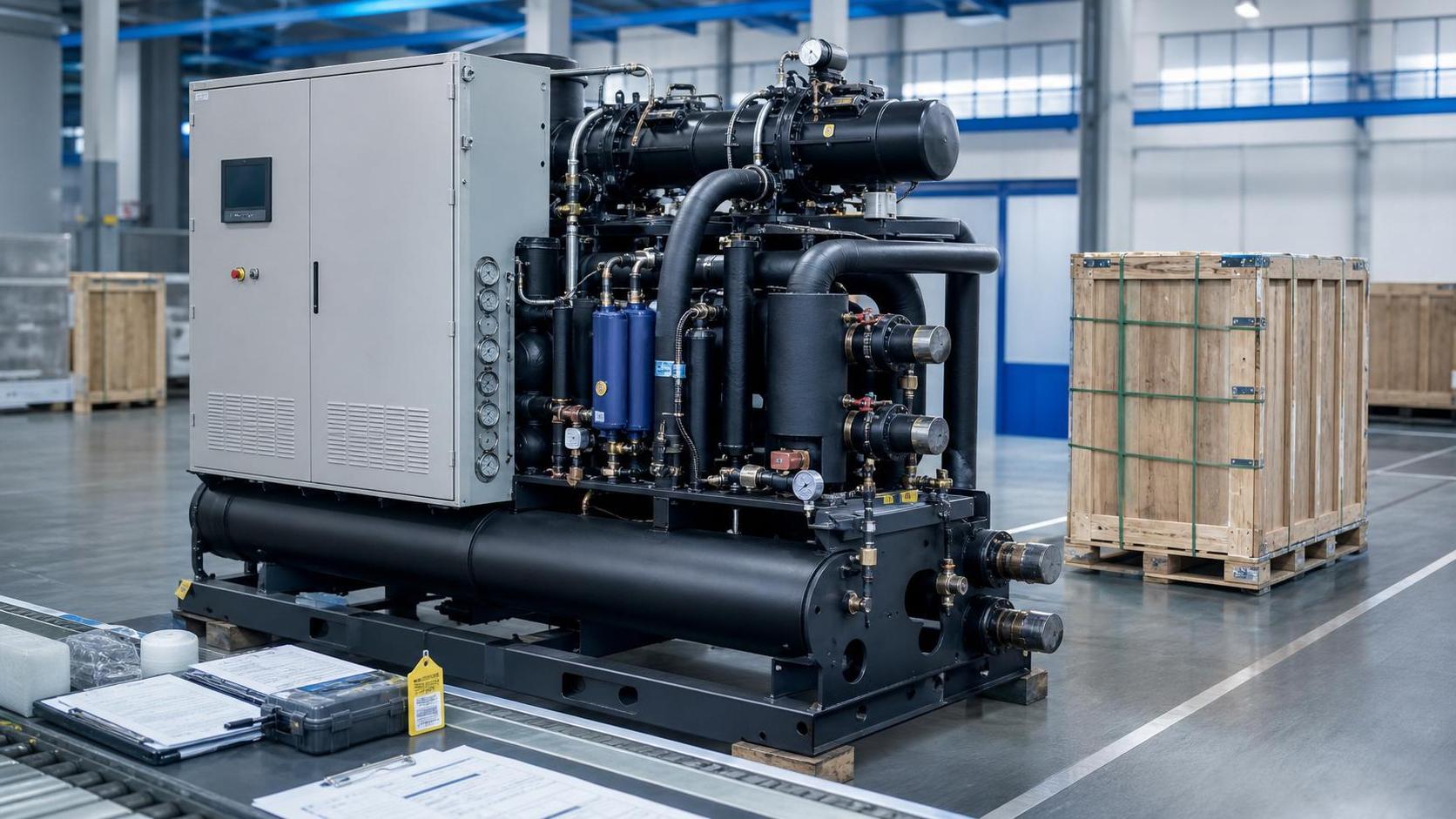
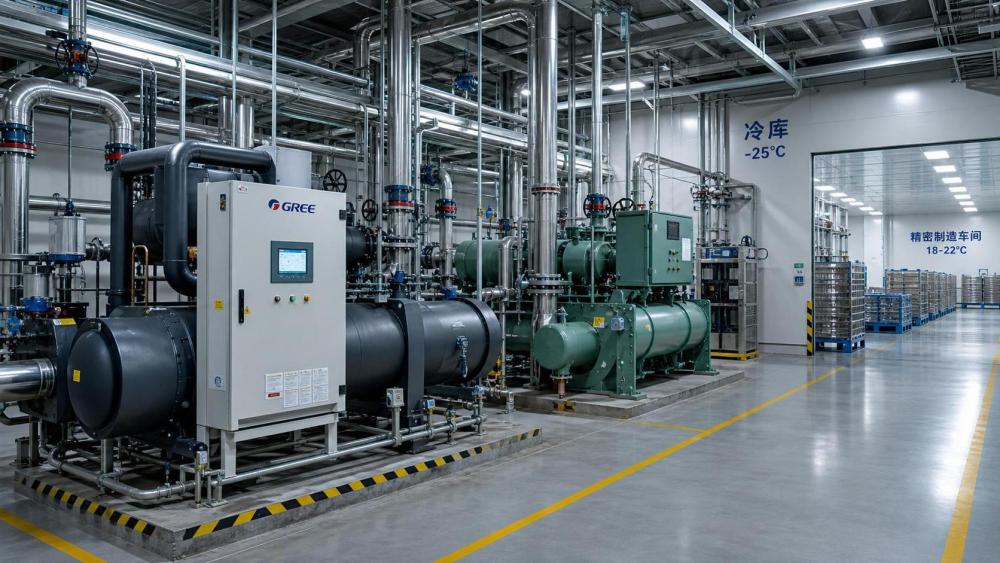
Industrial refrigeration often covers a broader system role. It may include low-temperature cooling, direct expansion, compressor racks, evaporators, condensers, storage environments, and integrated controls serving multiple thermal zones.
In simple terms, many chillers are packaged cooling assets. Many industrial refrigeration systems are plant-level thermal infrastructures. There is overlap, but the operating philosophy can be very different.
That is why identical cooling capacities may produce very different outcomes. One solution may be ideal for stable loop cooling, while another handles continuous low-temperature duty, load diversity, or expansion across production lines.
Load profile is the real selection filter
Load profile describes more than peak demand. It includes average load, ramp rate, daily cycling, seasonal variation, part-load hours, and the penalty of temperature drift during upset conditions.
A chiller often performs well when load is moderate, return temperatures are predictable, and the process benefits from a clean, centralized fluid loop. This is common in plastics, HVAC-linked industrial spaces, and equipment cooling.
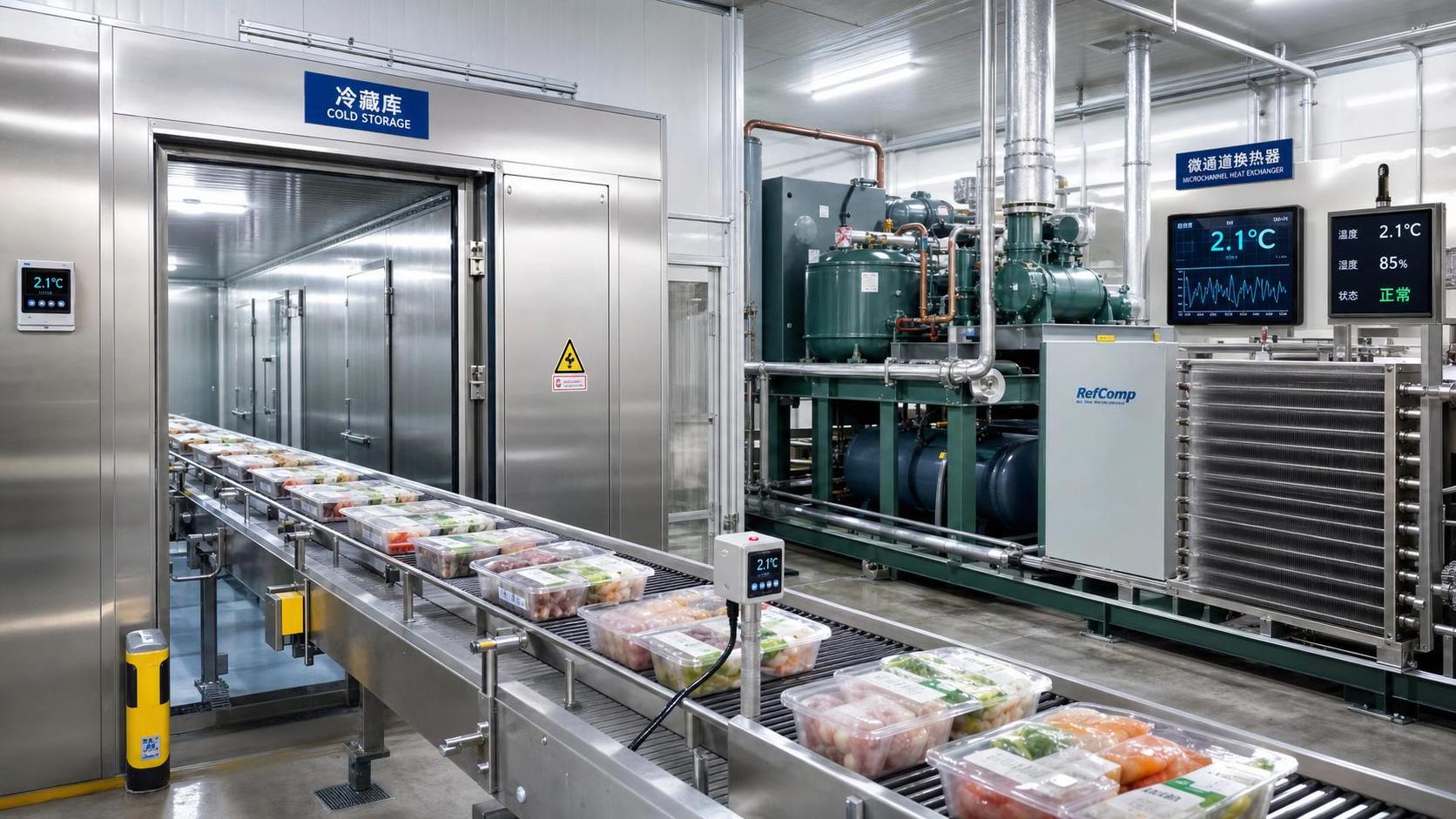
Industrial refrigeration becomes more attractive when low suction temperatures, long runtime, multiple evaporating levels, or demanding pull-down cycles are involved. Cold chain facilities and food plants are typical examples.
The critical mistake is selecting around peak load only. Oversizing can reduce efficiency, increase compressor cycling, and weaken humidity or temperature control. Undersizing can create chronic instability during production surges.
Questions that expose the true load pattern
- How many hours per year does the plant run above 80% load?
- Does the process need fast pull-down after batch start or door opening?
- Are there simultaneous loads with different temperature requirements?
- What is the acceptable temperature deviation at the point of use?
- How much redundancy is needed when one compressor or circuit is offline?
These questions usually reveal whether the application behaves like utility cooling or like mission-critical industrial refrigeration.
Comparing operating characteristics in context
A side-by-side comparison helps, but only if it stays tied to use conditions rather than generic pros and cons.
The table does not imply that one category always outperforms the other. It shows that system fit depends on thermodynamic duty and plant operating logic.
Why this choice is getting more strategic
The comparison has become more strategic because cooling systems now sit at the intersection of energy cost, compliance, and process resilience. Refrigerant selection alone can reshape lifecycle cost and retrofit timing.
At GTC-Matrix, analysis of industrial cooling, compressed air, and heat exchange markets points to the same trend: thermal systems are no longer judged only by installed capacity. They are judged by adaptability.
Microchannel heat exchangers, oil-free compression, advanced controls, and tighter environmental rules are changing what “efficient” means. Stable operation at part load is often more valuable than peak catalog performance.
This is especially visible in pharmaceutical, semiconductor, and food sectors, where the cost of thermal deviation can exceed the cost of energy waste. In those settings, industrial refrigeration strategy becomes a business continuity issue.
Typical scenarios and what they suggest
A few common scenarios make the distinction clearer.
Stable process loop cooling
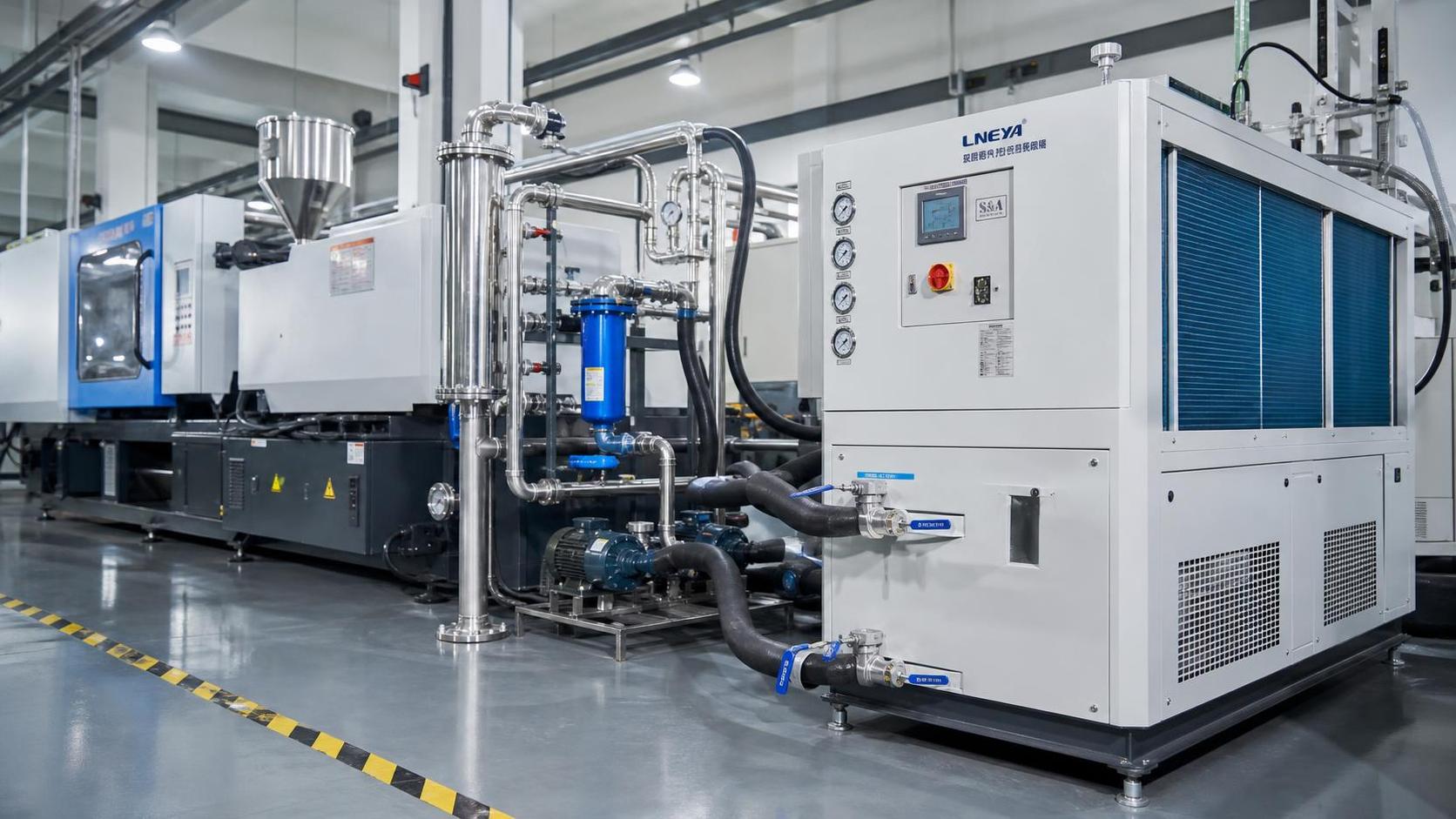
Injection molding lines, laser equipment, and machine cooling loops often favor chillers. The thermal load is measurable, fluid distribution is centralized, and temperature tolerances are tight but predictable.
Large cold storage or freezing duty
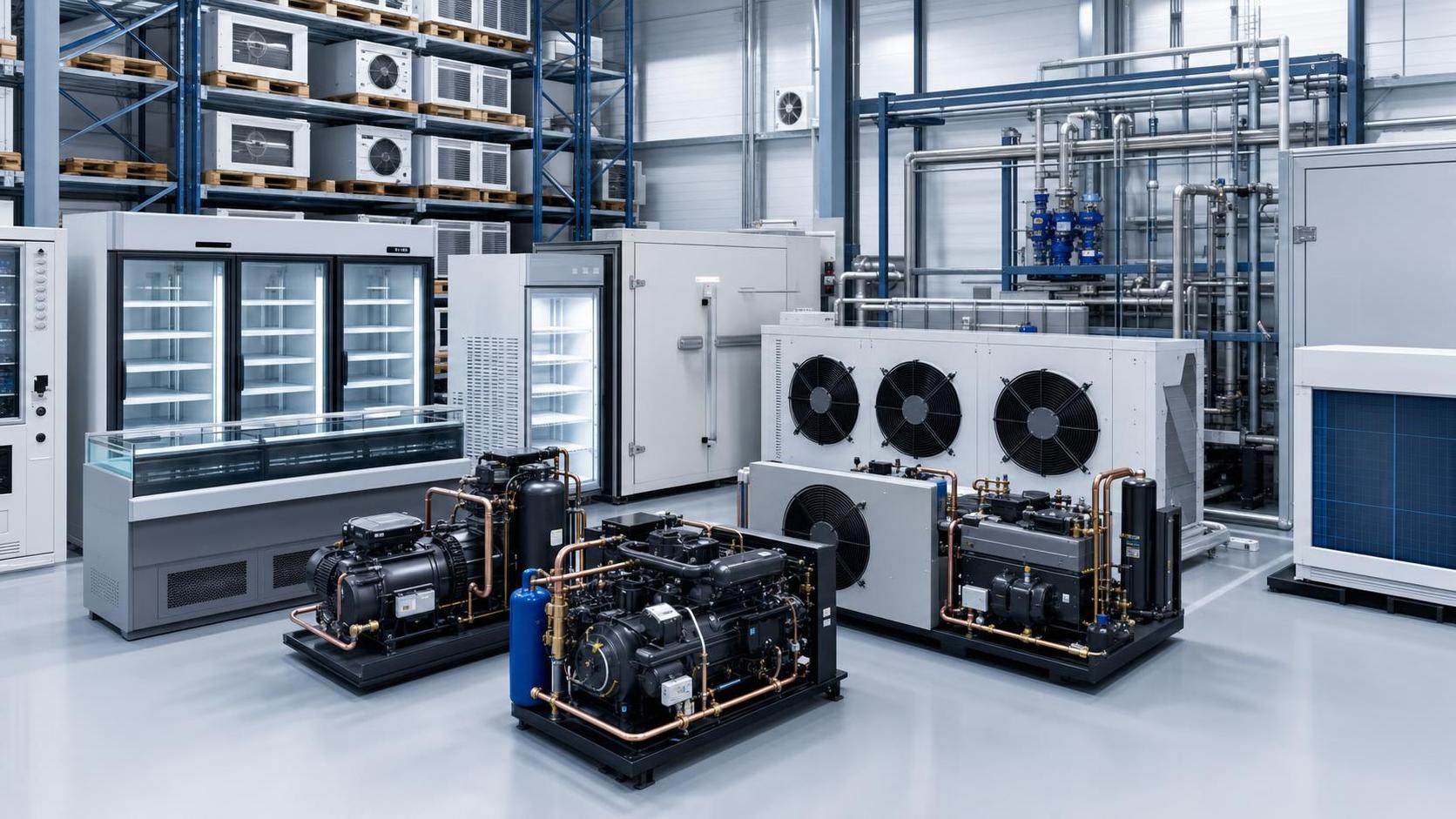
Facilities with long runtime, multiple rooms, product pull-down, and low evaporating temperatures usually lean toward industrial refrigeration. The system must absorb fluctuating internal loads without losing control.
Mixed-use industrial campuses
Some sites need both. A chiller may support process equipment, while industrial refrigeration serves storage, production zones, or low-temperature requirements. Hybrid planning is often the most rational choice.
Rapidly scaling production
Where load uncertainty is high, modularity matters. Chillers can simplify phased deployment, while industrial refrigeration may offer stronger long-term efficiency once demand becomes diverse and continuous.
How to evaluate beyond capacity and COP
A sound assessment should combine thermal data, operating constraints, and future plant plans. Capacity and COP are necessary, but not sufficient.
- Map hourly and seasonal load, not only design day peaks.
- Check minimum turndown and cycling behavior at low demand.
- Compare leaving temperature stability at the actual point of use.
- Review refrigerant pathway against regional policy exposure.
- Assess maintenance skill requirements and spare parts availability.
- Include redundancy logic for critical production windows.
It is also worth modeling the cost of bad fit. Frequent starts, poor oil management, unstable suction conditions, or excessive pump energy can erase expected savings from a lower first cost option.
A practical way forward
When comparing industrial refrigeration and chillers, start with thermal behavior, not equipment labels. Document real load intervals, required temperature bands, downtime risk, and likely expansion over the next several years.
Then test each option against the same operating profile. That makes it easier to see whether a packaged chiller is enough, whether a broader industrial refrigeration architecture is justified, or whether a hybrid design fits best.
For deeper decisions, it helps to track the same market signals highlighted by GTC-Matrix: refrigerant regulation, compression technology shifts, heat exchanger innovation, and sector-specific cooling demand. Those signals often determine which choice remains viable five years from now.
The most reliable next step is to turn the load profile into a decision framework. Once the process demand is quantified clearly, the right cooling path usually becomes far less ambiguous.
Related News
- EU Label Deadline Hits China Chiller ExportsAuthor :Cryogenic Systems Expert

- How Smart Thermal Systems Improve Industrial Cooling EfficiencyAuthor :Cryogenic Systems Expert

- How to Choose Process Cooling Equipment for Stable Temperature ControlAuthor :Cryogenic Systems Expert

- EU Finalizes 2026 HFC Quota Cut for R-134a ChillersAuthor :Cryogenic Systems Expert

- EU Tightens HFC-134a Quotas for Industrial ChillersAuthor :Cryogenic Systems Expert

- REACH SVHC Update Pressures HFC-134a Chiller Supply ChainsAuthor :Cryogenic Systems Expert

- EU PFAS Coolant Ban Reshapes Chiller ExportsAuthor :Cryogenic Systems Expert

- EU REACH Restricts PFAS Cooling Media ImportsAuthor :Cryogenic Systems Expert

- EU Ecodesign Rule Takes Effect for Industrial ChillersAuthor :Cryogenic Systems Expert

- EU REACH Rule Takes Effect for PFAS in Industrial Cooling ExportsAuthor :Cryogenic Systems Expert

- Industrial Cooling for Plastic Processing: How to Size for Stable Cycle TimesAuthor :Cryogenic Systems Expert

- EU F-Gas Update Bars R404A/R507 in Commercial CoolingAuthor :Cryogenic Systems Expert

- DOE Raises Chiller Efficiency Standard From October 2026Author :Cryogenic Systems Expert

- India Mandates BIS Energy Certification for Industrial ChillersAuthor :Cryogenic Systems Expert

- Energy-Efficient Heat Exchange for Process Cooling: Cost vs PaybackAuthor :Cryogenic Systems Expert

- EPA R-134a Import Ban Takes Effect on July 13, 2026Author :Cryogenic Systems Expert

- India BIS Rule Takes Effect for Industrial ChillersAuthor :Cryogenic Systems Expert

- EPA Cuts R134a Import Quotas 20% From July 10Author :Cryogenic Systems Expert

- How to Compare Energy-Efficient Cooling Systems for Factory Expansion ProjectsAuthor :Cryogenic Systems Expert

- Chiller Price Index Rises 11.3% in Q2Author :Cryogenic Systems Expert

- Saudi SASO Tightens Chiller Import Compliance From July 10Author :Cryogenic Systems Expert

- Dubai Opens Fast-Track Chiller TendersAuthor :Cryogenic Systems Expert

- Japan Raises Chiller COP Floor to 6.2 From Sept. 1Author :Cryogenic Systems Expert
![]()
- Compact Thermal Management in Smart Devices: Common Failure RisksAuthor :Cryogenic Systems Expert

- Thermal Management for Batteries: Cooling Methods ComparedAuthor :Cryogenic Systems Expert

- How Compact Thermal Design Extends Smart Device UptimeAuthor :Cryogenic Systems Expert

- Shanghai-Rotterdam Reefer Rates Jump 37% in a WeekAuthor :Cryogenic Systems Expert

- Process Cooling Equipment Low Maintenance: What Cuts Downtime Over 5 Years?Author :Cryogenic Systems Expert

- Semiconductor Cooling Solutions: Which Design Works Best for High-Density Tools?Author :Cryogenic Systems Expert

- Semiconductor Thermal Management Systems: Preventing Yield Loss from Heat DriftAuthor :Cryogenic Systems Expert

- EPA Clears R-1234ze(E) for Industrial ChillersAuthor :Cryogenic Systems Expert
 for Industrial Chillers")
- DOE Raises Chiller IEER Floor to 12.8 From Oct. 2026Author :Cryogenic Systems Expert

- Singapore Refrigeration Show Adds Green Compliance HubAuthor :Cryogenic Systems Expert

- How Food Industry Temperature Control Systems Reduce Product LossAuthor :Cryogenic Systems Expert

- EU REACH Adds 12 SVHCs, Raising Chiller Compliance RiskAuthor :Cryogenic Systems Expert

- Precision Temperature Control Air Cooling: Key Setup Mistakes That Reduce StabilityAuthor :Cryogenic Systems Expert