HFC-32 Hits RMB 62,500/Ton, Raising Export Pressure




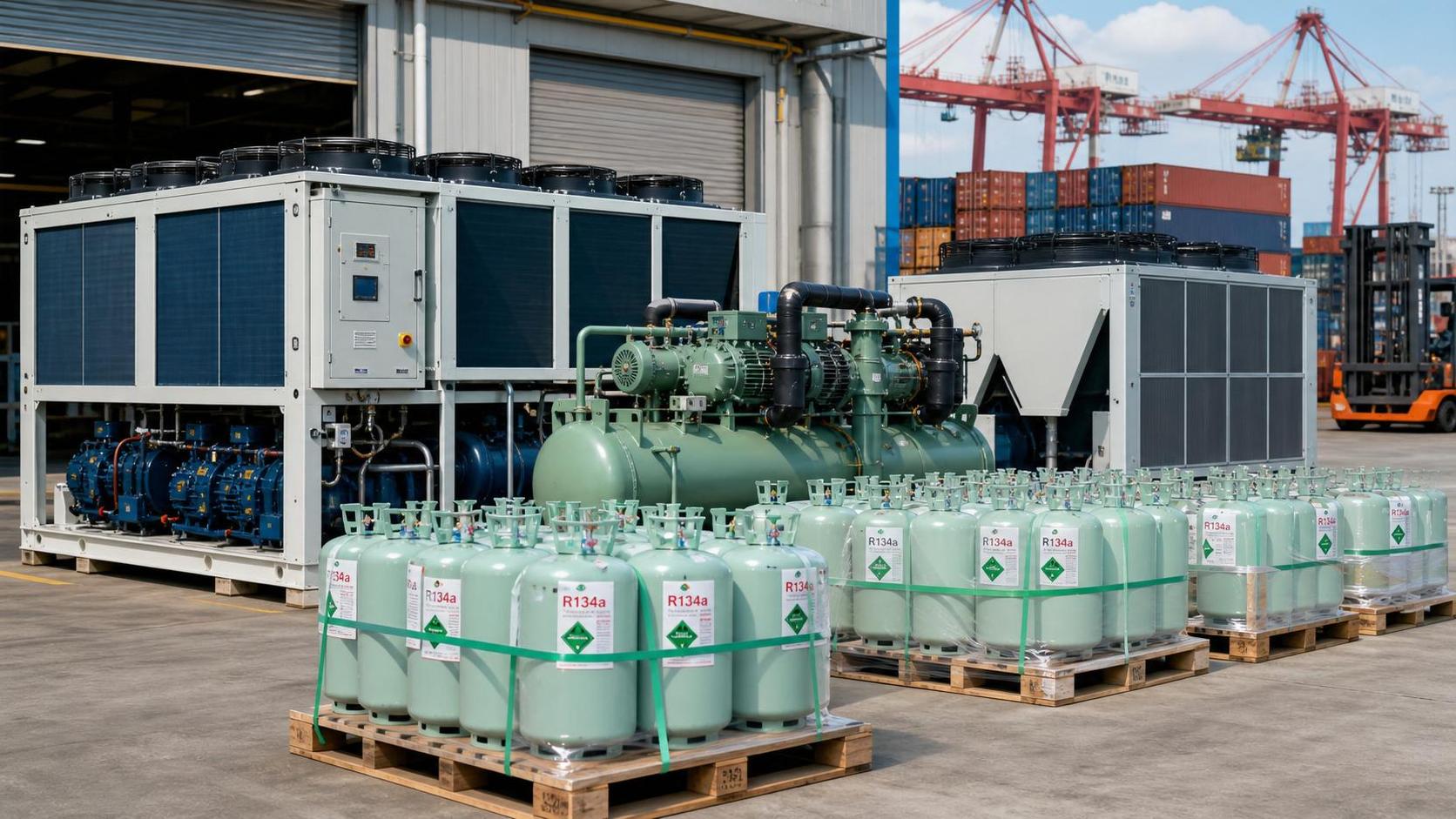
On June 12, 2026, the price surge in R32, a mainstream refrigerant used in residential and industrial air-conditioning, became a key signal for exporters of air-cooled industrial chiller units and related equipment. With the average price reaching RMB 62,500 per ton, up 34.13% year on year, the issue is no longer limited to upstream refrigerants: it is now affecting export quotations, delivery discussions, and refrigerant option reviews in Europe, the United States, and the Middle East.
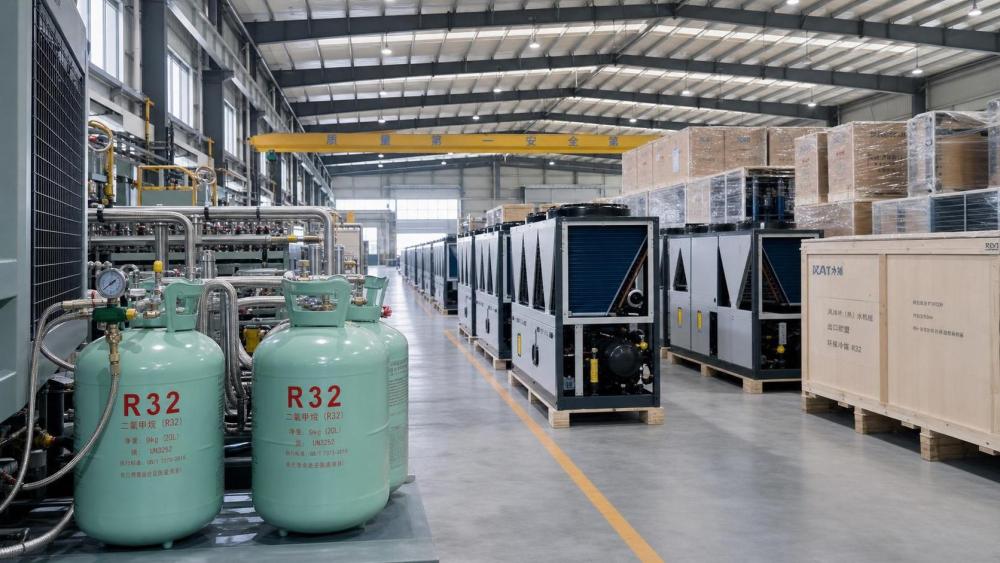
What the latest price move confirms
As of June 12, 2026, the average market price of R32 had risen to RMB 62,500 per ton, representing a year-on-year increase of 34.13%.
The confirmed drivers behind the increase include China’s 2026 total quota for third-generation HFCs at 797,800 tons, only a few thousand tons of additional R32 volume, higher prices for fluorite and hydrofluoric acid, and continued contraction in effective supply from small and medium-sized enterprises.
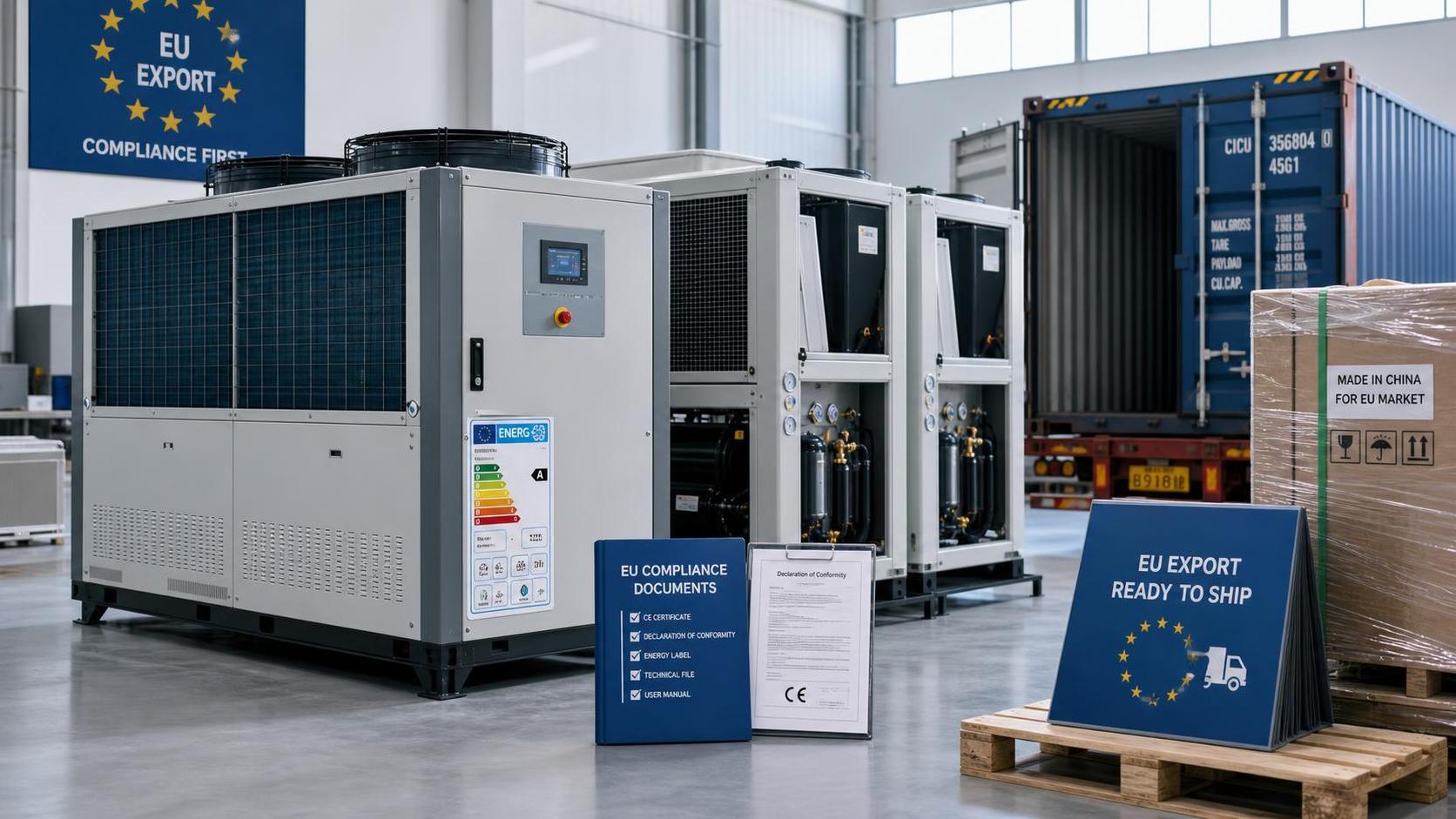
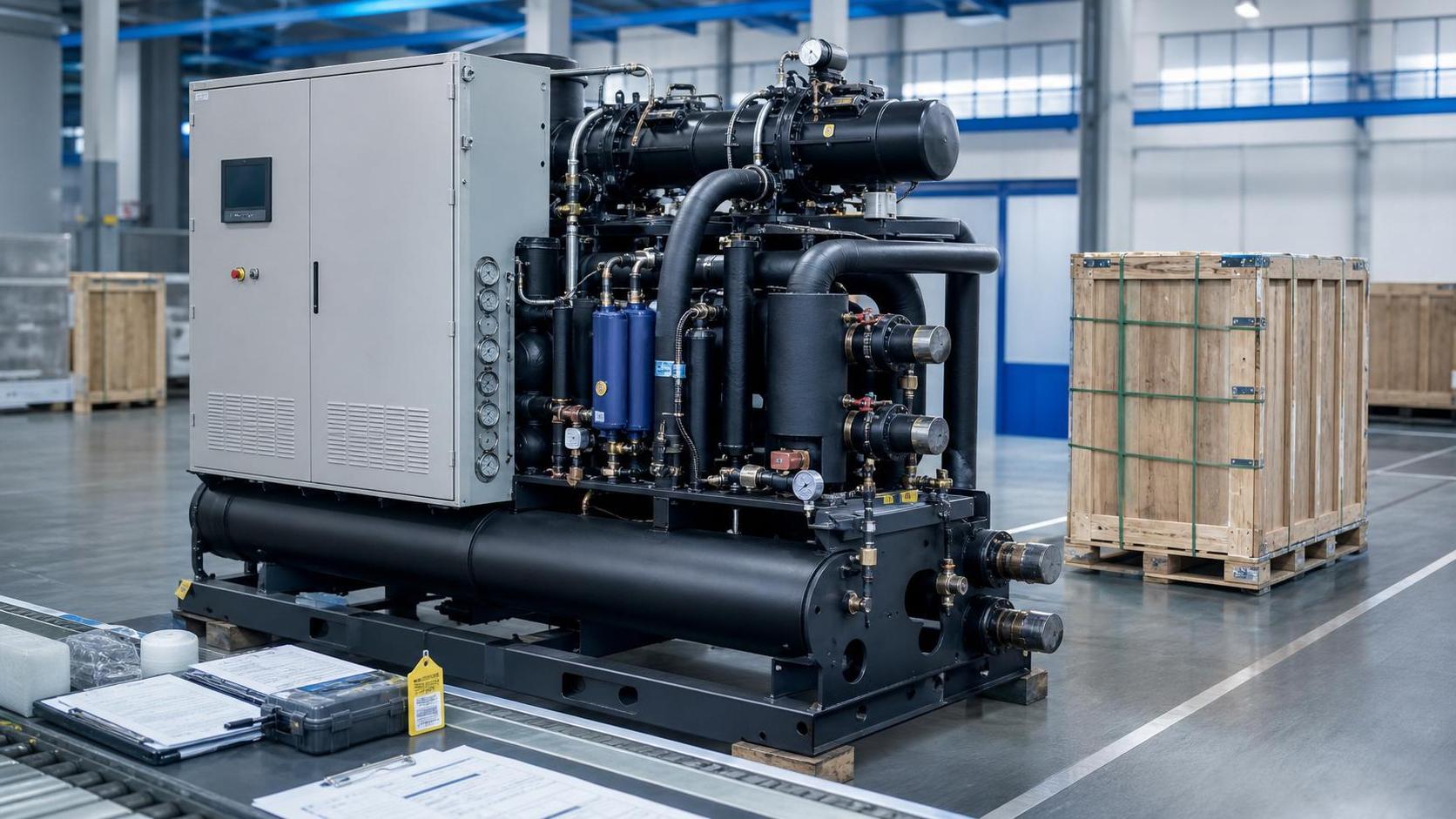
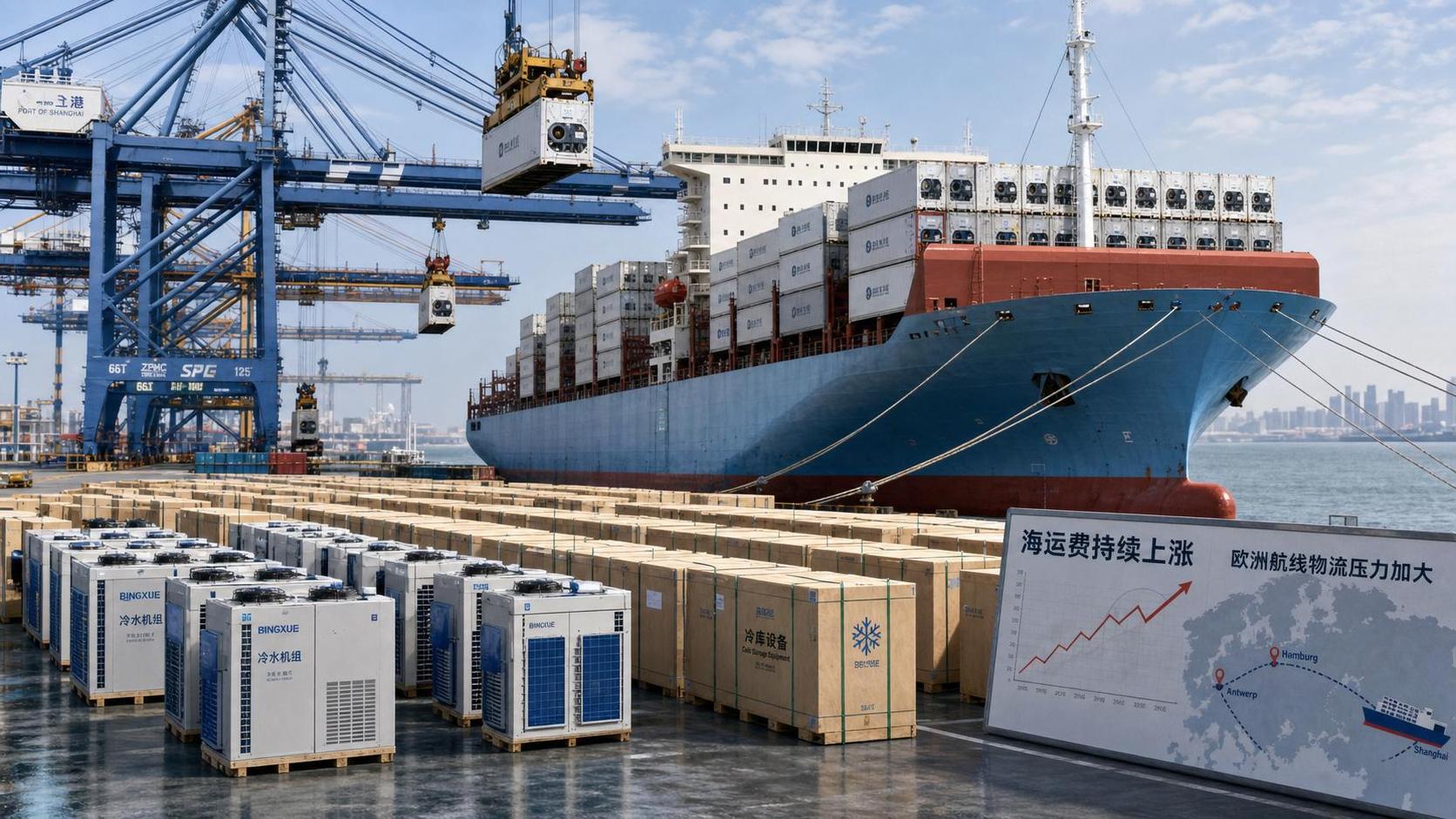
The information provided also confirms that this increase has already been transmitted to export quotations for downstream equipment such as air-cooled industrial chiller units. At the same time, customers in Europe, the United States, and the Middle East are accelerating reviews of alternative refrigerant options and possible delivery schedule adjustments.
Where the pressure is now showing up
Export quotations are becoming harder to stabilize
From an industry perspective, direct trading companies and exporters are among the first to feel the impact because refrigerant cost changes feed directly into quoted prices for finished equipment. What deserves closer attention is not only headline price movement, but also whether customers continue to accept revised quotations under changing procurement expectations.
Manufacturing plans face tighter cost pass-through
For equipment manufacturers, the effect is likely to appear in product costing, order pricing, and contract execution. Analysis shows that when refrigerant and related raw material costs rise together, the room to absorb increases becomes narrower, especially for exported air-cooled industrial chiller units whose pricing is often discussed in advance with overseas buyers.
Procurement and supply coordination become more sensitive
For procurement teams and supply chain service providers, the key issue is not only the current price level of R32 but also the continued shrinkage in effective supply from some small and medium-sized enterprises. Observably, this may affect supplier selection, purchasing rhythm, and the coordination of materials needed to keep export orders on schedule.
Overseas buyers are reassessing refrigerant choices and timing
For end buyers and project purchasers in Europe, the United States, and the Middle East, the reported response is already visible: they are accelerating evaluation of substitute refrigerant options and delivery adjustments. This means the impact is extending beyond cost and into specification review and project scheduling discussions.
What companies should watch next
Separate confirmed quota facts from later market interpretation
Companies should keep a clear distinction between the confirmed 2026 HFC quota information and broader market assumptions built on it. Analysis shows that pricing pressure is a current fact, but how long it persists still requires continued observation rather than automatic extrapolation.
Focus on product lines most exposed to R32 costs
Manufacturers and exporters should pay closer attention to product categories where R32 cost changes can directly alter margins or quotation competitiveness, especially air-cooled industrial chiller units and other equipment already identified as affected in export pricing.
Review supplier reliability and fulfillment timing
Because the summary points to shrinking effective supply among small and medium-sized enterprises, businesses should pay attention to supplier qualification, delivery reliability, and documentation consistency in actual order execution. This is particularly relevant where overseas customers are already discussing timing changes.
Prepare customer communication around pricing and lead times
What deserves closer attention is how companies explain price revisions and delivery changes to overseas customers. Where buyers are evaluating alternative refrigerants, communication needs to address both commercial terms and product configuration implications without treating current market conditions as a settled long-term outcome.
Why this matters beyond a single price spike
Analysis shows that this development is more than a simple spot-market fluctuation because the reported drivers combine quota constraints, limited incremental R32 volume, higher upstream raw material costs, and contraction in effective supply. That combination gives the price move broader relevance for export-oriented HVAC and cooling equipment businesses.
At the same time, it is more appropriate to understand this as a market signal that is already affecting transactions, rather than as a fully settled long-term industry conclusion. The fact that overseas customers are reviewing alternatives and delivery timing suggests an active adjustment phase is underway, but the eventual depth and duration of that adjustment still need continued observation.
How this update should be understood now
At this stage, the most rational reading is that rising HFC-32 prices have moved from an upstream cost issue into a downstream export management issue. For companies linked to air-cooled industrial chiller units, the immediate significance lies in pricing, procurement, and customer coordination rather than in any definitive structural outcome.
From an industry perspective, this is best understood as a short-term development with potential longer-tail implications, especially if supply tightness and customer reassessment continue. It deserves close monitoring, but not overstatement.
Basis of this article and ongoing verification
This article is generated based on the user-provided news title, event date, and event summary. The analysis is limited to the confirmed information provided: the June 12, 2026 timing, the R32 average price of RMB 62,500 per ton, the 34.13% year-on-year increase, the stated HFC quota and supply factors, and the reported transmission to export quotations and overseas customer responses.
For this type of industry update, relevant source categories would typically include official announcements, company disclosures, industry association information, authoritative media coverage, and standard-setting or regulatory documents. However, no specific official source link was provided in the input, so further verification remains necessary.
Key follow-up areas include any later official wording or rule-related clarification, changes in refrigerant supply conditions, and whether customer discussions on substitute refrigerants and delivery schedules translate into broader market practice.
Related News
- EU Label Deadline Hits China Chiller ExportsAuthor :Cryogenic Systems Expert

- How Smart Thermal Systems Improve Industrial Cooling EfficiencyAuthor :Cryogenic Systems Expert

- How to Choose Process Cooling Equipment for Stable Temperature ControlAuthor :Cryogenic Systems Expert

- EU Finalizes 2026 HFC Quota Cut for R-134a ChillersAuthor :Cryogenic Systems Expert

- EU Tightens HFC-134a Quotas for Industrial ChillersAuthor :Cryogenic Systems Expert

- REACH SVHC Update Pressures HFC-134a Chiller Supply ChainsAuthor :Cryogenic Systems Expert

- EU PFAS Coolant Ban Reshapes Chiller ExportsAuthor :Cryogenic Systems Expert

- EU REACH Restricts PFAS Cooling Media ImportsAuthor :Cryogenic Systems Expert

- EU Ecodesign Rule Takes Effect for Industrial ChillersAuthor :Cryogenic Systems Expert

- EU REACH Rule Takes Effect for PFAS in Industrial Cooling ExportsAuthor :Cryogenic Systems Expert

- Industrial Cooling for Plastic Processing: How to Size for Stable Cycle TimesAuthor :Cryogenic Systems Expert

- EU F-Gas Update Bars R404A/R507 in Commercial CoolingAuthor :Cryogenic Systems Expert

- DOE Raises Chiller Efficiency Standard From October 2026Author :Cryogenic Systems Expert

- India Mandates BIS Energy Certification for Industrial ChillersAuthor :Cryogenic Systems Expert

- Energy-Efficient Heat Exchange for Process Cooling: Cost vs PaybackAuthor :Cryogenic Systems Expert

- EPA R-134a Import Ban Takes Effect on July 13, 2026Author :Cryogenic Systems Expert

- India BIS Rule Takes Effect for Industrial ChillersAuthor :Cryogenic Systems Expert

- EPA Cuts R134a Import Quotas 20% From July 10Author :Cryogenic Systems Expert

- How to Compare Energy-Efficient Cooling Systems for Factory Expansion ProjectsAuthor :Cryogenic Systems Expert

- Chiller Price Index Rises 11.3% in Q2Author :Cryogenic Systems Expert

- Saudi SASO Tightens Chiller Import Compliance From July 10Author :Cryogenic Systems Expert

- Dubai Opens Fast-Track Chiller TendersAuthor :Cryogenic Systems Expert

- Japan Raises Chiller COP Floor to 6.2 From Sept. 1Author :Cryogenic Systems Expert
![]()
- Compact Thermal Management in Smart Devices: Common Failure RisksAuthor :Cryogenic Systems Expert

- Thermal Management for Batteries: Cooling Methods ComparedAuthor :Cryogenic Systems Expert

- How Compact Thermal Design Extends Smart Device UptimeAuthor :Cryogenic Systems Expert

- Shanghai-Rotterdam Reefer Rates Jump 37% in a WeekAuthor :Cryogenic Systems Expert

- Process Cooling Equipment Low Maintenance: What Cuts Downtime Over 5 Years?Author :Cryogenic Systems Expert

- Semiconductor Cooling Solutions: Which Design Works Best for High-Density Tools?Author :Cryogenic Systems Expert

- Semiconductor Thermal Management Systems: Preventing Yield Loss from Heat DriftAuthor :Cryogenic Systems Expert

- EPA Clears R-1234ze(E) for Industrial ChillersAuthor :Cryogenic Systems Expert
 for Industrial Chillers")
- DOE Raises Chiller IEER Floor to 12.8 From Oct. 2026Author :Cryogenic Systems Expert

- Singapore Refrigeration Show Adds Green Compliance HubAuthor :Cryogenic Systems Expert

- How Food Industry Temperature Control Systems Reduce Product LossAuthor :Cryogenic Systems Expert

- EU REACH Adds 12 SVHCs, Raising Chiller Compliance RiskAuthor :Cryogenic Systems Expert

- Precision Temperature Control Air Cooling: Key Setup Mistakes That Reduce StabilityAuthor :Cryogenic Systems Expert