



How to Compare Industrial Cooling Solutions for Multi-Line Plants




How to Compare Industrial Cooling Solutions for Multi-Line Plants
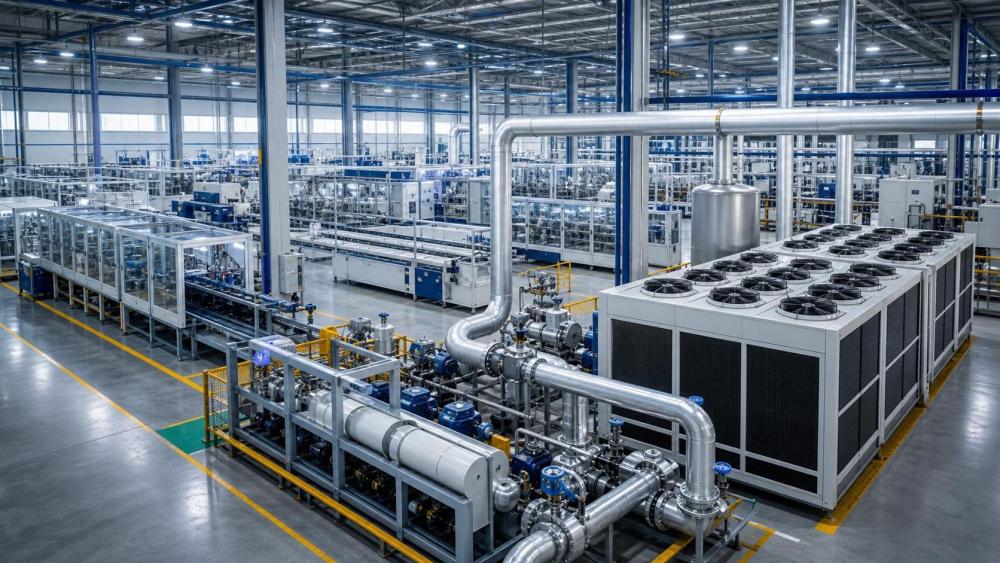
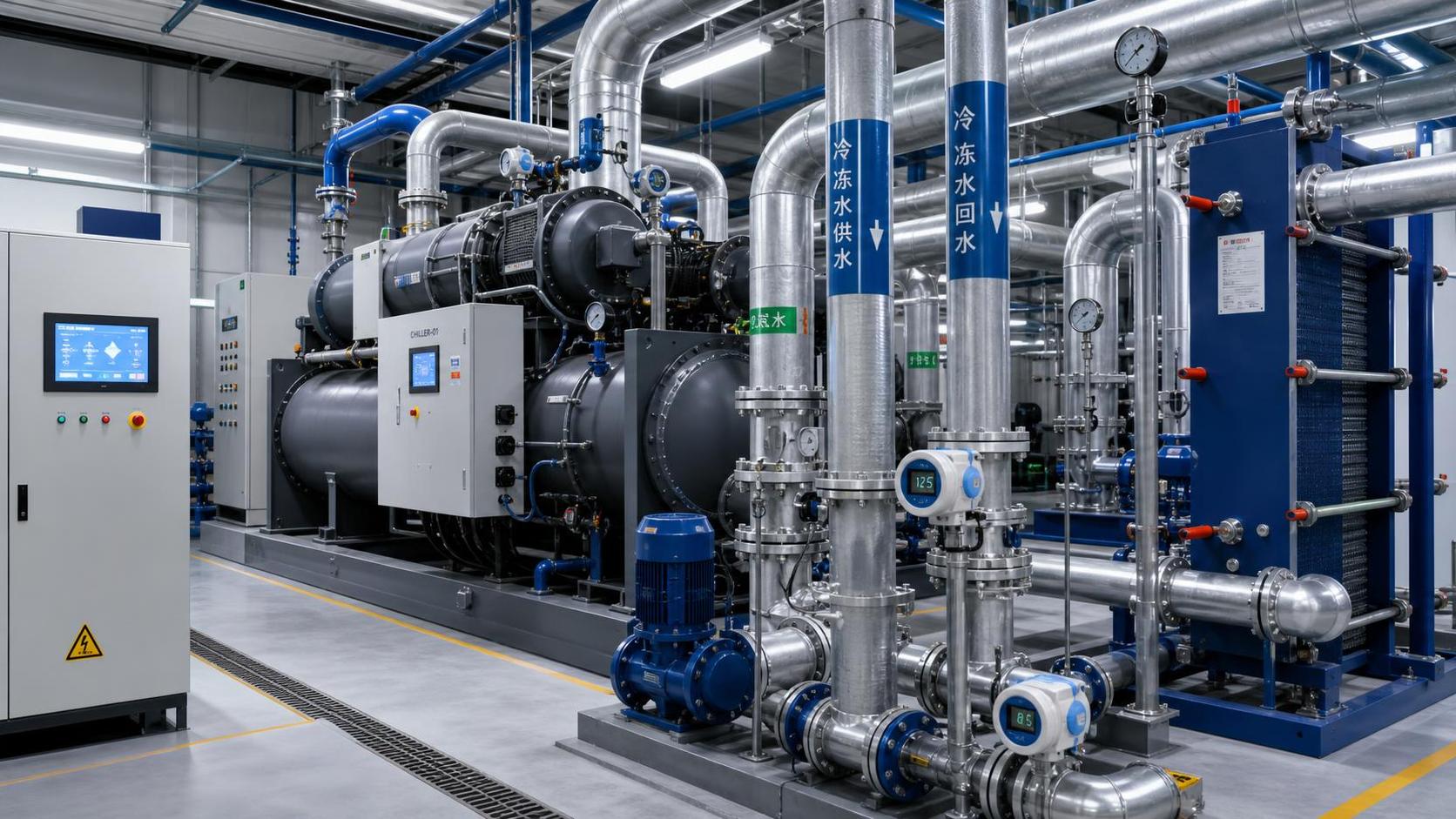
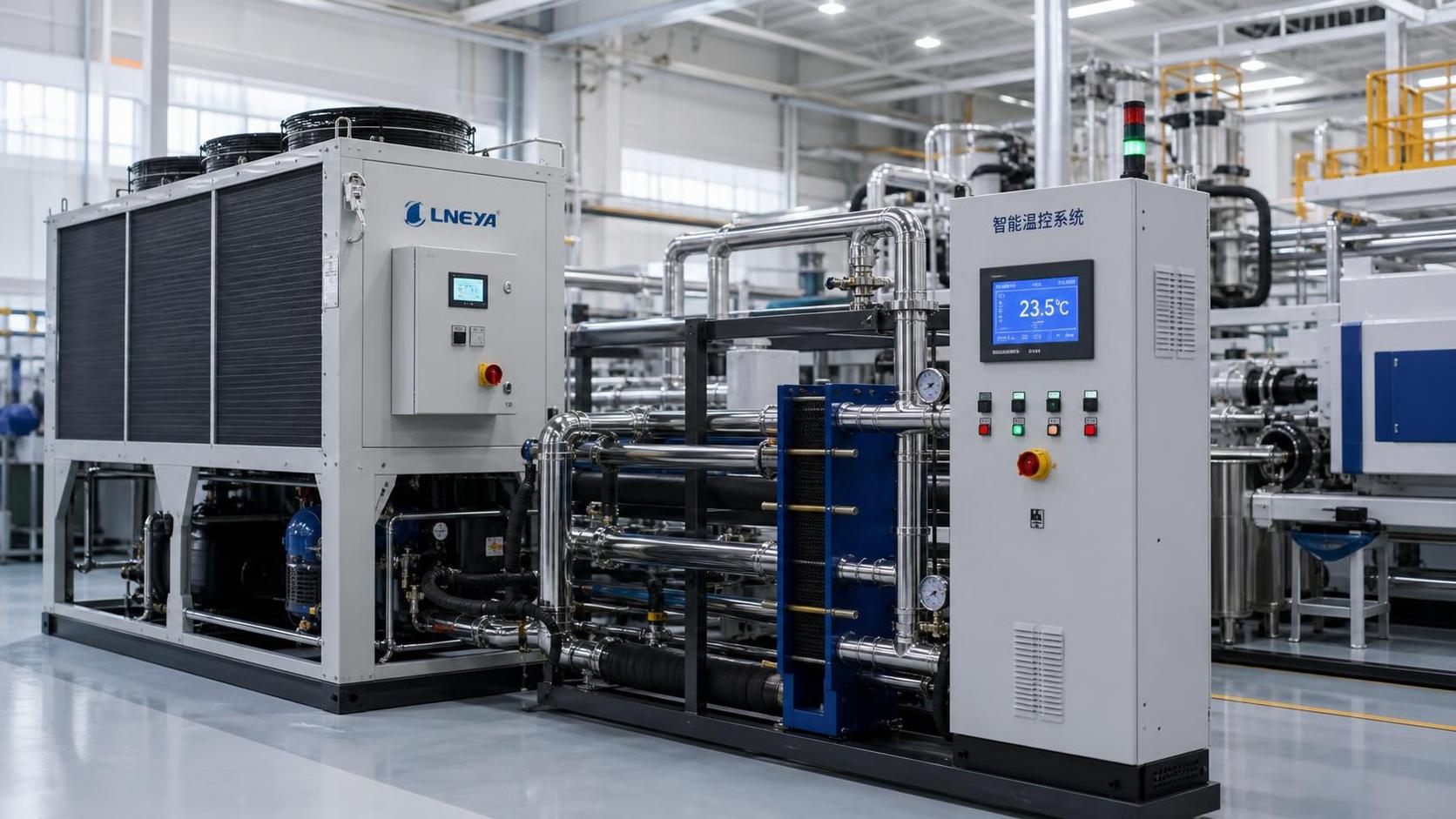
Choosing the right industrial cooling solutions for a multi-line plant can directly affect uptime, product quality, and energy costs.
The decision gets harder when each line has different loads, schedules, and temperature limits.
That is why comparing industrial cooling solutions should start with plant reality, not vendor brochures.
In practical terms, the best option is rarely the biggest chiller or the newest control package.
It is the system that keeps all lines stable, adapts to load swings, and stays efficient over years.
For multi-line plants, that usually means balancing capacity, redundancy, water quality, controls, maintenance access, and lifecycle cost.
A structured comparison helps reduce oversizing, hidden bottlenecks, and avoidable retrofits later.
Start with a Process-Based Cooling Map
Before reviewing equipment, map every production line by heat load, operating window, and tolerance band.
This step reveals whether your industrial cooling solutions must serve steady loads, batch peaks, or frequent changeovers.
Some plants need tight process cooling for one line and general utility cooling for another.
Treating those needs as identical often leads to poor control and wasted energy.
A useful cooling map should include:
- Peak and average thermal load per line
- Required supply temperature and return temperature
- Flow rate variation during different shifts
- Critical assets that cannot tolerate short temperature drift
- Expansion plans for the next three to five years
Once this map is clear, comparing industrial cooling solutions becomes much more objective.
You are no longer buying equipment in isolation.
You are matching cooling architecture to actual production behavior.
Compare Cooling Technologies by Fit, Not Familiarity
Many plants default to the same setup they used in earlier projects.
That feels safe, but it can lock in inefficiency.
Industrial cooling solutions should be compared by process fit, ambient conditions, utilities, and control flexibility.
Common options worth evaluating
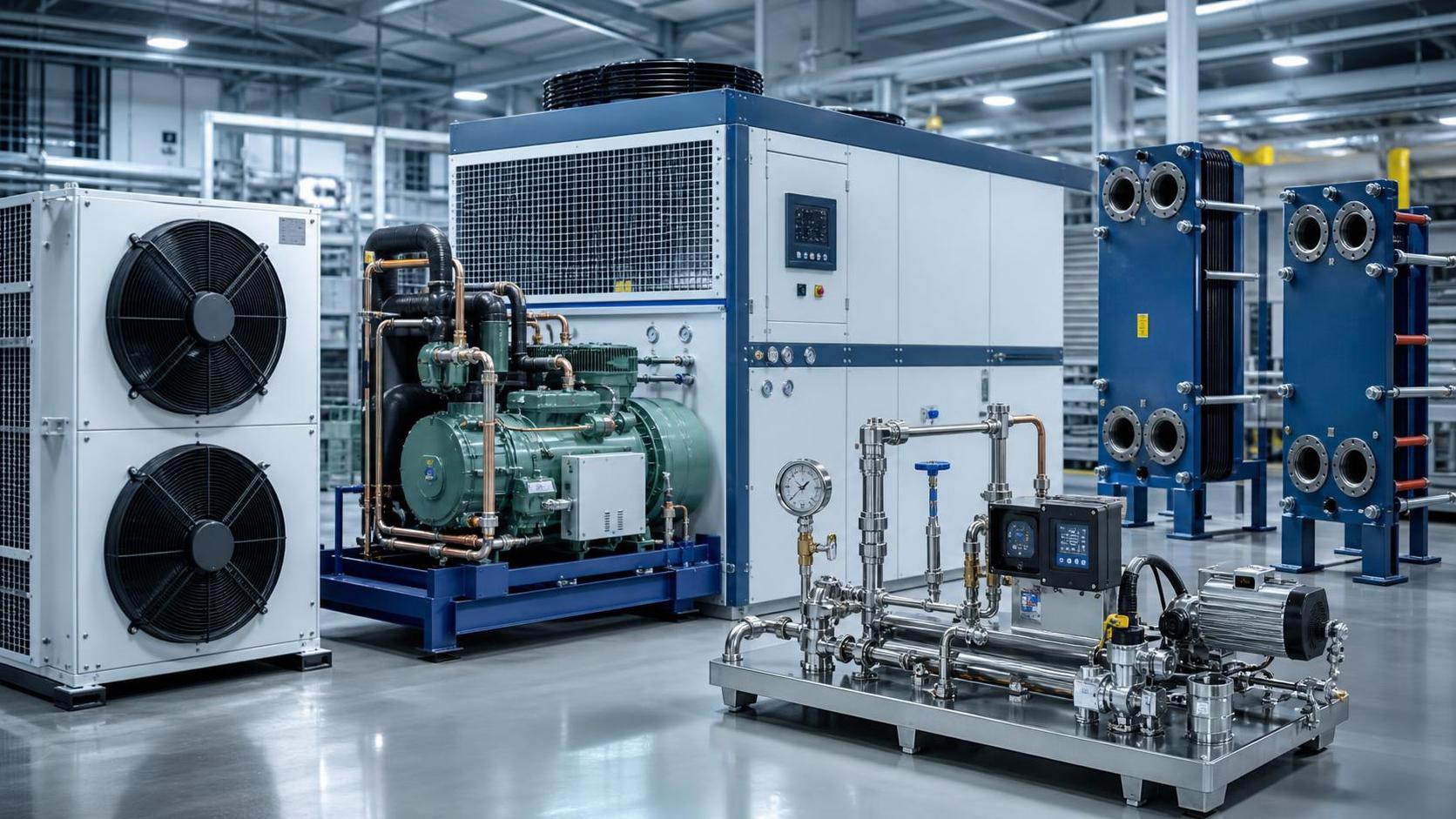
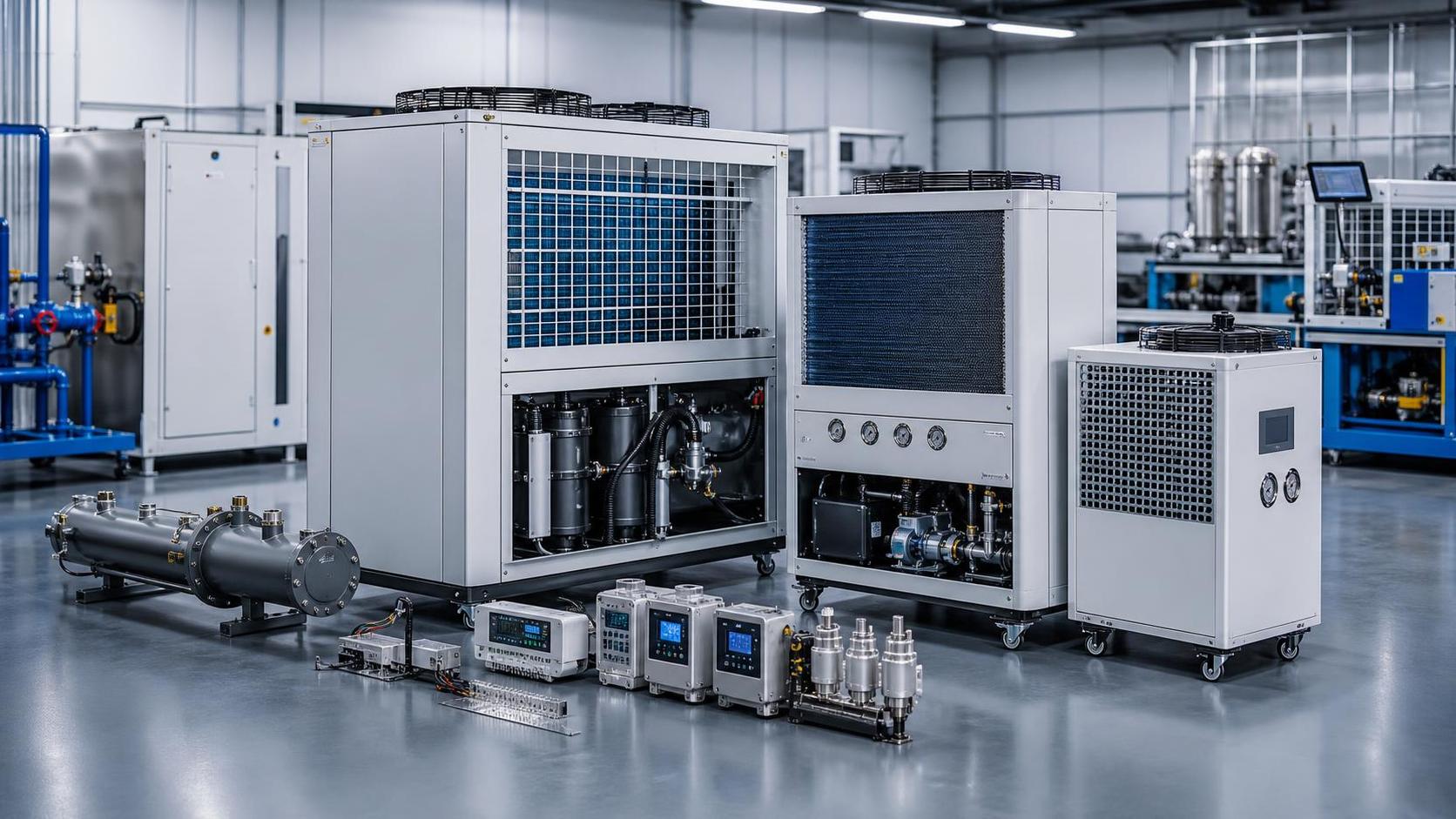
- Air-cooled chillers: simpler installation, useful where water is limited, but less efficient in hot climates.
- Water-cooled chillers: stronger efficiency at scale, though they require cooling towers and water treatment.
- Adiabatic systems: attractive where seasonal efficiency matters and water use must stay controlled.
- Free cooling systems: effective for climates with long cool periods and stable return temperatures.
- Hybrid setups: useful when lines have mixed criticality and different operating profiles.
The key question is not which technology looks advanced.
The key question is which option delivers stable cooling across all lines under your worst operating conditions.
From recent market shifts, a clearer signal is rising interest in modular industrial cooling solutions.
They support phased expansion and reduce the risk of one oversized central asset becoming a single failure point.
Evaluate Capacity Control and Part-Load Efficiency
Multi-line plants rarely run at full load all day.
That makes part-load performance one of the most important comparison points.
Some industrial cooling solutions perform well on paper at design load, then lose efficiency during normal operation.
This is where compressor staging, variable-speed drives, thermal storage, and control logic matter.
Ask suppliers for data under real operating ranges, not only nameplate conditions.
Good evaluation points include:
- Efficiency at 25%, 50%, 75%, and 100% load
- Response speed during sudden line startup
- Temperature stability during simultaneous load swings
- Control performance during night, weekend, or seasonal low demand
This also means the cheapest capital option may be the most expensive operating choice.
For plants with uneven production schedules, lifecycle energy cost often dominates the purchase decision.
Look Beyond Equipment to System Architecture
Industrial cooling solutions should never be judged by the chiller alone.
Pipe layout, hydraulic separation, buffering, and controls decide whether the plant performs as expected.
In real projects, poor system architecture causes many of the problems later blamed on equipment.
When comparing proposals, review whether each solution supports:
- Primary-secondary loops for better flow stability
- Dedicated circuits for temperature-sensitive lines
- Redundant pumps, valves, or control panels for critical operations
- Heat recovery opportunities for nearby process or building demand
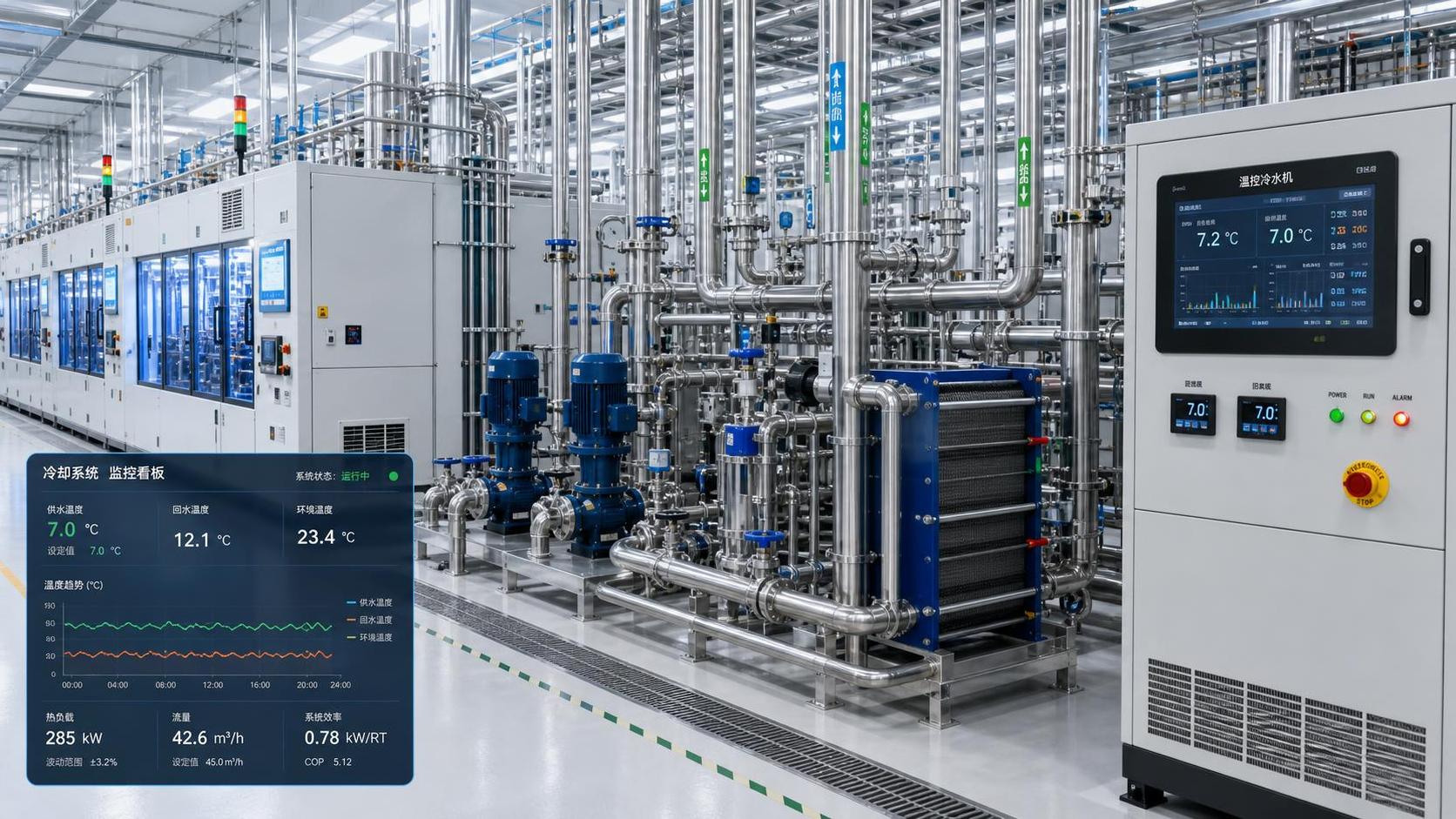
- Integration with plant SCADA, BMS, or energy management systems
A strong architecture gives industrial cooling solutions more resilience during maintenance and production changes.
It also makes future debottlenecking much easier.
Factor in Water Quality, Ambient Risk, and Compliance
Cooling performance is heavily shaped by local conditions.
Yet these factors are often underestimated during selection.
For example, poor makeup water can reduce heat transfer and increase maintenance cost faster than expected.
High ambient temperatures may erase the apparent efficiency edge of some industrial cooling solutions.
A solid comparison should include:
This is one area where short-term price comparisons can be misleading.
A slightly higher upfront cost may protect uptime and compliance for the full project horizon.
Compare Serviceability and Failure Consequences
Not all downtime carries the same cost.
In some plants, one hour of temperature instability can scrap a full batch or stop several lines.
That is why industrial cooling solutions must be evaluated for maintainability and failure impact.
Ask practical questions during comparison:
- Can one module be serviced while the rest of the system stays online?
- Are critical spare parts locally available?
- How easy is tube cleaning, sensor replacement, and valve access?
- What alarms, trends, and remote diagnostics are included?
- What is the real recovery time after a fault?
In actual operations, serviceability often separates robust industrial cooling solutions from risky ones.
A slightly more modular design can significantly reduce production exposure.
Build a Decision Model That Reflects Business Priorities
The final comparison should be more than a technical checklist.
It should reflect business risk, production targets, and long-term operating strategy.
A simple weighted model can help rank industrial cooling solutions with fewer internal debates.
Typical decision categories include capital cost, annual energy use, maintainability, uptime protection, expansion flexibility, and compliance risk.
Assign higher weight to the factors that matter most to your plant economics.
For a high-volume plant, uptime may outweigh first cost.
For a site facing utility pressure, part-load efficiency may dominate.
The strongest decisions usually come from combining process data, supplier performance curves, and site-level constraints into one transparent framework.
That approach turns industrial cooling solutions selection into a defensible investment decision.
When the comparison is grounded in real loads, architecture, service risk, and lifecycle value, the chosen system is far more likely to support stable growth across every line.
Related News
- EPA Rule Takes Effect for R-410A Equipment ImportsAuthor :Cryogenic Systems Expert

- EN 378-1:2026 Tightens EU Export ChecksAuthor :Cryogenic Systems Expert

- How to Compare Semiconductor Cooling Solutions by Heat Load and Uptime RiskAuthor :Cryogenic Systems Expert

- EU Label Deadline Hits China Chiller ExportsAuthor :Cryogenic Systems Expert

- How Smart Thermal Systems Improve Industrial Cooling EfficiencyAuthor :Cryogenic Systems Expert

- How to Choose Process Cooling Equipment for Stable Temperature ControlAuthor :Cryogenic Systems Expert

- EU Finalizes 2026 HFC Quota Cut for R-134a ChillersAuthor :Cryogenic Systems Expert

- EU Tightens HFC-134a Quotas for Industrial ChillersAuthor :Cryogenic Systems Expert

- REACH SVHC Update Pressures HFC-134a Chiller Supply ChainsAuthor :Cryogenic Systems Expert

- EU PFAS Coolant Ban Reshapes Chiller ExportsAuthor :Cryogenic Systems Expert

- EU REACH Restricts PFAS Cooling Media ImportsAuthor :Cryogenic Systems Expert

- EU Ecodesign Rule Takes Effect for Industrial ChillersAuthor :Cryogenic Systems Expert

- EU REACH Rule Takes Effect for PFAS in Industrial Cooling ExportsAuthor :Cryogenic Systems Expert

- Industrial Cooling for Plastic Processing: How to Size for Stable Cycle TimesAuthor :Cryogenic Systems Expert

- EU F-Gas Update Bars R404A/R507 in Commercial CoolingAuthor :Cryogenic Systems Expert

- DOE Raises Chiller Efficiency Standard From October 2026Author :Cryogenic Systems Expert

- India Mandates BIS Energy Certification for Industrial ChillersAuthor :Cryogenic Systems Expert

- Energy-Efficient Heat Exchange for Process Cooling: Cost vs PaybackAuthor :Cryogenic Systems Expert

- EPA R-134a Import Ban Takes Effect on July 13, 2026Author :Cryogenic Systems Expert

- India BIS Rule Takes Effect for Industrial ChillersAuthor :Cryogenic Systems Expert

- EPA Cuts R134a Import Quotas 20% From July 10Author :Cryogenic Systems Expert

- How to Compare Energy-Efficient Cooling Systems for Factory Expansion ProjectsAuthor :Cryogenic Systems Expert

- Chiller Price Index Rises 11.3% in Q2Author :Cryogenic Systems Expert

- Saudi SASO Tightens Chiller Import Compliance From July 10Author :Cryogenic Systems Expert

- Dubai Opens Fast-Track Chiller TendersAuthor :Cryogenic Systems Expert

- Japan Raises Chiller COP Floor to 6.2 From Sept. 1Author :Cryogenic Systems Expert
![]()
- Compact Thermal Management in Smart Devices: Common Failure RisksAuthor :Cryogenic Systems Expert

- Thermal Management for Batteries: Cooling Methods ComparedAuthor :Cryogenic Systems Expert

- How Compact Thermal Design Extends Smart Device UptimeAuthor :Cryogenic Systems Expert

- Shanghai-Rotterdam Reefer Rates Jump 37% in a WeekAuthor :Cryogenic Systems Expert

- Process Cooling Equipment Low Maintenance: What Cuts Downtime Over 5 Years?Author :Cryogenic Systems Expert

- Semiconductor Cooling Solutions: Which Design Works Best for High-Density Tools?Author :Cryogenic Systems Expert

- Semiconductor Thermal Management Systems: Preventing Yield Loss from Heat DriftAuthor :Cryogenic Systems Expert

- EPA Clears R-1234ze(E) for Industrial ChillersAuthor :Cryogenic Systems Expert
 for Industrial Chillers")
- DOE Raises Chiller IEER Floor to 12.8 From Oct. 2026Author :Cryogenic Systems Expert

- Singapore Refrigeration Show Adds Green Compliance HubAuthor :Cryogenic Systems Expert