How Microchannel Heat Exchangers Improve Industrial Refrigeration Efficiency




How Microchannel Heat Exchangers Improve Industrial Refrigeration Efficiency
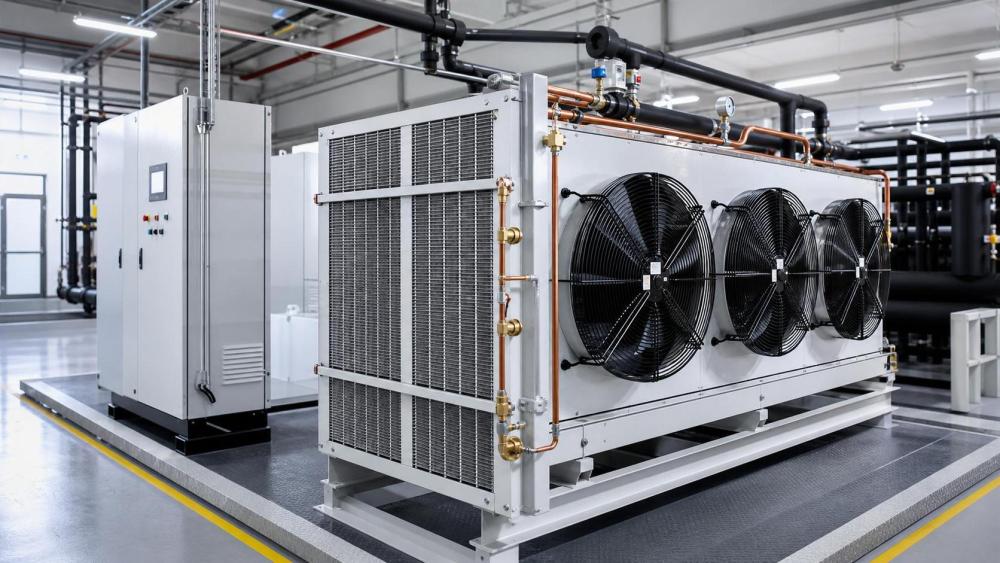
For performance-driven refrigeration design, component choice now shapes system economics more than ever.
That is why microchannel heat exchangers are moving from niche option to mainstream benchmark.
They offer a compact path to higher heat transfer, lower refrigerant charge, and tighter thermal control.
In industrial refrigeration, those gains affect power draw, maintenance intervals, and long-term compliance.
This matters even more as operators face stricter energy targets and refrigerant management pressure.
From a technical review perspective, microchannel heat exchangers deserve attention beyond simple footprint savings.
Their geometry changes how heat is rejected, how airflow is used, and how efficiently compressors operate.
At GTC-Matrix, this trend is closely tied to broader shifts in efficient thermal system architecture.
The key question is not whether they are advanced, but where they create measurable industrial value.
What Makes Microchannel Heat Exchangers Different
Traditional coil designs rely on round tubes and mechanically expanded fin structures.
Microchannel heat exchangers use flat multi-port tubes with a much larger surface-area-to-volume ratio.
That geometry improves refrigerant distribution and supports faster thermal exchange across a compact core.
In practical terms, more heat is transferred with less internal volume.
This also means less refrigerant is required to achieve the same cooling duty.
Most microchannel heat exchangers are aluminum-based, which helps reduce weight and simplify recycling pathways.
The design is especially attractive in condensers, gas coolers, and packaged industrial cooling modules.
Core structural advantages
- High heat transfer area in a smaller core
- Lower refrigerant volume inside the exchanger
- Reduced air-side pressure drop in optimized layouts
- Better fit for modular and high-density equipment design
These features are not just engineering details. They directly shape refrigeration efficiency and operating stability.
How Microchannel Heat Exchangers Improve Efficiency
The biggest efficiency gain comes from improved thermal performance at the heat rejection stage.
When condensing temperature drops, compressor lift usually drops as well.
That translates into lower compressor power for the same cooling output.
Microchannel heat exchangers help reach that condition by transferring heat faster and more evenly.
In many systems, they also improve response during part-load operation.
That is important because industrial refrigeration rarely runs at one fixed design point.
Loads move with ambient conditions, process timing, and product flow.
A heat exchanger that maintains strong performance across variable conditions supports better annualized efficiency.
Efficiency mechanisms in real systems
- Lower condensing pressure reduces compressor energy demand.
- Lower refrigerant charge cuts pumping losses and leakage exposure.
- Compact cores improve packaging around fans and airflow paths.
- Faster heat rejection helps stabilize process temperatures.
Taken together, these mechanisms can improve COP and reduce total cost of ownership.
Why Reduced Refrigerant Charge Matters
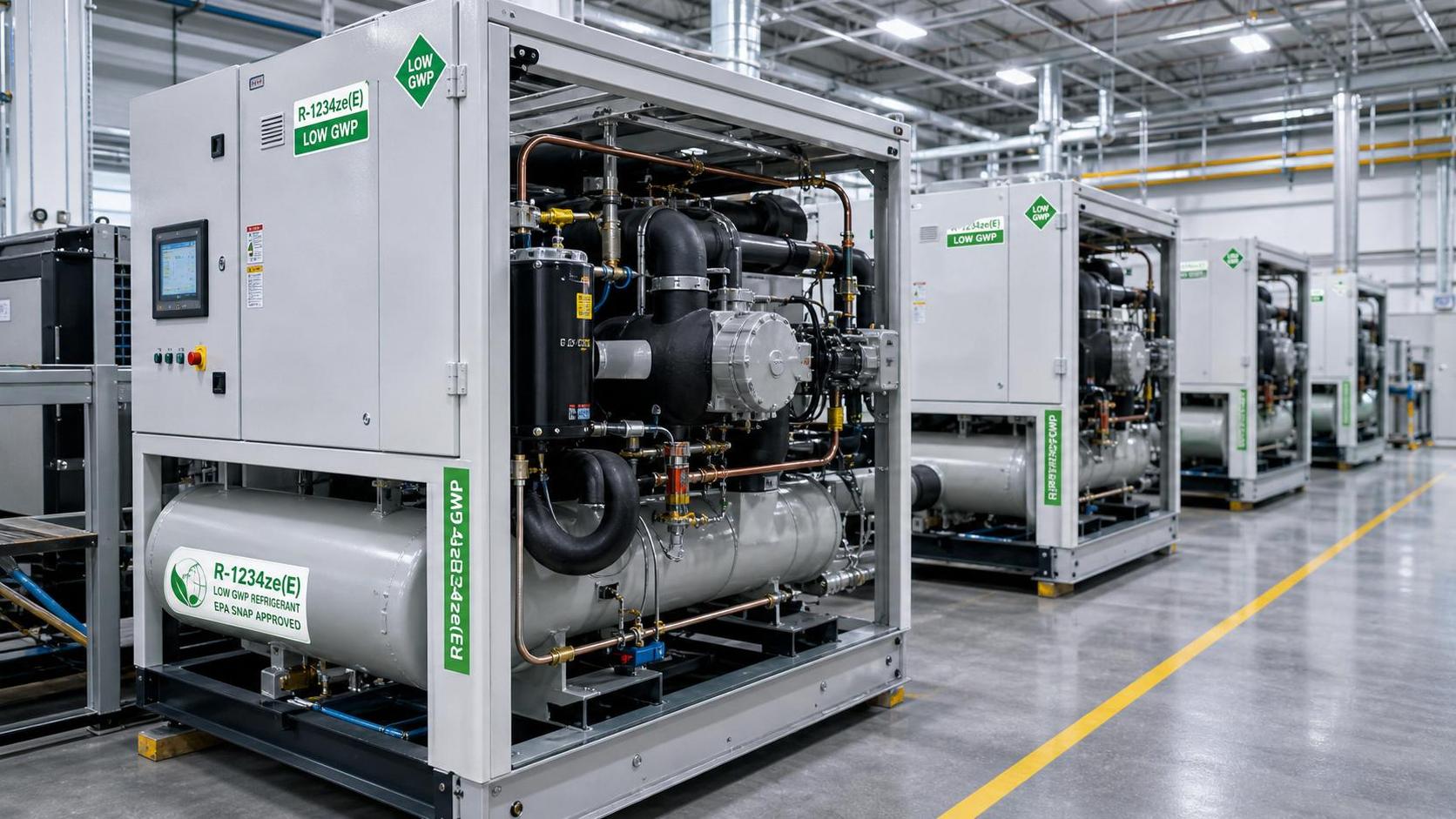
One of the strongest arguments for microchannel heat exchangers is reduced refrigerant inventory.
That benefit is operational, financial, and increasingly regulatory.
A lower charge reduces refrigerant procurement cost and lowers potential leak-related losses.
It may also simplify compliance strategy where refrigerant quotas or reporting frameworks are tightening.
For systems using higher-value refrigerants, the savings can be material over the asset lifecycle.
Lower internal volume can also support safer design logic in some applications.
This does not remove the need for good piping, controls, and leak detection.
But it does improve the baseline risk profile of the heat exchange section.
Evaluation points
- Charge reduction versus conventional fin-and-tube baseline
- Leak exposure under actual duty cycle conditions
- Impact on refrigerant transition strategy
- Recovery and service procedures during maintenance
From recent market signals, this charge issue is becoming a bigger selection driver, not a side note.
Performance Limits and Design Risks
Microchannel heat exchangers are not automatically the best answer in every plant.
Their benefits depend on application conditions, maintenance capability, and environmental exposure.
Air-side fouling can still reduce performance if filtration and cleaning practices are weak.
Corrosive environments also require careful material review and protective coating decisions.
Repair philosophy is another real issue. Some operators are more familiar with round-tube coil servicing.
That means specification teams should examine service access and replacement planning early.
More importantly, performance claims should be checked under the actual ambient and load envelope.
A strong rating at one condition does not guarantee superior seasonal refrigeration efficiency.
Common technical checks
- Face velocity and fan matching across design points
- Fouling tolerance in dusty or oily environments
- Coating durability in coastal or chemical exposure zones
- Drainage, cleaning access, and replacement logistics
In short, microchannel heat exchangers improve efficiency best when the surrounding system is designed with equal discipline.
Where They Deliver the Most Value
The strongest fit often appears in facilities with high energy intensity and tight process windows.
Food processing is one example, especially where washdown design and stable cooling capacity are critical.
Pharmaceutical and biotech operations also benefit from compact, controlled thermal performance.
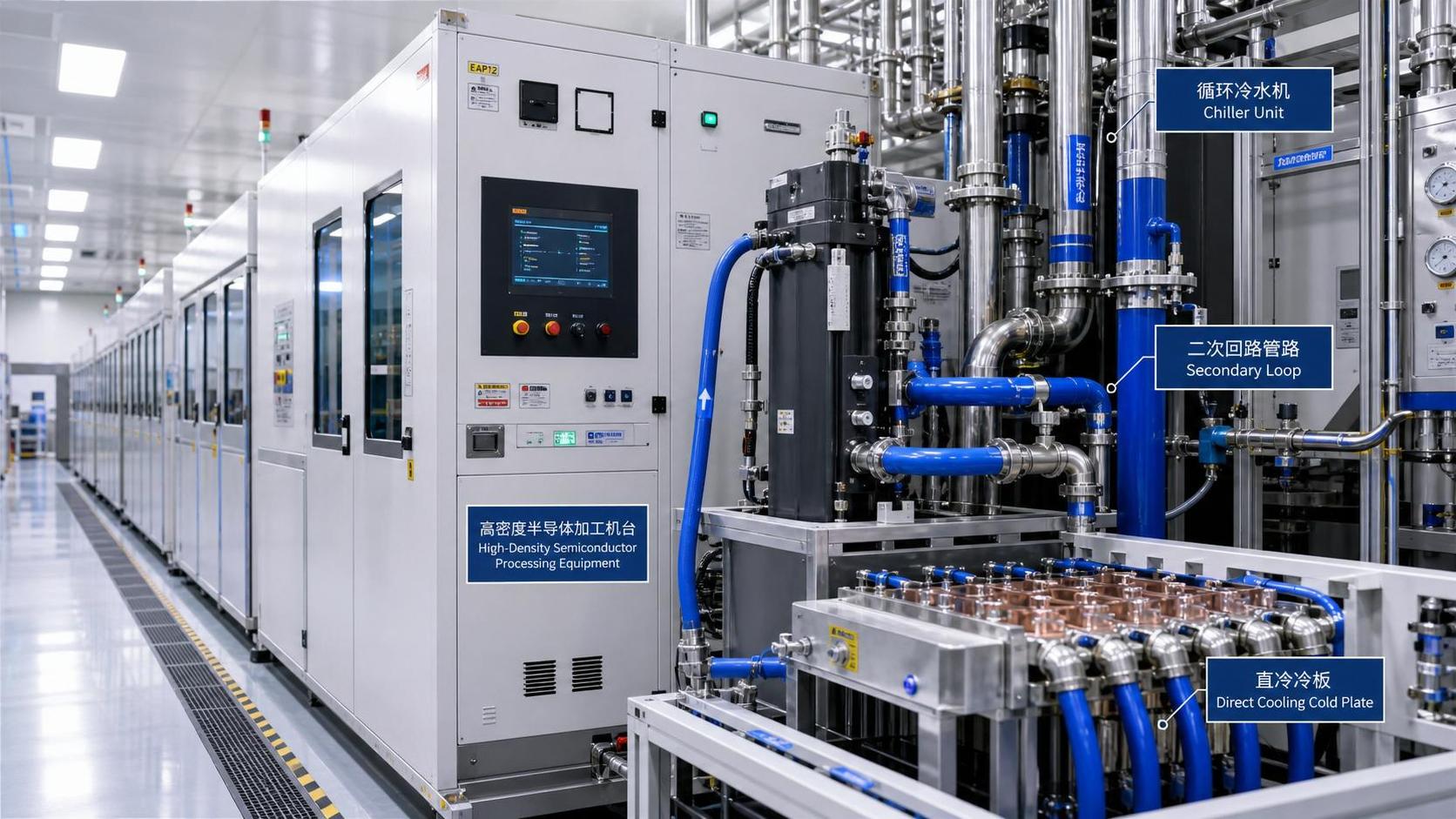
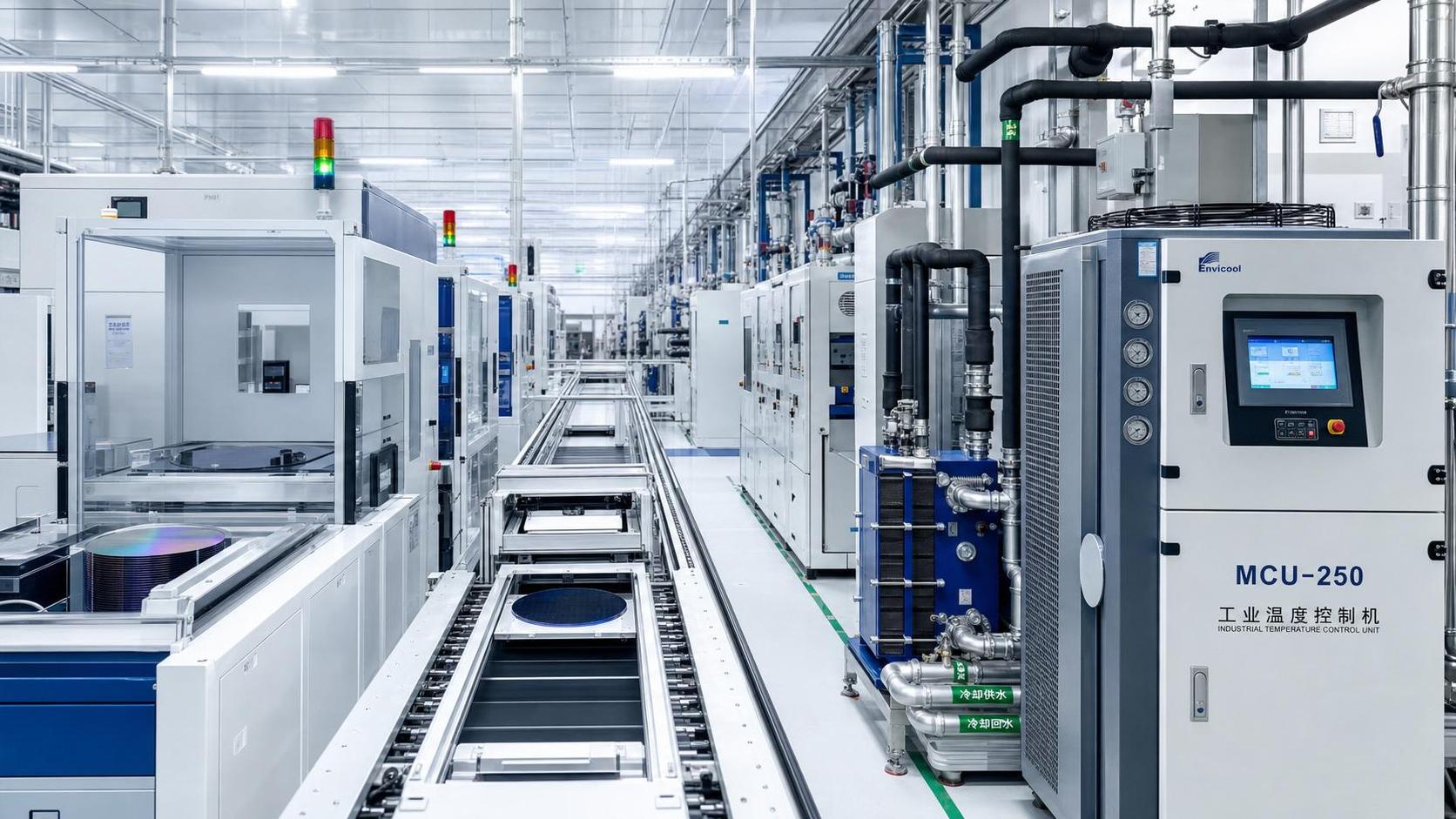
Electronics and semiconductor support systems value space efficiency and reliable part-load behavior.
Cold storage, packaged chillers, and process condensers are also common use cases.
The more obvious signal is this: dense thermal loads reward better heat rejection hardware.
Typical application priorities
How to Evaluate Microchannel Heat Exchangers in Specifications
A useful evaluation process starts with measurable system outcomes, not brochure-level efficiency claims.
Ask how the microchannel heat exchangers affect condensing temperature, annual energy use, and refrigerant charge.
Then check performance across expected ambient bands and real part-load profiles.
It is also smart to compare cleaning methods, coating options, and replacement lead times.
This is where total lifecycle value becomes clearer than first-cost comparison alone.
Practical specification checklist
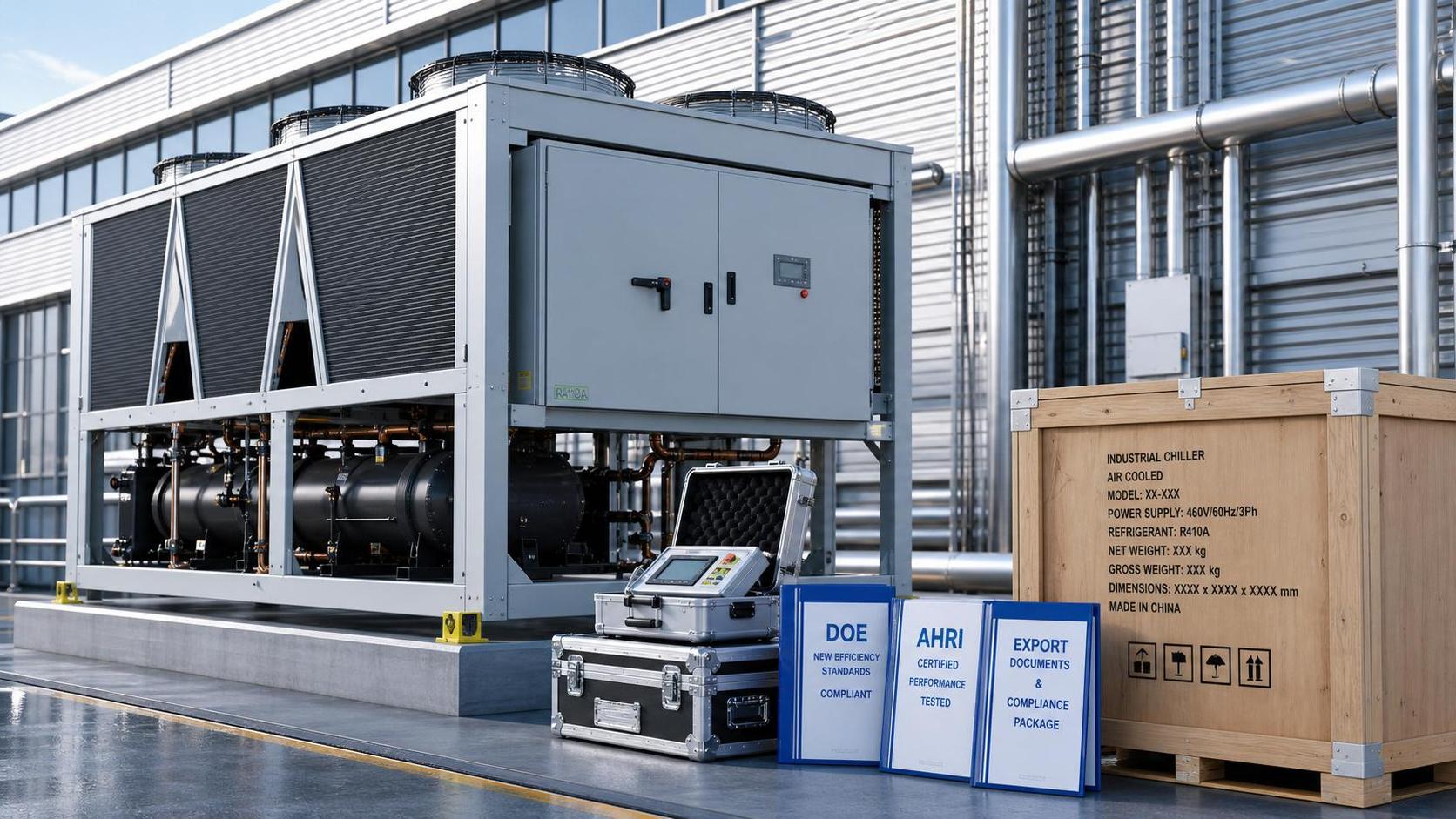
- Request certified thermal ratings at multiple operating points.
- Quantify refrigerant charge reduction against the current design.
- Review airflow, fan energy, and pressure-drop interactions.
- Check corrosion protection for the installation environment.
- Define cleaning access and field service procedures in advance.
- Model lifecycle cost, not only capital cost.
In actual procurement work, these questions separate true performance upgrades from cosmetic specification changes.
A Smarter Efficiency Decision
Microchannel heat exchangers improve industrial refrigeration efficiency by changing the thermal balance of the system.
They can lower compressor energy, reduce refrigerant charge, and support compact high-performance equipment design.
Still, the best results come from disciplined evaluation of fouling risk, service strategy, and real operating conditions.
For industrial teams balancing efficiency targets with reliability, microchannel heat exchangers are no longer a secondary option.
They are increasingly a strategic design choice in modern refrigeration systems.
A practical next step is to benchmark them against your current condenser or gas cooler using annualized performance and lifecycle cost data.
Related News
- How to Compare Semiconductor Cooling Solutions by Heat Load and Uptime RiskAuthor :Cryogenic Systems Expert

- EU Label Deadline Hits China Chiller ExportsAuthor :Cryogenic Systems Expert

- How Smart Thermal Systems Improve Industrial Cooling EfficiencyAuthor :Cryogenic Systems Expert

- How to Choose Process Cooling Equipment for Stable Temperature ControlAuthor :Cryogenic Systems Expert

- EU Finalizes 2026 HFC Quota Cut for R-134a ChillersAuthor :Cryogenic Systems Expert

- EU Tightens HFC-134a Quotas for Industrial ChillersAuthor :Cryogenic Systems Expert

- REACH SVHC Update Pressures HFC-134a Chiller Supply ChainsAuthor :Cryogenic Systems Expert

- EU PFAS Coolant Ban Reshapes Chiller ExportsAuthor :Cryogenic Systems Expert

- EU REACH Restricts PFAS Cooling Media ImportsAuthor :Cryogenic Systems Expert

- EU Ecodesign Rule Takes Effect for Industrial ChillersAuthor :Cryogenic Systems Expert

- EU REACH Rule Takes Effect for PFAS in Industrial Cooling ExportsAuthor :Cryogenic Systems Expert

- Industrial Cooling for Plastic Processing: How to Size for Stable Cycle TimesAuthor :Cryogenic Systems Expert

- EU F-Gas Update Bars R404A/R507 in Commercial CoolingAuthor :Cryogenic Systems Expert

- DOE Raises Chiller Efficiency Standard From October 2026Author :Cryogenic Systems Expert

- India Mandates BIS Energy Certification for Industrial ChillersAuthor :Cryogenic Systems Expert

- Energy-Efficient Heat Exchange for Process Cooling: Cost vs PaybackAuthor :Cryogenic Systems Expert

- EPA R-134a Import Ban Takes Effect on July 13, 2026Author :Cryogenic Systems Expert

- India BIS Rule Takes Effect for Industrial ChillersAuthor :Cryogenic Systems Expert

- EPA Cuts R134a Import Quotas 20% From July 10Author :Cryogenic Systems Expert

- How to Compare Energy-Efficient Cooling Systems for Factory Expansion ProjectsAuthor :Cryogenic Systems Expert

- Chiller Price Index Rises 11.3% in Q2Author :Cryogenic Systems Expert

- Saudi SASO Tightens Chiller Import Compliance From July 10Author :Cryogenic Systems Expert

- Dubai Opens Fast-Track Chiller TendersAuthor :Cryogenic Systems Expert

- Japan Raises Chiller COP Floor to 6.2 From Sept. 1Author :Cryogenic Systems Expert
![]()
- Compact Thermal Management in Smart Devices: Common Failure RisksAuthor :Cryogenic Systems Expert

- Thermal Management for Batteries: Cooling Methods ComparedAuthor :Cryogenic Systems Expert

- How Compact Thermal Design Extends Smart Device UptimeAuthor :Cryogenic Systems Expert

- Shanghai-Rotterdam Reefer Rates Jump 37% in a WeekAuthor :Cryogenic Systems Expert

- Process Cooling Equipment Low Maintenance: What Cuts Downtime Over 5 Years?Author :Cryogenic Systems Expert

- Semiconductor Cooling Solutions: Which Design Works Best for High-Density Tools?Author :Cryogenic Systems Expert

- Semiconductor Thermal Management Systems: Preventing Yield Loss from Heat DriftAuthor :Cryogenic Systems Expert

- EPA Clears R-1234ze(E) for Industrial ChillersAuthor :Cryogenic Systems Expert
 for Industrial Chillers")
- DOE Raises Chiller IEER Floor to 12.8 From Oct. 2026Author :Cryogenic Systems Expert

- Singapore Refrigeration Show Adds Green Compliance HubAuthor :Cryogenic Systems Expert

- How Food Industry Temperature Control Systems Reduce Product LossAuthor :Cryogenic Systems Expert

- EU REACH Adds 12 SVHCs, Raising Chiller Compliance RiskAuthor :Cryogenic Systems Expert