EPA Clears R-1234ze(E) for Industrial Chillers




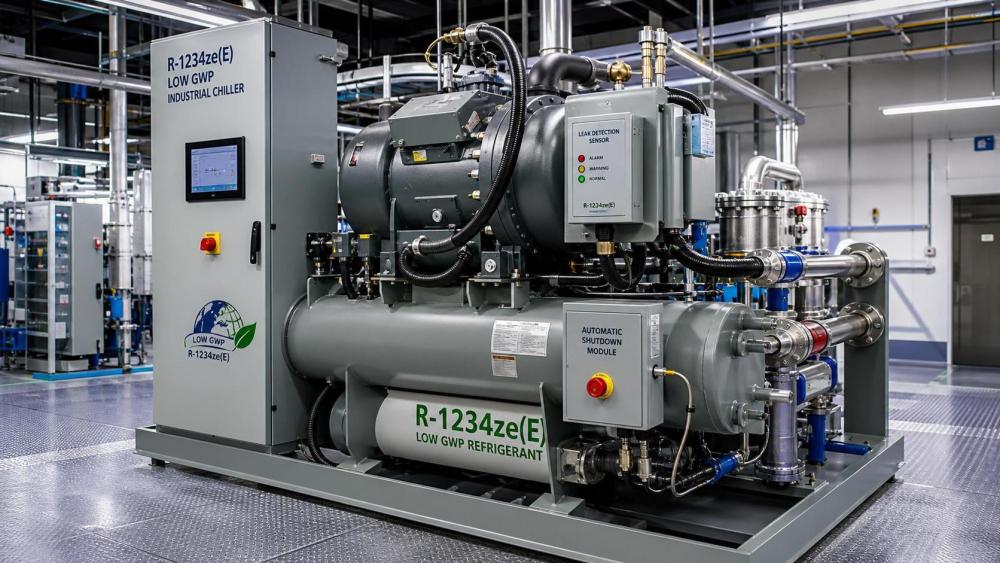
On June 28, 2026, the U.S. Environmental Protection Agency updated SNAP Notice 47 to allow R-1234ze(E) for use in industrial chillers, but only under a narrow technical scope. The approval applies only to systems with a single compressor displacement of at least 150 kW and requires real-time leak detection together with an automatic shutdown module. For chiller manufacturers, buyers, service providers, and supply chain participants in North America, this is worth close attention because the rule opens a path for a low-GWP refrigerant while also limiting where that path is commercially practical.
What the EPA update confirms
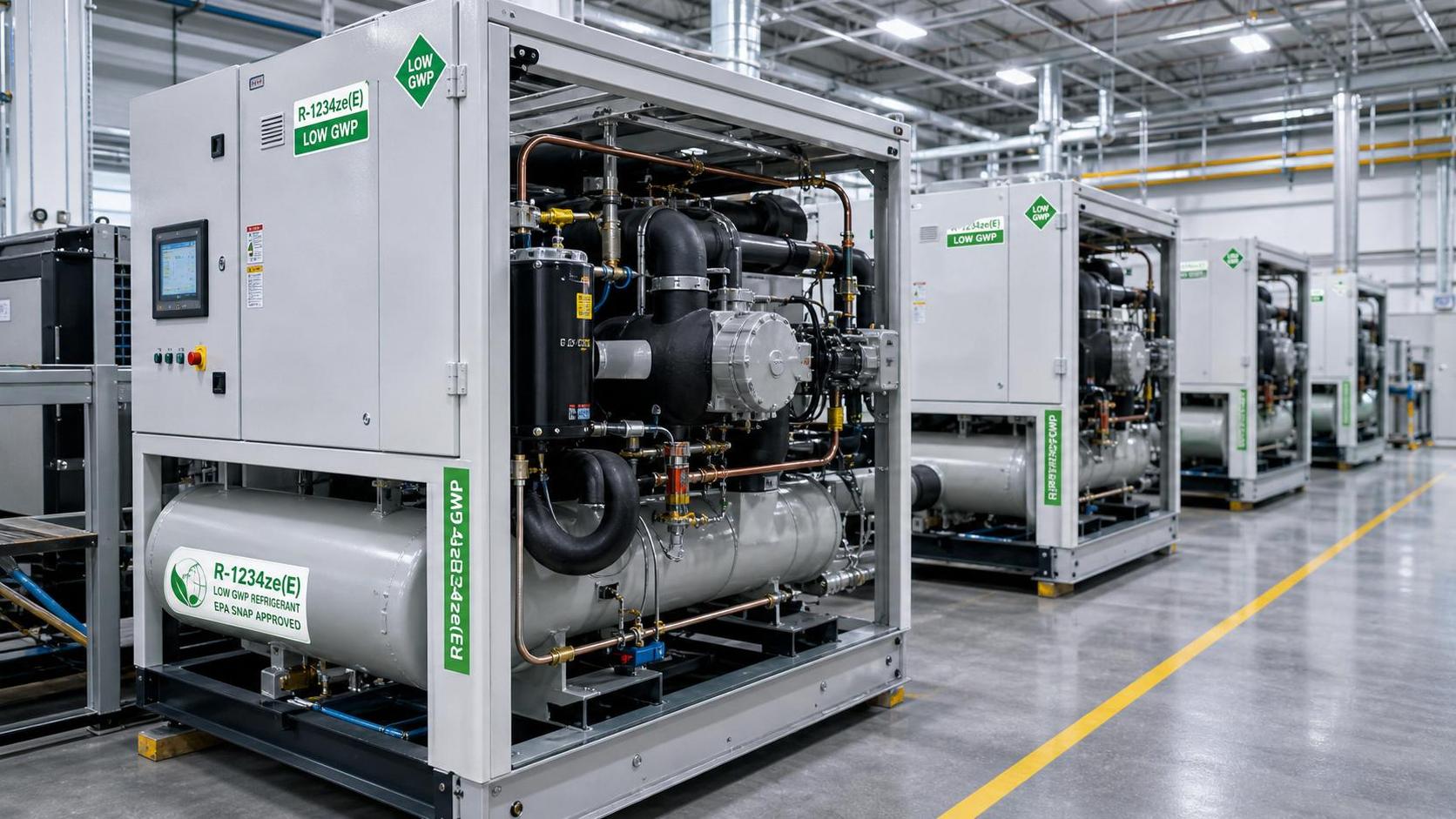
The confirmed facts are limited but clear. The EPA updated its Significant New Alternatives Policy (SNAP) program through Notice 47 on June 28, 2026. In that update, R-1234ze(E) was approved as a low-GWP refrigerant for industrial chillers. The approval is not broad-based: it is restricted to systems with a single compressor displacement of 150 kW or more, and those systems must include real-time leak monitoring and an automatic shutdown function.
The event summary also indicates that this change is expected to reshape purchasing preferences in North America toward equipment that is compatible with high-efficiency refrigerants and can meet the stated technical conditions.
Where the market may feel the impact first
Equipment makers will face a narrower qualifying window
From an industry perspective, manufacturers of industrial chillers are likely to be affected first because the approval is tied to specific equipment characteristics. The immediate impact is likely to fall on product planning, configuration decisions, and compliance-related design work, especially where product lines span different compressor capacities. What deserves closer attention is whether existing offerings already fit the 150 kW threshold and required safety functions, or whether qualification would depend on redesign, documentation, or a narrower sales focus.
Buyers will need to verify more than refrigerant choice
Procurement teams and end users may also see a change in evaluation criteria. Analysis shows that refrigerant approval alone will not be enough for purchasing decisions in this category; buyers will also need to verify whether a proposed system meets the minimum compressor threshold and includes real-time leak detection and automatic shutdown capability. In practice, this can shift attention toward specification review, bid comparison, and supplier clarification during procurement.
Service and supply chain participants may see compliance become part of delivery
For service providers and supply chain partners, the likely impact is less about the refrigerant label itself and more about the supporting system requirements attached to its use. Observably, any transaction or delivery process connected to qualifying industrial chillers may need closer alignment on equipment configuration, supporting technical materials, and customer communication. That makes the handoff between manufacturing, distribution, installation, and after-sales support more sensitive than in a simple refrigerant substitution scenario.
What companies should watch now
Track the exact scope of future official wording
Companies should pay close attention to how the EPA or related official materials continue to describe the eligible application scope. Analysis shows that the commercial meaning of this update depends heavily on how strictly the compressor threshold and safety-module requirements are interpreted in practice.
Separate policy permission from immediate sales readiness
What deserves closer attention is the difference between regulatory allowance and business readiness. A refrigerant may be permitted for a defined use case, but that does not automatically mean every product, quotation, or installed base is aligned with the approval conditions. Internal reviews of applicable models, technical files, and customer-facing claims are likely to become more important.
Review procurement and supplier communication points
For procurement teams, distributors, and project-facing sales staff, the current priority is likely to be verification discipline. This includes checking whether supplier documentation clearly addresses the 150 kW minimum and the required leak detection and shutdown functions, and whether those points are communicated consistently during tendering, order confirmation, and project delivery.
Prepare for customer questions around applicability
Service teams and account managers should expect more questions about which industrial chiller configurations are actually covered. Observably, the main practical issue is not broad market messaging but application boundaries. Clear explanations on where the approval applies, and where it does not, may help reduce confusion in ongoing procurement discussions.
Why this looks more like a directional signal than a blanket opening
Analysis shows that this update is best understood as a targeted regulatory signal rather than a universal opening for R-1234ze(E) across all industrial chiller scenarios. The EPA has recognized a low-GWP option, but it has done so with explicit technical limits and required control measures. That combination suggests the market should pay attention to qualified configurations, not assume a broad-based shift across every equipment class.
It is more appropriate to understand this as an important development that may influence procurement preferences and product positioning, while still requiring continued observation of how the rule translates into actual projects, supplier offerings, and customer acceptance.
How to read this development at this stage
At this stage, the industry significance lies in the combination of permission and restriction. The approval of R-1234ze(E) for industrial chillers creates a clearer regulatory route for certain low-GWP applications, but the 150 kW threshold and mandatory safety features mean the impact is likely to be selective rather than uniform. A neutral reading is that this is a meaningful policy move for qualified equipment in North America, and one that market participants should interpret carefully against actual system design and procurement requirements.
Basis of this article and what still needs verification
This article is based on the user-provided news title, event date, and event summary. For this type of development, relevant source categories would typically include official regulatory notices, company statements, industry association updates, authoritative media coverage, and standards-related documents. No specific official source link was provided in the input, so the exact source document link remains to be verified. Continued monitoring should focus on any further official clarification, implementation wording, and how market participants apply the stated conditions in real purchasing and delivery workflows.
Related News
- EPA Rule Takes Effect for R-410A Equipment ImportsAuthor :Cryogenic Systems Expert

- EN 378-1:2026 Tightens EU Export ChecksAuthor :Cryogenic Systems Expert

- How to Compare Semiconductor Cooling Solutions by Heat Load and Uptime RiskAuthor :Cryogenic Systems Expert

- EU Label Deadline Hits China Chiller ExportsAuthor :Cryogenic Systems Expert

- How Smart Thermal Systems Improve Industrial Cooling EfficiencyAuthor :Cryogenic Systems Expert

- How to Choose Process Cooling Equipment for Stable Temperature ControlAuthor :Cryogenic Systems Expert

- EU Finalizes 2026 HFC Quota Cut for R-134a ChillersAuthor :Cryogenic Systems Expert

- EU Tightens HFC-134a Quotas for Industrial ChillersAuthor :Cryogenic Systems Expert

- REACH SVHC Update Pressures HFC-134a Chiller Supply ChainsAuthor :Cryogenic Systems Expert

- EU PFAS Coolant Ban Reshapes Chiller ExportsAuthor :Cryogenic Systems Expert

- EU REACH Restricts PFAS Cooling Media ImportsAuthor :Cryogenic Systems Expert

- EU Ecodesign Rule Takes Effect for Industrial ChillersAuthor :Cryogenic Systems Expert

- EU REACH Rule Takes Effect for PFAS in Industrial Cooling ExportsAuthor :Cryogenic Systems Expert

- Industrial Cooling for Plastic Processing: How to Size for Stable Cycle TimesAuthor :Cryogenic Systems Expert

- EU F-Gas Update Bars R404A/R507 in Commercial CoolingAuthor :Cryogenic Systems Expert

- DOE Raises Chiller Efficiency Standard From October 2026Author :Cryogenic Systems Expert

- India Mandates BIS Energy Certification for Industrial ChillersAuthor :Cryogenic Systems Expert

- Energy-Efficient Heat Exchange for Process Cooling: Cost vs PaybackAuthor :Cryogenic Systems Expert

- EPA R-134a Import Ban Takes Effect on July 13, 2026Author :Cryogenic Systems Expert

- India BIS Rule Takes Effect for Industrial ChillersAuthor :Cryogenic Systems Expert

- EPA Cuts R134a Import Quotas 20% From July 10Author :Cryogenic Systems Expert

- How to Compare Energy-Efficient Cooling Systems for Factory Expansion ProjectsAuthor :Cryogenic Systems Expert

- Chiller Price Index Rises 11.3% in Q2Author :Cryogenic Systems Expert

- Saudi SASO Tightens Chiller Import Compliance From July 10Author :Cryogenic Systems Expert

- Dubai Opens Fast-Track Chiller TendersAuthor :Cryogenic Systems Expert

- Japan Raises Chiller COP Floor to 6.2 From Sept. 1Author :Cryogenic Systems Expert
![]()
- Compact Thermal Management in Smart Devices: Common Failure RisksAuthor :Cryogenic Systems Expert

- Thermal Management for Batteries: Cooling Methods ComparedAuthor :Cryogenic Systems Expert

- How Compact Thermal Design Extends Smart Device UptimeAuthor :Cryogenic Systems Expert

- Shanghai-Rotterdam Reefer Rates Jump 37% in a WeekAuthor :Cryogenic Systems Expert

- Process Cooling Equipment Low Maintenance: What Cuts Downtime Over 5 Years?Author :Cryogenic Systems Expert

- Semiconductor Cooling Solutions: Which Design Works Best for High-Density Tools?Author :Cryogenic Systems Expert

- Semiconductor Thermal Management Systems: Preventing Yield Loss from Heat DriftAuthor :Cryogenic Systems Expert

- EPA Clears R-1234ze(E) for Industrial ChillersAuthor :Cryogenic Systems Expert
 for Industrial Chillers")
- DOE Raises Chiller IEER Floor to 12.8 From Oct. 2026Author :Cryogenic Systems Expert

- Singapore Refrigeration Show Adds Green Compliance HubAuthor :Cryogenic Systems Expert