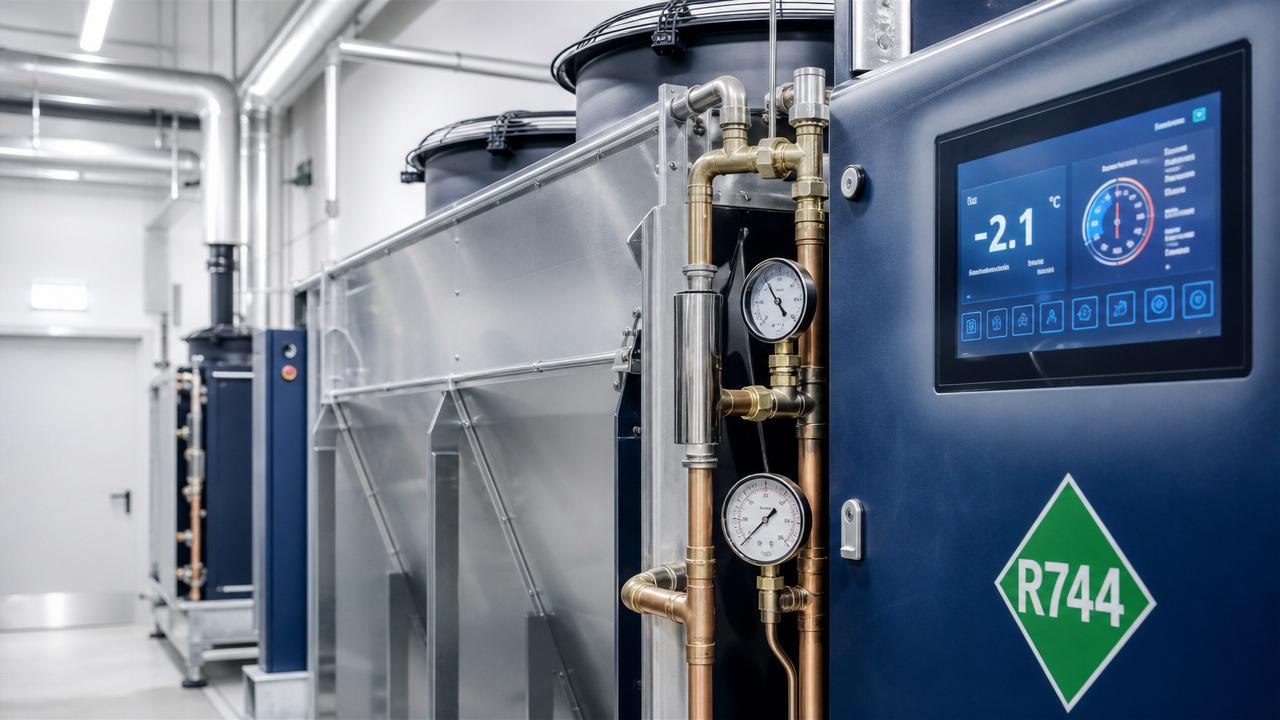
PSA Jurong Island Launches Mandatory Cold-Chain Traceability for Refrigerants




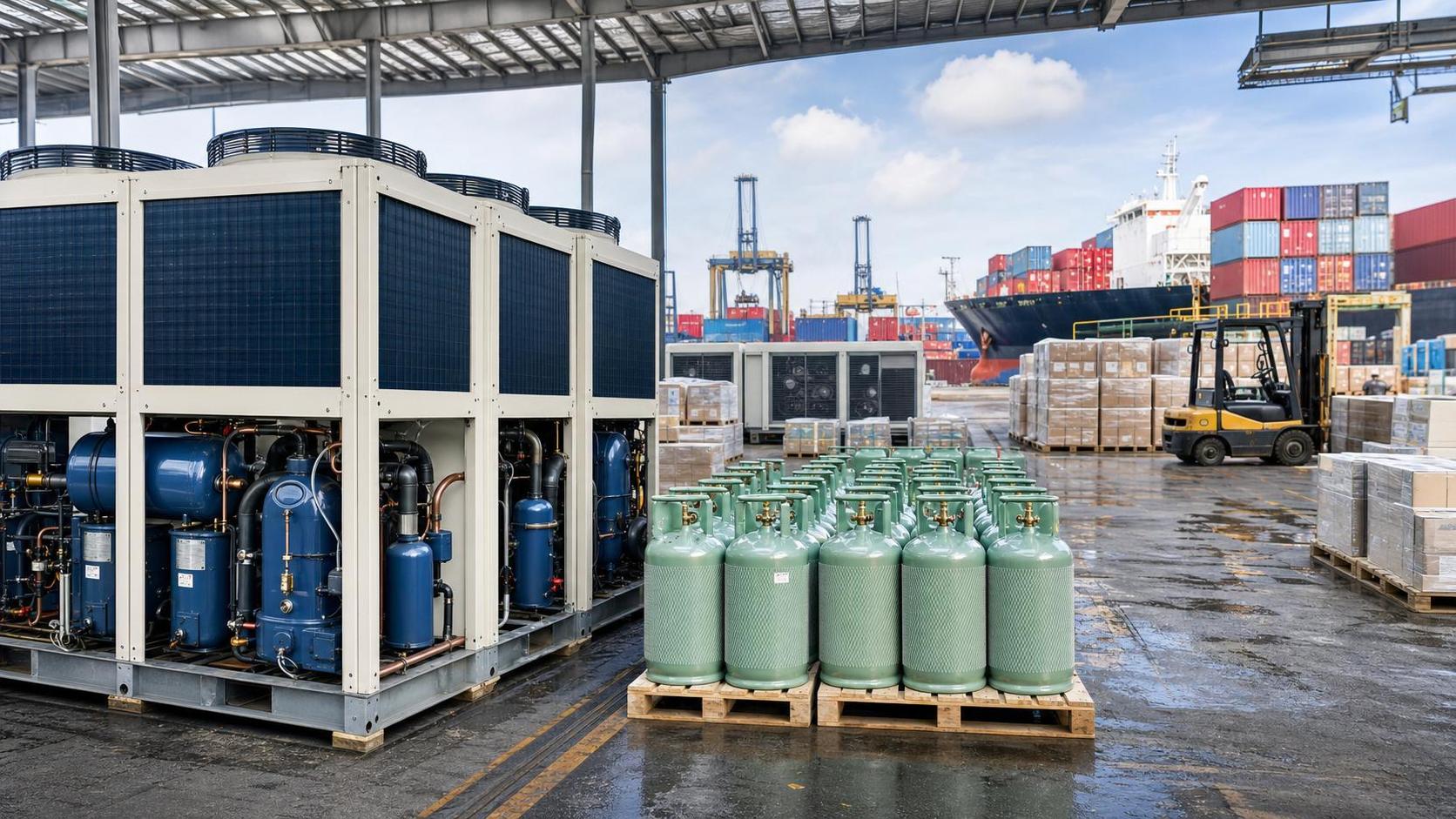
On 24 May 2026, the Port of Singapore Authority (PSA) officially activated the Phase II Smart Cold-Chain Inspection Zone at Jurong Island Terminal. This regulatory upgrade mandates full temperature-controlled handling and real-time digital traceability for all imported refrigerants—including R-134a, R-410A, and other hydrofluorocarbon (HFC) and hydrochlorofluorocarbon (HCFC) variants—marking a significant shift in compliance expectations for exporters and logistics providers serving the Singaporean market.
Event Overview
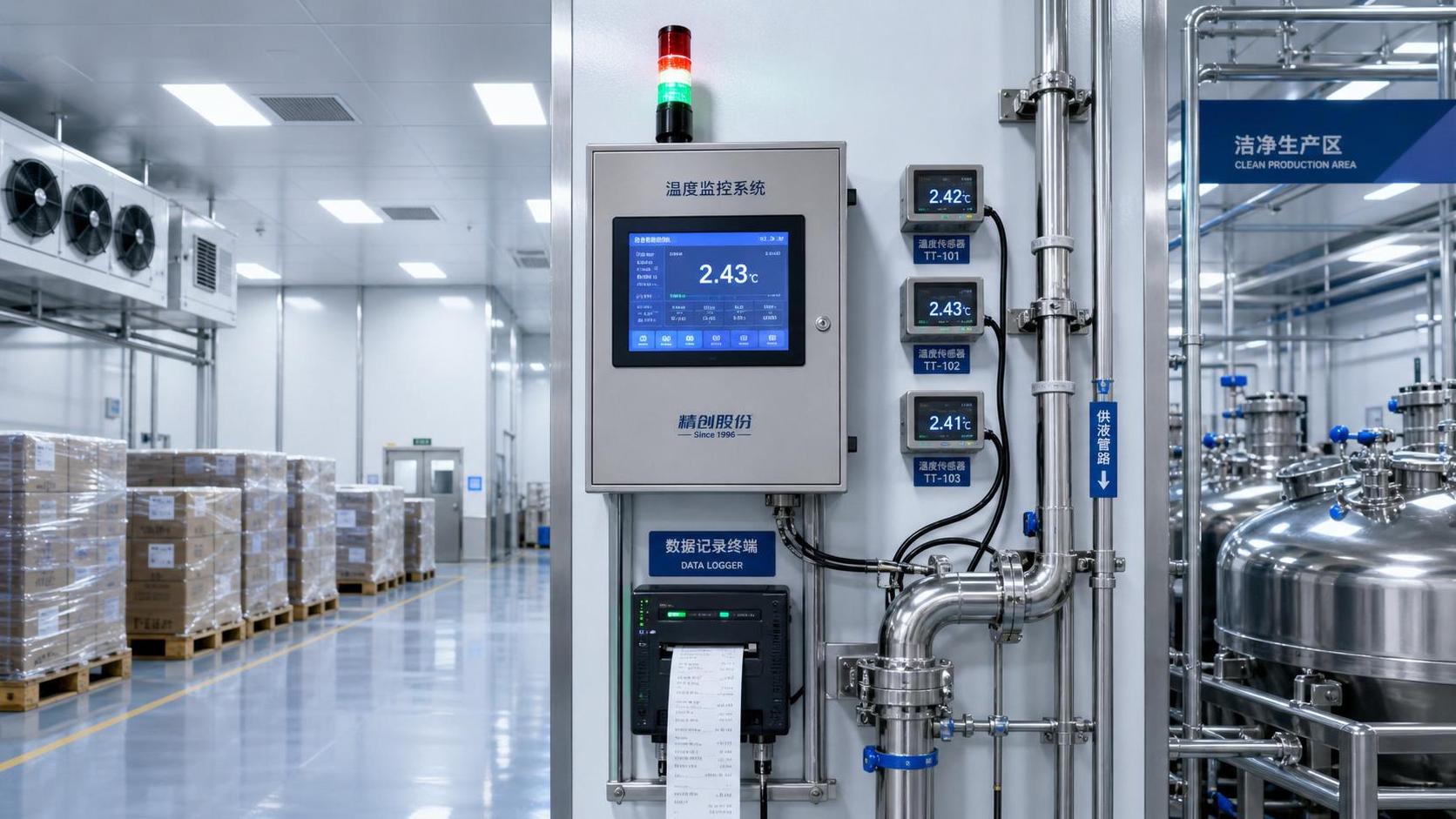
PSA commenced operations of its new intelligent cold-chain inspection facility at Jurong Island Terminal on 24 May 2026. Under the new requirement, all imported refrigerants must maintain a strict temperature range of −20 °C to +10 °C throughout unloading, warehousing, and cargo release. Temperature logs must be captured hourly and uploaded via PSA’s IoT platform. Shipments failing to integrate with PSA’s API-compliant data stream—via certified Bluetooth-enabled temperature loggers and ISO 17025–aligned thermal labels—will face customs clearance suspension upon arrival.
Industries Affected
Direct Exporters (e.g., Chinese refrigerant manufacturers and trading firms): These entities now bear primary responsibility for end-to-end cold-chain integrity prior to vessel departure. Non-compliance triggers immediate clearance delays—not only at PSA terminals but potentially across Singapore Customs’ integrated risk-assessment systems. Impact manifests as increased pre-shipment validation costs, tighter lead-time coordination with freight forwarders, and exposure to contractual penalties under Incoterms® 2020 DAP or DPU clauses.
Raw Material Procurement Firms (e.g., upstream chemical distributors sourcing bulk HFCs): While not directly handling final export consignments, these firms face growing demand for temperature-stable intermediate packaging and certified cold-chain documentation. Their supply contracts are increasingly incorporating audit-ready temperature history clauses, shifting liability for thermal excursions earlier in the value chain.
Processing & Manufacturing Enterprises (e.g., HVAC OEMs and refrigeration equipment assemblers importing blended refrigerants): These users confront operational friction when receiving partial shipments or mixed-container loads. Since PSA’s system validates per-container—not per BL or per consignment—manufacturers must now verify individual container-level compliance before releasing goods into production lines, risking line-stoppage if data gaps occur.
Supply Chain Service Providers (e.g., licensed customs brokers, cold-chain integrators, and IoT hardware vendors): Demand is rising for API-integrated temperature monitoring solutions validated against PSA’s technical specifications (e.g., BLE 5.0 firmware, UTC timestamp sync, TLS 1.3 encryption). Brokers report a 40% increase in client requests for ‘PSA-ready’ cold-chain readiness assessments since Q1 2026—indicating rapid downstream adoption pressure.
Key Focus Areas and Recommended Actions
Validate Hardware Compatibility Against PSA’s API Schema
Exporters and their appointed freight forwarders must confirm that deployed Bluetooth loggers and cloud platforms meet PSA’s documented interface requirements—including payload structure, authentication token lifecycle, and error-handling protocols. PSA does not certify devices; it certifies data ingestion. A compliant label alone is insufficient without successful API handshake and log acceptance.
Implement Pre-Loading Thermal Profiling
Given the narrow allowable temperature band (−20 °C to +10 °C), ambient loading conditions in exporting regions (e.g., southern China’s humid summers) may induce thermal lag or condensation-related sensor drift. Conducting 72-hour pre-loading thermal profiling—including simulated transit vibration and door-cycle stress tests—is now advisable to avoid false non-compliance alerts.
Assign Joint Compliance Ownership with Local Agents
PSA requires local declaration of the ‘Cold-Chain Responsible Party’—a role that cannot be fulfilled remotely. Chinese exporters must formally designate and contractually empower their Singapore-based forwarding agent to manage real-time data reconciliation, exception reporting, and PSA liaison. This goes beyond traditional customs representation and entails shared liability for data continuity.
Editorial Perspective / Industry Observation
Observably, PSA’s move signals a broader pivot from outcome-based regulation (e.g., post-arrival temperature checks) toward process-based assurance anchored in verifiable digital provenance. Analysis shows this is less about refrigerant safety per se—and more about establishing a scalable infrastructure for future climate-relevant imports, such as low-GWP alternatives (e.g., R-32, R-1234yf) and carbon-capture media, where thermal stability correlates strongly with chemical degradation and emissions risk. From an industry standpoint, this should be understood not merely as a Singapore-specific hurdle, but as a potential blueprint for ASEAN harmonisation—especially given ongoing discussions under the ASEAN Single Window Working Group on Environmental Goods Traceability.
Conclusion
This initiative represents a structural tightening of environmental commodity governance at a critical maritime node. It does not raise absolute barriers to trade—but redefines competitiveness along digital infrastructure readiness, cross-border data interoperability, and embedded quality control. For global refrigerant suppliers, adapting is no longer optional; it is the baseline condition for market access in one of Asia’s most strategically connected ports.
Source Attribution
Official announcement issued by PSA International Pte Ltd, 24 May 2026 (PSA Press Release #JICZ-2026-05); Technical Specifications v2.1 published on PSA IoT Portal (accessed 25 May 2026); Verified through Singapore Customs’ TradeNet Bulletin No. TN-2026-017. Note: PSA has indicated plans to extend similar requirements to ammonia-based industrial coolants and fluorinated ketones by Q4 2027—subject to public consultation currently underway.
Related News
- EPA Freezes R-410A Quotas, Fast-Tracks R-32Author :Cryogenic Systems Expert

- Low GWP Refrigerants HFO Blends: Key Stability and Safety FactorsAuthor :Cryogenic Systems Expert

- R-32 Price Spike Reshapes Chiller ProcurementAuthor :Cryogenic Systems Expert

- How to Compare Environmentally Friendly Refrigerants by GWP, Safety, and CostAuthor :Cryogenic Systems Expert

- R-454B Export Quota Cut 18% as Lead Times DoubleAuthor :Cryogenic Systems Expert

- Japan Cuts R32 and R290 Import Quotas From July 10Author :Cryogenic Systems Expert

- EPA Cuts R-134a Import Quotas 42% From July 2026Author :Cryogenic Systems Expert
![]()
- Low GWP Refrigerants HFO Blends: Performance and Compliance in 2026Author :Cryogenic Systems Expert

- R-513A Jumps 23% as China Tightens Export QuotasAuthor :Cryogenic Systems Expert

- Environmentally Friendly Refrigerants in 2026: Compliance Risks and Upgrade PrioritiesAuthor :Cryogenic Systems Expert

- Pharmaceutical Temperature Control Systems: Common Compliance RisksAuthor :Cryogenic Systems Expert

- China Tightens Q3 R32 Export QuotasAuthor :Cryogenic Systems Expert

- California EPR Deadline Nears for Refrigeration MakersAuthor :Cryogenic Systems Expert

- Resource Circularity Trends Reshaping Refrigerants and Cooling SystemsAuthor :Cryogenic Systems Expert

- HFCs Filing Rules Enter Full EnforcementAuthor :Cryogenic Systems Expert

- How Environmentally Friendly Refrigerants Affect Chiller ComplianceAuthor :Cryogenic Systems Expert

- EU REACH Tightens Refrigerant Impurity Limits for R134a ExportsAuthor :Cryogenic Systems Expert

- China Seeks Feedback on 2027 Refrigerant QuotasAuthor :Cryogenic Systems Expert

- EU to Ban High-GWP ACs in 2029 as R410A Exits HomesAuthor :Cryogenic Systems Expert

- US, UK Delay HFC Phaseout, Extending R32/R134a Export WindowAuthor :Cryogenic Systems Expert

- EU HFC Cut Tightens by 2029 as Gen-3 Output Falls 10%Author :Cryogenic Systems Expert

- Kuwait Bans HCFC AC Imports as Shift to R32/R290 Speeds UpAuthor :Cryogenic Systems Expert

- Saudi SASO Rules Tighten AC Imports in DecemberAuthor :Cryogenic Systems Expert

- Environmentally Friendly Refrigerants: Compliance, Safety, and Retrofit RisksAuthor :Cryogenic Systems Expert

- SABIC Force Majeure Keeps Chiller Refrigerant Supply TightAuthor :Cryogenic Systems Expert

- SABIC Force Majeure Tightens Refrigerant FeedstocksAuthor :Cryogenic Systems Expert

- UL 60335-2-89 Tightens R290 Leak Test RulesAuthor :Cryogenic Systems Expert
![]()
- UL 60335-2-89 Adds R290 Vacuum Leak TestAuthor :Cryogenic Systems Expert

- Global Refrigerant Price Index Falls 8.3% MoM in MayAuthor :Cryogenic Systems Expert
![]()
- PSA Jurong Island Launches Mandatory Cold-Chain Traceability for RefrigerantsAuthor :Cryogenic Systems Expert
![]()
- 2026 Refrigerants Shift: What Changes for Cold StorageAuthor :Cryogenic Systems Expert

- Shanghai Pudong Pilots E-Labels for Imported CosmeticsAuthor :Cryogenic Systems Expert

- 2026 Refrigerant Shift: Safer Options With Lower Compliance RiskAuthor :Cryogenic Systems Expert

- Vitafoods Europe Highlights Clinical Herb Data, Cold Chain Demand SurgesAuthor :Cryogenic Systems Expert
![]()
- U.S. Treasury Yield Surge Stabilizes Silver, Eases Refrigerants Export PricingAuthor :Cryogenic Systems Expert

- France Allocates €710M to Support War-Impacted Firms on Cold Chain ComplianceAuthor :Cryogenic Systems Expert