Global Refrigerant Price Index Falls 8.3% MoM in May




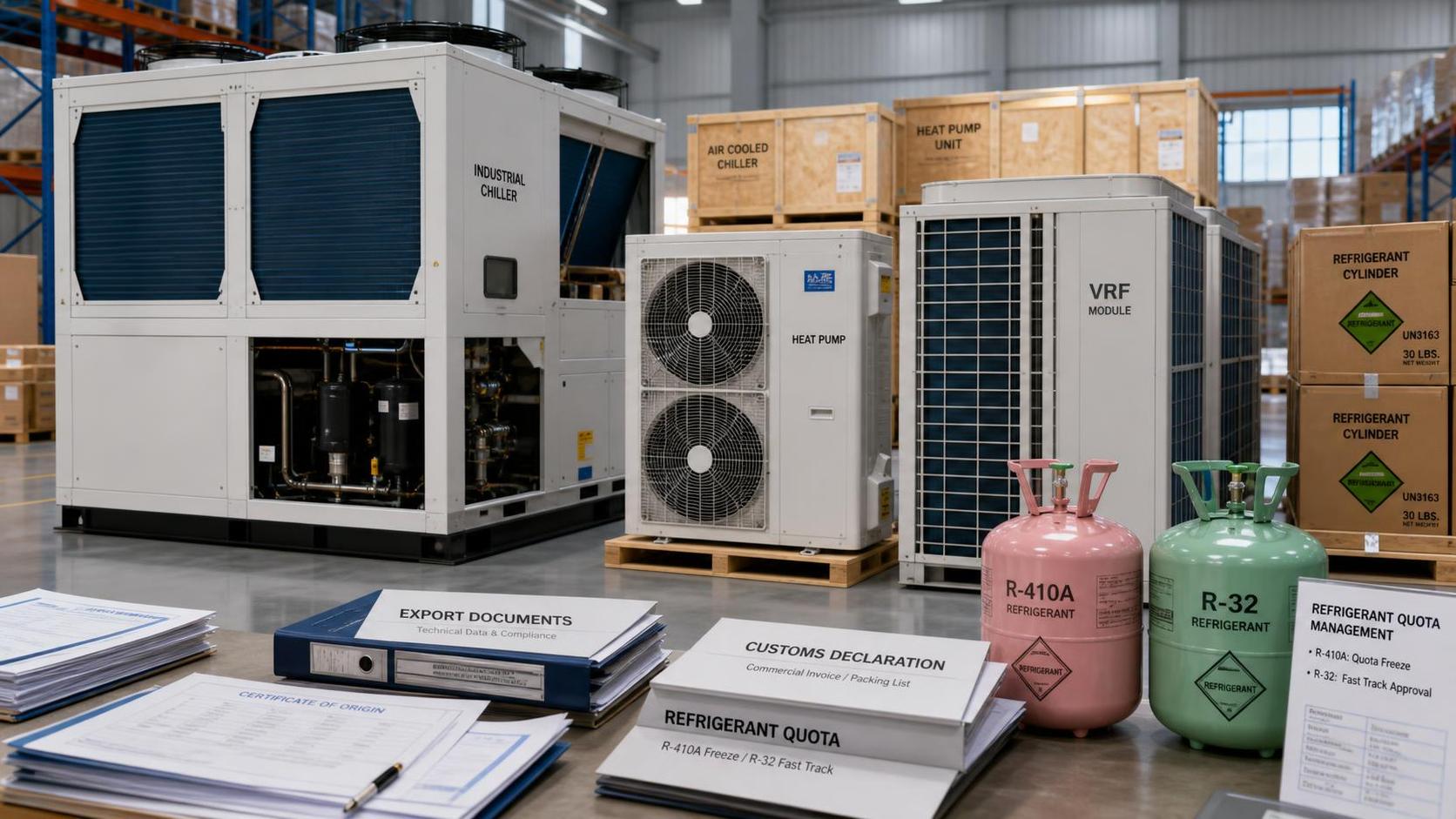
On May 24, 2026, the International Institute of Refrigeration (IIR) released the Global Refrigerant Price Index (GRPI), showing a 8.3% month-on-month decline. Key refrigerants R-32 and R-125 registered average prices of $18.2/kg (−9.1%) and $24.6/kg (−7.5%), respectively. This shift is especially relevant for industrial chiller manufacturers, cold storage system exporters, and refrigerant-dependent equipment suppliers — as it signals near-term cost relief and potential margin adjustments in international quotations.
Event Overview
According to the IIR’s GRPI report published on May 24, 2026, the global average price for R-32 stood at $18.2 per kilogram, down 9.1% from April; R-125 averaged $24.6/kg, down 7.5%. The IIR attributed the decline to two confirmed factors: the conclusion of Q2 maintenance shutdowns across major Chinese production facilities and seasonal softening of overseas demand.
Impact on Specific Industry Segments
Direct Trading Enterprises
These firms face immediate pricing pressure when quoting export contracts. With GRPI down 8.3%, their landed cost for R-32 and R-125 has decreased — but this benefit only translates into realized margin improvement if contracts include price-adjustment mechanisms or are newly negotiated. Fixed-price deals signed before May may not reflect the drop.
Raw Material Procurement Teams
Purchasing departments sourcing R-32 or R-125 for internal manufacturing or blending operations now have modest negotiating leverage. The reported price decline follows a known supply-side event (end of Chinese plant maintenance), suggesting limited further downside in the short term — making May–June a window for tactical procurement rather than speculative delay.
Equipment Manufacturing Firms (e.g., Industrial Chillers, Cold Storage Systems)
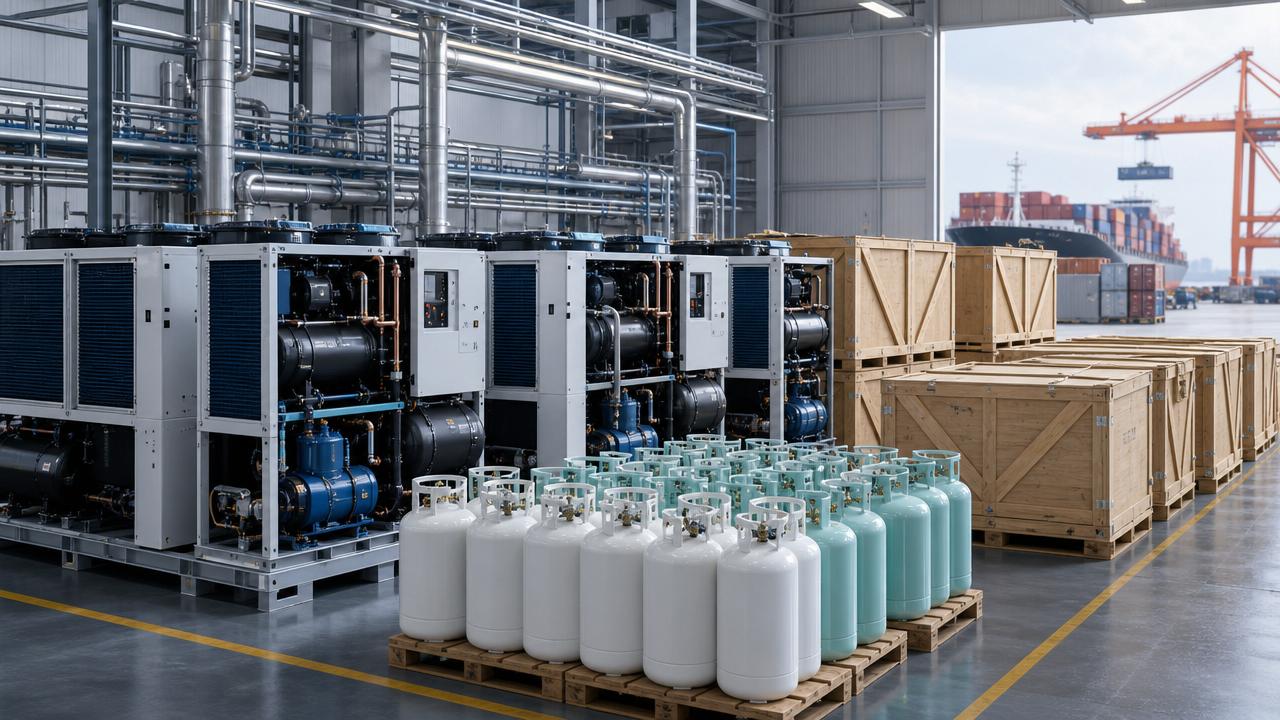
For OEMs integrating refrigerants into final products, the GRPI drop implies an estimated 3–5% reduction in material cost per unit. However, this assumes no offsetting increases in logistics, energy, or labor inputs. The impact is most pronounced for export-oriented producers where refrigerant cost constitutes a measurable share of bill-of-materials.
Distribution & Channel Partners
Wholesalers and regional distributors holding inventory acquired at pre-May prices may experience margin compression on near-term sales unless they adjust list pricing downward. Conversely, those with just-in-time replenishment models can pass through lower acquisition costs faster — improving competitiveness in tender-based markets like food logistics infrastructure projects.
What Relevant Enterprises or Practitioners Should Focus On and How to Respond
Embed dynamic price linkage clauses in new export quotations starting June
The IIR explicitly recommends that外贸 teams integrate GRPI-based adjustment terms into contracts finalized from June onward. This mitigates exposure to volatility and aligns pricing with observable market conditions — particularly important for multi-month delivery schedules.
Monitor official GRPI updates and Chinese production status reports closely over the next 30 days
While Q2 maintenance has concluded, any unplanned outages or new environmental compliance measures in China could reverse the trend. The current decline is tied to a time-bound operational factor — not structural oversupply — so sustainability hinges on upcoming supply-side signals.
Assess refrigerant cost weight in BOM for key export SKUs and model revised gross margins
Manufacturers should quantify how much R-32/R-125 contributes to total unit cost for top-exported chillers or cold room systems. A 3–5% input cost reduction only improves net margin if other cost lines remain stable — and if pricing strategy captures part of the gain without eroding competitiveness.
Coordinate procurement timing with production planning cycles to avoid mismatched inventory valuation
Procurement teams should align new orders with actual build schedules — avoiding early bulk purchases that risk carrying higher-cost inventory into a lower-price environment, or conversely, delaying buys and missing the current dip due to rigid MRP logic.
Editorial Perspective / Industry Observation
Observably, this GRPI correction is less a structural shift and more a cyclical rebound following a predictable supply constraint. It reflects normalized output after scheduled maintenance — not a fundamental change in regulatory policy, feedstock availability, or long-term demand outlook. Analysis shows the magnitude (8.3% MoM) is consistent with prior post-maintenance corrections seen in 2024 and 2025, suggesting this is a repeatable pattern rather than an inflection point. From an industry perspective, the value lies not in the drop itself, but in its timing: it arrives just ahead of peak Northern Hemisphere summer procurement cycles, offering a narrow but actionable window for commercial recalibration.
Current more appropriate interpretation is that this is a short-term signal, not yet a confirmed trend. Its relevance will depend on whether June’s GRPI shows stabilization or further decline — which would indicate broader demand weakness beyond seasonal factors.
Conclusion
This GRPI update does not represent a turning point in refrigerant market fundamentals, but it does deliver tangible, quantifiable cost relief for specific export-oriented equipment segments. For stakeholders, the priority is operational responsiveness — not strategic repositioning. It is best understood as a timely, moderate input cost adjustment aligned with known seasonal and maintenance cycles, requiring tactical execution rather than long-term planning shifts.
Information Sources
Main source: International Institute of Refrigeration (IIR), Global Refrigerant Price Index (GRPI) report, published May 24, 2026.
Note: Ongoing observation is warranted for the IIR’s June 2026 GRPI release and any official announcements regarding Chinese refrigerant plant operations or export licensing changes.
Related News
- EPA Freezes R-410A Quotas, Fast-Tracks R-32Author :Cryogenic Systems Expert

- Low GWP Refrigerants HFO Blends: Key Stability and Safety FactorsAuthor :Cryogenic Systems Expert

- R-32 Price Spike Reshapes Chiller ProcurementAuthor :Cryogenic Systems Expert

- How to Compare Environmentally Friendly Refrigerants by GWP, Safety, and CostAuthor :Cryogenic Systems Expert

- R-454B Export Quota Cut 18% as Lead Times DoubleAuthor :Cryogenic Systems Expert

- Japan Cuts R32 and R290 Import Quotas From July 10Author :Cryogenic Systems Expert

- EPA Cuts R-134a Import Quotas 42% From July 2026Author :Cryogenic Systems Expert
![]()
- Low GWP Refrigerants HFO Blends: Performance and Compliance in 2026Author :Cryogenic Systems Expert

- R-513A Jumps 23% as China Tightens Export QuotasAuthor :Cryogenic Systems Expert

- Environmentally Friendly Refrigerants in 2026: Compliance Risks and Upgrade PrioritiesAuthor :Cryogenic Systems Expert

- Pharmaceutical Temperature Control Systems: Common Compliance RisksAuthor :Cryogenic Systems Expert

- China Tightens Q3 R32 Export QuotasAuthor :Cryogenic Systems Expert

- California EPR Deadline Nears for Refrigeration MakersAuthor :Cryogenic Systems Expert

- Resource Circularity Trends Reshaping Refrigerants and Cooling SystemsAuthor :Cryogenic Systems Expert

- HFCs Filing Rules Enter Full EnforcementAuthor :Cryogenic Systems Expert

- How Environmentally Friendly Refrigerants Affect Chiller ComplianceAuthor :Cryogenic Systems Expert

- EU REACH Tightens Refrigerant Impurity Limits for R134a ExportsAuthor :Cryogenic Systems Expert

- China Seeks Feedback on 2027 Refrigerant QuotasAuthor :Cryogenic Systems Expert

- EU to Ban High-GWP ACs in 2029 as R410A Exits HomesAuthor :Cryogenic Systems Expert

- US, UK Delay HFC Phaseout, Extending R32/R134a Export WindowAuthor :Cryogenic Systems Expert

- EU HFC Cut Tightens by 2029 as Gen-3 Output Falls 10%Author :Cryogenic Systems Expert

- Kuwait Bans HCFC AC Imports as Shift to R32/R290 Speeds UpAuthor :Cryogenic Systems Expert

- Saudi SASO Rules Tighten AC Imports in DecemberAuthor :Cryogenic Systems Expert

- Environmentally Friendly Refrigerants: Compliance, Safety, and Retrofit RisksAuthor :Cryogenic Systems Expert

- SABIC Force Majeure Keeps Chiller Refrigerant Supply TightAuthor :Cryogenic Systems Expert

- SABIC Force Majeure Tightens Refrigerant FeedstocksAuthor :Cryogenic Systems Expert

- UL 60335-2-89 Tightens R290 Leak Test RulesAuthor :Cryogenic Systems Expert
![]()
- UL 60335-2-89 Adds R290 Vacuum Leak TestAuthor :Cryogenic Systems Expert

- Global Refrigerant Price Index Falls 8.3% MoM in MayAuthor :Cryogenic Systems Expert
![]()
- PSA Jurong Island Launches Mandatory Cold-Chain Traceability for RefrigerantsAuthor :Cryogenic Systems Expert
![]()
- 2026 Refrigerants Shift: What Changes for Cold StorageAuthor :Cryogenic Systems Expert

- Shanghai Pudong Pilots E-Labels for Imported CosmeticsAuthor :Cryogenic Systems Expert

- 2026 Refrigerant Shift: Safer Options With Lower Compliance RiskAuthor :Cryogenic Systems Expert

- Vitafoods Europe Highlights Clinical Herb Data, Cold Chain Demand SurgesAuthor :Cryogenic Systems Expert
![]()
- U.S. Treasury Yield Surge Stabilizes Silver, Eases Refrigerants Export PricingAuthor :Cryogenic Systems Expert

- France Allocates €710M to Support War-Impacted Firms on Cold Chain ComplianceAuthor :Cryogenic Systems Expert