Environmentally Friendly Refrigerants: Compliance, Safety, and Retrofit Risks




Environmental compliance is reshaping refrigeration decisions across factories, cold chains, laboratories, and process plants. For many operations, environmentally friendly refrigerants now sit at the center of a larger risk equation.
Lower global warming potential matters, but it does not cancel concerns about toxicity, flammability, lubricant behavior, pressure changes, or equipment life. A refrigerant transition that looks clean on paper can still create instability in practice.
That is why the conversation has moved beyond quota compliance. It now includes system integrity, incident prevention, maintenance discipline, and the quality of technical intelligence used before a retrofit begins.
Why refrigerant selection has become a strategic issue
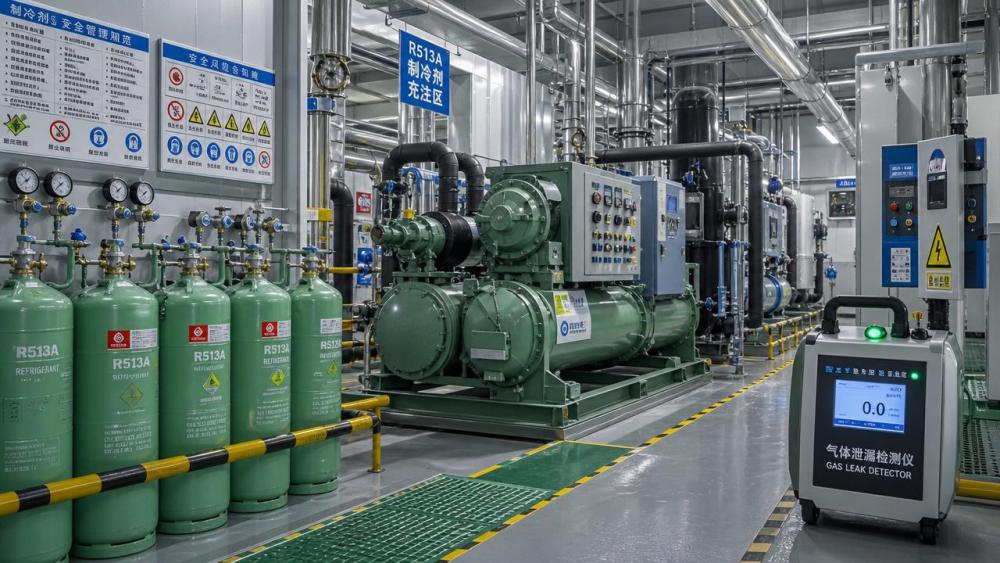
Environmental rules are tightening in parallel with decarbonization targets. Phase-down schedules, leak reporting, and safety codes are changing the economics of cooling assets across multiple industries.
In industrial settings, refrigerants are not isolated chemicals. They influence compressor loading, heat exchanger performance, valve response, controls logic, and even shutdown procedures during abnormal events.
This broader systems view is especially relevant in the context tracked by GTC-Matrix, where industrial cooling, compressed air, vacuum processes, and heat exchange technologies are increasingly assessed as connected efficiency assets.
From that perspective, environmentally friendly refrigerants are not only an environmental topic. They are part of thermal efficiency, operating resilience, and long-term asset governance.
What “environmentally friendly” really means in operations
The term usually points to refrigerants with lower ozone depletion potential, lower global warming potential, or both. In current practice, it often includes HFOs, natural refrigerants, and some blended alternatives.
Yet operational suitability depends on more than environmental metrics. A refrigerant may reduce emissions impact while introducing higher flammability, tighter charge limits, or different material compatibility requirements.
Simple comparisons can therefore mislead. Two options with similar climate profiles may behave very differently in compressor discharge temperatures, glide characteristics, leak detectability, and recovery procedures.
For this reason, environmentally friendly refrigerants should be evaluated as part of a full operating envelope, not as a one-line sustainability upgrade.
Key dimensions behind the label
- Environmental profile, including GWP, indirect energy impact, and expected leakage consequences.
- Safety classification, especially flammability class, toxicity exposure, and ignition control requirements.
- System fit, including oil return, seals, elastomers, metallurgy, and component pressure rating.
- Service practicality, such as charging method, recovery handling, technician readiness, and monitoring needs.
The compliance layer is necessary, but not sufficient
Regulations are often the trigger for change, but not the finish line. A compliant refrigerant choice can still produce unacceptable safety exposure or hidden quality losses.
This matters in sectors with strict thermal tolerances. Pharmaceuticals, semiconductors, food processing, and cold storage all rely on stable temperature control, predictable downtime windows, and controlled contamination risk.
A refrigerant change that shifts evaporating behavior or compressor stress may affect product integrity before a formal failure appears. In quality systems, that is already a material event.
GTC-Matrix frequently highlights how policy signals, energy price movement, and equipment evolution interact. That linkage is important because refrigerant compliance decisions increasingly shape both energy conversion efficiency and operational control.
Common compliance blind spots
- Assuming a lower-GWP replacement is automatically “drop-in.”
- Checking legal status without reviewing updated building and fire code implications.
- Ignoring how refrigerant changes alter maintenance intervals and leak response protocols.
- Treating vendor claims as equivalent to site-specific validation.
Safety risk changes during and after transition
The move toward environmentally friendly refrigerants often shifts the risk profile rather than simply lowering it. One hazard may decline while another becomes more significant.
Mildly flammable A2L refrigerants are a good example. They can support lower climate impact goals, but they may require revised ventilation, gas detection, charge management, and hot-work controls.
Natural refrigerants create another set of tradeoffs. Ammonia offers strong thermodynamic performance, yet toxicity planning becomes critical. Carbon dioxide can reduce environmental burden, but high operating pressure changes design and response expectations.
Safety planning should therefore examine the entire lifecycle: storage, charging, operation, leakage, repair, recovery, and emergency isolation.
Retrofit risk often starts before the first cylinder arrives
Retrofit discussions sometimes focus too narrowly on refrigerant nameplate substitution. In reality, the highest risks usually emerge from assumptions made during planning.
Capacity changes are a common issue. A replacement refrigerant may reduce cooling output under peak conditions, creating unstable temperature control during summer loads or high-throughput production cycles.
Compressor reliability can also be affected. Discharge temperature, lubrication behavior, and mass flow changes may shorten service life even when the system appears functional after commissioning.
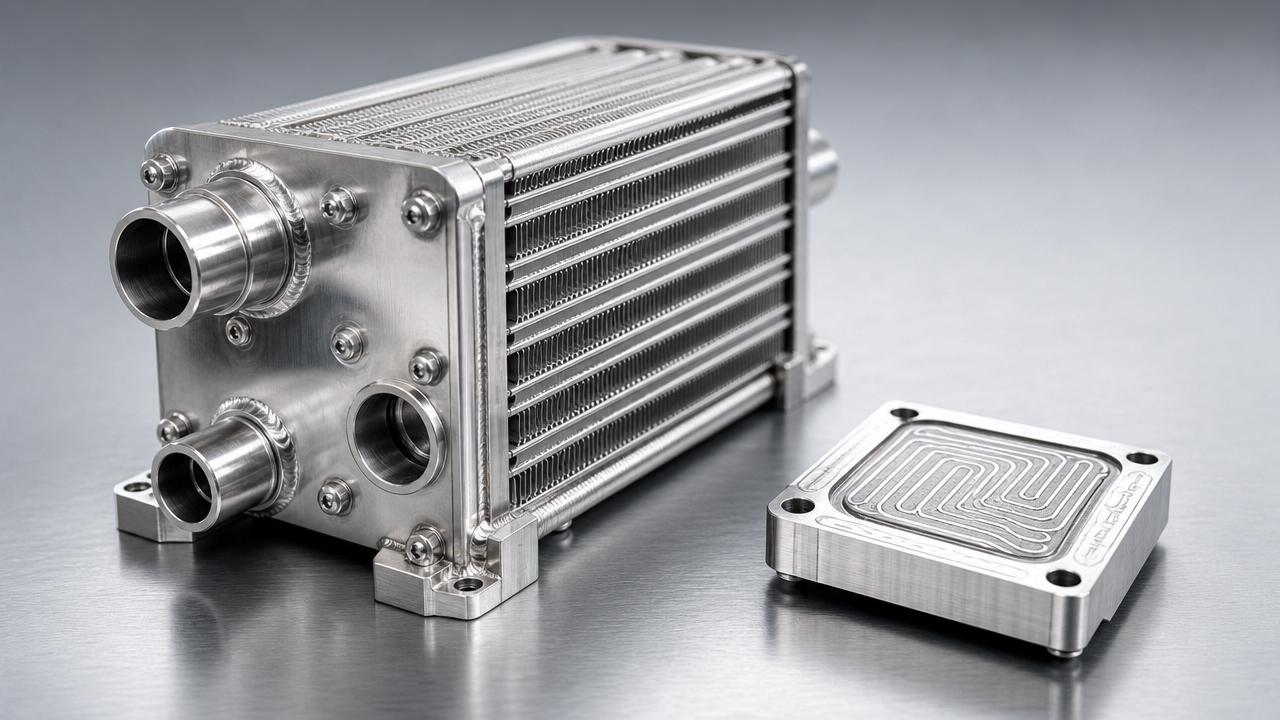
Heat exchangers deserve equal attention. Microchannel and other high-efficiency designs may respond differently to pressure, glide, and fouling tendencies, which alters both safety margin and energy performance.
High-risk retrofit assumptions
- Nameplate compatibility equals full-system compatibility.
- Similar operating pressure means similar reliability.
- Existing controls can absorb new refrigerant behavior without retuning.
- A successful pilot on one line guarantees fleet-wide success.
Where practical evaluation should begin
A useful review starts with the installed system, not the refrigerant brochure. Site conditions, duty cycle, occupancy pattern, ventilation quality, and maintenance maturity all influence the right decision.
For many facilities, the best path is a structured screening matrix. That matrix should compare environmental profile, safety classification, retrofit depth, expected efficiency, spare parts exposure, and compliance horizon.
This is where intelligence platforms add value. When policy movement, energy cost trends, and equipment evolution are read together, refrigerant decisions become less reactive and more evidence-based.
A workable decision checklist
- Map current refrigerant exposure by asset criticality and leak consequence.
- Confirm legal timeline, charge limits, and site safety obligations.
- Review compressors, oils, seals, controls, and relief devices for compatibility.
- Model capacity and efficiency under real seasonal loads.
- Update emergency procedures before physical conversion starts.
- Track post-retrofit drift through alarms, leakage data, and maintenance findings.
A transition standard worth building now
Environmentally friendly refrigerants will remain a moving target as regulations, technologies, and energy systems evolve. The better response is not chasing every new option, but building a repeatable evaluation standard.
That standard should connect environmental goals with measurable safety controls, equipment integrity checks, and post-change verification. It should also separate short-term compliance pressure from long-term operating value.
For organizations managing cooling and thermal assets across multiple sites, the next useful step is to compare refrigerant choices by scenario rather than by marketing category. That creates clearer priorities for retrofit timing, risk treatment, and capital planning.
In practice, better decisions come from better context. Tracking refrigerant policy, thermodynamic performance, component evolution, and industry demand signals together makes environmentally friendly refrigerants easier to judge with confidence.
Related News
- EU F-Gas Revision Cuts R410A Quotas 40%Author :Cryogenic Systems Expert

- EPA Freezes R-410A Quotas, Fast-Tracks R-32Author :Cryogenic Systems Expert

- Low GWP Refrigerants HFO Blends: Key Stability and Safety FactorsAuthor :Cryogenic Systems Expert

- R-32 Price Spike Reshapes Chiller ProcurementAuthor :Cryogenic Systems Expert

- How to Compare Environmentally Friendly Refrigerants by GWP, Safety, and CostAuthor :Cryogenic Systems Expert

- R-454B Export Quota Cut 18% as Lead Times DoubleAuthor :Cryogenic Systems Expert

- Japan Cuts R32 and R290 Import Quotas From July 10Author :Cryogenic Systems Expert

- EPA Cuts R-134a Import Quotas 42% From July 2026Author :Cryogenic Systems Expert
![]()
- Low GWP Refrigerants HFO Blends: Performance and Compliance in 2026Author :Cryogenic Systems Expert

- R-513A Jumps 23% as China Tightens Export QuotasAuthor :Cryogenic Systems Expert

- Environmentally Friendly Refrigerants in 2026: Compliance Risks and Upgrade PrioritiesAuthor :Cryogenic Systems Expert

- Pharmaceutical Temperature Control Systems: Common Compliance RisksAuthor :Cryogenic Systems Expert

- China Tightens Q3 R32 Export QuotasAuthor :Cryogenic Systems Expert

- California EPR Deadline Nears for Refrigeration MakersAuthor :Cryogenic Systems Expert

- Resource Circularity Trends Reshaping Refrigerants and Cooling SystemsAuthor :Cryogenic Systems Expert

- HFCs Filing Rules Enter Full EnforcementAuthor :Cryogenic Systems Expert

- How Environmentally Friendly Refrigerants Affect Chiller ComplianceAuthor :Cryogenic Systems Expert

- EU REACH Tightens Refrigerant Impurity Limits for R134a ExportsAuthor :Cryogenic Systems Expert

- China Seeks Feedback on 2027 Refrigerant QuotasAuthor :Cryogenic Systems Expert

- EU to Ban High-GWP ACs in 2029 as R410A Exits HomesAuthor :Cryogenic Systems Expert

- US, UK Delay HFC Phaseout, Extending R32/R134a Export WindowAuthor :Cryogenic Systems Expert

- EU HFC Cut Tightens by 2029 as Gen-3 Output Falls 10%Author :Cryogenic Systems Expert

- Kuwait Bans HCFC AC Imports as Shift to R32/R290 Speeds UpAuthor :Cryogenic Systems Expert

- Saudi SASO Rules Tighten AC Imports in DecemberAuthor :Cryogenic Systems Expert

- Environmentally Friendly Refrigerants: Compliance, Safety, and Retrofit RisksAuthor :Cryogenic Systems Expert

- SABIC Force Majeure Keeps Chiller Refrigerant Supply TightAuthor :Cryogenic Systems Expert

- SABIC Force Majeure Tightens Refrigerant FeedstocksAuthor :Cryogenic Systems Expert

- UL 60335-2-89 Tightens R290 Leak Test RulesAuthor :Cryogenic Systems Expert
![]()
- UL 60335-2-89 Adds R290 Vacuum Leak TestAuthor :Cryogenic Systems Expert

- Global Refrigerant Price Index Falls 8.3% MoM in MayAuthor :Cryogenic Systems Expert
![]()
- PSA Jurong Island Launches Mandatory Cold-Chain Traceability for RefrigerantsAuthor :Cryogenic Systems Expert
![]()
- 2026 Refrigerants Shift: What Changes for Cold StorageAuthor :Cryogenic Systems Expert

- Shanghai Pudong Pilots E-Labels for Imported CosmeticsAuthor :Cryogenic Systems Expert

- 2026 Refrigerant Shift: Safer Options With Lower Compliance RiskAuthor :Cryogenic Systems Expert

- Vitafoods Europe Highlights Clinical Herb Data, Cold Chain Demand SurgesAuthor :Cryogenic Systems Expert
![]()
- U.S. Treasury Yield Surge Stabilizes Silver, Eases Refrigerants Export PricingAuthor :Cryogenic Systems Expert