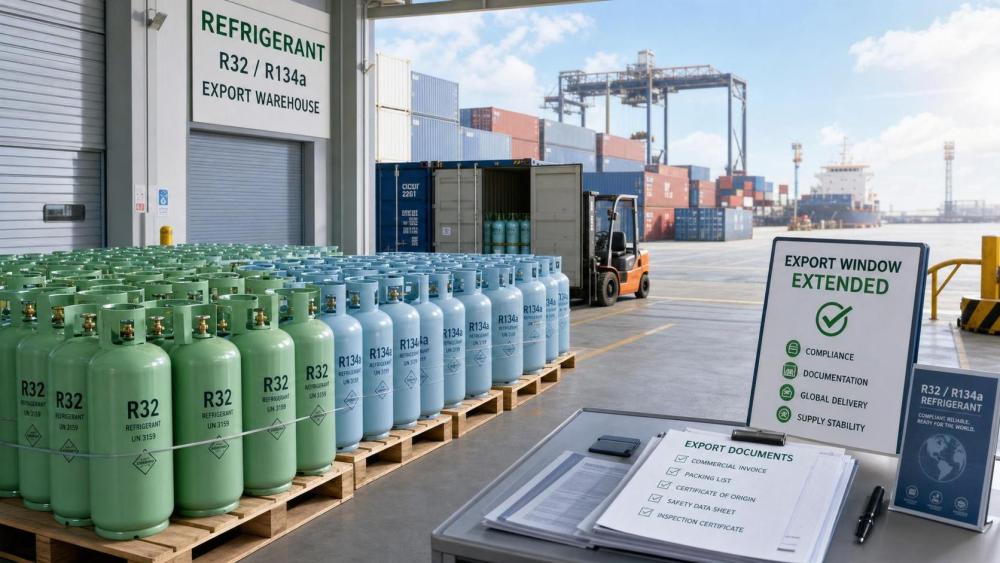
US, UK Delay HFC Phaseout, Extending R32/R134a Export Window




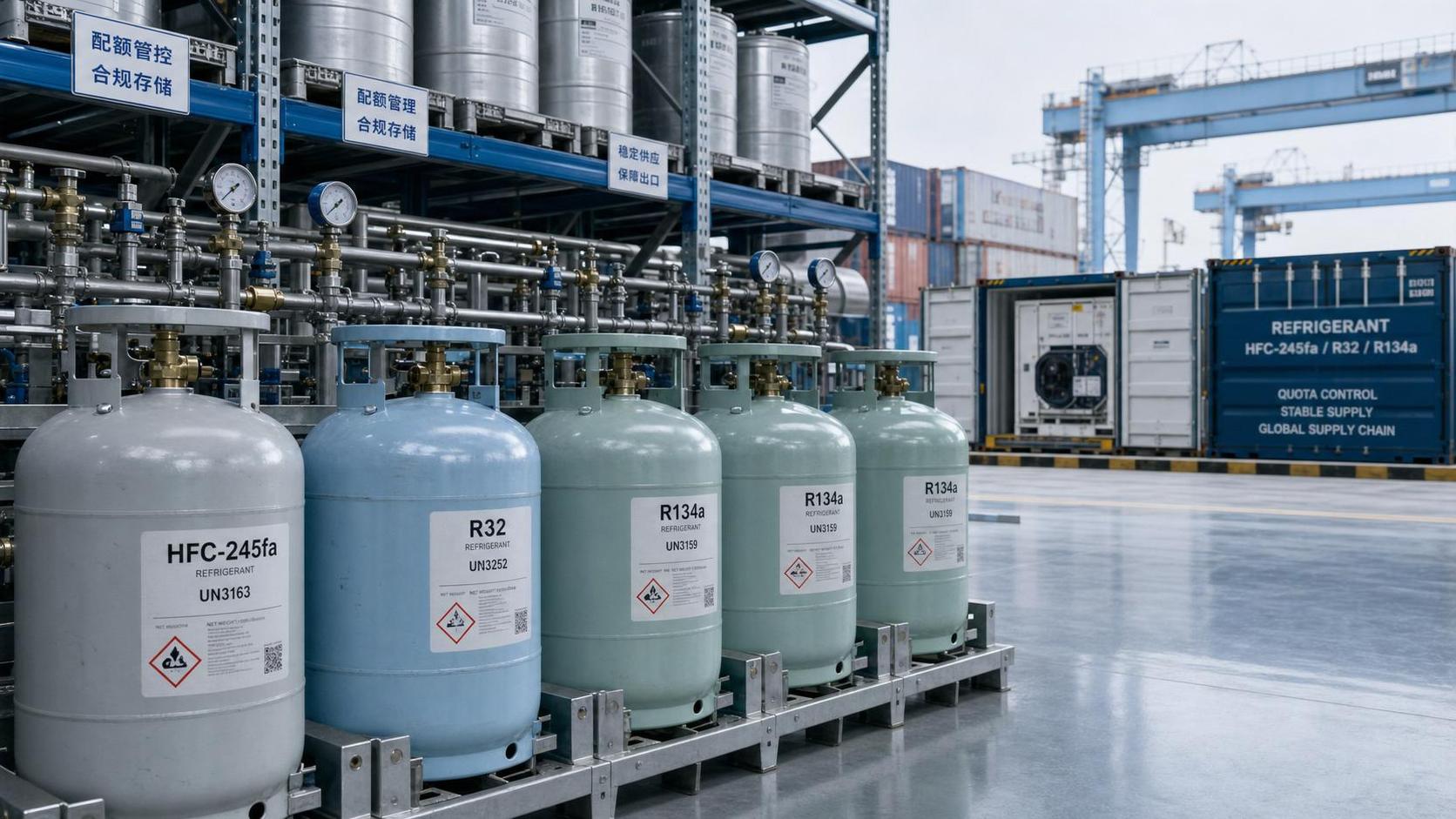
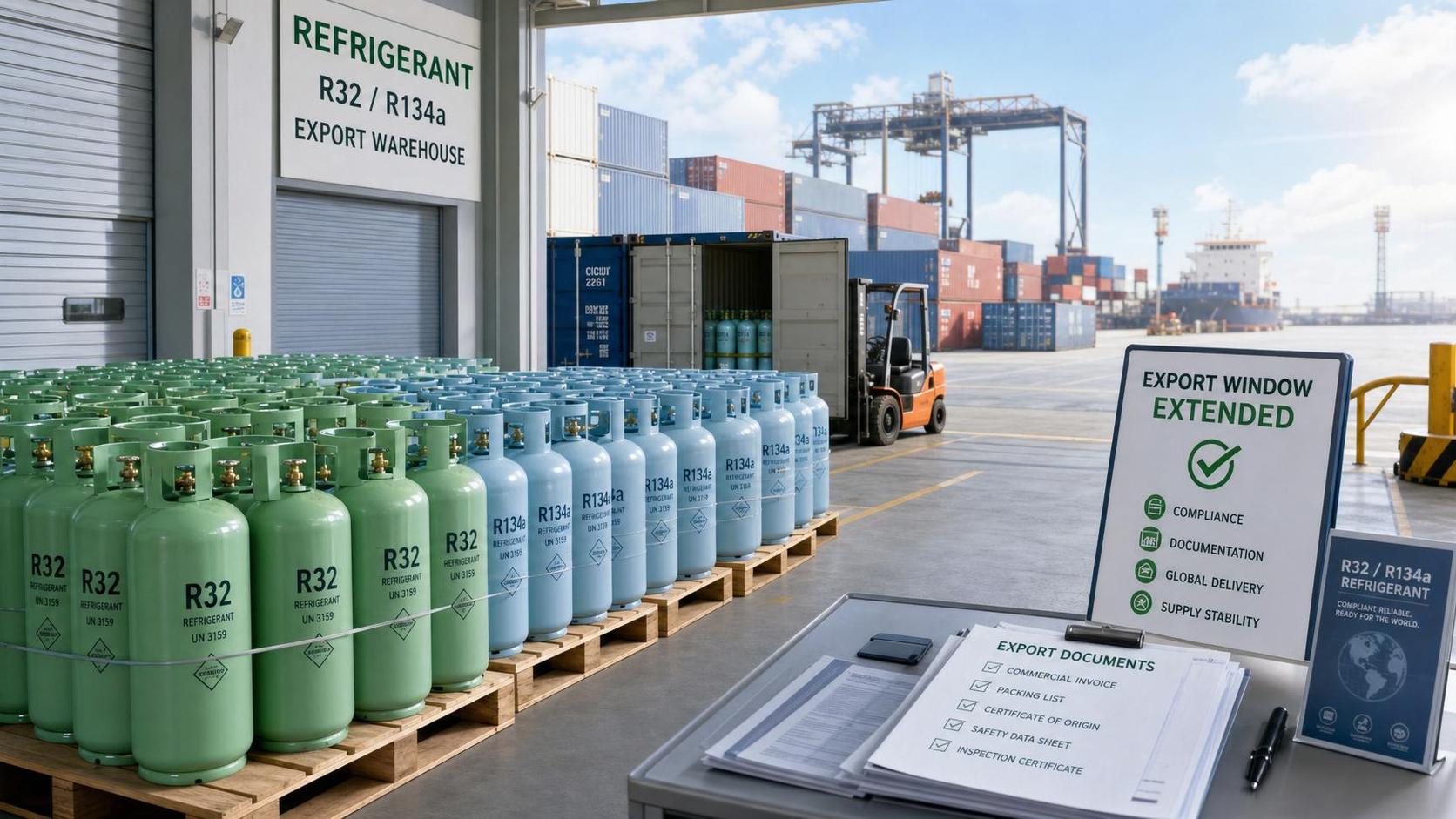
On May 21, 2026, the U.S. EPA revised its 2023 Technology Transitions Rule to extend the compliant use period for HFC refrigerants, while the UK DEFRA also delayed its fluorinated gas reduction steps. For refrigerant exporters, importers, and downstream buyers, this is a closely watched development because it eases the risk of an abrupt demand drop for third-generation refrigerants and creates a more stable near-term trading environment for quota-compliant products such as R32 and R134a.
What changed in the US and UK
The confirmed change is that the U.S. EPA, on May 21, revised the 2023 Technology Transitions Rule and formally extended the compliance timeline for HFC refrigerants. In parallel, the UK DEFRA postponed the next reduction steps for fluorinated gases. Based on the information provided, this directly reduces the immediate risk of a demand cliff for third-generation refrigerants and extends the export window for Chinese quota-based products including R32 and R134a into the US and European markets.
Where the impact is likely to be felt first
Export transactions gain more room for timing
From an industry perspective, direct trading companies are likely to feel the effect first because the policy adjustment changes the pace of compliant product demand rather than eliminating it. The main impact is likely to appear in order timing, contract discussions, and shipment planning for R32 and R134a within quota limits. What deserves closer attention is whether buyers use the extended window to smooth purchasing cycles instead of placing highly concentrated short-term orders.
Import-side procurement may become less compressed
Importers and procurement teams may see a more predictable supply cycle, as the delayed phaseout path reduces the pressure created by a sudden regulatory cutoff. The most relevant business links are purchasing schedules, inventory coordination, and delivery planning. Analysis shows that buyers should pay attention not only to price discussions, but also to how suppliers interpret the revised compliance timeline in actual order execution.
Supply chain service providers face a planning adjustment
For logistics, documentation, and trade service providers, the change matters because a longer export window can alter booking rhythms, customs preparation, and contract fulfillment pacing. Observably, the operational focus is less about a one-time demand spike and more about maintaining continuity in cross-border supply arrangements under updated regulatory expectations.
What companies should monitor now
Follow official wording, not just market interpretation
Analysis shows that companies should closely track how official rule language is presented and clarified after the May 21 update. A policy signal and actual transaction practice are not always identical, so exporters and buyers should avoid relying only on secondary market interpretation when confirming delivery commitments and compliant product positioning.
Keep close watch on quota-compliant product lines
What deserves closer attention is the performance of quota-based products such as R32 and R134a in key export discussions. The practical issue is not simply whether demand continues, but how much flexibility remains in negotiation, shipment scheduling, and customer acceptance under the revised timetable.
Check documents, compliance readiness, and fulfillment cycles
For companies already serving the US and UK markets, current attention should stay on supplier qualifications, product documentation, and fulfillment timing. The extension of the compliance window may support steadier procurement, but day-to-day execution still depends on whether documentation and contract terms match the latest regulatory understanding.
Strengthen communication with overseas customers
Observably, customer communication becomes more important when policy timing changes. Exporters, distributors, and service providers should align with customers on order cadence, expected delivery windows, and any compliance-related documentation requests so that the revised timeline translates into smoother transactions rather than new uncertainty.
Why this looks like a timing signal rather than a final endpoint
Analysis shows that this development is better understood as a timing adjustment with clear near-term commercial relevance, rather than as a complete reversal of the broader HFC transition direction. The immediate meaning is that the risk of a sudden demand break has been eased, giving market participants more operating space. At the same time, it remains an industry dynamic that still requires observation, because policy extension and real market behavior do not always move in perfect sync.
How to read the development at this stage
At this stage, it is more appropriate to understand the US and UK decisions as a short- to medium-term easing of transition pressure in the refrigerant trade, especially for R32 and R134a export activity tied to quota compliance. The industry significance lies in improved supply continuity, wider room for negotiation, and a less compressed purchasing rhythm. It should not yet be treated as a definitive long-term demand conclusion, but it is a meaningful signal for companies managing export planning, procurement cadence, and customer coordination.
Basis of this article and points for continued verification
This article is based on the user-provided news title, event date, and event summary. For developments of this kind, relevant source categories typically include official government notices, company disclosures, industry association updates, authoritative media reporting, and standards-related documents. No specific official source link was provided in the input, so the exact source documentation still needs ongoing verification. Continued attention should focus on any further official clarification, implementation wording, and how the revised timelines are reflected in actual cross-border purchasing and supply arrangements.
Related News
- EU REACH PFAS Draft Raises New Export ChecksAuthor :Cryogenic Systems Expert

- EU Cuts High-GWP Refrigerant Import Quotas by 35%Author :Cryogenic Systems Expert

- EU Cuts Q4 2026 Quotas for High-GWP RefrigerantsAuthor :Cryogenic Systems Expert

- EU F-Gas Revision Cuts R410A Quotas 40%Author :Cryogenic Systems Expert

- EPA Freezes R-410A Quotas, Fast-Tracks R-32Author :Cryogenic Systems Expert

- Low GWP Refrigerants HFO Blends: Key Stability and Safety FactorsAuthor :Cryogenic Systems Expert

- R-32 Price Spike Reshapes Chiller ProcurementAuthor :Cryogenic Systems Expert

- How to Compare Environmentally Friendly Refrigerants by GWP, Safety, and CostAuthor :Cryogenic Systems Expert

- R-454B Export Quota Cut 18% as Lead Times DoubleAuthor :Cryogenic Systems Expert

- Japan Cuts R32 and R290 Import Quotas From July 10Author :Cryogenic Systems Expert

- EPA Cuts R-134a Import Quotas 42% From July 2026Author :Cryogenic Systems Expert
![]()
- Low GWP Refrigerants HFO Blends: Performance and Compliance in 2026Author :Cryogenic Systems Expert

- R-513A Jumps 23% as China Tightens Export QuotasAuthor :Cryogenic Systems Expert

- Environmentally Friendly Refrigerants in 2026: Compliance Risks and Upgrade PrioritiesAuthor :Cryogenic Systems Expert

- Pharmaceutical Temperature Control Systems: Common Compliance RisksAuthor :Cryogenic Systems Expert

- China Tightens Q3 R32 Export QuotasAuthor :Cryogenic Systems Expert

- California EPR Deadline Nears for Refrigeration MakersAuthor :Cryogenic Systems Expert

- Resource Circularity Trends Reshaping Refrigerants and Cooling SystemsAuthor :Cryogenic Systems Expert

- HFCs Filing Rules Enter Full EnforcementAuthor :Cryogenic Systems Expert

- How Environmentally Friendly Refrigerants Affect Chiller ComplianceAuthor :Cryogenic Systems Expert

- EU REACH Tightens Refrigerant Impurity Limits for R134a ExportsAuthor :Cryogenic Systems Expert

- China Seeks Feedback on 2027 Refrigerant QuotasAuthor :Cryogenic Systems Expert

- EU to Ban High-GWP ACs in 2029 as R410A Exits HomesAuthor :Cryogenic Systems Expert

- US, UK Delay HFC Phaseout, Extending R32/R134a Export WindowAuthor :Cryogenic Systems Expert

- EU HFC Cut Tightens by 2029 as Gen-3 Output Falls 10%Author :Cryogenic Systems Expert

- Kuwait Bans HCFC AC Imports as Shift to R32/R290 Speeds UpAuthor :Cryogenic Systems Expert

- Saudi SASO Rules Tighten AC Imports in DecemberAuthor :Cryogenic Systems Expert

- Environmentally Friendly Refrigerants: Compliance, Safety, and Retrofit RisksAuthor :Cryogenic Systems Expert

- SABIC Force Majeure Keeps Chiller Refrigerant Supply TightAuthor :Cryogenic Systems Expert

- SABIC Force Majeure Tightens Refrigerant FeedstocksAuthor :Cryogenic Systems Expert

- UL 60335-2-89 Tightens R290 Leak Test RulesAuthor :Cryogenic Systems Expert
![]()
- UL 60335-2-89 Adds R290 Vacuum Leak TestAuthor :Cryogenic Systems Expert

- Global Refrigerant Price Index Falls 8.3% MoM in MayAuthor :Cryogenic Systems Expert
![]()
- PSA Jurong Island Launches Mandatory Cold-Chain Traceability for RefrigerantsAuthor :Cryogenic Systems Expert
![]()
- 2026 Refrigerants Shift: What Changes for Cold StorageAuthor :Cryogenic Systems Expert

- Shanghai Pudong Pilots E-Labels for Imported CosmeticsAuthor :Cryogenic Systems Expert