China Seeks Feedback on 2027 Refrigerant Quotas




The timing of the underlying market reaction is not specified in the provided information, but one policy milestone is clear: on June 2, 2026, China’s Ministry of Ecology and Environment released the proposed 2027 quota plan for ODS and HFCs for public comment. The draft deserves close attention from refrigerant producers, exporters, procurement teams, and downstream manufacturers because it tightens the conversion framework around HFC-245fa while reinforcing supply discipline for mainstream products such as R32 and R134a.
What the draft proposal changes
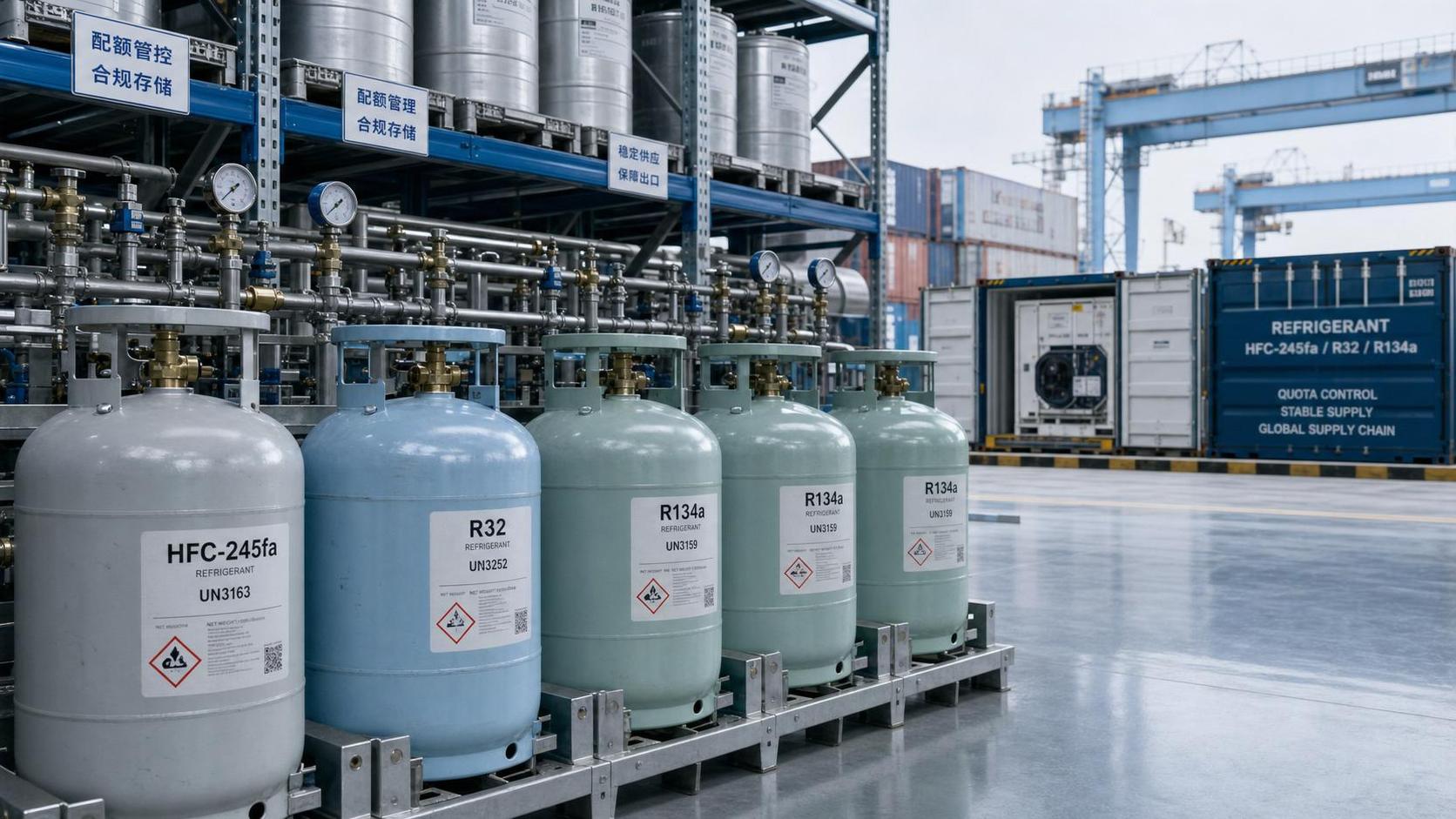
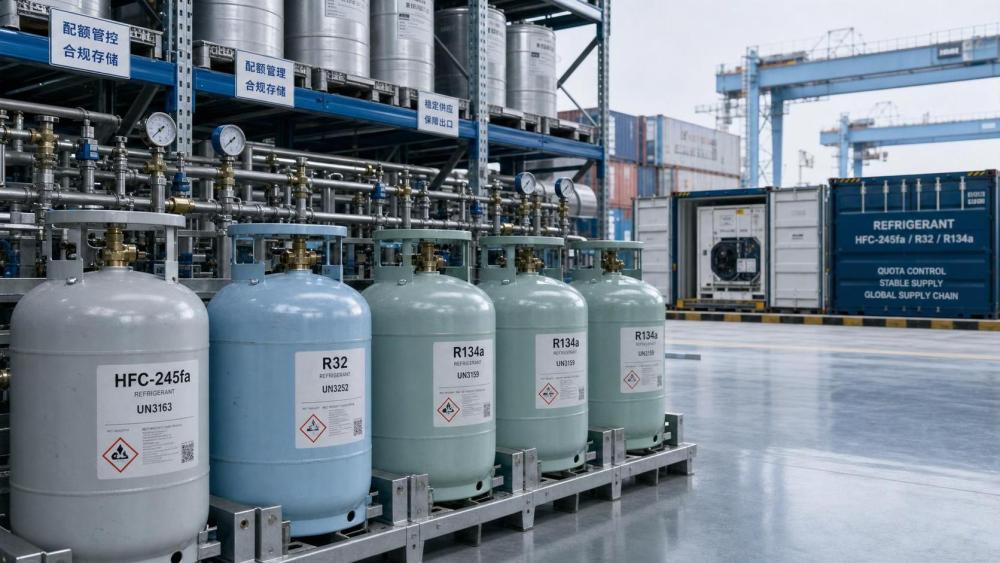
According to the provided summary, HFC-245fa has been placed on the list of products that cannot be converted across refrigerant categories under the proposed 2027 quota arrangement. At the same time, the cap for converting other third-generation refrigerants into HFC-245fa is raised from 30% to 50%.
The same summary indicates that this design would strengthen the supply rigidity of mainstream refrigerants including R32 and R134a. It also states that the ability of leading suppliers to maintain controlled volumes and pricing would be further consolidated, and that export price levels may remain elevated.
Why different market participants are paying attention
Pressure points for producers and exporters
From an industry perspective, producers and export-oriented sellers are likely to focus first on how tighter treatment of HFC-245fa affects product allocation flexibility. If cross-category conversion becomes more restricted for this product, production planning and quota deployment may become more dependent on the final wording of the 2027 scheme. Export businesses may also watch whether firmer supply conditions in mainstream refrigerants support a continued high export pricing center.
Procurement implications for manufacturing buyers
For raw material procurement teams and processing manufacturers, the relevance lies in supply predictability and pricing discussions. Analysis shows that when mainstream products such as R32 and R134a face stronger supply rigidity, buyers may need to monitor availability, contract timing, and the pace of supplier quotations more closely than before.
What channel and supply-chain operators should watch
Distributors, traders, and supply-chain service providers may be affected through inventory rhythm, order matching, and delivery coordination. Observably, the more rigid the quota framework becomes for key refrigerants, the more important it is for intermediaries to track category-specific policy wording rather than relying only on broad market expectations.
Operational issues companies should monitor now
Watch the final wording, not only the consultation headline
What deserves closer attention is the distinction between a consultation draft and a finalized rule. Companies should track whether the final 2027 quota language keeps HFC-245fa within the proposed non-convertible category treatment and whether the conversion cap adjustment remains unchanged.
Separate product-specific signals from broader market sentiment
Businesses dealing in multiple refrigerants should avoid treating all HFC products as moving under one identical logic. The current information points specifically to tighter handling of HFC-245fa and stronger supply rigidity in mainstream products such as R32 and R134a, so product-level review matters more than broad assumptions.
Prepare for procurement and delivery communication
For purchasing, sales, and fulfillment teams, it is practical to review supply commitments, delivery windows, and customer communication plans. If export price levels remain high as indicated in the summary, counterparties may pay closer attention to quotation validity, shipment timing, and contract execution expectations.
Check documentation and compliance workflows
Companies involved in trading and delivery should also be ready to verify whether any subsequent official clarification affects internal approval steps, supporting documents, or supplier communication routines. This is especially relevant where product allocation depends on quota interpretation.
How this signal is best understood at this stage
Analysis shows that this development is better understood as a strong policy signal rather than a fully settled market outcome. The consultation itself already highlights a stricter stance around HFC-245fa and a framework that could support tighter supply conditions for key mainstream refrigerants. At the same time, because the information provided refers to a public comment draft, the industry still needs to distinguish between direction and finalized implementation.
Observably, the most important takeaway is not only the single adjustment around HFC-245fa, but also what it suggests about quota management priorities. It points to continued attention on product-specific control and to a market environment in which supply discipline remains central to pricing discussions.
What this means for the market conversation
At present, it is more appropriate to understand this update as a meaningful regulatory signal with direct relevance for supply planning, procurement decisions, and export pricing expectations. It does not by itself confirm every downstream outcome, but it does sharpen the need for market participants to watch how the 2027 quota framework is finalized and implemented.
For industry readers, the key significance lies in the combination of tighter conversion treatment for HFC-245fa and stronger rigidity for mainstream refrigerants. That combination is likely to remain a central reference point in commercial and supply-chain decisions as the consultation process develops.
Basis of this article and follow-up verification
This article is generated from the user-provided news title, event timing note, and event summary. The specific official source link was not provided in the input, so the exact publication text and any later revisions still require ongoing verification.
For this type of industry update, relevant source categories typically include official government notices, company disclosures, industry association releases, authoritative media coverage, and standard-setting documents. The main follow-up focus should be the final version of the 2027 ODS and HFCs quota arrangement, any clarified wording on HFC-245fa conversion treatment, and whether the market impact described in the summary becomes reflected in actual procurement and export practices.
Related News
- EU REACH PFAS Draft Raises New Export ChecksAuthor :Cryogenic Systems Expert

- EU Cuts High-GWP Refrigerant Import Quotas by 35%Author :Cryogenic Systems Expert

- EU Cuts Q4 2026 Quotas for High-GWP RefrigerantsAuthor :Cryogenic Systems Expert

- EU F-Gas Revision Cuts R410A Quotas 40%Author :Cryogenic Systems Expert

- EPA Freezes R-410A Quotas, Fast-Tracks R-32Author :Cryogenic Systems Expert

- Low GWP Refrigerants HFO Blends: Key Stability and Safety FactorsAuthor :Cryogenic Systems Expert

- R-32 Price Spike Reshapes Chiller ProcurementAuthor :Cryogenic Systems Expert

- How to Compare Environmentally Friendly Refrigerants by GWP, Safety, and CostAuthor :Cryogenic Systems Expert

- R-454B Export Quota Cut 18% as Lead Times DoubleAuthor :Cryogenic Systems Expert

- Japan Cuts R32 and R290 Import Quotas From July 10Author :Cryogenic Systems Expert

- EPA Cuts R-134a Import Quotas 42% From July 2026Author :Cryogenic Systems Expert
![]()
- Low GWP Refrigerants HFO Blends: Performance and Compliance in 2026Author :Cryogenic Systems Expert

- R-513A Jumps 23% as China Tightens Export QuotasAuthor :Cryogenic Systems Expert

- Environmentally Friendly Refrigerants in 2026: Compliance Risks and Upgrade PrioritiesAuthor :Cryogenic Systems Expert

- Pharmaceutical Temperature Control Systems: Common Compliance RisksAuthor :Cryogenic Systems Expert

- China Tightens Q3 R32 Export QuotasAuthor :Cryogenic Systems Expert

- California EPR Deadline Nears for Refrigeration MakersAuthor :Cryogenic Systems Expert

- Resource Circularity Trends Reshaping Refrigerants and Cooling SystemsAuthor :Cryogenic Systems Expert

- HFCs Filing Rules Enter Full EnforcementAuthor :Cryogenic Systems Expert

- How Environmentally Friendly Refrigerants Affect Chiller ComplianceAuthor :Cryogenic Systems Expert

- EU REACH Tightens Refrigerant Impurity Limits for R134a ExportsAuthor :Cryogenic Systems Expert

- China Seeks Feedback on 2027 Refrigerant QuotasAuthor :Cryogenic Systems Expert

- EU to Ban High-GWP ACs in 2029 as R410A Exits HomesAuthor :Cryogenic Systems Expert

- US, UK Delay HFC Phaseout, Extending R32/R134a Export WindowAuthor :Cryogenic Systems Expert

- EU HFC Cut Tightens by 2029 as Gen-3 Output Falls 10%Author :Cryogenic Systems Expert

- Kuwait Bans HCFC AC Imports as Shift to R32/R290 Speeds UpAuthor :Cryogenic Systems Expert

- Saudi SASO Rules Tighten AC Imports in DecemberAuthor :Cryogenic Systems Expert

- Environmentally Friendly Refrigerants: Compliance, Safety, and Retrofit RisksAuthor :Cryogenic Systems Expert

- SABIC Force Majeure Keeps Chiller Refrigerant Supply TightAuthor :Cryogenic Systems Expert

- SABIC Force Majeure Tightens Refrigerant FeedstocksAuthor :Cryogenic Systems Expert

- UL 60335-2-89 Tightens R290 Leak Test RulesAuthor :Cryogenic Systems Expert
![]()
- UL 60335-2-89 Adds R290 Vacuum Leak TestAuthor :Cryogenic Systems Expert

- Global Refrigerant Price Index Falls 8.3% MoM in MayAuthor :Cryogenic Systems Expert
![]()
- PSA Jurong Island Launches Mandatory Cold-Chain Traceability for RefrigerantsAuthor :Cryogenic Systems Expert
![]()
- 2026 Refrigerants Shift: What Changes for Cold StorageAuthor :Cryogenic Systems Expert

- Shanghai Pudong Pilots E-Labels for Imported CosmeticsAuthor :Cryogenic Systems Expert