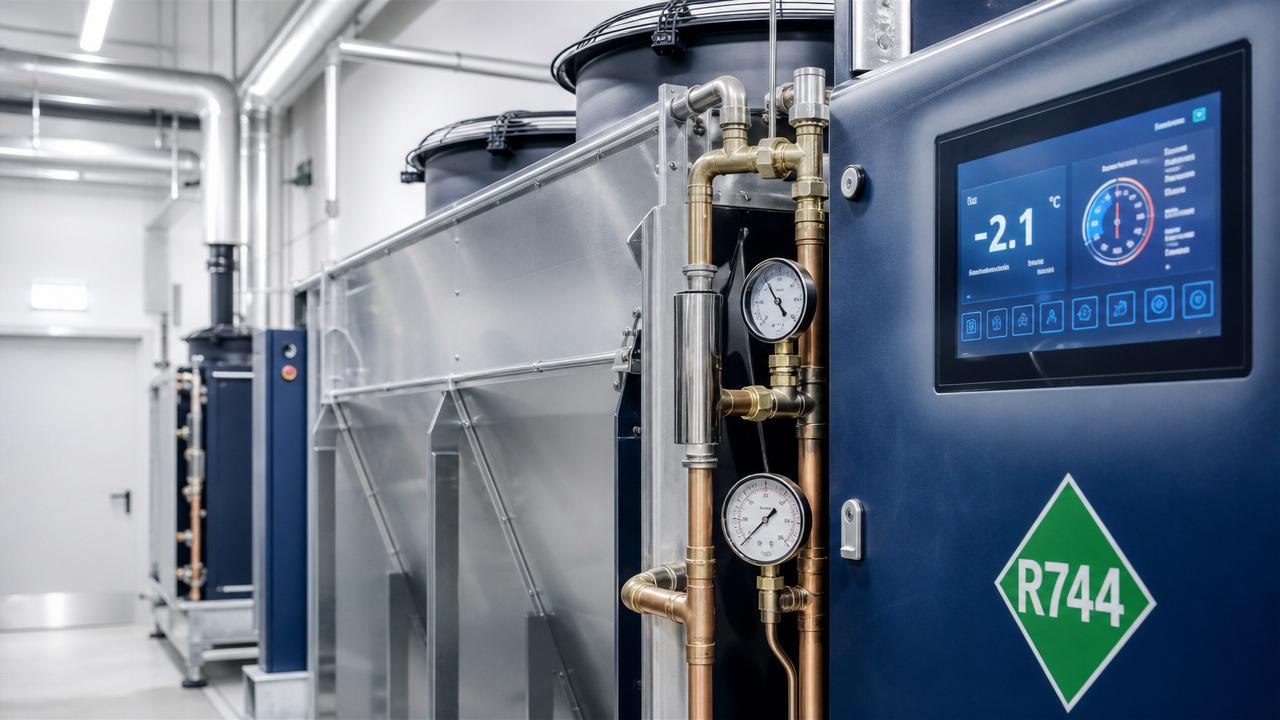




Low GWP Refrigerants HFO Blends: Performance and Compliance in 2026




Low GWP Refrigerants HFO Blends: Performance and Compliance in 2026
As 2026 approaches, technical evaluators face tighter compliance rules and rising performance expectations for low GWP refrigerants HFO blends.
This article examines how these formulations balance efficiency, safety, retrofit practicality, and regulatory alignment across industrial cooling and thermal systems.
It offers a clear starting point for assessing whether current and next-generation HFO blends can meet operational targets and environmental mandates.
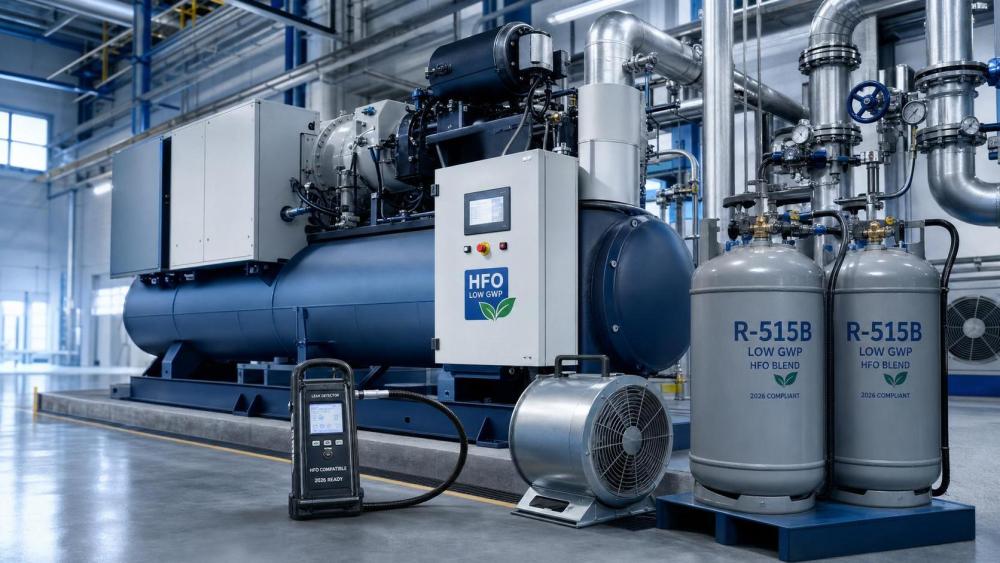
From a market perspective, the discussion has moved beyond simple GWP reduction.
The harder question is whether low GWP refrigerants HFO blends can deliver stable capacity, acceptable glide, manageable flammability, and a credible compliance path through 2026.
Why 2026 Raises the Stakes
The compliance environment is tightening across North America, Europe, and parts of Asia.
Quota pressure, PFAS scrutiny, and sector-specific bans are reshaping refrigerant selection faster than many asset plans expected.
That matters because low GWP refrigerants HFO blends often sit at the intersection of performance gains and regulatory uncertainty.
In practical terms, 2026 is not just another standards checkpoint.
It is becoming a budgeting year for replacements, conversions, refrigerant stocking strategy, and service training.
The Main Drivers Behind Adoption
- Lower lifecycle climate impact than legacy HFC options.
- Better compatibility with phasedown targets in many regulated markets.
- Usable efficiency in medium-temperature and some low-temperature systems.
- A possible bridge where natural refrigerants are not yet practical.
Even so, low GWP refrigerants HFO blends are not a one-size-fits-all answer. Selection depends on plant design, charge size, safety controls, and local code interpretation.
How HFO Blends Perform in Real Systems
Performance evaluation should start with system behavior, not brochure claims.
Most low GWP refrigerants HFO blends are engineered to reduce environmental impact while staying close to familiar pressure and temperature profiles.
That design goal helps with transition planning, but tradeoffs remain visible during detailed review.
Efficiency and Capacity
Many low GWP refrigerants HFO blends deliver competitive COP in optimized equipment.
However, retrofit performance can vary with compressor mapping, expansion valve behavior, and heat exchanger surface conditions.
A blend that performs well in catalog tests may show weaker seasonal performance in high-ambient or variable-load duty.
This is especially relevant in industrial cooling loops where partial load efficiency often matters more than headline full-load numbers.
Temperature Glide and Heat Exchange
One recurring issue with low GWP refrigerants HFO blends is temperature glide.
In some evaporators and condensers, glide can improve heat transfer matching.
In other systems, it complicates control stability, superheat settings, and troubleshooting.
For technical evaluation, glide should be reviewed alongside coil design, pressure drop, and process temperature tolerances.
Lubricants and Materials
Most low GWP refrigerants HFO blends require careful lubricant matching, often with POE oils.
Seal compatibility, moisture control, and filter drier condition become more important during conversions.
A technically acceptable refrigerant can still fail commercially if oil return or material stability is not validated early.
Safety and Compliance Questions That Cannot Be Deferred
A more obvious signal in 2026 is the growing focus on safety classification and local enforcement.
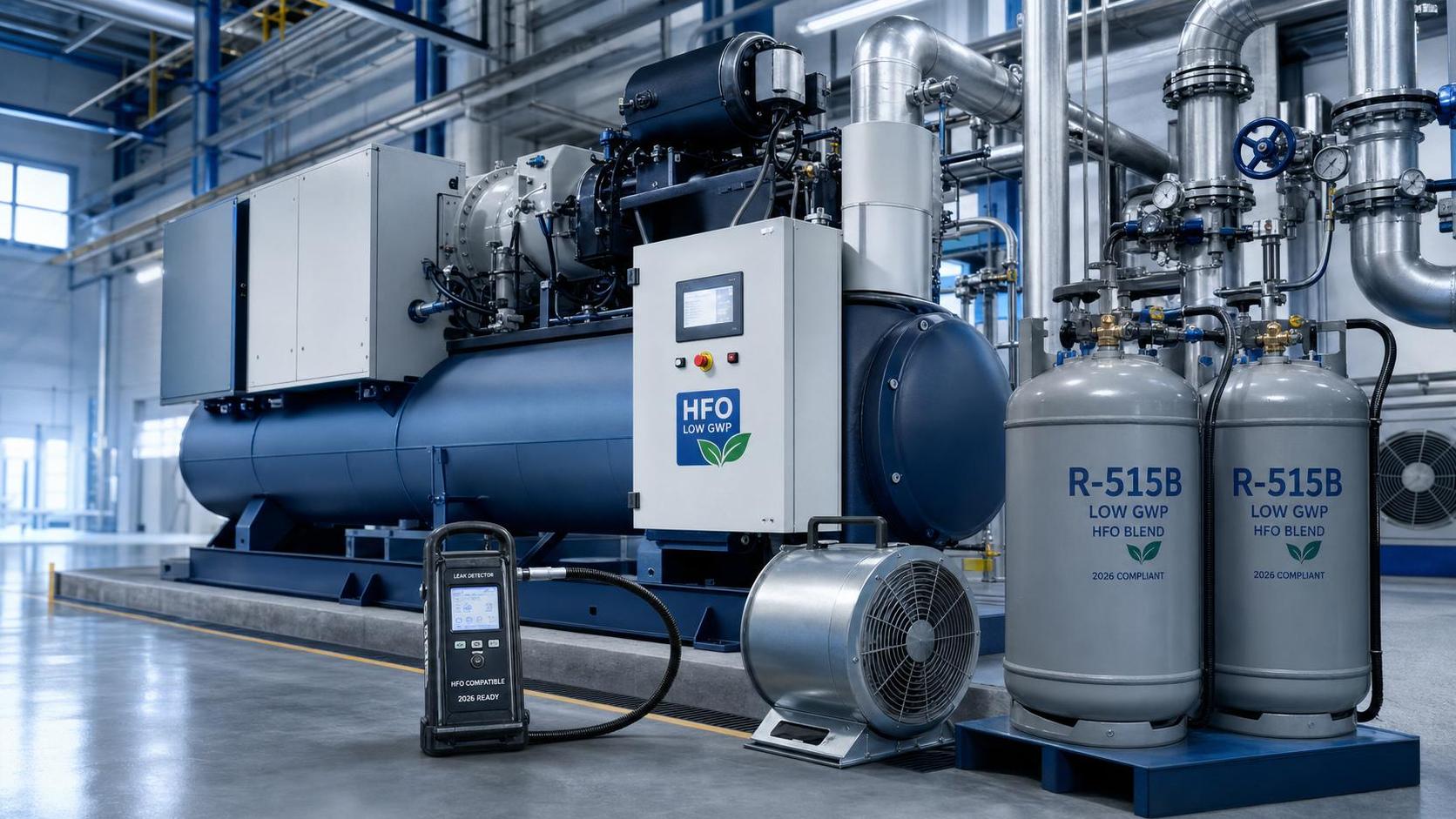
Many low GWP refrigerants HFO blends fall into A2L, which changes the conversation for machinery rooms, ventilation, leak detection, and service procedures.
This does not make them unsuitable.
It means the compliance review must include operating context, not only refrigerant data sheets.
Standards and Approval Path
A solid assessment usually references ASHRAE 34, ISO 817, EN 378, UL updates, and local building or fire codes.
The exact mix depends on geography and asset type.
For low GWP refrigerants HFO blends, compliance often hinges on charge limits, occupancy category, and equipment certification status.
PFAS and Long-Term Regulatory Risk
This is where decisions get more nuanced.
Some low GWP refrigerants HFO blends support near-term phasedown goals, yet still face longer-term attention under broader fluorinated substance policy discussions.
That does not invalidate them for 2026 planning.
It does mean procurement teams should avoid assuming a twenty-year regulatory runway without scenario analysis.
Retrofit Versus New Equipment: Where the Real Decision Sits
In actual projects, the decision is rarely just about refrigerant chemistry.
It is usually a comparison between retrofit economics and full equipment replacement.
Low GWP refrigerants HFO blends often look attractive because they can preserve major hardware.
Still, the details decide whether that path is genuinely efficient.
When Retrofit Makes Sense
- The compressor envelope remains suitable after pressure and discharge checks.
- Heat exchangers can tolerate glide without harming process control.
- The site can support A2L detection, ventilation, and labeling if needed.
- Expected energy savings justify commissioning and service retraining costs.
When New Equipment Is the Better Answer
New systems often unlock the full benefit of low GWP refrigerants HFO blends.
They allow optimized heat exchangers, control algorithms, refrigerant charge reduction, and integrated safety architecture.
For facilities planning capacity expansion, a clean-sheet design may outperform repeated retrofit adjustments over the asset lifecycle.
A Practical Evaluation Framework for 2026
A useful review process should keep technical, economic, and regulatory factors visible at the same time.
That is the only reliable way to compare low GWP refrigerants HFO blends against legacy HFCs, natural refrigerants, or delayed replacement strategies.
Recommended Screening Steps
- Map each candidate system by temperature range, load profile, and charge size.
- Compare low GWP refrigerants HFO blends using OEM-approved operating envelopes.
- Review A2L implications at site level, not only equipment level.
- Model energy, maintenance, and refrigerant availability over several years.
- Check policy exposure, including possible future restrictions on fluorinated chemistries.
The strongest decisions usually come from cross-checking field data, OEM guidance, and local compliance interpretation.
That approach reduces the risk of choosing a blend that looks efficient on paper but becomes costly in operation.
For 2026, low GWP refrigerants HFO blends remain a serious option, especially where efficiency, phasedown alignment, and retrofit practicality must all be balanced.
Closing View
The next year will reward disciplined evaluation more than quick substitution.
Low GWP refrigerants HFO blends can support strong performance and near-term compliance, but only when matched to the right system architecture and risk profile.
In real business settings, the best choice is the one that stays efficient, serviceable, and compliant after installation, not just at purchase.
A practical next step is to build a short comparative matrix for priority assets, then validate each candidate blend against site safety rules, OEM limits, and 2026 policy scenarios.
Related News
- EPA Freezes R-410A Quotas, Fast-Tracks R-32Author :Cryogenic Systems Expert

- Low GWP Refrigerants HFO Blends: Key Stability and Safety FactorsAuthor :Cryogenic Systems Expert

- R-32 Price Spike Reshapes Chiller ProcurementAuthor :Cryogenic Systems Expert

- How to Compare Environmentally Friendly Refrigerants by GWP, Safety, and CostAuthor :Cryogenic Systems Expert

- R-454B Export Quota Cut 18% as Lead Times DoubleAuthor :Cryogenic Systems Expert

- Japan Cuts R32 and R290 Import Quotas From July 10Author :Cryogenic Systems Expert

- EPA Cuts R-134a Import Quotas 42% From July 2026Author :Cryogenic Systems Expert
![]()
- Low GWP Refrigerants HFO Blends: Performance and Compliance in 2026Author :Cryogenic Systems Expert

- R-513A Jumps 23% as China Tightens Export QuotasAuthor :Cryogenic Systems Expert

- Environmentally Friendly Refrigerants in 2026: Compliance Risks and Upgrade PrioritiesAuthor :Cryogenic Systems Expert

- Pharmaceutical Temperature Control Systems: Common Compliance RisksAuthor :Cryogenic Systems Expert

- China Tightens Q3 R32 Export QuotasAuthor :Cryogenic Systems Expert

- California EPR Deadline Nears for Refrigeration MakersAuthor :Cryogenic Systems Expert

- Resource Circularity Trends Reshaping Refrigerants and Cooling SystemsAuthor :Cryogenic Systems Expert

- HFCs Filing Rules Enter Full EnforcementAuthor :Cryogenic Systems Expert

- How Environmentally Friendly Refrigerants Affect Chiller ComplianceAuthor :Cryogenic Systems Expert

- EU REACH Tightens Refrigerant Impurity Limits for R134a ExportsAuthor :Cryogenic Systems Expert

- China Seeks Feedback on 2027 Refrigerant QuotasAuthor :Cryogenic Systems Expert

- EU to Ban High-GWP ACs in 2029 as R410A Exits HomesAuthor :Cryogenic Systems Expert

- US, UK Delay HFC Phaseout, Extending R32/R134a Export WindowAuthor :Cryogenic Systems Expert

- EU HFC Cut Tightens by 2029 as Gen-3 Output Falls 10%Author :Cryogenic Systems Expert

- Kuwait Bans HCFC AC Imports as Shift to R32/R290 Speeds UpAuthor :Cryogenic Systems Expert

- Saudi SASO Rules Tighten AC Imports in DecemberAuthor :Cryogenic Systems Expert

- Environmentally Friendly Refrigerants: Compliance, Safety, and Retrofit RisksAuthor :Cryogenic Systems Expert

- SABIC Force Majeure Keeps Chiller Refrigerant Supply TightAuthor :Cryogenic Systems Expert

- SABIC Force Majeure Tightens Refrigerant FeedstocksAuthor :Cryogenic Systems Expert

- UL 60335-2-89 Tightens R290 Leak Test RulesAuthor :Cryogenic Systems Expert
![]()
- UL 60335-2-89 Adds R290 Vacuum Leak TestAuthor :Cryogenic Systems Expert

- Global Refrigerant Price Index Falls 8.3% MoM in MayAuthor :Cryogenic Systems Expert
![]()
- PSA Jurong Island Launches Mandatory Cold-Chain Traceability for RefrigerantsAuthor :Cryogenic Systems Expert
![]()
- 2026 Refrigerants Shift: What Changes for Cold StorageAuthor :Cryogenic Systems Expert

- Shanghai Pudong Pilots E-Labels for Imported CosmeticsAuthor :Cryogenic Systems Expert

- 2026 Refrigerant Shift: Safer Options With Lower Compliance RiskAuthor :Cryogenic Systems Expert

- Vitafoods Europe Highlights Clinical Herb Data, Cold Chain Demand SurgesAuthor :Cryogenic Systems Expert
![]()
- U.S. Treasury Yield Surge Stabilizes Silver, Eases Refrigerants Export PricingAuthor :Cryogenic Systems Expert

- France Allocates €710M to Support War-Impacted Firms on Cold Chain ComplianceAuthor :Cryogenic Systems Expert