2026 Refrigerant Shift: Safer Options With Lower Compliance Risk




As the 2026 refrigerant transition accelerates, quality and safety teams face rising pressure to balance performance, regulatory readiness, and operational risk. Choosing environmentally friendly refrigerants is no longer just a sustainability decision—it is a practical strategy to reduce compliance exposure, improve workplace safety, and protect long-term equipment reliability. This article outlines safer options and key evaluation points for more confident refrigerant planning.
2026 is turning refrigerant selection into a business risk decision
The refrigerant shift is no longer a future discussion. It is entering budgeting, audits, maintenance planning, and equipment replacement cycles across many industries.
Rules on high-GWP fluids are tightening in North America, Europe, and parts of Asia. Internal ESG targets are adding another layer of pressure.
At the same time, insurance reviews and workplace safety expectations are becoming stricter. That raises questions beyond cooling capacity and efficiency.
For facilities using chillers, cold storage, process cooling, HVAC, or heat pumps, the refrigerant decision now affects legal exposure and operational continuity.
This is why environmentally friendly refrigerants are gaining attention. They offer a path to lower emissions while reducing the chance of stranded assets.
Trend signals show a clear move toward lower-GWP and safer system design
Several market signals now point in the same direction. Refrigerant strategy is moving from simple replacement toward full risk-based system planning.
- Quota reductions are making legacy refrigerants more expensive and less predictable to source.
- OEM roadmaps increasingly prioritize lower-GWP platforms and updated safety controls.
- Service networks are retraining for mildly flammable and natural refrigerant applications.
- End users want equipment with easier documentation for audits and environmental reporting.
- Life-cycle evaluation is replacing first-cost thinking in refrigeration and thermal system upgrades.
These signals matter across the broader industrial landscape. Food processing, pharma, logistics, electronics, commercial buildings, and utilities all face similar transition questions.
Why the shift is happening faster than many expected
The move toward environmentally friendly refrigerants is driven by policy, economics, safety, and technology at the same time.
The result is a compressed decision timeline. Waiting too long can limit technology options and raise transition costs.
Safer options are emerging, but each comes with a different risk profile
No refrigerant is universally perfect. The best choice depends on charge size, occupancy, application temperature, service capability, and local code requirements.
Lower-GWP HFO and HFO blends
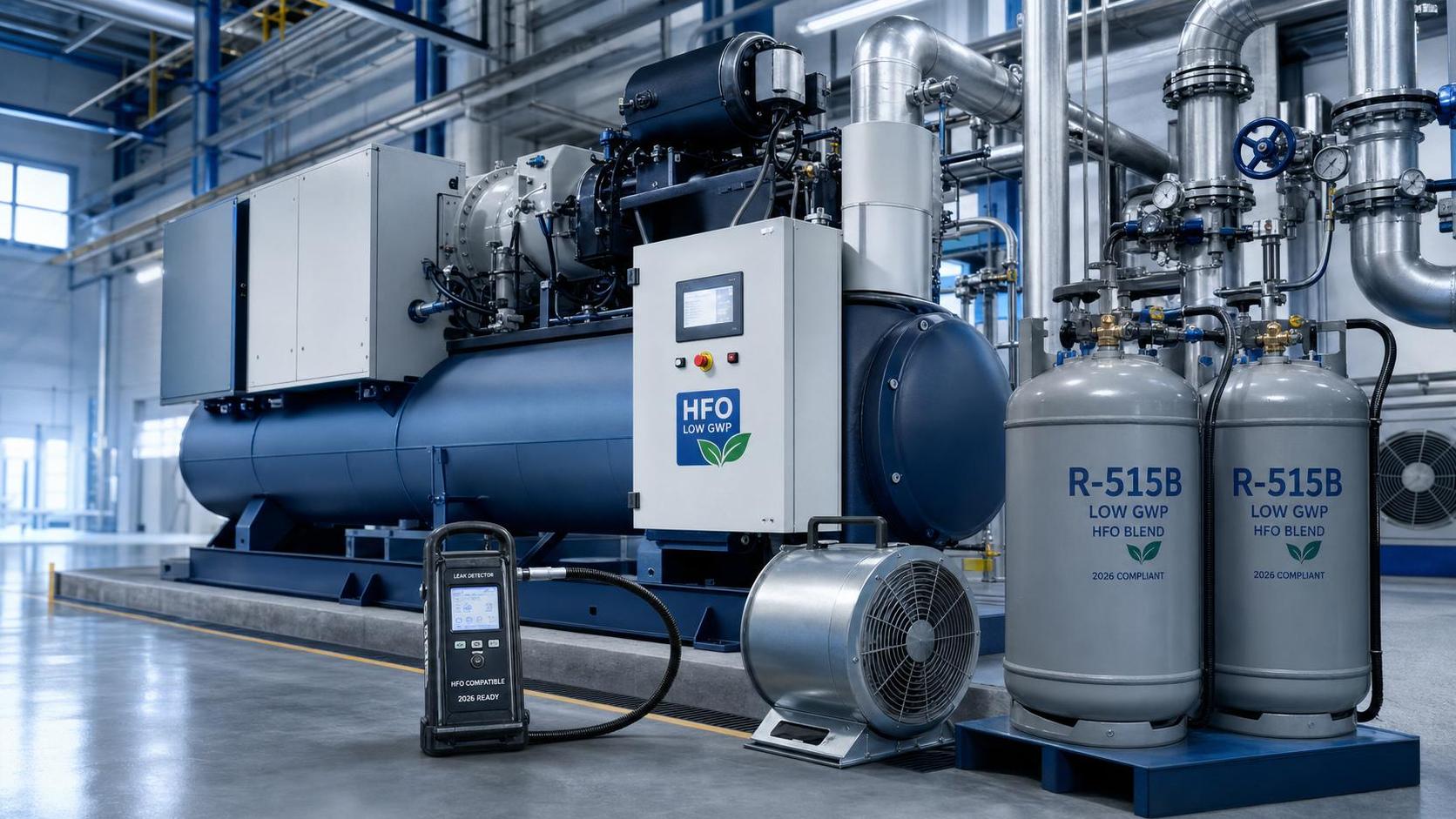
These are often selected to reduce environmental impact while preserving familiar system architectures. Many support smoother migration from older HFC platforms.
However, some are A2L mildly flammable. That means leak detection, airflow, electrical classification, and technician training must be reviewed carefully.
Natural refrigerants such as CO2, ammonia, and hydrocarbons
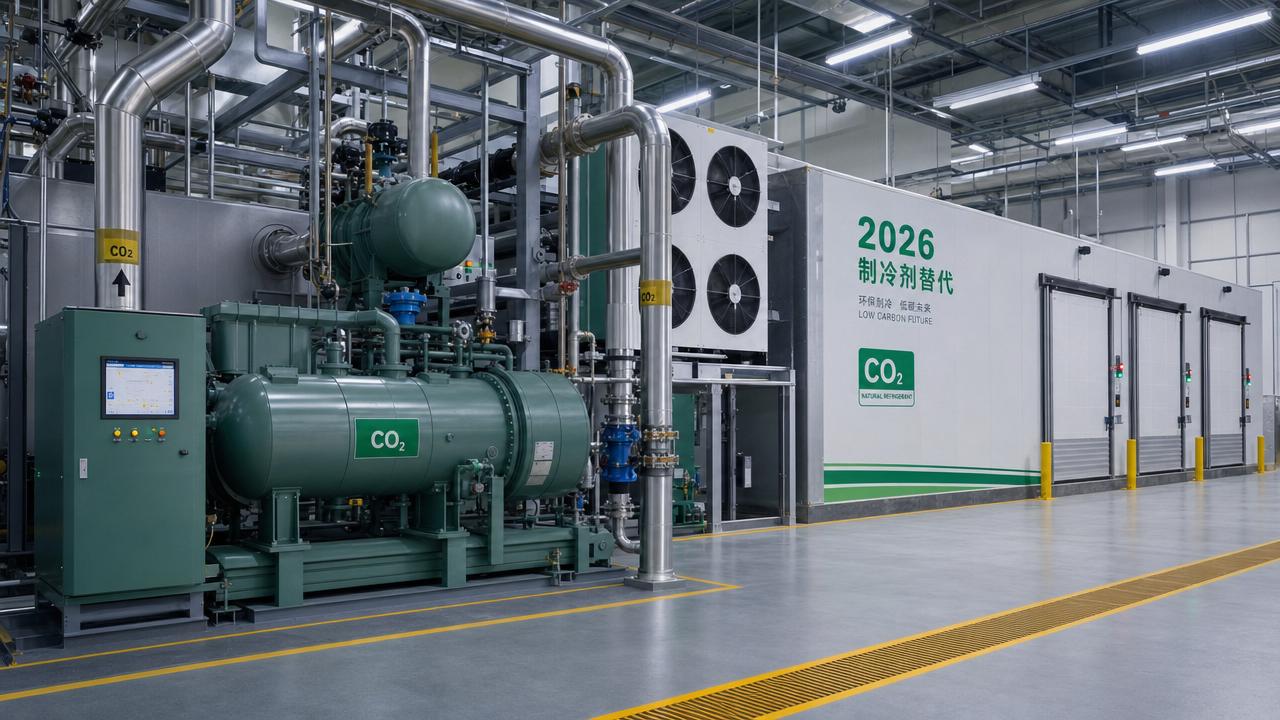
Natural refrigerants can offer very low GWP and strong long-term regulatory positioning. They are central to many advanced environmentally friendly refrigerants strategies.
Yet each brings specific design demands. CO2 involves high pressure, ammonia requires toxicity management, and hydrocarbons require strict flammability controls.
Optimized legacy transition paths
In some cases, phased retrofit planning remains practical. A transitional refrigerant may reduce near-term exposure while preparing for a later full system change.
This approach can work when capital timing is constrained. Still, it should not ignore the longer compliance horizon.
The impact extends beyond engineering into operations, finance, and governance
Refrigerant decisions influence far more than thermal performance. They shape maintenance routines, documentation needs, emergency planning, and replacement priorities.
- Operations may need new leak response procedures and spare parts planning.
- Facility design may require ventilation, gas sensing, or pressure protection updates.
- Compliance records may need tighter tracking of charge, recovery, and service events.
- Insurance and site risk reviews may change for flammable or toxic refrigerant systems.
- Procurement decisions may shift toward equipment with clearer refrigerant roadmaps.
For mixed portfolios, the challenge is greater. Older assets, different site rules, and varied cooling loads often require a segmented transition strategy.
What deserves closer attention when comparing environmentally friendly refrigerants
A lower GWP number alone does not guarantee lower risk. Better decisions come from balancing environmental, technical, and operational factors together.
- Safety classification: Review toxicity and flammability alongside occupancy and enclosure conditions.
- System compatibility: Check lubricants, seals, compressors, valves, and controls before retrofit plans advance.
- Application fit: Match refrigerant behavior to ambient climate, temperature lift, and load variability.
- Service ecosystem: Confirm technician readiness, tools, parts availability, and recovery processes.
- Code pathway: Validate local building, fire, and mechanical code implications early.
- Total cost: Include energy, downtime risk, refrigerant price volatility, and future compliance costs.
This framework helps identify which environmentally friendly refrigerants are truly practical, not just attractive on paper.
A practical comparison approach can reduce costly missteps
Using a comparison matrix improves cross-functional alignment. It also prevents decisions based only on price or marketing claims.
A staged response is often smarter than a rushed portfolio-wide switch
The strongest response usually starts with asset mapping. Identify refrigerant type, charge size, leak history, criticality, age, and replacement timing.
Then divide systems into three groups: maintain, retrofit, or replace. This reduces disruption and helps prioritize the highest compliance exposure first.
- Screen assets with high GWP, frequent leaks, or poor service support.
- Assess safer environmentally friendly refrigerants for each application category.
- Review codes, safety upgrades, and training before final selection.
- Pilot where operating conditions are well understood.
- Standardize documentation for refrigerant tracking and future audits.
This staged method supports continuity while preserving flexibility as regulations and technology continue to evolve.
The next move should focus on readiness, not just replacement
The 2026 transition is a signal to build a stronger refrigerant strategy. Safer systems, clearer compliance pathways, and better data now matter as much as capacity.
Environmentally friendly refrigerants can reduce long-term exposure, but only when matched with application fit, safety design, and realistic service conditions.
A useful next step is to review current assets against regulatory horizon, safety class, and replacement timing. That creates a more confident basis for action.
For organizations tracking industrial cooling and thermal system evolution, disciplined intelligence is becoming essential. Better decisions start with better visibility.
Related News
- EPA Freezes R-410A Quotas, Fast-Tracks R-32Author :Cryogenic Systems Expert

- Low GWP Refrigerants HFO Blends: Key Stability and Safety FactorsAuthor :Cryogenic Systems Expert

- R-32 Price Spike Reshapes Chiller ProcurementAuthor :Cryogenic Systems Expert

- How to Compare Environmentally Friendly Refrigerants by GWP, Safety, and CostAuthor :Cryogenic Systems Expert

- R-454B Export Quota Cut 18% as Lead Times DoubleAuthor :Cryogenic Systems Expert

- Japan Cuts R32 and R290 Import Quotas From July 10Author :Cryogenic Systems Expert

- EPA Cuts R-134a Import Quotas 42% From July 2026Author :Cryogenic Systems Expert
![]()
- Low GWP Refrigerants HFO Blends: Performance and Compliance in 2026Author :Cryogenic Systems Expert

- R-513A Jumps 23% as China Tightens Export QuotasAuthor :Cryogenic Systems Expert

- Environmentally Friendly Refrigerants in 2026: Compliance Risks and Upgrade PrioritiesAuthor :Cryogenic Systems Expert

- Pharmaceutical Temperature Control Systems: Common Compliance RisksAuthor :Cryogenic Systems Expert

- China Tightens Q3 R32 Export QuotasAuthor :Cryogenic Systems Expert

- California EPR Deadline Nears for Refrigeration MakersAuthor :Cryogenic Systems Expert

- Resource Circularity Trends Reshaping Refrigerants and Cooling SystemsAuthor :Cryogenic Systems Expert

- HFCs Filing Rules Enter Full EnforcementAuthor :Cryogenic Systems Expert

- How Environmentally Friendly Refrigerants Affect Chiller ComplianceAuthor :Cryogenic Systems Expert

- EU REACH Tightens Refrigerant Impurity Limits for R134a ExportsAuthor :Cryogenic Systems Expert

- China Seeks Feedback on 2027 Refrigerant QuotasAuthor :Cryogenic Systems Expert

- EU to Ban High-GWP ACs in 2029 as R410A Exits HomesAuthor :Cryogenic Systems Expert

- US, UK Delay HFC Phaseout, Extending R32/R134a Export WindowAuthor :Cryogenic Systems Expert

- EU HFC Cut Tightens by 2029 as Gen-3 Output Falls 10%Author :Cryogenic Systems Expert

- Kuwait Bans HCFC AC Imports as Shift to R32/R290 Speeds UpAuthor :Cryogenic Systems Expert

- Saudi SASO Rules Tighten AC Imports in DecemberAuthor :Cryogenic Systems Expert

- Environmentally Friendly Refrigerants: Compliance, Safety, and Retrofit RisksAuthor :Cryogenic Systems Expert

- SABIC Force Majeure Keeps Chiller Refrigerant Supply TightAuthor :Cryogenic Systems Expert

- SABIC Force Majeure Tightens Refrigerant FeedstocksAuthor :Cryogenic Systems Expert

- UL 60335-2-89 Tightens R290 Leak Test RulesAuthor :Cryogenic Systems Expert
![]()
- UL 60335-2-89 Adds R290 Vacuum Leak TestAuthor :Cryogenic Systems Expert

- Global Refrigerant Price Index Falls 8.3% MoM in MayAuthor :Cryogenic Systems Expert
![]()
- PSA Jurong Island Launches Mandatory Cold-Chain Traceability for RefrigerantsAuthor :Cryogenic Systems Expert
![]()
- 2026 Refrigerants Shift: What Changes for Cold StorageAuthor :Cryogenic Systems Expert

- Shanghai Pudong Pilots E-Labels for Imported CosmeticsAuthor :Cryogenic Systems Expert

- 2026 Refrigerant Shift: Safer Options With Lower Compliance RiskAuthor :Cryogenic Systems Expert

- Vitafoods Europe Highlights Clinical Herb Data, Cold Chain Demand SurgesAuthor :Cryogenic Systems Expert
![]()
- U.S. Treasury Yield Surge Stabilizes Silver, Eases Refrigerants Export PricingAuthor :Cryogenic Systems Expert

- France Allocates €710M to Support War-Impacted Firms on Cold Chain ComplianceAuthor :Cryogenic Systems Expert