



EPA Extends R-1234ze(E) Exemption for Industrial Chillers to Dec 2027




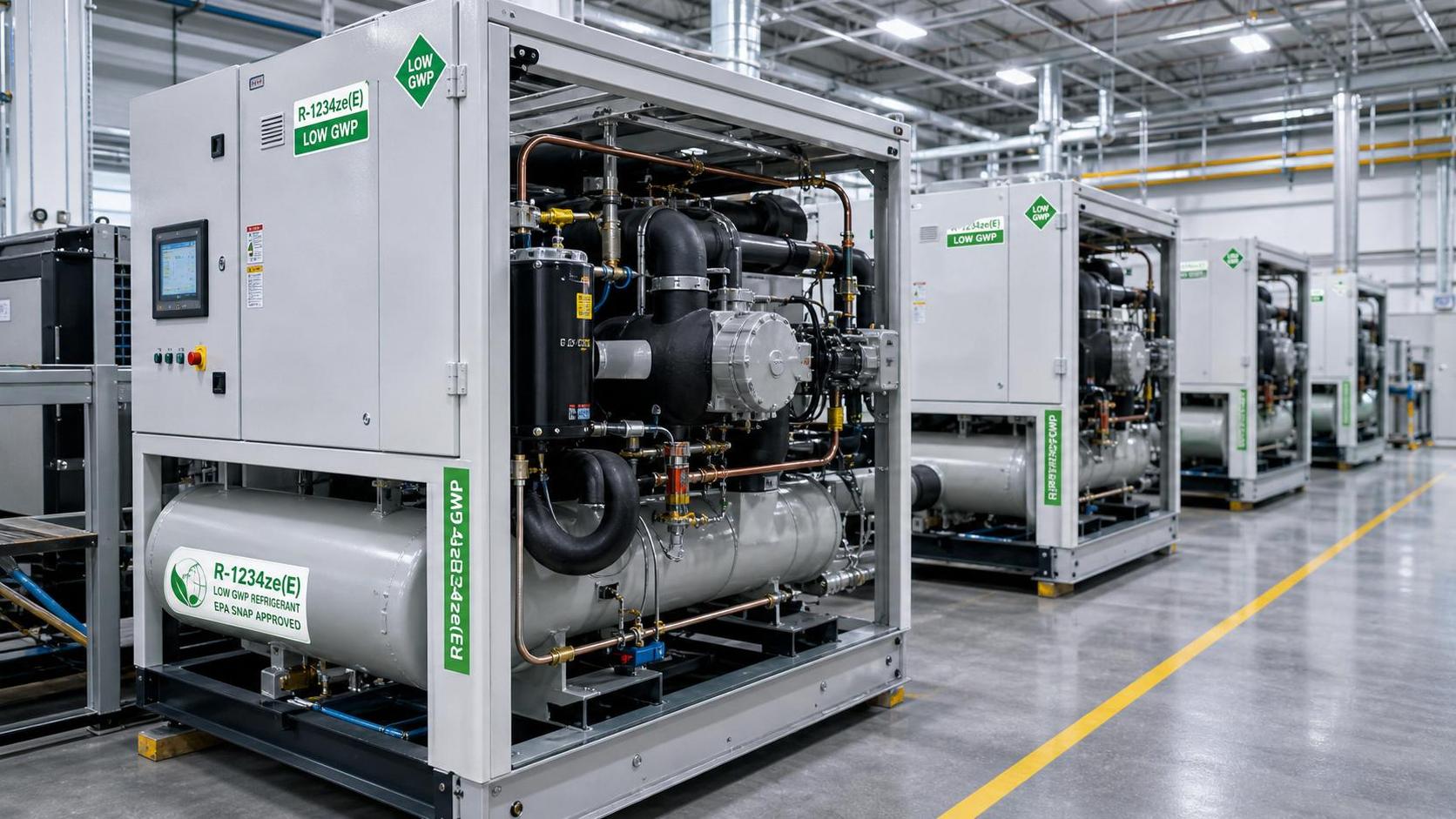
On May 24, 2026, the U.S. Environmental Protection Agency (EPA) announced an extension of the Significant New Alternatives Policy (SNAP) exemption for R-1234ze(E) in industrial chillers — now valid through December 31, 2027 — delaying the original phaseout date of June 30, 2026. This update directly affects manufacturers, exporters, and supply chain stakeholders involved in industrial refrigeration equipment, particularly those engaged in North American market access and refrigerant-dependent production.
Event Overview
The U.S. EPA issued a SNAP Program update on May 24, 2026, extending the regulatory exemption allowing the use of R-1234ze(E) in industrial chillers until December 31, 2027. The exemption was previously scheduled to expire on June 30, 2026. No additional conditions or restrictions were announced in this update; the extension applies solely to industrial chiller applications under SNAP Rule 25.
Industries Affected
Original Equipment Manufacturers (OEMs) in North America
OEMs relying on R-1234ze(E) for current chiller models face delayed pressure to redesign systems for alternatives such as R-513A or R-1233zd(E). The extension alleviates near-term supply-chain uncertainty tied to those alternatives’ limited availability and higher cost, allowing continued production of existing certified configurations without immediate requalification.
Chinese Exporters of Industrial Chillers
For Chinese manufacturers exporting to the U.S. and Canada, the extension provides at least 18 months of stability in product compliance status. It reduces urgency to re-engineer units or renegotiate pricing with customers affected by alternative refrigerant cost premiums, supporting consistent export quotations and delivery timelines.
Refrigerant Distributors and Blenders
Distributors handling R-1234ze(E) benefit from sustained demand visibility through end-2027. However, no change is indicated for R-513A or R-1233zd(E) supply dynamics — their commercial scale-up remains unaffected by this exemption extension, meaning parallel investment in those streams is still not guaranteed.
Aftermarket Service Providers
Technicians and service firms maintaining installed R-1234ze(E)-charged chillers gain extended certainty regarding refrigerant availability for leak repairs and retrofits. No new SNAP restrictions on servicing existing equipment were introduced alongside the extension.
What Stakeholders Should Monitor and Do Now
Track official SNAP rulemaking documents for potential conditions or scope limitations
The EPA’s May 24 notice confirms the extension but does not publish revised regulatory text or clarify whether future SNAP updates may impose new reporting, labeling, or usage thresholds. Stakeholders should monitor the Federal Register for formal rule amendments beyond the initial announcement.
Assess exposure to R-513A/R-1233zd(E) procurement risk — separately from this exemption
This extension delays—but does not cancel—the eventual transition away from R-1234ze(E). Companies preparing for post-2027 compliance must continue evaluating actual availability, pricing, and technical compatibility of R-513A and R-1233zd(E), as supply constraints cited in the EPA notice remain unaddressed by the extension itself.
Review model-specific SNAP listing status and avoid assuming blanket applicability
The exemption applies only to industrial chillers explicitly listed under SNAP Rule 25. It does not cover other equipment types (e.g., centrifugal chillers outside defined industrial categories, or HVAC chillers), nor does it revise listings for R-1234ze(E) in other end uses. Firms must verify individual model eligibility using EPA’s SNAP Substitution List database.
Update internal compliance timelines and customer communications accordingly
Exporters and OEMs should revise internal regulatory roadmaps to reflect the new 2027 deadline — including recalibrating engineering validation schedules, certification renewal plans, and sales team guidance. Avoid referencing ‘permanent’ or ‘indefinite’ use; the extension remains time-bound and subject to future review.
Editorial Perspective / Industry Observation
Observably, this extension functions primarily as a procedural pause — not a policy reversal. It acknowledges real-world supply chain gaps for lower-GWP alternatives without altering the EPA’s long-term direction toward phasedown of high-impact HFCs and transitional hydrofluoroolefins. Analysis shows the move reflects responsiveness to stakeholder feedback rather than a shift in environmental targets. From an industry standpoint, it is better understood as a risk-mitigation measure for continuity of supply and certification, not as evidence of reduced regulatory pressure overall. Continued attention is warranted because the 2027 deadline remains firm, and no subsequent extension has been signaled.
In summary, the EPA’s R-1234ze(E) exemption extension offers tangible short-to-midterm operational relief for industrial chiller OEMs and exporters, particularly those managing cross-border compliance and refrigerant-dependent manufacturing. However, it does not eliminate the underlying technical and commercial challenges associated with next-generation refrigerants. Currently, it is more accurate to interpret this update as a calibrated adjustment to implementation timing — not a revision of regulatory intent or timeline expectations beyond 2027.
Source: U.S. Environmental Protection Agency (EPA), SNAP Program Update, May 24, 2026. Official notice published via EPA website and preliminary Federal Register docket. Note: Formal rule codification and any accompanying guidance documents remain pending and require ongoing monitoring.
Related News
- How Smart Thermal Systems Improve Industrial Cooling EfficiencyAuthor :Cryogenic Systems Expert

- How to Choose Process Cooling Equipment for Stable Temperature ControlAuthor :Cryogenic Systems Expert

- EU Finalizes 2026 HFC Quota Cut for R-134a ChillersAuthor :Cryogenic Systems Expert

- EU Tightens HFC-134a Quotas for Industrial ChillersAuthor :Cryogenic Systems Expert

- REACH SVHC Update Pressures HFC-134a Chiller Supply ChainsAuthor :Cryogenic Systems Expert

- EU PFAS Coolant Ban Reshapes Chiller ExportsAuthor :Cryogenic Systems Expert

- EU REACH Restricts PFAS Cooling Media ImportsAuthor :Cryogenic Systems Expert

- EU Ecodesign Rule Takes Effect for Industrial ChillersAuthor :Cryogenic Systems Expert

- EU REACH Rule Takes Effect for PFAS in Industrial Cooling ExportsAuthor :Cryogenic Systems Expert

- Industrial Cooling for Plastic Processing: How to Size for Stable Cycle TimesAuthor :Cryogenic Systems Expert

- EU F-Gas Update Bars R404A/R507 in Commercial CoolingAuthor :Cryogenic Systems Expert

- DOE Raises Chiller Efficiency Standard From October 2026Author :Cryogenic Systems Expert

- India Mandates BIS Energy Certification for Industrial ChillersAuthor :Cryogenic Systems Expert

- Energy-Efficient Heat Exchange for Process Cooling: Cost vs PaybackAuthor :Cryogenic Systems Expert

- EPA R-134a Import Ban Takes Effect on July 13, 2026Author :Cryogenic Systems Expert

- India BIS Rule Takes Effect for Industrial ChillersAuthor :Cryogenic Systems Expert

- EPA Cuts R134a Import Quotas 20% From July 10Author :Cryogenic Systems Expert

- How to Compare Energy-Efficient Cooling Systems for Factory Expansion ProjectsAuthor :Cryogenic Systems Expert

- Chiller Price Index Rises 11.3% in Q2Author :Cryogenic Systems Expert

- Saudi SASO Tightens Chiller Import Compliance From July 10Author :Cryogenic Systems Expert

- Dubai Opens Fast-Track Chiller TendersAuthor :Cryogenic Systems Expert

- Japan Raises Chiller COP Floor to 6.2 From Sept. 1Author :Cryogenic Systems Expert
![]()
- Compact Thermal Management in Smart Devices: Common Failure RisksAuthor :Cryogenic Systems Expert

- Thermal Management for Batteries: Cooling Methods ComparedAuthor :Cryogenic Systems Expert

- How Compact Thermal Design Extends Smart Device UptimeAuthor :Cryogenic Systems Expert

- Shanghai-Rotterdam Reefer Rates Jump 37% in a WeekAuthor :Cryogenic Systems Expert

- Process Cooling Equipment Low Maintenance: What Cuts Downtime Over 5 Years?Author :Cryogenic Systems Expert

- Semiconductor Cooling Solutions: Which Design Works Best for High-Density Tools?Author :Cryogenic Systems Expert

- Semiconductor Thermal Management Systems: Preventing Yield Loss from Heat DriftAuthor :Cryogenic Systems Expert

- EPA Clears R-1234ze(E) for Industrial ChillersAuthor :Cryogenic Systems Expert
 for Industrial Chillers")
- DOE Raises Chiller IEER Floor to 12.8 From Oct. 2026Author :Cryogenic Systems Expert

- Singapore Refrigeration Show Adds Green Compliance HubAuthor :Cryogenic Systems Expert

- How Food Industry Temperature Control Systems Reduce Product LossAuthor :Cryogenic Systems Expert

- EU REACH Adds 12 SVHCs, Raising Chiller Compliance RiskAuthor :Cryogenic Systems Expert

- Precision Temperature Control Air Cooling: Key Setup Mistakes That Reduce StabilityAuthor :Cryogenic Systems Expert

- India BEE Eyes APF Labels for Imported ChillersAuthor :Cryogenic Systems Expert