IIAR 2026: CO2 Growth Drives Demand for Larger Industrial Compressors




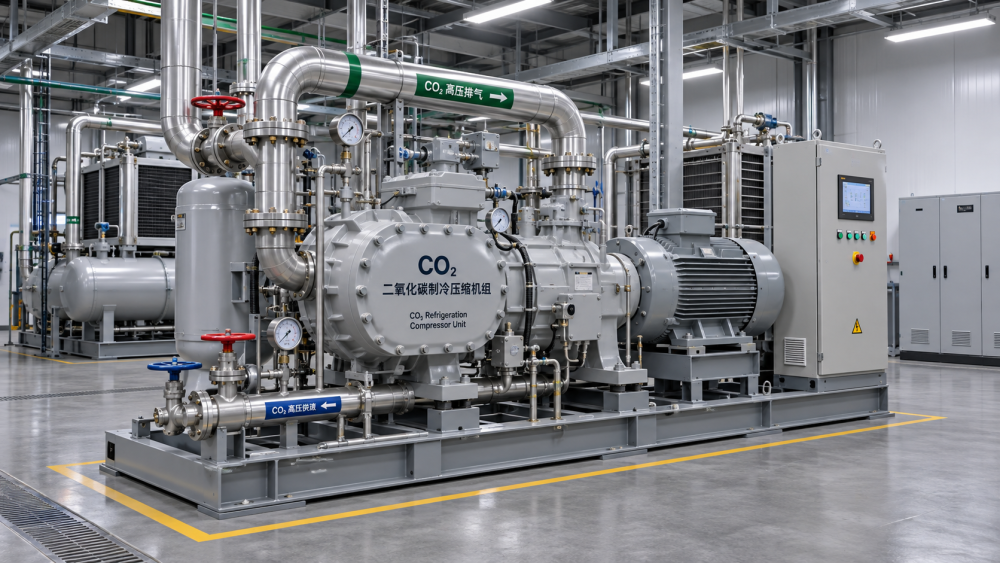
Industrial adoption of transcritical CO2 refrigeration in North America reached approximately 1,240 facilities in 2025, up 42% year on year, according to reporting from the IIAR 2026 exhibition. The growth has been accompanied by rising demand for larger-capacity compressors, including screw and reciprocating models, as CO2 gains ground as a refrigerant in industrial applications.
The figures point to an expanding base of facilities using the technology. They also help explain why compressor capacity has become a focus: as CO2 systems are used across more industrial sites, equipment suppliers face demand for machines suited to larger refrigeration loads. The available figures describe facility adoption, however, and do not establish the number or value of compressors sold.
What the increase means for compressor demand
CO2, also known as R744, is a natural refrigerant. The reported rise in industrial facilities using transcritical CO2 systems indicates that its role extends to applications where refrigeration capacity is a central equipment-selection issue.
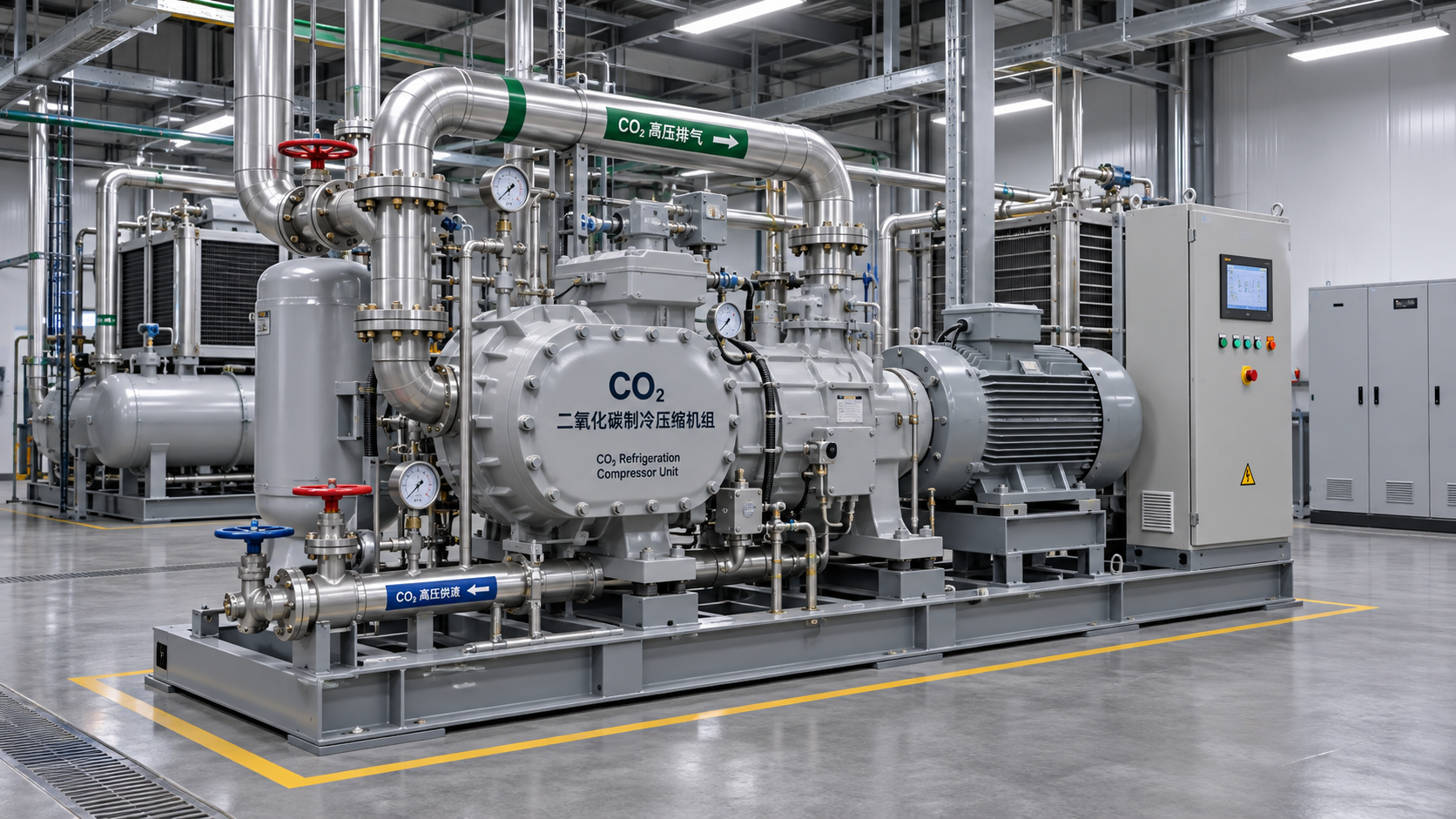
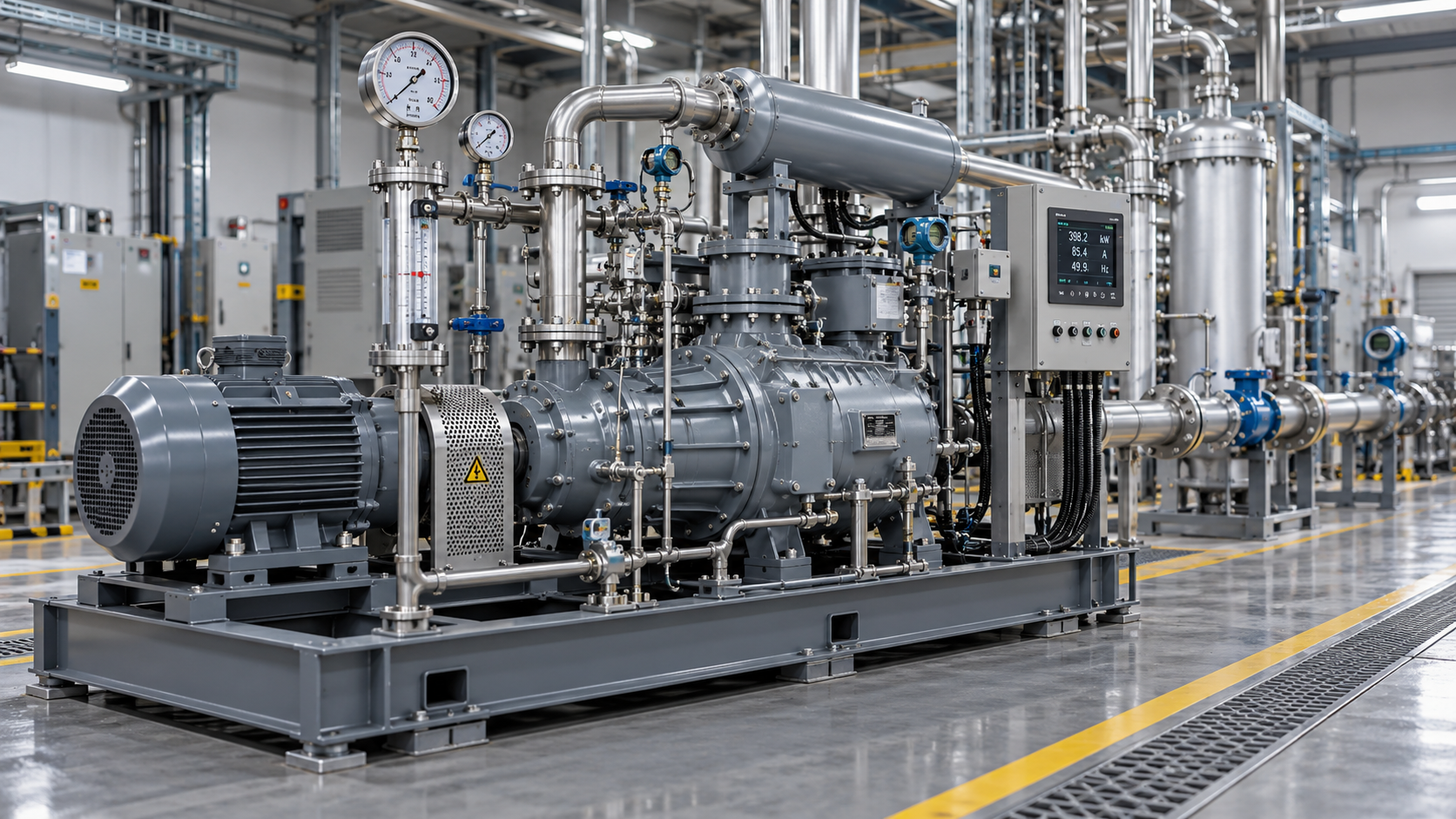
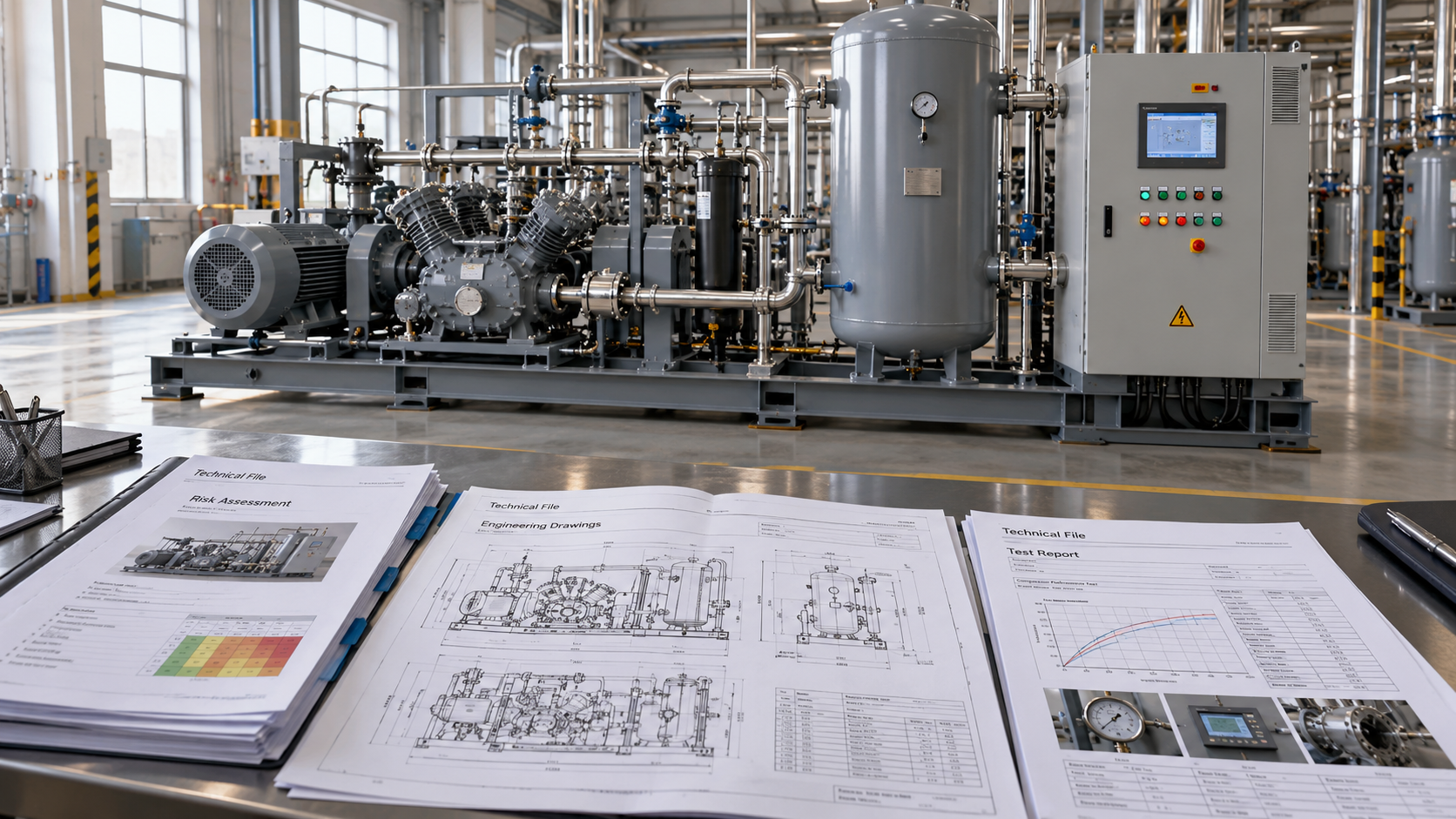
That creates a direct connection between system adoption and compressor demand. A facility considering a larger CO2 installation must match its compressor selection to the required refrigeration load and the design of the wider system. Screw and reciprocating compressors are among the equipment types identified in the IIAR 2026 reporting as demand shifts toward larger capacities.
For compressor manufacturers and suppliers, the significance is therefore more specific than a general increase in interest in natural refrigerants. The question is how demand for capacity translates into requirements for particular compressor types and system configurations. Growth in the number of facilities alone does not show how that demand is divided between screw and reciprocating machines.
Facility growth and sales are different measures
The reported 42% increase measures the change in the number of North American industrial facilities using transcritical CO2 systems. It provides a useful indicator of adoption, but it should not be read as an equivalent increase in CO2 equipment sales revenue, compressor shipments or installed refrigeration capacity.
Facilities can differ in the size and design of their refrigeration systems. As a result, a change in the number of sites does not on its own reveal the value of equipment purchased or the capacity installed. The report identifies stronger demand for larger compressors, but the figures cited do not quantify that increase.
This distinction matters when assessing the commercial implications. A broader installed base signals an expanding industrial application for CO2; the effect on individual equipment categories depends on the capacity and configuration of the systems selected. Further reporting on compressor shipments, capacity ranges or sales would provide a clearer picture of how facility adoption is translating into equipment demand.
The current development is consistent with a shift toward lower-carbon refrigeration technology, while its longer-term scale will depend on whether adoption continues and how future industrial systems are specified.
Ready when you are. Send us a message to get started.
Related News
- How does heat exchanger fouling affect heat transfer cost?Author :

- IIAR 2026: CO2 Growth Drives Demand for Larger Industrial CompressorsAuthor :

- Major HVAC Manufacturers Report Q3 Revenue GrowthAuthor :

- Seven Kenyan Counties Promote Sustainable Cooling Projects to International InvestorsAuthor :

- What drives the price of industrial decarbonization solutions?Author :

- How to prioritize projects in a decarbonization roadmapAuthor :

- How to verify an exporter’s cooling system efficiency claimsAuthor :

- How to assess a thermal systems factory's production capacityAuthor :

- How does capacity affect the price of energy conversion systems?Author :

- How to prioritize industrial decarbonization projectsAuthor :

- How does cooling capacity affect electronics cooling solution prices?Author :

- How to write measurable requirements in a procurement specificationAuthor :

- How to select industrial equipment for automation with existing PLCsAuthor :

- How electricity prices shape industrial compressed air price trendsAuthor :

- Choosing air filtration systems for heavy dust in the Middle EastAuthor :

- How much does a fully installed compressed air monitoring system cost?Author :

- What documentation supports CE marking for industrial equipment?Author :

- How local support affects vacuum system costs in Southeast AsiaAuthor :

- How worldwide industry category guides help compare market opportunitiesAuthor :

- What drives sustainable thermal systems cost over their operating life?Author :

- Which industrial solution comparison criteria prevent project delays?Author :

- How Ambient Temperature and Load Profile Affect Industrial Compressor SizingAuthor :

- What to evaluate before choosing a thermal process engineering supplierAuthor :

- How industrial utility systems affect energy costs in process plantsAuthor :

- What Data Is Needed to Assess Heat Recovery Decarbonization?Author :

- Can Waste Heat Recovery Support Carbon Neutrality Targets?Author :

- Is Compressor Heat Recovery Worth the Installation Cost?Author :

- What to verify before choosing a process separation technology supplierAuthor :

- When does process utilities engineering reduce project rework?Author :

- Where thermal efficiency optimization delivers the fastest savings in EuropeAuthor :

- What should you verify before selecting a heat transfer supplier?Author :

- What drives compressed air systems price for industrial projects?Author :

- How an industrial product knowledge comparison guide reduces sourcing riskAuthor :

- When does a procurement specification planning process reduce bid risk?Author :

- When does thermal system optimization for electronics reduce failure risk?Author :

- When high temperature process heating systems justify the higher energy costAuthor :