EU REACH PFAS Draft Raises New Export Checks




On August 2, 2026, a new REACH draft amendment released by ECHA put PFAS use in industrial cooling, compressed air, and high-vacuum equipment into sharper regulatory focus. For exporters tied to Screw Compressors, High Vacuum, and Refrigerants, the issue is not only the proposed restriction itself but also the resulting compliance review across materials, technical documentation, supplier declarations, and testing records ahead of the stated February 2027 timeline.
What the draft amendment specifically covers
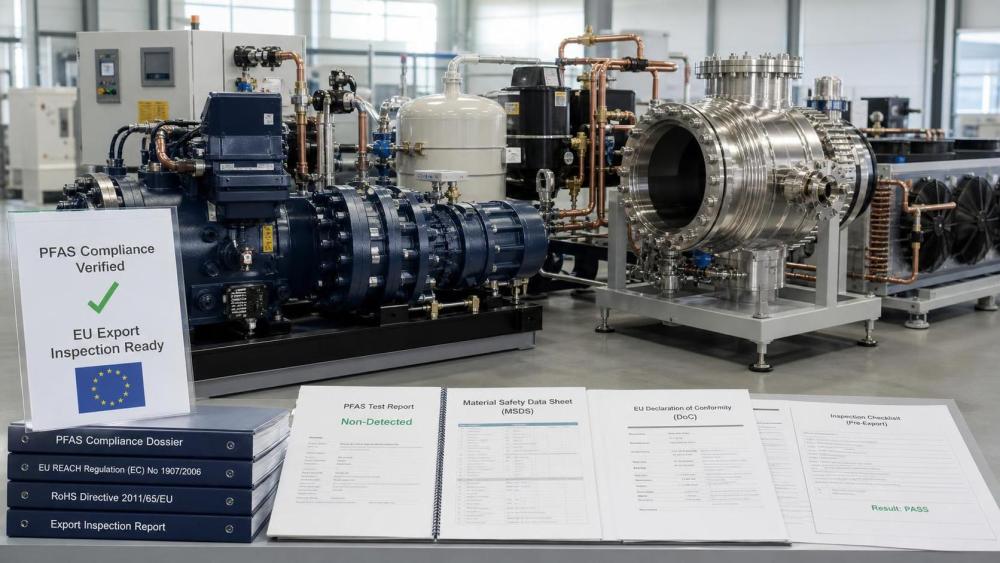
According to the provided event summary, ECHA released a REACH draft amendment identified as Annex XVII Entry 79a on August 2, 2026. The draft proposes a broad restriction from February 2027 on per- and polyfluoroalkyl substances, or PFAS, in industrial cooling, compressed air, and high-vacuum equipment.
The scope described in the summary includes PFAS-containing seals, lubricants, refrigerant carriers, and coating materials. The same summary states that the change directly affects export compliance pathways for products such as Screw Compressors, High Vacuum, and Refrigerants.
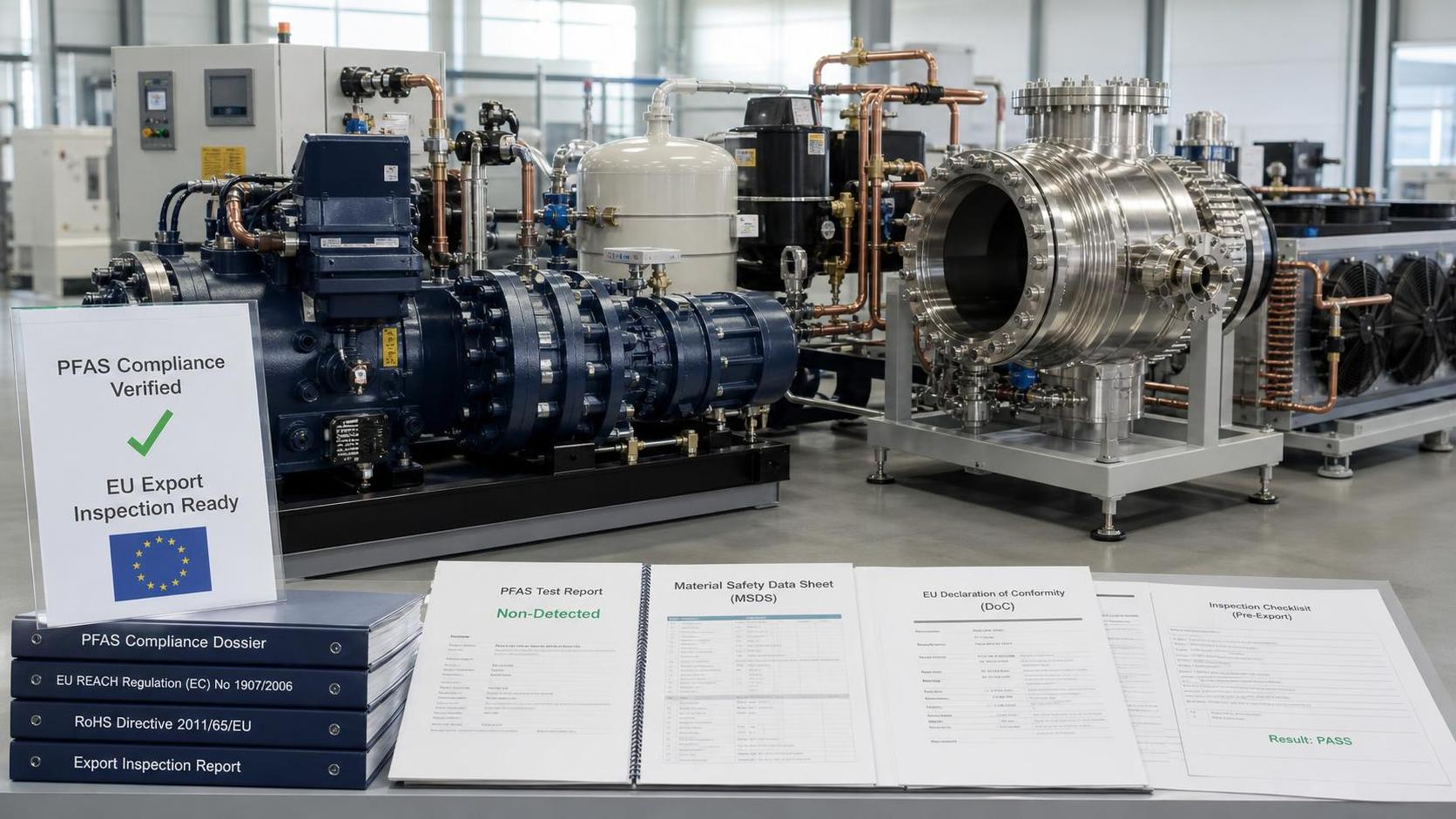
It also states that Chinese suppliers will be required to provide substance declarations, validation of substitute solutions, and conformity test reports under EN ISO 16175-2:2026.
Where the commercial pressure is likely to appear first
Equipment exporters facing a changed documentation threshold
From an industry perspective, exporters of covered equipment are likely to feel the impact first because the draft connects product marketability to material-level compliance evidence. The practical pressure point is likely to sit in export review, customer qualification, and pre-shipment documentation, especially where seals, lubricants, carriers, or coatings may contain PFAS.
What deserves closer attention is the need to align product files with substance declarations, substitute-solution verification, and referenced test reports rather than treating compliance as a single end-stage certificate issue.
Manufacturers and integrators dealing with parts and material traceability
Analysis shows that manufacturers and system integrators may face a more detailed review of bill-of-materials content and supplier traceability. Where a finished unit includes PFAS-related inputs in sealing systems, lubricating media, refrigerant-related materials, or surface treatments, compliance exposure may arise before delivery rather than after installation.
The main business effect is likely to appear in engineering review, supplier qualification, internal approval of alternative materials, and technical file preparation for export orders.
Procurement teams and supply-chain service providers under tighter input control
Observably, procurement functions may need to shift attention from price and lead time alone to material declarations and replacement feasibility. Supply-chain service providers supporting export fulfillment may also need to check whether supplier files are complete enough for customer review or conformity assessment.
The immediate concern is less about a generic market reaction and more about whether supporting documents, test references, and substitution records can move in step with order and delivery schedules.
Testing and certification-related services moving closer to the transaction
Analysis shows that the stated requirement for EN ISO 16175-2:2026 conformity testing reports could move testing and certification-related work earlier in the sales and export cycle. For affected participants, this means documentation readiness may become part of bid support, technical clarification, or customer approval, not only a post-production step.
What companies should review now
Check whether PFAS appears in hidden material layers
What deserves closer attention is that the described scope is not limited to an obvious single chemical input. The summary explicitly mentions seals, lubricants, refrigerant carriers, and coatings, so companies should review whether PFAS appears in embedded or supporting materials that are easy to overlook in finished equipment files.
Prepare compliance files around the stated document set
From an industry perspective, the most immediate practical task is document readiness. The provided summary points to three items in particular: substance declarations, substitute-solution validation, and EN ISO 16175-2:2026 conformity test reports. Companies involved in export transactions should therefore examine whether existing technical files already support these items or whether additional supplier coordination is required.
Watch how customer and tender requirements begin to change
Observably, even before any final execution pattern becomes clear, customer questionnaires, technical bid documents, and procurement checklists may begin to reflect the draft direction. It is more appropriate to understand this stage as a period for tracking requirement changes in commercial documents rather than assuming that all enforcement details are already fixed.
Build more time into export and delivery planning
Analysis shows that where substitute validation and conformity testing are requested, review cycles may become longer. Companies should pay attention to how compliance checks could affect order confirmation, document submission timing, and delivery coordination, especially for export projects involving covered product categories.
Why this matters beyond the draft text itself
Observably, this development is not just a technical materials issue. It signals that PFAS-related review is moving closer to the commercial gate for certain industrial equipment exports. The key point is not only whether a rule has been proposed, but how quickly buyers, certifiers, and supply-chain participants begin to translate that proposal into documentation and qualification expectations.
It is more appropriate to understand this as an execution signal that deserves continued monitoring rather than a fully settled compliance endpoint. The draft status matters, but so do the next layers of interpretation, including how conformity evidence is requested and how market participants apply the stated requirements in practice.
How this development is best understood at this stage
From an industry perspective, the current significance of the August 2, 2026 development lies in early compliance repositioning for exporters tied to industrial cooling, compressed air, and high-vacuum equipment. The event points to a more document-driven export pathway for affected products and to closer scrutiny of PFAS-related material content in supporting components and media.
A rational reading is that companies should treat this as an important rule-development signal with practical near-term implications for compliance preparation, supplier file management, and delivery planning, while still watching for further clarification in execution and market adoption.
Basis of this article and what still needs verification
This article is based on the user-provided news title, event date, and event summary. For events of this type, relevant source categories commonly include official regulatory notices, releases from supervisory bodies, customs or trade-administration information, industry association updates, standards organization documents, and reporting from established trade media.
No specific official source link was provided in the input, so the exact official link still needs to be verified on an ongoing basis. What also requires continued monitoring includes later policy detail, certification interpretation, tender-document changes, industry feedback, and how companies implement the stated documentation and testing expectations in actual export business.
Related News
- EU REACH PFAS Draft Raises New Export ChecksAuthor :Cryogenic Systems Expert

- EU Cuts High-GWP Refrigerant Import Quotas by 35%Author :Cryogenic Systems Expert

- EU Cuts Q4 2026 Quotas for High-GWP RefrigerantsAuthor :Cryogenic Systems Expert

- EU F-Gas Revision Cuts R410A Quotas 40%Author :Cryogenic Systems Expert

- EPA Freezes R-410A Quotas, Fast-Tracks R-32Author :Cryogenic Systems Expert

- Low GWP Refrigerants HFO Blends: Key Stability and Safety FactorsAuthor :Cryogenic Systems Expert

- R-32 Price Spike Reshapes Chiller ProcurementAuthor :Cryogenic Systems Expert

- How to Compare Environmentally Friendly Refrigerants by GWP, Safety, and CostAuthor :Cryogenic Systems Expert

- R-454B Export Quota Cut 18% as Lead Times DoubleAuthor :Cryogenic Systems Expert

- Japan Cuts R32 and R290 Import Quotas From July 10Author :Cryogenic Systems Expert

- EPA Cuts R-134a Import Quotas 42% From July 2026Author :Cryogenic Systems Expert
![]()
- Low GWP Refrigerants HFO Blends: Performance and Compliance in 2026Author :Cryogenic Systems Expert

- R-513A Jumps 23% as China Tightens Export QuotasAuthor :Cryogenic Systems Expert

- Environmentally Friendly Refrigerants in 2026: Compliance Risks and Upgrade PrioritiesAuthor :Cryogenic Systems Expert

- Pharmaceutical Temperature Control Systems: Common Compliance RisksAuthor :Cryogenic Systems Expert

- China Tightens Q3 R32 Export QuotasAuthor :Cryogenic Systems Expert

- California EPR Deadline Nears for Refrigeration MakersAuthor :Cryogenic Systems Expert

- Resource Circularity Trends Reshaping Refrigerants and Cooling SystemsAuthor :Cryogenic Systems Expert

- HFCs Filing Rules Enter Full EnforcementAuthor :Cryogenic Systems Expert

- How Environmentally Friendly Refrigerants Affect Chiller ComplianceAuthor :Cryogenic Systems Expert

- EU REACH Tightens Refrigerant Impurity Limits for R134a ExportsAuthor :Cryogenic Systems Expert

- China Seeks Feedback on 2027 Refrigerant QuotasAuthor :Cryogenic Systems Expert

- EU to Ban High-GWP ACs in 2029 as R410A Exits HomesAuthor :Cryogenic Systems Expert

- US, UK Delay HFC Phaseout, Extending R32/R134a Export WindowAuthor :Cryogenic Systems Expert

- EU HFC Cut Tightens by 2029 as Gen-3 Output Falls 10%Author :Cryogenic Systems Expert

- Kuwait Bans HCFC AC Imports as Shift to R32/R290 Speeds UpAuthor :Cryogenic Systems Expert

- Saudi SASO Rules Tighten AC Imports in DecemberAuthor :Cryogenic Systems Expert

- Environmentally Friendly Refrigerants: Compliance, Safety, and Retrofit RisksAuthor :Cryogenic Systems Expert

- SABIC Force Majeure Keeps Chiller Refrigerant Supply TightAuthor :Cryogenic Systems Expert

- SABIC Force Majeure Tightens Refrigerant FeedstocksAuthor :Cryogenic Systems Expert

- UL 60335-2-89 Tightens R290 Leak Test RulesAuthor :Cryogenic Systems Expert
![]()
- UL 60335-2-89 Adds R290 Vacuum Leak TestAuthor :Cryogenic Systems Expert

- Global Refrigerant Price Index Falls 8.3% MoM in MayAuthor :Cryogenic Systems Expert
![]()
- PSA Jurong Island Launches Mandatory Cold-Chain Traceability for RefrigerantsAuthor :Cryogenic Systems Expert
![]()
- 2026 Refrigerants Shift: What Changes for Cold StorageAuthor :Cryogenic Systems Expert

- Shanghai Pudong Pilots E-Labels for Imported CosmeticsAuthor :Cryogenic Systems Expert