EU PFAS Proposal Puts Refrigerant and Vacuum Exports Under Review




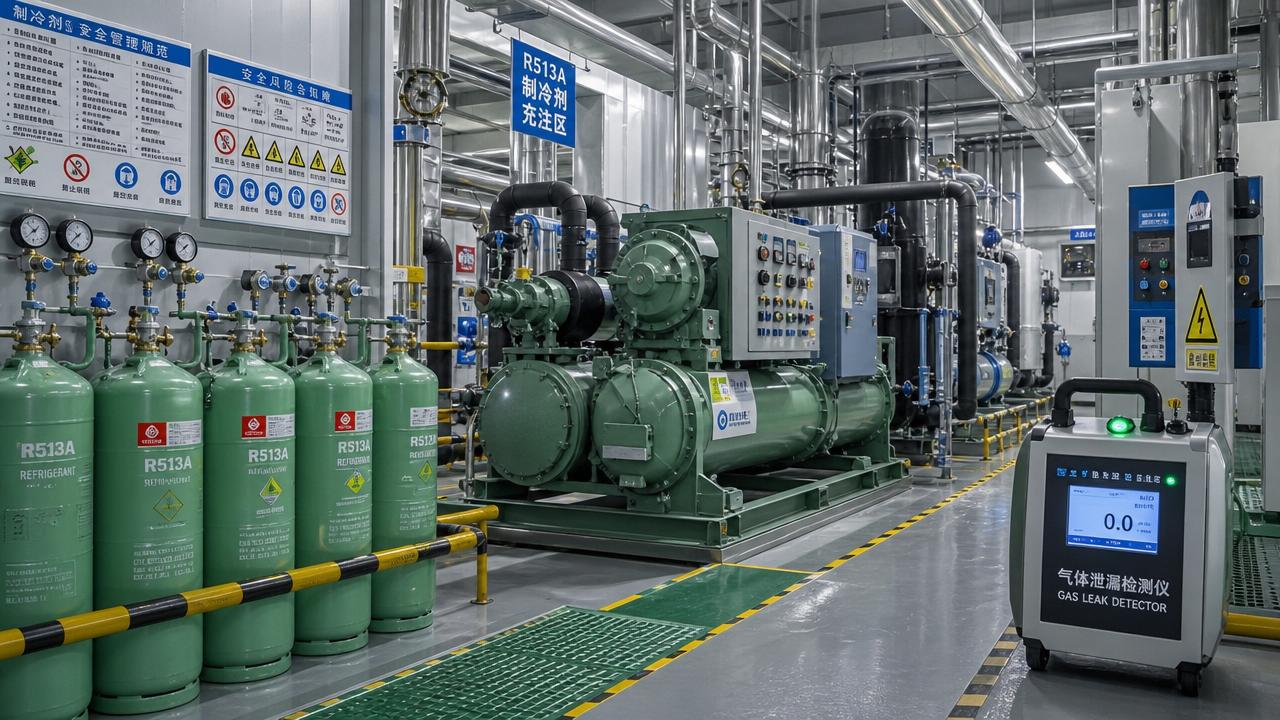
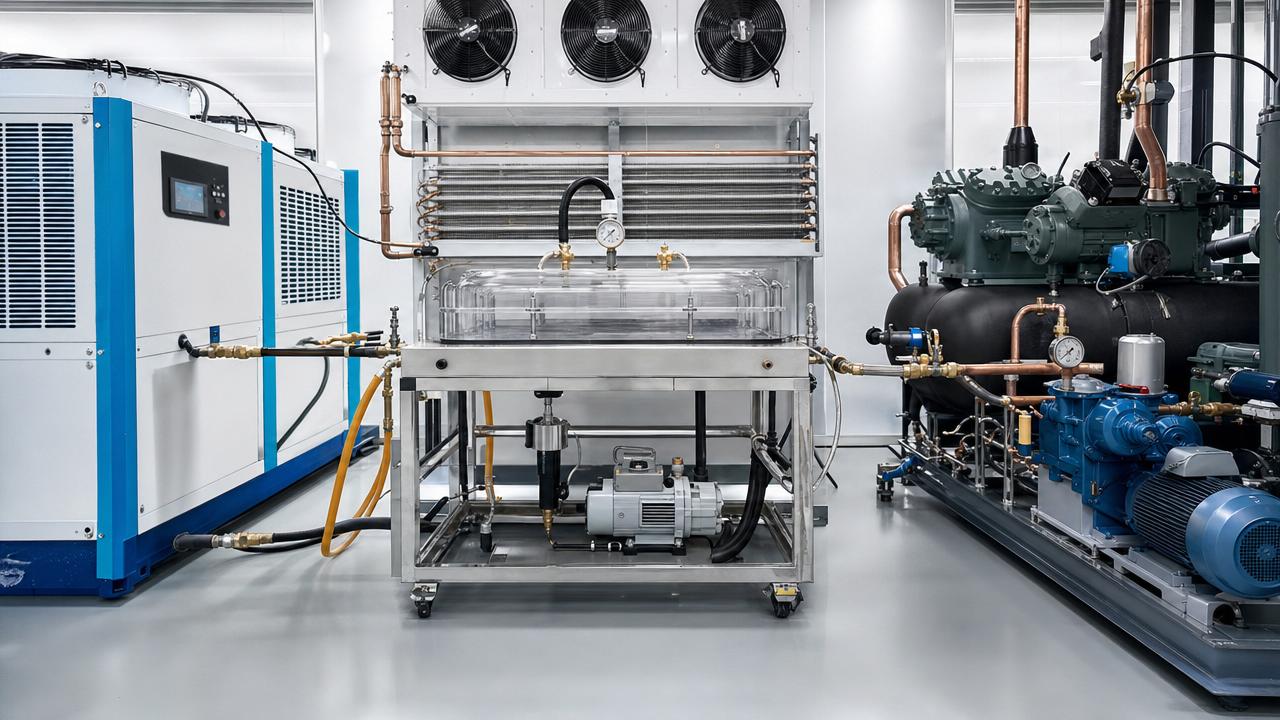
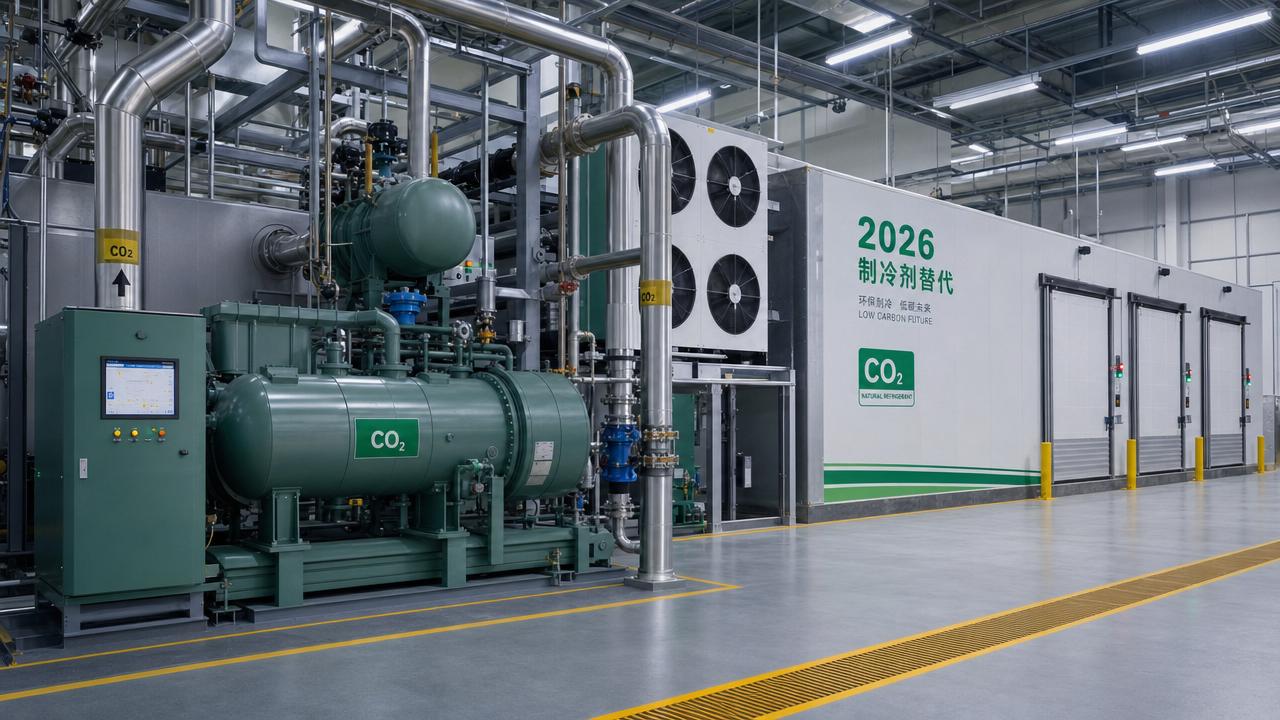
On August 4, 2026, the European Chemicals Agency (ECHA) released a draft amendment to REACH (Ref: ECHA/RAC/2026/12) that would restrict PFAS use in industrial refrigerants, vacuum pump oils, and sealing materials used in high-vacuum systems from October 2027. For exporters serving the EU market, especially those involved in refrigeration equipment linked to R134a and R404A and in liquid ring, screw, and oil-sealed rotary vane vacuum systems, this is not just a regulatory update but a signal that product access, material selection, and compliance documentation may need to be reassessed on a defined timeline.
What the Draft Amendment Explicitly Covers
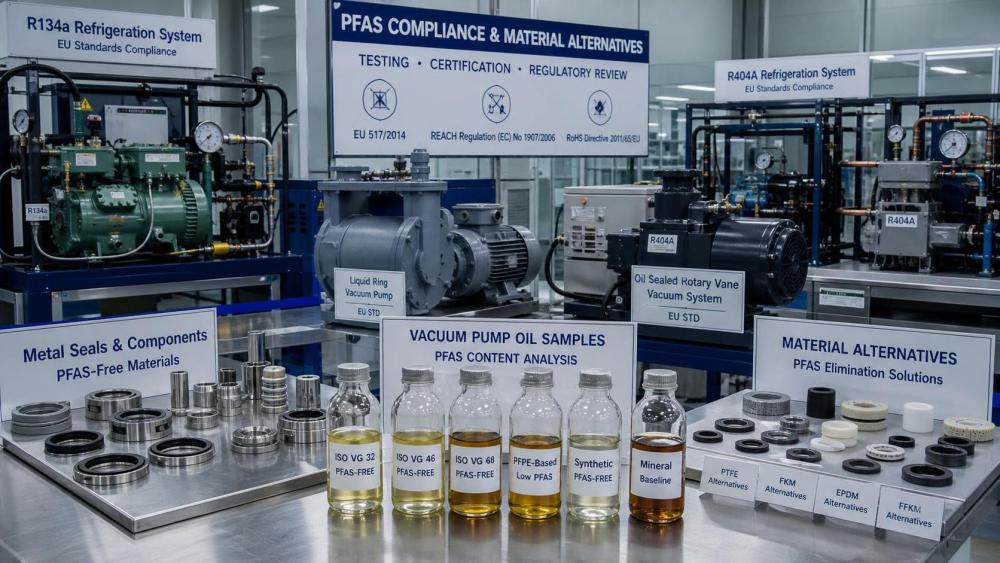
According to the information provided, ECHA formally issued the REACH draft amendment on August 4, 2026. The draft proposes a broad restriction on per- and polyfluoroalkyl substances (PFAS) in three identified areas: industrial refrigerants, vacuum pump oils, and sealing materials used in high-vacuum systems. The proposed effective timing is October 2027.
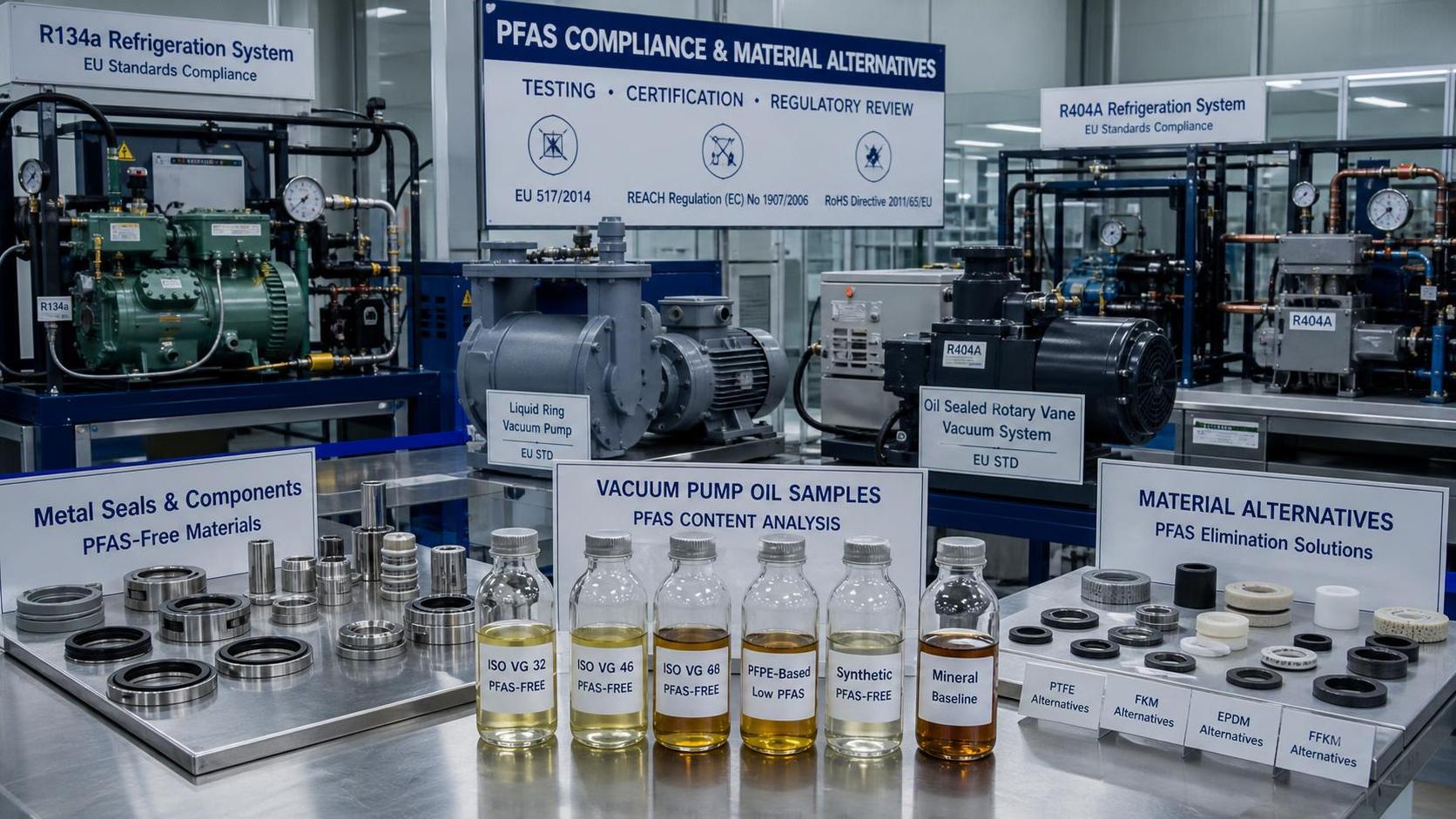
The draft directly affects EU market access for equipment associated with traditional refrigerants such as R134a and R404A, as well as for liquid ring vacuum pumps, screw vacuum units, and oil-sealed rotary vane systems. The provided information also states that Chinese exporters are required to complete substitute validation and updates to SVHC notifications before Q4 2026.
Where the Pressure Is Likely to Appear First
Export-facing equipment suppliers will face immediate compliance screening
From an industry perspective, manufacturers and trading companies shipping refrigeration-related equipment and vacuum systems to the EU are likely to feel the first impact because EU entry conditions are directly referenced in the draft. The main pressure point is likely to be at the product compliance review stage, where material composition, system compatibility, and documentation readiness become central.
Component and materials procurement teams may need earlier upstream checks
Analysis shows that the proposal is not limited to finished equipment. Because the restriction refers to refrigerants, vacuum pump oils, and sealing materials, procurement teams handling inputs for export models may need to pay closer attention to whether existing materials or formulations remain suitable for EU-bound deliveries. The operational impact is likely to appear in supplier confirmation, technical file review, and timing coordination.
Supply chain and delivery functions may need to manage transition timing
Observably, supply chain service providers and order fulfillment teams may also be affected if substitute validation and SVHC notification updates become gating items before shipment or customer acceptance. The practical issue is less about abstract policy interpretation and more about whether transition work can be completed in time for customer schedules tied to the EU market.
EU buyers and project-side users may tighten specification review
For buyers and downstream users in the EU, the proposal may lead to closer scrutiny of the refrigerant-related configuration, pump oil selection, and sealing materials used in imported systems. What deserves closer attention is that specification review may move upstream into quotation, tender, or approval discussions rather than waiting until final delivery.
What Companies Should Track Now
Watch the wording of the official rule as it develops
Because the current item is a draft amendment, companies should distinguish between the confirmed release of the proposal and the final form of the rule. What deserves closer attention is whether later official wording changes the scope, timing, or compliance expectations for the named product areas.
Prioritize the product lines already named in the notice
The most immediate practical focus should be on equipment linked to R134a and R404A, along with liquid ring vacuum pumps, screw vacuum units, and oil-sealed rotary vane systems. These categories are explicitly referenced in the provided information, so they are the clearest starting point for internal compliance review and customer communication.
Align substitute validation with notification updates
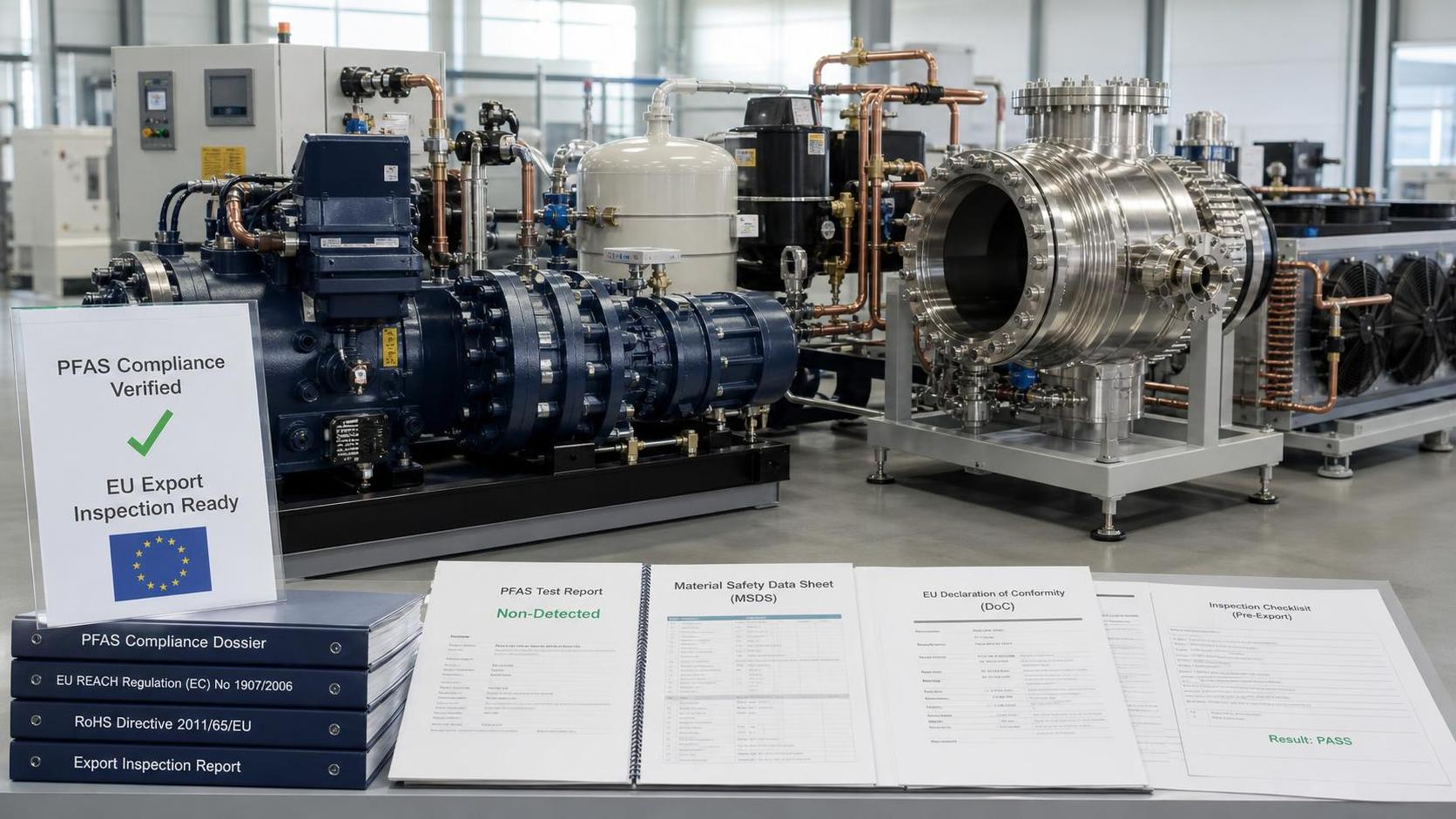
The provided information sets a Q4 2026 deadline for Chinese exporters to complete substitute validation and update SVHC notifications. In practical terms, companies should not treat these as separate tasks. Material substitution without synchronized documentation updates may leave export readiness incomplete, while paperwork alone does not resolve technical compatibility questions.
Prepare for customer and supplier communication around lead time
Analysis shows that one of the most immediate business issues may be timing. Exporters may need to confirm supplier readiness, gather supporting compliance documents, and communicate clearly with EU customers about any validation or filing steps that could affect delivery planning. The issue here is execution discipline rather than broad strategic positioning.
Why This Matters Beyond a Single Draft
Observably, this development is best understood as more than a routine compliance notice but not yet as a fully settled market outcome. It is a concrete policy signal with a stated implementation direction and a near-term preparation window, especially for exporters already active in the affected categories. At the same time, because the information provided refers to a draft amendment, the market still needs to watch how the rule is finalized and applied in practice.
From an industry perspective, the importance of this update lies in how it connects chemical regulation with equipment market access. That linkage means regulatory review is no longer isolated within documentation teams; it may influence design decisions, sourcing choices, and shipment planning for EU-bound products.
How This Update Is Best Interpreted at This Stage
It is more appropriate to understand this development as a clear compliance warning with operational implications rather than as a completed market outcome. The draft already identifies affected substance use areas, names product categories with EU access implications, and sets a preparation expectation for Chinese exporters before Q4 2026. That makes it material for current planning, even though some regulatory details still require continued observation.
A neutral reading is that companies exposed to EU refrigeration and vacuum system exports should move from passive monitoring to structured review, while still keeping final judgments tied to subsequent official clarification.
Basis of This Article and Ongoing Verification
This article is based on the user-provided news title, event date, and event summary concerning the ECHA REACH draft amendment dated August 4, 2026. For developments of this type, relevant source categories typically include official regulatory notices, company compliance disclosures, industry association updates, authoritative media reporting, and standard-setting or technical documentation.
No specific official source link was provided in the input, so the exact official document access path still requires ongoing verification. Continued attention should focus on later official wording, any updates to implementation timing, and any further clarification affecting substitute validation and SVHC notification requirements.
Related News
- EU PFAS Proposal Puts Refrigerant and Vacuum Exports Under ReviewAuthor :Cryogenic Systems Expert

- EU REACH PFAS Draft Raises New Export ChecksAuthor :Cryogenic Systems Expert

- EU Cuts High-GWP Refrigerant Import Quotas by 35%Author :Cryogenic Systems Expert

- EU Cuts Q4 2026 Quotas for High-GWP RefrigerantsAuthor :Cryogenic Systems Expert

- EU F-Gas Revision Cuts R410A Quotas 40%Author :Cryogenic Systems Expert

- EPA Freezes R-410A Quotas, Fast-Tracks R-32Author :Cryogenic Systems Expert

- Low GWP Refrigerants HFO Blends: Key Stability and Safety FactorsAuthor :Cryogenic Systems Expert

- R-32 Price Spike Reshapes Chiller ProcurementAuthor :Cryogenic Systems Expert

- How to Compare Environmentally Friendly Refrigerants by GWP, Safety, and CostAuthor :Cryogenic Systems Expert

- R-454B Export Quota Cut 18% as Lead Times DoubleAuthor :Cryogenic Systems Expert

- Japan Cuts R32 and R290 Import Quotas From July 10Author :Cryogenic Systems Expert

- EPA Cuts R-134a Import Quotas 42% From July 2026Author :Cryogenic Systems Expert
![]()
- Low GWP Refrigerants HFO Blends: Performance and Compliance in 2026Author :Cryogenic Systems Expert

- R-513A Jumps 23% as China Tightens Export QuotasAuthor :Cryogenic Systems Expert

- Environmentally Friendly Refrigerants in 2026: Compliance Risks and Upgrade PrioritiesAuthor :Cryogenic Systems Expert

- Pharmaceutical Temperature Control Systems: Common Compliance RisksAuthor :Cryogenic Systems Expert

- China Tightens Q3 R32 Export QuotasAuthor :Cryogenic Systems Expert

- California EPR Deadline Nears for Refrigeration MakersAuthor :Cryogenic Systems Expert

- Resource Circularity Trends Reshaping Refrigerants and Cooling SystemsAuthor :Cryogenic Systems Expert

- HFCs Filing Rules Enter Full EnforcementAuthor :Cryogenic Systems Expert

- How Environmentally Friendly Refrigerants Affect Chiller ComplianceAuthor :Cryogenic Systems Expert

- EU REACH Tightens Refrigerant Impurity Limits for R134a ExportsAuthor :Cryogenic Systems Expert

- China Seeks Feedback on 2027 Refrigerant QuotasAuthor :Cryogenic Systems Expert

- EU to Ban High-GWP ACs in 2029 as R410A Exits HomesAuthor :Cryogenic Systems Expert

- US, UK Delay HFC Phaseout, Extending R32/R134a Export WindowAuthor :Cryogenic Systems Expert

- EU HFC Cut Tightens by 2029 as Gen-3 Output Falls 10%Author :Cryogenic Systems Expert

- Kuwait Bans HCFC AC Imports as Shift to R32/R290 Speeds UpAuthor :Cryogenic Systems Expert

- Saudi SASO Rules Tighten AC Imports in DecemberAuthor :Cryogenic Systems Expert

- Environmentally Friendly Refrigerants: Compliance, Safety, and Retrofit RisksAuthor :Cryogenic Systems Expert

- SABIC Force Majeure Keeps Chiller Refrigerant Supply TightAuthor :Cryogenic Systems Expert

- SABIC Force Majeure Tightens Refrigerant FeedstocksAuthor :Cryogenic Systems Expert

- UL 60335-2-89 Tightens R290 Leak Test RulesAuthor :Cryogenic Systems Expert
![]()
- UL 60335-2-89 Adds R290 Vacuum Leak TestAuthor :Cryogenic Systems Expert

- Global Refrigerant Price Index Falls 8.3% MoM in MayAuthor :Cryogenic Systems Expert
![]()
- PSA Jurong Island Launches Mandatory Cold-Chain Traceability for RefrigerantsAuthor :Cryogenic Systems Expert
![]()
- 2026 Refrigerants Shift: What Changes for Cold StorageAuthor :Cryogenic Systems Expert