



Industrial Refrigeration Equipment: Cost Factors to Compare




Industrial Refrigeration Equipment: what really drives the cost?
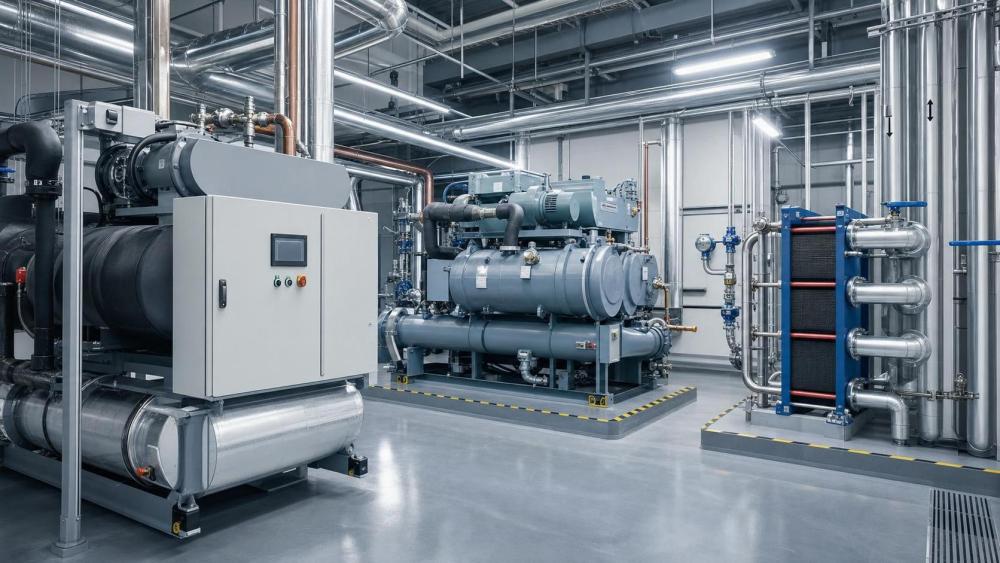
Industrial refrigeration equipment is rarely judged well by sticker price alone.
In real projects, the cheaper unit can become the more expensive asset within two or three operating seasons.
That happens when energy demand, refrigerant rules, service access, and uptime needs were not compared early enough.
For factories, cold storage sites, food lines, chemical processing, and clean manufacturing, cooling performance affects more than utility bills.
It also affects product quality, process stability, audit readiness, and maintenance planning.
A practical comparison starts with total cost, not quoted cost.
That is why industrial intelligence platforms such as GTC-Matrix focus on thermodynamics, compression efficiency, refrigerant policy, and lifecycle economics together.
The useful question is not only “Which system costs less today?” but also “Which industrial refrigeration equipment protects cost control over time?”
Is the purchase price the main number to compare?
Usually, no.
The initial quote matters, but it is only one layer of the decision.
Industrial refrigeration equipment often runs for long hours, under variable ambient conditions, with tight temperature tolerances.
That means operating cost can quickly overtake capital cost.
A lower-priced chiller, condensing unit, or compressor rack may use more electricity, require frequent service, or face earlier compliance pressure.
More useful comparisons usually include these cost buckets:
- Equipment purchase and installation scope
- Power consumption at full and part load
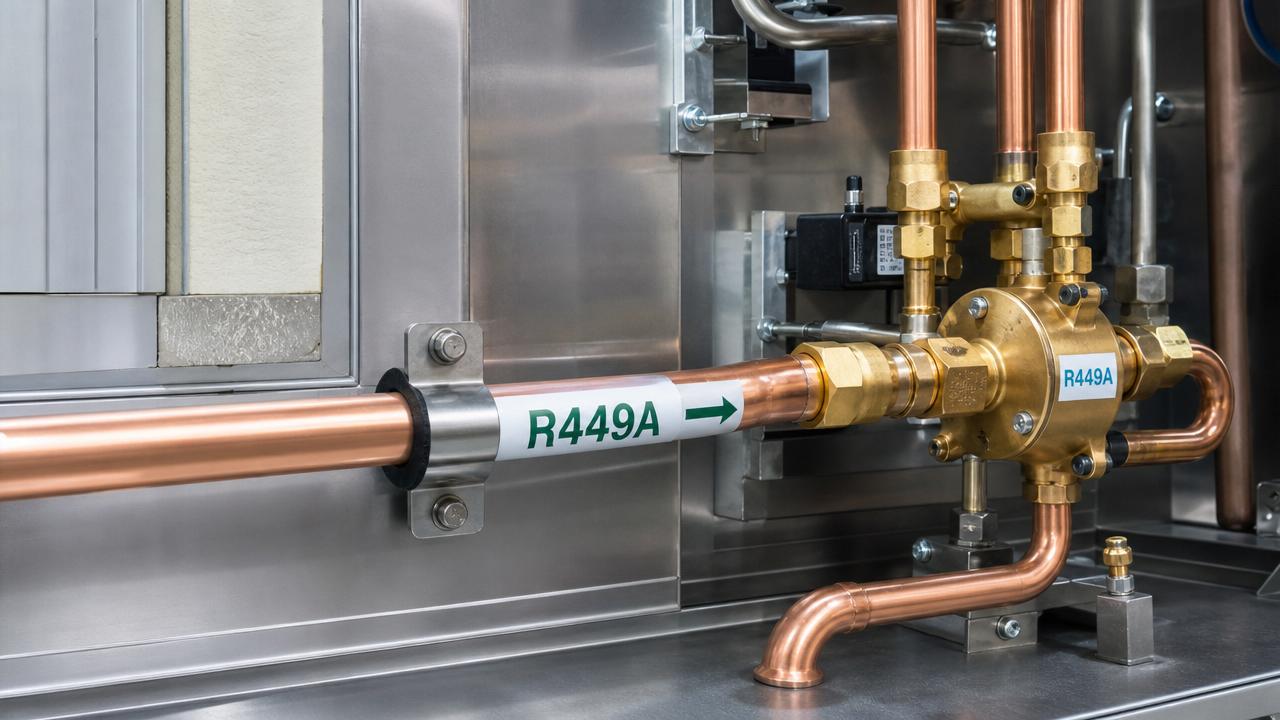
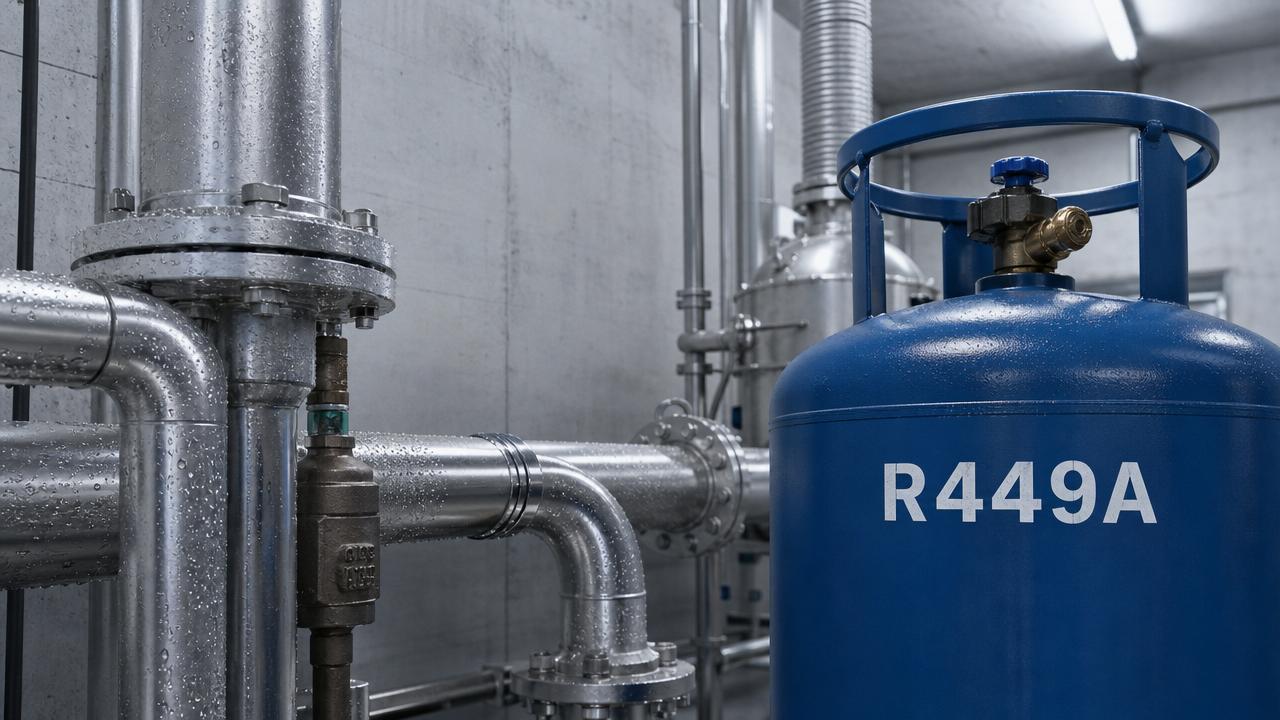
- Refrigerant type, leakage risk, and future quota exposure
- Maintenance intervals and spare parts availability
- Control integration with plant systems
- Expected service life and residual upgrade value
In practice, the better question is whether the equipment keeps cost predictable under real load conditions.
That is where many side-by-side quotes start to separate.
Which cost factors change the economics most over the lifecycle?
Energy is often the largest driver, especially for continuous-duty sites.
Even small efficiency differences can create a large annual gap when the system runs around the clock.
Part-load behavior deserves close attention because many systems rarely stay at nameplate conditions.
Variable-speed compressors, optimized controls, and efficient heat exchangers can lower real operating cost more than headline ratings suggest.
Refrigerant choice is the next major factor.
A system using a refrigerant under tightening environmental pressure may carry future retrofit, reporting, or replacement costs.
This is one reason market watchers follow quota changes and low-GWP transitions so closely.
Maintenance also reshapes total cost.
Industrial refrigeration equipment with difficult component access, specialized parts, or unstable supply support can increase downtime exposure.
The table below helps organize the comparison beyond price.
A balanced review of these items usually reveals the true cost profile of industrial refrigeration equipment.
How should two similar systems be compared when both look technically acceptable?
This is where buying decisions become more analytical.
Two systems may both meet the target temperature and capacity, yet one performs better under plant reality.
A useful method is to compare them against the same operating profile, not just the same datasheet headline.
For example, ask for expected performance during summer peaks, low-load night shifts, and partial line shutdowns.
More detailed comparisons often include:
- Annual energy model based on local tariffs
- Refrigerant compliance horizon over five to ten years
- Mean time between service events
- Critical spare lead times
- Failure impact on production or storage integrity
In actual industrial settings, downtime cost can outweigh an efficiency gain or erase a price advantage.
That is why reliable controls, component redundancy, and service network depth deserve weight in the comparison.
GTC-Matrix often frames this as a connection between thermal performance and business resilience.
That framing is useful because it keeps the decision tied to risk, not just equipment features.
Where do buyers most often misjudge industrial refrigeration equipment costs?
One common mistake is treating nominal capacity as the same as effective delivered capacity.
Performance can change sharply with ambient temperature, suction condition, and load variation.
Another frequent issue is underestimating installation complexity.
Piping layout, electrical upgrades, ventilation, water quality treatment, and control integration can materially change project cost.
There is also a tendency to ignore efficiency degradation.
If coils foul easily or heat exchange surfaces are hard to clean, operating cost rises quietly over time.
The same happens when refrigerant leakage management is weak.
A short checklist can help avoid these blind spots:
- Confirm design conditions match the actual site
- Separate equipment price from installed project cost
- Check efficiency retention, not only day-one efficiency
- Review refrigerant availability and policy direction
- Test service support assumptions before approval
These checks are simple, but they often change the ranking of candidate systems.
Does industry trend data really help with equipment cost decisions?
Yes, especially when the equipment will stay in service for many years.
Industrial refrigeration equipment does not exist in a stable cost environment.
Electricity pricing, refrigerant policy, decarbonization pressure, and component innovation all influence future ownership cost.
That is why sector intelligence matters.
When a platform tracks energy cost movements, oil-free compression trends, microchannel heat exchanger adoption, and environmental refrigerant shifts, it gives context to a purchase decision.
For example, a system with slightly higher capital cost may become easier to justify if it reduces exposure to future refrigerant restrictions.
Likewise, stronger monitoring and data visibility may support better optimization later, not only safer operation today.
In this sense, industrial refrigeration equipment should be evaluated as part of a broader energy conversion and process control strategy.
That perspective fits sectors where thermal stability directly affects yield, hygiene, or audit compliance.
What is the smartest next step before shortlisting a system?
Start by translating the cooling need into a comparison framework.
That means recording load pattern, ambient conditions, temperature tolerance, uptime requirement, utility pricing, and compliance constraints.
Then compare industrial refrigeration equipment against those conditions, not against generic marketing claims.
A strong shortlist usually answers five points clearly:
- What will the system cost to run each year?
- How exposed is it to refrigerant or policy change?
- How easy is it to maintain without long stoppages?
- How stable is performance under partial and peak load?
- What happens if a critical component fails?
If those answers are documented, the choice becomes much clearer.
In the end, the best industrial refrigeration equipment is not simply the least expensive option.
It is the option that balances energy efficiency, compliance durability, serviceability, and process protection over the full lifecycle.
Before moving forward, it is worth building a side-by-side cost model and checking it against current thermal and compression market intelligence.
That extra step often prevents costly revisions later.
Related News
- MPA Opens Fast-Track Cold Chain Inspections in SingaporeAuthor :Cryogenic Systems Expert

- GCC Cold Storage Imports Face GCC-CLIMAT 2026 RuleAuthor :Cryogenic Systems Expert

- Industrial Refrigeration Equipment Evaporator Selection: Capacity, Frost, and Energy TradeoffsAuthor :Cryogenic Systems Expert

- Industrial Refrigeration Equipment: Cost Factors to CompareAuthor :Cryogenic Systems Expert

- Manzhouli Rail Hub Sets Weekly Reefer RecordAuthor :Cryogenic Systems Expert

- Manzhouli Rail Cold-Chain Volume Hits Weekly HighAuthor :Cryogenic Systems Expert

- High-Precision Temperature Control for Stable Cold StorageAuthor :Cryogenic Systems Expert
![]()
- High-Precision Temperature Control in Cold StorageAuthor :Cryogenic Systems Expert

- Japan's METI Mandates AI Energy Models for Cold StorageAuthor :Cryogenic Systems Expert
![]()
- Fruit Attraction Madrid 2026 Booths 91% Booked; Smart Cold Storage Now EU Entry GateAuthor :Cryogenic Systems Expert

- Fruit Attraction Madrid: 90% Booths Booked; Smart Cold Storage Now EU Entry GateAuthor :Cryogenic Systems Expert
![]()
- How Global Energy Costs Are Changing Cold Storage PlanningAuthor :Cryogenic Systems Expert

- High-Precision Temperature Control in Cold StorageAuthor :Cryogenic Systems Expert

- Hema's Discount Brand 'Chao He Suan NB' Expands to Southeast AsiaAuthor :Cryogenic Systems Expert

- State Council Approves Urban Renewal '15th Five-Year' Plan, Boosting Cold Storage Retrofit DemandAuthor :Cryogenic Systems Expert

- Colombia Upholds Anti-Dumping Duties on Chinese Acrylic SheetsAuthor :Cryogenic Systems Expert

- PSA Launches Express Lane for Industrial Thermal EquipmentAuthor :Cryogenic Systems Expert

- Smart Thermal Systems for Cold Storage: Control Gains That Cut Energy WasteAuthor :Cryogenic Systems Expert

- PSA Launches Express Lane for Temperature-Critical CargoAuthor :Cryogenic Systems Expert

- Pure Power Sources: What Matters Most for Cold Storage ReliabilityAuthor :Cryogenic Systems Expert

- Brazil Grants Unilateral Visa-Free Access to Chinese CitizensAuthor :Cryogenic Systems Expert

- India BIS Proposes Mandatory Low-GWP Verification for R449A in Cold StorageAuthor :Cryogenic Systems Expert

- US BIS Adds 3 Cold Storage Controller Makers to Entity ListAuthor :Cryogenic Systems Expert

- High-Precision Temperature Control in Cold Storage OperationsAuthor :Cryogenic Systems Expert

- India BIS Proposes Mandatory Low-GWP Verification for R449A in Cold StorageAuthor :Cryogenic Systems Expert

- US BIS Adds 3 Chinese Cold Storage Controller Makers to Entity ListAuthor :Cryogenic Systems Expert

- China Expands HCFCs Phase-Out Verification for Cold Storage ExportsAuthor :Cryogenic Systems Expert

- Smart Thermal Systems for Cold Storage: What Delivers PaybackAuthor :Cryogenic Systems Expert

- China Expands HCFCs Phase-Out Checks to 127 Chiller PlantsAuthor :Cryogenic Systems Expert

- Shanghai Port Reefer FEU Rates Surge Past $12,800 Amid Red Sea DiversionAuthor :Cryogenic Systems Expert

- Red Sea Crisis Pushes Shanghai-Rotterdam Reefer Freight to $12,520/FEUAuthor :Cryogenic Systems Expert
![]()
- What Intellectualization Means for Smarter Cold Storage OperationsAuthor :Cryogenic Systems Expert