



GCC Cold Storage Imports Face GCC-CLIMAT 2026 Rule




As of November 1, 2026, the launch of the GCC-CLIMAT 2026 certification requirement has moved from a standards announcement into an immediate market-access issue for cold storage equipment entering the six GCC countries. The framework, initiated on July 3, 2026 by GSO together with Saudi Arabia's SASO and the UAE's ESMA, is relevant not only to equipment manufacturers, but also to exporters, procurement teams, compliance staff, and delivery planners because it directly affects whether covered products can be shipped into the region.
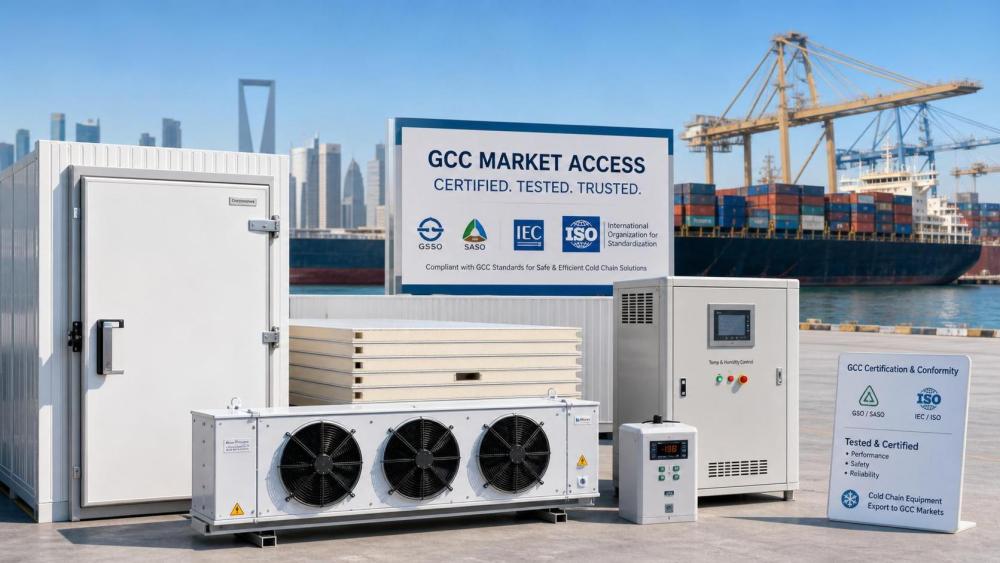
What the new certification requirement covers
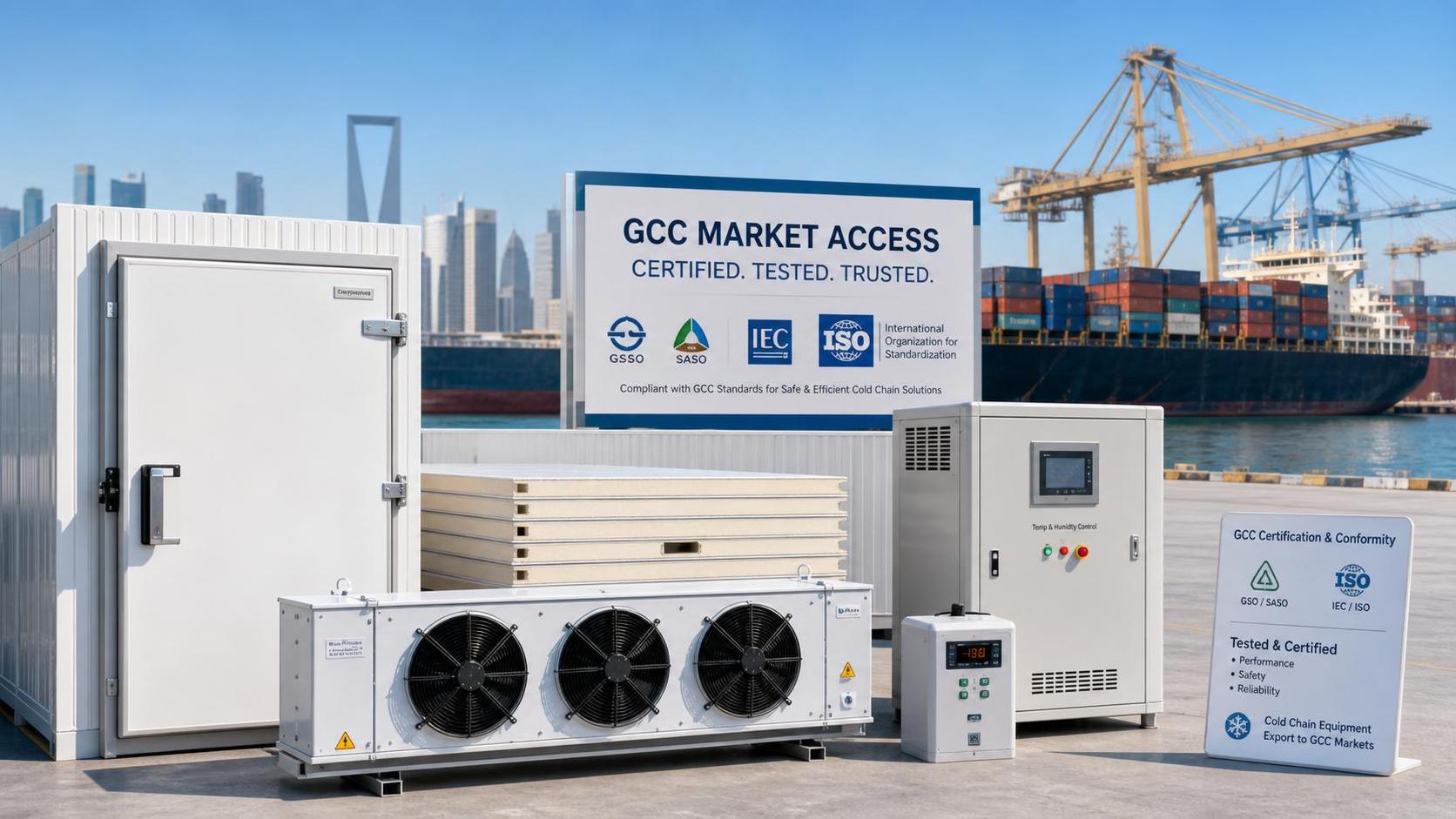
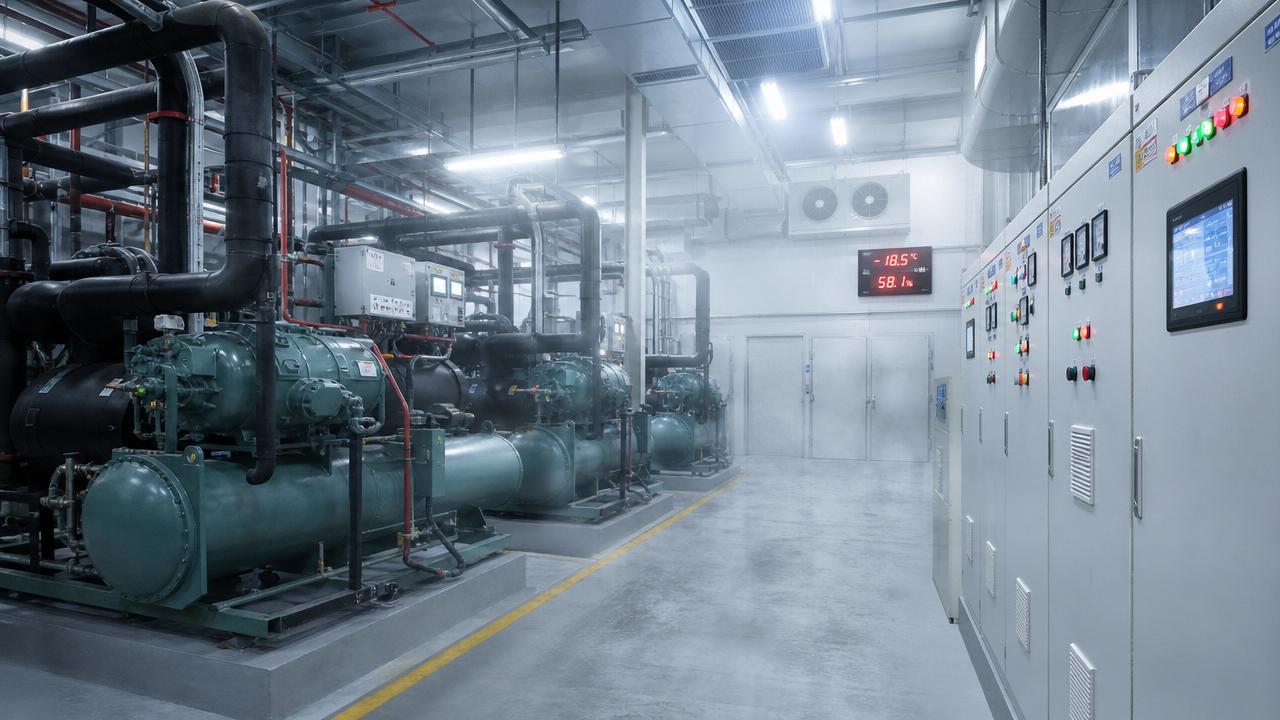
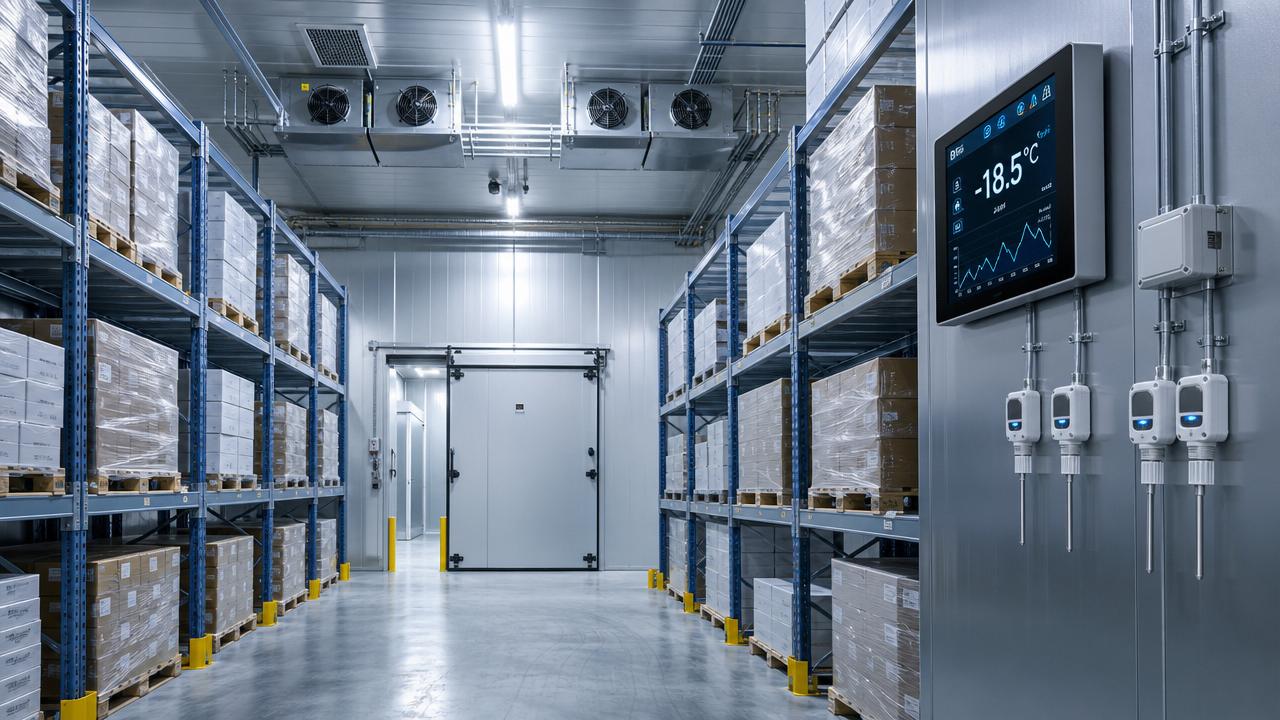
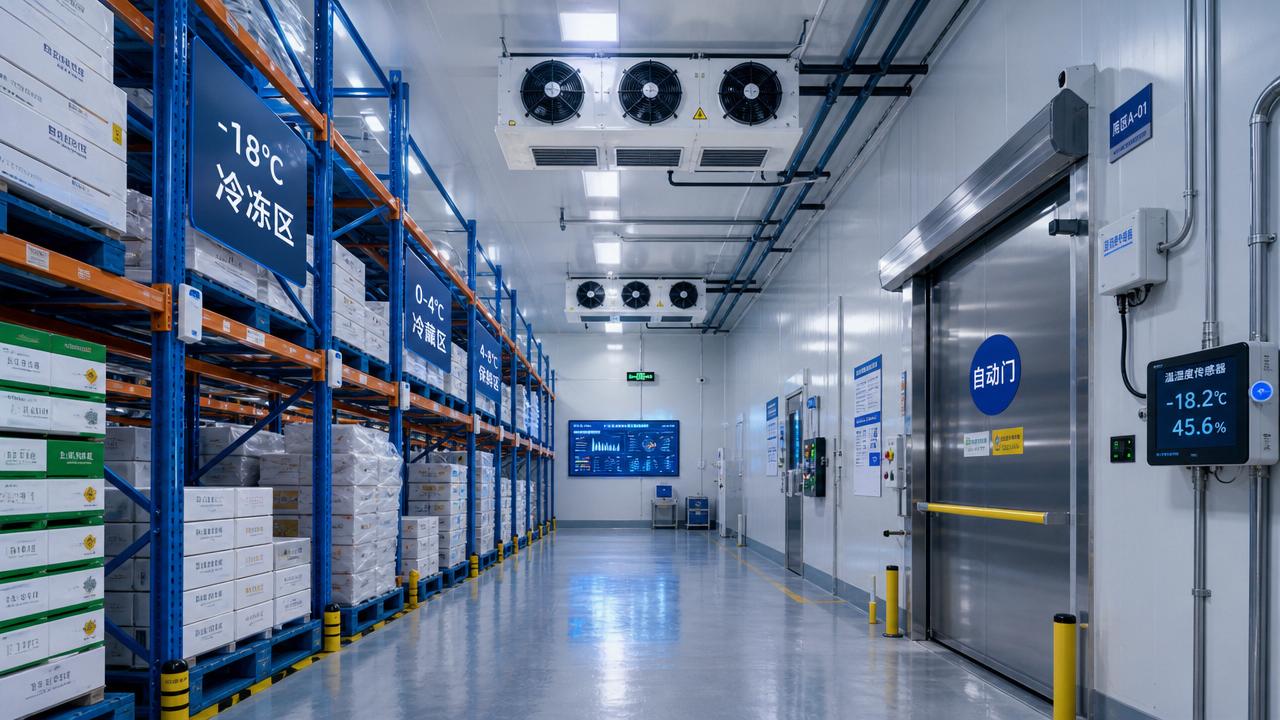
According to the provided information, GCC-CLIMAT 2026 covers cold storage doors, insulated cold room panels, evaporators, and temperature control systems. From November 2026, all cold storage equipment entering the six GCC countries must pass this certification.
The stated technical focus includes low-temperature cyclic sealing performance, with a leakage limit of no more than 0.05 g/year at -40 degrees C, as well as compatibility with dual refrigerants using ammonia and CO2. For Chinese exports of cold storage equipment, test reports must be issued by laboratories authorized by GSO.
Where the pressure is likely to appear in the supply chain
Market-entry risk for equipment exporters
From an industry perspective, exporters of covered cold storage equipment are the first group likely to feel the impact because certification now sits directly between production and customs-facing market access. The practical pressure point is no longer only product performance in a general sense, but whether the shipment is supported by the required certification pathway and documentation.
What deserves closer attention is the timing relationship between product readiness, testing, and export scheduling. For businesses shipping to GCC destinations, any mismatch between delivery commitments and certification completion could affect order execution and customer communication.
Design and validation pressure for manufacturers
Manufacturers of cold room doors, insulated panels, evaporators, and control systems may need to pay closer attention to whether existing designs can satisfy the stated testing focus on sealing performance under low-temperature cycling and ammonia/CO2 compatibility. Analysis shows that the impact is likely to be concentrated in product validation, technical file preparation, and coordination between engineering and compliance functions.
This does not by itself confirm that every current product will require redesign, but it does indicate that compliance can no longer be treated as a secondary export document issue for covered categories.
Procurement and project coordination for buyers and integrators
For procurement teams, distributors, and project-side buyers sourcing cold storage equipment for GCC markets, the issue is likely to extend beyond price and lead time. Observably, supplier selection may now require closer review of whether a vendor can provide certification-backed products and whether reports come from a GSO-authorized laboratory where required.
The affected business steps are likely to include tender review, supplier screening, contract wording, and shipment acceptance planning. The key change to watch is whether certification status becomes a gating condition earlier in the purchasing process.
What companies should check now
Whether the product is inside the covered scope
The first practical question is scope. Companies dealing in cold storage doors, insulated cold room panels, evaporators, or temperature control systems should verify whether the goods they plan to ship into GCC markets fall within the categories named in the certification framework.
Whether test documentation matches the rule
For Chinese exporters in particular, the provided information makes the reporting route explicit: reports must come from laboratories authorized by GSO. That means document review should focus not only on test content, but also on whether the issuing laboratory meets the stated authorization requirement.
Whether technical claims align with the testing focus
The certification emphasis on sealing performance at -40 degrees C and ammonia/CO2 dual-refrigerant compatibility means technical, sales, and compliance teams should check whether current product claims, specifications, and customer-facing materials are consistent with what the certification is actually designed to assess.
Whether delivery plans need a compliance buffer
Analysis shows that companies active in GCC-bound shipments should also examine delivery schedules and internal approval steps. Where certification is now mandatory from November 2026, the difference between a policy announcement and a shippable product may come down to testing completion, report issuance, and document readiness.
Why this looks bigger than a paperwork update
Analysis shows that this development is better understood as a market-access tightening measure than as a routine standards notice. The reason is straightforward: the rule links entry into the GCC market to defined certification, specified technical tests, and, for Chinese exports, a named reporting channel through GSO-authorized laboratories.
At the same time, it is more appropriate to understand this as a concrete near-term compliance change with longer-term signaling value, rather than as a fully measurable market outcome. The confirmed facts establish the rule and its scope, but they do not yet establish how quickly different suppliers will adapt or how enforcement will play out in specific commercial workflows. That remains an area to watch.
How this news is best understood at this stage
At this stage, the most balanced reading is that GCC-CLIMAT 2026 has already created a clear operational threshold for covered cold storage equipment entering the GCC. The immediate significance lies in certification readiness, documentation validity, and product-test alignment. The broader industry significance lies in the signal that technical compliance is becoming more central to cold-chain equipment access in the region.
For companies exposed to GCC trade, this is less a distant policy signal than an active execution issue. Even so, the wider commercial effects should still be assessed cautiously until more implementation details, market responses, and official clarifications are available.
Basis of this report and follow-up points
This article is based on the user-provided news title, event date, and summary information. For this type of development, relevant source categories would typically include official notices, standards body documents, industry association releases, company statements, and reporting by authoritative trade media.
No specific official source link was provided in the input, so the original publication channel and any later interpretive guidance still require ongoing verification. Follow-up attention should remain on any official wording updates, implementation clarifications, laboratory authorization details, and practical documentation expectations for shipments into GCC markets.
Related News
- MPA Opens Fast-Track Cold Chain Inspections in SingaporeAuthor :Cryogenic Systems Expert

- GCC Cold Storage Imports Face GCC-CLIMAT 2026 RuleAuthor :Cryogenic Systems Expert

- Industrial Refrigeration Equipment Evaporator Selection: Capacity, Frost, and Energy TradeoffsAuthor :Cryogenic Systems Expert

- Industrial Refrigeration Equipment: Cost Factors to CompareAuthor :Cryogenic Systems Expert

- Manzhouli Rail Hub Sets Weekly Reefer RecordAuthor :Cryogenic Systems Expert

- Manzhouli Rail Cold-Chain Volume Hits Weekly HighAuthor :Cryogenic Systems Expert

- High-Precision Temperature Control for Stable Cold StorageAuthor :Cryogenic Systems Expert
![]()
- High-Precision Temperature Control in Cold StorageAuthor :Cryogenic Systems Expert

- Japan's METI Mandates AI Energy Models for Cold StorageAuthor :Cryogenic Systems Expert
![]()
- Fruit Attraction Madrid 2026 Booths 91% Booked; Smart Cold Storage Now EU Entry GateAuthor :Cryogenic Systems Expert

- Fruit Attraction Madrid: 90% Booths Booked; Smart Cold Storage Now EU Entry GateAuthor :Cryogenic Systems Expert
![]()
- How Global Energy Costs Are Changing Cold Storage PlanningAuthor :Cryogenic Systems Expert

- High-Precision Temperature Control in Cold StorageAuthor :Cryogenic Systems Expert

- Hema's Discount Brand 'Chao He Suan NB' Expands to Southeast AsiaAuthor :Cryogenic Systems Expert

- State Council Approves Urban Renewal '15th Five-Year' Plan, Boosting Cold Storage Retrofit DemandAuthor :Cryogenic Systems Expert

- Colombia Upholds Anti-Dumping Duties on Chinese Acrylic SheetsAuthor :Cryogenic Systems Expert

- PSA Launches Express Lane for Industrial Thermal EquipmentAuthor :Cryogenic Systems Expert

- Smart Thermal Systems for Cold Storage: Control Gains That Cut Energy WasteAuthor :Cryogenic Systems Expert

- PSA Launches Express Lane for Temperature-Critical CargoAuthor :Cryogenic Systems Expert

- Pure Power Sources: What Matters Most for Cold Storage ReliabilityAuthor :Cryogenic Systems Expert

- Brazil Grants Unilateral Visa-Free Access to Chinese CitizensAuthor :Cryogenic Systems Expert

- India BIS Proposes Mandatory Low-GWP Verification for R449A in Cold StorageAuthor :Cryogenic Systems Expert

- US BIS Adds 3 Cold Storage Controller Makers to Entity ListAuthor :Cryogenic Systems Expert

- High-Precision Temperature Control in Cold Storage OperationsAuthor :Cryogenic Systems Expert

- India BIS Proposes Mandatory Low-GWP Verification for R449A in Cold StorageAuthor :Cryogenic Systems Expert

- US BIS Adds 3 Chinese Cold Storage Controller Makers to Entity ListAuthor :Cryogenic Systems Expert

- China Expands HCFCs Phase-Out Verification for Cold Storage ExportsAuthor :Cryogenic Systems Expert

- Smart Thermal Systems for Cold Storage: What Delivers PaybackAuthor :Cryogenic Systems Expert

- China Expands HCFCs Phase-Out Checks to 127 Chiller PlantsAuthor :Cryogenic Systems Expert

- Shanghai Port Reefer FEU Rates Surge Past $12,800 Amid Red Sea DiversionAuthor :Cryogenic Systems Expert

- Red Sea Crisis Pushes Shanghai-Rotterdam Reefer Freight to $12,520/FEUAuthor :Cryogenic Systems Expert
![]()
- What Intellectualization Means for Smarter Cold Storage OperationsAuthor :Cryogenic Systems Expert