China Expands HCFCs Phase-Out Checks to 127 Chiller Plants




On May 7, 2026, China’s Ministry of Ecology and Environment (MEE) expanded its on-site verification program for hydrochlorofluorocarbon (HCFC) phase-out compliance—now covering 127 industrial chiller and modular cold storage system manufacturers. The move signals tightening regulatory enforcement ahead of China’s binding commitments under the Montreal Protocol and its national HCFC phase-out schedule, directly impacting exporters, component suppliers, and system integrators in the refrigeration value chain.
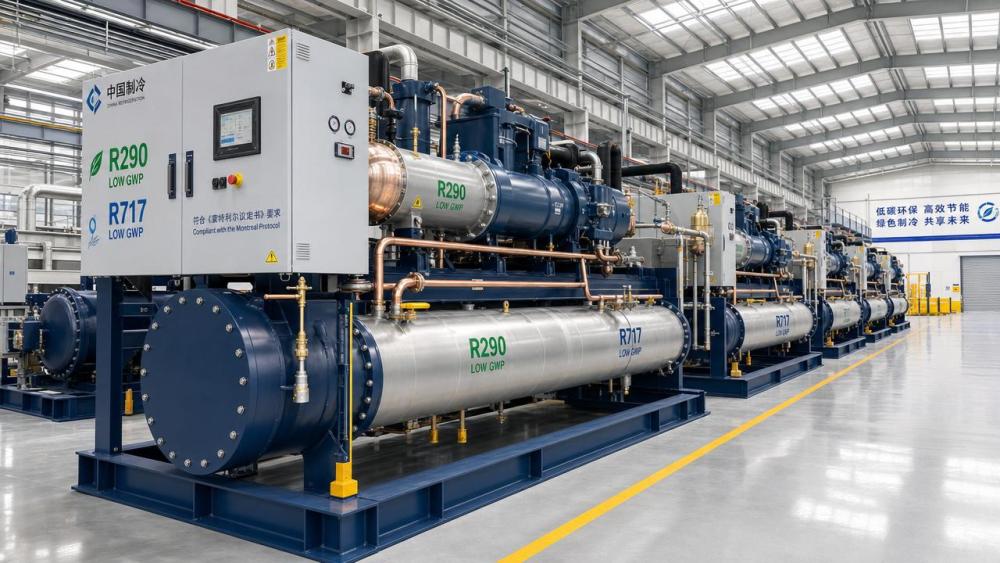
Event Overview
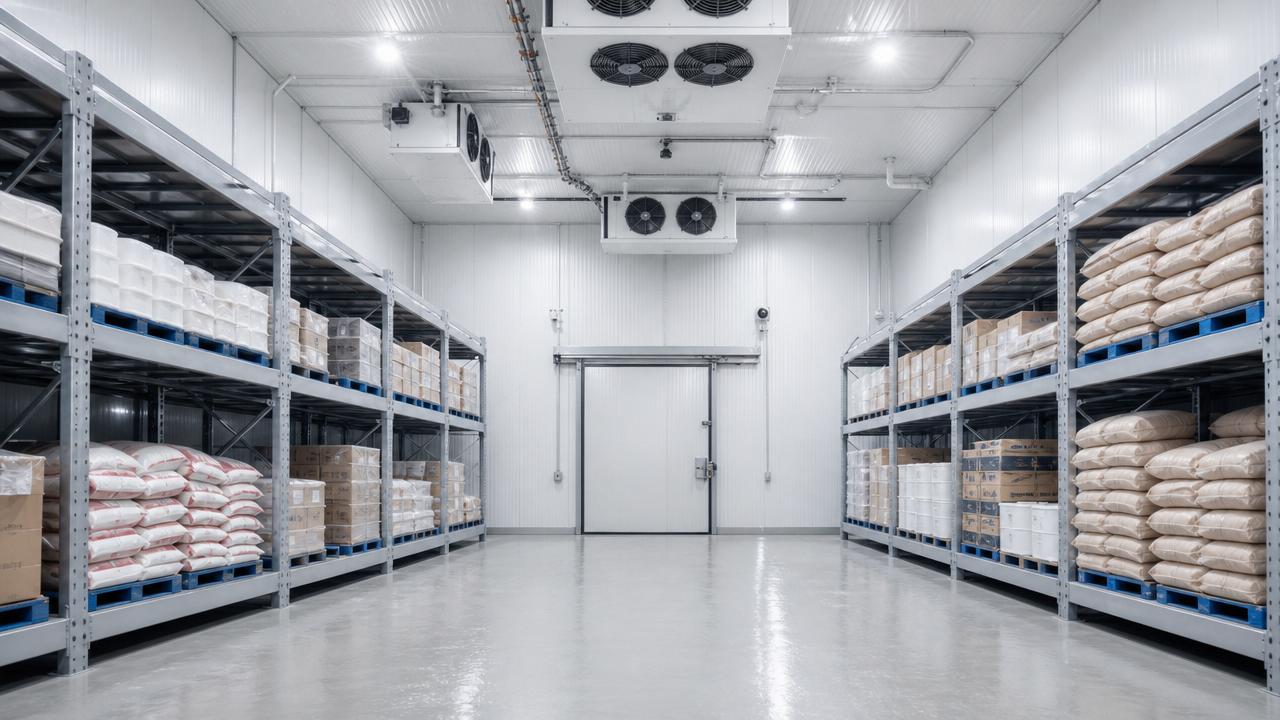
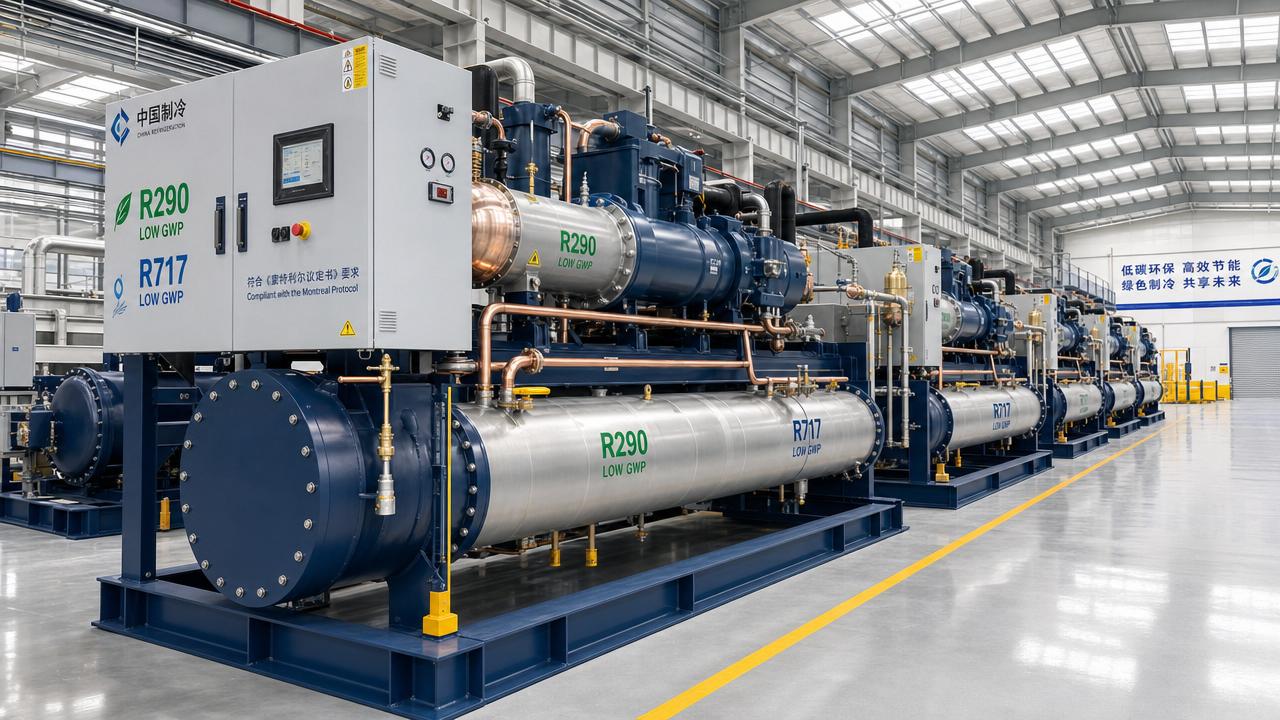
Following the launch of the first round of inspections in April, the MEE announced on May 7, 2026, a second batch of on-site verification targets—including 63 additional manufacturers of industrial water chillers and modular cold storage systems. All listed enterprises must submit, within 30 days, technical documentation covering their transition to low-GWP alternatives (specifically R290 and R717), safety risk assessments, and progress toward international certifications (e.g., UL 60335-2-40, IEC 60335-2-89). Concurrently, overseas procurement tenders for cold storage projects increasingly require submission of an approved alternative technology white paper as a mandatory compliance document.
Industries Affected
Direct Exporters
Export-oriented chiller and cold room system vendors face immediate tender eligibility risks: failure to provide the MEE-aligned white paper—or delays in certification alignment—may result in disqualification from public or private infrastructure bids in the EU, ASEAN, and Middle East markets, where sustainability clauses are now standard in refrigeration-related procurement.
Raw Material Suppliers
Suppliers of refrigerants, copper tubing, pressure vessels, and safety components must adapt rapidly—not only to shifting formulation requirements (e.g., higher purity R290, ammonia-compatible gaskets), but also to tighter traceability expectations. MEE’s verification includes supply chain mapping; thus, upstream vendors may be asked to validate material origins and process controls under third-party audit conditions.
Equipment Manufacturers
Chiller and cold storage OEMs are now required to restructure internal technical workflows: integrating safety engineering early in design (e.g., leak detection architecture, ventilation redundancy), documenting hazard analysis (HAZOP/FMEA), and aligning testing protocols with both domestic verification criteria and export-market standards—without standardized templates or transitional grace periods.
Supply Chain Service Providers
Certification consultants, testing labs, and logistics firms supporting cold chain exports must scale capacity in specialized domains—particularly ammonia (R717) system safety training, flammability risk modeling for R290 installations, and bilingual technical documentation review. Demand for ISO/IEC 17065-accredited conformity assessment services has risen sharply since the April rollout.
Key Focus Areas and Recommended Actions
Prioritize White Paper Development with Export Alignment
Enterprises should treat the MEE-required alternative technology white paper not as a standalone compliance report, but as a dual-purpose technical dossier—structured to satisfy both domestic verification and common international tender requirements (e.g., referencing EN 378, ASHRAE Standard 15, and local fire codes).
Conduct Internal Gap Assessment Against Safety Standards
Manufacturers must map current product designs and facility practices against R290/R717-specific safety benchmarks—including charge size limits, ventilation rates, ignition source control, and emergency response protocols—before submitting risk assessments to avoid revision cycles during MEE review.
Engage Certification Bodies Early—Not Just for Final Audit
Rather than waiting until documentation is complete, companies should initiate pre-audit consultations with accredited bodies (e.g., TÜV Rheinland, SGS, CCIC) to co-develop test plans, interpret regional equivalency pathways, and anticipate documentation bottlenecks—especially for ammonia-based systems requiring operator competency verification.
Editorial Perspective / Industry Observation
Observably, this expansion reflects a strategic pivot: the MEE is no longer treating HCFC phase-out as a chemical management issue alone, but as a systemic industrial upgrading lever—linking climate goals with manufacturing quality, export competitiveness, and occupational safety reform. Analysis shows that the 30-day submission window is intentionally tight, likely intended to accelerate adoption rather than accommodate incremental change. From an industry perspective, the emphasis on white papers—rather than just equipment-level certification—suggests a shift toward lifecycle accountability, where system integrators bear responsibility for end-use safety, not just component compliance. Current more critical concern lies less in technical feasibility and more in cross-functional coordination: engineering, regulatory affairs, and sales teams must operate from a shared technical baseline—a capability still uneven across mid-sized manufacturers.
Conclusion
This regulatory escalation does not merely tighten compliance—it reframes competitiveness in the global cold chain sector. Success will hinge less on substituting one refrigerant for another, and more on embedding safety-by-design, transparency-by-documentation, and agility-by-process into core operations. A rational interpretation is that the policy serves as both a deadline and a catalyst: those who treat it as the former may struggle; those who treat it as the latter may gain first-mover advantage in high-integrity export markets.
Source Attribution
Official notices published by the Ministry of Ecology and Environment (MEE) of the People’s Republic of China, dated April 2026 (first batch) and May 7, 2026 (second batch); Montreal Protocol Multilateral Fund Implementation Reports (2025–2026); UN Environment Programme Ozone Secretariat Technical Background Document No. UNEP/OzL.Pro/ImpCom/100/INF/3. Continued monitoring is advised for upcoming MEE guidance on third-party verification protocols and harmonized white paper templates—currently pending publication.
Related News
- MPA Opens Fast-Track Cold Chain Inspections in SingaporeAuthor :Cryogenic Systems Expert

- GCC Cold Storage Imports Face GCC-CLIMAT 2026 RuleAuthor :Cryogenic Systems Expert

- Industrial Refrigeration Equipment Evaporator Selection: Capacity, Frost, and Energy TradeoffsAuthor :Cryogenic Systems Expert

- Industrial Refrigeration Equipment: Cost Factors to CompareAuthor :Cryogenic Systems Expert

- Manzhouli Rail Hub Sets Weekly Reefer RecordAuthor :Cryogenic Systems Expert

- Manzhouli Rail Cold-Chain Volume Hits Weekly HighAuthor :Cryogenic Systems Expert

- High-Precision Temperature Control for Stable Cold StorageAuthor :Cryogenic Systems Expert
![]()
- High-Precision Temperature Control in Cold StorageAuthor :Cryogenic Systems Expert

- Japan's METI Mandates AI Energy Models for Cold StorageAuthor :Cryogenic Systems Expert
![]()
- Fruit Attraction Madrid 2026 Booths 91% Booked; Smart Cold Storage Now EU Entry GateAuthor :Cryogenic Systems Expert

- Fruit Attraction Madrid: 90% Booths Booked; Smart Cold Storage Now EU Entry GateAuthor :Cryogenic Systems Expert
![]()
- How Global Energy Costs Are Changing Cold Storage PlanningAuthor :Cryogenic Systems Expert

- High-Precision Temperature Control in Cold StorageAuthor :Cryogenic Systems Expert

- Hema's Discount Brand 'Chao He Suan NB' Expands to Southeast AsiaAuthor :Cryogenic Systems Expert

- State Council Approves Urban Renewal '15th Five-Year' Plan, Boosting Cold Storage Retrofit DemandAuthor :Cryogenic Systems Expert

- Colombia Upholds Anti-Dumping Duties on Chinese Acrylic SheetsAuthor :Cryogenic Systems Expert

- PSA Launches Express Lane for Industrial Thermal EquipmentAuthor :Cryogenic Systems Expert

- Smart Thermal Systems for Cold Storage: Control Gains That Cut Energy WasteAuthor :Cryogenic Systems Expert

- PSA Launches Express Lane for Temperature-Critical CargoAuthor :Cryogenic Systems Expert

- Pure Power Sources: What Matters Most for Cold Storage ReliabilityAuthor :Cryogenic Systems Expert

- Brazil Grants Unilateral Visa-Free Access to Chinese CitizensAuthor :Cryogenic Systems Expert

- India BIS Proposes Mandatory Low-GWP Verification for R449A in Cold StorageAuthor :Cryogenic Systems Expert

- US BIS Adds 3 Cold Storage Controller Makers to Entity ListAuthor :Cryogenic Systems Expert

- High-Precision Temperature Control in Cold Storage OperationsAuthor :Cryogenic Systems Expert

- India BIS Proposes Mandatory Low-GWP Verification for R449A in Cold StorageAuthor :Cryogenic Systems Expert

- US BIS Adds 3 Chinese Cold Storage Controller Makers to Entity ListAuthor :Cryogenic Systems Expert

- China Expands HCFCs Phase-Out Verification for Cold Storage ExportsAuthor :Cryogenic Systems Expert

- Smart Thermal Systems for Cold Storage: What Delivers PaybackAuthor :Cryogenic Systems Expert

- China Expands HCFCs Phase-Out Checks to 127 Chiller PlantsAuthor :Cryogenic Systems Expert

- Shanghai Port Reefer FEU Rates Surge Past $12,800 Amid Red Sea DiversionAuthor :Cryogenic Systems Expert

- Red Sea Crisis Pushes Shanghai-Rotterdam Reefer Freight to $12,520/FEUAuthor :Cryogenic Systems Expert
![]()
- What Intellectualization Means for Smarter Cold Storage OperationsAuthor :Cryogenic Systems Expert