India BIS Proposes Mandatory Low-GWP Verification for R449A in Cold Storage




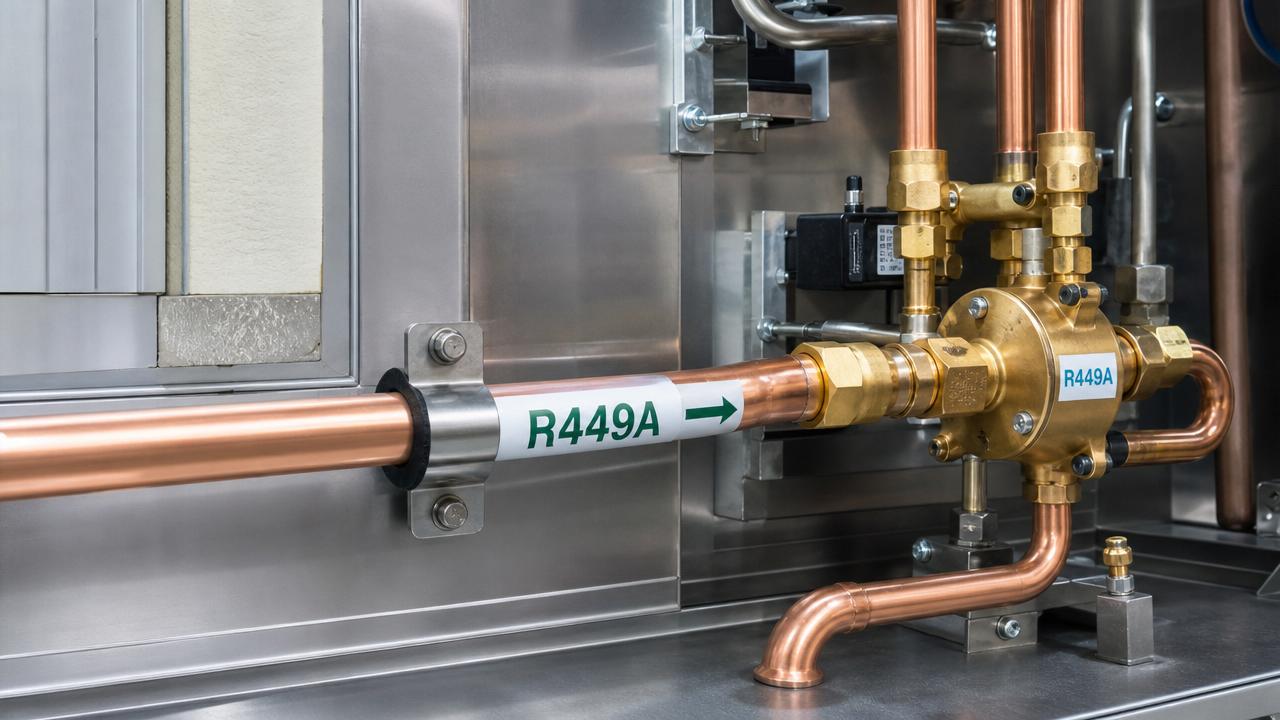
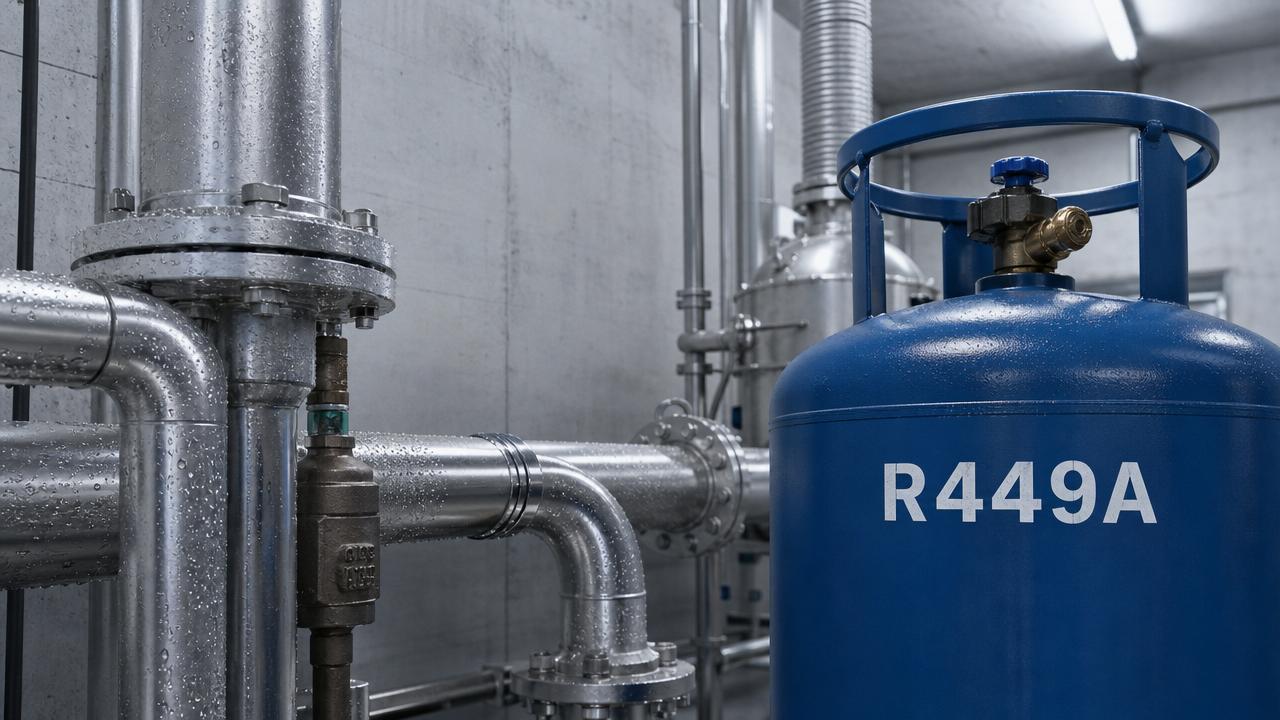
On May 7, 2026, the Bureau of Indian Standards (BIS) released the draft standard Draft IS 17925:2026, proposing mandatory low-global-warming-potential (GWP) verification for R449A refrigerant used in cold storage applications. Effective from April 1, 2026 (draft public consultation period), the proposal requires R449A to demonstrate a GWP value ≤140 — aligning closely with its measured value of 139.7±0.5 — and mandates batch-specific test reports issued by BIS-recognized laboratories. Exporters and manufacturers supplying R449A for cold storage systems in India — particularly Chinese refrigerant filling plants and chilled equipment OEMs — should closely monitor this development.
Event Overview
On May 7, 2026, the Bureau of Indian Standards (BIS) published Draft IS 17925:2026 for public comment. The draft proposes mandatory low-GWP verification for R449A refrigerant intended for cold storage applications in India. It specifies a maximum allowable GWP of 140 and requires certified laboratory test reports — issued by BIS-accredited facilities — for each production batch. The draft is currently in its public consultation phase, with implementation anticipated in Q4 2026.
Industries Affected
Refrigerant Filling & Blending Manufacturers (e.g., Chinese R449A Producers)
These enterprises supply bulk or pre-charged R449A to Indian cold chain infrastructure projects and OEMs. Under the draft, they must obtain batch-level GWP verification from BIS-recognized labs — a new compliance step not previously required for R449A in India. Impact includes added testing cost, documentation burden, and potential delays in customs clearance or project commissioning if reports are missing or non-compliant.
Cold Storage Equipment OEMs & System Integrators
OEMs exporting packaged cold storage units or chillers pre-charged with R449A to India may face certification linkage requirements. While the draft targets the refrigerant itself, downstream equipment approvals could require evidence of compliant refrigerant sourcing. This introduces traceability obligations across the refrigerant supply chain — from filling plant to final equipment installation.
Export Trading & Compliance Service Providers
Firms facilitating refrigerant exports to India — including customs brokers, regulatory consultants, and lab coordination services — will need to verify whether their current service scope covers BIS-recognized GWP testing and report issuance. Absent such capability, clients risk shipment rejection or market access suspension post-implementation.
What Enterprises and Practitioners Should Monitor and Do Now
Track official updates on BIS’s recognition list for testing laboratories
The draft mandates use of BIS-recognized labs — but no such list has been published yet. Enterprises should monitor BIS’s official portal and notifications for the formal accreditation framework and eligible laboratories, especially those offering GWP measurement per ISO 16789 or equivalent methods.
Verify existing R449A product specifications against the ≤140 GWP threshold
Although R449A’s typical measured GWP is 139.7±0.5, batch variability and analytical uncertainty must be confirmed. Manufacturers should review historical test data and assess whether their quality control protocols ensure consistent sub-140 results — and whether retesting under BIS-specified methodology is needed.
Prepare documentation workflows for batch-level traceability
The requirement applies per production batch, not per product line or annual volume. Companies should evaluate current labeling, batch coding, and certificate-of-analysis systems to ensure alignment with BIS reporting expectations — including language, format, and signature requirements for lab reports.
Assess timing implications for Q4 2026 implementation
With enforcement expected in Q4 2026, lead times for lab accreditation, report generation, and import documentation processing must be factored into Q3 2026 planning. Early engagement with Indian import partners and local compliance agents is advisable to identify procedural bottlenecks before rollout.
Editorial Observation / Industry Perspective
Observably, this draft signals India’s accelerating alignment with global low-GWP refrigerant policy trends — notably those advanced under the Kigali Amendment — but focused narrowly on a high-impact application segment: cold storage. Analysis shows it is not a blanket refrigerant phaseout, nor does it mandate substitution; rather, it introduces verification as a gatekeeping mechanism for one specific HFC blend in one sector. From an industry standpoint, this is best understood as an early-stage regulatory signal — not yet an operational constraint — where compliance readiness hinges less on reformulation and more on traceability infrastructure and lab coordination. Continued attention is warranted because BIS may extend similar verification to other refrigerants (e.g., R452A, R513A) or sectors (e.g., transport refrigeration) following this precedent.
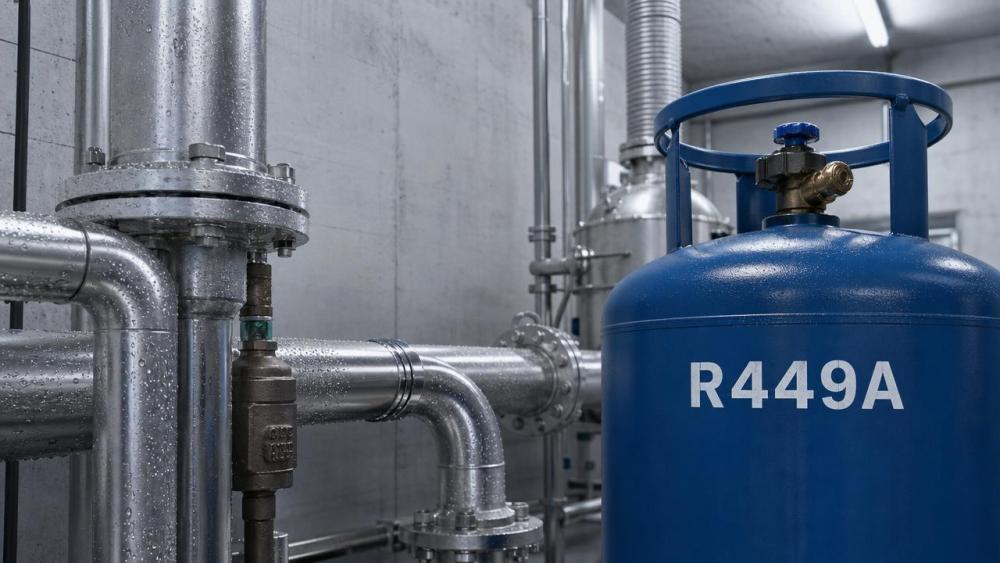
India’s move reflects growing emphasis on verifiable environmental performance at the point of import — a trend increasingly visible in emerging markets. For exporters, the immediate implication is not technical infeasibility, but procedural adaptation: ensuring that GWP verification becomes embedded in standard export documentation, not treated as an ad hoc add-on.
Conclusion
This draft standard represents a targeted, verification-based regulatory step — not a technology ban or market exclusion measure. Its significance lies in establishing a precedent for enforceable GWP claims in India’s cold chain sector. Currently, it is more accurately understood as a compliance preparation trigger than an immediate barrier. Enterprises should treat it as a signal to audit existing refrigerant documentation practices, engage proactively with accredited testing pathways, and avoid conflating policy intent with broader phaseout timelines.
Source Attribution
Main source: Bureau of Indian Standards (BIS), Draft IS 17925:2026, published May 7, 2026 (public consultation period opened April 1, 2026).
Points requiring ongoing observation: BIS’s official list of recognized laboratories; final version of IS 17925 (including effective date and transitional provisions); potential expansion to other refrigerants or end uses.
Related News
- How to Size a Blast Freezer for Industrial Refrigeration Capacity and Pull-Down TimeAuthor :Cryogenic Systems Expert

- MPA Opens Fast-Track Cold Chain Inspections in SingaporeAuthor :Cryogenic Systems Expert

- GCC Cold Storage Imports Face GCC-CLIMAT 2026 RuleAuthor :Cryogenic Systems Expert

- Industrial Refrigeration Equipment Evaporator Selection: Capacity, Frost, and Energy TradeoffsAuthor :Cryogenic Systems Expert

- Industrial Refrigeration Equipment: Cost Factors to CompareAuthor :Cryogenic Systems Expert

- Manzhouli Rail Hub Sets Weekly Reefer RecordAuthor :Cryogenic Systems Expert

- Manzhouli Rail Cold-Chain Volume Hits Weekly HighAuthor :Cryogenic Systems Expert

- High-Precision Temperature Control for Stable Cold StorageAuthor :Cryogenic Systems Expert
![]()
- High-Precision Temperature Control in Cold StorageAuthor :Cryogenic Systems Expert

- Japan's METI Mandates AI Energy Models for Cold StorageAuthor :Cryogenic Systems Expert
![]()
- Fruit Attraction Madrid 2026 Booths 91% Booked; Smart Cold Storage Now EU Entry GateAuthor :Cryogenic Systems Expert

- Fruit Attraction Madrid: 90% Booths Booked; Smart Cold Storage Now EU Entry GateAuthor :Cryogenic Systems Expert
![]()
- How Global Energy Costs Are Changing Cold Storage PlanningAuthor :Cryogenic Systems Expert

- High-Precision Temperature Control in Cold StorageAuthor :Cryogenic Systems Expert

- Hema's Discount Brand 'Chao He Suan NB' Expands to Southeast AsiaAuthor :Cryogenic Systems Expert

- State Council Approves Urban Renewal '15th Five-Year' Plan, Boosting Cold Storage Retrofit DemandAuthor :Cryogenic Systems Expert

- Colombia Upholds Anti-Dumping Duties on Chinese Acrylic SheetsAuthor :Cryogenic Systems Expert

- PSA Launches Express Lane for Industrial Thermal EquipmentAuthor :Cryogenic Systems Expert

- Smart Thermal Systems for Cold Storage: Control Gains That Cut Energy WasteAuthor :Cryogenic Systems Expert

- PSA Launches Express Lane for Temperature-Critical CargoAuthor :Cryogenic Systems Expert

- Pure Power Sources: What Matters Most for Cold Storage ReliabilityAuthor :Cryogenic Systems Expert

- Brazil Grants Unilateral Visa-Free Access to Chinese CitizensAuthor :Cryogenic Systems Expert

- India BIS Proposes Mandatory Low-GWP Verification for R449A in Cold StorageAuthor :Cryogenic Systems Expert

- US BIS Adds 3 Cold Storage Controller Makers to Entity ListAuthor :Cryogenic Systems Expert

- High-Precision Temperature Control in Cold Storage OperationsAuthor :Cryogenic Systems Expert

- India BIS Proposes Mandatory Low-GWP Verification for R449A in Cold StorageAuthor :Cryogenic Systems Expert

- US BIS Adds 3 Chinese Cold Storage Controller Makers to Entity ListAuthor :Cryogenic Systems Expert

- China Expands HCFCs Phase-Out Verification for Cold Storage ExportsAuthor :Cryogenic Systems Expert

- Smart Thermal Systems for Cold Storage: What Delivers PaybackAuthor :Cryogenic Systems Expert

- China Expands HCFCs Phase-Out Checks to 127 Chiller PlantsAuthor :Cryogenic Systems Expert

- Shanghai Port Reefer FEU Rates Surge Past $12,800 Amid Red Sea DiversionAuthor :Cryogenic Systems Expert

- Red Sea Crisis Pushes Shanghai-Rotterdam Reefer Freight to $12,520/FEUAuthor :Cryogenic Systems Expert
![]()
- What Intellectualization Means for Smarter Cold Storage OperationsAuthor :Cryogenic Systems Expert