Compressed Air Efficiency Gains That Actually Lower Utility Bills




For financial decision-makers, compressed air efficiency is no longer just an engineering metric—it is a direct lever for lowering utility bills, improving asset performance, and reducing operating risk. In energy-intensive operations, even small efficiency gains in compressed air systems can unlock measurable cost savings, making smarter upgrades and data-backed optimization strategies essential to stronger budget control and long-term profitability.
In many plants, compressed air accounts for 10% to 30% of total electricity use, yet it often receives less financial scrutiny than HVAC, production lines, or boilers. That gap creates opportunity. When finance leaders understand where compressed air efficiency losses occur, they can approve targeted upgrades with clearer payback periods, lower lifecycle costs, and stronger resilience against rising energy tariffs.
For organizations tracking industrial cooling, vacuum, heat exchange, and pneumatic power systems, the issue is not whether to improve performance, but which actions produce the fastest and most durable utility savings. That is where disciplined evaluation, cross-functional data, and a platform such as GTC-Matrix can support more confident investment decisions.
Where Utility Bills Rise in Compressed Air Systems
Most utility waste in compressed air systems comes from 4 familiar sources: leaks, excessive pressure, poor control strategy, and avoidable thermal losses. For finance teams, the important point is that these losses compound. A system running 1 bar higher than necessary can increase energy consumption by roughly 6% to 8%, while leaks in older networks can waste 20% to 30% of generated air before it reaches production.
The Hidden Cost Drivers Finance Teams Should Track
A compressor does not consume cost only when it runs at full load. It also creates expense during unload cycles, pressure drops across filters and dryers, and maintenance delays that force inefficient operating modes. In facilities with 2 to 5 compressors, poor sequencing alone can add thousands in annual electricity costs, especially during partial-load operation or seasonal demand swings.
Common indicators of low compressed air efficiency
- Leak rates above 10% of total output during non-production hours
- System pressure set above actual process need by 0.5 to 1.5 bar
- Pressure drop across treatment equipment exceeding 0.3 bar
- Compressors operating below 50% load for long periods
- High dryer purge losses or untreated heat recovery opportunities
The table below helps translate technical losses into financial review points. It is useful during capex screening, quarterly energy audits, and supplier comparisons.
For budget owners, these figures show why compressed air efficiency should be assessed as a utility cost program, not only as a maintenance issue. The fastest savings often come from correcting system behavior before replacing equipment.
Efficiency Improvements That Commonly Deliver Measurable Payback
Not every upgrade requires a major capital project. Many facilities achieve meaningful savings through a phased plan over 30, 60, or 90 days. A practical sequence starts with leak detection, then pressure optimization, then controls, and finally equipment modernization if the baseline still underperforms.
High-priority actions for lower utility bills
- Repair leaks found during off-shift audits, especially at couplings, valves, and legacy branch lines.
- Reduce system pressure in steps of 0.1 to 0.2 bar while validating production stability.
- Install or retune master controls for multi-compressor sequencing.
- Review dryer, filter, and piping pressure drop every 3 to 6 months.
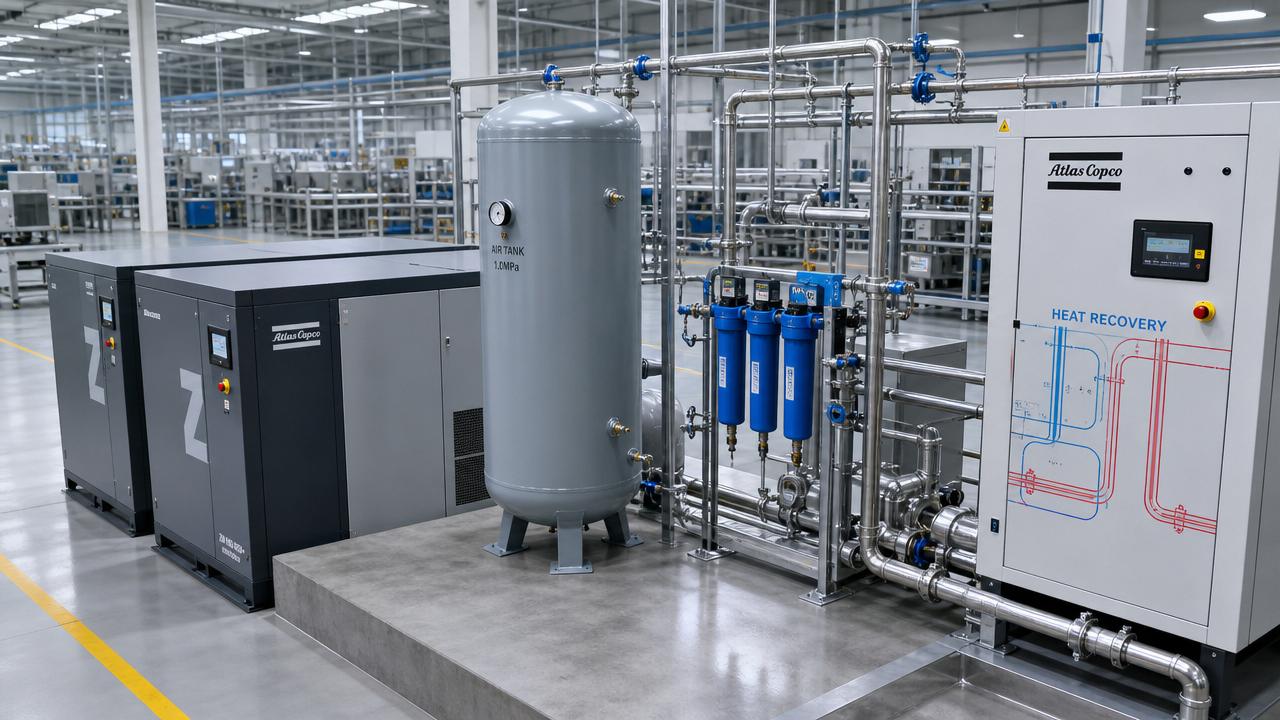
- Capture waste heat where compressor run hours exceed 4,000 hours per year.
The next table compares common improvement paths from a financial perspective. It is designed for approval workflows where utility savings, downtime risk, and implementation speed all matter.
The key takeaway is that compressed air efficiency gains should be prioritized by speed to savings and persistence of savings. Leak repair may deliver the quickest return, but controls and heat recovery often create stronger long-term value when energy prices remain volatile.
When equipment replacement makes financial sense
Replacement should be considered when existing compressors face repeated failures, poor turndown performance, or maintenance costs that exceed a reasonable operating threshold. In many industrial settings, units older than 10 to 15 years may still run, but their specific energy performance and control flexibility can lag behind newer systems, especially where demand fluctuates by more than 20% across shifts.
How Finance Leaders Can Evaluate Compressed Air Projects with Less Risk
A strong approval case combines engineering evidence with financial discipline. Instead of evaluating only purchase price, finance teams should review 5 factors: baseline kWh consumption, annual run hours, pressure stability requirements, maintenance exposure, and implementation disruption. This approach reduces the risk of underestimating total cost of ownership.
A practical 3-step review framework
1. Establish the baseline
Capture 14 to 30 days of data on flow, pressure, load profile, and electricity use. If continuous metering is unavailable, even weekly trend logging across 3 production states can reveal overcapacity, night leakage, or unstable control behavior.
2. Rank measures by payback and operational impact
Separate no-to-low capex actions from strategic retrofits. A leak campaign or pressure reset can often be approved quickly, while new compressors, dryers, or heat exchangers may require a 2- to 5-year horizon assessment. For critical sectors such as pharma, semiconductors, and food processing, purity and uptime should weigh as heavily as power reduction.
3. Verify savings after implementation
Post-project measurement is essential. Compare kWh per unit of air delivered, not just total utility spend, because production levels may change month to month. Verification over 60 to 90 days gives a more reliable view of whether compressed air efficiency gains are holding.
Where intelligence platforms add decision value
For cross-border manufacturers and equipment suppliers, market context matters. Energy tariffs, refrigerant policy shifts, decarbonization targets, and technology trends in oil-free compression or heat exchange can change the economics of an air system upgrade. GTC-Matrix supports this broader view by connecting thermodynamic analysis, pneumatic engineering insight, and commercial signals that help teams justify investments with more confidence.
When financial approvers can see both plant-level savings and sector-level direction, they are better positioned to fund projects that reduce present utility bills while supporting long-term efficiency strategy.
Compressed air efficiency is one of the most actionable paths to lower industrial utility costs because the losses are measurable, the fixes are often phased, and the savings can be verified. For finance-led organizations, the best results come from pairing baseline data with targeted corrective action, disciplined supplier review, and follow-up measurement. If you are assessing upgrades in compressed air, cooling, vacuum, or heat exchange systems, contact GTC-Matrix to get a tailored evaluation framework, explore solution pathways, and learn more about practical options that improve energy performance without unnecessary capital risk.
Related News
- Compression Technology Guide for Lower Energy LossAuthor :Pneumatic Power Engineer
![]()
- Air Compression Energy Losses and How to Reduce ThemAuthor :Pneumatic Power Engineer

- Compression Technology Trends for Screw Compressors in 2026Author :Pneumatic Power Engineer

- Air Compression Costs: Screw vs Oil-Free SystemsAuthor :Pneumatic Power Engineer

- 2026 Screw Compressors: Energy Savings Worth the Upgrade?Author :Pneumatic Power Engineer

- SASO Enforces IEC 61800-5-2:2026 for Screw CompressorsAuthor :Pneumatic Power Engineer
![]()
- Three Ministries Issue AI Agent Guidelines; Screw Compressors' Remote Diagnostics Gain Export EdgeAuthor :Pneumatic Power Engineer

- Compressed Air Technology Mistakes That Keep Raising Plant CostsAuthor :Pneumatic Power Engineer

- Jotun Expands China R&D Center Amid Rising Screw Compressor Demand for EV Battery Coating CoolingAuthor :Pneumatic Power Engineer
![]()
- Air Compression Costs: Screw vs Piston Units in 2026Author :Pneumatic Power Engineer

- Compressed Air Technology: Oil-Free or Screw Systems?Author :Pneumatic Power Engineer

- APEC Auto Dialogue Advances SC Standard AlignmentAuthor :Pneumatic Power Engineer

- Compressed Air Technology Upgrades That Cut Plant Energy LossAuthor :Pneumatic Power Engineer

- INDEX Dubai 2026: Screw Compressor Local Assembly Dominates ProcurementAuthor :Pneumatic Power Engineer

- INDEX Dubai 2026 Spotlights Screw Compressors in Localisation PushAuthor :Pneumatic Power Engineer

- High-Efficiency Manufacturing and the Next Wave of Screw CompressorsAuthor :Pneumatic Power Engineer

- Multi-Dept AI Terminal Standard Affects Screw Compressor ExportsAuthor :Pneumatic Power Engineer

- APEC Green Supply Chain Launches LCA Data Module for Screw CompressorsAuthor :Pneumatic Power Engineer

- Japan METI Revises JIS B 8605: Screw Compressors Must Label 'Full-Load Specific Power @ 7 bar'Author :Pneumatic Power Engineer

- Compressed Air Technology Upgrades That Cut Energy LossAuthor :Pneumatic Power Engineer

- Japan Mandates 'Full-Load Specific Power @7bar' on Screw Compressor LabelsAuthor :Pneumatic Power Engineer

- APEC Green Supply Chain Platform Launches LCA Data Integration for Screw CompressorsAuthor :Pneumatic Power Engineer

- APEC LCA Data Hub 2.0 Launches for Screw CompressorsAuthor :Pneumatic Power Engineer

- Japan METI Revises JIS B 8605: Screw Compressors Must Label Full-Load Specific Power @7 barAuthor :Pneumatic Power Engineer

- Compressed Air Technology: Hidden Energy Losses to Fix in 2026Author :Pneumatic Power Engineer

- APEC Green Supply Chain Initiative Requires Carbon Footprint Reports for Screw Compressors ExportsAuthor :Pneumatic Power Engineer

- APEC Green Supply Chain Rules to Mandate Carbon Footprinting for Screw CompressorsAuthor :Pneumatic Power Engineer

- ISO 8573-7:2026 Enters Force: Nanoparticle Limits for Oil-Flooded Screw Compressed AirAuthor :Pneumatic Power Engineer

- Compression Technology Choices That Affect Maintenance DowntimeAuthor :Pneumatic Power Engineer

- Air Compression Leaks: The Hidden Cost in Daily OperationAuthor :Pneumatic Power Engineer

- China Customs Implements HS Code 22nd Digit for Air Compressor ExportsAuthor :Pneumatic Power Engineer

- ISO 8573-7:2026 Enforces Nanoparticle Limits in Oil-Flooded Screw Compressed AirAuthor :Pneumatic Power Engineer

- How to Choose Air Compression Systems for Stable Plant PerformanceAuthor :Pneumatic Power Engineer

- Compressed Air Technology: What Drives Long-Term Energy WasteAuthor :Pneumatic Power Engineer

- Compressed Air Technology Options for Demanding Plant ConditionsAuthor :Pneumatic Power Engineer

- Compressed Air Efficiency Gains That Actually Lower Utility BillsAuthor :Pneumatic Power Engineer