INDEX Dubai 2026: Screw Compressor Local Assembly Dominates Procurement




From May 13–17, 2026, INDEX Dubai concluded with a clear market signal: localized assembly of screw compressors — specifically CKD/SKD models — has become the dominant procurement requirement across key Middle Eastern markets, including the UAE, Saudi Arabia, and Egypt. This shift directly impacts manufacturers, trade service providers, and supply chain stakeholders engaged in industrial compression equipment exports to the region.
Event Overview
The INDEX Dubai 2026 exhibition took place from May 13 to 17, 2026. Official data presented at the event indicated that 72% of compressor procurement inquiries from buyers in the UAE, Saudi Arabia, and Egypt explicitly required CKD (Completely Knocked Down) or SKD (Semi-Knocked Down) local assembly arrangements — not fully assembled unit imports. Chinese compressor manufacturers have signed 12 joint assembly agreements with the Jebel Ali Free Zone (JAFZA) in Dubai and MODON Industrial Cities in Saudi Arabia. The first production lines under these agreements are scheduled to commence operations in Q3 2026.
Industries Affected
Direct Exporters & OEM Manufacturers
These entities face immediate operational recalibration: tariff avoidance (up to 35%) and compliance with local content (ICV) requirements now hinge on shifting from finished-goods export to component-based supply chains. Revenue models must accommodate technical transfer, logistics of disassembled kits, and coordination with regional assembly partners.
Component & Subsystem Suppliers
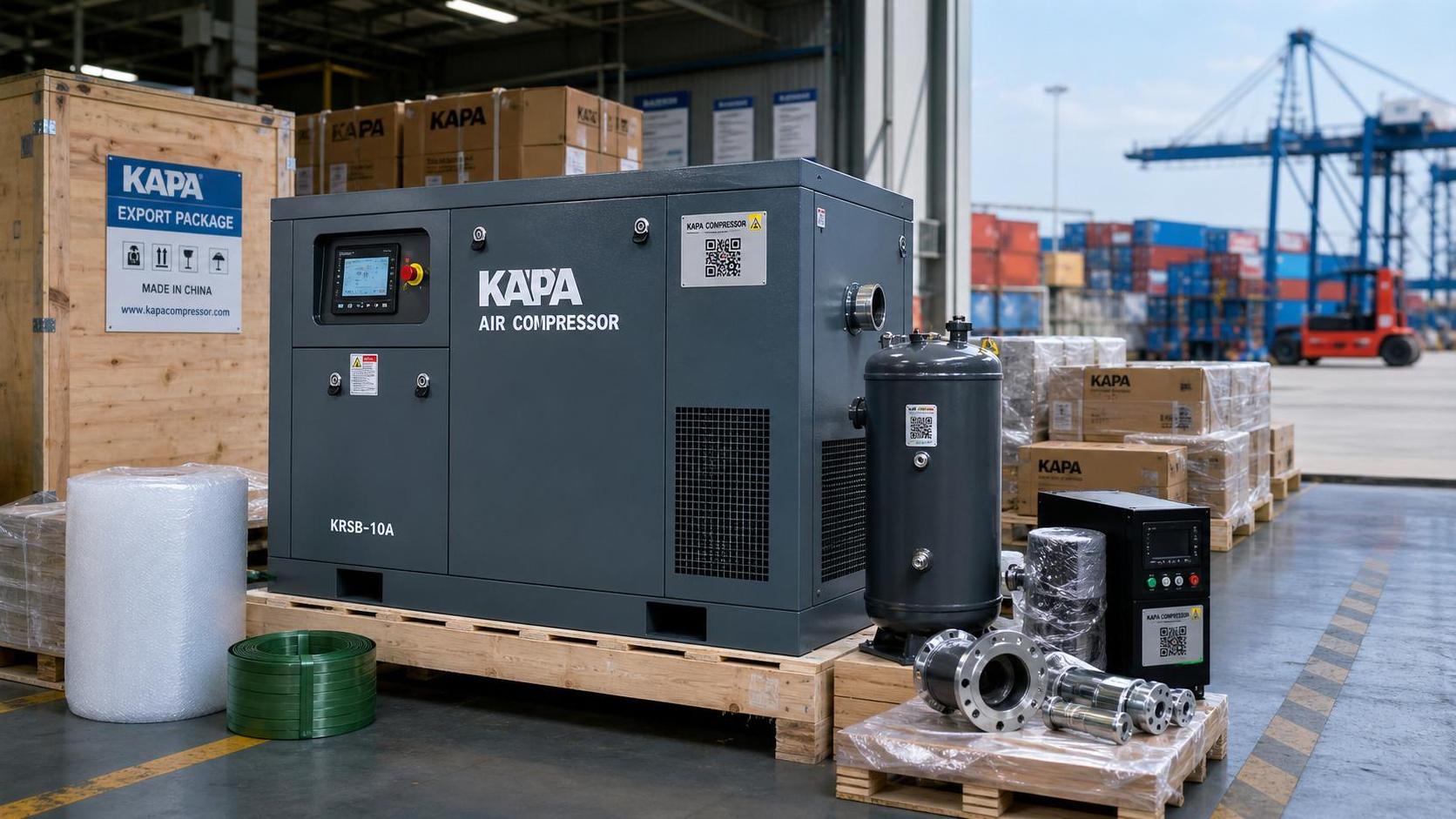
Suppliers of rotors, bearings, motors, control systems, and housings for screw compressors are seeing increased demand for modular, pre-certified, and documentation-ready sub-assemblies — not just bulk parts. Packaging, labeling, and customs classification must align with CKD/SKD regulatory frameworks in target jurisdictions.
Logistics & Trade Compliance Service Providers
Firms offering freight forwarding, customs brokerage, and regulatory advisory services must now support dual-track documentation: one set for imported components (subject to origin rules and CKD-specific HS codes), another for locally assembled units (subject to ICV verification and post-assembly certification).
Industrial Distribution & Channel Partners
Distributors in the Gulf Cooperation Council (GCC) region are transitioning from inventory-holding resellers to assembly-coordination hubs. Their role increasingly involves managing local labor partnerships, quality assurance protocols for final assembly, and after-sales service integration with original component suppliers.
What Enterprises and Practitioners Should Monitor and Act On
Track official ICV calculation methodologies and updates
Current ICV policies in Saudi Arabia and the UAE apply varying weightings to local labor, local procurement, and domestic value addition. Analysis shows these metrics directly affect eligibility for government tenders and tax incentives — making precise, up-to-date ICV reporting essential for all assembly partners.
Confirm CKD/SKD classification criteria per jurisdiction
Observably, customs authorities in Dubai and Riyadh apply different thresholds for what qualifies as ‘knocked down’ versus ‘substantially assembled’. Misclassification risks delays, reclassification penalties, or loss of tariff benefits — requiring pre-shipment validation with local customs advisors.
Distinguish between policy intent and operational readiness
While 12 joint assembly agreements have been signed, only those with confirmed Q3 2026 commissioning dates represent near-term capacity. From industry perspective, early-mover advantage lies not in signing agreements, but in validating component sourcing, testing local assembly line throughput, and aligning warranty and service SLAs across borders.
Prepare for cross-border technical coordination workflows
Local assembly requires real-time alignment on engineering specs, quality control checkpoints, and firmware/software licensing. Current more suitable preparation includes establishing shared digital platforms for BOM management, calibration logs, and non-conformance tracking — not just contractual MOUs.
Editorial Perspective / Industry Observation
This development is better understood as a structural inflection point — not merely a procurement trend. Analysis shows it reflects a broader regional pivot toward industrial localization, where import substitution is being implemented through regulated, incentive-driven manufacturing partnerships rather than protectionist barriers. Observably, the 72% demand figure signals buyer-side consensus, not isolated pilot projects. However, the actual scale of impact remains contingent on execution: facility ramp-up timelines, workforce training speed, and consistency of ICV audit practices across GCC states will determine whether this becomes a durable model or a transitional phase. Industry should therefore monitor not just new agreements, but verified output volumes and certified local content percentages reported by early-adopting facilities.
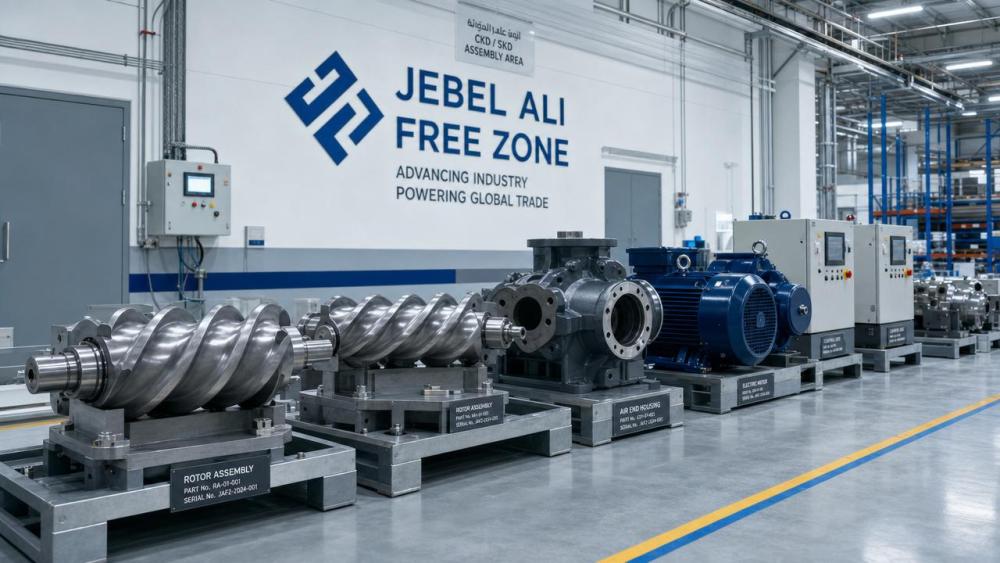
In summary, INDEX Dubai 2026 crystallized a decisive shift in how screw compressors enter Middle Eastern markets — moving from import-led distribution to integrated, policy-aligned local assembly. This is neither a temporary adjustment nor a niche opportunity; it represents an operational prerequisite for sustained market access in priority energy, infrastructure, and industrial sectors. Currently, it is more accurate to interpret this as an enforceable market standard taking shape — one that demands technical, logistical, and regulatory adaptation, not just strategic awareness.
Source: Official exhibition data released at INDEX Dubai 2026 (May 13–17, 2026); public announcements from JAFZA and MODON Industrial Cities; verified agreement disclosures from participating Chinese compressor manufacturers. Note: Facility commissioning timelines and ICV verification procedures remain subject to ongoing monitoring beyond the exhibition period.
Ready when you are. Send us a message to get started.
Related News
- When does variable gas flow justify a custom screw compressor system?Author :Pneumatic Power Engineer

- How to size compressed air equipment for pneumatic toolsAuthor :Pneumatic Power Engineer

- How Should Energy Management Systems Handle Compressor Load Changes?Author :Pneumatic Power Engineer

- Which Maintenance Issues Reduce Air Compressor Efficiency?Author :Pneumatic Power Engineer

- How Much Energy Can Variable-Speed Screw Compressors Save?Author :Pneumatic Power Engineer

- Industrial Compressor Selection: Matching Flow, Pressure, and Duty CycleAuthor :Pneumatic Power Engineer

- China Expands Cross-Border RMB and FX Cash Pooling NationwideAuthor :Pneumatic Power Engineer

- How to Size Air Compressor Systems for Pneumatics by Flow and Pressure DemandAuthor :Pneumatic Power Engineer

- How Energy Recovery Systems for Compressors Cut Power CostsAuthor :Pneumatic Power Engineer

- How to Evaluate Screw Compressors in Industrial Refrigeration EquipmentAuthor :Pneumatic Power Engineer

- India Makes BIS Certification Mandatory for Screw CompressorsAuthor :Pneumatic Power Engineer

- China Tightens Export Filing for Screw CompressorsAuthor :Pneumatic Power Engineer

- SABIC Sets IoT Interface Rule for Screw CompressorsAuthor :Pneumatic Power Engineer

- Industrial Heat Recovery Systems for Compressors: When Do Energy Savings Pay Back?Author :Pneumatic Power Engineer

- EU Tightens REACH Limit for Screw Compressor LubricantsAuthor :Pneumatic Power Engineer

- EU Opens China Screw Compressor Review With Carbon RuleAuthor :Pneumatic Power Engineer

- DOE Mandates AHRI 1000-2026 for Screw CompressorsAuthor :Pneumatic Power Engineer

- VDMA Filing Signals EU Risk for Chinese Oil Screw CompressorsAuthor :Pneumatic Power Engineer
![]()
- Screw vs Piston Air Compressors for Stable Plant OutputAuthor :Pneumatic Power Engineer

- Saudi SASO Tightens Refrigerant Limits in IEC 60335-2-40:2026Author :Pneumatic Power Engineer

- IIR Warns of 18-Week Lead Times for Screw CompressorsAuthor :Pneumatic Power Engineer

- Welded Compressed Air Manifold Selection Guide for Pressure Stability and LeaksAuthor :Pneumatic Power Engineer

- India BIS Rule Adds IS 16830 Requirement for Imported Screw CompressorsAuthor :Pneumatic Power Engineer

- What to Check Before Choosing a Compressed Air FactoryAuthor :Pneumatic Power Engineer

- China Tightens Export Checks on Screw CompressorsAuthor :Pneumatic Power Engineer

- Screw Compressor Lead Times Reach 22 WeeksAuthor :Pneumatic Power Engineer

- Vietnam Requires QR Labels on Imported Screw CompressorsAuthor :Pneumatic Power Engineer

- Compressed Air Technologies Filtration: How to Reduce Pressure Drop and Energy LossAuthor :Pneumatic Power Engineer

- STSPIN830 Lead Time Tops 32 Weeks in Screw CompressorsAuthor :Pneumatic Power Engineer

- IGBT Shortage Extends Screw Compressor Lead TimesAuthor :Pneumatic Power Engineer

- Compressed Air Systems: 7 Hidden Costs That Raise Total Operating ExpenseAuthor :Pneumatic Power Engineer

- Compressed Air Efficiency: 7 Hidden Losses That Raise Operating CostsAuthor :Pneumatic Power Engineer

- How to Compare Screw vs Oil-Free Air Compression SystemsAuthor :Pneumatic Power Engineer

- Compressed Air Leaks: What They Really Cost in Daily OperationsAuthor :Pneumatic Power Engineer

- DOE Moves Up R449A Chiller Deadline to March 2027Author :Pneumatic Power Engineer

- How Compression Technology Cuts Energy Use in Modern PlantsAuthor :Pneumatic Power Engineer