Compressed Air Technology: Oil-Free or Screw Systems?




Choosing the right compressed air technology can reshape operating cost, product safety, and equipment uptime across diverse industrial settings. In practice, the choice between oil-free and screw systems is rarely simple.
Compressed air technology must match air purity targets, duty cycle, ambient conditions, and lifecycle economics. A low purchase price may look attractive, yet hidden energy and maintenance costs often decide long-term value.
For broad industrial applications, the best answer depends on where compressed air is used, how clean it must be, and what downtime can cost. This guide breaks that decision into clear, practical scenarios.
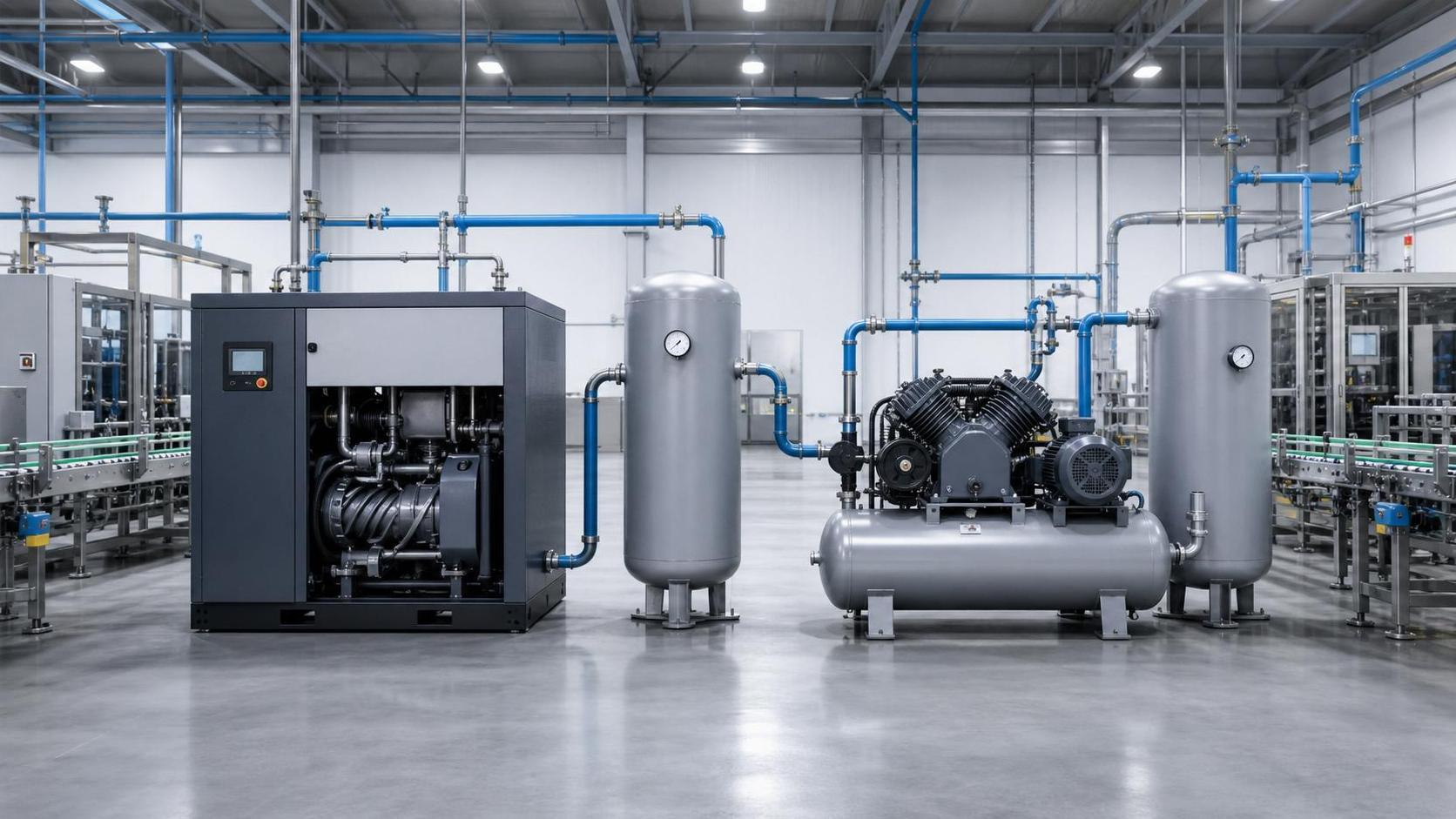
When application risk is high, oil-free compressed air technology usually leads

Some environments cannot tolerate oil carryover. In these cases, oil-free compressed air technology becomes less of a preference and more of a process requirement.
Typical examples include pharmaceuticals, electronics, food processing, laboratories, and sensitive coating lines. Product integrity, audit readiness, and contamination control outweigh first-cost savings.
Why purity changes the buying logic
Oil-free systems reduce contamination risk at the source. That matters when compressed air contacts products, packaging, instruments, or clean utility lines.
Filtration can help lubricated machines, but filters require monitoring, replacement, and validation. For critical processes, many sites prefer design-based purity over dependence on downstream barriers.
- Lower risk of oil contamination incidents
- Simpler compliance with strict quality standards
- Better fit for direct-contact applications
- Reduced concern during audits and traceability reviews
When production runs continuously, screw compressed air technology often wins
For metalworking, automotive support systems, general manufacturing, logistics hubs, and utility air networks, screw compressed air technology is often the practical workhorse.
Rotary screw compressors are valued for stable output, efficient continuous operation, and broad capacity options. In many plants, they offer the best balance between reliability and cost control.
Where screw systems fit best
If compressed air powers tools, actuators, conveyors, blow-off stations, or automation equipment, small traces of oil may be manageable with proper treatment. That changes the economics significantly.
In these settings, oil-injected screw systems often deliver lower capital cost and high energy efficiency. They also integrate well with central compressor rooms and variable load profiles.
- Strong performance in continuous-duty operations
- Good efficiency at medium to high demand
- Widely available service and spare parts
- Flexible capacity for plant expansion
How different industrial scenarios change compressed air technology priorities
The most effective compressed air technology decision starts with scenario mapping. Pressure, purity, moisture, duty cycle, heat recovery, and redundancy needs vary widely between applications.
In cost-sensitive facilities, total ownership matters more than purchase price
Compressed air technology should be evaluated over years, not weeks. Energy usually dominates lifecycle cost, followed by maintenance, planned downtime, treatment equipment, and quality risk.
Oil-free units may cost more initially, yet avoid some contamination-control burdens. Screw systems may start cheaper, yet require ongoing oil, separator, and filtration management.
A practical lifecycle checklist
- Compare full-load and part-load power consumption.
- Estimate annual running hours and pressure profile.
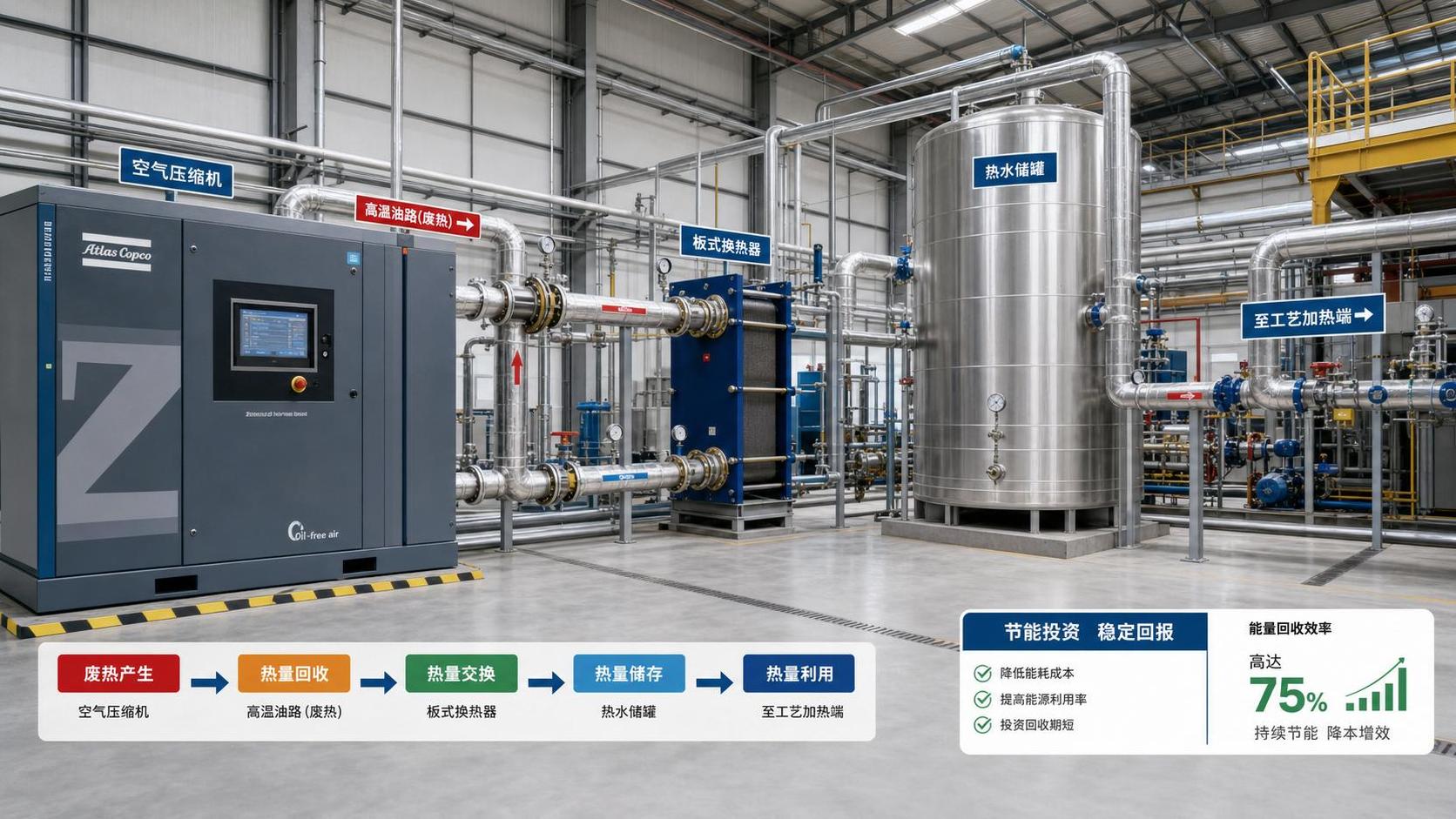
- Include dryers, filters, drains, and heat recovery options.
- Price preventive maintenance and service availability.
- Quantify the cost of contamination or production interruption.
This approach turns compressed air technology selection into a measurable business case. It also prevents overbuying purity or underestimating operational risk.
For mixed-use plants, hybrid compressed air technology strategies can reduce waste
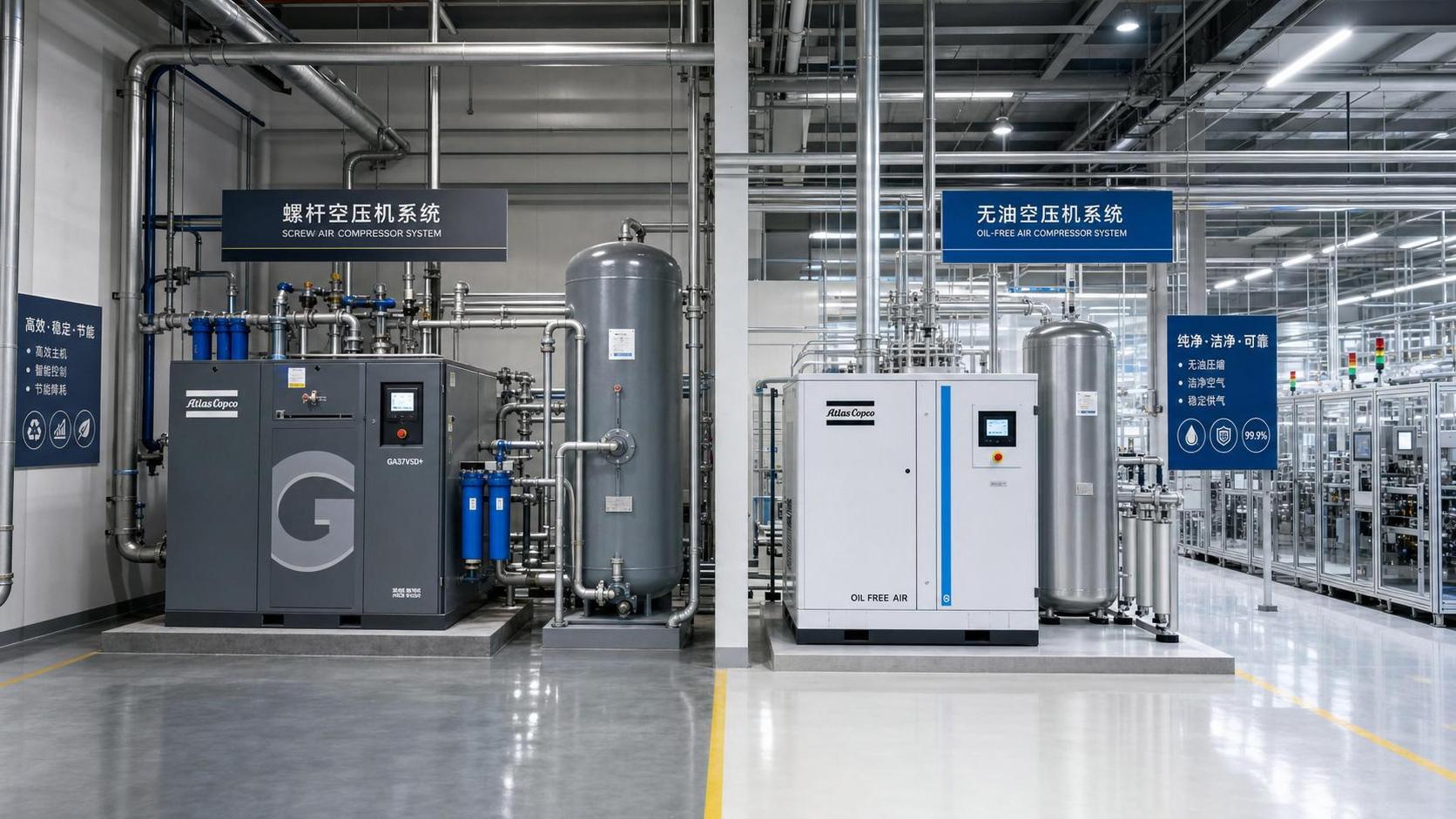
Many facilities do not need one compressor type everywhere. A hybrid compressed air technology layout can supply oil-free air to critical points and screw air to general utilities.
This is common in large industrial campuses with packaging lines, instrument air, maintenance bays, and automation cells under one roof. Different air qualities can be separated by use case.
Hybrid layouts make sense when
- Only some zones require certified clean air
- Demand fluctuates by department or shift
- Expansion plans involve new clean production lines
- Redundancy is needed without oversizing one system
A scenario-based network design often improves energy performance and avoids applying premium air quality where it is not required.
Common mistakes when comparing oil-free and screw compressed air technology
Several decision errors repeat across industries. Most come from focusing on machine type before defining the actual application and air quality endpoint.
- Assuming all screw systems are unsuitable for quality-critical operations
- Assuming filtration eliminates every contamination concern
- Ignoring part-load efficiency in variable-demand sites
- Overlooking condensate treatment and dryer sizing
- Comparing compressor prices without installation or service cost
- Neglecting future regulations, audits, or customer specifications
Another frequent issue is pressure creep. Facilities often buy larger systems or run higher pressure than needed, which raises energy use regardless of compressed air technology type.
How to choose the right compressed air technology for the next sourcing step
A strong sourcing process begins with three questions. Where is the air used? What happens if oil reaches that point? How many hours per year will the system run?
Then build a side-by-side comparison using purity class, power use, maintenance intervals, service support, and expansion flexibility. Ask suppliers for performance data under real operating conditions.
For deeper market intelligence, GTC-Matrix tracks technology evolution, energy efficiency trends, and industrial application shifts across compression and thermal systems. That context helps convert technical comparison into smarter capital planning.
In the end, compressed air technology should fit the scenario, not the other way around. Oil-free systems serve critical purity environments. Screw systems excel in robust, cost-focused continuous production.
Use the application, risk profile, and lifecycle cost model to make the final call. The right match can lower energy waste, protect process quality, and support stable industrial growth.
Ready when you are. Send us a message to get started.
Related News
- When does variable gas flow justify a custom screw compressor system?Author :Pneumatic Power Engineer

- How to size compressed air equipment for pneumatic toolsAuthor :Pneumatic Power Engineer

- How Should Energy Management Systems Handle Compressor Load Changes?Author :Pneumatic Power Engineer

- Which Maintenance Issues Reduce Air Compressor Efficiency?Author :Pneumatic Power Engineer

- How Much Energy Can Variable-Speed Screw Compressors Save?Author :Pneumatic Power Engineer

- Industrial Compressor Selection: Matching Flow, Pressure, and Duty CycleAuthor :Pneumatic Power Engineer

- China Expands Cross-Border RMB and FX Cash Pooling NationwideAuthor :Pneumatic Power Engineer

- How to Size Air Compressor Systems for Pneumatics by Flow and Pressure DemandAuthor :Pneumatic Power Engineer

- How Energy Recovery Systems for Compressors Cut Power CostsAuthor :Pneumatic Power Engineer

- How to Evaluate Screw Compressors in Industrial Refrigeration EquipmentAuthor :Pneumatic Power Engineer

- India Makes BIS Certification Mandatory for Screw CompressorsAuthor :Pneumatic Power Engineer

- China Tightens Export Filing for Screw CompressorsAuthor :Pneumatic Power Engineer

- SABIC Sets IoT Interface Rule for Screw CompressorsAuthor :Pneumatic Power Engineer

- Industrial Heat Recovery Systems for Compressors: When Do Energy Savings Pay Back?Author :Pneumatic Power Engineer

- EU Tightens REACH Limit for Screw Compressor LubricantsAuthor :Pneumatic Power Engineer

- EU Opens China Screw Compressor Review With Carbon RuleAuthor :Pneumatic Power Engineer

- DOE Mandates AHRI 1000-2026 for Screw CompressorsAuthor :Pneumatic Power Engineer

- VDMA Filing Signals EU Risk for Chinese Oil Screw CompressorsAuthor :Pneumatic Power Engineer
![]()
- Screw vs Piston Air Compressors for Stable Plant OutputAuthor :Pneumatic Power Engineer

- Saudi SASO Tightens Refrigerant Limits in IEC 60335-2-40:2026Author :Pneumatic Power Engineer

- IIR Warns of 18-Week Lead Times for Screw CompressorsAuthor :Pneumatic Power Engineer

- Welded Compressed Air Manifold Selection Guide for Pressure Stability and LeaksAuthor :Pneumatic Power Engineer

- India BIS Rule Adds IS 16830 Requirement for Imported Screw CompressorsAuthor :Pneumatic Power Engineer

- What to Check Before Choosing a Compressed Air FactoryAuthor :Pneumatic Power Engineer

- China Tightens Export Checks on Screw CompressorsAuthor :Pneumatic Power Engineer

- Screw Compressor Lead Times Reach 22 WeeksAuthor :Pneumatic Power Engineer

- Vietnam Requires QR Labels on Imported Screw CompressorsAuthor :Pneumatic Power Engineer

- Compressed Air Technologies Filtration: How to Reduce Pressure Drop and Energy LossAuthor :Pneumatic Power Engineer

- STSPIN830 Lead Time Tops 32 Weeks in Screw CompressorsAuthor :Pneumatic Power Engineer

- IGBT Shortage Extends Screw Compressor Lead TimesAuthor :Pneumatic Power Engineer

- Compressed Air Systems: 7 Hidden Costs That Raise Total Operating ExpenseAuthor :Pneumatic Power Engineer

- Compressed Air Efficiency: 7 Hidden Losses That Raise Operating CostsAuthor :Pneumatic Power Engineer

- How to Compare Screw vs Oil-Free Air Compression SystemsAuthor :Pneumatic Power Engineer

- Compressed Air Leaks: What They Really Cost in Daily OperationsAuthor :Pneumatic Power Engineer

- DOE Moves Up R449A Chiller Deadline to March 2027Author :Pneumatic Power Engineer

- How Compression Technology Cuts Energy Use in Modern PlantsAuthor :Pneumatic Power Engineer