



Compression Technology Choices That Affect Maintenance Downtime




For quality control and safety management teams, compression technology decisions can directly shape maintenance downtime, equipment stability, and compliance risk. Choosing the right compression technology is not only about output efficiency—it also affects failure frequency, service intervals, contamination control, and workplace safety. Understanding these trade-offs helps industrial operations reduce unplanned stoppages while protecting product quality and system reliability.
In plants where compressed air, process gas, vacuum, or thermal systems support production, the wrong compression technology can create a chain reaction: more condensate, more vibration, shorter seal life, unplanned shutdowns, and more frequent quality deviations. For teams responsible for product integrity and safe operations, this makes compressor selection a maintenance strategy decision, not just a utilities purchase.
GTC-Matrix closely tracks how industrial cooling, heat exchange, and compression systems intersect with uptime performance. In practice, the most effective decisions come from matching compression technology to contamination sensitivity, duty cycle, ambient conditions, and maintenance capability. A system that looks efficient on paper may still create 12–24 hours of avoidable downtime per quarter if service intervals, spare parts access, or oil carryover risks are poorly understood.
Why Compression Technology Choice Directly Affects Downtime
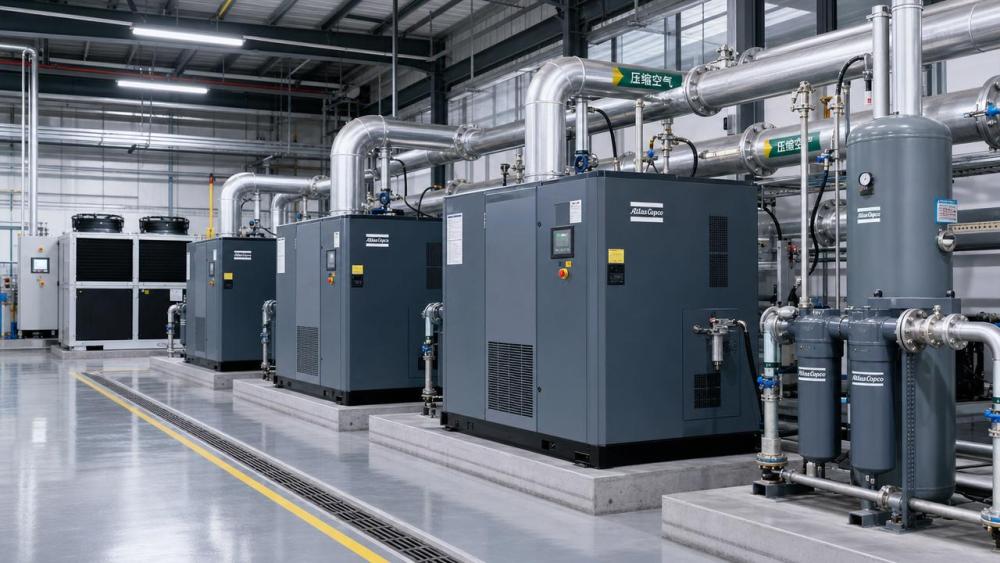
Compression technology influences how often a system needs intervention, how predictable wear patterns are, and how safely it can operate under fluctuating load. For quality control personnel, the concern often starts with contamination, moisture, and pressure stability. For safety managers, the priority extends to overheating risk, lubricant management, leak control, and emergency response during failure events.
Across general industry, maintenance downtime is rarely caused by a single dramatic breakdown. More often, it comes from repeated small disruptions: blocked filters every 2–6 weeks, separator replacement ahead of schedule, seal leakage, temperature alarms, or pressure drops that force line stoppages. The selected compression technology determines how often these issues appear and how complex they are to resolve.
The main downtime drivers behind compressor selection
When evaluating compression technology, operations teams should focus on five downtime drivers rather than only motor power or rated flow. These drivers shape both planned and unplanned maintenance windows:
- Lubrication architecture: oil-injected designs may need tighter separator, filter, and condensate management.
- Heat rejection profile: poor thermal control increases trips in hot environments above 35°C.
- Load variability tolerance: systems cycling 20–40 times per hour can wear faster if not designed for part-load operation.
- Component count: more valves, seals, and coolers usually mean more inspection points.
- Service accessibility: a 4-hour maintenance task can become a 10-hour shutdown if access is poor.
These factors are especially important in pharmaceutical support utilities, food packaging lines, electronics manufacturing, and multi-shift plants, where even a 15-minute pressure disruption can trigger product holds or restart validation procedures.
How different compression technologies behave in maintenance terms
The table below compares common compression technology options from a maintenance downtime perspective. It is designed for teams balancing quality, safety, and service practicality rather than only energy consumption.
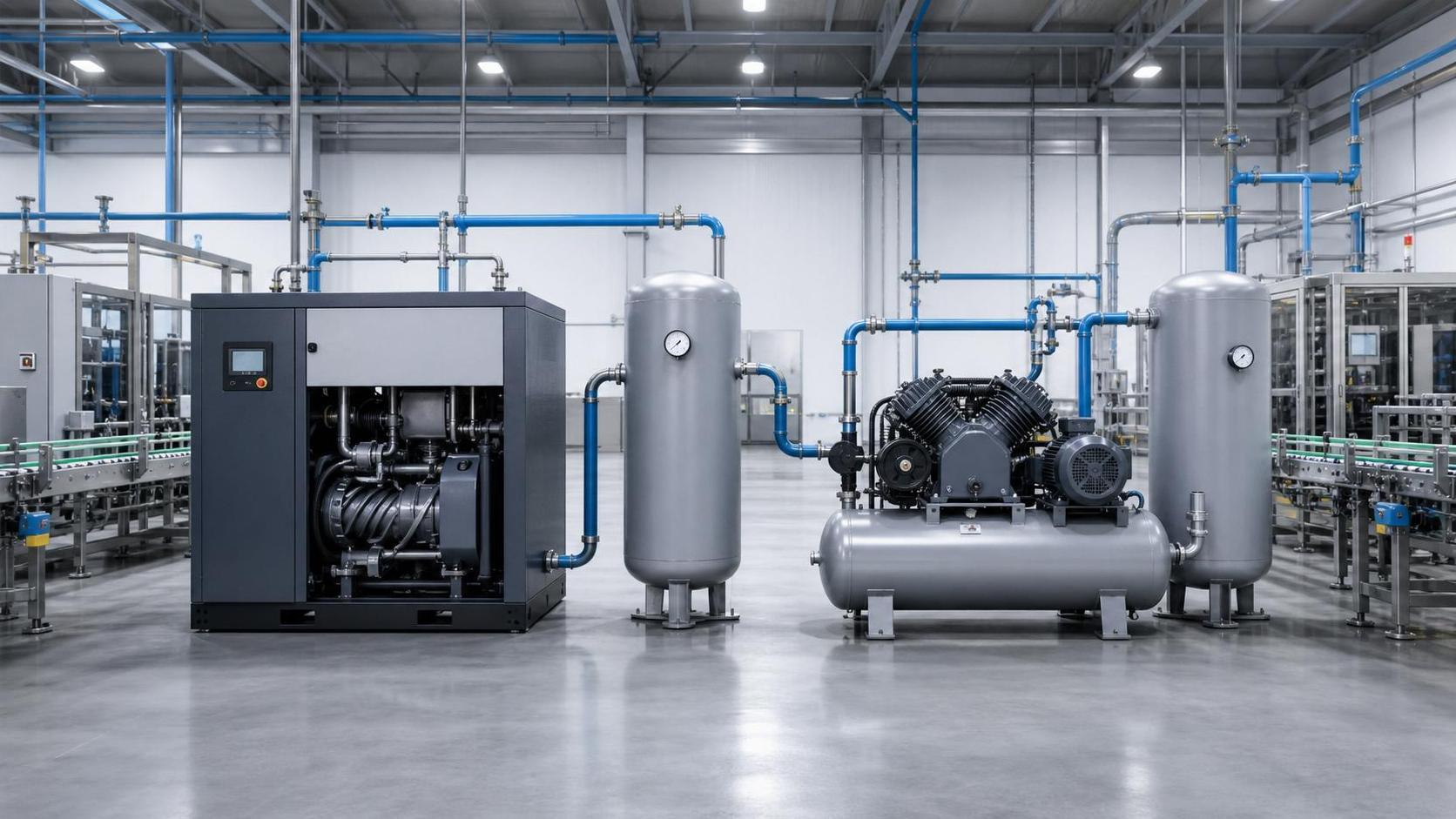
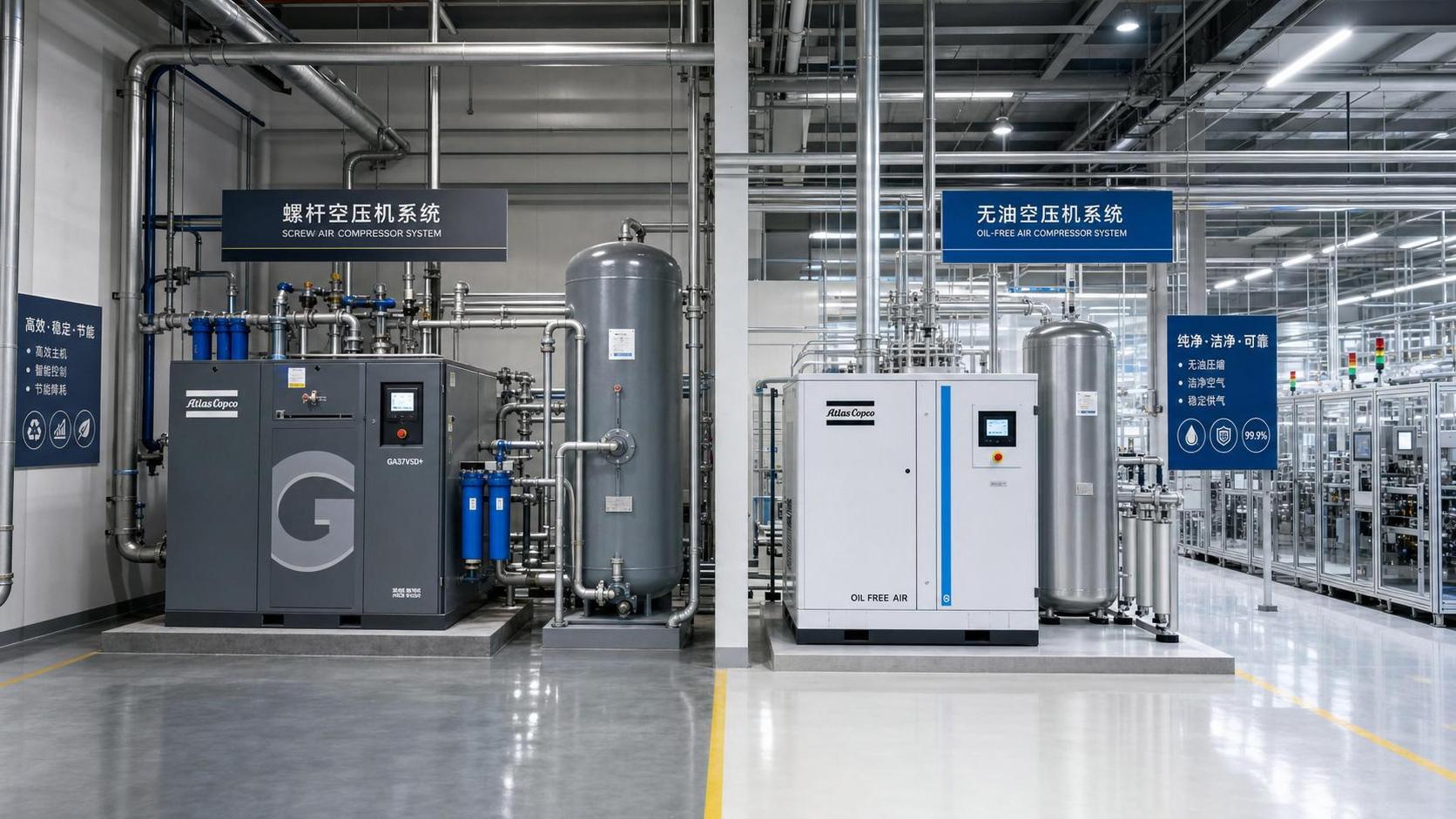
For many facilities, oil-injected rotary screw systems offer the most familiar maintenance model, while oil-free options reduce contamination-related stoppages in sensitive production. Reciprocating units may still fit specific pressure bands, but they often require closer inspection discipline. Centrifugal designs can perform well at scale, yet they demand stable operating conditions and skilled support.
Quality and safety implications beyond uptime
A compressor that runs 8,000 hours per year but creates recurring moisture excursions or lubricant carryover can be more damaging than a unit with slightly higher service frequency. Quality teams must consider whether the chosen compression technology supports dew point targets, clean air requirements, and stable process pressure within the tolerance band required by downstream equipment.
Safety teams should also examine hot surface exposure, overpressure protection, condensate handling, and isolation procedures. If routine service requires multiple lockout points, lifting tools, or confined access, each maintenance event carries greater operational risk and longer restart time.
Key Selection Criteria for Quality Control and Safety Management Teams
The right compression technology depends on process sensitivity, maintenance resources, and the cost of interruption. In a general industrial setting, selection should be made through a cross-functional review involving production, maintenance, quality, EHS, and procurement. In most cases, 4–6 decision criteria will reveal the most practical choice faster than comparing dozens of performance specifications.
1. Contamination control requirements
If compressed air or gas comes into direct or indirect contact with product, packaging, instruments, or clean environments, contamination risk should be treated as a downtime issue. Product quarantine, line cleaning, and root-cause investigation can take 6–48 hours after a contamination event. In these cases, oil-free compression technology or robust downstream treatment can reduce risk significantly.
2. Duty cycle and load stability
Plants with stable base load typically benefit from compression technology that performs efficiently near a fixed operating point. Facilities with rapid demand swings, weekend shutdowns, or frequent starts need systems that tolerate cycling without accelerated wear. A unit running at 70–85% load for most of the week usually experiences less stress than one jumping from 20% to 100% repeatedly.
3. Ambient conditions and thermal management
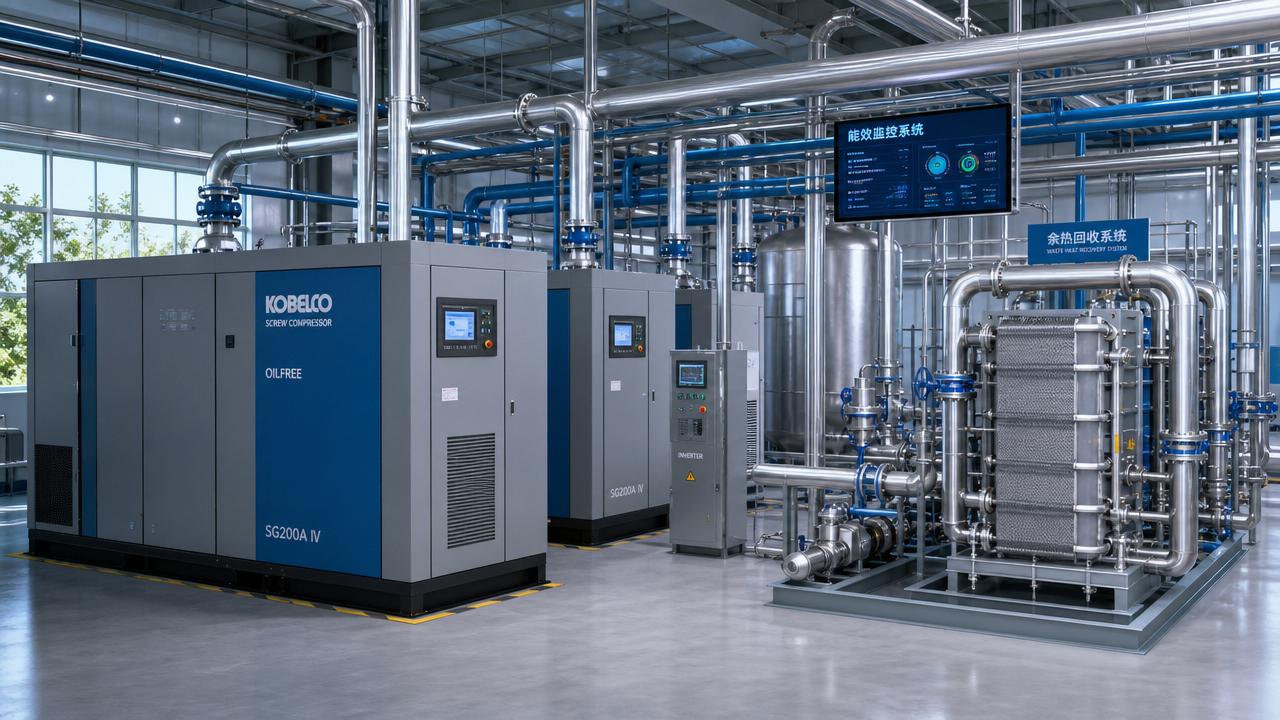
High room temperatures, poor ventilation, dust, and humid climates amplify maintenance burden. If compressor rooms regularly reach 35–40°C, cooler fouling and thermal trips become more likely. Compression technology should therefore be assessed together with aftercoolers, ventilation design, heat recovery options, and filter access—not as a standalone machine decision.
4. Maintenance capability and spare parts readiness
A technically advanced system is not automatically the best option if the plant lacks trained staff, diagnostic tools, or local parts support. Quality and safety managers should ask whether critical maintenance tasks can be completed in one shift, whether common parts are stocked for 3–6 months, and whether the OEM or service partner can respond within 24 hours for urgent failures.
The following table helps structure a practical review for compression technology selection in facilities where uptime, audit readiness, and contamination control matter equally.
This comparison shows that compression technology should be judged by consequence of failure, not only by acquisition cost. In many quality-critical environments, the more resilient option is the one that simplifies cleaning validation, shortens maintenance windows, and reduces hidden stoppages from unstable air quality.
Implementation Practices That Reduce Service Interruptions
Even well-chosen compression technology can underperform if implementation is weak. Downtime prevention depends on system design, commissioning discipline, and maintenance planning from day one. For most facilities, the first 90 days after installation are critical because control settings, condensate behavior, thermal load, and operator response patterns are still being stabilized.
Commissioning checks that matter
- Verify pressure stability across normal and peak demand, ideally over 2–3 full production cycles.
- Confirm discharge temperature, room ventilation, and cooler approach performance during hot-day conditions.
- Test drains, separators, and downstream treatment under real condensate load.
- Document alarm logic, trip points, and restart permissions for operators and EHS personnel.
- Set initial inspection intervals at 250, 500, and 1,000 hours rather than waiting for annual review.
These steps help identify mismatches between designed and actual operation. They are especially useful where multiple utilities interact, such as compressed air with dryers, chillers, process cooling loops, or heat recovery equipment.
Maintenance planning by criticality
A practical maintenance strategy ranks assets by production impact. If one compressor supports sterile packaging, clean instrument air, or safety actuators, it should not share the same service plan as a low-consequence workshop unit. Plants often benefit from dividing compressor assets into 3 tiers: critical, important, and non-critical. Each tier should have different spare stocking, alarm routing, and response time targets.
For example, critical units may require weekly inspection, monthly dew point review, vibration trending every 30 days, and stocked consumables for the next 2 service cycles. Non-critical units may be checked less often, such as every 4–6 weeks, if they do not affect quality release or safety systems.
Common mistakes that increase downtime
- Selecting compression technology based only on peak flow instead of real operating profile.
- Ignoring ambient heat load and placing compressors in rooms with inadequate airflow.
- Underestimating the maintenance burden of downstream dryers, filters, and drains.
- Failing to define who owns alarm response across production, maintenance, and safety teams.
- Using a single unit with no standby capacity where one trip can stop 100% of a line.
Many avoidable shutdowns are system-level problems rather than machine defects. This is why compression technology must be integrated with monitoring, cooling, filtration, and service planning from the beginning.
Procurement and Risk Control Guidance for Industrial Decision-Makers
For procurement teams supporting quality and safety stakeholders, the goal is not simply to buy the most advanced compressor. The goal is to secure compression technology that fits the plant’s risk profile, support capacity, and compliance needs over a 5–10 year operating horizon. A lower purchase price can be offset quickly by 2 or 3 major stoppages, emergency rentals, expedited spare parts, or rejected production.
Questions suppliers should answer clearly
Before approval, suppliers should be able to explain service interval assumptions, expected wear components, recommended ambient limits, contamination safeguards, and commissioning requirements. They should also identify which tasks are operator-level, which need certified technicians, and what the realistic recovery time is after a trip, sensor fault, or cooler blockage.
What to include in the purchase review checklist
- Target operating range in flow and pressure, including low-load periods.
- Expected service interval in hours and required shutdown duration per event.
- List of critical spares with normal lead time, such as 24 hours, 7 days, or 4 weeks.
- Recommended filtration, drying, and condensate treatment package.
- Safety requirements for lockout, hot work exclusion, and lifting during maintenance.
- Digital monitoring capability for temperature, vibration, pressure trend, and fault history.
This checklist helps teams compare proposals on operational reality rather than marketing language. It also supports better alignment between utility reliability and product quality assurance.
Compression technology choices have lasting consequences for downtime, contamination control, and safe maintenance execution. For quality control and safety management teams, the best decision is usually the one that balances purity requirements, thermal stability, service simplicity, and failure consequence across the full system—not just the compressor block itself.
GTC-Matrix helps industrial decision-makers interpret these trade-offs through intelligence on compressed air, vacuum, cooling, and heat exchange technologies. If you are evaluating a new compressor room, upgrading oil-free capacity, or reducing utility-related stoppages, now is the right time to review your compression technology strategy in detail.
Contact us to discuss your application, get a more tailored selection framework, or explore broader thermal and power system solutions that can reduce maintenance downtime while protecting quality and safety performance.
Related News
- China Expands Cross-Border RMB and FX Cash Pooling NationwideAuthor :Pneumatic Power Engineer

- How to Size Air Compressor Systems for Pneumatics by Flow and Pressure DemandAuthor :Pneumatic Power Engineer

- How Energy Recovery Systems for Compressors Cut Power CostsAuthor :Pneumatic Power Engineer

- How to Evaluate Screw Compressors in Industrial Refrigeration EquipmentAuthor :Pneumatic Power Engineer

- India Makes BIS Certification Mandatory for Screw CompressorsAuthor :Pneumatic Power Engineer

- China Tightens Export Filing for Screw CompressorsAuthor :Pneumatic Power Engineer

- SABIC Sets IoT Interface Rule for Screw CompressorsAuthor :Pneumatic Power Engineer

- Industrial Heat Recovery Systems for Compressors: When Do Energy Savings Pay Back?Author :Pneumatic Power Engineer

- EU Tightens REACH Limit for Screw Compressor LubricantsAuthor :Pneumatic Power Engineer

- EU Opens China Screw Compressor Review With Carbon RuleAuthor :Pneumatic Power Engineer

- DOE Mandates AHRI 1000-2026 for Screw CompressorsAuthor :Pneumatic Power Engineer

- VDMA Filing Signals EU Risk for Chinese Oil Screw CompressorsAuthor :Pneumatic Power Engineer
![]()
- Screw vs Piston Air Compressors for Stable Plant OutputAuthor :Pneumatic Power Engineer

- Saudi SASO Tightens Refrigerant Limits in IEC 60335-2-40:2026Author :Pneumatic Power Engineer

- IIR Warns of 18-Week Lead Times for Screw CompressorsAuthor :Pneumatic Power Engineer

- Welded Compressed Air Manifold Selection Guide for Pressure Stability and LeaksAuthor :Pneumatic Power Engineer

- India BIS Rule Adds IS 16830 Requirement for Imported Screw CompressorsAuthor :Pneumatic Power Engineer

- What to Check Before Choosing a Compressed Air FactoryAuthor :Pneumatic Power Engineer

- China Tightens Export Checks on Screw CompressorsAuthor :Pneumatic Power Engineer

- Screw Compressor Lead Times Reach 22 WeeksAuthor :Pneumatic Power Engineer

- Vietnam Requires QR Labels on Imported Screw CompressorsAuthor :Pneumatic Power Engineer

- Compressed Air Technologies Filtration: How to Reduce Pressure Drop and Energy LossAuthor :Pneumatic Power Engineer

- STSPIN830 Lead Time Tops 32 Weeks in Screw CompressorsAuthor :Pneumatic Power Engineer

- IGBT Shortage Extends Screw Compressor Lead TimesAuthor :Pneumatic Power Engineer

- Compressed Air Systems: 7 Hidden Costs That Raise Total Operating ExpenseAuthor :Pneumatic Power Engineer

- Compressed Air Efficiency: 7 Hidden Losses That Raise Operating CostsAuthor :Pneumatic Power Engineer

- How to Compare Screw vs Oil-Free Air Compression SystemsAuthor :Pneumatic Power Engineer

- Compressed Air Leaks: What They Really Cost in Daily OperationsAuthor :Pneumatic Power Engineer

- DOE Moves Up R449A Chiller Deadline to March 2027Author :Pneumatic Power Engineer

- How Compression Technology Cuts Energy Use in Modern PlantsAuthor :Pneumatic Power Engineer

- EU Adds GB 18613-2025 to Import Energy ChecksAuthor :Pneumatic Power Engineer

- EU CE Rule Adds SRA for R290 Compressor ImportsAuthor :Pneumatic Power Engineer

- Compressed Air Leaks: Hidden Costs and Practical Ways to Reduce LossesAuthor :Pneumatic Power Engineer

- Kunming Sourcing Festival Adds Thermal & Compression HubAuthor :Pneumatic Power Engineer

- Compressed Air Efficiency: Where Energy Losses Usually StartAuthor :Pneumatic Power Engineer

- US 3-Year Treasury Yield Rise Pressures Compressor Export QuotesAuthor :Pneumatic Power Engineer