Compressed Air Technology Upgrades That Cut Energy Loss




For business decision-makers, upgrading compressed air technology is no longer just a maintenance choice—it is a strategic move to reduce energy loss, improve system reliability, and strengthen cost control. As energy prices rise and efficiency standards tighten, smarter compression solutions are becoming essential for manufacturers seeking measurable performance gains and long-term operational resilience.
For most industrial sites, the biggest opportunity is not buying a larger compressor. It is cutting hidden losses across generation, treatment, storage, and end use.
That is the core search intent behind compressed air technology upgrades: leaders want to know which investments reduce energy waste fastest, what returns are realistic, and how to prioritize action.
They are not looking for theory alone. They need a practical guide that links technology choices to energy cost, uptime, maintenance risk, and capital planning.
Why compressed air technology upgrades deserve board-level attention
Compressed air is often one of the most expensive utilities in a plant, yet it is frequently managed with less discipline than electricity, steam, or water.
In many facilities, 10 to 30 percent of compressed air is lost through leaks, poor controls, pressure mismatch, or inappropriate end-use applications.
That means energy loss is not usually caused by one failed machine. It is the result of system design choices made over time without a full performance view.
For decision-makers, this matters because compressed air inefficiency affects more than power bills. It also drives maintenance spending, production instability, and avoidable carbon emissions.
The strongest business case for upgrading compressed air technology comes when leaders evaluate the whole system, not only the compressor package on the equipment list.
What enterprise decision-makers usually want to know first
Before approving upgrades, executives typically ask four questions. Where is the loss today, which technologies produce measurable savings, what is the payback period, and what implementation risks exist.
Those questions are valid because compressed air projects can range from low-cost leak programs to full variable-speed compressor replacements and digital control modernization.
The right answer depends on operating profile, pressure demand, process criticality, and energy tariff structure. A round-the-clock plant has different economics than a batch facility.
What helps most is a baseline. Without measured data on load profile, pressure drops, leakage rates, dryer performance, and specific power, upgrade decisions stay too subjective.
If leaders want reliable returns, they should require an audit that translates technical findings into annual energy cost impact, maintenance reduction, and avoided downtime.
Start with the biggest hidden loss: leaks and unmanaged demand
Many plants pursue major equipment replacement before fixing the simplest source of waste: air leaks. This often delays savings and weakens the return on larger projects.
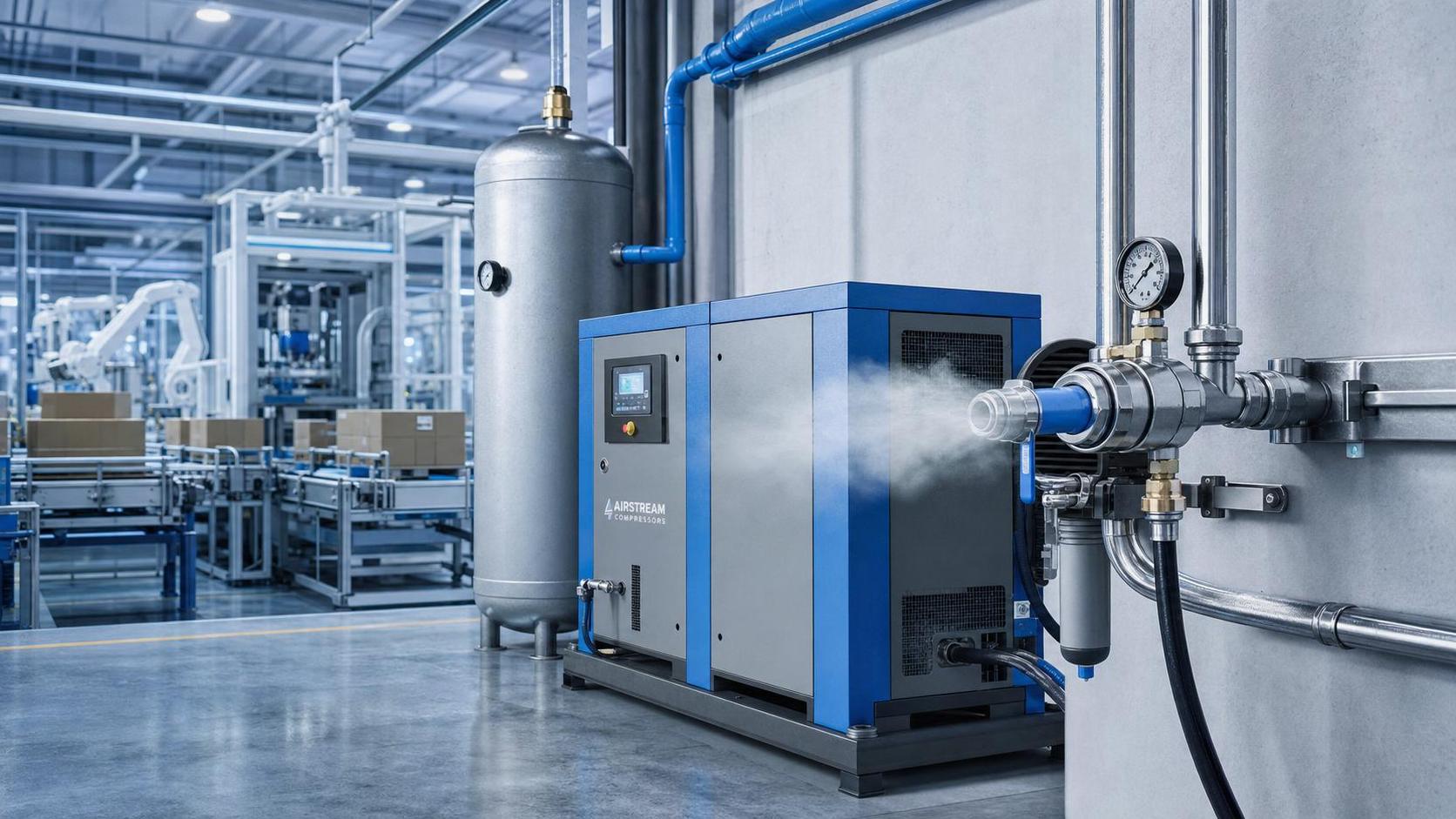
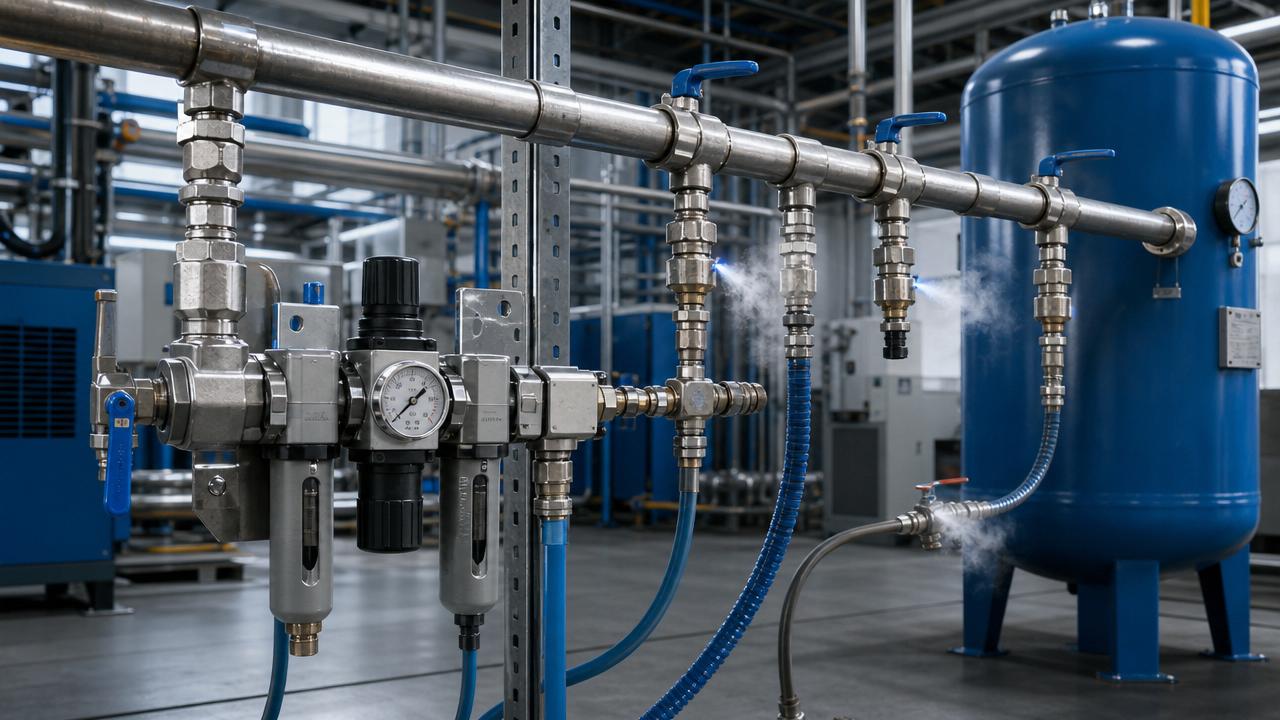
Leaks occur in couplings, hoses, fittings, valves, filters, and older distribution lines. Even small leaks add up because compressed air is generated at high energy cost.
Unmanaged demand is equally damaging. Operators may use compressed air for cooling, cleaning, or product movement where blowers, electric tools, or mechanical alternatives work better.
From a management perspective, leak detection and demand review are attractive because they usually require limited capital and can deliver fast, measurable savings.
A structured program should include ultrasonic leak surveys, repair tracking, responsibility assignment, and verification after maintenance. Without accountability, leaks simply return.
Decision-makers should also ask whether every point of use truly needs compressed air. Eliminating nonessential demand can postpone or avoid a major compressor investment.
Upgrade controls before assuming capacity is the problem
One common mistake is adding compressor capacity when the real issue is poor sequencing between existing machines. Multiple compressors may run inefficiently at partial load.
Modern master controllers can coordinate base-load, trim, and standby units more effectively. This reduces unloaded running hours, stabilizes pressure, and improves system efficiency.
For facilities with varying demand, controls are often one of the highest-value compressed air technology upgrades because they optimize assets already installed on site.
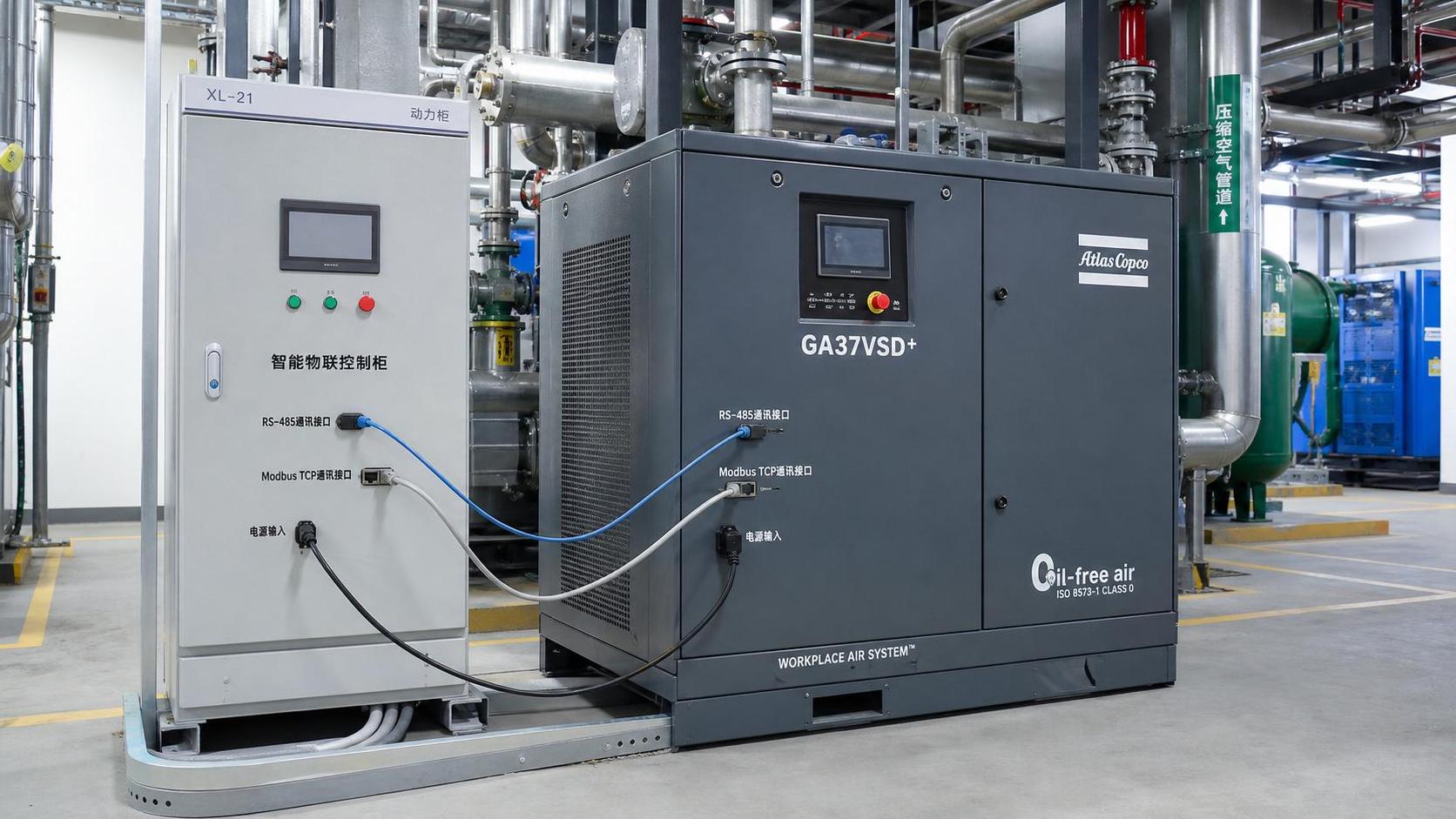
Better controls also support better decisions. They reveal trends in pressure, flow, machine utilization, alarms, and energy consumption that were previously hidden.
Business leaders should not view digital control upgrades as optional software. In many plants, they are a direct route to lower energy intensity and better reliability.
Use variable speed where demand really changes
Variable speed drive compressors are widely promoted, but they are not automatically the right answer in every system. Their value depends on load variation.
If demand fluctuates significantly during shifts, product changes, or seasonal cycles, variable speed technology can reduce unload losses and hold pressure more precisely.
However, if a plant runs at a stable high load, a fixed-speed base-load compressor may remain the more efficient option for that operating band.
The strategic lesson is clear: buy for profile, not for trend. Matching compressor technology to actual demand is what cuts energy loss most effectively.
Executives should ask suppliers for part-load performance data, annualized energy modeling, and control strategy assumptions. Nameplate efficiency alone is not enough.
Pressure optimization often delivers savings without disrupting production
Many facilities operate at higher pressure than process needs require. This is often done as a safety margin against pressure drops caused by poor piping or control instability.
Running at excess pressure increases power consumption and can worsen leakage. In many cases, reducing pressure safely lowers energy use across the whole system.
The challenge is operational confidence. Production teams fear that lower pressure could cause tool failure, process inconsistency, or unexpected stoppages.
This is why pressure optimization should be based on measurement and point-of-use validation. Critical users may need local boosters rather than higher pressure everywhere.
For management, this is a strong example of targeted capital allocation. Fixing distribution bottlenecks is often cheaper than over-pressurizing the entire network indefinitely.
Do not ignore dryers, filters, and distribution piping
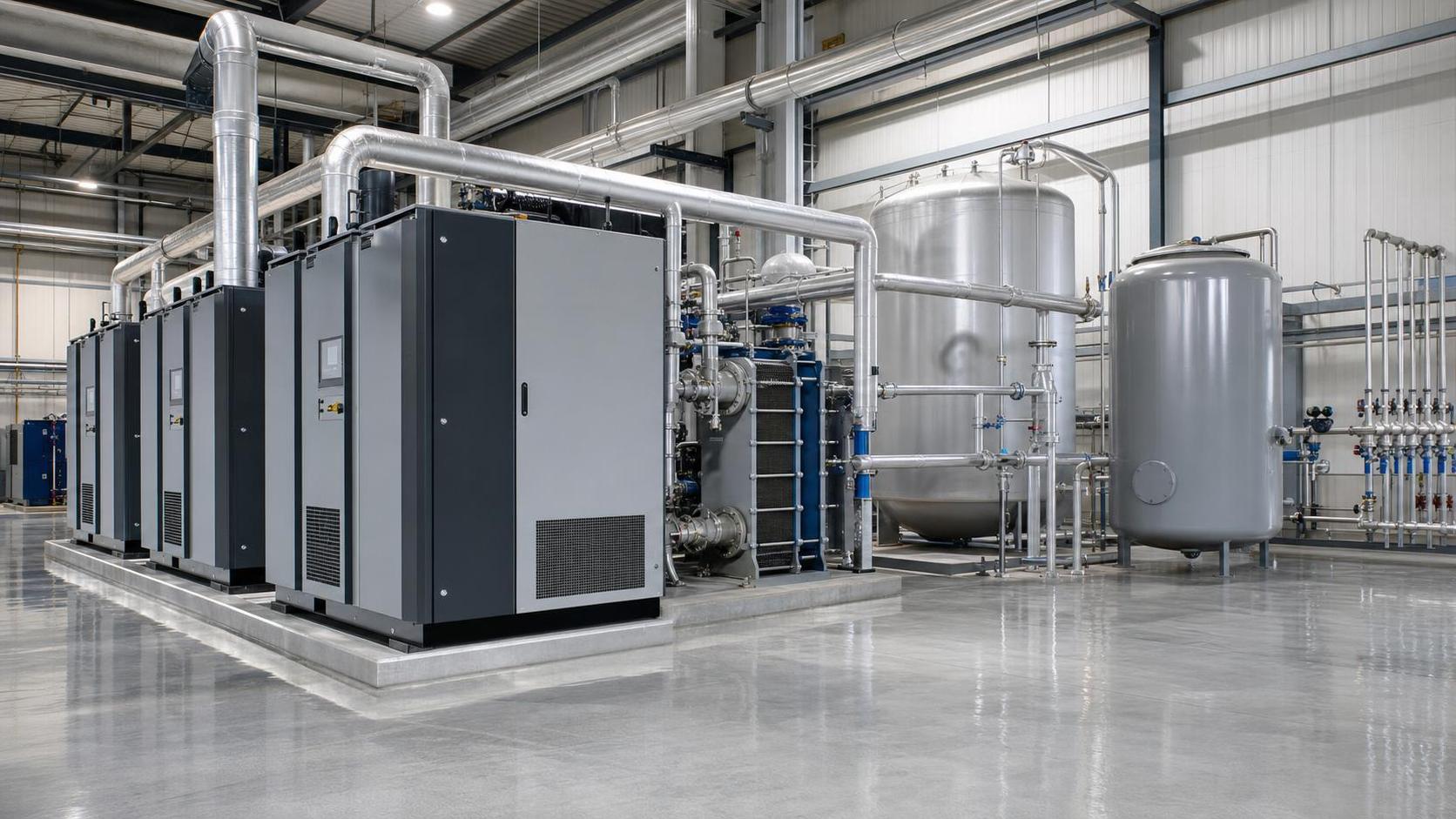
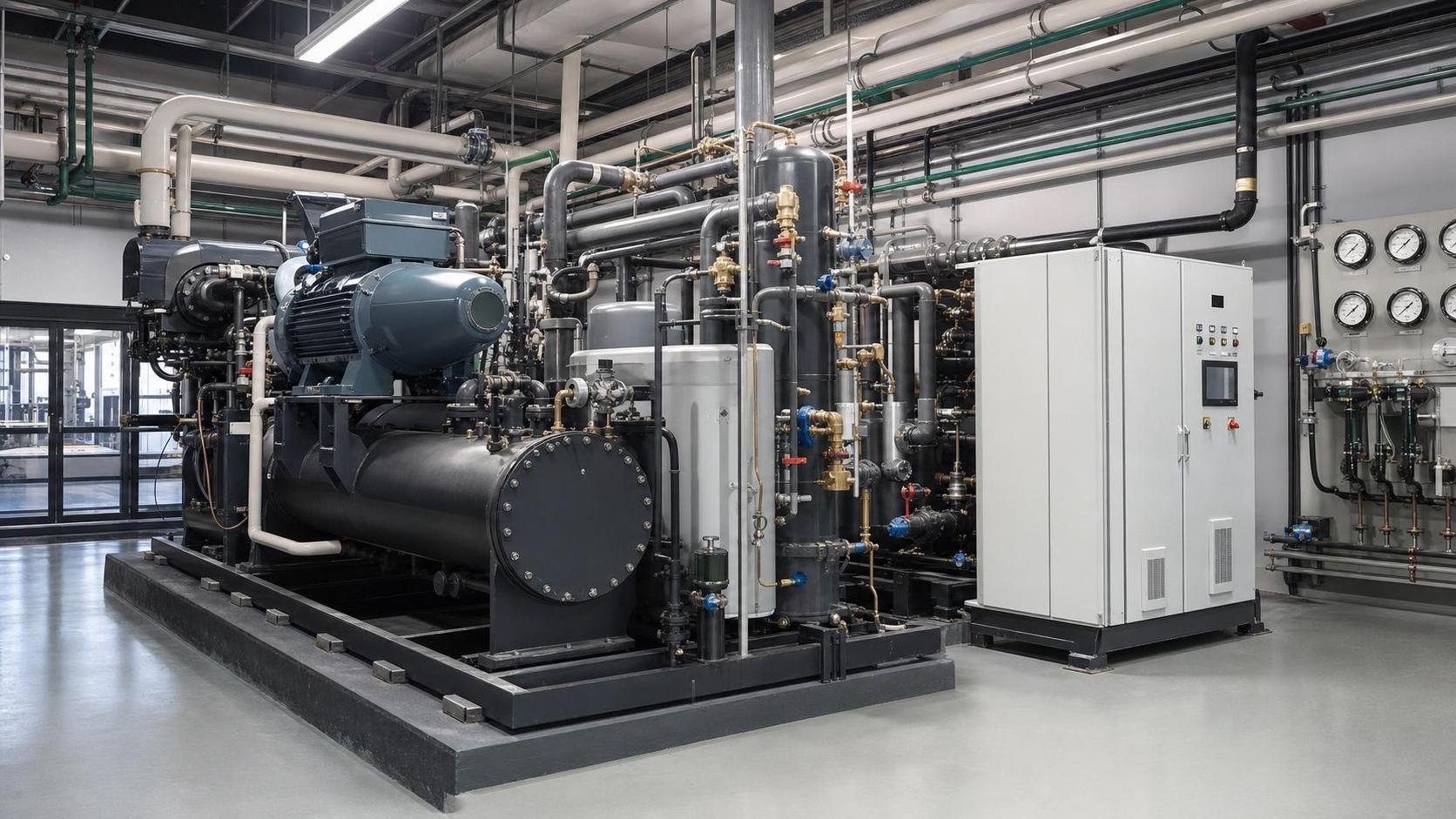
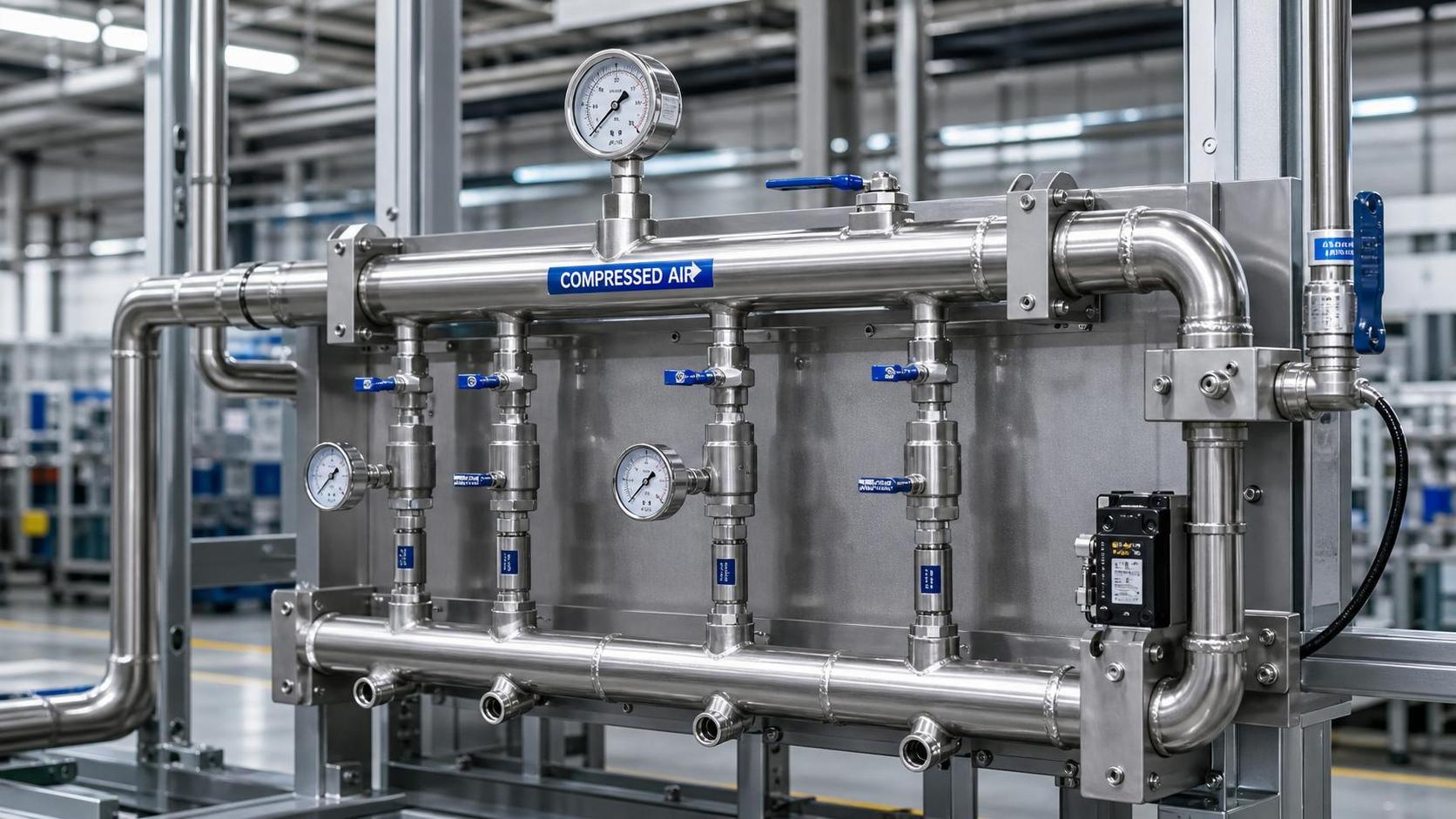
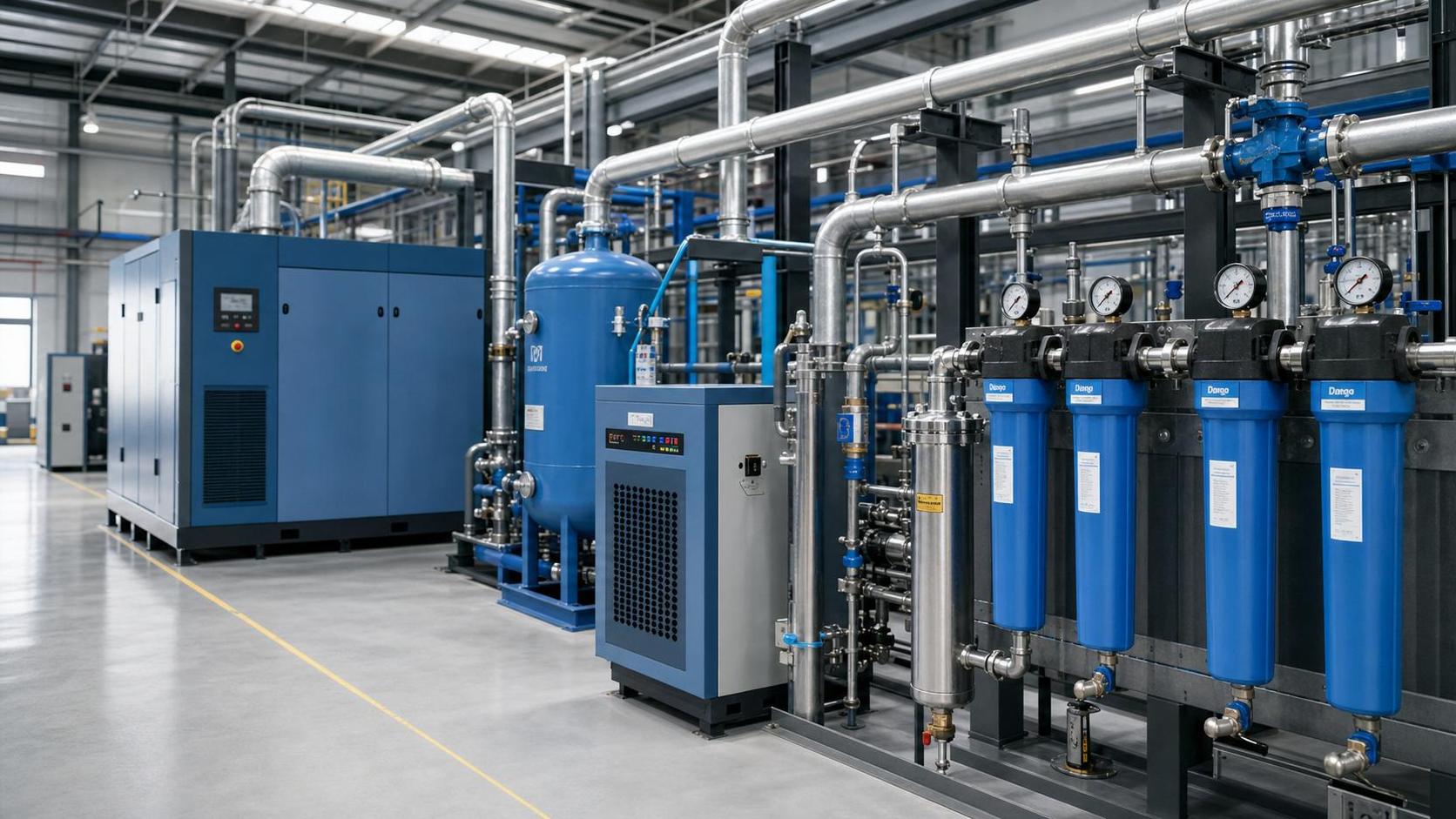
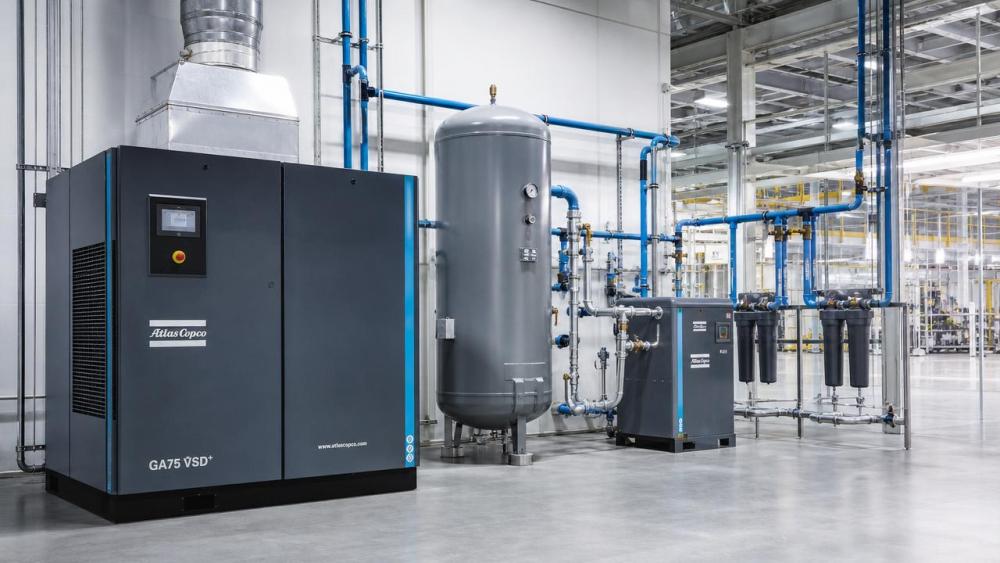
Compressed air technology is not just about the compressor. Treatment and distribution components can create major pressure loss and unnecessary operating cost.
Oversaturated filters, undersized dryers, poorly designed piping loops, and long dead-end runs all force compressors to work harder than they should.
In sectors such as pharmaceuticals, semiconductors, food, and precision manufacturing, air quality requirements make this even more important. Efficiency cannot compromise purity.
The best upgrade strategy balances quality and energy performance. Low-pressure-drop filters, right-sized dryers, and better piping layouts can cut waste while supporting compliance.
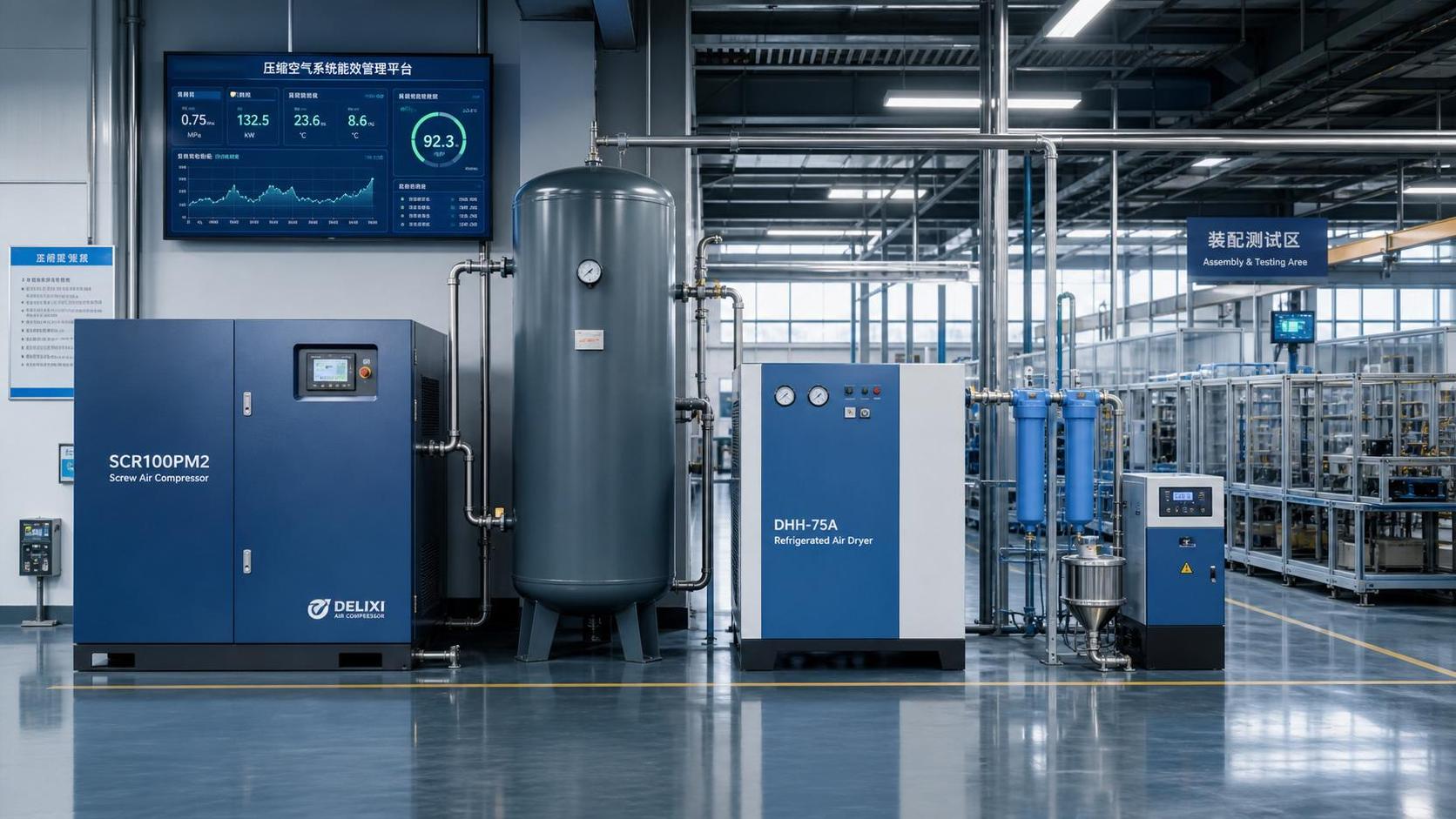
Decision-makers should request system-level recommendations, not isolated equipment quotes. Otherwise, gains in one area may be offset by losses elsewhere.
Heat recovery can turn waste into measurable financial value
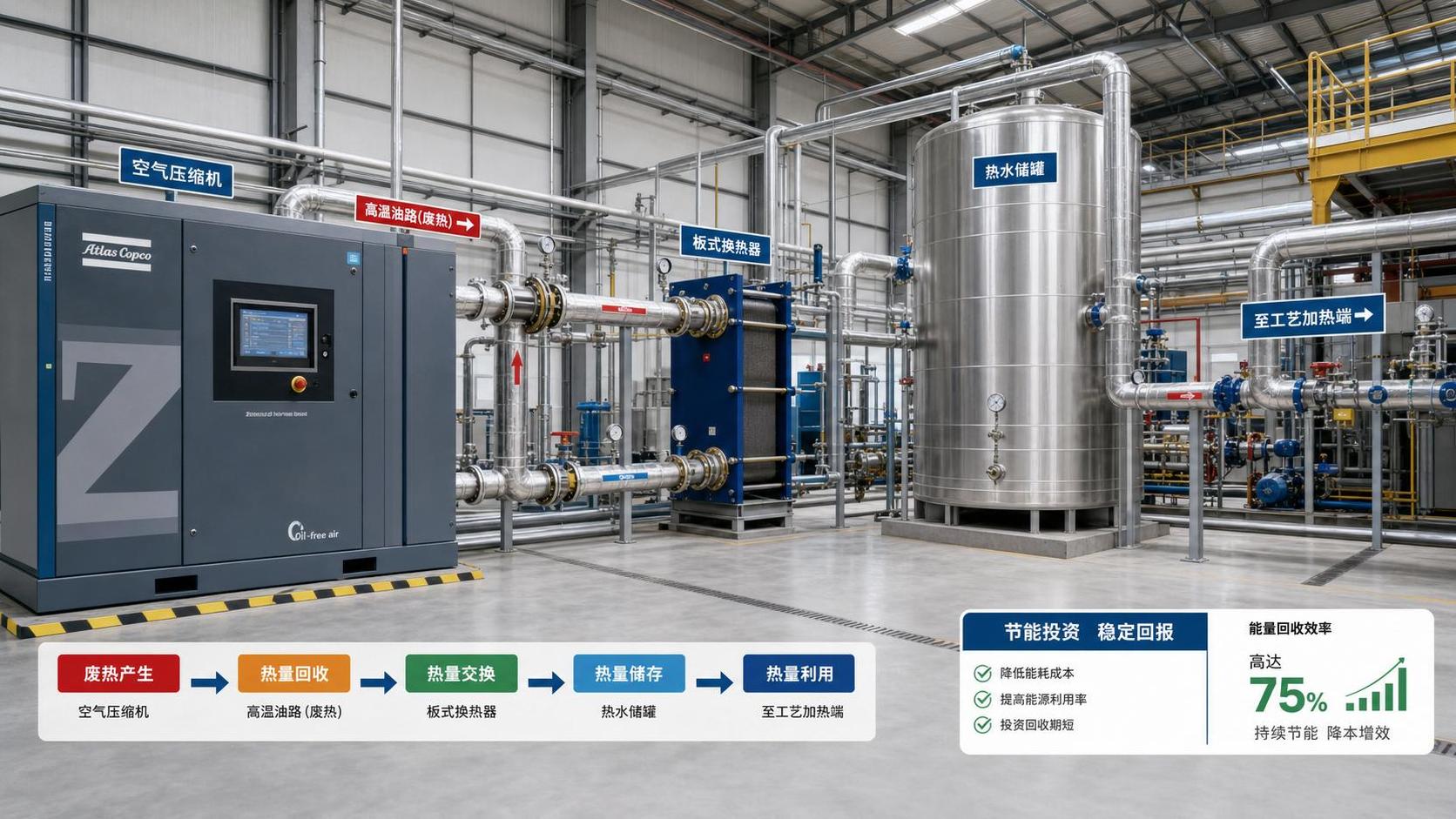
A large share of compressor input energy becomes heat. Without recovery, that energy is simply rejected to ambient or cooling systems and lost.
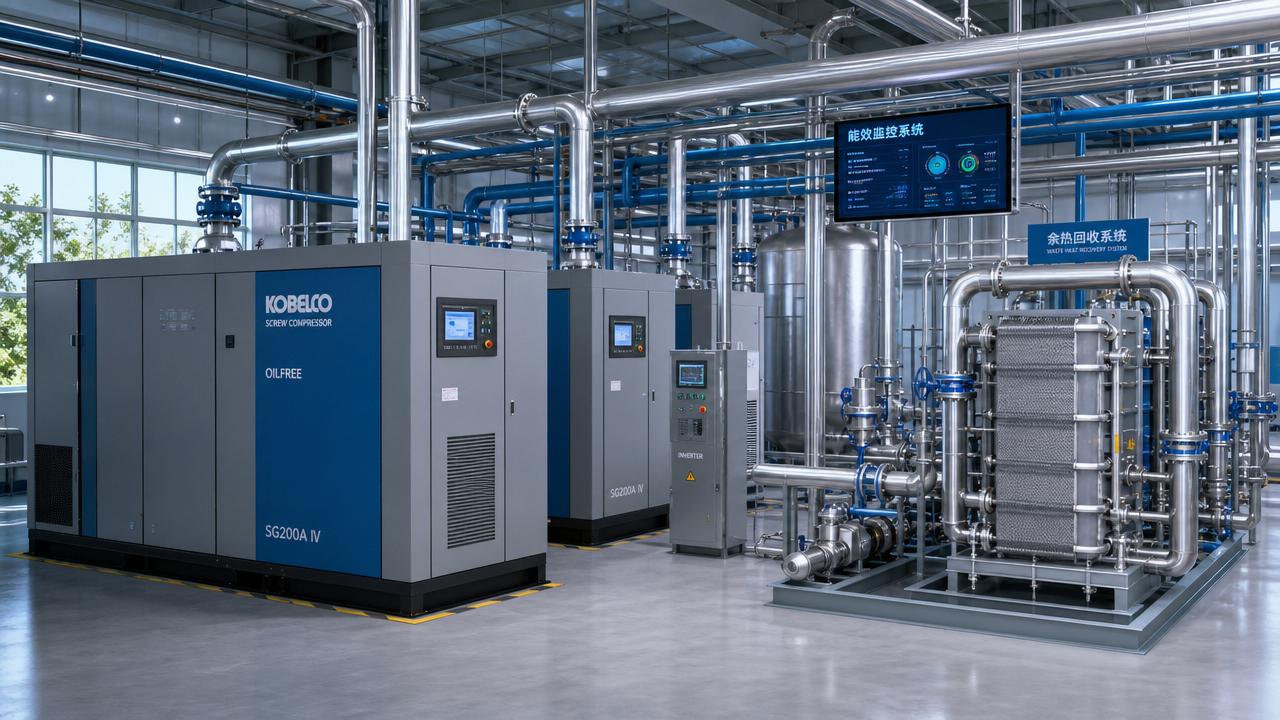
Heat recovery upgrades can capture this thermal output for space heating, boiler feedwater preheating, wash processes, or other low- to medium-temperature uses.
For plants with year-round thermal demand, this can materially improve project economics and shorten payback periods beyond what electricity savings alone would achieve.
This is especially relevant for companies evaluating decarbonization pathways. Recovering compressor heat supports broader energy efficiency goals with relatively mature technology.
Leaders should assess compressed air and thermal systems together. The strongest value often appears where power efficiency and heat reuse are planned as one investment case.
How to evaluate ROI without oversimplifying the decision
Payback matters, but simple payback alone can distort priorities. A cheaper project with quick savings may still deliver less long-term value than a deeper system upgrade.
A better evaluation includes annual energy reduction, maintenance savings, avoided downtime, production quality impact, carbon reduction, and future capacity flexibility.
Leaders should also consider risk-adjusted value. For example, replacing an aging compressor may be justified partly by reliability and spare parts exposure, not just efficiency.
Ask vendors and internal teams to model at least three scenarios: low-cost optimization, targeted modernization, and strategic system redesign. Comparison sharpens decision quality.
When reviewing proposals, insist on measurement assumptions, operating hours, pressure targets, electricity price inputs, and verification methods after commissioning.
What implementation risks should be managed early
Even good projects underperform when execution is weak. Common risks include inaccurate demand data, oversized equipment selection, poor integration with existing controls, and weak operator adoption.
Another frequent issue is fragmented procurement. Buying compressors, dryers, controls, and piping from separate scopes can create accountability gaps and suboptimal performance.
Operational disruption is also a concern, especially in high-throughput facilities. Planned shutdown windows, temporary supply arrangements, and commissioning sequences need early coordination.
For executive teams, governance matters. Assign a clear project owner, define performance metrics, and require post-installation verification against the original business case.
The goal is not simply to install new technology. It is to confirm that the system delivers the expected reduction in energy loss under real operating conditions.
A practical priority roadmap for compressed air technology upgrades
If a company wants to move quickly, the most effective roadmap usually starts with audit and metering, then leak reduction, control optimization, and pressure review.
Next comes treatment and distribution improvement, followed by compressor replacement or variable speed deployment where the operating profile supports it.
Heat recovery and advanced analytics should be evaluated as part of broader plant energy strategy, especially where thermal demand and decarbonization targets align.
This sequence works because it captures low-cost savings first, improves decision quality for larger investments, and reduces the risk of oversizing new equipment.
It also gives leadership a clearer capital narrative: fix waste, optimize assets, then modernize selectively where data proves the value.
Conclusion: the best upgrades cut energy loss by treating compressed air as a system
The most important takeaway for decision-makers is that compressed air technology upgrades create the highest value when approached as a system efficiency strategy.
Leaks, controls, pressure, treatment, distribution, compressor selection, and heat recovery all influence results. Focusing on one component alone often leaves major savings untouched.
For companies facing rising energy costs and tighter performance expectations, the priority is not technology for its own sake. It is measurable business improvement.
That means using data to identify loss, matching upgrades to operating reality, and evaluating returns across cost, reliability, and long-term resilience.
When done well, compressed air technology modernization does more than trim electricity use. It strengthens operating discipline and supports a more competitive industrial energy model.
Related News
- How Should Energy Management Systems Handle Compressor Load Changes?Author :Pneumatic Power Engineer

- Which Maintenance Issues Reduce Air Compressor Efficiency?Author :Pneumatic Power Engineer

- How Much Energy Can Variable-Speed Screw Compressors Save?Author :Pneumatic Power Engineer

- China Expands Cross-Border RMB and FX Cash Pooling NationwideAuthor :Pneumatic Power Engineer

- How to Size Air Compressor Systems for Pneumatics by Flow and Pressure DemandAuthor :Pneumatic Power Engineer

- How Energy Recovery Systems for Compressors Cut Power CostsAuthor :Pneumatic Power Engineer

- How to Evaluate Screw Compressors in Industrial Refrigeration EquipmentAuthor :Pneumatic Power Engineer

- India Makes BIS Certification Mandatory for Screw CompressorsAuthor :Pneumatic Power Engineer

- China Tightens Export Filing for Screw CompressorsAuthor :Pneumatic Power Engineer

- SABIC Sets IoT Interface Rule for Screw CompressorsAuthor :Pneumatic Power Engineer

- Industrial Heat Recovery Systems for Compressors: When Do Energy Savings Pay Back?Author :Pneumatic Power Engineer

- EU Tightens REACH Limit for Screw Compressor LubricantsAuthor :Pneumatic Power Engineer

- EU Opens China Screw Compressor Review With Carbon RuleAuthor :Pneumatic Power Engineer

- DOE Mandates AHRI 1000-2026 for Screw CompressorsAuthor :Pneumatic Power Engineer

- VDMA Filing Signals EU Risk for Chinese Oil Screw CompressorsAuthor :Pneumatic Power Engineer
![]()
- Screw vs Piston Air Compressors for Stable Plant OutputAuthor :Pneumatic Power Engineer

- Saudi SASO Tightens Refrigerant Limits in IEC 60335-2-40:2026Author :Pneumatic Power Engineer

- IIR Warns of 18-Week Lead Times for Screw CompressorsAuthor :Pneumatic Power Engineer

- Welded Compressed Air Manifold Selection Guide for Pressure Stability and LeaksAuthor :Pneumatic Power Engineer

- India BIS Rule Adds IS 16830 Requirement for Imported Screw CompressorsAuthor :Pneumatic Power Engineer

- What to Check Before Choosing a Compressed Air FactoryAuthor :Pneumatic Power Engineer

- China Tightens Export Checks on Screw CompressorsAuthor :Pneumatic Power Engineer

- Screw Compressor Lead Times Reach 22 WeeksAuthor :Pneumatic Power Engineer

- Vietnam Requires QR Labels on Imported Screw CompressorsAuthor :Pneumatic Power Engineer

- Compressed Air Technologies Filtration: How to Reduce Pressure Drop and Energy LossAuthor :Pneumatic Power Engineer

- STSPIN830 Lead Time Tops 32 Weeks in Screw CompressorsAuthor :Pneumatic Power Engineer

- IGBT Shortage Extends Screw Compressor Lead TimesAuthor :Pneumatic Power Engineer

- Compressed Air Systems: 7 Hidden Costs That Raise Total Operating ExpenseAuthor :Pneumatic Power Engineer

- Compressed Air Efficiency: 7 Hidden Losses That Raise Operating CostsAuthor :Pneumatic Power Engineer

- How to Compare Screw vs Oil-Free Air Compression SystemsAuthor :Pneumatic Power Engineer

- Compressed Air Leaks: What They Really Cost in Daily OperationsAuthor :Pneumatic Power Engineer

- DOE Moves Up R449A Chiller Deadline to March 2027Author :Pneumatic Power Engineer

- How Compression Technology Cuts Energy Use in Modern PlantsAuthor :Pneumatic Power Engineer

- EU Adds GB 18613-2025 to Import Energy ChecksAuthor :Pneumatic Power Engineer

- EU CE Rule Adds SRA for R290 Compressor ImportsAuthor :Pneumatic Power Engineer

- Compressed Air Leaks: Hidden Costs and Practical Ways to Reduce LossesAuthor :Pneumatic Power Engineer