Air Compression Energy Losses and How to Reduce Them




Air compression is essential to daily industrial operations, but every leak, pressure drop, poor maintenance habit, or oversized system quietly turns energy into avoidable cost. For operators on the front line, understanding where these losses occur is the first step toward safer, more efficient production. This article explains the main causes of compressed air energy waste and outlines practical ways to reduce consumption, improve system reliability, and support lower-carbon, high-efficiency manufacturing.
Where Does Air Compression Energy Disappear in Daily Operation?
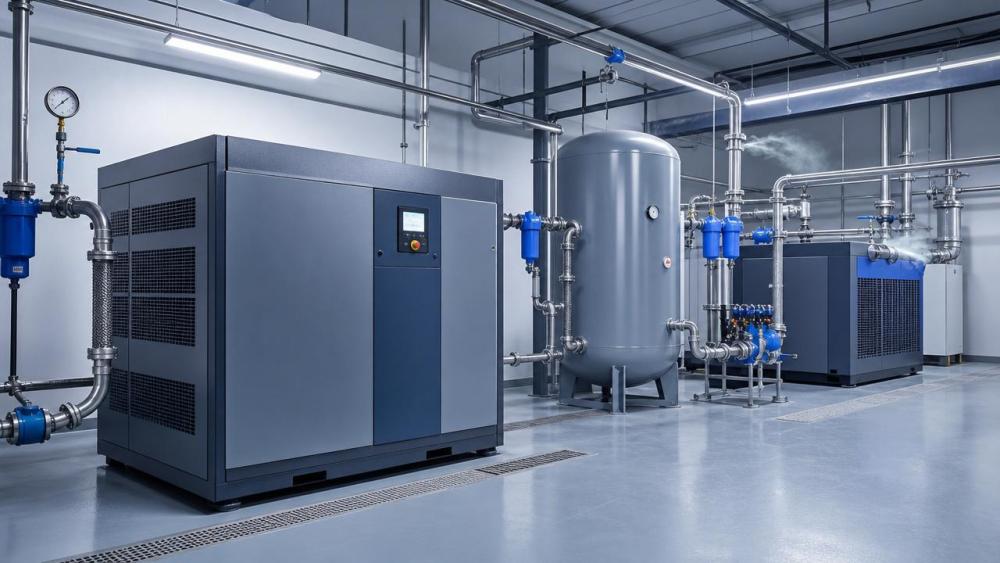
In many plants, air compression is treated as a utility that simply must be available. Operators hear the compressor running and assume the system is working.
The hidden problem is that compressed air is one of the most energy-intensive power carriers. Most input electricity becomes heat, not useful work at the tool.
Losses usually appear as small faults: hissing couplings, dirty filters, unstable pressure, wet air, or compressors cycling when demand is low.
A practical loss map for operators
- Generation losses occur inside the compressor when inlet conditions, mechanical wear, or inefficient controls increase power draw.
- Treatment losses occur across dryers, filters, separators, and aftercoolers when pressure drop rises beyond normal operating limits.
- Distribution losses occur in pipework, fittings, valves, hoses, and quick connectors that leak or restrict airflow.
- End-use losses occur when operators use compressed air for blowing, cooling, agitation, or cleaning without flow control.
GTC-Matrix views air compression as part of the industrial “Power Heart.” Every pressure decision affects thermal load, utility cost, downtime risk, and carbon performance.
Which Loss Sources Cost Operators the Most?
Operators need a fast way to separate visible faults from expensive faults. The table below summarizes common air compression losses across mixed industrial sites.
This loss map helps operators focus on measurable symptoms. A good air compression improvement program begins with pressure, flow, runtime, and leak evidence.
Why Oversized or Poorly Controlled Systems Waste Air Compression Energy
Oversizing often looks safe during procurement, but it can punish daily operation. A compressor that is too large may spend long periods unloaded.
Unloaded running still consumes electricity. The motor turns, oil circulates, controls remain active, and heat continues entering the compressor room.
Control modes operators should understand
The right control strategy depends on demand pattern, pressure stability, storage volume, and acceptable response time. The table gives a field-level comparison.
No single control mode is always right. Operators should track real air compression demand before recommending replacement, expansion, or control upgrades.
How to Reduce Leaks Without Disrupting Production
Leaks are the most familiar air compression loss because operators can often hear them. Yet many leaks remain unfixed because production pressure stays acceptable.
A leak program works best when it fits shift routines. It should not depend on rare shutdowns or complex engineering reports.
A simple leak-reduction workflow
- Walk the system during quiet periods and note audible leakage at hoses, couplings, cylinders, drains, and unused branches.
- Use a tag with location, estimated severity, equipment owner, and safety concern so repairs do not disappear between shifts.
- Prioritize leaks closest to headers, high-pressure zones, and machines running continuously across multiple shifts.
- After repair, verify pressure stability and compressor load time rather than assuming the fitting replacement solved the issue.
In air compression systems, a leak is not just lost air. It increases compressor heat, shortens service intervals, and may hide supply constraints.
Pressure Drop: The Quiet Penalty in Filters, Pipes, and Dryers
Pressure drop is less obvious than leakage. Operators may see acceptable compressor discharge pressure while tools still feel weak downstream.
When pressure drop increases, teams often raise compressor setpoint. That solves the symptom but raises air compression energy consumption across the whole network.
Checkpoints for restriction control
- Record pressure before and after coalescing filters, particulate filters, dryers, and critical isolation valves.
- Inspect condensate drain behavior because stuck-open drains waste air while blocked drains damage downstream air quality.
- Review pipe branches where multiple machines were added over time without resizing the original distribution line.
- Avoid using undersized flexible hoses as permanent piping for high-demand tools or automated production cells.
Good air compression management treats pressure as a delivered value, not just a compressor display number. Measure where the process actually uses air.
Air Quality, Drying, and Energy: What Should Operators Balance?
Dry, clean air protects valves, instruments, pneumatic cylinders, paint lines, food packaging, and semiconductor-related support equipment. But treatment equipment can add losses.
The goal is not minimum treatment. The goal is the right treatment level for each process, with pressure drop and purge losses controlled.
Typical application decisions
Different industries need different air compression quality targets. Operators should confirm the real process requirement before adding dryers or raising pressure.
Standards such as ISO 8573 are often used to describe compressed air quality classes. Operators should use such references carefully and avoid over-specifying every branch.
Maintenance Habits That Lower Air Compression Consumption
Maintenance affects energy as much as reliability. A compressor can be running, delivering air, and still wasting power because basic conditions drift.
Operator checks with high practical value
- Keep intake filters clean because restricted inlet air reduces compressor performance and can increase discharge temperature.
- Check cooler cleanliness because poor heat rejection raises operating temperature and may trigger protective derating.
- Monitor oil level and condition where oil-lubricated equipment is used, following the manufacturer’s service interval.
- Confirm automatic drains are cycling correctly, especially after seasonal humidity changes or condensate load increases.
- Log loaded hours, unloaded hours, starts, discharge pressure, and alarms so trend changes are visible before failure.
GTC-Matrix emphasizes the link between thermal management and air compression efficiency. Heat, pressure, flow, and maintenance data should be read together.
Procurement and Upgrade Decisions: What Should Front-Line Teams Ask?
Operators may not sign the purchase order, but their observations often determine whether a new air compression solution will work in real production.
Before buying a compressor, dryer, receiver, or control system, teams should gather actual demand evidence instead of relying only on nameplate assumptions.
Questions that prevent expensive mismatch
- What is the minimum required pressure at the most sensitive process during peak demand?
- Does demand stay steady, change by shift, or spike during cleaning, packaging, or batch transfer?
- Are current complaints caused by compressor capacity, pipe restrictions, poor controls, or leaking end-use equipment?
- What air quality class is required by the process, and which branches do not need the same treatment level?
- Will installation require downtime, pipe modification, electrical upgrade, extra ventilation, or compliance documentation?
A strong procurement decision is based on duty cycle, lifecycle cost, service access, controls, and air quality requirement, not only purchase price.
Cost Reduction Priorities When Budget Is Limited
Many sites cannot replace equipment immediately. That does not mean air compression savings must wait for a major capital project.
The best early actions are measurable, low disruption, and easy for operators to repeat. They also build evidence for future investment.
Practical priority order
- Fix leaks and failed drains first because they waste air continuously, even when production demand is low.
- Reduce pressure gradually after confirming the critical user, then watch machine performance and compressor loading.
- Replace blocked filters and review dryer operation where pressure drop has become a routine complaint.
- Add receiver storage or improve sequencing if compressors cycle excessively or overlap inefficiently.
- Consider controls, variable-speed equipment, or system redesign when logged data shows persistent mismatch.
This sequence helps operators protect production while reducing wasted air compression energy. It also avoids replacing equipment before root causes are confirmed.
Compliance, Safety, and Documentation Operators Should Not Ignore
Compressed air is stored energy. Efficiency improvements must not compromise pressure vessel safety, machine guarding, process hygiene, or documented quality control.
Common compliance reference points
- Pressure vessels and receivers should be inspected according to applicable local regulations and plant safety procedures.
- Air quality specifications may reference ISO 8573 when moisture, oil, or particulate limits affect product quality.
- Energy management programs may align with ISO 50001 principles by measuring baseline consumption and verifying improvements.
- Lockout, depressurization, and stored-energy procedures are essential before repairing leaks, drains, valves, or pneumatic actuators.
Operators should document air compression changes clearly. A pressure adjustment that works today may create confusion if the next shift cannot see the reason.
FAQ: Operator Questions About Air Compression Losses
How low can we set air compression pressure safely?
Start with the most pressure-sensitive process, not the compressor outlet. Lower setpoint in small steps, monitor machine response, and record alarms or cycle-time changes.
Are leaks still important if the compressor has spare capacity?
Yes. Spare capacity does not mean free air. Leaks increase runtime, heat load, maintenance demand, and future capacity pressure when production expands.
Should every plant choose a variable-speed compressor?
Not always. Variable-speed equipment helps fluctuating demand, but steady high-load sites may benefit more from correct sizing, sequencing, and adequate storage.
What is the easiest air compression metric to start tracking?
Track loaded hours versus total powered hours, discharge pressure, and main header pressure. These simple readings reveal control issues and pressure losses quickly.
Why Choose GTC-Matrix for Air Compression Intelligence and Decision Support?
GTC-Matrix connects thermodynamics analysis, pneumatic power engineering, and industrial economics for teams managing compressed air, cooling, vacuum, and heat exchange systems.
For operators, this means practical intelligence that links daily symptoms with system-level decisions. A leak, dryer issue, or pressure complaint becomes actionable evidence.
Consultation topics we can help clarify
- Parameter confirmation, including pressure range, flow demand, duty cycle, air quality class, and thermal operating conditions.
- Product selection logic for compressors, dryers, receivers, filtration, control systems, and energy monitoring architecture.
- Custom solution review for complex sites with multiple shifts, mixed demand zones, high-purity air needs, or restricted installation windows.
- Certification and documentation discussion, including common references for air quality, energy management, and pressure equipment safety.
- Quotation preparation and delivery-cycle communication based on realistic technical scope rather than incomplete equipment lists.
If your air compression system shows rising energy cost, unstable pressure, frequent alarms, or unclear upgrade options, consult GTC-Matrix for structured technical guidance.
Thermal Driving Industry, Intelligence Connecting Power: our role is to help industrial teams turn compressed air data into safer, leaner, lower-carbon operation.
Ready when you are. Send us a message to get started.
Related News
- When does variable gas flow justify a custom screw compressor system?Author :Pneumatic Power Engineer

- How to size compressed air equipment for pneumatic toolsAuthor :Pneumatic Power Engineer

- How Should Energy Management Systems Handle Compressor Load Changes?Author :Pneumatic Power Engineer

- Which Maintenance Issues Reduce Air Compressor Efficiency?Author :Pneumatic Power Engineer

- How Much Energy Can Variable-Speed Screw Compressors Save?Author :Pneumatic Power Engineer

- Industrial Compressor Selection: Matching Flow, Pressure, and Duty CycleAuthor :Pneumatic Power Engineer

- China Expands Cross-Border RMB and FX Cash Pooling NationwideAuthor :Pneumatic Power Engineer

- How to Size Air Compressor Systems for Pneumatics by Flow and Pressure DemandAuthor :Pneumatic Power Engineer

- How Energy Recovery Systems for Compressors Cut Power CostsAuthor :Pneumatic Power Engineer

- How to Evaluate Screw Compressors in Industrial Refrigeration EquipmentAuthor :Pneumatic Power Engineer

- India Makes BIS Certification Mandatory for Screw CompressorsAuthor :Pneumatic Power Engineer

- China Tightens Export Filing for Screw CompressorsAuthor :Pneumatic Power Engineer

- SABIC Sets IoT Interface Rule for Screw CompressorsAuthor :Pneumatic Power Engineer

- Industrial Heat Recovery Systems for Compressors: When Do Energy Savings Pay Back?Author :Pneumatic Power Engineer

- EU Tightens REACH Limit for Screw Compressor LubricantsAuthor :Pneumatic Power Engineer

- EU Opens China Screw Compressor Review With Carbon RuleAuthor :Pneumatic Power Engineer

- DOE Mandates AHRI 1000-2026 for Screw CompressorsAuthor :Pneumatic Power Engineer

- VDMA Filing Signals EU Risk for Chinese Oil Screw CompressorsAuthor :Pneumatic Power Engineer
![]()
- Screw vs Piston Air Compressors for Stable Plant OutputAuthor :Pneumatic Power Engineer

- Saudi SASO Tightens Refrigerant Limits in IEC 60335-2-40:2026Author :Pneumatic Power Engineer

- IIR Warns of 18-Week Lead Times for Screw CompressorsAuthor :Pneumatic Power Engineer

- Welded Compressed Air Manifold Selection Guide for Pressure Stability and LeaksAuthor :Pneumatic Power Engineer

- India BIS Rule Adds IS 16830 Requirement for Imported Screw CompressorsAuthor :Pneumatic Power Engineer

- What to Check Before Choosing a Compressed Air FactoryAuthor :Pneumatic Power Engineer

- China Tightens Export Checks on Screw CompressorsAuthor :Pneumatic Power Engineer

- Screw Compressor Lead Times Reach 22 WeeksAuthor :Pneumatic Power Engineer

- Vietnam Requires QR Labels on Imported Screw CompressorsAuthor :Pneumatic Power Engineer

- Compressed Air Technologies Filtration: How to Reduce Pressure Drop and Energy LossAuthor :Pneumatic Power Engineer

- STSPIN830 Lead Time Tops 32 Weeks in Screw CompressorsAuthor :Pneumatic Power Engineer

- IGBT Shortage Extends Screw Compressor Lead TimesAuthor :Pneumatic Power Engineer

- Compressed Air Systems: 7 Hidden Costs That Raise Total Operating ExpenseAuthor :Pneumatic Power Engineer

- Compressed Air Efficiency: 7 Hidden Losses That Raise Operating CostsAuthor :Pneumatic Power Engineer

- How to Compare Screw vs Oil-Free Air Compression SystemsAuthor :Pneumatic Power Engineer

- Compressed Air Leaks: What They Really Cost in Daily OperationsAuthor :Pneumatic Power Engineer

- DOE Moves Up R449A Chiller Deadline to March 2027Author :Pneumatic Power Engineer

- How Compression Technology Cuts Energy Use in Modern PlantsAuthor :Pneumatic Power Engineer