



ISO 8573-7:2026 Enters Force: Nanoparticle Limits for Oil-Flooded Screw Compressed Air




On May 1, 2026, ISO 8573-7:2026 — Compressed Air — Part 7: Test Methods for Oil Mist and Nanoparticles — entered into global force, establishing for the first time a maximum allowable concentration of sub-100 nm particles (≤0.01 mg/m³) in the discharge air of oil-flooded screw compressors. This standard directly affects manufacturers and end-users in pharmaceutical cleanroom environments, automotive Tier 1 supply chains, and other high-purity compressed air applications — particularly those targeting EU GMP-certified facilities or German OEM requirements.
Event Overview
Effective May 1, 2026, ISO 8573-7:2026 became globally applicable. It specifies test methods and sets an upper limit of ≤0.01 mg/m³ for nanoparticles smaller than 100 nm in compressed air from oil-lubricated screw compressors. According to data released by the China Compressor Industry Association, only 31% of domestically produced oil-flooded screw compressor models have passed TÜV Rheinland’s nanoparticle testing under this new requirement. Non-compliant units are excluded from high-end clean-air projects, including EU GMP pharmaceutical plants and German automotive Tier 1 supplier facilities.
Industries Affected by This Standard
Direct Exporters and Trade Enterprises
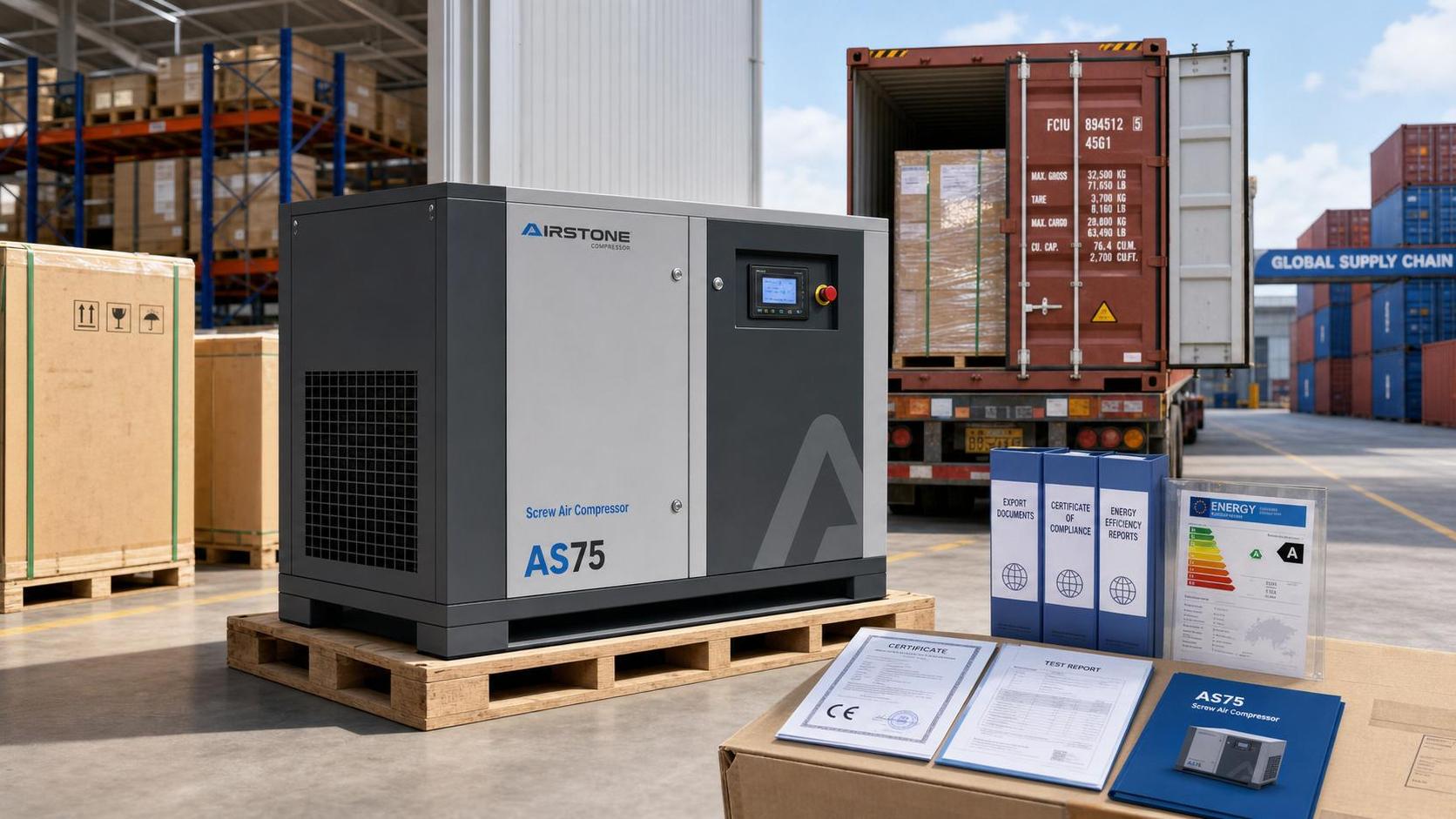
Exporters supplying oil-flooded screw compressors to the EU or Germany face immediate market access restrictions. Compliance is now a prerequisite for tender eligibility in regulated sectors — especially where compressed air contacts drug products or precision assembly processes. Failure to meet the nanoparticle limit may result in rejected bids, contract cancellations, or mandatory retrofitting post-shipment.
Original Equipment Manufacturers (OEMs) and System Integrators
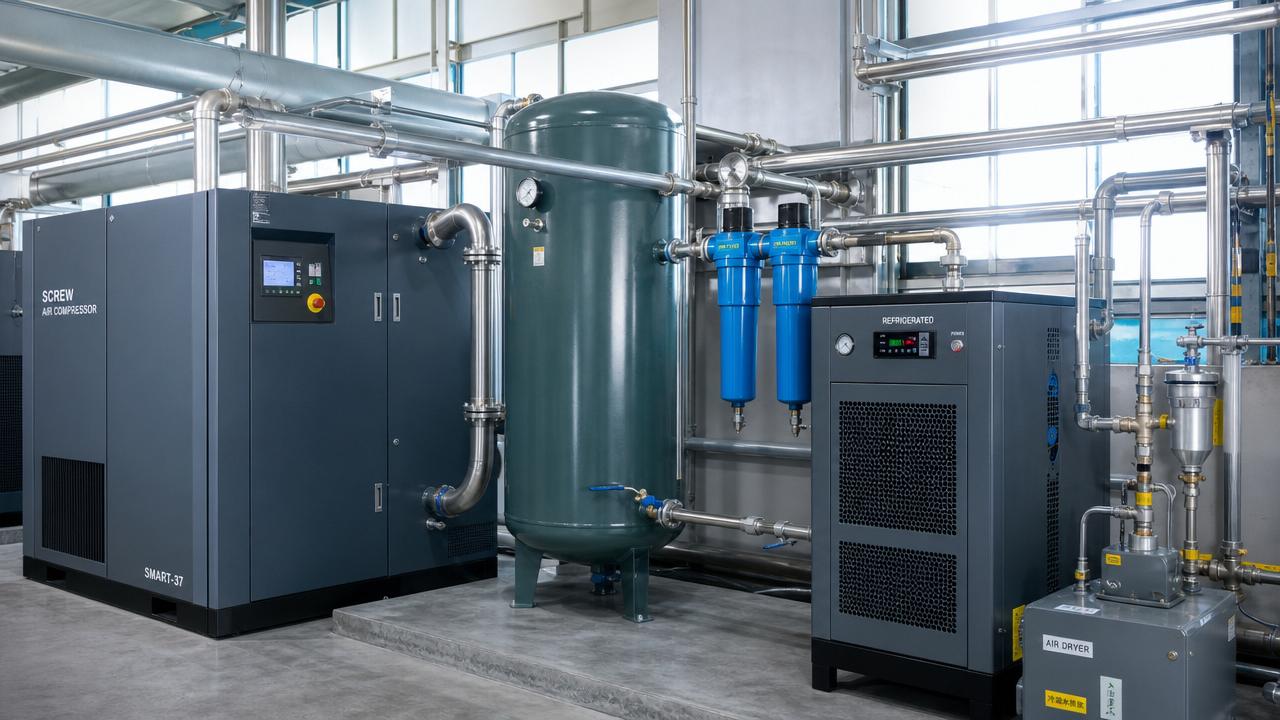
OEMs integrating compressors into clean-air systems (e.g., for pharmaceutical packaging lines or battery dry rooms) must verify nanoparticle compliance at the component level. Since ISO 8573-7:2026 applies to the compressor’s exhaust stream — not downstream filtration — upstream selection becomes critical. Relying on post-compressor filters alone does not satisfy the standard unless validated as part of an integrated, certified system.
End-User Facilities in Regulated Sectors
GMP-certified pharmaceutical plants, medical device manufacturers, and Tier 1 automotive suppliers operating in Germany or exporting to the EU must now include nanoparticle verification in their compressed air validation protocols. Audit readiness requires documented evidence of compressor model certification — not just general oil content (ISO 8573-1 Class 0) or particulate class (ISO 8573-1 Class 1).
What Relevant Enterprises or Practitioners Should Monitor and Do Now
Confirm official interpretation and implementation guidance from national standards bodies
While ISO 8573-7:2026 is published, national adoptions (e.g., GB/T equivalents in China or DIN EN transpositions in Germany) may include transitional provisions or enforcement timelines. Enterprises should track updates from SAC (Standardization Administration of China), DIN, or CEN to determine whether grandfathering applies to existing installations or contracts signed before May 2026.
Identify high-risk product lines and target markets requiring immediate verification
Manufacturers should prioritize models sold into EU pharmaceutical or German automotive channels. TÜV Rheinland and other accredited labs report extended lead times for nanoparticle testing; early engagement with testing providers is advisable. Models previously certified only to ISO 8573-1 Class 0 (oil-free) are not automatically compliant — nanoparticle measurement is a separate, mandatory test per ISO 8573-7:2026.
Distinguish between regulatory signal and operational enforcement
Analysis shows that while the standard is formally effective, initial enforcement is likely project- or audit-driven rather than blanket-mandated. For example, EU GMP inspectors may request nanoparticle data during facility qualification, but routine surveillance audits may not yet include it. Enterprises should treat compliance as a procurement and validation requirement — not solely a certification checkbox.
Prepare technical documentation and supplier communication protocols
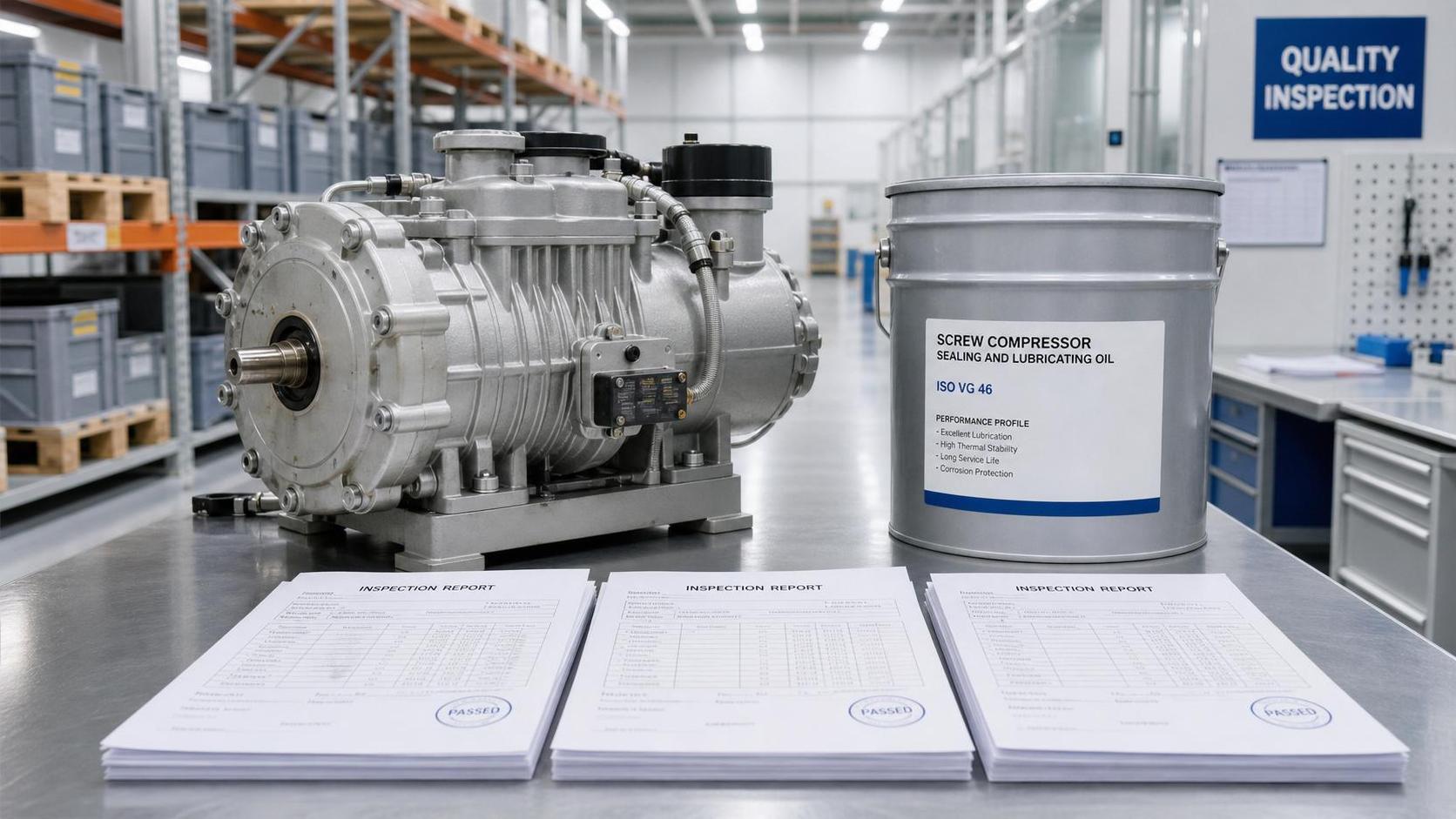
Procurement teams should update specification sheets and tender documents to explicitly reference ISO 8573-7:2026 nanoparticle limits. Suppliers must provide third-party test reports (not internal claims) showing measured values ≤0.01 mg/m³ under defined test conditions (e.g., ISO 8573-7 Annex B). Internal validation teams should align sampling and reporting procedures with the standard’s methodology.
Editorial Perspective / Industry Observation
Observably, ISO 8573-7:2026 represents a shift from broad purity classes toward quantifiable, health- and process-relevant metrics — specifically nanoparticle exposure risk in inhalation-critical or surface-contamination-sensitive operations. From an industry perspective, this is less a sudden regulatory shock and more a formalized escalation of long-standing engineering concerns about ultrafine aerosol carryover in oil-flooded compression. Current adoption patterns suggest it functions primarily as a market gatekeeper for premium segments rather than a universal baseline — meaning its practical impact remains concentrated in high-compliance-value applications. Continued attention is warranted as downstream standards (e.g., ISO 8573-1 revisions or EU pharmacopoeia updates) may incorporate or reference its thresholds.
Conclusion
This standard marks the institutionalization of nanoparticle control as a non-negotiable parameter in select high-integrity compressed air applications. It does not replace existing oil or particle class requirements but adds a new, independent verification layer focused on sub-100 nm aerosols. For affected stakeholders, it is best understood not as a generalized industry upgrade, but as a targeted technical barrier for specific export markets and regulated end uses — one requiring model-level validation, not system-level assumptions.
Source Attribution
Main source: Official publication of ISO 8573-7:2026 (International Organization for Standardization); supporting data from China Compressor Industry Association (2026 public briefing); TÜV Rheinland nanoparticle testing protocol documentation.
Note: National implementation timelines and enforcement practices remain subject to observation and may vary by jurisdiction.
Related News
- China Expands Cross-Border RMB and FX Cash Pooling NationwideAuthor :Pneumatic Power Engineer

- How to Size Air Compressor Systems for Pneumatics by Flow and Pressure DemandAuthor :Pneumatic Power Engineer

- How Energy Recovery Systems for Compressors Cut Power CostsAuthor :Pneumatic Power Engineer

- How to Evaluate Screw Compressors in Industrial Refrigeration EquipmentAuthor :Pneumatic Power Engineer

- India Makes BIS Certification Mandatory for Screw CompressorsAuthor :Pneumatic Power Engineer

- China Tightens Export Filing for Screw CompressorsAuthor :Pneumatic Power Engineer

- SABIC Sets IoT Interface Rule for Screw CompressorsAuthor :Pneumatic Power Engineer

- Industrial Heat Recovery Systems for Compressors: When Do Energy Savings Pay Back?Author :Pneumatic Power Engineer

- EU Tightens REACH Limit for Screw Compressor LubricantsAuthor :Pneumatic Power Engineer

- EU Opens China Screw Compressor Review With Carbon RuleAuthor :Pneumatic Power Engineer

- DOE Mandates AHRI 1000-2026 for Screw CompressorsAuthor :Pneumatic Power Engineer

- VDMA Filing Signals EU Risk for Chinese Oil Screw CompressorsAuthor :Pneumatic Power Engineer
![]()
- Screw vs Piston Air Compressors for Stable Plant OutputAuthor :Pneumatic Power Engineer

- Saudi SASO Tightens Refrigerant Limits in IEC 60335-2-40:2026Author :Pneumatic Power Engineer

- IIR Warns of 18-Week Lead Times for Screw CompressorsAuthor :Pneumatic Power Engineer

- Welded Compressed Air Manifold Selection Guide for Pressure Stability and LeaksAuthor :Pneumatic Power Engineer

- India BIS Rule Adds IS 16830 Requirement for Imported Screw CompressorsAuthor :Pneumatic Power Engineer

- What to Check Before Choosing a Compressed Air FactoryAuthor :Pneumatic Power Engineer

- China Tightens Export Checks on Screw CompressorsAuthor :Pneumatic Power Engineer

- Screw Compressor Lead Times Reach 22 WeeksAuthor :Pneumatic Power Engineer

- Vietnam Requires QR Labels on Imported Screw CompressorsAuthor :Pneumatic Power Engineer

- Compressed Air Technologies Filtration: How to Reduce Pressure Drop and Energy LossAuthor :Pneumatic Power Engineer

- STSPIN830 Lead Time Tops 32 Weeks in Screw CompressorsAuthor :Pneumatic Power Engineer

- IGBT Shortage Extends Screw Compressor Lead TimesAuthor :Pneumatic Power Engineer

- Compressed Air Systems: 7 Hidden Costs That Raise Total Operating ExpenseAuthor :Pneumatic Power Engineer

- Compressed Air Efficiency: 7 Hidden Losses That Raise Operating CostsAuthor :Pneumatic Power Engineer

- How to Compare Screw vs Oil-Free Air Compression SystemsAuthor :Pneumatic Power Engineer

- Compressed Air Leaks: What They Really Cost in Daily OperationsAuthor :Pneumatic Power Engineer

- DOE Moves Up R449A Chiller Deadline to March 2027Author :Pneumatic Power Engineer

- How Compression Technology Cuts Energy Use in Modern PlantsAuthor :Pneumatic Power Engineer

- EU Adds GB 18613-2025 to Import Energy ChecksAuthor :Pneumatic Power Engineer

- EU CE Rule Adds SRA for R290 Compressor ImportsAuthor :Pneumatic Power Engineer

- Compressed Air Leaks: Hidden Costs and Practical Ways to Reduce LossesAuthor :Pneumatic Power Engineer

- Kunming Sourcing Festival Adds Thermal & Compression HubAuthor :Pneumatic Power Engineer

- Compressed Air Efficiency: Where Energy Losses Usually StartAuthor :Pneumatic Power Engineer

- US 3-Year Treasury Yield Rise Pressures Compressor Export QuotesAuthor :Pneumatic Power Engineer