How to Choose Air Compression Systems for Stable Plant Performance




Choosing the right air compression system is essential for stable plant performance, lower energy waste, and consistent production quality. For operators and plant users, understanding how air compression equipment matches process demands, pressure stability, and maintenance needs can prevent costly downtime. This guide explores the key factors that help industrial facilities select reliable systems for efficiency, control, and long-term operational value.
When users search for guidance on air compression selection, they usually want a practical answer to one question: which system will keep the plant running steadily without wasting energy or creating maintenance trouble? For operators, the best choice is rarely the biggest machine or the lowest purchase price. It is the system that matches real air demand, holds pressure consistently, protects product quality, and remains easy to maintain under everyday plant conditions.
The most important decision factors are usually airflow profile, pressure requirement, air quality level, duty cycle, control method, maintenance access, and total operating cost. If these are evaluated correctly, an air compression system can support stable production for years. If they are guessed or oversimplified, the result is often pressure drops, overloading, moisture problems, rising electricity bills, and unplanned shutdowns.
What plant users should evaluate before choosing an air compression system
Before comparing compressor brands or technologies, plant users should first understand how compressed air is actually used in the facility. Many selection mistakes happen because the system is sized around nameplate assumptions instead of measured operating reality. A stable plant needs air compression equipment that fits normal load, peak demand, and future process variation.
Start with flow demand. Determine the average air consumption, the peak consumption, and whether demand changes by shift, product type, or season. A plant with short but frequent demand spikes may need storage and controls as much as raw compressor capacity. If the equipment is chosen only for peak flow without looking at load profile, the system may run inefficiently during most of the day.
Pressure requirement is equally important. Operators often request a higher compressor discharge pressure to “stay safe,” but that usually increases energy consumption and can hide piping or control problems. The better approach is to identify the minimum pressure required at the point of use, then work backward through distribution losses, filtration losses, and dryer losses to define the correct system setpoint.
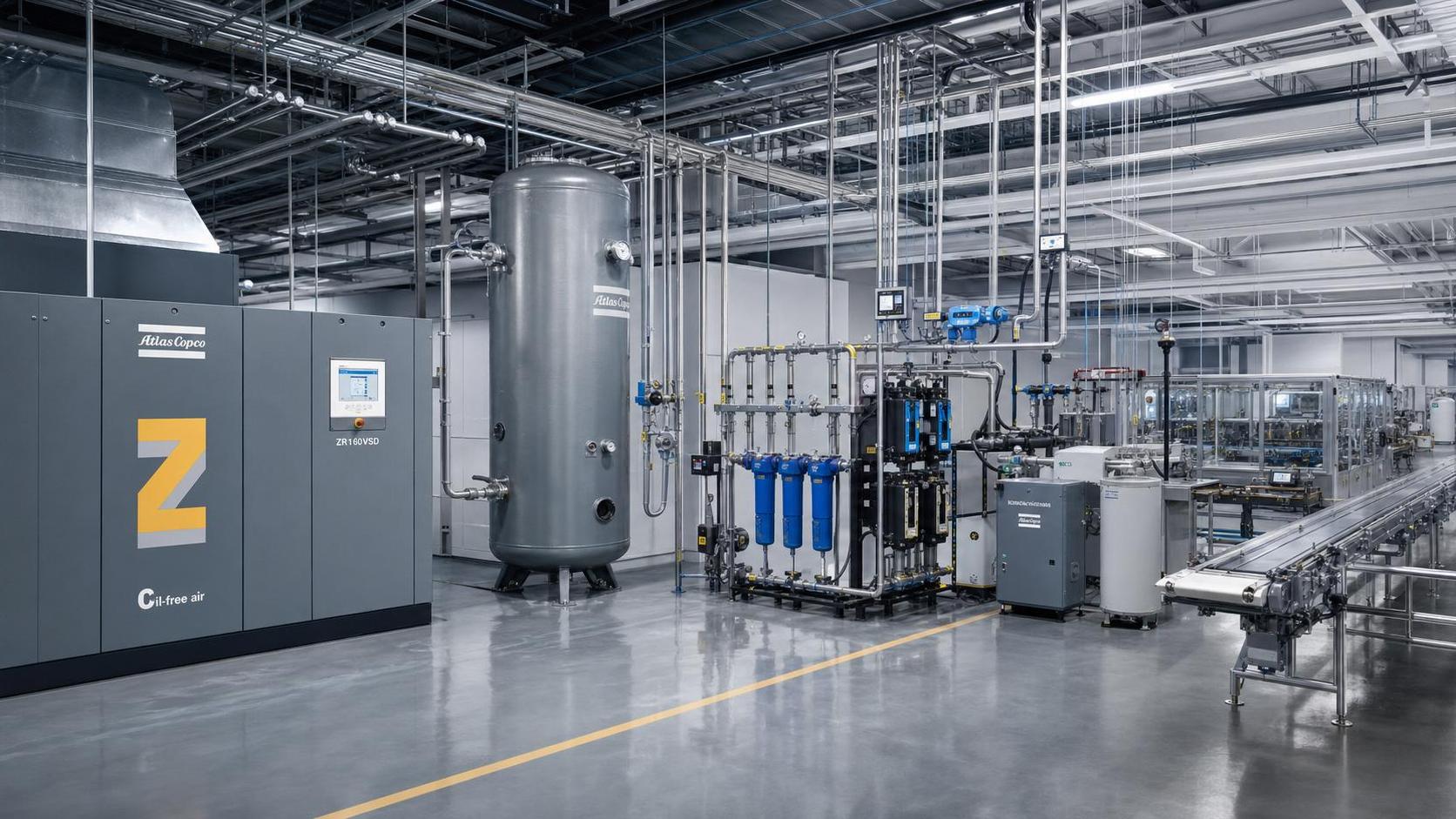
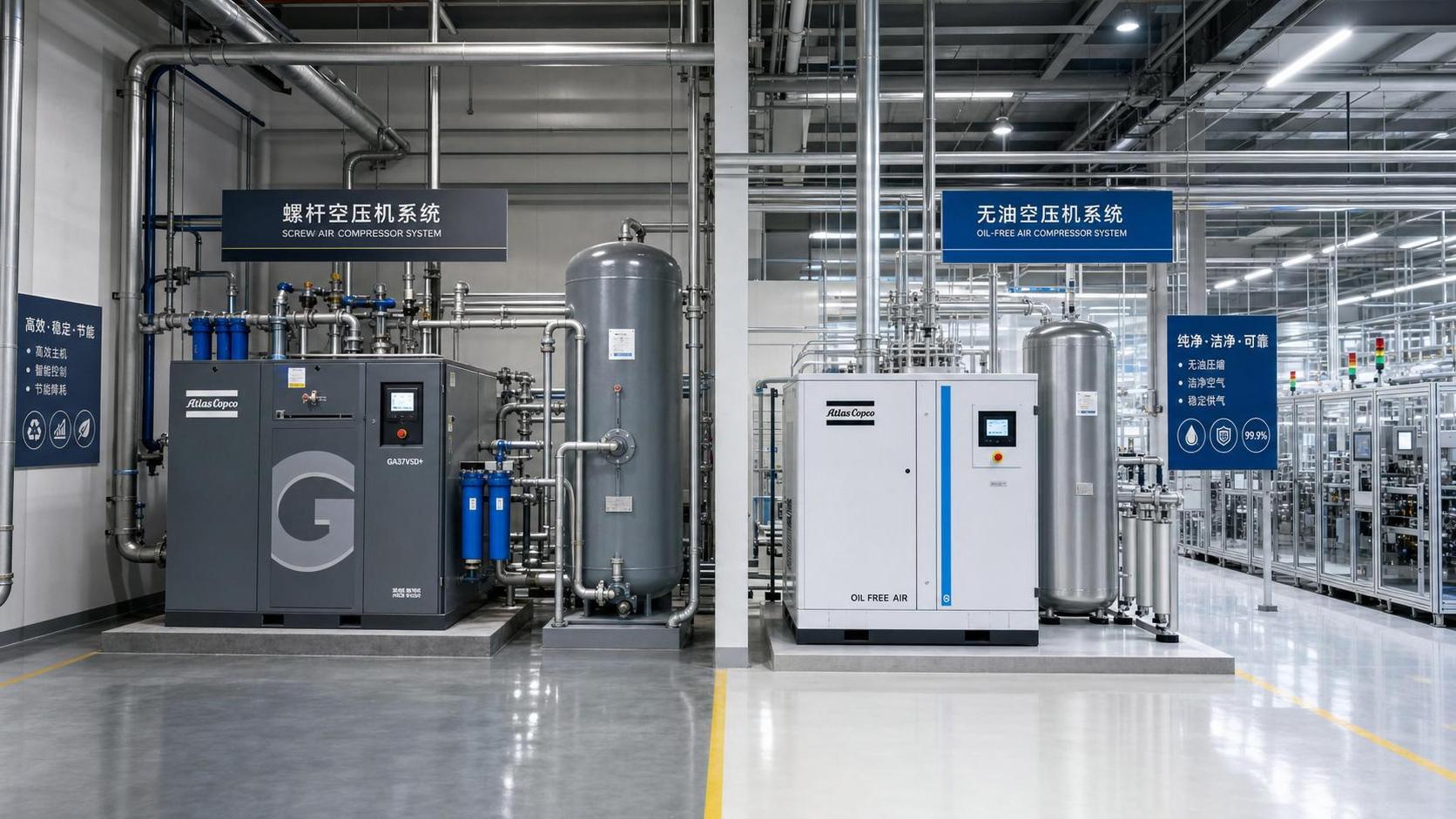
Air quality also affects system design. Not every plant needs oil-free compressed air, but some applications do. Food production, pharmaceuticals, electronics, laboratories, and sensitive packaging lines may require very clean and dry air to avoid contamination, reject rates, or compliance issues. In contrast, some utility air applications can operate reliably with a standard lubricated system plus proper treatment.
Users should also examine environmental and site conditions. Ambient temperature, dust level, ventilation quality, altitude, humidity, and available installation space all influence compressor performance and service life. A system that works well in a clean, climate-controlled room may perform very differently in a hot workshop with poor airflow and heavy airborne particles.
How to match compressor type to plant performance needs
Different air compression technologies suit different operating patterns. The right choice depends on whether the plant needs continuous base load, intermittent use, very clean air, low noise, or high efficiency at variable demand. Users should focus on performance fit, not just familiarity.
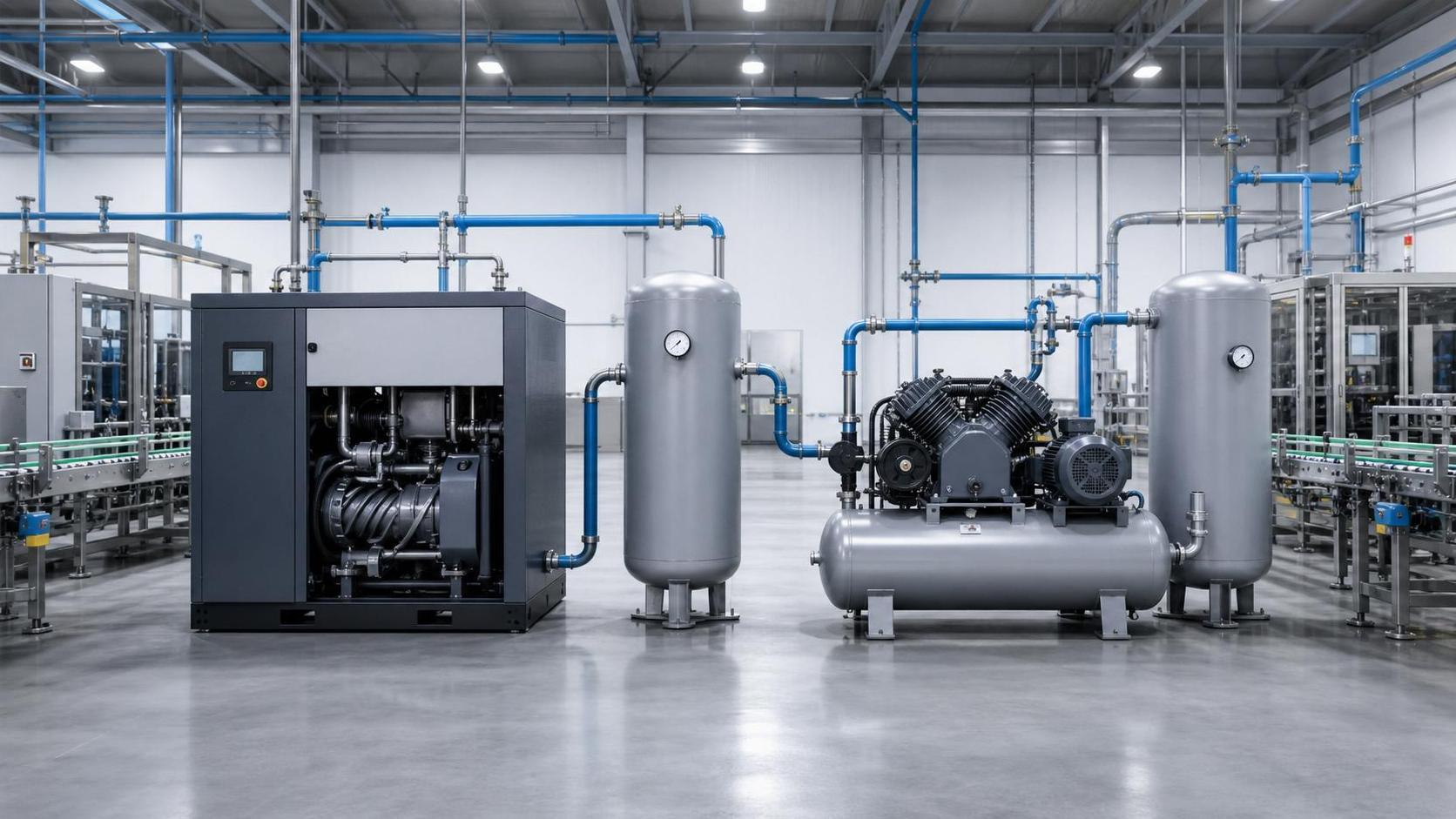
Rotary screw compressors are among the most common choices for industrial plants because they provide continuous flow, reliable operation, and relatively simple integration into production environments. They are often a practical option for plants that need steady compressed air across multiple shifts. For many factories, a rotary screw system offers a good balance of durability, maintenance accessibility, and energy performance.
Reciprocating compressors are often suitable for smaller facilities, intermittent demand, or applications with limited operating hours. They can be effective in certain workshops, but for larger plants with continuous demand, they may create more vibration, higher maintenance frequency, and less stable output compared with a well-configured screw system.
Centrifugal compressors are often selected for very large industrial operations with high and relatively constant airflow demand. They can deliver strong efficiency at scale, but they are generally more complex and less suitable for smaller or highly variable applications. Plants should not choose this technology unless their demand profile truly supports it.
Oil-free compressors are essential when contamination risk cannot be tolerated. However, they usually involve higher capital cost and require clear justification based on process sensitivity, product quality, or regulation. If the application does not truly need oil-free air, a properly designed lubricated system with effective filtration may offer better economic value without sacrificing reliability.
Why pressure stability matters more than maximum pressure
Many users think plant performance improves when compressor pressure is raised. In practice, unstable pressure is usually a bigger threat than low pressure alone. A production line may tolerate a specific operating pressure if it remains stable, but fluctuations can disrupt valves, instruments, actuators, packaging equipment, and automated sequences.
Pressure instability often comes from poor system design rather than insufficient compressor power. Common causes include undersized piping, clogged filters, neglected dryers, inadequate receiver capacity, and compressors operating with inefficient load-unload behavior. Simply installing a larger compressor may increase energy cost without solving the real issue.
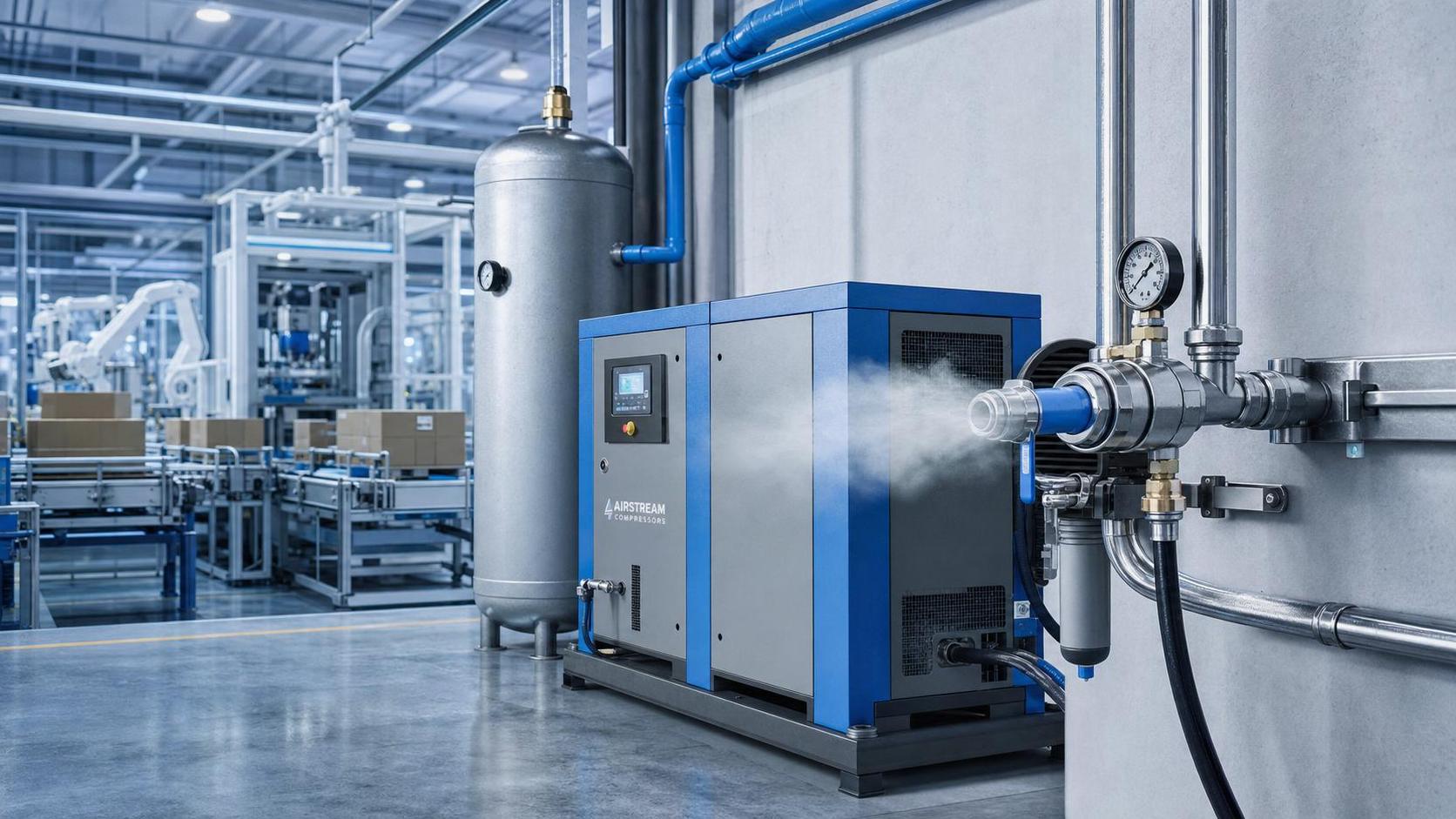
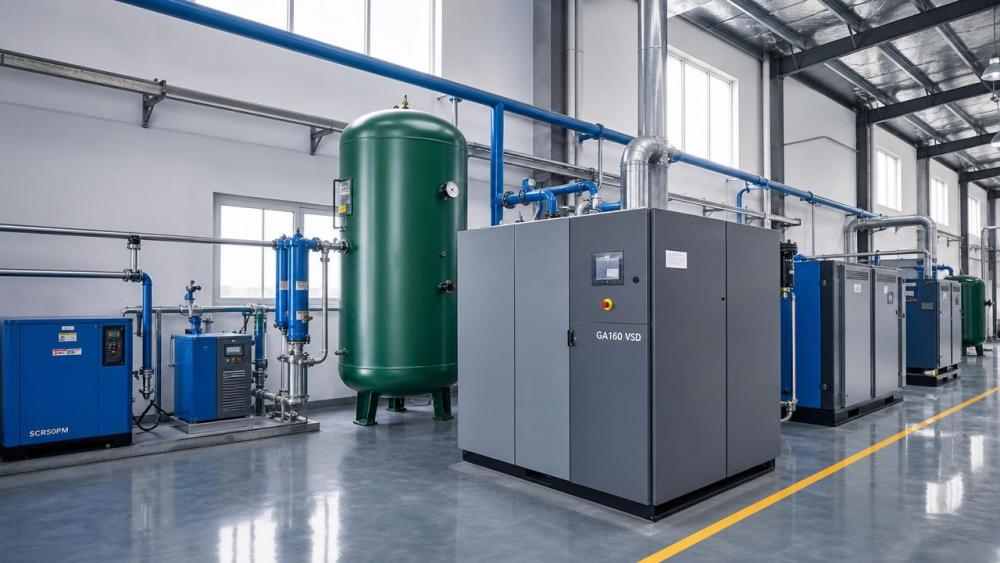
A stable air compression system usually combines several elements: appropriately sized compressors, correctly placed air receivers, responsive control logic, low-loss air treatment, and a distribution network designed to reduce pressure drop. Users should ask not only “How much pressure can this machine make?” but also “How well can this system maintain pressure during actual production swings?”
Variable speed drive compressors can help in plants with changing demand, but they are not automatically the answer for every site. They work best when load variation is significant and when the control strategy is designed properly. In some cases, a combination of fixed-speed base-load units and one variable-speed trim unit gives better stability and energy efficiency than relying on one oversized machine.
How to avoid oversizing and the hidden cost of unused capacity
Oversizing is one of the most common air compression mistakes in industry. It usually happens because plants want extra safety margin, expect future expansion, or replace old equipment without measuring actual demand. While this may seem cautious, oversized systems often cycle inefficiently, waste power, create moisture issues, and increase maintenance wear.
Compressed air is expensive energy. If a compressor runs lightly loaded for long periods, the plant may pay continuously for capacity it never uses. That extra electricity cost can exceed the value of the original purchase decision. Oversizing may also prevent the system from reaching its optimal operating temperature, which can affect condensation control and lubricant condition.
The best way to avoid oversizing is to perform an air demand audit. Measure real flow, pressure, operating hours, and demand swings. Identify leaks, non-productive usage, and process waste before specifying new equipment. In some facilities, fixing leaks and improving controls reduces required capacity enough to delay or resize a capital purchase.
Future expansion should still be considered, but it should be handled strategically. Instead of buying one very large compressor today, many plants benefit from modular system design. Adding staged capacity later often gives better efficiency, redundancy, and capital discipline than carrying oversized equipment from day one.
Air treatment, storage, and piping are part of the system choice
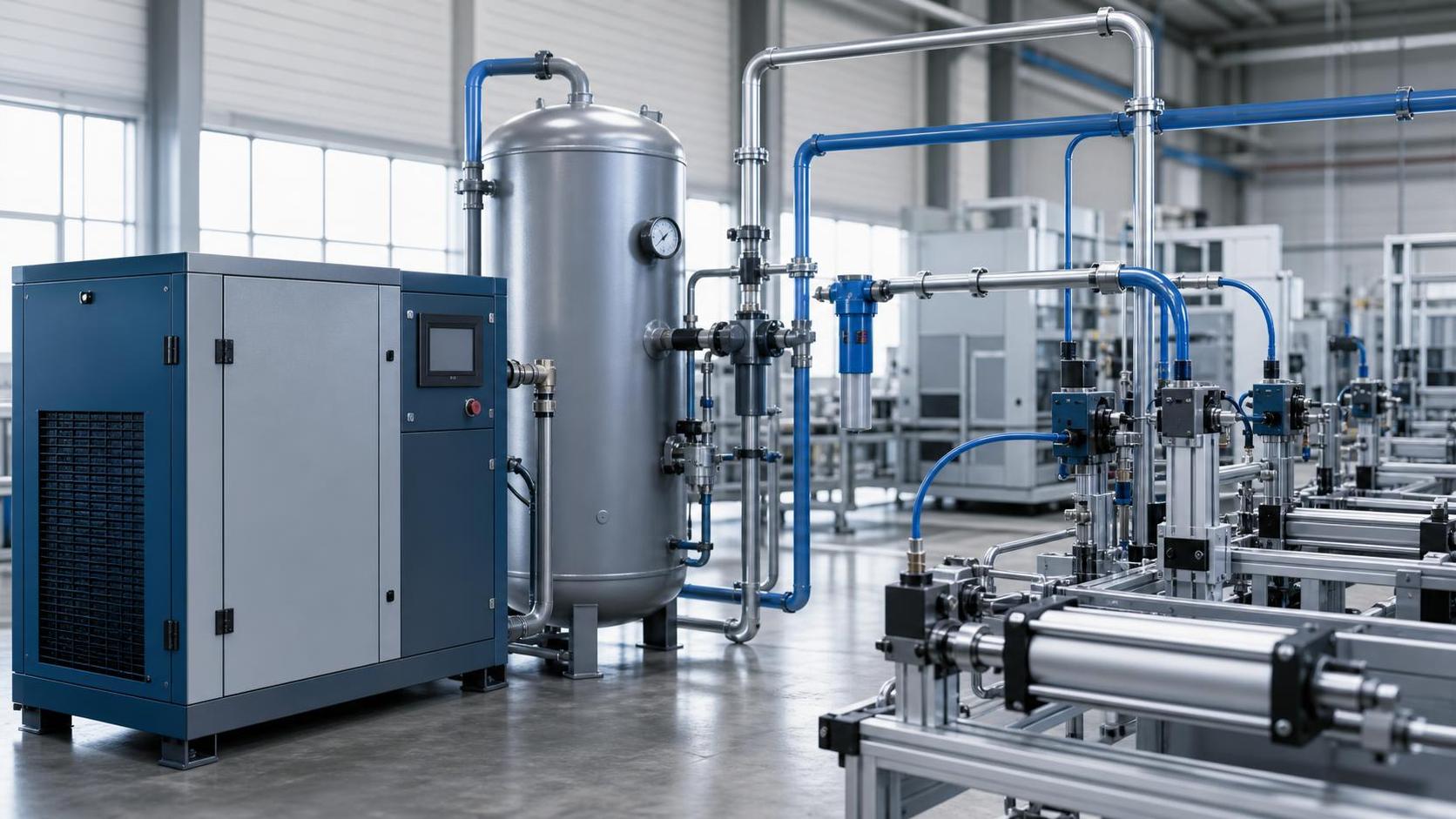
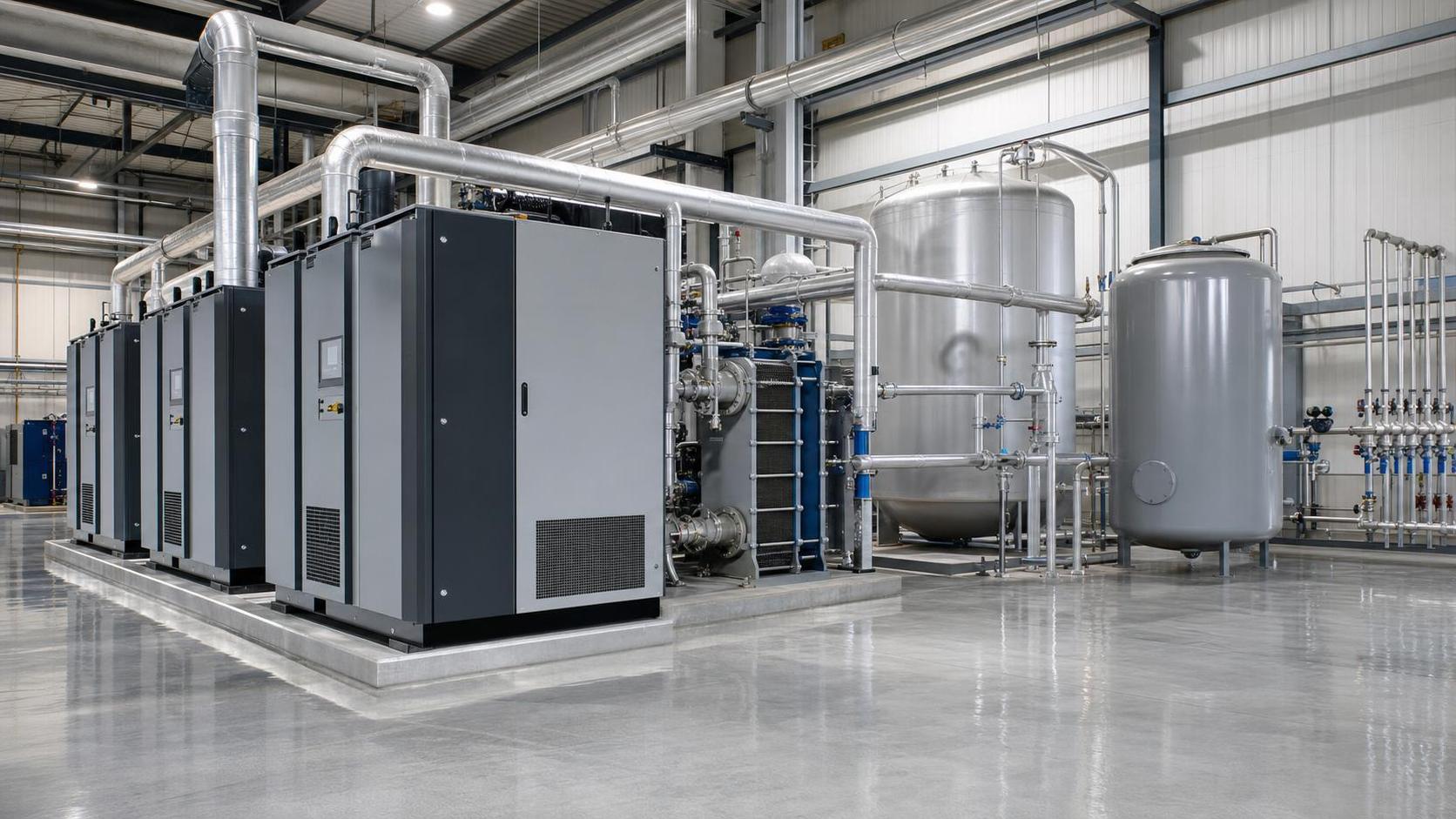
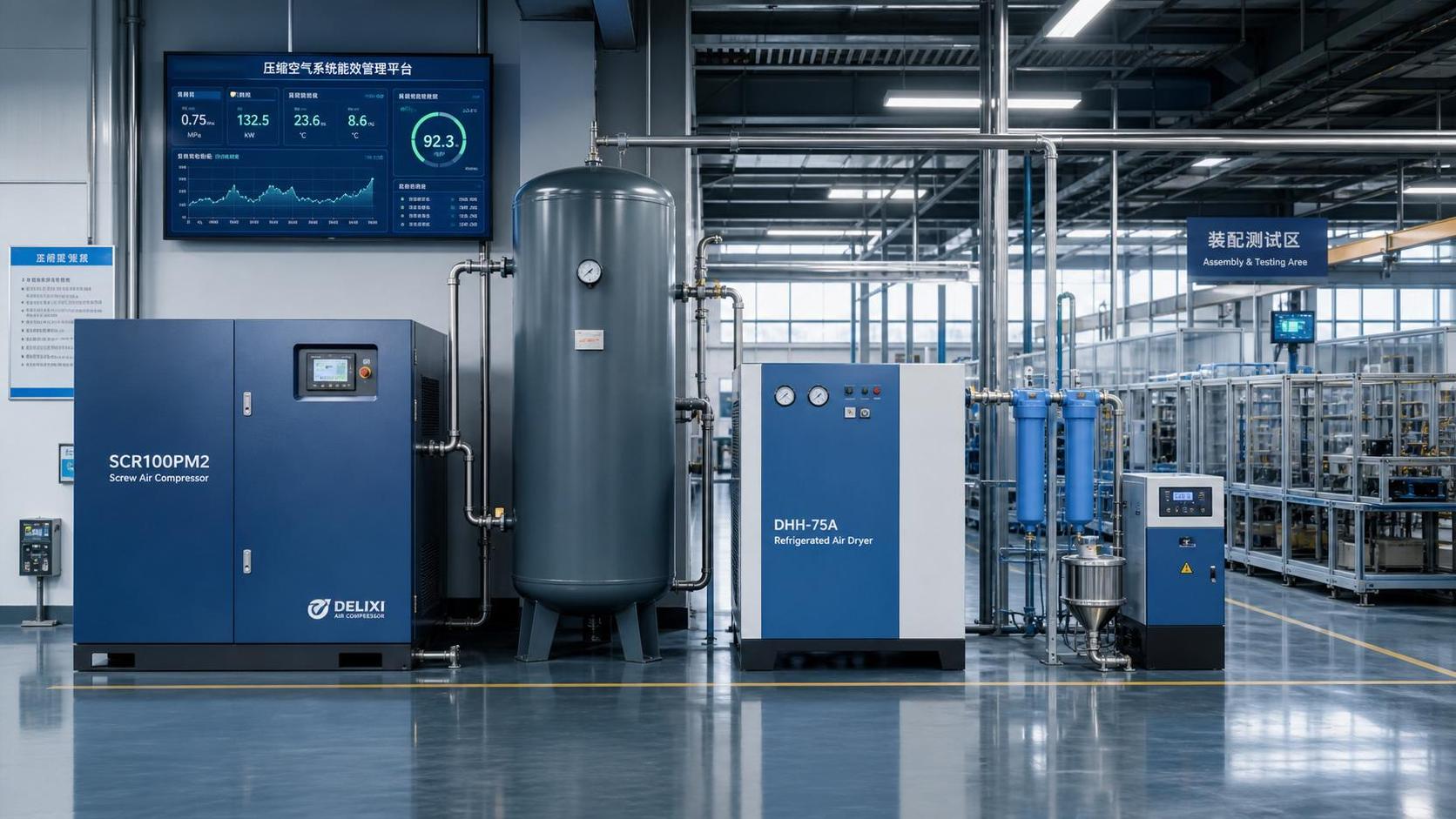
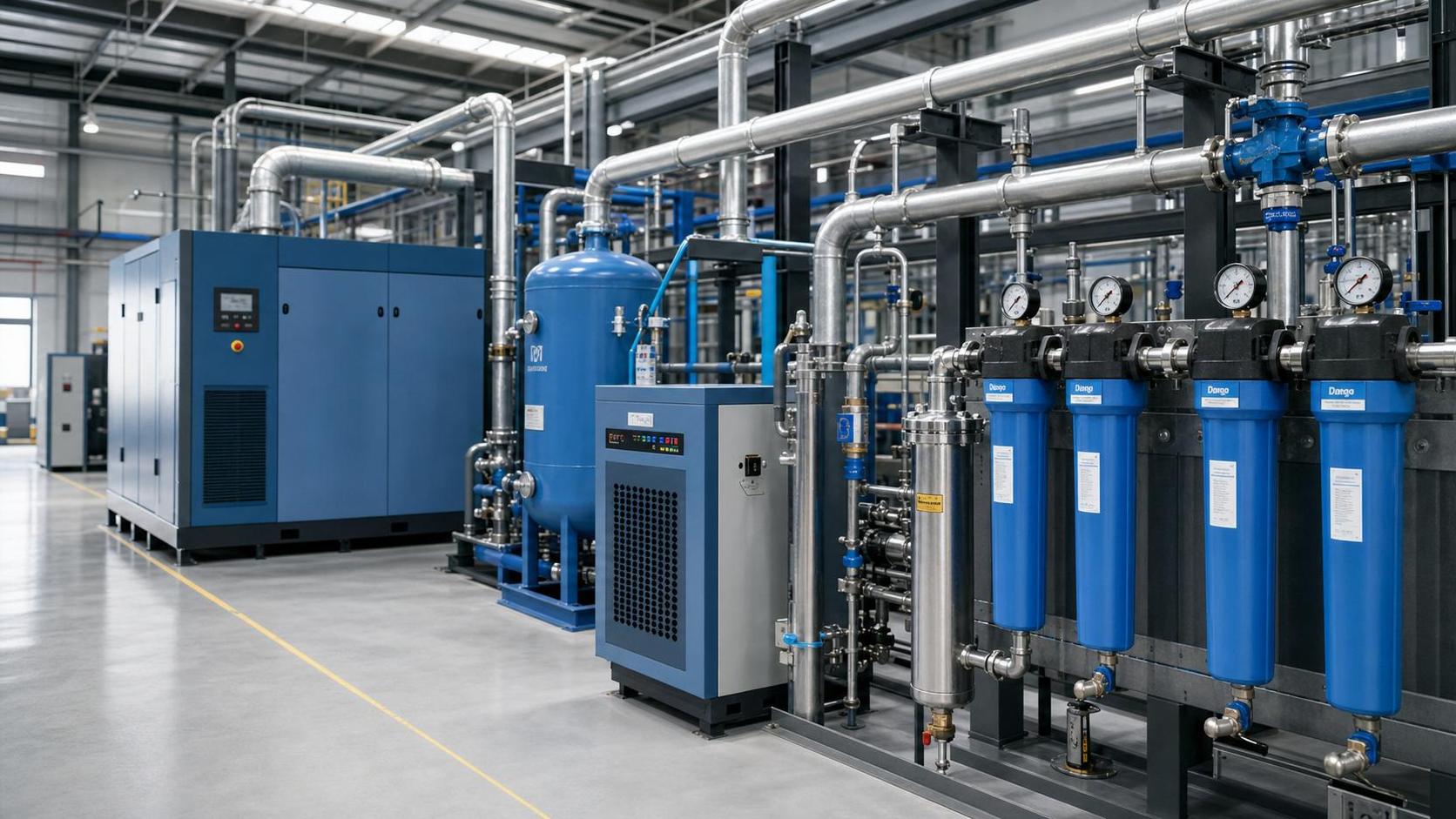
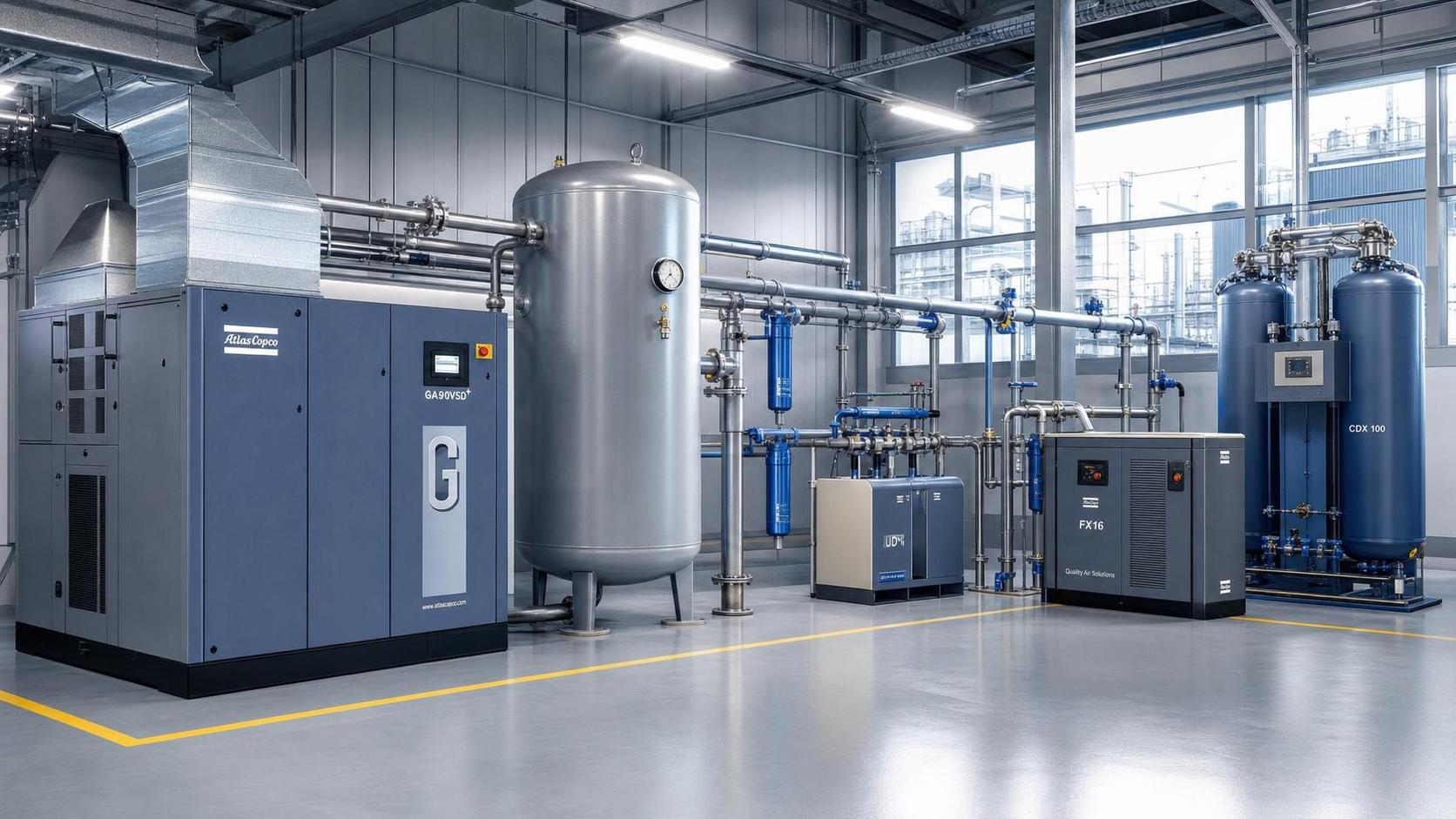
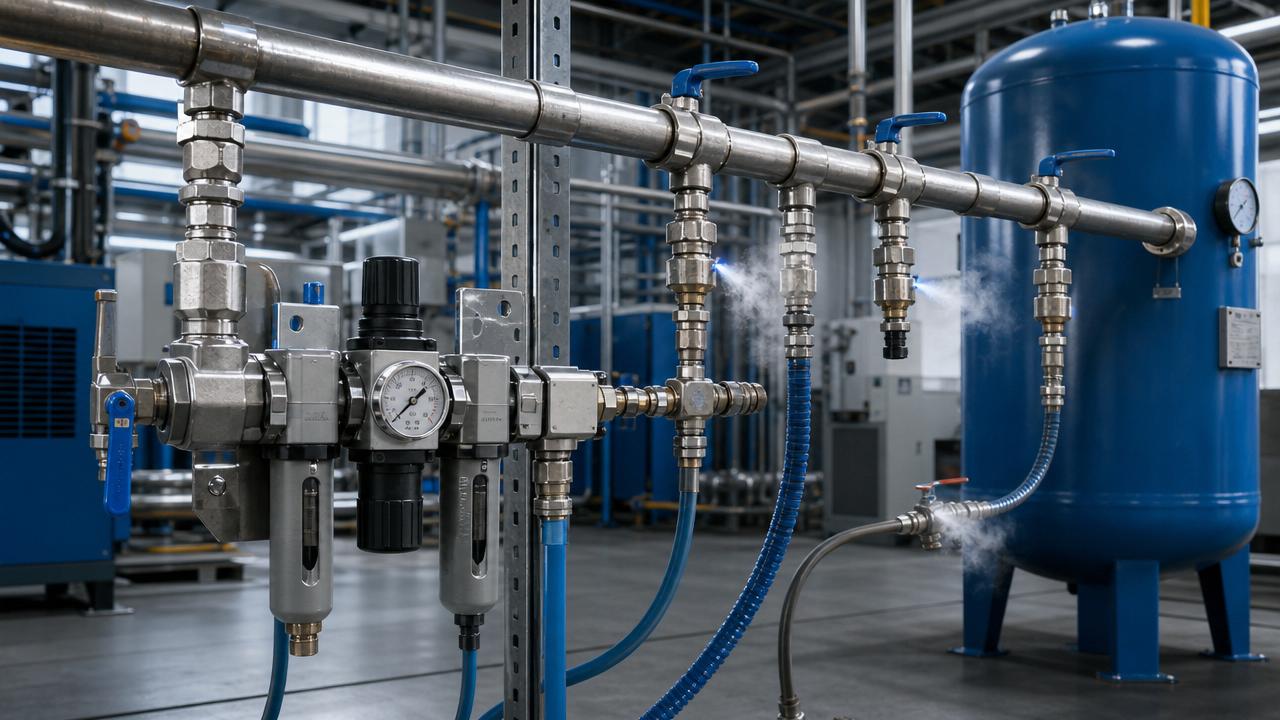
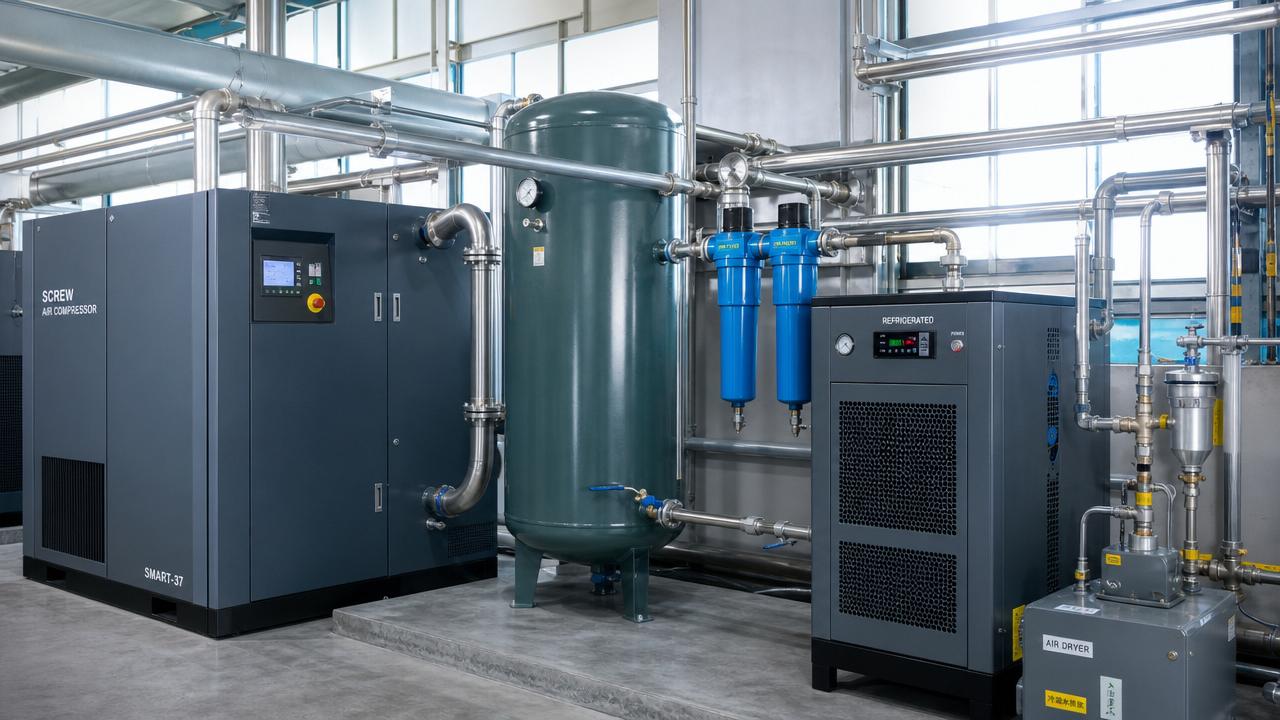
Choosing air compression equipment is not only about the compressor itself. Stable plant performance depends on the complete system, including dryers, filters, receivers, drains, piping layout, and monitoring points. Operators often experience problems that appear to come from the compressor but actually originate in poor downstream design.
Dryers are essential when moisture can damage tools, corrode piping, affect instrumentation, or compromise product quality. The required dew point depends on the application and site conditions. Refrigerated dryers may be suitable for general industrial use, while desiccant dryers may be necessary for much drier air in critical processes.
Filters should be selected according to contamination risk and pressure loss. Better filtration is not always better if it creates excessive restriction and is not maintained properly. Users should look at both filtration grade and lifecycle pressure drop. A neglected high-efficiency filter can quietly become an energy penalty across the whole plant.
Air receivers provide buffering that helps stabilize pressure and reduce compressor cycling. Wet-side and dry-side storage both have value depending on system design. In plants with rapid demand changes, receiver sizing can significantly improve performance without requiring much larger compressors.
Piping design also matters more than many users expect. Undersized pipes, too many bends, poor loop layout, and unmanaged condensate can create pressure loss and inconsistent air delivery at points of use. A well-selected air compression system can still underperform if the distribution network is restrictive or poorly maintained.
Maintenance, reliability, and ease of operation should influence selection
Operators and users live with the equipment every day, so maintainability should be part of the buying decision from the beginning. A technically advanced compressor is not automatically the best solution if service access is difficult, spare parts are slow to obtain, or routine maintenance requires long shutdowns.
Ask practical questions during evaluation. How easy is it to change filters, separators, and lubricant? Are service intervals clear and realistic? Can the control panel provide alarms that operators can understand quickly? Is local support available? Stable plant performance depends not only on machine design but also on how effectively the site can maintain it.
Redundancy is another key reliability factor. If compressed air is critical to production, relying on a single compressor may create unnecessary risk. A multiple-unit setup often improves uptime because one machine can carry essential load while another is serviced or fails unexpectedly. This also supports better sequencing under variable demand.
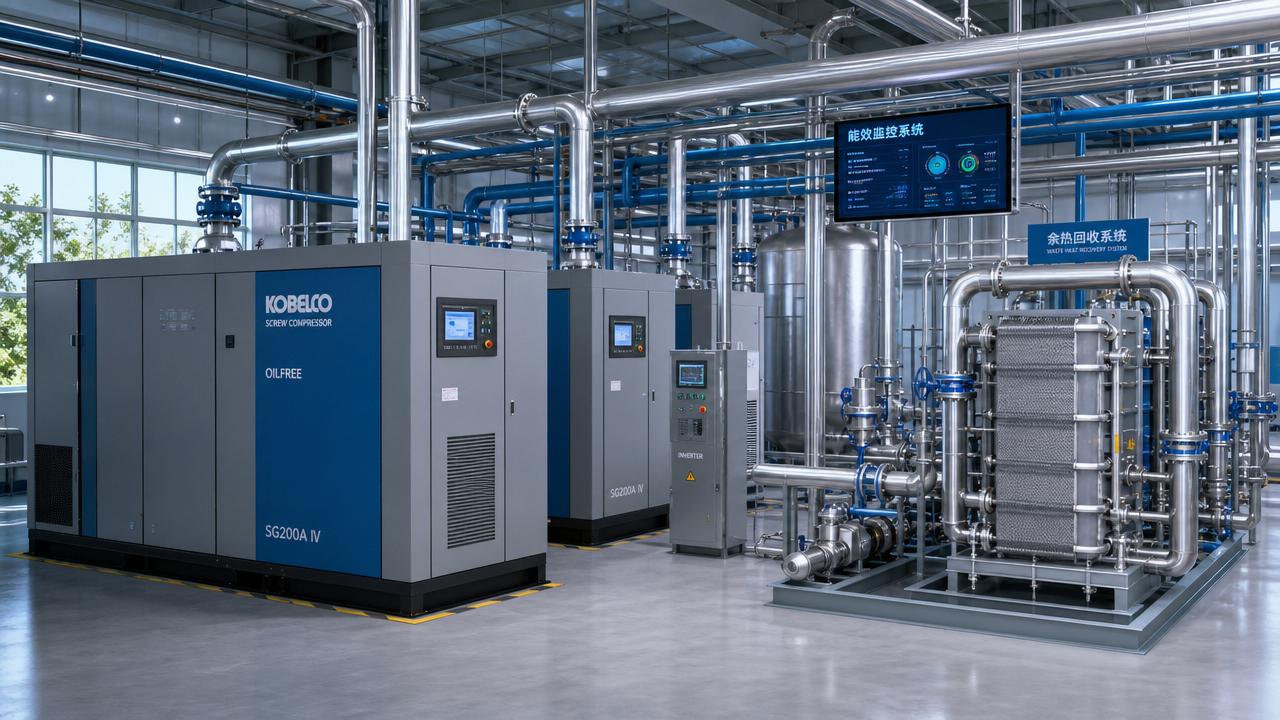
Condition monitoring adds further value. Pressure trending, dew point monitoring, temperature alarms, vibration analysis, and energy tracking help users detect problems before they become downtime events. For plants focused on operational stability, the best air compression choice is often the one that provides not only air, but visibility.
How to compare systems by total cost, not just purchase price
The purchase price of an air compression system is only one part of its real cost. In most industrial applications, energy use dominates lifetime expense. Maintenance, consumables, downtime risk, and product quality impact can also outweigh the initial equipment price over time.
When comparing options, users should ask for a total cost of ownership view. This includes power consumption at expected operating load, annual maintenance cost, treatment equipment losses, projected service intervals, and the cost impact of reliability differences. Two compressors with similar capacity can produce very different lifecycle economics.
Energy efficiency should be evaluated under actual site conditions, not only brochure values. A compressor that performs well at full load may be less efficient in a plant with fluctuating demand. Control strategy, sequencing, pressure band, and system leakage all affect the final energy outcome.
Downtime cost should also be part of the analysis. In some plants, one hour of lost production is more expensive than a large difference in capital cost. If a more robust system reduces shutdown risk, speeds maintenance, or protects process quality, its economic value may be far greater than its purchase premium suggests.
A practical checklist for choosing the right air compression system
For plant users, the most effective selection process is structured and evidence-based. Begin by mapping actual air demand, pressure needs, quality requirements, and critical operating risks. Then compare system designs against those realities instead of making a decision by habit or headline specifications.
A strong selection checklist should include: actual flow profile, minimum point-of-use pressure, air quality class, ambient conditions, redundancy needs, future expansion plan, maintenance capability, energy performance at part load, treatment requirements, piping losses, and supplier support strength.
It is also wise to involve operators, maintenance staff, and process owners early in the decision. They often know where pressure instability occurs, which lines are most sensitive, and what service problems previous systems created. Their input helps ensure the selected air compression solution works in practice, not only on paper.
If possible, request an audit, system simulation, or performance review from qualified specialists before finalizing the purchase. The most stable plants usually treat compressed air as a managed utility, not just a machine purchase. That mindset leads to better sizing, better controls, and better long-term results.
Conclusion: choose for stable performance, not just rated capacity
The right air compression system supports production stability, energy efficiency, equipment reliability, and product quality at the same time. For plant users, the best decision comes from understanding real demand, avoiding oversizing, ensuring pressure stability, and evaluating the full system including treatment, storage, piping, and maintenance needs.
In simple terms, do not choose based only on maximum pressure or upfront price. Choose the air compression solution that matches the plant’s actual operating profile and can maintain dependable performance every day. That is the path to lower waste, fewer shutdowns, and stronger long-term plant value.
Related News
- China Expands Cross-Border RMB and FX Cash Pooling NationwideAuthor :Pneumatic Power Engineer

- How to Size Air Compressor Systems for Pneumatics by Flow and Pressure DemandAuthor :Pneumatic Power Engineer

- How Energy Recovery Systems for Compressors Cut Power CostsAuthor :Pneumatic Power Engineer

- How to Evaluate Screw Compressors in Industrial Refrigeration EquipmentAuthor :Pneumatic Power Engineer

- India Makes BIS Certification Mandatory for Screw CompressorsAuthor :Pneumatic Power Engineer

- China Tightens Export Filing for Screw CompressorsAuthor :Pneumatic Power Engineer

- SABIC Sets IoT Interface Rule for Screw CompressorsAuthor :Pneumatic Power Engineer

- Industrial Heat Recovery Systems for Compressors: When Do Energy Savings Pay Back?Author :Pneumatic Power Engineer

- EU Tightens REACH Limit for Screw Compressor LubricantsAuthor :Pneumatic Power Engineer

- EU Opens China Screw Compressor Review With Carbon RuleAuthor :Pneumatic Power Engineer

- DOE Mandates AHRI 1000-2026 for Screw CompressorsAuthor :Pneumatic Power Engineer

- VDMA Filing Signals EU Risk for Chinese Oil Screw CompressorsAuthor :Pneumatic Power Engineer
![]()
- Screw vs Piston Air Compressors for Stable Plant OutputAuthor :Pneumatic Power Engineer

- Saudi SASO Tightens Refrigerant Limits in IEC 60335-2-40:2026Author :Pneumatic Power Engineer

- IIR Warns of 18-Week Lead Times for Screw CompressorsAuthor :Pneumatic Power Engineer

- Welded Compressed Air Manifold Selection Guide for Pressure Stability and LeaksAuthor :Pneumatic Power Engineer

- India BIS Rule Adds IS 16830 Requirement for Imported Screw CompressorsAuthor :Pneumatic Power Engineer

- What to Check Before Choosing a Compressed Air FactoryAuthor :Pneumatic Power Engineer

- China Tightens Export Checks on Screw CompressorsAuthor :Pneumatic Power Engineer

- Screw Compressor Lead Times Reach 22 WeeksAuthor :Pneumatic Power Engineer

- Vietnam Requires QR Labels on Imported Screw CompressorsAuthor :Pneumatic Power Engineer

- Compressed Air Technologies Filtration: How to Reduce Pressure Drop and Energy LossAuthor :Pneumatic Power Engineer

- STSPIN830 Lead Time Tops 32 Weeks in Screw CompressorsAuthor :Pneumatic Power Engineer

- IGBT Shortage Extends Screw Compressor Lead TimesAuthor :Pneumatic Power Engineer

- Compressed Air Systems: 7 Hidden Costs That Raise Total Operating ExpenseAuthor :Pneumatic Power Engineer

- Compressed Air Efficiency: 7 Hidden Losses That Raise Operating CostsAuthor :Pneumatic Power Engineer

- How to Compare Screw vs Oil-Free Air Compression SystemsAuthor :Pneumatic Power Engineer

- Compressed Air Leaks: What They Really Cost in Daily OperationsAuthor :Pneumatic Power Engineer

- DOE Moves Up R449A Chiller Deadline to March 2027Author :Pneumatic Power Engineer

- How Compression Technology Cuts Energy Use in Modern PlantsAuthor :Pneumatic Power Engineer

- EU Adds GB 18613-2025 to Import Energy ChecksAuthor :Pneumatic Power Engineer

- EU CE Rule Adds SRA for R290 Compressor ImportsAuthor :Pneumatic Power Engineer

- Compressed Air Leaks: Hidden Costs and Practical Ways to Reduce LossesAuthor :Pneumatic Power Engineer

- Kunming Sourcing Festival Adds Thermal & Compression HubAuthor :Pneumatic Power Engineer

- Compressed Air Efficiency: Where Energy Losses Usually StartAuthor :Pneumatic Power Engineer

- US 3-Year Treasury Yield Rise Pressures Compressor Export QuotesAuthor :Pneumatic Power Engineer