APEC Auto Dialogue Advances SC Standard Alignment




On May 12, 2026, the 43rd APEC Automotive Dialogue convened in Shanghai, marking a pivotal step toward regulatory convergence for intelligent connected vehicles across the Asia-Pacific region. The initiative directly impacts the automotive air supply systems sector—particularly screw compressors used in electric and autonomous vehicles—by accelerating cross-border standard recognition and reducing technical barriers to market access.
Event Overview
On May 12, 2026, the APEC 43rd Automotive Dialogue was held in Shanghai. China announced it would lead the development of over 60 international standards and regulations covering electric vehicle safety and automated driving systems. Concurrently, China committed to coordinating standards with Japan, South Korea, and ASEAN members specifically on onboard compressed air systems—including interface specifications, energy efficiency metrics, and electromagnetic compatibility (EMC) requirements for screw compressors.
Industries Affected
Direct Export Enterprises: Manufacturers exporting screw compressors to APEC markets—especially Tier-1 suppliers targeting Japanese, Korean, or ASEAN-based EV OEMs—face reduced certification complexity and shorter time-to-market. Harmonized interface and EMC requirements mean fewer redesign cycles and lower validation costs per destination market.
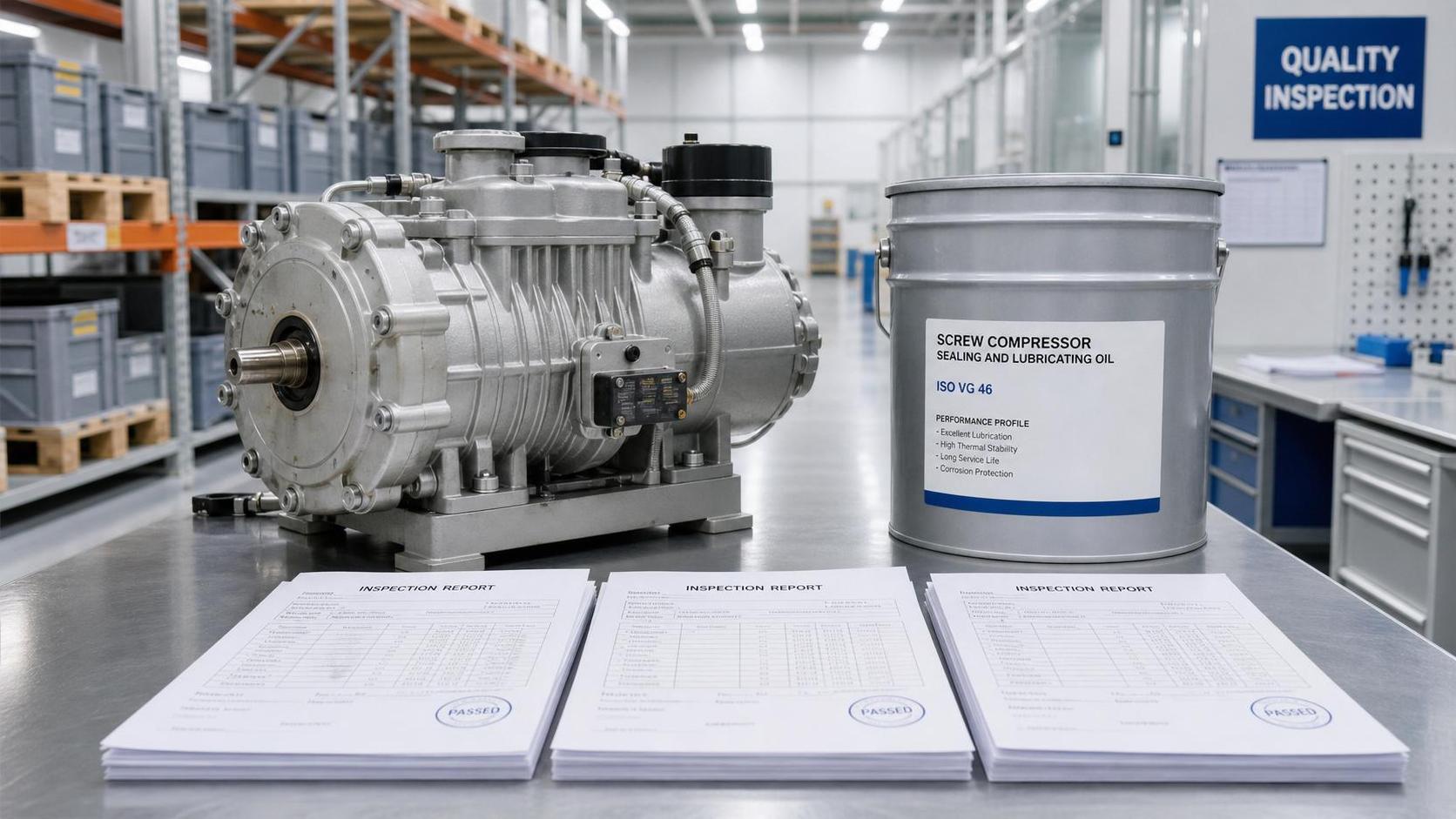
Raw Material Procurement Firms: Suppliers of high-precision bearing steels, specialty lubricants, and coated aluminum alloys may see increased demand volatility as export-oriented compressor makers adjust material specs to meet aligned regional performance thresholds—particularly for thermal stability under repeated duty cycles and low-noise operation.
Contract Manufacturing & Assembly Firms: EMS providers and ODM partners specializing in automotive-grade air management modules must now adapt production line testing protocols to reflect harmonized EMC and efficiency benchmarks—not just domestic GB standards. This implies recalibration of aging test benches and potential retraining for quality assurance staff.
Supply Chain Service Providers: Certification consultants, logistics integrators offering homologation support, and customs brokers handling APEC-origin declarations will need to expand competency in cross-referencing ISO/IEC TR 21448 (SOTIF), UN R155 cybersecurity management system alignment, and newly coordinated APEC air-system test reports—beyond traditional CCC or ECE type-approval pathways.
Key Focus Areas and Recommended Actions
Review Existing Product Documentation Against Draft APEC Air-System Annexes
Exporters should cross-check current technical files—including interface drawings, EMC test reports (per CISPR 25 Class 5), and ISO 50001-aligned energy consumption logs—against the draft annexes published by the APEC Automotive Working Group. Early gap identification enables targeted design updates before formal adoption.
Engage Proactively with National Standardization Bodies on Domestic Implementation Timelines
While APEC coordination is voluntary, participating economies often fast-track aligned standards into national frameworks. Firms should monitor updates from SAC (China), JISC (Japan), KATS (Korea), and ASEAN Secretariat’s ASEAN Automotive Standards Harmonization Roadmap to anticipate local enforcement dates.
Validate Interoperability with Reference Platforms from Key OEMs
Given that standard alignment focuses on integration into vehicle architectures—not standalone device compliance—manufacturers are advised to conduct joint interoperability tests using reference ECUs and chassis control networks provided by leading regional EV OEMs (e.g., BYD, Hyundai Motor, BYTON, VinFast).
Editorial Perspective / Industry Observation
Observably, this APEC effort is less about creating wholly new standards—and more about deconflicting overlapping national interpretations of existing IEC, ISO, and SAE frameworks. Analysis shows that the emphasis on interface and EMC dimensions reflects growing OEM concerns over functional safety integration in 48V air suspension and brake-by-wire systems, where compressor noise or latency can cascade into ASIL-B–level faults. From an industry standpoint, the real bottleneck may shift from compliance to verification capacity: accredited labs in Shanghai, Seoul, and Singapore report 8–12-week backlogs for full-cycle AEC-Q200-compliant vibration + EMC combo testing. This suggests near-term pressure on third-party validation infrastructure—not just product design.
Conclusion
This APEC dialogue does not signal immediate regulatory binding—but rather establishes a credible, multilateral pathway for incremental convergence. For screw compressor manufacturers, it represents a structural opportunity: one that rewards early alignment investment, but also exposes firms relying solely on fragmented, country-specific approvals to increasing cost and schedule risk. The broader implication lies in precedent: if successful, this model could extend to other powertrain ancillaries—such as thermal management pumps or DC-DC converters—making APEC a de facto incubator for next-generation automotive subsystem interoperability.
Source Attribution
Official statements released by the APEC Secretariat and China’s Ministry of Industry and Information Technology (MIIT), May 12, 2026. Draft annexes referenced are available via the APEC Automotive Working Group portal (public access pending final review). Note: Final technical parameters, implementation timelines, and OEM adoption rates remain subject to ongoing bilateral consultations and are under active observation.
Ready when you are. Send us a message to get started.
Related News
- When does variable gas flow justify a custom screw compressor system?Author :Pneumatic Power Engineer

- How to size compressed air equipment for pneumatic toolsAuthor :Pneumatic Power Engineer

- How Should Energy Management Systems Handle Compressor Load Changes?Author :Pneumatic Power Engineer

- Which Maintenance Issues Reduce Air Compressor Efficiency?Author :Pneumatic Power Engineer

- How Much Energy Can Variable-Speed Screw Compressors Save?Author :Pneumatic Power Engineer

- Industrial Compressor Selection: Matching Flow, Pressure, and Duty CycleAuthor :Pneumatic Power Engineer

- China Expands Cross-Border RMB and FX Cash Pooling NationwideAuthor :Pneumatic Power Engineer

- How to Size Air Compressor Systems for Pneumatics by Flow and Pressure DemandAuthor :Pneumatic Power Engineer

- How Energy Recovery Systems for Compressors Cut Power CostsAuthor :Pneumatic Power Engineer

- How to Evaluate Screw Compressors in Industrial Refrigeration EquipmentAuthor :Pneumatic Power Engineer

- India Makes BIS Certification Mandatory for Screw CompressorsAuthor :Pneumatic Power Engineer

- China Tightens Export Filing for Screw CompressorsAuthor :Pneumatic Power Engineer

- SABIC Sets IoT Interface Rule for Screw CompressorsAuthor :Pneumatic Power Engineer

- Industrial Heat Recovery Systems for Compressors: When Do Energy Savings Pay Back?Author :Pneumatic Power Engineer

- EU Tightens REACH Limit for Screw Compressor LubricantsAuthor :Pneumatic Power Engineer

- EU Opens China Screw Compressor Review With Carbon RuleAuthor :Pneumatic Power Engineer

- DOE Mandates AHRI 1000-2026 for Screw CompressorsAuthor :Pneumatic Power Engineer

- VDMA Filing Signals EU Risk for Chinese Oil Screw CompressorsAuthor :Pneumatic Power Engineer
![]()
- Screw vs Piston Air Compressors for Stable Plant OutputAuthor :Pneumatic Power Engineer

- Saudi SASO Tightens Refrigerant Limits in IEC 60335-2-40:2026Author :Pneumatic Power Engineer

- IIR Warns of 18-Week Lead Times for Screw CompressorsAuthor :Pneumatic Power Engineer

- Welded Compressed Air Manifold Selection Guide for Pressure Stability and LeaksAuthor :Pneumatic Power Engineer

- India BIS Rule Adds IS 16830 Requirement for Imported Screw CompressorsAuthor :Pneumatic Power Engineer

- What to Check Before Choosing a Compressed Air FactoryAuthor :Pneumatic Power Engineer

- China Tightens Export Checks on Screw CompressorsAuthor :Pneumatic Power Engineer

- Screw Compressor Lead Times Reach 22 WeeksAuthor :Pneumatic Power Engineer

- Vietnam Requires QR Labels on Imported Screw CompressorsAuthor :Pneumatic Power Engineer

- Compressed Air Technologies Filtration: How to Reduce Pressure Drop and Energy LossAuthor :Pneumatic Power Engineer

- STSPIN830 Lead Time Tops 32 Weeks in Screw CompressorsAuthor :Pneumatic Power Engineer

- IGBT Shortage Extends Screw Compressor Lead TimesAuthor :Pneumatic Power Engineer

- Compressed Air Systems: 7 Hidden Costs That Raise Total Operating ExpenseAuthor :Pneumatic Power Engineer

- Compressed Air Efficiency: 7 Hidden Losses That Raise Operating CostsAuthor :Pneumatic Power Engineer

- How to Compare Screw vs Oil-Free Air Compression SystemsAuthor :Pneumatic Power Engineer

- Compressed Air Leaks: What They Really Cost in Daily OperationsAuthor :Pneumatic Power Engineer

- DOE Moves Up R449A Chiller Deadline to March 2027Author :Pneumatic Power Engineer

- How Compression Technology Cuts Energy Use in Modern PlantsAuthor :Pneumatic Power Engineer