SASO Enforces IEC 61800-5-2:2026 for Screw Compressors




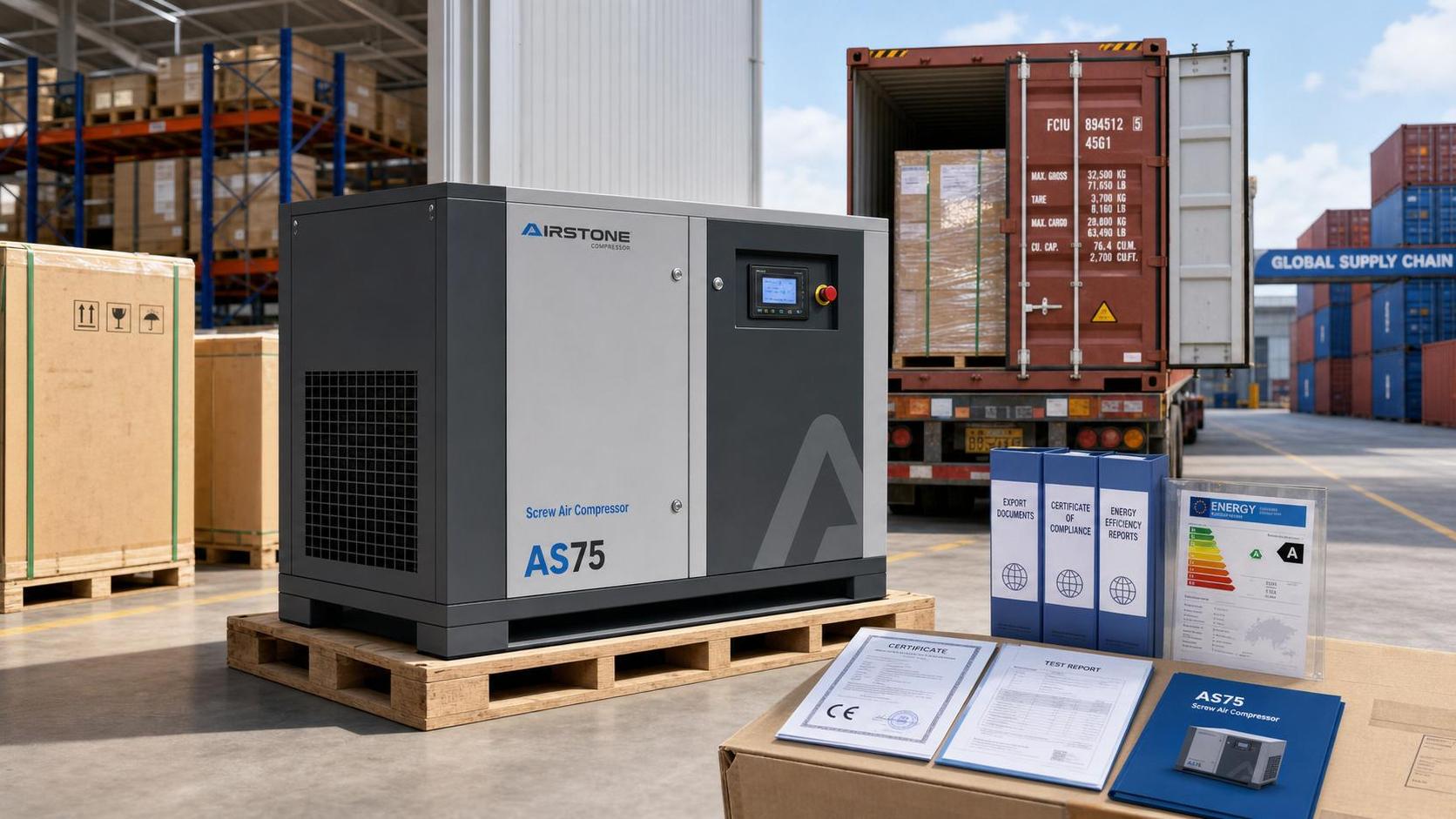
Saudi Standards, Metrology and Quality Organization (SASO) enforced SASO IEC 61800-5-2:2026 on May 24, 2026, mandating functional safety certification for all screw compressors exported to Saudi Arabia. This development directly impacts manufacturers, exporters, and distributors of industrial air compression systems — particularly those supplying to oil & gas, petrochemical, and power generation sectors — as non-compliant units face port detention and customs rejection.
Event Overview
The Saudi Standards, Metrology and Quality Organization (SASO) implemented SASO IEC 61800-5-2:2026 on May 24, 2026. Under this regulation, all screw compressors imported into Saudi Arabia must demonstrate compliance with functional safety requirements at PLd level (per ISO 13849) or SIL2 level (per IEC 62061). Certification covers verification of 12 safety-related circuits, including emergency stop, overload protection, and explosion-proof interlocks. The requirement took effect immediately, with no transition period. Reports confirm cargo hold-ups at Jeddah Islamic Port for multiple shipments awaiting verification.
Impact on Specific Industry Segments
Direct Exporters and Trading Companies
These entities are directly exposed to customs clearance risk. Non-certified units cannot be released at Saudi ports; documentation gaps may trigger rework, delays, or rejection. Since the rule applies to all incoming shipments as of May 24, 2026, previously shipped but undelivered consignments may also undergo retrospective verification.
Original Equipment Manufacturers (OEMs) and System Integrators
OEMs supplying screw compressor units — especially those embedding variable-speed drives (VSDs) or integrated safety controllers — must now validate their entire safety architecture against SASO IEC 61800-5-2:2026. This includes design-level traceability, component-level SIL/PL claims, and full safety circuit validation reports. Integration partners relying on third-party drive modules must verify whether those modules carry valid PLd/SIL2 certification under the SASO-adapted standard.
Aftermarket and Spare Parts Distributors
While the regulation explicitly targets complete screw compressor units, replacement control boards, safety relays, or emergency stop modules intended for retrofitting into existing in-service compressors may fall under scrutiny if installed as part of a safety function. Distributors should assess whether such components require standalone certification when supplied as part of a safety-critical upgrade.
Logistics and Customs Clearance Providers
Freight forwarders and customs brokers handling industrial equipment shipments to Saudi Arabia must now verify pre-arrival submission of functional safety certificates. Absence of valid PLd or SIL2 documentation may result in extended inspection timelines, storage fees, or mandatory return shipments — increasing operational liability for service providers.
What Relevant Enterprises or Practitioners Should Focus On
Confirm alignment with SASO’s official interpretation of IEC 61800-5-2:2026
Although the standard references IEC 61800-5-2, SASO may apply national deviations or supplementary requirements. Enterprises should monitor SASO’s official portal and accredited certification bodies for published technical guidance or FAQs issued after May 24, 2026.
Verify certification scope for existing and pending shipments
For units already produced or en route, determine whether prior certifications (e.g., under older editions or non-SASO-accredited schemes) remain acceptable. SASO has not announced grandfathering provisions; therefore, current shipments should be treated as subject to full compliance unless officially confirmed otherwise.
Distinguish between regulatory signal and enforceable requirement
The immediate port detentions at Jeddah indicate active enforcement — not merely a policy announcement. However, interpretation of scope (e.g., whether refurbished units or field-upgraded systems are covered) remains open. Enterprises should treat enforcement as operational reality while tracking clarifications from SASO or Saudi Customs.
Prepare technical documentation and coordinate with certified bodies without delay
Functional safety certification requires documented evidence across design, validation, and production phases. Companies lacking internal safety engineering capacity should engage SASO-recognized certification bodies early — lead times for full assessment can exceed eight weeks, and backlog is expected following the abrupt implementation.
Editorial Perspective / Industry Observation
Observably, this enforcement marks a shift from voluntary conformity toward mandatory functional safety governance for power-driven industrial equipment in Saudi Arabia. Analysis shows it reflects broader regional alignment with international functional safety frameworks — particularly for machinery deployed in high-hazard environments. From an industry perspective, this is less a one-off compliance event and more a precedent-setting step: similar requirements may extend to other rotating equipment categories (e.g., centrifugal compressors, large pumps) in upcoming SASO updates. Current enforcement intensity suggests SASO intends this to serve both as a safety measure and as a market gatekeeping mechanism — making timely, technically accurate response essential for sustained market access.
Conclusion: SASO IEC 61800-5-2:2026 is not merely a technical update but an operational inflection point for exporters of screw compressors to Saudi Arabia. Its immediate enforcement, absence of grace period, and linkage to physical port outcomes mean its impact is already material — not prospective. It is more accurately understood as an active compliance threshold than a future policy signal. Enterprises should prioritize verification of unit-level certification status and documentation readiness over speculative interpretation.
Source: Saudi Standards, Metrology and Quality Organization (SASO); public enforcement notice dated May 24, 2026.
Note: Clarifications regarding scope applicability to refurbished units, spare parts, or legacy installations remain pending further SASO communication and are under ongoing observation.
Ready when you are. Send us a message to get started.
Related News
- When does variable gas flow justify a custom screw compressor system?Author :Pneumatic Power Engineer

- How to size compressed air equipment for pneumatic toolsAuthor :Pneumatic Power Engineer

- How Should Energy Management Systems Handle Compressor Load Changes?Author :Pneumatic Power Engineer

- Which Maintenance Issues Reduce Air Compressor Efficiency?Author :Pneumatic Power Engineer

- How Much Energy Can Variable-Speed Screw Compressors Save?Author :Pneumatic Power Engineer

- Industrial Compressor Selection: Matching Flow, Pressure, and Duty CycleAuthor :Pneumatic Power Engineer

- China Expands Cross-Border RMB and FX Cash Pooling NationwideAuthor :Pneumatic Power Engineer

- How to Size Air Compressor Systems for Pneumatics by Flow and Pressure DemandAuthor :Pneumatic Power Engineer

- How Energy Recovery Systems for Compressors Cut Power CostsAuthor :Pneumatic Power Engineer

- How to Evaluate Screw Compressors in Industrial Refrigeration EquipmentAuthor :Pneumatic Power Engineer

- India Makes BIS Certification Mandatory for Screw CompressorsAuthor :Pneumatic Power Engineer

- China Tightens Export Filing for Screw CompressorsAuthor :Pneumatic Power Engineer

- SABIC Sets IoT Interface Rule for Screw CompressorsAuthor :Pneumatic Power Engineer

- Industrial Heat Recovery Systems for Compressors: When Do Energy Savings Pay Back?Author :Pneumatic Power Engineer

- EU Tightens REACH Limit for Screw Compressor LubricantsAuthor :Pneumatic Power Engineer

- EU Opens China Screw Compressor Review With Carbon RuleAuthor :Pneumatic Power Engineer

- DOE Mandates AHRI 1000-2026 for Screw CompressorsAuthor :Pneumatic Power Engineer

- VDMA Filing Signals EU Risk for Chinese Oil Screw CompressorsAuthor :Pneumatic Power Engineer
![]()
- Screw vs Piston Air Compressors for Stable Plant OutputAuthor :Pneumatic Power Engineer

- Saudi SASO Tightens Refrigerant Limits in IEC 60335-2-40:2026Author :Pneumatic Power Engineer

- IIR Warns of 18-Week Lead Times for Screw CompressorsAuthor :Pneumatic Power Engineer

- Welded Compressed Air Manifold Selection Guide for Pressure Stability and LeaksAuthor :Pneumatic Power Engineer

- India BIS Rule Adds IS 16830 Requirement for Imported Screw CompressorsAuthor :Pneumatic Power Engineer

- What to Check Before Choosing a Compressed Air FactoryAuthor :Pneumatic Power Engineer

- China Tightens Export Checks on Screw CompressorsAuthor :Pneumatic Power Engineer

- Screw Compressor Lead Times Reach 22 WeeksAuthor :Pneumatic Power Engineer

- Vietnam Requires QR Labels on Imported Screw CompressorsAuthor :Pneumatic Power Engineer

- Compressed Air Technologies Filtration: How to Reduce Pressure Drop and Energy LossAuthor :Pneumatic Power Engineer

- STSPIN830 Lead Time Tops 32 Weeks in Screw CompressorsAuthor :Pneumatic Power Engineer

- IGBT Shortage Extends Screw Compressor Lead TimesAuthor :Pneumatic Power Engineer

- Compressed Air Systems: 7 Hidden Costs That Raise Total Operating ExpenseAuthor :Pneumatic Power Engineer

- Compressed Air Efficiency: 7 Hidden Losses That Raise Operating CostsAuthor :Pneumatic Power Engineer

- How to Compare Screw vs Oil-Free Air Compression SystemsAuthor :Pneumatic Power Engineer

- Compressed Air Leaks: What They Really Cost in Daily OperationsAuthor :Pneumatic Power Engineer

- DOE Moves Up R449A Chiller Deadline to March 2027Author :Pneumatic Power Engineer

- How Compression Technology Cuts Energy Use in Modern PlantsAuthor :Pneumatic Power Engineer