Japan Mandates 'Full-Load Specific Power @7bar' on Screw Compressor Labels




Japan’s Ministry of Economy, Trade and Industry (METI) has revised JIS B 8605, introducing a mandatory energy label requirement for screw compressors effective 1 October 2026. The update targets export-oriented manufacturers—particularly those in China—and signals a tightening of technical market access standards in Japan’s industrial equipment sector.
Event Overview
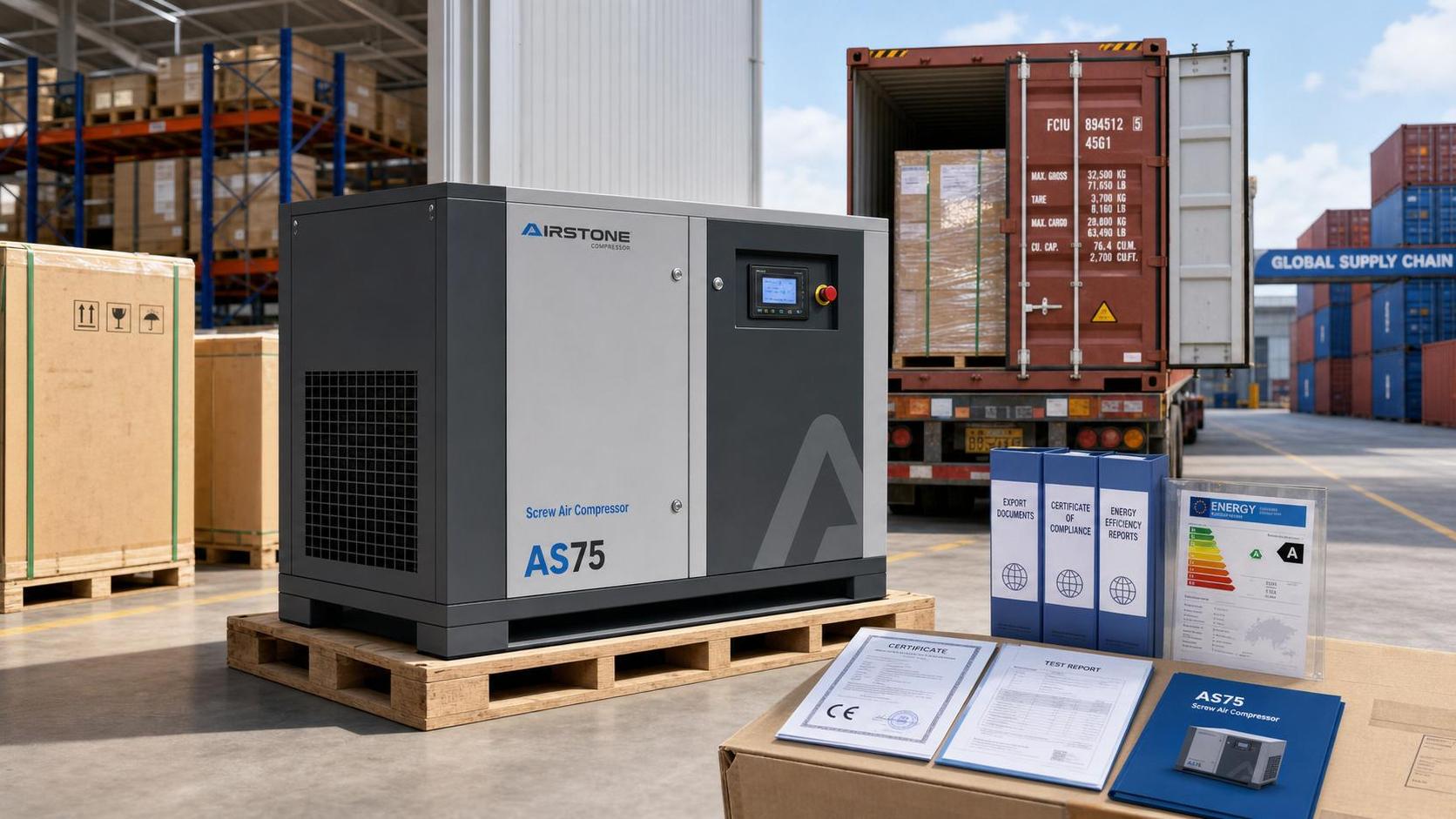
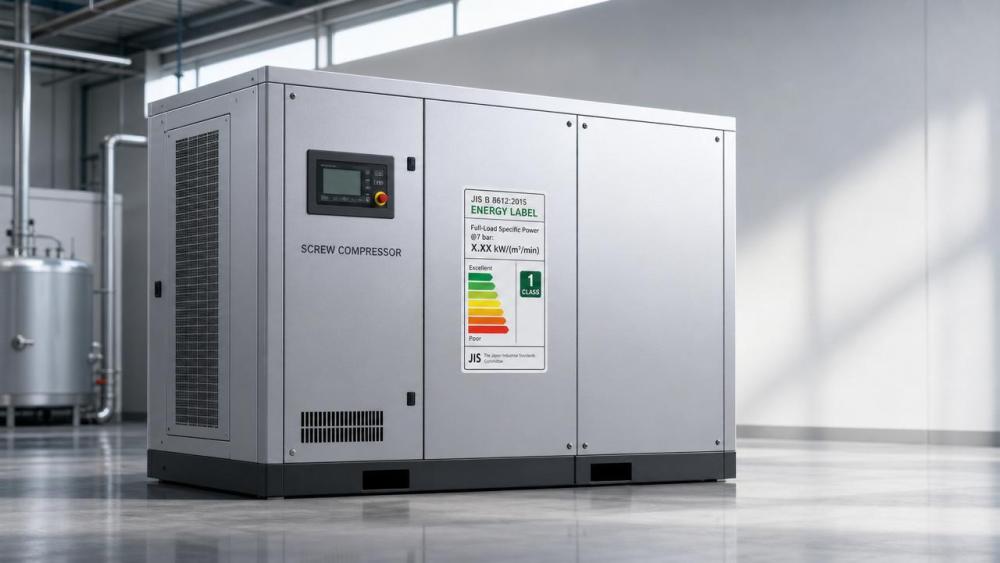
On 11 May 2026, METI published the official revision notice for JIS B 8605:2026. Starting 1 October 2026, all screw compressors imported into Japan must display ‘Full-Load Specific Power @7 bar’—expressed in kW/(m³/min)—on their energy efficiency labels. This replaces the previous, less precise term ‘Rated Condition Specific Power’. Non-compliant units will be denied customs clearance.
Industries Affected
Direct Trading Enterprises
Exporters and importers handling screw compressors face immediate operational impact: label redesign, test report reformatting, and potential delays in customs documentation. Since Japanese importers often rely on supplier-provided labels to complete regulatory filings, misalignment between Chinese factory labeling practices and JIS B 8605:2026 may trigger shipment holds or retesting requests at port.
Raw Material Procurement Enterprises
Firms sourcing components for compressor assemblies—including motors, rotors, and cooling systems—must now anticipate tighter performance specifications. For example, motor efficiency and thermal management capabilities directly influence full-load specific power at 7 bar; procurement teams may need to revise supplier qualification criteria or request updated performance certifications aligned with the new test condition.
Manufacturing Enterprises
OEMs and contract manufacturers must adjust product validation protocols. Testing must now be conducted at precisely 7 bar discharge pressure under full-load conditions—not at variable or nominal pressures previously accepted. This affects not only lab scheduling but also design iteration cycles, especially for models originally optimized for 8 bar or 10 bar operation where efficiency curves differ significantly at 7 bar.
Supply Chain Service Providers
Certification bodies, testing laboratories, and logistics compliance consultants will see increased demand for JIS-aligned verification services. Notably, third-party labs accredited under JIS S 0001 (General Rules for Standardization) must confirm their test rigs meet the 7 bar steady-state pressure tolerance requirements before issuing valid reports. Some smaller regional labs may lack calibrated instrumentation for this specific point, creating bottlenecks.
Key Focus Areas and Recommended Actions
Verify Test Report Alignment
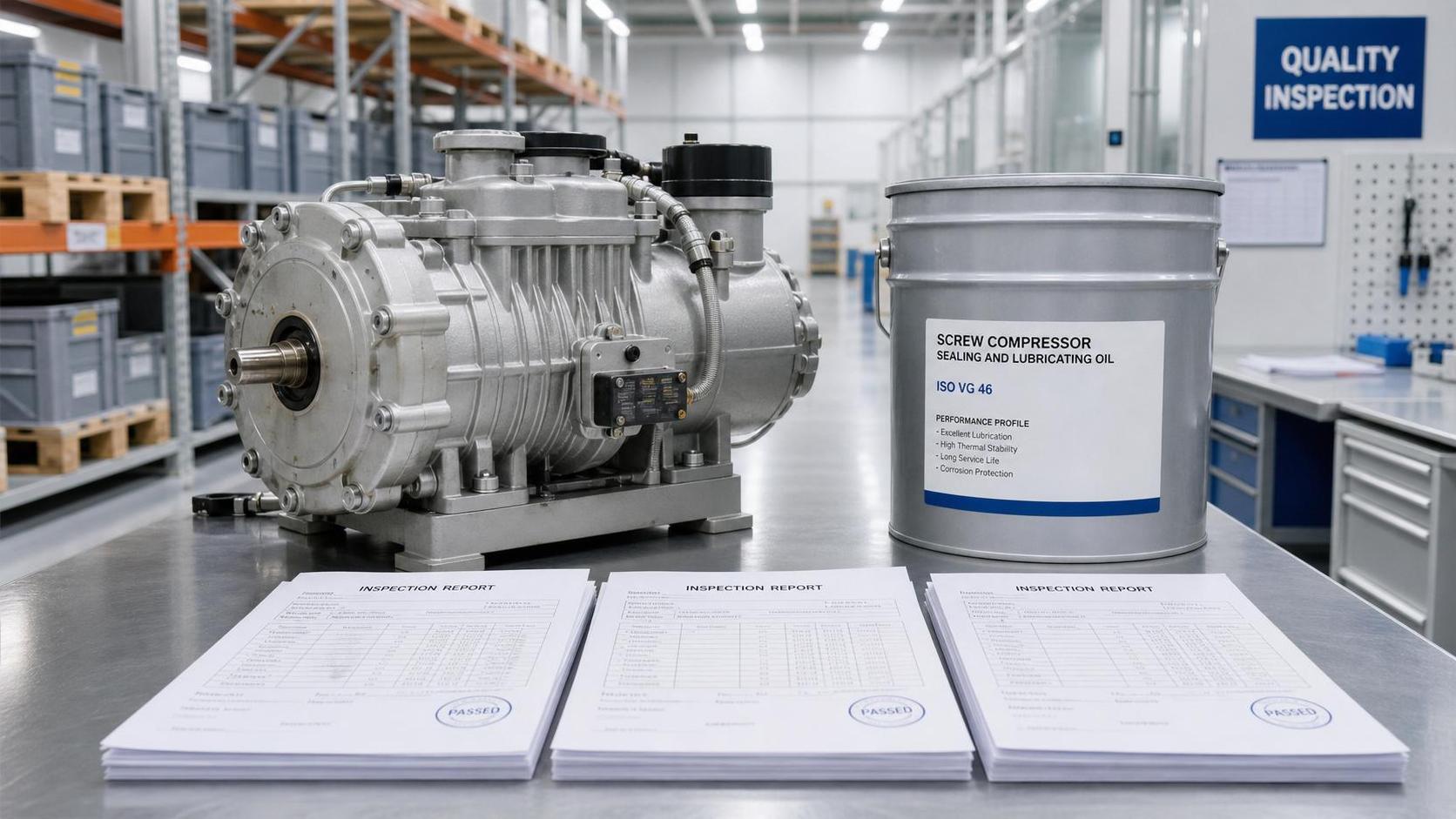
Confirm that existing or upcoming type-test reports explicitly state test conditions as ‘full load, 7 bar discharge pressure, ISO 1217:2016 Annex C compliant’, including ambient temperature, humidity, and inlet pressure controls. Reports referencing ‘rated condition’ without defining pressure are no longer sufficient.
Update Label Templates and ERP Systems
Revise digital label assets, packaging artwork, and product data sheets to include the exact phrase ‘Full-Load Specific Power @7 bar’ and its unit. Ensure ERP and PLM systems support version-controlled label metadata tied to production lot numbers and test dates.
Engage Early with Japanese Import Partners
Coordinate with Japanese distributors or end-user clients to align on label placement, bilingual formatting expectations (Japanese/English), and acceptable deviations—e.g., whether dual-labeling (old + new) is permitted during transition months. METI does not recognize transitional labeling unless formally approved via prior consultation.
Editorial Perspective / Industry Observation
Observably, this revision reflects Japan’s broader shift toward standardized, application-specific efficiency metrics—not just generic ratings. Unlike EU’s ErP Directive, which uses weighted average power across partial loads, JIS B 8605:2026 anchors performance to a single, high-utilization point. Analysis shows this better reflects real-world use in Japanese manufacturing facilities, where constant-pressure air systems dominate. From an industry perspective, it is less about raising the bar universally and more about calibrating measurement to actual operating context. Current trends suggest other Asian markets—including South Korea and Taiwan—may adopt similar pressure-specific labeling within 2–3 years, making early alignment strategically advantageous.
Conclusion
This update is not merely a labeling change but a signal of increasing regulatory granularity in industrial energy policy. For global compressor suppliers, adapting to JIS B 8605:2026 offers both compliance necessity and an opportunity to refine product benchmarking around real-use conditions. A rational interpretation is that standardization around fixed-pressure points enhances cross-manufacturer comparability—ultimately supporting more informed procurement decisions by end users.
Source Attribution
Official source: Ministry of Economy, Trade and Industry (METI), Japan — JIS B 8605:2026 Revision Notice, published 11 May 2026. Available via the Japanese Industrial Standards Committee (JISC) portal (https://www.jisc.go.jp). Note: METI has indicated plans to publish supplementary guidance on test methodology and lab accreditation by Q3 2026—this remains under observation.
Related News
- How Should Energy Management Systems Handle Compressor Load Changes?Author :Pneumatic Power Engineer

- Which Maintenance Issues Reduce Air Compressor Efficiency?Author :Pneumatic Power Engineer

- How Much Energy Can Variable-Speed Screw Compressors Save?Author :Pneumatic Power Engineer

- China Expands Cross-Border RMB and FX Cash Pooling NationwideAuthor :Pneumatic Power Engineer

- How to Size Air Compressor Systems for Pneumatics by Flow and Pressure DemandAuthor :Pneumatic Power Engineer

- How Energy Recovery Systems for Compressors Cut Power CostsAuthor :Pneumatic Power Engineer

- How to Evaluate Screw Compressors in Industrial Refrigeration EquipmentAuthor :Pneumatic Power Engineer

- India Makes BIS Certification Mandatory for Screw CompressorsAuthor :Pneumatic Power Engineer

- China Tightens Export Filing for Screw CompressorsAuthor :Pneumatic Power Engineer

- SABIC Sets IoT Interface Rule for Screw CompressorsAuthor :Pneumatic Power Engineer

- Industrial Heat Recovery Systems for Compressors: When Do Energy Savings Pay Back?Author :Pneumatic Power Engineer

- EU Tightens REACH Limit for Screw Compressor LubricantsAuthor :Pneumatic Power Engineer

- EU Opens China Screw Compressor Review With Carbon RuleAuthor :Pneumatic Power Engineer

- DOE Mandates AHRI 1000-2026 for Screw CompressorsAuthor :Pneumatic Power Engineer

- VDMA Filing Signals EU Risk for Chinese Oil Screw CompressorsAuthor :Pneumatic Power Engineer
![]()
- Screw vs Piston Air Compressors for Stable Plant OutputAuthor :Pneumatic Power Engineer

- Saudi SASO Tightens Refrigerant Limits in IEC 60335-2-40:2026Author :Pneumatic Power Engineer

- IIR Warns of 18-Week Lead Times for Screw CompressorsAuthor :Pneumatic Power Engineer

- Welded Compressed Air Manifold Selection Guide for Pressure Stability and LeaksAuthor :Pneumatic Power Engineer

- India BIS Rule Adds IS 16830 Requirement for Imported Screw CompressorsAuthor :Pneumatic Power Engineer

- What to Check Before Choosing a Compressed Air FactoryAuthor :Pneumatic Power Engineer

- China Tightens Export Checks on Screw CompressorsAuthor :Pneumatic Power Engineer

- Screw Compressor Lead Times Reach 22 WeeksAuthor :Pneumatic Power Engineer

- Vietnam Requires QR Labels on Imported Screw CompressorsAuthor :Pneumatic Power Engineer

- Compressed Air Technologies Filtration: How to Reduce Pressure Drop and Energy LossAuthor :Pneumatic Power Engineer

- STSPIN830 Lead Time Tops 32 Weeks in Screw CompressorsAuthor :Pneumatic Power Engineer

- IGBT Shortage Extends Screw Compressor Lead TimesAuthor :Pneumatic Power Engineer

- Compressed Air Systems: 7 Hidden Costs That Raise Total Operating ExpenseAuthor :Pneumatic Power Engineer

- Compressed Air Efficiency: 7 Hidden Losses That Raise Operating CostsAuthor :Pneumatic Power Engineer

- How to Compare Screw vs Oil-Free Air Compression SystemsAuthor :Pneumatic Power Engineer

- Compressed Air Leaks: What They Really Cost in Daily OperationsAuthor :Pneumatic Power Engineer

- DOE Moves Up R449A Chiller Deadline to March 2027Author :Pneumatic Power Engineer

- How Compression Technology Cuts Energy Use in Modern PlantsAuthor :Pneumatic Power Engineer

- EU Adds GB 18613-2025 to Import Energy ChecksAuthor :Pneumatic Power Engineer

- EU CE Rule Adds SRA for R290 Compressor ImportsAuthor :Pneumatic Power Engineer

- Compressed Air Leaks: Hidden Costs and Practical Ways to Reduce LossesAuthor :Pneumatic Power Engineer