Air Compression Costs: Screw vs Piston Units in 2026




For procurement teams planning 2026 investments, air compression costs are no longer just about purchase price. Choosing between screw and piston units affects energy use, maintenance cycles, uptime, and long-term operating value. This guide helps buyers compare both technologies through a practical cost lens, so they can make more confident sourcing decisions in a market shaped by efficiency targets and rising industrial performance demands.
How should buyers compare air compression costs in 2026?
In industrial purchasing, the real cost of air compression comes from the full operating profile of the system. Capital expenditure matters, but electricity, load pattern, maintenance labor, parts replacement, and production interruption usually have a larger effect over the equipment life.
For procurement personnel in mixed manufacturing, processing, logistics, packaging, and utility environments, the choice between screw and piston compressors often becomes a debate between lower entry price and lower lifecycle cost. The right answer depends on duty cycle, pressure stability, air quality needs, and future expansion.
GTC-Matrix approaches this question from an industrial intelligence perspective. By connecting thermodynamic behavior, compressed air demand, energy pricing, and maintenance economics, buyers can move beyond simple catalog comparison and build a sourcing case aligned with production performance and decarbonization goals.
- Use total cost of ownership rather than purchase price alone.
- Match compressor type to actual load profile, not nameplate capacity only.
- Evaluate downtime risk, because unstable air compression can disrupt the entire line.
- Review compliance, energy efficiency, and service access before signing a supply contract.
Screw vs piston units: what are the practical differences for procurement?
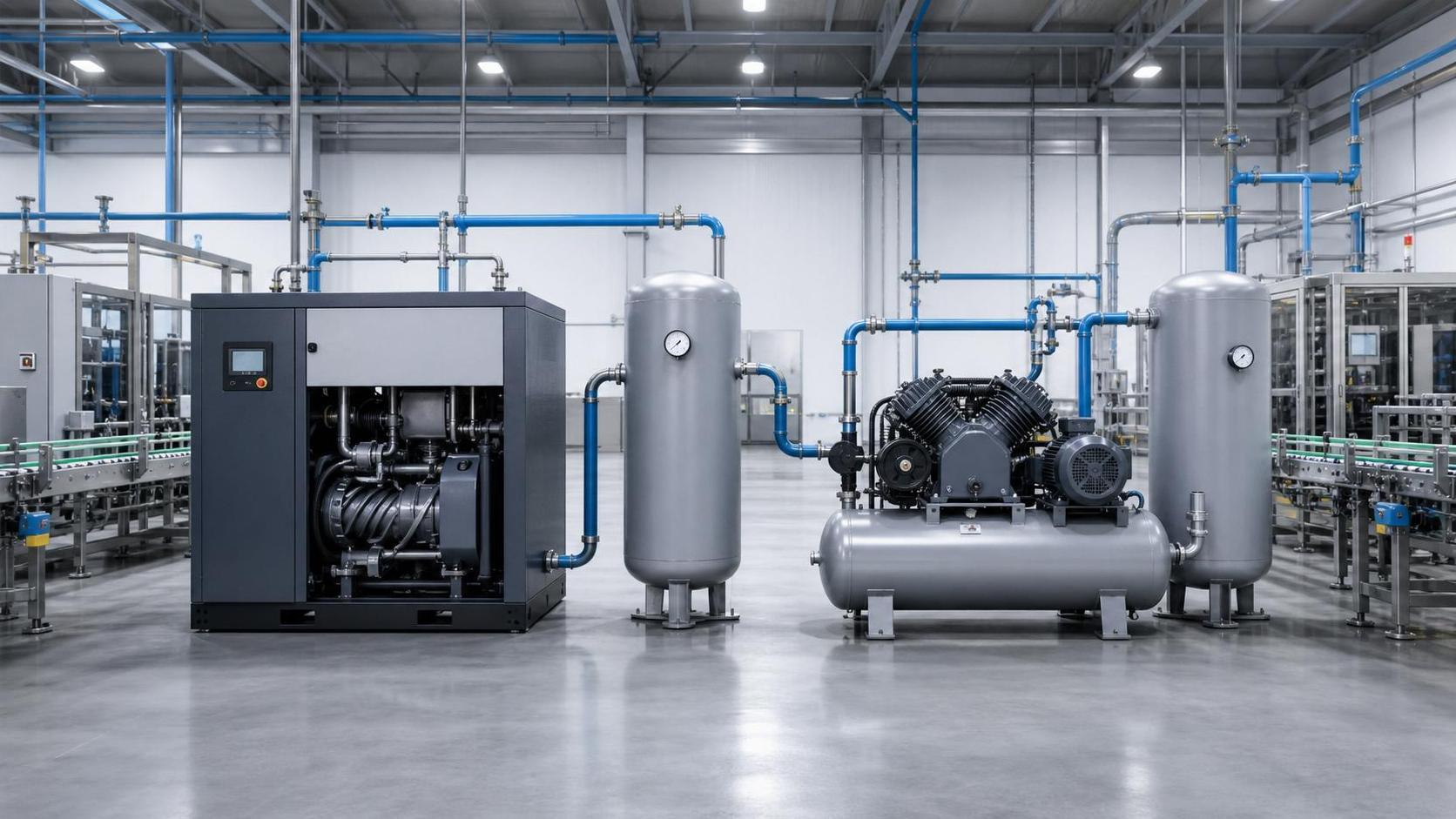
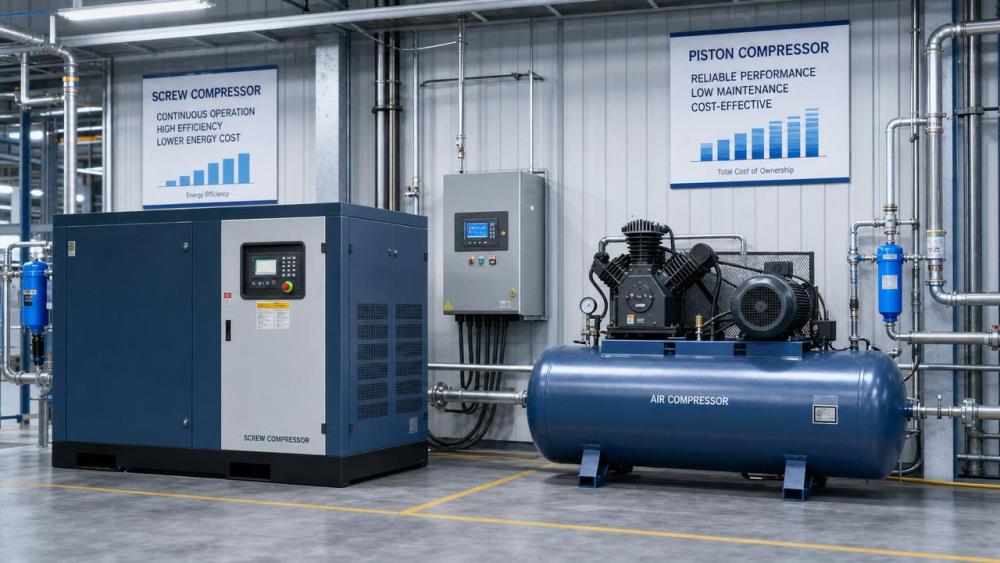
Screw compressors use rotary meshing elements and are widely selected for continuous industrial air compression. Piston compressors use reciprocating motion and remain common in intermittent-duty applications, workshops, maintenance stations, and smaller process points.
From a sourcing standpoint, screw units are often favored where air demand is steady, multi-shift operation is normal, and system pressure must remain consistent. Piston units can still make financial sense when operation is occasional, budget is tight, or air usage is limited to short bursts.
The table below gives a procurement-oriented comparison of air compression options rather than a purely engineering view.
This comparison shows why air compression decisions should not be reduced to a single quote. A lower invoice today may create higher energy and maintenance costs over the next five to ten years.
Where do the biggest air compression costs actually come from?
In many industrial facilities, electricity remains the dominant cost driver in air compression. Even a small efficiency gap becomes significant when a compressor runs daily across multiple shifts. This is why loading pattern, part-load efficiency, and leakage control deserve procurement attention.
Maintenance is the second major contributor. Screw units may require higher-value service kits, but piston units often need more frequent intervention under heavy use. The cost discussion should therefore include labor availability, spare parts lead time, and the production cost of unplanned stoppage.
The next table breaks air compression cost categories into practical buyer language.
For procurement teams, the most important insight is simple: air compression cost is cumulative. A unit that appears inexpensive at purchase can become expensive when energy tariffs rise, maintenance windows tighten, or the factory expands.
Which applications favor screw units, and when do piston compressors still make sense?
Application fit is the fastest way to improve an air compression purchasing decision. Compressors are not interchangeable in economic terms, because demand behavior changes the cost curve.
When screw compressors are usually the better buy
- Plants operating one, two, or three shifts with stable compressed air demand.
- Packaging, food processing, plastics, electronics, and assembly lines where pressure drop can affect product quality.
- Facilities planning networked controls, heat recovery, or future capacity upgrades.
- Sites where lower noise, compact packaged design, and predictable service planning are valued.
When piston compressors remain commercially reasonable
- Maintenance workshops, garages, and smaller fabrication cells with short daily runtime.
- Remote service points where low initial spend is more important than central optimization.
- Backup duty where the compressor is not the primary production air source.
- Projects with uncertain demand that need an interim air compression solution first.
A common procurement mistake is buying a piston unit for a continuously running line because the first quotation looks attractive. In many cases, the wrong duty-cycle match erodes savings quickly through energy use, thermal stress, and more frequent service intervention.
What technical factors should procurement teams verify before comparing quotations?
Quotations for air compression equipment can look similar while representing very different system value. Buyers should normalize the technical basis before evaluating price.
- Confirm required flow at actual operating pressure, not free-air-delivery marketing claims alone.
- Check duty cycle and runtime expectations by shift, season, and production plan.
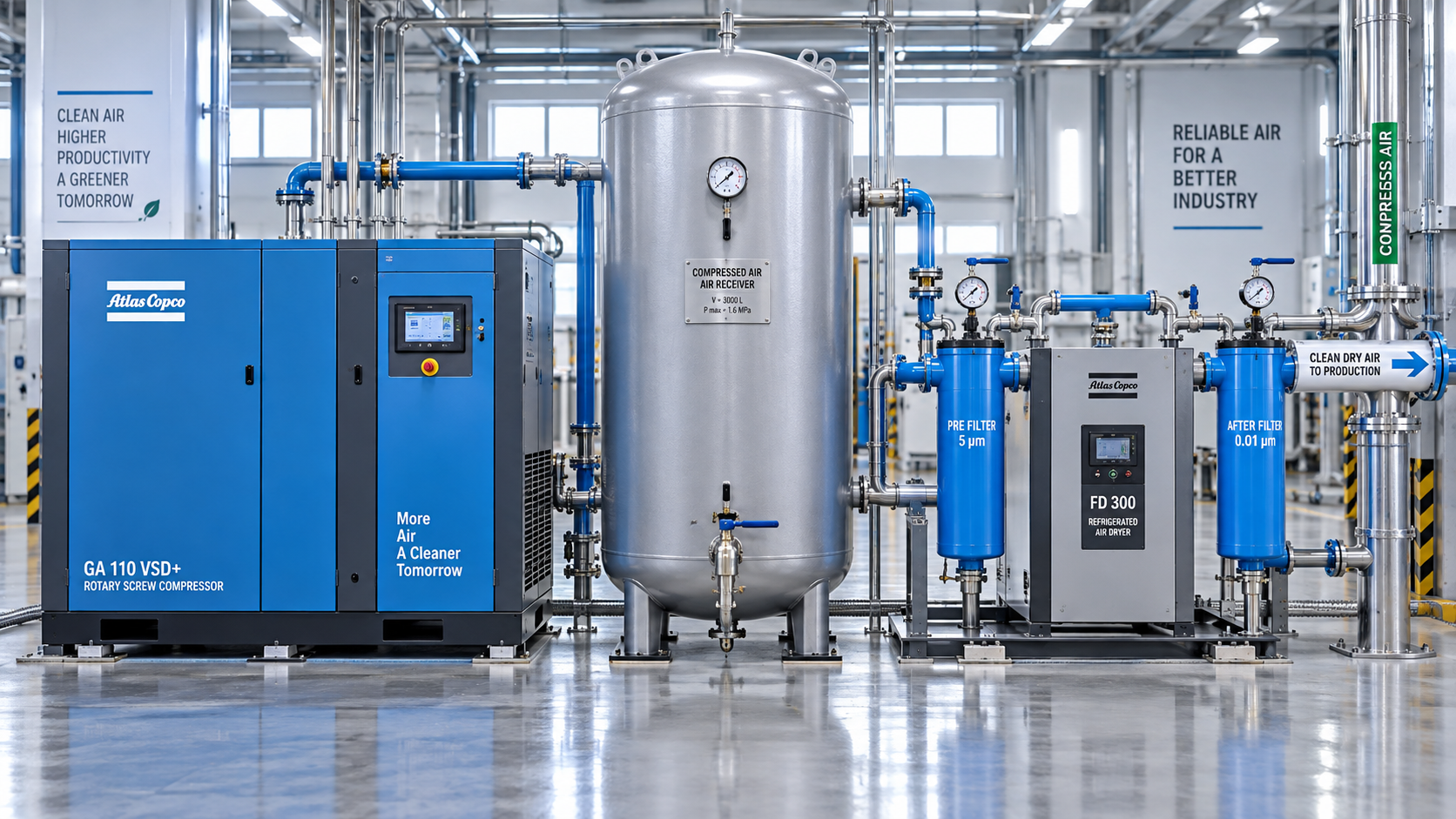
- Review whether the quote includes dryer, filters, receiver tank, controls, and condensate management.
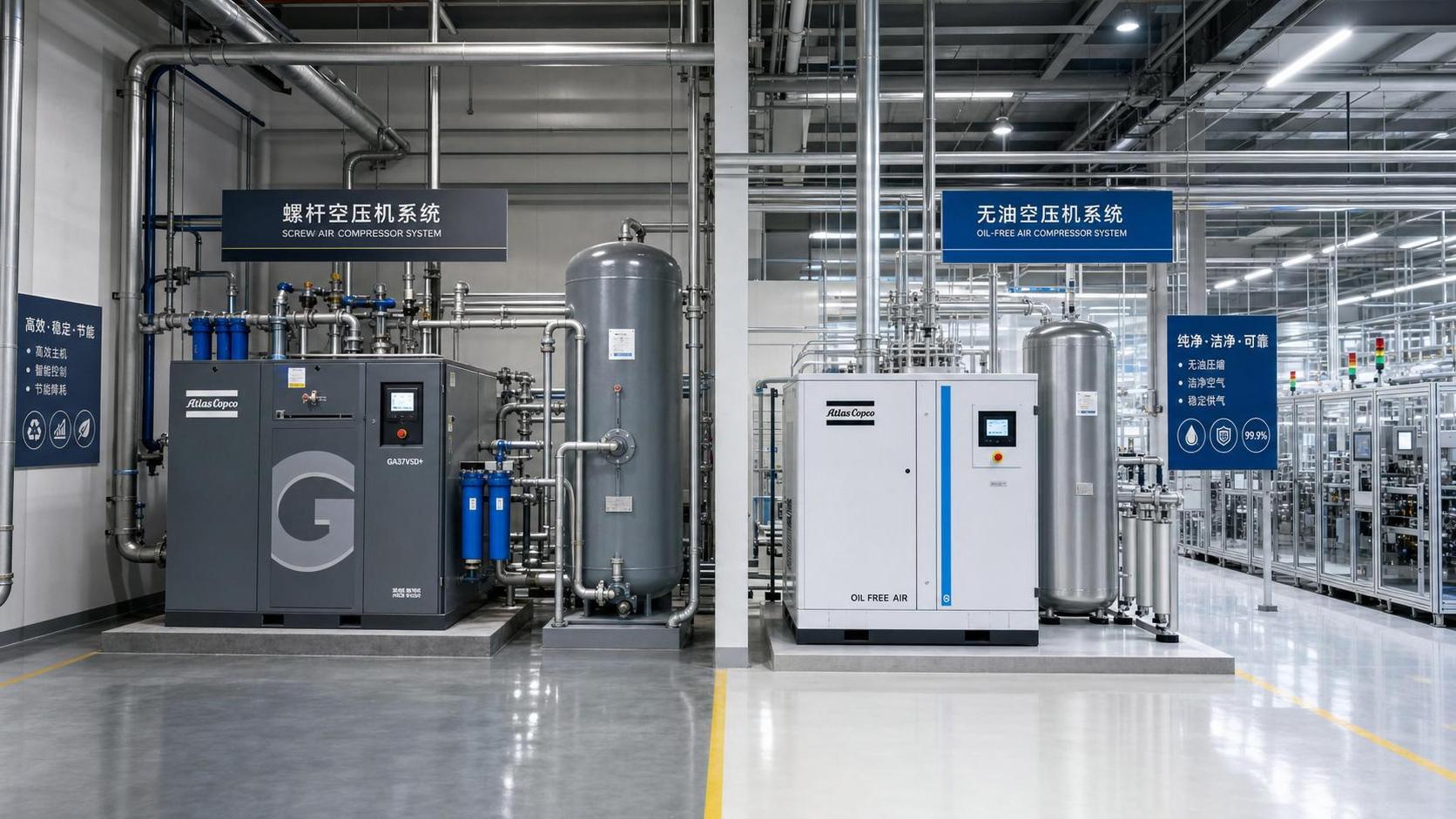
- Assess oil-lubricated versus oil-free requirements based on product sensitivity and downstream process risk.
- Request noise data, ambient condition limits, cooling method, and maintenance interval details.
Where food, pharmaceutical, semiconductor, or precision manufacturing environments are involved, air quality specifications become a major part of air compression cost. Filtration level, dew point, and contamination risk can change both compressor choice and supporting equipment budget.
GTC-Matrix helps buyers connect these technical details with broader market realities, including energy price shifts, efficiency trends, oil-free adoption, and process-driven demand for cleaner compressed air systems.
How can procurement reduce risk in sourcing and implementation?
Reducing air compression cost risk starts with better demand visibility. If the plant has no recent demand profile, the sourcing process should include at least a basic load review before finalizing capacity and technology choice.
Beyond sizing, implementation planning matters. Delivery schedule, commissioning scope, spare parts availability, and service response time should be evaluated together, especially for sites where compressed air is a utility critical to production continuity.
Practical risk-control checklist
- Request a clear operating point: pressure, flow, ambient temperature, and annual hours.
- Ask suppliers to state excluded items, not only included components.
- Compare service intervals and expected consumables over the first three years.
- Check whether local codes, electrical standards, and pressure vessel requirements apply.
- Plan for leakage reduction and storage optimization, since system waste can distort compressor economics.
General standards and compliance references may include pressure equipment rules, electrical safety conformity, noise limits, and compressed air quality guidance such as ISO 8573, depending on the application and region. Procurement should verify what is mandatory versus desirable for the intended use.
FAQ: common air compression questions buyers ask
Is a screw compressor always cheaper over time?
Not always. For continuous or heavy-duty air compression, screw units often produce lower lifecycle cost. For intermittent use with low annual runtime, a piston unit may still be more economical because the energy-saving advantage of a screw package may not offset the higher purchase cost.
What is the biggest hidden cost in air compression projects?
The most overlooked cost is usually system mismatch. Oversizing, poor part-load behavior, leakage, unstable pressure control, and missing downstream treatment can all raise electricity use and reduce process reliability. Hidden cost also appears when maintenance access or spare parts support is weak.
Should buyers focus on oil-free technology in 2026?
Only when the process requires it or contamination risk justifies it. Oil-free air compression can align with strict product purity standards, but it should be evaluated against actual application needs, energy performance, maintenance strategy, and total installed cost.
How long should procurement evaluate total cost of ownership?
A three- to five-year horizon is often the minimum for meaningful comparison, while larger plants may model seven to ten years. This is especially important when energy prices are volatile or when the compressor supports core process continuity.
What will shape air compression sourcing decisions in 2026?
In 2026, buyers are likely to face stronger pressure to justify energy consumption, resilience, and asset productivity together. That means air compression procurement will increasingly favor measurable efficiency, controllability, and cleaner integration with plant digital systems.
Another clear trend is convergence between utility purchasing and process engineering. Compressed air is no longer treated as a background service only. In sectors requiring high precision temperature control or pure power sources, compressor decisions now influence quality, sustainability, and operational risk.
This is where intelligence-led evaluation becomes valuable. GTC-Matrix tracks industrial cooling, compressed air, vacuum processes, and heat exchange developments so buyers can compare equipment decisions against broader market signals such as energy cost movement, regulatory change, and evolving process requirements.
Why choose us for air compression decision support?
GTC-Matrix supports procurement teams that need more than a basic vendor pitch. Our value lies in connecting thermodynamic logic, pneumatic engineering, and industrial economics to help buyers understand whether a screw or piston solution fits their real operating context.
You can consult us on parameter confirmation, air compression technology selection, operating cost comparison, delivery-cycle considerations, downstream treatment matching, and compliance-oriented evaluation for different industries and plant conditions.
If your team is preparing a 2026 sourcing plan, share your target pressure, flow range, runtime pattern, air quality requirement, and project timeline. We can help structure a more informed comparison covering screw versus piston units, lifecycle cost assumptions, service expectations, and quotation review priorities before you move into final supplier negotiation.
Ready when you are. Send us a message to get started.
Related News
- When does variable gas flow justify a custom screw compressor system?Author :Pneumatic Power Engineer

- How to size compressed air equipment for pneumatic toolsAuthor :Pneumatic Power Engineer

- How Should Energy Management Systems Handle Compressor Load Changes?Author :Pneumatic Power Engineer

- Which Maintenance Issues Reduce Air Compressor Efficiency?Author :Pneumatic Power Engineer

- How Much Energy Can Variable-Speed Screw Compressors Save?Author :Pneumatic Power Engineer

- Industrial Compressor Selection: Matching Flow, Pressure, and Duty CycleAuthor :Pneumatic Power Engineer

- China Expands Cross-Border RMB and FX Cash Pooling NationwideAuthor :Pneumatic Power Engineer

- How to Size Air Compressor Systems for Pneumatics by Flow and Pressure DemandAuthor :Pneumatic Power Engineer

- How Energy Recovery Systems for Compressors Cut Power CostsAuthor :Pneumatic Power Engineer

- How to Evaluate Screw Compressors in Industrial Refrigeration EquipmentAuthor :Pneumatic Power Engineer

- India Makes BIS Certification Mandatory for Screw CompressorsAuthor :Pneumatic Power Engineer

- China Tightens Export Filing for Screw CompressorsAuthor :Pneumatic Power Engineer

- SABIC Sets IoT Interface Rule for Screw CompressorsAuthor :Pneumatic Power Engineer

- Industrial Heat Recovery Systems for Compressors: When Do Energy Savings Pay Back?Author :Pneumatic Power Engineer

- EU Tightens REACH Limit for Screw Compressor LubricantsAuthor :Pneumatic Power Engineer

- EU Opens China Screw Compressor Review With Carbon RuleAuthor :Pneumatic Power Engineer

- DOE Mandates AHRI 1000-2026 for Screw CompressorsAuthor :Pneumatic Power Engineer

- VDMA Filing Signals EU Risk for Chinese Oil Screw CompressorsAuthor :Pneumatic Power Engineer
![]()
- Screw vs Piston Air Compressors for Stable Plant OutputAuthor :Pneumatic Power Engineer

- Saudi SASO Tightens Refrigerant Limits in IEC 60335-2-40:2026Author :Pneumatic Power Engineer

- IIR Warns of 18-Week Lead Times for Screw CompressorsAuthor :Pneumatic Power Engineer

- Welded Compressed Air Manifold Selection Guide for Pressure Stability and LeaksAuthor :Pneumatic Power Engineer

- India BIS Rule Adds IS 16830 Requirement for Imported Screw CompressorsAuthor :Pneumatic Power Engineer

- What to Check Before Choosing a Compressed Air FactoryAuthor :Pneumatic Power Engineer

- China Tightens Export Checks on Screw CompressorsAuthor :Pneumatic Power Engineer

- Screw Compressor Lead Times Reach 22 WeeksAuthor :Pneumatic Power Engineer

- Vietnam Requires QR Labels on Imported Screw CompressorsAuthor :Pneumatic Power Engineer

- Compressed Air Technologies Filtration: How to Reduce Pressure Drop and Energy LossAuthor :Pneumatic Power Engineer

- STSPIN830 Lead Time Tops 32 Weeks in Screw CompressorsAuthor :Pneumatic Power Engineer

- IGBT Shortage Extends Screw Compressor Lead TimesAuthor :Pneumatic Power Engineer

- Compressed Air Systems: 7 Hidden Costs That Raise Total Operating ExpenseAuthor :Pneumatic Power Engineer

- Compressed Air Efficiency: 7 Hidden Losses That Raise Operating CostsAuthor :Pneumatic Power Engineer

- How to Compare Screw vs Oil-Free Air Compression SystemsAuthor :Pneumatic Power Engineer

- Compressed Air Leaks: What They Really Cost in Daily OperationsAuthor :Pneumatic Power Engineer

- DOE Moves Up R449A Chiller Deadline to March 2027Author :Pneumatic Power Engineer

- How Compression Technology Cuts Energy Use in Modern PlantsAuthor :Pneumatic Power Engineer