Jotun Expands China R&D Center Amid Rising Screw Compressor Demand for EV Battery Coating Cooling




On May 21, 2026, Jotun — a Norway-based global coatings provider — announced a USD 330 million expansion of its Shanghai R&D Center, focused on high-performance coatings for new energy vehicle (NEV) battery systems. The move signals intensified technical requirements in battery manufacturing infrastructure, particularly for clean, stable compressed air and precision thermal management — driving new demand for screw compressors and industrial chillers meeting stringent ISO and operational specifications.
Event Overview
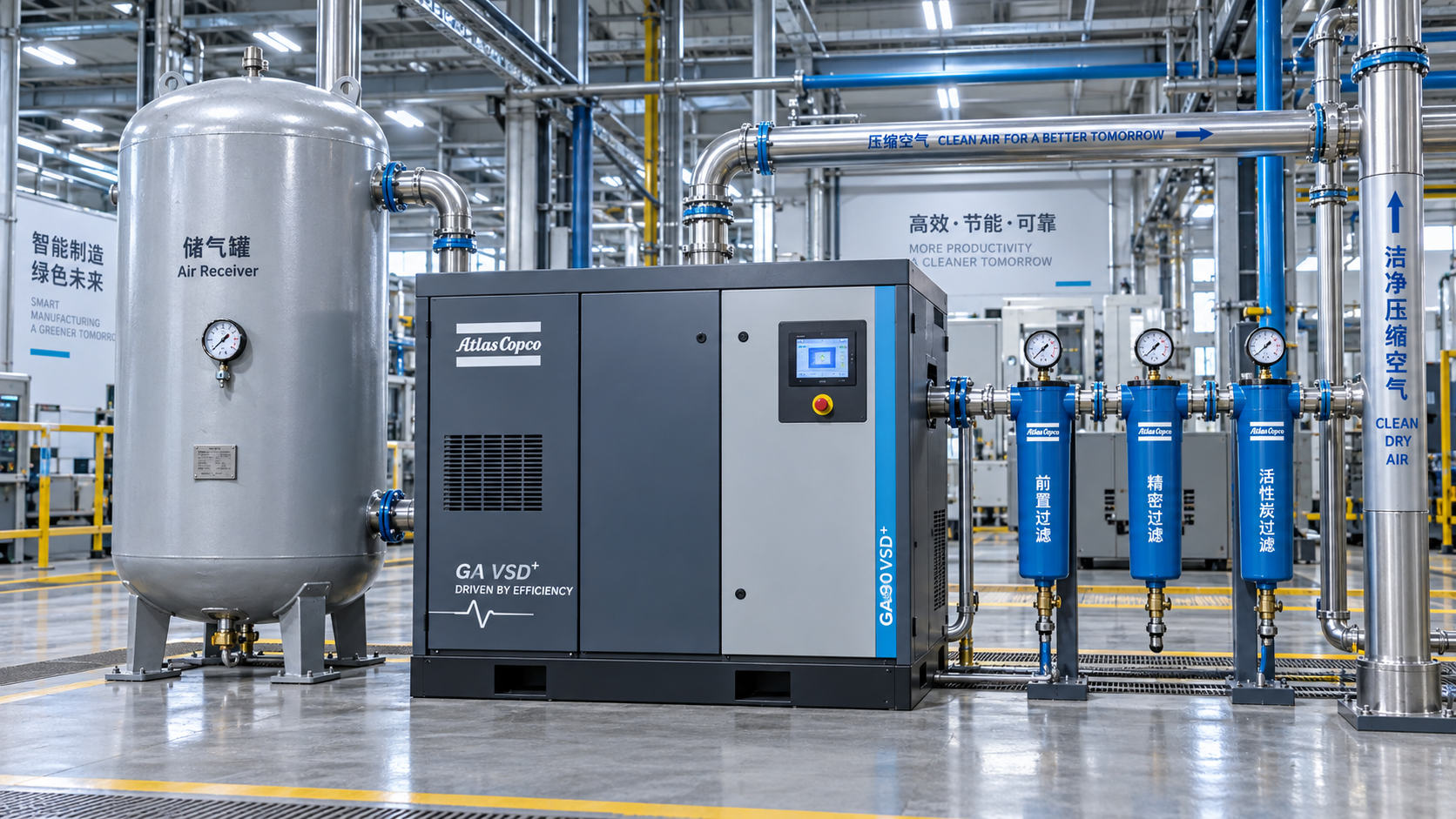
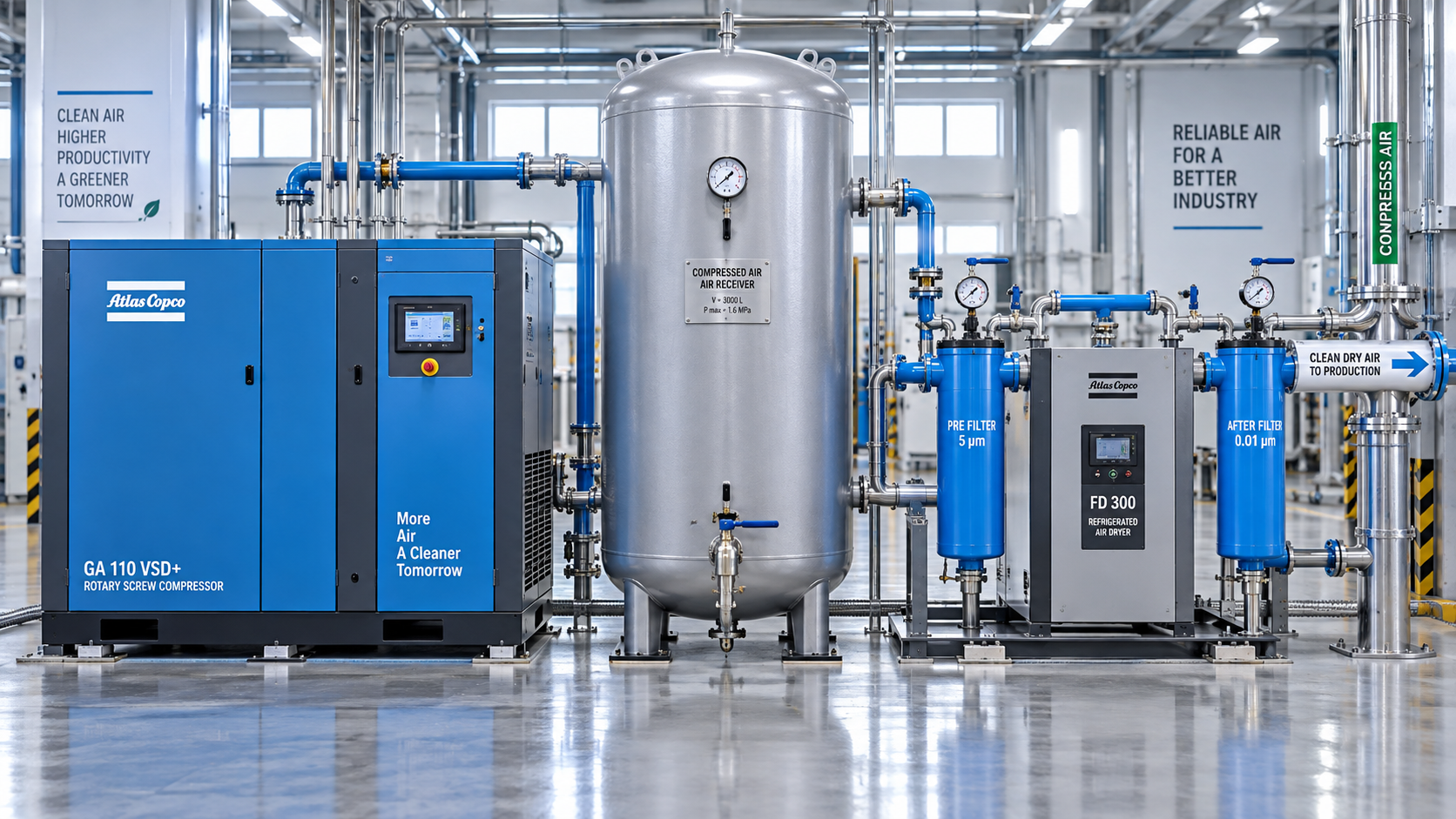
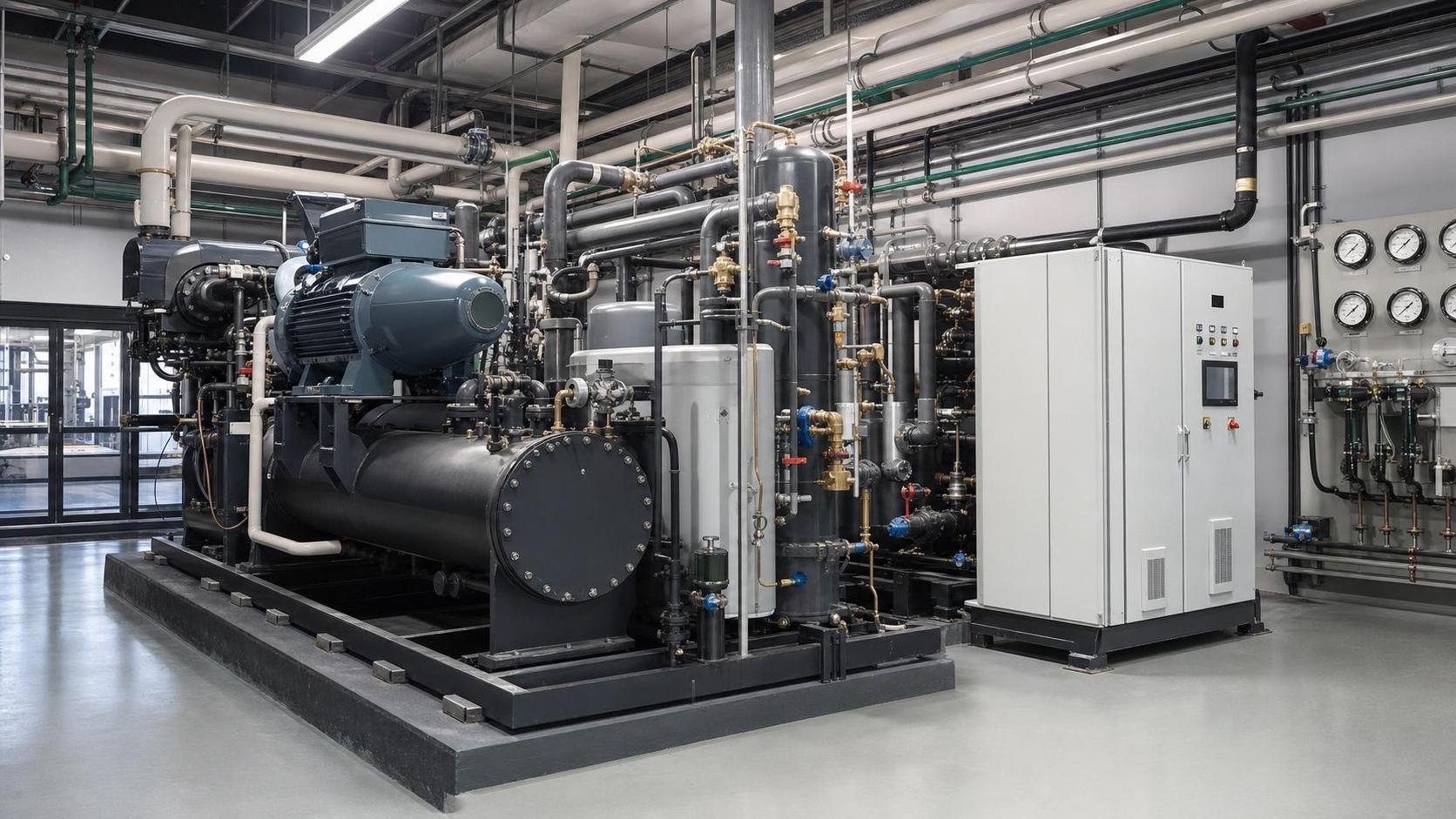
On May 21, 2026, Jotun Group confirmed its investment of USD 330 million to expand its Shanghai R&D Center. The upgraded facility will specialize in developing advanced coatings for lithium-ion battery cells and modules used in electric vehicles. To support coating application processes — including electrode drying, cell encapsulation, and electrolyte filling — the center requires integrated supply systems: high-purity screw compressors compliant with ISO 8573-1 Class 1 (≤0.1 µm particles, ≤0.01 mg/m³ oil content) and industrial chillers capable of maintaining closed-loop temperature control within –10°C to +5°C.
Jotun has issued its first set of technical specification documents to leading Chinese compressor manufacturers, outlining these performance thresholds and integration interface requirements.
Industries Affected
Direct Trading Enterprises
Trading firms specializing in industrial gas equipment and thermal management systems face immediate procurement shifts. Jotun’s specification package sets a de facto benchmark for NEV battery coating lines — meaning importers/exporters of screw compressors and chillers must now validate compliance with Class 1 cleanliness and sub-zero operating envelopes. This increases pre-shipment testing costs and extends lead times for certification-aligned models.
Raw Material Procurement Enterprises
Suppliers of critical compressor components — such as high-efficiency rotors, low-outgassing seals, and corrosion-resistant heat exchanger alloys — are seeing revised material qualification protocols. Jotun’s requirement for continuous operation under wide-temperature cycling (–10°C to +5°C) implies stricter thermal fatigue testing and tighter tolerances for coefficient-of-thermal-expansion matching. Procurement teams must now prioritize vendors with traceable test logs against IEC 60034-30-2 (efficiency) and ISO 10816-3 (vibration).
Manufacturing Enterprises
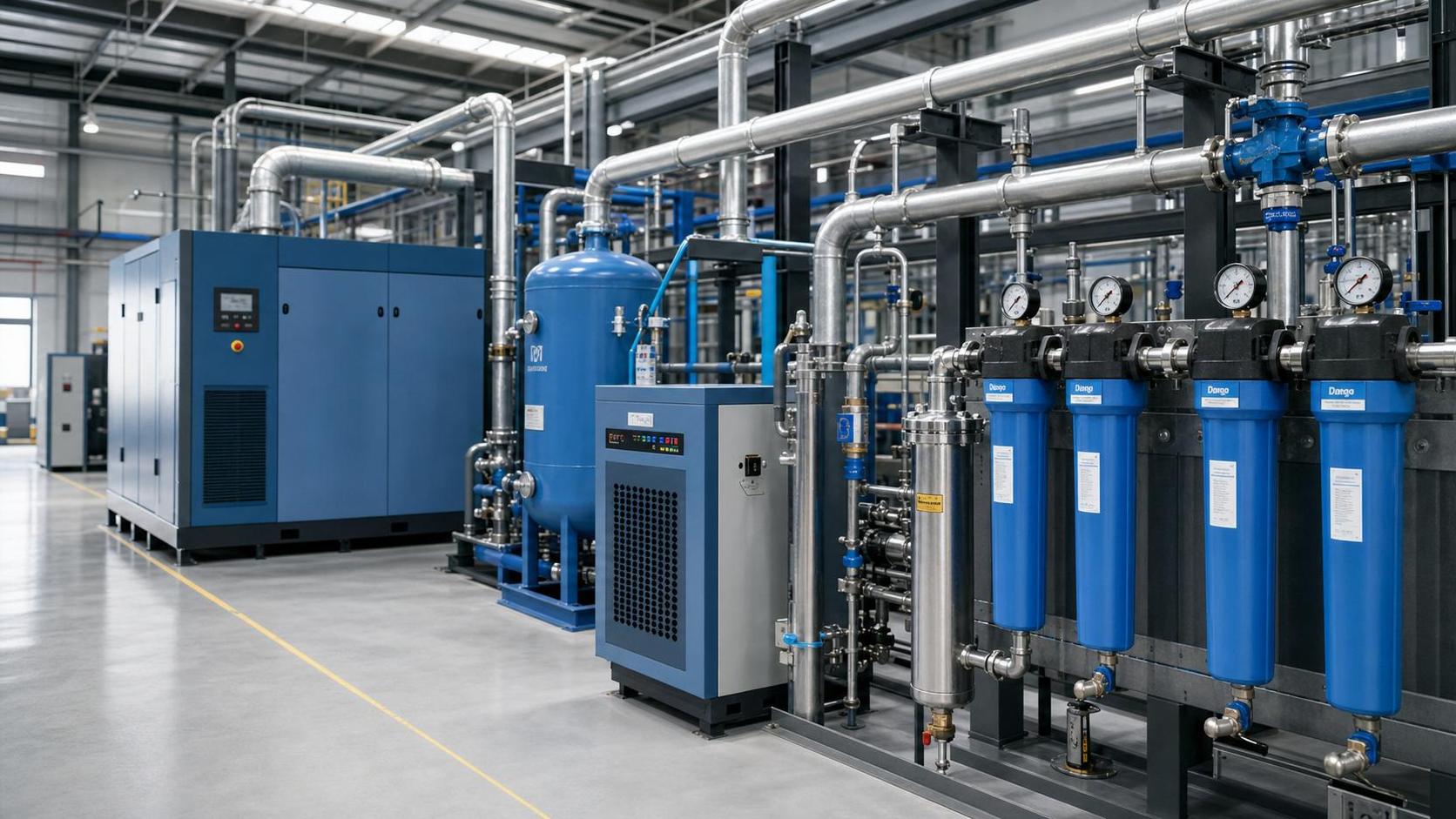
OEMs and Tier-1 suppliers building battery coating lines must re-evaluate their utility system design assumptions. Traditional compressed air systems (e.g., Class 3 or 4) and standard chiller units cannot meet Jotun’s stated specs. This triggers redesign cycles for cleanroom-grade air distribution networks, vibration-isolation foundations, and redundant chilled-water loops — increasing CAPEX by an estimated 18–22% per line, according to preliminary engineering assessments.
Supply Chain Service Providers
Maintenance, calibration, and lifecycle support providers must upgrade service capabilities. ISO 8573-1 Class 1 systems require quarterly particle/oil aerosol monitoring, real-time dew point logging, and validated filter replacement procedures. Similarly, chillers operating across a 15°C span demand expanded refrigerant charge diagnostics and glycol concentration verification — services not routinely offered by general HVAC maintenance contractors.
Key Focus Areas & Recommended Actions
Validate Clean Air Certification Pathways
Compressor manufacturers should initiate third-party validation against ISO 8573-1:2010 Annex B (Class 1), using certified test labs. Internal documentation must explicitly map filtration stages (coalescing → activated carbon → ultra-low penetration air [ULPA] grade) to particle size removal efficiency.
Test Chiller Stability Across Full Temperature Range
Industrial chiller suppliers must conduct minimum 72-hour continuous load tests at both –10°C and +5°C setpoints, recording compressor discharge temperature variance, refrigerant superheat consistency, and control loop response time — all required for Jotun’s technical review.
Prepare Integrated System Interface Documentation
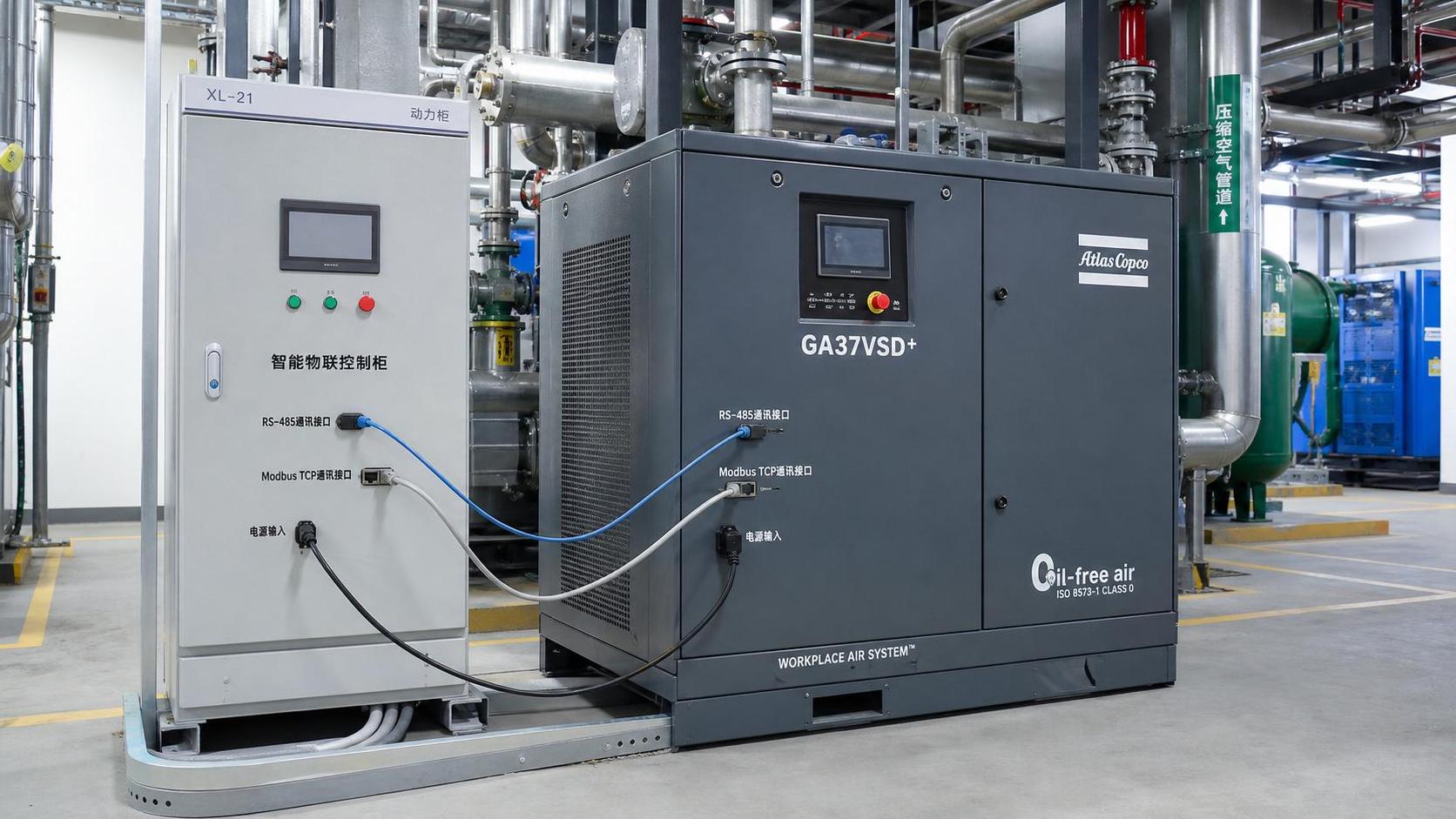
Vendors must supply machine-readable interface definitions (e.g., Modbus TCP register maps, OPC UA node structures) for air pressure, dew point, chiller outlet temperature, and flow rate — enabling seamless integration into battery production MES/SCADA platforms.
Editorial Perspective / Industry Observation
Observably, Jotun’s Shanghai expansion is less about scaling R&D capacity and more about vertically anchoring next-generation process standards into China’s NEV supply chain. Analysis shows this is the first publicly disclosed case where a Tier-1 coatings supplier has mandated Class 1 compressed air — previously reserved for semiconductor lithography or pharmaceutical isolators — for battery coating applications. From an industry perspective, this reflects growing recognition that electrode coating uniformity (critical for cycle life and safety) is as sensitive to airborne particulates and thermal drift as it is to slurry rheology. Current more relevant interpretation is not that all battery lines will adopt Class 1, but rather that high-value segments — premium EVs, solid-state prototypes, and aviation batteries — will increasingly treat air quality and thermal stability as non-negotiable process variables, not utility afterthoughts.
Conclusion
This development marks a structural inflection: compressed air and cooling systems are transitioning from generic utilities to mission-critical process enablers in battery manufacturing. For stakeholders across the value chain, the implication is clear — technical alignment with emerging NEV coating standards is no longer optional differentiation, but foundational infrastructure readiness.
Source Attribution
Official announcement: Jotun Global Press Release, May 21, 2026 (jotun.com/press/shanghai-rd-expansion-2026). Technical specifications referenced are drawn from Jotun’s confidential Request for Quotation (RFQ) document #JOT-CN-SC-2026-001, shared under NDA with select Chinese OEM suppliers. Note: Final compliance validation timelines, volume ramp-up schedule, and potential extension to other Jotun facilities remain under observation.
Ready when you are. Send us a message to get started.
Related News
- When does variable gas flow justify a custom screw compressor system?Author :Pneumatic Power Engineer

- How to size compressed air equipment for pneumatic toolsAuthor :Pneumatic Power Engineer

- How Should Energy Management Systems Handle Compressor Load Changes?Author :Pneumatic Power Engineer

- Which Maintenance Issues Reduce Air Compressor Efficiency?Author :Pneumatic Power Engineer

- How Much Energy Can Variable-Speed Screw Compressors Save?Author :Pneumatic Power Engineer

- Industrial Compressor Selection: Matching Flow, Pressure, and Duty CycleAuthor :Pneumatic Power Engineer

- China Expands Cross-Border RMB and FX Cash Pooling NationwideAuthor :Pneumatic Power Engineer

- How to Size Air Compressor Systems for Pneumatics by Flow and Pressure DemandAuthor :Pneumatic Power Engineer

- How Energy Recovery Systems for Compressors Cut Power CostsAuthor :Pneumatic Power Engineer

- How to Evaluate Screw Compressors in Industrial Refrigeration EquipmentAuthor :Pneumatic Power Engineer

- India Makes BIS Certification Mandatory for Screw CompressorsAuthor :Pneumatic Power Engineer

- China Tightens Export Filing for Screw CompressorsAuthor :Pneumatic Power Engineer

- SABIC Sets IoT Interface Rule for Screw CompressorsAuthor :Pneumatic Power Engineer

- Industrial Heat Recovery Systems for Compressors: When Do Energy Savings Pay Back?Author :Pneumatic Power Engineer

- EU Tightens REACH Limit for Screw Compressor LubricantsAuthor :Pneumatic Power Engineer

- EU Opens China Screw Compressor Review With Carbon RuleAuthor :Pneumatic Power Engineer

- DOE Mandates AHRI 1000-2026 for Screw CompressorsAuthor :Pneumatic Power Engineer

- VDMA Filing Signals EU Risk for Chinese Oil Screw CompressorsAuthor :Pneumatic Power Engineer
![]()
- Screw vs Piston Air Compressors for Stable Plant OutputAuthor :Pneumatic Power Engineer

- Saudi SASO Tightens Refrigerant Limits in IEC 60335-2-40:2026Author :Pneumatic Power Engineer

- IIR Warns of 18-Week Lead Times for Screw CompressorsAuthor :Pneumatic Power Engineer

- Welded Compressed Air Manifold Selection Guide for Pressure Stability and LeaksAuthor :Pneumatic Power Engineer

- India BIS Rule Adds IS 16830 Requirement for Imported Screw CompressorsAuthor :Pneumatic Power Engineer

- What to Check Before Choosing a Compressed Air FactoryAuthor :Pneumatic Power Engineer

- China Tightens Export Checks on Screw CompressorsAuthor :Pneumatic Power Engineer

- Screw Compressor Lead Times Reach 22 WeeksAuthor :Pneumatic Power Engineer

- Vietnam Requires QR Labels on Imported Screw CompressorsAuthor :Pneumatic Power Engineer

- Compressed Air Technologies Filtration: How to Reduce Pressure Drop and Energy LossAuthor :Pneumatic Power Engineer

- STSPIN830 Lead Time Tops 32 Weeks in Screw CompressorsAuthor :Pneumatic Power Engineer

- IGBT Shortage Extends Screw Compressor Lead TimesAuthor :Pneumatic Power Engineer

- Compressed Air Systems: 7 Hidden Costs That Raise Total Operating ExpenseAuthor :Pneumatic Power Engineer

- Compressed Air Efficiency: 7 Hidden Losses That Raise Operating CostsAuthor :Pneumatic Power Engineer

- How to Compare Screw vs Oil-Free Air Compression SystemsAuthor :Pneumatic Power Engineer

- Compressed Air Leaks: What They Really Cost in Daily OperationsAuthor :Pneumatic Power Engineer

- DOE Moves Up R449A Chiller Deadline to March 2027Author :Pneumatic Power Engineer

- How Compression Technology Cuts Energy Use in Modern PlantsAuthor :Pneumatic Power Engineer