Compressed Air Technology Upgrades That Cut Plant Energy Loss




Rising energy costs and decarbonization targets are pushing manufacturers to rethink compressed air technology as a strategic lever, not just a utility expense. For enterprise decision-makers, targeted upgrades in controls, leak management, heat recovery, and system design can significantly reduce plant energy loss while improving reliability, production stability, and long-term competitiveness.
Why compressed air technology still hides major energy loss
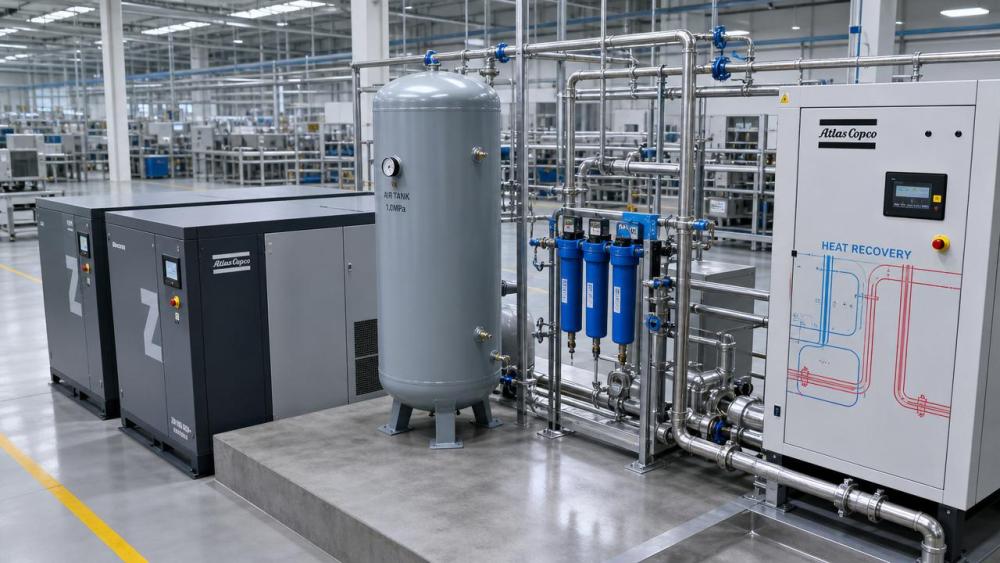
In many industrial facilities, compressed air technology remains one of the least optimized energy systems. It is essential, invisible to production teams when it works well, and expensive when its inefficiencies are ignored.
For decision-makers, the real issue is not whether compressed air is necessary. The issue is how much avoidable cost sits inside pressure drops, oversized compressors, inappropriate control logic, leaks, poor air treatment, and wasted heat.
A typical plant may focus heavily on motors, HVAC, or process lines while compressed air technology quietly consumes a large share of electricity. Because only a small fraction of input energy becomes useful pneumatic work, every system loss matters.
- Leaks often continue for months because they do not trigger immediate production stoppages, yet they continuously drain power and raise compressor loading hours.
- Pressure settings are frequently higher than actual process needs, which increases specific energy consumption and intensifies leakage volume.
- Legacy control strategies cause multiple compressors to run inefficiently at part load, especially in plants with variable demand across shifts and seasons.
- Untreated condensate, poor filtration, and unstable dew point can create hidden quality costs in food, pharmaceutical, electronics, and general manufacturing environments.
This is where GTC-Matrix adds strategic value. By connecting thermodynamic analysis, pneumatic power expertise, and industrial economic insight, the platform helps companies interpret compressed air technology not as isolated equipment, but as an energy conversion system linked to broader plant efficiency and decarbonization goals.
Which upgrades usually deliver the fastest return
Not every plant needs a full compressor replacement. In many cases, the fastest gains come from system-level upgrades that cut loss before capital-intensive equipment changes are approved.
1. Smart controls and sequencing
Modern master controls coordinate multiple compressors based on demand profile, pressure band, and machine efficiency. This reduces unloaded running, unnecessary starts, and pressure instability across mixed compressor fleets.
2. Leak detection and repair programs
An unmanaged leak network can waste substantial compressed air capacity. Ultrasonic leak surveys, prioritized repair planning, and monthly verification provide one of the most practical upgrades in compressed air technology.
3. Pressure optimization
Many facilities run at a pressure setpoint designed around the single worst-use point in the system. Redesigning piping, storage, or local boosters often allows lower central pressure without compromising production reliability.
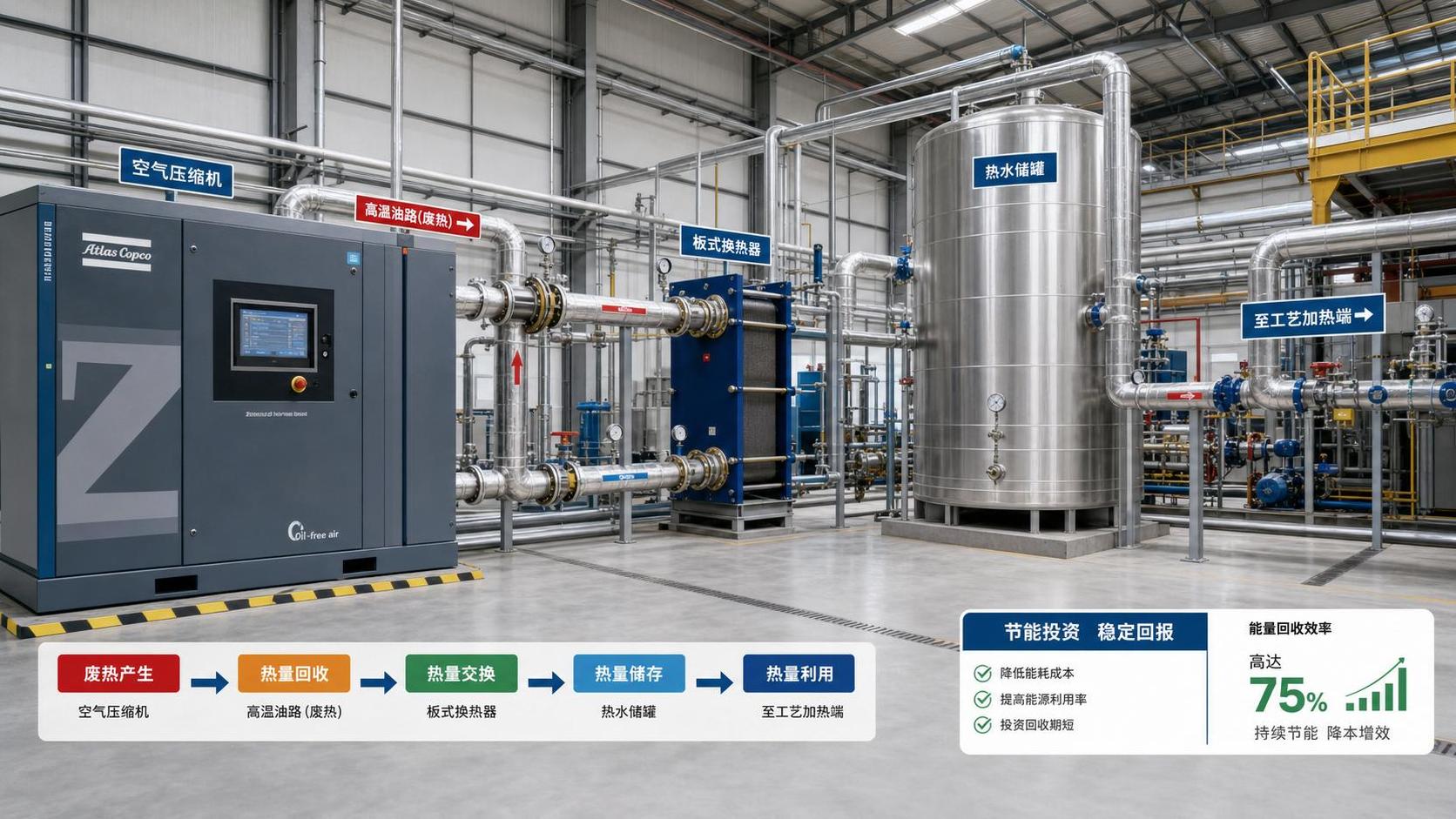
4. Heat recovery
A significant portion of compressor input energy becomes heat. Capturing that heat for space heating, process water preheating, or other thermal demands can transform a utility system into a useful energy source.
5. Storage and distribution redesign
Receiver capacity, looped piping, lower pressure drop filters, and point-of-use optimization improve system stability. These upgrades often reduce compressor cycling and improve usable pressure at critical tools.
The table below summarizes where compressed air technology upgrades typically create measurable operational value for cross-industry plants.
For most plants, the best sequence starts with measurement and operating logic, not assumptions. That approach protects budget, clarifies return potential, and avoids replacing equipment before system losses are understood.
How should enterprise buyers prioritize compressed air technology investments?
Capital planning is difficult when every department requests funding. Compressed air technology projects therefore need a decision framework that combines energy, uptime, quality, and implementation risk instead of focusing only on compressor nameplate efficiency.
A practical investment hierarchy
- Measure the baseline: power draw, pressure profile, flow variation, dew point, leak load, and maintenance history.
- Fix low-capex losses first: leaks, inappropriate pressure bands, blocked filters, and poorly managed drains.
- Upgrade controls and storage where demand fluctuates across batches, shifts, or product families.
- Evaluate compressor replacement only after real demand and distribution performance are verified.
- Add heat recovery when the plant has steady thermal loads that can absorb recovered energy consistently.
This structure is especially useful in diversified industrial groups where some sites need high-purity air, others require robust utility air, and some operate under strict production continuity constraints. GTC-Matrix supports such decisions with sector intelligence that links technical evolution to operating economics.
The next table helps procurement and operations teams compare common compressed air technology upgrade paths using decision-oriented criteria rather than vendor claims alone.
When this kind of comparison is done early, companies avoid two expensive mistakes: over-specifying hardware for a system problem, or underinvesting in monitoring and controls that determine actual lifecycle performance.
What technical indicators should management teams ask for?
Executive teams do not need to manage every engineering detail, but they do need the right indicators. Without them, compressed air technology proposals are difficult to compare and easy to misjudge.
- Specific energy at actual operating conditions, not only at full-load catalog points.
- System pressure stability across peak, off-peak, and transitional operating periods.
- Air quality metrics such as particle, oil, and moisture control where process sensitivity matters.
- Annual running hours, maintenance intervals, and impact of downtime on production value.
- Recoverable heat potential and the plant’s ability to use that thermal output productively.
In regulated or quality-sensitive sectors, buyers should also ask whether system design aligns with relevant air quality and safety expectations. Depending on the application, this may involve ISO-oriented compressed air quality references, documented maintenance procedures, and traceable monitoring practices.
GTC-Matrix is particularly useful here because market noise often obscures the relationship between new compressor technologies, heat exchange advances, oil-free trends, and changing end-user requirements in global pharmaceutical, semiconductor, and food segments.
Common implementation mistakes that reduce savings
Many compressed air technology upgrades underperform not because the equipment is poor, but because the implementation logic is incomplete. Decision-makers should watch for several recurring mistakes.
Mistake 1: Replacing compressors before fixing the network
If leaks, pressure drop, and poor storage are still present, a new compressor may simply feed an inefficient system more effectively. Energy savings then fall short of the business case.
Mistake 2: Buying for peak flow only
A system sized around rare peak events can run inefficiently for most of the year. Demand-side management, storage, or local boosters may offer a better answer than larger base capacity.
Mistake 3: Ignoring air quality costs
Moisture, oil carryover, and insufficient filtration can damage tools, contaminate products, or create rejects. In these cases, compressed air technology is directly linked to product quality and brand risk.
Mistake 4: No post-upgrade verification
Without metering and review, organizations cannot verify whether savings came from the upgrade, from reduced production, or from temporary operating changes. That weakens future capital approvals.
How compressed air technology supports broader decarbonization goals
Compressed air projects are increasingly evaluated not only by utility savings but by carbon reduction, resilience, and operational intelligence. That shift matters because energy transformation decisions now affect investor expectations, customer audits, and regional policy exposure.
Upgraded compressed air technology reduces indirect emissions by lowering electricity use. If heat recovery is added, it can also offset separate thermal energy consumption. When connected to digital monitoring, it improves reporting quality for sustainability programs and plant-level energy governance.
This aligns with the GTC-Matrix mission of optimizing thermal systems and driving power efficiency through data-based intelligence. For industrial groups navigating carbon neutrality and high-efficiency manufacturing goals, this system view is more useful than a narrow equipment-only conversation.
FAQ: what buyers often ask before approving upgrades
How do we know whether compressed air technology is really a major loss area in our plant?
Start with a short diagnostic using power consumption, flow trends, pressure profile, leak survey results, and maintenance records. If compressors run heavily during low production periods or pressure must be kept artificially high, losses are usually significant.
Should we choose oil-free compressed air technology for every facility?
Not always. The decision depends on process risk, contamination tolerance, regulatory expectations, and lifecycle economics. In sensitive sectors, oil-free may be justified. In general utility applications, well-managed lubricated systems with suitable treatment may remain appropriate.
What is the biggest procurement mistake in compressed air projects?
The biggest mistake is buying on compressor price alone. Decision-makers should compare full system impact, including controls, installation logic, air treatment, serviceability, redundancy, and expected performance under real demand variation.
Can upgrades be phased if budget is limited?
Yes. Many organizations phase compressed air technology improvements by first addressing leaks and controls, then adding storage or piping changes, and finally replacing core equipment once measured data confirms the right capacity and configuration.
Why choose us for compressed air technology intelligence and next-step planning
GTC-Matrix helps enterprise decision-makers move beyond fragmented supplier messages. Our platform connects industrial cooling, compressed air, vacuum processes, and heat exchange intelligence so your team can assess upgrades in the context of real energy conversion performance.
Through our Strategic Intelligence Center, we track sector news, technology evolution, and commercial demand shifts that affect compressed air technology investment timing. That means your team can evaluate not only technical options, but also policy movement, energy cost pressure, and downstream market expectations.
- Request support for parameter confirmation, including pressure range, flow pattern, air quality expectations, and heat recovery suitability.
- Discuss product and system selection logic for mixed fleets, oil-free requirements, or multi-site standardization plans.
- Review implementation priorities when delivery schedules are tight and capital must be phased across several plants.
- Clarify certification expectations, maintenance planning, monitoring architecture, and reporting needs for internal approval.
- Open a quotation dialogue around tailored upgrade pathways, from leak management and controls to heat recovery and system redesign.
If your organization is reassessing plant energy loss, compressed air technology is one of the most actionable places to start. A focused consultation with GTC-Matrix can help define where waste occurs, which upgrades fit your operating model, and how to build a more resilient, efficient industrial power backbone.
Ready when you are. Send us a message to get started.
Related News
- When does variable gas flow justify a custom screw compressor system?Author :Pneumatic Power Engineer

- How to size compressed air equipment for pneumatic toolsAuthor :Pneumatic Power Engineer

- How Should Energy Management Systems Handle Compressor Load Changes?Author :Pneumatic Power Engineer

- Which Maintenance Issues Reduce Air Compressor Efficiency?Author :Pneumatic Power Engineer

- How Much Energy Can Variable-Speed Screw Compressors Save?Author :Pneumatic Power Engineer

- Industrial Compressor Selection: Matching Flow, Pressure, and Duty CycleAuthor :Pneumatic Power Engineer

- China Expands Cross-Border RMB and FX Cash Pooling NationwideAuthor :Pneumatic Power Engineer

- How to Size Air Compressor Systems for Pneumatics by Flow and Pressure DemandAuthor :Pneumatic Power Engineer

- How Energy Recovery Systems for Compressors Cut Power CostsAuthor :Pneumatic Power Engineer

- How to Evaluate Screw Compressors in Industrial Refrigeration EquipmentAuthor :Pneumatic Power Engineer

- India Makes BIS Certification Mandatory for Screw CompressorsAuthor :Pneumatic Power Engineer

- China Tightens Export Filing for Screw CompressorsAuthor :Pneumatic Power Engineer

- SABIC Sets IoT Interface Rule for Screw CompressorsAuthor :Pneumatic Power Engineer

- Industrial Heat Recovery Systems for Compressors: When Do Energy Savings Pay Back?Author :Pneumatic Power Engineer

- EU Tightens REACH Limit for Screw Compressor LubricantsAuthor :Pneumatic Power Engineer

- EU Opens China Screw Compressor Review With Carbon RuleAuthor :Pneumatic Power Engineer

- DOE Mandates AHRI 1000-2026 for Screw CompressorsAuthor :Pneumatic Power Engineer

- VDMA Filing Signals EU Risk for Chinese Oil Screw CompressorsAuthor :Pneumatic Power Engineer
![]()
- Screw vs Piston Air Compressors for Stable Plant OutputAuthor :Pneumatic Power Engineer

- Saudi SASO Tightens Refrigerant Limits in IEC 60335-2-40:2026Author :Pneumatic Power Engineer

- IIR Warns of 18-Week Lead Times for Screw CompressorsAuthor :Pneumatic Power Engineer

- Welded Compressed Air Manifold Selection Guide for Pressure Stability and LeaksAuthor :Pneumatic Power Engineer

- India BIS Rule Adds IS 16830 Requirement for Imported Screw CompressorsAuthor :Pneumatic Power Engineer

- What to Check Before Choosing a Compressed Air FactoryAuthor :Pneumatic Power Engineer

- China Tightens Export Checks on Screw CompressorsAuthor :Pneumatic Power Engineer

- Screw Compressor Lead Times Reach 22 WeeksAuthor :Pneumatic Power Engineer

- Vietnam Requires QR Labels on Imported Screw CompressorsAuthor :Pneumatic Power Engineer

- Compressed Air Technologies Filtration: How to Reduce Pressure Drop and Energy LossAuthor :Pneumatic Power Engineer

- STSPIN830 Lead Time Tops 32 Weeks in Screw CompressorsAuthor :Pneumatic Power Engineer

- IGBT Shortage Extends Screw Compressor Lead TimesAuthor :Pneumatic Power Engineer

- Compressed Air Systems: 7 Hidden Costs That Raise Total Operating ExpenseAuthor :Pneumatic Power Engineer

- Compressed Air Efficiency: 7 Hidden Losses That Raise Operating CostsAuthor :Pneumatic Power Engineer

- How to Compare Screw vs Oil-Free Air Compression SystemsAuthor :Pneumatic Power Engineer

- Compressed Air Leaks: What They Really Cost in Daily OperationsAuthor :Pneumatic Power Engineer

- DOE Moves Up R449A Chiller Deadline to March 2027Author :Pneumatic Power Engineer

- How Compression Technology Cuts Energy Use in Modern PlantsAuthor :Pneumatic Power Engineer