How to Improve Vacuum Process Efficiency Without Overengineering




Improving vacuum process efficiency does not always require complex redesigns or oversized investments. In many industrial settings, the biggest gains come from disciplined observation, targeted maintenance, and better component matching.
A practical approach to vacuum process efficiency focuses on controllable losses. These include leaks, poor pump sizing, unstable demand, excessive safety margins, and weak operating visibility.
For sectors tracked by GTC-Matrix, this matters across packaging, food processing, electronics, chemicals, pharmaceuticals, printing, and general manufacturing. Better vacuum process efficiency supports energy savings, product consistency, and longer equipment life.
What does vacuum process efficiency really mean in daily operations?
Vacuum process efficiency is not only about reaching a deeper vacuum. It means achieving the required pressure level, cycle time, and process stability with the lowest reasonable energy and maintenance burden.
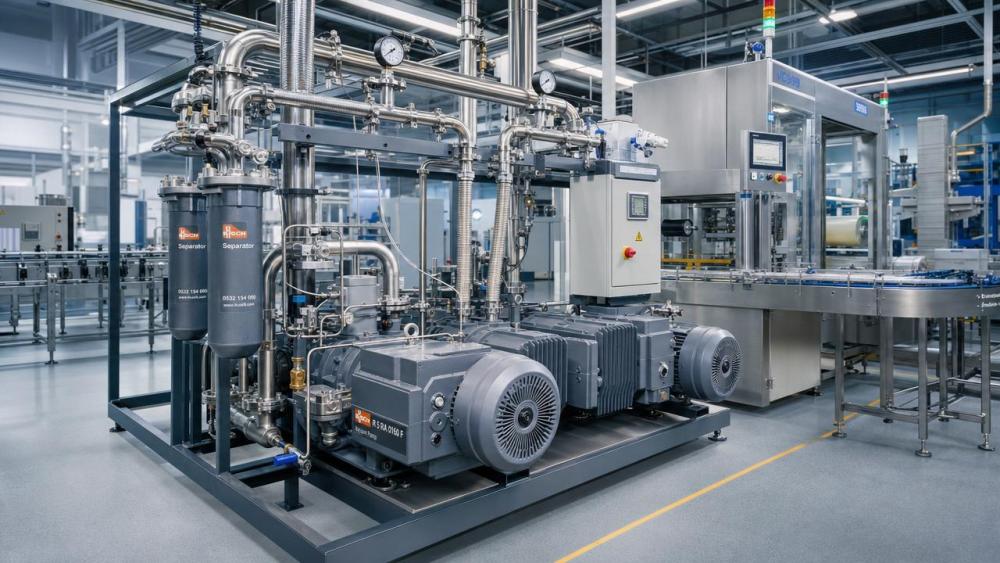
Many systems are judged by pump nameplate capacity alone. That is misleading. Real efficiency depends on the relationship between process demand, conductance, control logic, leakage rate, and pump performance under actual load.
A line that reaches target pressure quickly but wastes power between cycles is inefficient. A system with oversized pumps may look robust, yet still reduce vacuum process efficiency through unnecessary energy draw.
Useful indicators include:
- Energy consumed per production batch or cycle
- Time to reach target pressure
- Pressure stability during operation
- Leak rate and recovery behavior
- Maintenance frequency and unplanned downtime
This definition matters because it shifts attention away from headline specifications. It directs improvement toward measurable process value, which is the foundation of sustainable vacuum process efficiency.
Where are the most common hidden losses that reduce vacuum process efficiency?
The largest losses are often simple and persistent. They remain invisible because the system still runs, even while consuming more energy than necessary.
1. Small leaks with large cumulative impact
Leaks around seals, fittings, valves, chambers, and hose connections can quietly undermine vacuum process efficiency. Even minor leakage forces pumps to run longer and more often.
2. Oversized pumps and oversized reserves
Overengineering usually starts with safety margins. When capacity is selected far above real demand, the result can be unstable control, poor part-load behavior, and unnecessary operating cost.
3. Poor piping and conductance losses
Long pipe runs, restrictive bends, and undersized lines limit flow. A strong pump cannot compensate efficiently for poor conductance. The process sees slower evacuation and lower vacuum process efficiency.
4. Weak control strategies
Fixed-speed operation can waste energy when demand changes during shifts or between products. Cycling without smart setpoints often increases wear and reduces vacuum process efficiency over time.
5. Contamination and neglected maintenance
Dust, vapor, condensate, and process residue alter pump behavior. Filters clog, oil degrades, clearances change, and pressure response becomes inconsistent. Maintenance discipline strongly affects vacuum process efficiency.
How can vacuum process efficiency be improved without major redesign?
The best strategy is staged optimization. Start with fast, low-risk actions before considering equipment replacement. This prevents unnecessary spending and reveals where real constraints exist.
Audit the actual demand profile
Measure pressure targets, cycle times, idle periods, and peak loads. Many facilities discover that nominal design assumptions no longer reflect current production patterns.
Repair leaks before upgrading hardware
Leak repair is often the fastest route to higher vacuum process efficiency. It lowers runtime, stabilizes pressure, and improves the performance of the existing system.
Match controls to variable demand
Variable speed drives, staged pump sequencing, or revised setpoint bands can improve vacuum process efficiency when process loads fluctuate. Control improvements usually cost less than full mechanical redesign.
Reduce conductance losses
Shorter runs, fewer restrictions, and better manifold layout can improve system response. These changes are practical and often more effective than simply installing a larger pump.
Use data, not assumptions
Trend pressure, power draw, cycle duration, and maintenance events. Data reveals whether vacuum process efficiency is improving, flat, or deteriorating under real production conditions.
- Establish a baseline for energy and pressure performance.
- Fix leaks and contamination sources.
- Tune controls and sequencing.
- Optimize piping and local restrictions.
- Reassess whether replacement is still necessary.
When does overengineering hurt more than it helps?
Overengineering becomes harmful when design decisions are driven by worst-case imagination rather than measured need. This often increases capital cost while reducing operational flexibility.
A common example is selecting the deepest vacuum capability for a process that mainly needs stable mid-range performance. Another is adding redundant complexity before basic leakage and controls are addressed.
The risks include:
- Higher purchase and installation cost
- Poor part-load efficiency
- More difficult maintenance routines
- Longer troubleshooting cycles
- Reduced visibility into true process losses
In broad industrial applications, simpler systems often deliver better vacuum process efficiency because they are easier to maintain, monitor, and adapt as production changes.
How should improvement priorities be evaluated across different industrial scenarios?
Not every process loses efficiency for the same reason. Packaging lines may suffer from cycling losses, while chemical processes may face contamination or vapor handling issues.
The table below helps compare common conditions affecting vacuum process efficiency and practical responses.
This comparison shows that vacuum process efficiency should be judged by process behavior, not by generic equipment preferences. Context determines the smartest next move.
What is a realistic roadmap for better vacuum process efficiency?
A realistic roadmap is incremental, measurable, and operationally grounded. It avoids disruptive redesign until evidence proves the redesign is necessary.
A practical sequence can look like this:
- Document current pressure targets, cycle times, and energy use.
- Identify leakage, contamination, and conductance bottlenecks.
- Tune controls for actual production variability.
- Review maintenance intervals against operating conditions.
- Evaluate replacement only after low-cost improvements are confirmed.
For industries covered by GTC-Matrix, this disciplined method aligns with a broader energy-efficiency mindset. It supports lower waste, stronger reliability, and more credible decarbonization progress.
In short, vacuum process efficiency improves fastest when systems are understood before they are expanded. Measured optimization usually beats expensive complexity.
The next step is simple: establish a baseline, find the losses, and test focused corrections. That approach turns vacuum process efficiency into a practical engineering outcome rather than an overengineered ambition.
Ready when you are. Send us a message to get started.
Related News
- How does base pressure affect film purity in vacuum deposition?Author :Vacuum Process Fellow

- How to size vacuum process equipment for the required pump-down timeAuthor :Vacuum Process Fellow

- Which vacuum specification best protects semiconductor process yield?Author :Vacuum Process Fellow

- How Can Contamination Be Prevented in a Semiconductor Vacuum Chamber?Author :Vacuum Process Fellow

- Which Vacuum Pump Specifications Matter Most for Semiconductor Processes?Author :Vacuum Process Fellow

- How to find leaks in vacuum pump systems before pump performance dropsAuthor :Vacuum Process Fellow

- How to size a Roots blower for vacuum process equipmentAuthor :Vacuum Process Fellow

- How vacuum level affects vacuum process efficiencyAuthor :Vacuum Process Fellow

- China Imposes Temporary Helium Export BanAuthor :Vacuum Process Fellow

- Semiconductor Vacuum Systems Factory Checklist for Process Stability and Cleanroom UseAuthor :Vacuum Process Fellow

- Vacuum Process Optimization Services: Signs Your Line Needs a Performance ReviewAuthor :Vacuum Process Fellow

- Vacuum Chambers for Cleanroom Use: Key Design Points That Prevent ContaminationAuthor :Vacuum Process Fellow

- Vacuum Distillation Systems: Key Performance Metrics That Affect Product PurityAuthor :Vacuum Process Fellow

- Vietnam Halts High Vacuum Pump Import Licenses for 30 DaysAuthor :Vacuum Process Fellow

- Vacuum Technology Database: What to Check Before Using Technical DataAuthor :Vacuum Process Fellow

- Dry Pump Vacuum System Design Mistakes That Raise DowntimeAuthor :Vacuum Process Fellow

- When Vacuum Systems Lose Performance: Common Causes and FixesAuthor :Vacuum Process Fellow
![]()
- EU Tightens EN 13445-3 Weld Testing for Vacuum VesselsAuthor :Vacuum Process Fellow
![]()
- EPA Cuts R-1234ze(E) Quota 35%, Tightening Vacuum Cooling SupplyAuthor :Vacuum Process Fellow
 Quota 35%, Tightening Vacuum Cooling Supply")
- ICA Warns of Tight Copper Alloy Supply for Vacuum PumpsAuthor :Vacuum Process Fellow

- Vacuum System Leak Detection: Signs, Tests, and FixesAuthor :Vacuum Process Fellow

- How to Compare Vacuum Systems Factory Capabilities for Stable Process UptimeAuthor :Vacuum Process Fellow

- Vacuum Pump Lead Times Extend to 26 WeeksAuthor :Vacuum Process Fellow

- Semiconductor Vacuum Systems Explained for Stable Process YieldAuthor :Vacuum Process Fellow

- Vacuum Process Efficiency: 7 Hidden Causes of Energy LossAuthor :Vacuum Process Fellow

- Vacuum Technology Solutions for Stable Low-Pressure ProductionAuthor :Vacuum Process Fellow

- Vacuum Processes: Common Efficiency Losses and FixesAuthor :Vacuum Process Fellow

- Common Vacuum Processes Problems and How to Prevent DowntimeAuthor :Vacuum Process Fellow

- Tantalum Spike Extends Vacuum Crucible Lead TimesAuthor :Vacuum Process Fellow

- Vacuum Process Efficiency: 5 Hidden Losses to Check FirstAuthor :Vacuum Process Fellow

- How Heat Transfer Design Impacts Vacuum Process EfficiencyAuthor :Vacuum Process Fellow

- EN 13445-4:2026 Takes Effect for High-Vacuum ComponentsAuthor :Vacuum Process Fellow

- EU Vacuum Components Face New EN 13445-4:2026 Leak Test RuleAuthor :Vacuum Process Fellow

- UBS: Fed Cut View May Ease Vacuum Pump Lead TimesAuthor :Vacuum Process Fellow

- Vacuum Processes: Common Causes of Unstable PerformanceAuthor :Vacuum Process Fellow
![]()
- SiC Certification Signals New Entry Path for Vacuum and Compressor DrivesAuthor :Vacuum Process Fellow
![]()